

What is black-box testing?
You spend a lot of time building and hardening controls, but in the real world, cloud risk only fully takes shape once systems are deployed. After all, risk depends on what external users can actually reach in production. Factors like exposed services, network reachability, identity permissions, and data sensitivity can combine to turn small external issues into larger failures.
Black-box testing starts from the attacker’s position, answering a question teams too often skip: What does our environment look like from the outside?
It’s called “black-box” testing because the test tools have zero visibility into source code, architecture, or design. Instead, black-box testing uses methods like DAST to determine whether protections hold up in production conditions, grounding security decisions in external reality rather than design intent.
In this blog post, we’ll break down what black-box testing is, how it differs from white-box testing, why it matters for cloud teams, and how to use it to focus on exploitable risk.
AWS Vulnerability Management Cheat Sheet
Secure your AWS environment with this definitive guide to cloud defense. From agentless visibility to automated patching, get the essential blueprint for hardening your workloads and neutralizing risks before they scale.

Why black-box testing matters for cloud security
Black-box testing is uniquely suited to ever-changing cloud environments. Here's how...
It’s dynamic: Static reviews and one-time assessments are unreliable once systems are live. Black-box testing provides an outside-in view that reflects how the environment actually behaves in production, not how it looked at a single point in time.
It takes an attacker perspective: By testing from the internet, black-box testing methodologies surface common cloud vulnerabilities: public storage misconfigurations, open administrative ports, overly permissive network access, exposed APIs, forgotten endpoints, and legacy services that are still reachable. These types of issues often slip through the cracks after deployment.
There’s a focus on attack paths: Attackers don’t usually rely on a single misconfiguration. They chain together reachable paths across identity, network, and application layers, combining exposed services, permissions, and access routes into a working attack path. Black-box testing can reveal these paths to help you shut them down.
TL;DR: Outside-in testing with black-box techniques confirms whether security controls actually reduce exposure in production and helps teams prioritize issues that are truly exploitable, rather than chasing disconnected alerts.
What is a penetration testing report? Components and examples
Penetration testing report is a formal document that details vulnerabilities found during a simulated attack, with evidence, risk ratings, and fixes.
Leggi di più
Types of black-box testing in cloud environments
There are many categories of black-box testing tools designed for cloud environments. Some focus on passive discovery, while others use active validation to confirm how external exposure turns into real risk. Taken together, they help your team move from simple discovery to validated, prioritized attack paths:
External attack surface testing (EASM) identifies internet-facing assets, services, domains, IPs, and endpoints across cloud accounts, including resources teams may not realize are exposed.
Exposure validation moves from visibility to confirmation. It actively tests whether exposed assets can be abused, checking for default credentials, misconfigurations, and unintended sensitive data exposure rather than assuming exposure equals impact.
Blast radius validation adds critical context by linking exposed entry points to nearby data stores, services, or privileges. This shows how far an attacker could realistically move once an initial foothold is gained.
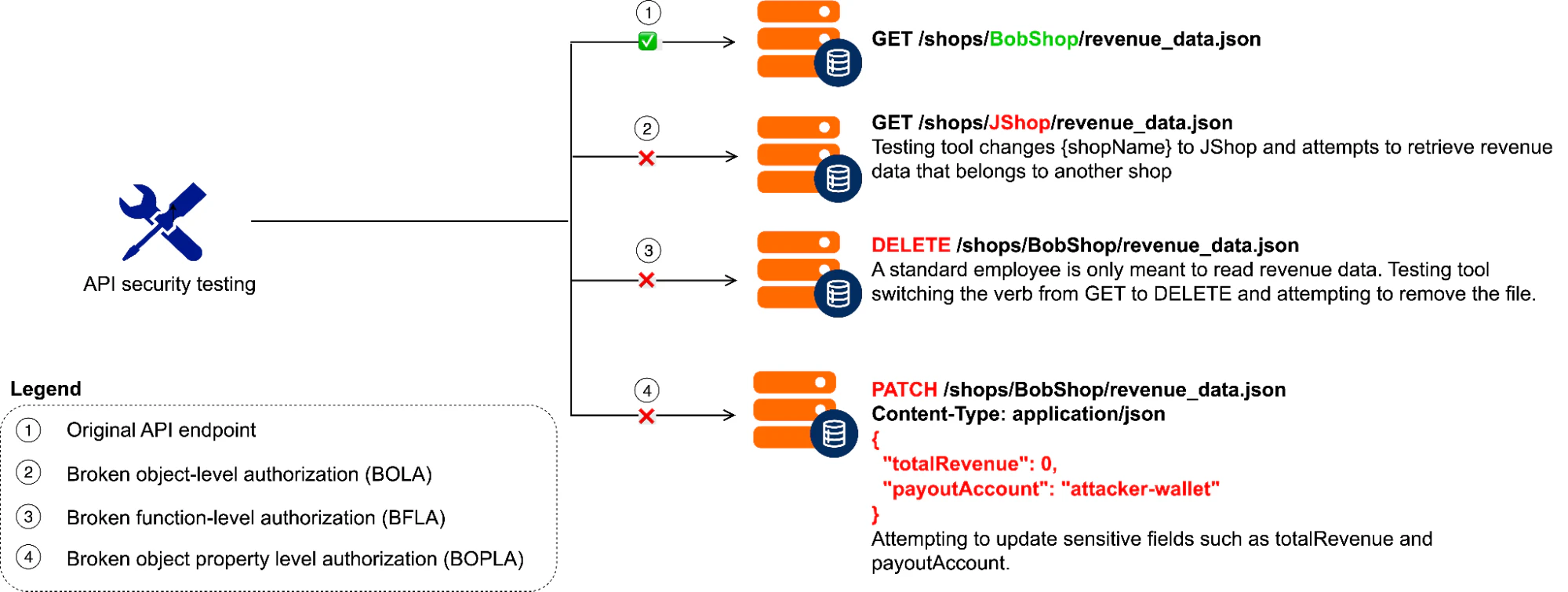
Application and API testing evaluates externally reachable web applications and APIs, including API fuzzing to test how endpoints handle unexpected input. These testing methods surface flaws in authentication, authorization, and application logic that only appear under real interaction.
Container and Kubernetes exposure testing looks for containerized services, ingress controllers, misconfigured cluster endpoints, exposed ports, protocols, and cloud networking paths that attackers can directly access.
Vulnerability-driven testing checks reachable services for known exploitable weaknesses, focusing only on vulnerabilities that are externally accessible rather than every theoretical flaw.
Identity and access testing examines how exposed roles, tokens, and permissions can be abused from the outside. In cloud environments, this often stems from how identities are exposed or propagated, including leaked credentials or secrets, misconfigured OIDC trust relationships, overly permissive token scopes, or from metadata endpoints reachable through attack techniques like SSRF.
Continuous exposure testing tracks how changes over time introduce new external risk. As cloud environments evolve, it ensures visibility keeps pace with new services, permissions, and connections instead of degrading after deployment.
Black-box testing techniques for modern applications
Just as attackers use different techniques to probe cloud-native services, APIs, and dynamically exposed infrastructure, different black-box testing techniques reveal different classes of flaws in your application.
Functional testing
| Testing sub-type | What it includes |
|---|---|
| Data-driven and logic testing | Equivalence partitioning, boundary value analysis, decision tables |
| Scenario and behavioral testing | Exploratory testing, use case testing, state transition testing |
Non-functional testing
| Testing sub-type | What it includes |
|---|---|
| Performance and scalability testing | Load, stress, spike, and endurance testing |
| Network and connectivity testing | Latency, network sensitivity, connection degradation |
| Compatibility and usability testing | Cross-browser and cross-device compatibility |
| Resilience and reliability testing | Failover testing, disaster recovery, chaos engineering |
| Security and access testing |
|
Integration testing
| Testing sub-type | What it includes |
|---|---|
| Interface and contract testing | API endpoint validation, response formats, error handling |
| External dependency testing | Third-party service connections, payment gateways, cloud storage |
Watch 12-min demo
See how Wiz eliminates scanning blind spots and alert fatigue by connecting vulnerabilities to real cloud context.

Implementation challenges and security considerations
To make the most of black-box testing, teams need to account for practical implementation challenges that can affect accuracy, signal quality, and how results translate into action. Here are some best practices from our experts to help you overcome these challenges.
Common challenges and best practices
| Challenge | Best practice solution |
|---|---|
| External findings lack ownership and business context | Correlate external exposure with cloud resources, identities, and services to establish ownership and impact |
| High noise and alert fatigue from standalone external scanners | Enrich findings with configuration, network, and identity context before prioritization |
| Difficulty automating tests across CI/CD and rapid cloud changes | Harden CI/CD workflows by embedding exposure testing to block insecure deployments |
| Findings are disconnected from development workflows | Integrate results directly into ticketing, CI pipelines, and engineering workflows |
| Prioritization based on severity rather than exploitability | Rank issues based on reachability, attack paths, and potential impact |
Other security considerations
Black-box testing works best when it’s part of a broader exposure management effort, not something you run in isolation. Pairing outside-in signals with internal context across code, infrastructure, and runtime makes it easier to see how findings connect, while automation and clear mapping from exposure to ownership help you remediate issues quickly.
Black-box testing vs. white-box and gray-box testing
White-box, gray-box, and black-box testing all approach the same question: How do we cut security risk?, but from very different angles.
Black-box testing, as we’ve seen, validates what’s reachable after deployment, when systems are live. Together, these approaches connect design intent, implementation choices, and real-world attacker behavior.
White-box testing has full visibility into source code, configurations, and architecture, which makes it effective for finding weaknesses early during design and development, before systems are deployed. The most common white-box testing techniques are static analysis approaches, often referred to as SAST (as compared with dynamic black-box techniques, or DAST).
Gray-box testing sits between the two, using limited internal knowledge or access to validate how exposed systems behave under partially trusted conditions. It helps focus effort on high-risk paths where internal assumptions and external behavior intersect.
One final approach, interactive application security testing (IAST), is a hybrid strategy that observes application behavior from inside the runtime using in-app instrumentation, combining elements of white-box insight with real execution paths typically exercised by black-box testing.
Combining all these approaches gives you a complete view of application risk. Here’s a quick side-by-side comparison:
| Testing type | Black-box testing | White-box testing | Gray-box testing |
|---|---|---|---|
| Initial visibility/reach | No credentials or internal knowledge | Full access to code, configs, and architecture | Limited internal access paired with external view |
| Focus area | What is reachable and exploitable from the outside | Risks stemming from design and implementation | What breaks when partial trust is assumed |
| What it finds | Exposed services, exposed APIs, misconfigurations, attack paths | Logic flaws, insecure defaults, missing controls | Authorization gaps and workflow weaknesses |
| Ultimate goal | Validates real-world exposure in production | Catches issues early in the SDLC | Targets risky paths by validating internal assumptions against external behavior |
| Limitations | Limited insight into internal intent | Cannot confirm exploitability | Like white-box testing, relies on assumptions about access |
How Wiz turns black-box testing into actionable security intelligence
Wiz reinvents traditional black-box testing by shifting from isolated, noisy scans to intelligent, context-aware dynamic analysis.
Here’s how:
AI-driven simulation: The Wiz Red Agent replaces static DAST scans by dynamically analyzing application logic, discovering shadow APIs, and safely executing context-aware attacks.
Outside-in probing: The native Dynamic Scanner acts from an external attacker's perspective, verifying exposed ports and protocols and capturing screenshots of exposed web interfaces as concrete proof.
DAST ingestion and correlation: Wiz ingests and normalizes dynamic findings from external third-party scanners, mapping them directly onto the Wiz Security Graph to identify prioritized attack paths.

Ready to see how Wiz prioritizes external findings in minutes, not weeks? Get a demo today to learn how Wiz centralizes DAST results, validates exposure, and helps your teams fix what truly matters.
Move from vulnerability lists to exploitable risk
Wiz correlates vulnerabilities with exposure, identities, and data access so your team fixes what actually matters.
