

What is SIEM?
SIEM stands for Security Information and Event Management. It is a unified platform that combines Security Information Management (SIM) and Security Event Management (SEM).
The core function of SIEM is collecting logs and event data from your firewalls, endpoints, applications, and cloud services. It acts as a central visibility platform, allowing security teams to monitor the entire IT environment from one place.
Modern SIEM systems perform two critical tasks:
Normalization: The system takes messy, disparate data formats from different vendors and organizes them into a standard structure for analysis.
Correlation: A real-time engine looks for patterns across this data that indicate a security incident.
This technology supports both proactive threat hunting to find hidden risks and reactive incident response to stop attacks. Deployment has shifted from on-premises hardware to cloud-based and hybrid models to match modern infrastructure, with organizations increasingly adopting SaaS SIEM platforms to reduce operational overhead. Unlike basic log management, SIEM adds security-specific analytics and correlation to actively detect threats.
Gartner® Market Guide for Cloud-Native Application Protection Platforms (CNAPP)
In this report, Gartner offers insights and recommendations to analyze and evaluate emerging CNAPP offerings.

How SIEM works
The SIEM process begins with data collection. Agents, APIs, and syslog protocols pull logs from diverse sources across your network.
Once collected, the system parses these logs to create a consistent data structure. This normalization ensures that data from different vendors can be analyzed together effectively.
Next, a correlation engine applies rules to spot suspicious patterns. For example, it might flag a failed login followed immediately by a successful login from a different geographic location.
The system enriches these events with threat intelligence feeds, asset context (criticality, owner, environment), and relationship data to provide a complete picture. Context enrichment from cloud configuration, identity permissions, and workload telemetry improves signal quality by showing not just what happened, but whether it's actually exploitable, for example, distinguishing between a vulnerability on an internet-exposed production database versus an isolated dev server. When rules are triggered, the system assigns severity levels and generates alerts for analysts.
Dashboards present this security posture visually so teams can spot trends quickly. Finally, historical data is stored for forensic investigation and compliance reporting.
SIEM vs SOAR: What is the real difference?
The main difference is that SIEM focuses on detection and visibility, while SOAR focuses on response and automation. SIEM collects and analyzes vast amounts of log data, whereas SOAR acts on processed alerts and findings.
もっと読む
Core SIEM capabilities
Data aggregation and log management
You must centralize collection from network devices, servers, applications, and cloud services. Scalability is essential to ingest the massive volumes of log data generated by modern systems.
Retention: Define data retention policies to meet specific compliance and forensic requirements.
Formats: The system must support both structured and unstructured log formats.
WAF and DNS logs (Cloudflare, Akamai, Route 53)
Real-time threat detection and correlation
Rule-based detection allows you to spot known attack patterns and signatures immediately. User and Entity Behavior Analytics (UEBA) establishes baselines of normal behavior for users, devices, and applications, then flags statistical anomalies. For example, a user who typically accesses 5 files per day suddenly downloading 5,000 files, or a service account authenticating from a new country.
Correlation links multiple events together to identify complex attack chains, for instance, connecting a phishing email delivery, credential compromise, lateral movement, and data exfiltration into a single incident timeline. You should also integrate threat intelligence to match events against known indicators of compromise.
Advanced correlation approaches use graph-based analysis across identities, networks, and workloads to surface attack paths, not just point-in-time events. For example, a graph-based system might connect: internet-exposed web server to overprivileged service account to lateral network access to sensitive database, revealing that a medium-severity vulnerability becomes critical because of the complete attack path. This reduces false positives by prioritizing truly exploitable risks over isolated findings.
Security analytics and reporting
Pre-built dashboards give you immediate visibility into your security posture. Compliance reporting templates help you meet regulations like PCI DSS, HIPAA, and SOC 2.
You can create custom reports to track specific organizational needs. Trend analysis allows you to measure the effectiveness of your security program over time.
Incident investigation and forensics
Timeline reconstruction helps you understand exactly how an attack progressed. Search functionality allows you to hunt for threats across historical data.
Context enrichment adds user, asset, and threat details to raw events. Integration with case management systems helps you track investigations from start to finish.
Automated response capabilities
Integrate with SOAR platforms to orchestrate complex response workflows. Automated containment actions can block IPs or disable compromised accounts immediately.
Playbooks execute specific steps based on the type of alert received. However, human oversight remains necessary to prevent disruptions from over-automation.
How to Make Your Incident Response Framework Actionable
An incident response framework is a blueprint that helps organizations deal with security incidents in a structured and efficient way. It outlines the steps to take before, during, and after an incident, and assigns roles and responsibilities to different team members.
もっと読む
SIEM benefits for modern security operations
Improved threat visibility and detection
Centralized logging eliminates blind spots across your distributed infrastructure. This allows for the early detection of threats before they escalate into major breaches.
Weak signals: You can correlate weak signals that individual tools would otherwise miss.
Insider threats: Behavioral analysis helps detect insider threats and compromised accounts.
Faster incident response and investigation
Real-time alerting significantly reduces the mean time to detect (MTTD) security incidents. Context-rich alerts give analysts the information they need to reduce investigation time.
Automated evidence collection speeds up forensic analysis. Integration with ticketing systems ensures a coordinated response across teams.
Enhanced compliance and audit readiness
SIEM centralizes and retains audit logs from in-scope systems (databases, applications, cloud services) to support the detailed audit trails required by regulatory frameworks like PCI DSS, HIPAA, and ISO 27001. Automated compliance reporting reduces the manual effort needed for audits.
You can easily collect evidence to demonstrate security controls. Policy enforcement features monitor for violations and alert you immediately.
SIEM centralizes and retains audit logs from in-scope systems to support regulatory audit trails:
PCI DSS 4.0 Requirement 10 mandates logging and monitoring of all access to cardholder data and system components, with 90-day retention (1 year for audit logs). SIEM provides centralized collection, correlation, and alerting for payment card environments.
HIPAA 164.312(b) requires audit controls to record and examine activity in systems containing electronic protected health information (ePHI). SIEM demonstrates this control through comprehensive logging and access monitoring.
ISO/IEC 27001 Annex A.8 (logging and monitoring) requires organizations to produce, store, protect, and analyze event logs. SIEM provides the technical implementation of this control.
SOC 2 CC7.x (monitoring activities) criteria require continuous monitoring and analysis of security events. SIEM serves as evidence of this control during audits.
Automated compliance reporting reduces manual effort by generating pre-built reports that map SIEM data to specific control requirements, showing auditors exactly which logs are collected, how long they're retained, and what alerts are configured.
Operational efficiency for security teams
Consolidating security telemetry and insights from firewalls, EDR, cloud providers, and identity systems into a unified dashboard simplifies operations by giving analysts a centralized view without switching between multiple tool interfaces. Intelligent correlation and prioritization reduce alert fatigue for analysts.
This enables smaller teams to manage larger, more complex environments effectively. Saved searches and correlation rules help capture and reuse institutional knowledge.
Watch 12-min demo
Learn about the full power of the Wiz cloud security platform. Built to protect your cloud environment from code to runtime.
Watch now
SIEM implementation challenges and best practices
Common deployment challenges
Integrating diverse log sources with different formats is often complex. Poor data quality leads to the "garbage in, garbage out" problem, affecting detection accuracy.
Poorly tuned correlation rules can generate excessive false positives and cause alert fatigue. You must also account for the significant storage, compute, and personnel resources required.
Tuning and optimization strategies
Establish a baseline of normal activity before enabling alerts. Use an iterative tuning process to reduce false positives while maintaining coverage.
Develop correlation rules based on your organization's specific threat landscape. Continuously refine these rules as your environment and threats evolve.
Integration with existing security stack
Connect your SIEM with firewalls, EDR, cloud security, and identity systems. Choose between API integrations and agent-based collection approaches based on your needs.
Normalizing data from both cloud-native and traditional infrastructure is a key challenge. Bidirectional integration is essential for enabling automated response actions.
Controlling SIEM costs and ingestion strategy
SIEM pricing typically follows one of two models: GB/day ingestion volume or events per second (EPS). A mid-size enterprise might ingest 500 GB to 2 TB daily, costing $150,000 to $500,000 annually depending on the vendor.
Cost optimization strategies:
Implement tiered retention: Store recent data (7-30 days) in hot storage for fast queries, move older data (31-90 days) to warm storage, and archive long-term data (91+ days) to cold storage or object storage (S3, Azure Blob) with on-demand query capabilities.
Filter noise at the source: Exclude verbose, low-value logs before ingestion, for example, successful authentication events from service accounts or health-check traffic from load balancers.
Pre-aggregate at the edge: Summarize repetitive events (firewall denies, DNS queries) before sending to SIEM, reducing volume by 40-60% while retaining security value.
Sample high-volume sources: For extremely verbose sources like VPC Flow Logs, sample 1-in-10 or 1-in-100 flows while retaining full fidelity for suspicious traffic.
Use cloud-native storage: Store raw logs in S3 or Azure Blob ($0.023/GB/month) and query on-demand with tools like Athena or Azure Data Explorer, reserving expensive SIEM storage for actively monitored data.
Right-size retention policies: Align retention with compliance requirements (PCI DSS requires 1 year, HIPAA requires 6 years) rather than defaulting to vendor maximums.
Addressing cloud-native environments
Traditional SIEM often struggles with ephemeral workloads (containers that exist for minutes) and dynamic infrastructure where resources scale up and down automatically based on demand.
You need cloud-native log collection methods like CSP API integrations (AWS CloudTrail, Azure Activity Logs, GCP Audit Logs) and cloud-native agents for workload-level telemetry where APIs don't provide sufficient detail.
Agentless cloud inventory via CSP APIs reduces blind spots and ensures broad coverage across accounts, subscriptions, projects, and Kubernetes clusters without requiring agents on every workload. This approach continuously discovers resources (compute, storage, databases, serverless functions) and their configurations, providing SIEM with complete asset context even for ephemeral workloads that exist too briefly for agent deployment.
Correlating events across multi-cloud and hybrid environments requires specialized strategies. Understand your cloud service provider's logging capabilities and use cloud context to enrich SIEM data.
SIEM use cases in cloud environments
Detecting cloud-specific threats
Detect compromised credentials by monitoring for unusual API activity patterns. Identify attempts to exploit misconfigurations in your cloud resources.
Watch for abnormal egress patterns that indicate data exfiltration. Monitor for privilege escalation to detect insider threats.
Multi-cloud security monitoring
Maintaining visibility across AWS, Azure, and GCP presents significant challenges. SIEM normalizes logs from different cloud platforms for unified analysis.
Correlate events across cloud boundaries to detect lateral movement. You need cloud-specific correlation rules and threat models for effective monitoring.
Container and Kubernetes security
Monitoring ephemeral containers with short lifespans is difficult. Collect logs directly from container orchestration platforms to capture relevant activity.
Detect container escape attempts and privilege escalation within clusters. Correlate container events with host and network activity for full context.
Code-to-cloud lineage maps running containers back to the source repository, CI/CD pipeline, and code owners, enabling faster owner identification and remediation. When SIEM detects a compromised container, lineage shows which team owns the code, which pipeline built it, and which vulnerabilities or misconfigurations were present at build time, turning runtime alerts into actionable development tasks.
Compliance and audit in cloud environments
Support cloud compliance frameworks like CIS Benchmarks and the CSA CCM. Maintain centralized audit logs for cloud resources and configuration changes by ingesting AWS CloudTrail (API activity), Azure Activity Logs (subscription changes), and GCP Audit Logs (admin activity) into your SIEM.
Use automated reporting to satisfy cloud-specific regulations. Demonstrate security controls effectively within the shared responsibility model.
How Wiz transforms SIEM for cloud-native environments
Traditional SIEM wasn't built for the cloud. It excels at collecting logs, but struggles to understand what actually matters in dynamic, ephemeral environments.That's where Wiz comes in.
Wiz Defend complements your existing SIEM by adding cloud-native threat detection and investigation capabilities. Instead of flooding your SIEM with every configuration change or vulnerability scan result, Wiz enriches cloud and runtime signals with Security Graph context and forwards only what matters—prioritized, de-duplicated findings that represent real risk.
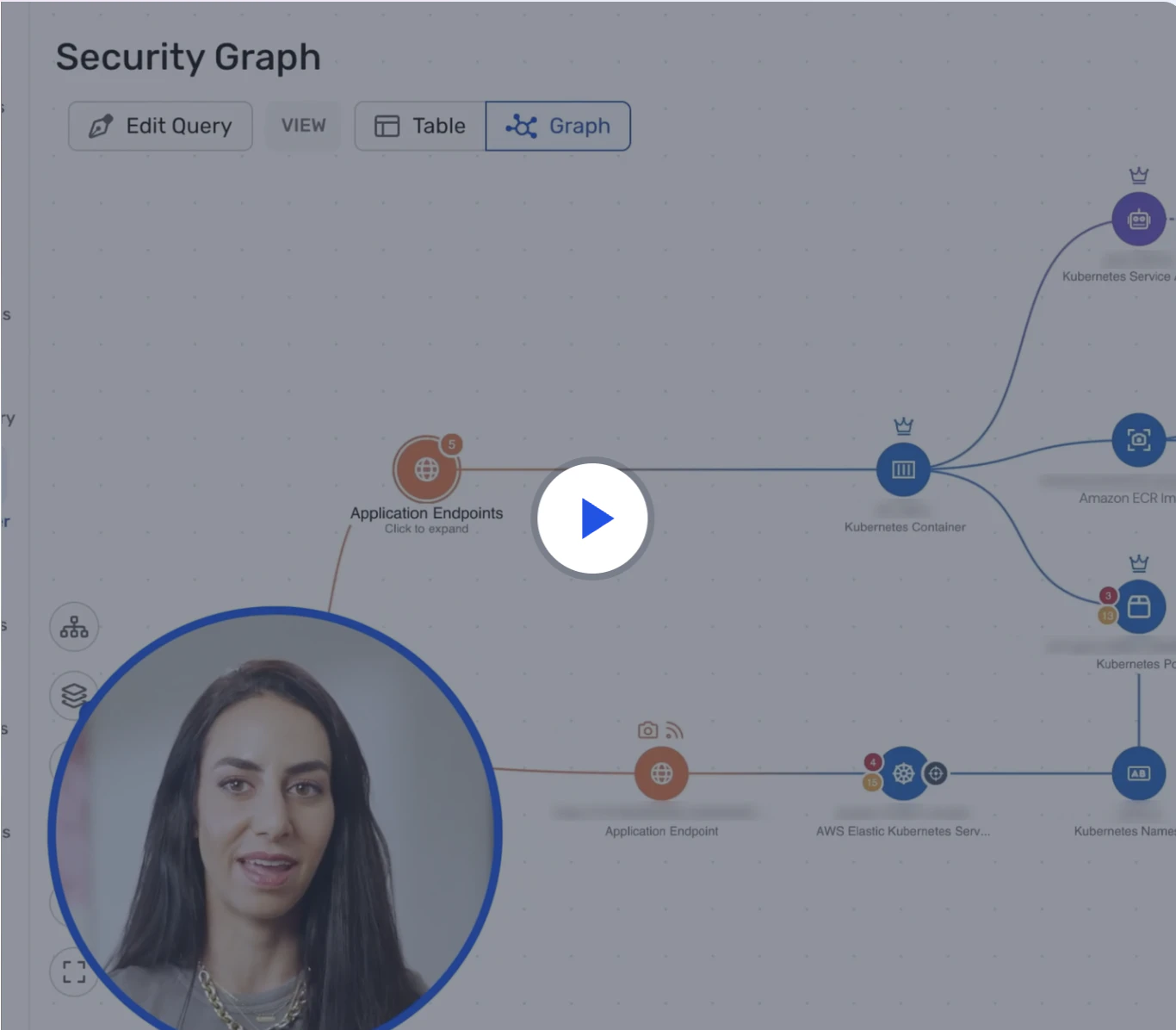
The Wiz Security Graph maps relationships between identities, workloads, data, and network paths—context that traditional log-only correlation simply can't provide. Attack-path analysis shows you why a critical vulnerability on an internet-exposed server with admin credentials demands immediate attention, while the same vulnerability on an isolated dev environment can wait. This significantly reduces SIEM ingestion volume while improving detection accuracy by filtering out noise and prioritizing findings that represent actual exploitable risk.
Our SecOps AI Agent automatically investigates cloud threats, analyzes attack paths, and correlates findings with threat intelligence to deliver clear verdicts: true positive, false positive, or needs human review. Enriched alerts are then exported to your SIEM for centralized case management—reducing analyst workload by automating tier-1 investigations.
Perhaps most importantly, Wiz enables your teams to trace from runtime threats back to code owners for faster remediation. When your SIEM detects a compromised container, Wiz connects it to the source repository, vulnerable dependency, and responsible development team—while your SIEM maintains centralized case management across both cloud-native and traditional infrastructure.
Ready to enhance your SIEM with cloud-native context and reduce alert fatigue? Get a personalized demo to see how Wiz transforms security operations for modern cloud environments.
Cloud Context for Your SIEM
Learn how Wiz helps SecOps teams cut through SIEM noise and respond to the cloud risks that matter most.
