

What are open-source SCA tools?
Open-source software composition analysis (SCA) tools scan your codebases, container images, and build artifacts, then match what they find against vulnerability and license databases. Some specialize in generating a Software Bill of Materials (SBOM); others specialize in scanning that inventory for known CVEs. Few do both well, which is why most teams pair two or more.
The open-source landscape covers a lot of ground: general-purpose scanners, JavaScript-specific tools, license-compliance engines, and SBOM generators built to work in tandem with a scanner. The five below cover the common combinations most teams reach for.
Catch code risks before you deploy
Learn how Wiz Code scans IaC, containers, and pipelines to stop misconfigurations and vulnerabilities before they hit your cloud.

5 open-source SCA tools
These five open source SCA tools cover the common ground most teams need, from SBOM generation to vulnerability scanning. They’re listed in no particular order, and many teams combine two or more to close coverage gaps.
1. OWASP Dependency-Check
OWASP Dependency-Check detects known vulnerabilities in project dependencies across multiple package managers and languages. It provides detailed reports and supports CI/CD integrations such as Jenkins and GitLab CI.
Aligned with OWASP standards, it’s a trusted solution among developers and security teams for its strong community backing and adherence to industry best practices. Dependency-Check identifies known vulnerabilities and provides detailed remediation guidance through its comprehensive vulnerability reports.
Available as a command-line tool or as a build script integration, Dependency-Check is a flexible and reliable way to secure open-source components throughout the development process.
Best for: Multi-language projects that need OWASP-aligned CI/CD scanning
2. Retire.js
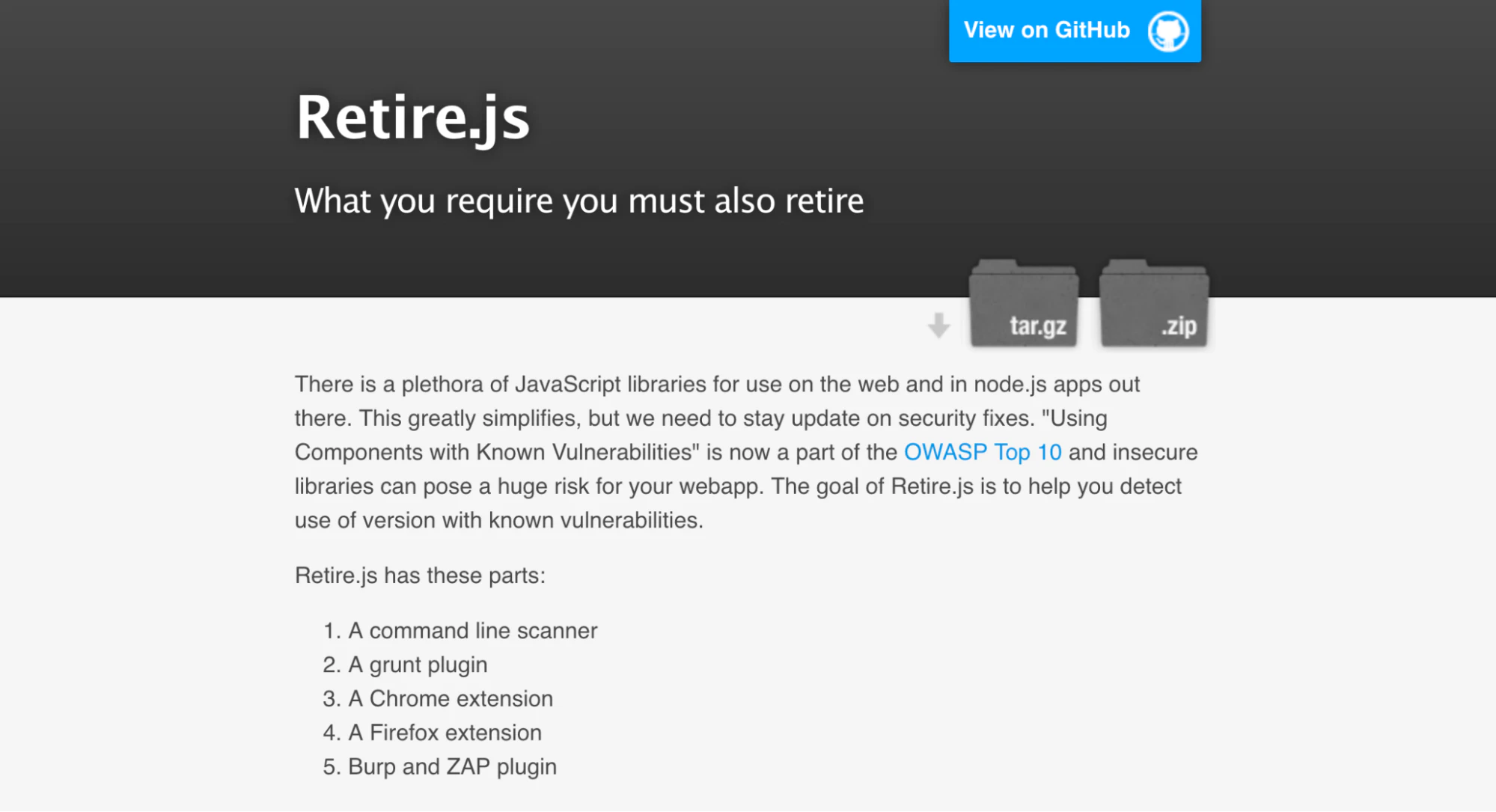
Retire.js is a security composition analysis tool designed to scan JavaScript codebases (including both frontend and backend applications) for known vulnerabilities in third-party libraries. By identifying outdated or insecure dependencies, Retire.js helps developers mitigate security risks early in the development cycle. Its simple command-line interface and integration with CI/CD pipelines make it easy to automate vulnerability detection, ensuring that libraries are up to date and secure.
In addition to its core functionality, Retire.js also provides a browser extension for client-side vulnerability detection, allowing security testers to analyze websites for insecure JavaScript libraries directly from the browser. It continuously updates its vulnerability database from sources like the CVE list, ensuring it identifies the latest security threats.
Retire.js focuses on JavaScript libraries. Organizations often pair it with other tools for multi-language coverage.
Best for: JavaScript and Node frontend and backend codebases
3. ScanCode
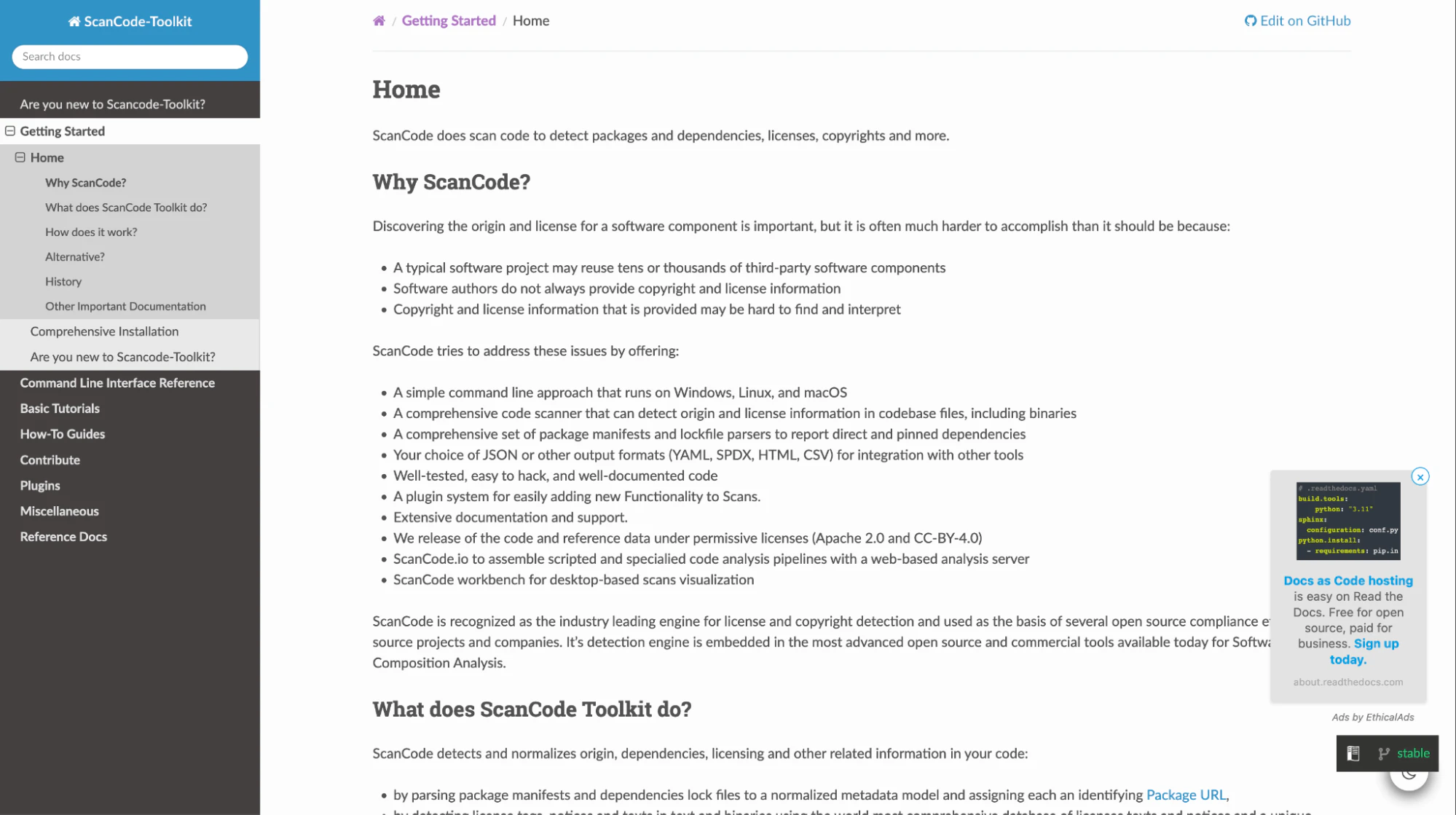
ScanCode is an open-source tool that specializes in analyzing the licensing, copyright, and vulnerability information of codebases and their dependencies. Designed to provide comprehensive details about software composition, it scans source code and binaries to detect licenses, extract copyright notices, and identify vulnerabilities in open-source components.
One of its standout features is its ability to perform detailed license compliance checks, ensuring that developers are aware of any legal obligations associated with the libraries they use. ScanCode supports a wide range of programming languages and package formats, making it a fit for large, multi-language projects.
Beyond vulnerability detection, ScanCode’s modular architecture allows users to customize the tool for specific use cases, and it integrates with CI/CD pipelines to automate scanning.
Best for: License and copyright compliance across multi-language projects
4. Syft
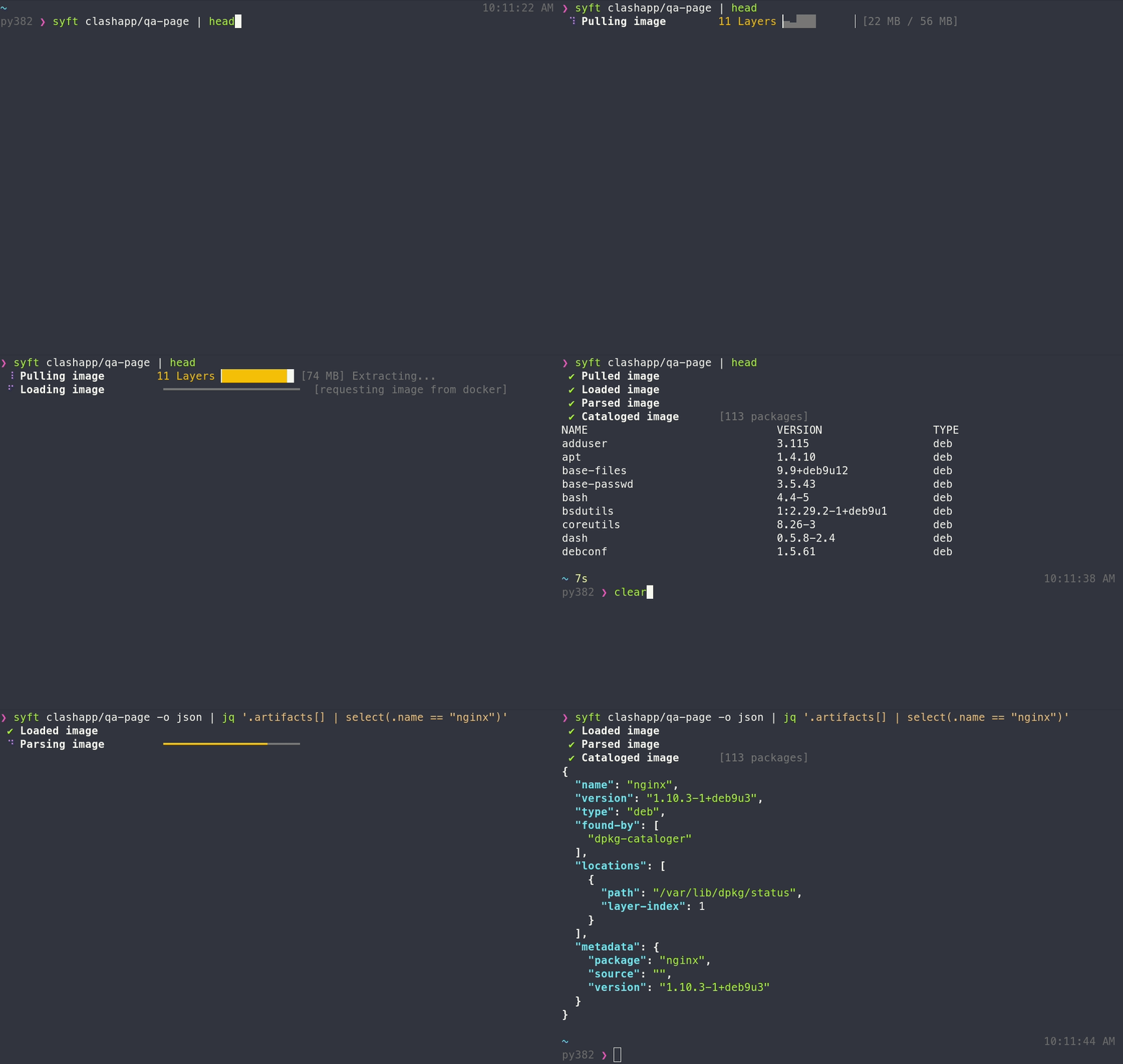
Syft is an open-source CLI tool and Go library for generating SBOMs for container images and filesystems. It identifies packages, libraries, and dependencies across a wide range of ecosystems, helping you understand your software composition with high precision.
Syft supports multiple SBOM formats, including CycloneDX and SPDX, making it useful for compliance, inventory management, and security workflows. Its integration with CI/CD pipelines allows SBOM generation to be automated as part of the build process.
Syft can also be paired with other tools, such as Grype, for vulnerability scanning, enabling a layered approach to open-source risk management.
Best for: Generating SBOMs across many ecosystems
5. Grype
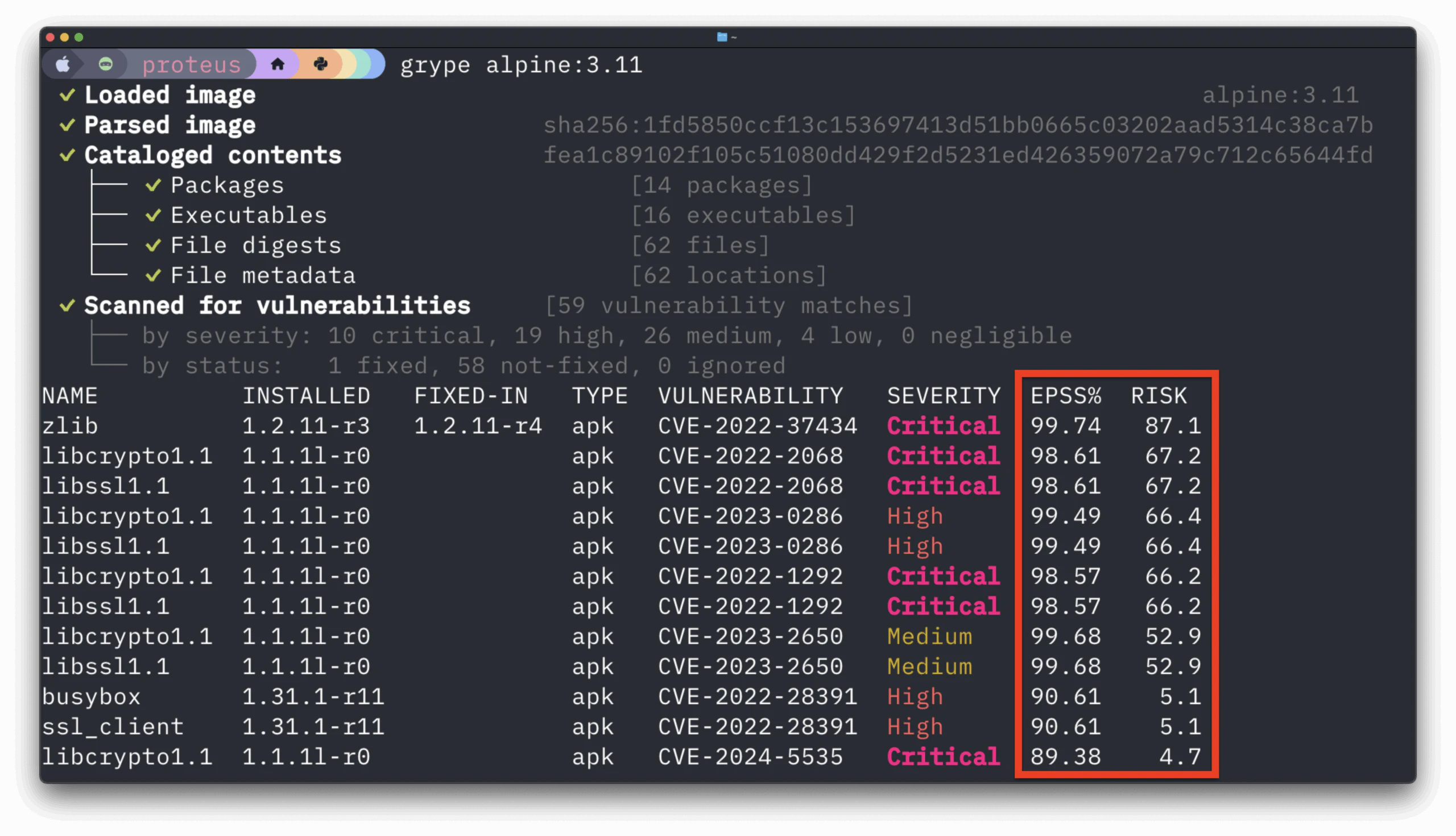
Grype is an open-source vulnerability scanner that effectively functions as a lightweight SCA tool for open-source components, containers, and OS packages. Built by Anchore, it detects known vulnerabilities across a wide range of ecosystems, including container images, Linux distributions, and application dependencies, by mapping them against multiple public vulnerability feeds.
Grype works especially well when paired with Syft, its companion SBOM generator. Together, they provide a clear view of what’s in your software and the risks associated with each component.
Grype integrates easily into CI/CD pipelines, local development workflows, and container registries, enabling continuous scanning throughout the build and deployment process.
Best for: Fast vulnerability scanning of containers and OS packages, especially paired with Syft.
Watch 5-minute demo
Watch the demo to learn how Wiz Code scans infrastructure as code, container images, and CI/CD pipelines to catch risks early—before they reach the cloud.
Watch now
Key benefits of open-source SCA tools
Open-source SCA tools give teams visibility into third-party risk without a licensing cost. The payoffs show up across security, compliance, and day-to-day developer workflows.
Security vulnerability detection: By identifying known vulnerabilities in open-source components, OSS SCA tools reduce the likelihood of security incidents.
License compliance: Open-source software SCA solutions are vital for ensuring compliance with relevant licenses across all open-source components, helping you mitigate legal and operational risks.
Risk management: OSS SCA tools provide critical insights into the overall risk profile of an application's software composition. By identifying vulnerabilities and compliance issues, these tools enable continuous risk management, helping you address potential threats earlier and support a more secure software development lifecycle.
Integration with CI/CD pipelines: OSS SCA tools integrate with continuous integration/continuous deployment (CI/CD) pipelines, enabling end-to-end monitoring and compliance. CI/CD integration alerts you to vulnerabilities in third-party components early, allowing you to patch or update dependencies before any security issues reach production. Automating this scanning also saves time and lets you respond quickly when a new vulnerability surfaces.
Dependency updates: Many OSS SCA tools automatically track and update outdated libraries, a critical function given that one analysis found 85% of audited codebases contained open-source software that had not been updated in over four years. This ensures projects stay up to date with the latest versions to reduce technical debt and security risk.
What to look for in an open-source SCA tool
Not every scanner earns its place in your pipeline. The tools that stick are the ones that cut noise and point developers to the fixes that actually change your risk. Weigh these criteria before you commit.
Reachability and false-positive reduction: A vulnerable package only matters if your code calls the affected function. Tools that trace reachability rather than flagging every listed CVE keep developers from drowning in alerts they can safely ignore.
Transitive-dependency depth: Most risk hides in the dependencies of your dependencies. Look for a scanner that walks the full tree, not just the packages you added by hand.
Remediation quality: "Upgrade to latest" is not a fix plan. The better tools tell you the minimum safe version, flag breaking changes, and point to the exact manifest line to edit.
Language and ecosystem coverage: Check that the tool speaks the package managers your teams actually use, from npm and Maven to Go modules and PyPI. Gaps here become blind spots.
CI/CD fit: A scanner you have to run by hand gets skipped. Favor tools that drop into your existing pipeline and fail builds on the thresholds you set.
SBOM output: Standard formats like CycloneDX and SPDX let you feed results into other tools and satisfy supply chain requirements without extra work.
Cloud and runtime context: A critical CVE in a package that never executes or sits behind no external exposure is far less urgent than a moderate one on an internet-facing service with access to sensitive data. Tools that tie findings to your actual cloud environment help you spend remediation time where it counts.
No single criterion above matters in isolation. The tools that hold up in practice combine several of these, not just one.
Wiz's approach to SCA
Wiz Code provides comprehensive SCA to help you find vulnerabilities in your code and cloud resources. The Wiz SCA engine scans by analyzing manifest and lock files to identify supported software components, versions, and code libraries, covering both direct and transitive dependencies.
Open-source tools win on flexibility and cost. Teams with strong DevOps skills can shape them to fit their workflows and wire them into CI/CD without vendor lock-in.
The challenge most teams face is understanding which SCA findings actually matter in their production environment. A vulnerability in a dependency might seem critical in isolation but becomes less urgent if that component isn't exposed to external traffic or doesn't have access to sensitive data.
That's where Wiz Code complements existing OSS tooling. By mapping open-source and transitive dependencies to their real exposure paths in your cloud environment, Wiz helps you understand which issues truly matter and how they relate to identities, misconfigurations, runtime behavior, and data access.
Wiz Code fits naturally alongside the OSS ecosystem by providing:
Code-to-cloud mapping that enriches SCA results with cloud context
SBOM generation and analysis to support supply chain transparency
IaC, container, and pipeline scanning to secure every stage of development
Runtime-aware risk prioritization through the Wiz Runtime Sensor
Together, OSS SCA tools and Wiz Code give teams the full picture: strong dependency hygiene and the cloud context needed to understand which risks are exploitable, how they propagate, and how to remediate them quickly. That context matters even more now that AI-generated code pulls in more open-source dependencies faster than ever, which makes tying each finding to real cloud and runtime behavior the difference between chasing alerts and fixing what attackers can reach.
Want to see for yourself how Wiz can protect everything you build and run in the cloud? Schedule a demo today.
Catch code risks before you deploy
Learn how Wiz Code scans IaC, containers, and pipelines to stop misconfigurations and vulnerabilities before they hit your cloud.
How to choose the right open-source SCA tool
Start by pairing tools that do one job well. For example, Syft handles the inventory side by generating an SBOM, and Grype scans that output for known vulnerabilities. Run them together and you get both a clear picture of what's in your software and a fast read on the risks each component carries.
Next, match the tools to the languages and ecosystems your teams actually ship. Retire.js serves a JavaScript-heavy front end well, while a mixed codebase with strict license requirements leans toward ScanCode or OWASP Dependency-Check. There's rarely one tool that covers everything, so most teams settle on a small stack that maps to how they build.
The harder question is where open source stops being enough. OSS scanners are strong at detection, and for many teams, that's the right starting point. But detection alone tells you a package is vulnerable, not whether that vulnerability is reachable or sitting next to sensitive data in production.
When you need to know which findings an attacker could actually use, you need reachability and cloud context on top of the scan. That's the line where teams move from stitching OSS tools together to adding a platform that connects code findings to how the code runs.