Kubernetes Security Contexts Best Practices [Cheat Sheet]

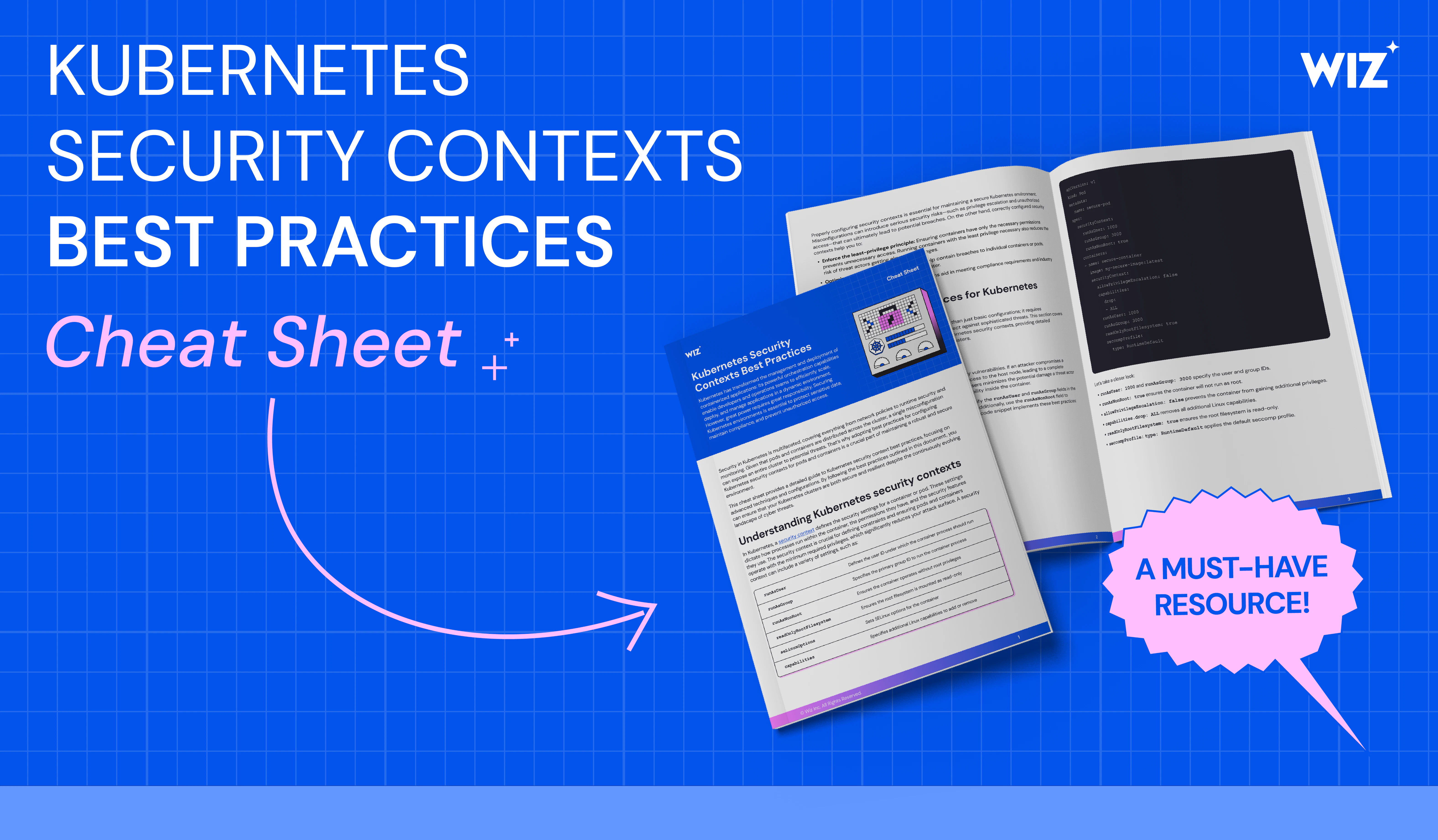
Download Cheat Sheet
Key Takeaways
- 1. Security contexts are the foundation of container hardening The cheat sheet stresses that Kubernetes security starts with the configuration of each pod and container. Settings like runAsNonRoot, disabled privilege escalation, dropped capabilities, SELinux/AppArmor profiles, and read-only filesystems dramatically reduce the blast radius of a compromise. Security contexts aren’t optional – they are the building blocks of least privilege in Kubernetes.
- 2. Enforcement matters more than configuration The guide shows that manually configured best practices break down without enforcement. Pod Security Admission (the successor to PodSecurityPolicy) provides cluster-wide policy guardrails that prevent insecure workloads from ever being deployed.
- 3. Runtime signals complete the security picture Security contexts provide preventive controls, but the guide makes clear that runtime monitoring — Falco rules, system call tracing, log aggregation, anomaly detection, and automated node patching – is essential for detecting active threats.
Who Benefits from This Cheat Sheet?
This cheat sheet is designed for Kubernetes administrators, DevOps engineers, and security professionals responsible for managing and securing containerized applications. It’s particularly valuable for:
Teams working in production Kubernetes environments that require strict security measures.
Organizations in regulated industries needing to meet compliance requirements like PCI DSS, HIPAA, or GDPR.
Professionals looking to adopt shift-left security practices and integrate security into development pipelines.
Teams facing challenges with runtime monitoring, vulnerability detection, and security policy enforcement.
Enterprises seeking to enhance their overall Kubernetes security posture while reducing operational complexity.
What's included in this template?
The cheat sheet covers all the critical aspects of Kubernetes security contexts, including:
Running Containers as Non-Root: Learn how to configure security contexts to prevent privilege escalation and ensure containers run with the least privilege required.
Enforcing Pod Security Admission: Understand how to label namespaces with Baseline or Restricted policies to automatically enforce secure configurations for all pods.
Managing Linux Capabilities: Discover how to drop unnecessary Linux capabilities and allow only essential ones, minimizing attack surfaces.
Using SELinux or AppArmor: Explore how to implement SELinux or AppArmor policies to isolate container processes and prevent unauthorized access to system resources.
Runtime Container Forensics: Gain insights into using tools like Falco to detect and respond to anomalous container activity in real time.
Continuous Monitoring and Patch Management: Learn how tools like Kured and the EFK stack can keep your Kubernetes clusters secure and compliant through continuous updates and logging.
Compliance Automation: Discover how Wiz automates compliance checks for standards like NIST, PCI DSS, and HIPAA, ensuring your clusters meet regulatory requirements.
맞춤형 데모를 받아보세요
맞춤형 데모 신청하기
"내가 본 최고의 사용자 경험은 클라우드 워크로드에 대한 완전한 가시성을 제공합니다."
"Wiz는 클라우드 환경에서 무슨 일이 일어나고 있는지 볼 수 있는 단일 창을 제공합니다."
"우리는 Wiz가 무언가를 중요한 것으로 식별하면 실제로 중요하다는 것을 알고 있습니다."