

What is data classification?
Data classification is the practice of sorting data into categories based on how sensitive it is and how much protection it needs. That sounds like paperwork, but it decides where your security effort goes. When you know which records are highly sensitive and which are routine, you can focus tight controls where they matter and avoid overspending on data that carries little risk.
The real payoff comes from pairing each category with context: where that data lives across your cloud accounts and who can actually reach it. A label on a file means little if an over-permissioned role or a public bucket quietly exposes it. Classification gives you the vocabulary, and knowing the location and access paths turns that vocabulary into protection you can act on. It is the groundwork for access controls, encryption decisions, and faster answers during an audit or a security incident.
Data Goverance & Compliance Guide
This Guide to Data Governance and Compliance in the Cloud provides a straightforward, 7-step framework to help you strengthen your cloud governance approach with confidence.

Why do you need data classification?
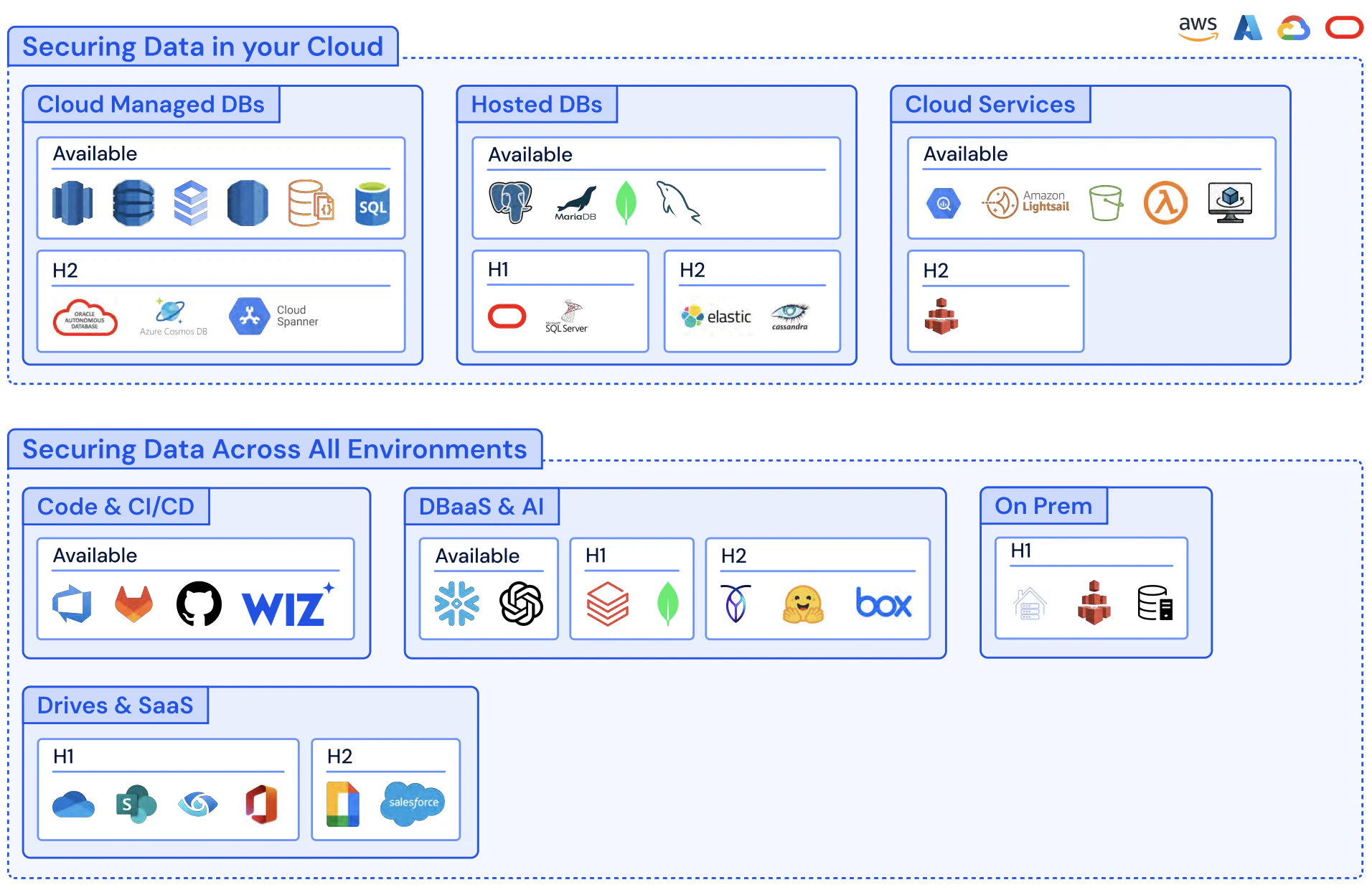
Every business collects data worth protecting: payroll records, credit card data, Social Security numbers, medical records, financial records, and intellectual property. You need to handle it responsibly across its full lifecycle, from creation through storage, use, and disposal.
That responsibility is now written into law. Growing regulation means mishandling data at any stage can lead to financial loss and reputational damage, so you need clear handling rules for each type you hold.
The trouble is that companies often overlook whole stages of the lifecycle. The final destruction phase gets skipped, leaving readable remnants on storage devices even after disposal. Data in transit is another blind spot, open to man-in-the-middle attacks when encryption is weak. Classification tells you which data deserves the tightest handling at each stage, so nothing sensitive slips through by default.
What are the levels of data classification?
Most organizations sort data into tiers that signal how much protection each piece needs. Four levels show up again and again: public, internal, confidential, and restricted. Treat them as a common convention rather than a rigid universal standard, since the exact names and count vary by industry and regulation.
| Level | What it means | Example |
|---|---|---|
| Public | Data you can share openly, with no harm if it is disclosed. | Marketing pages, press releases, published documentation. |
| Internal | Data meant for employees only, with low impact if it leaks outside the company. | Org charts, internal memos, general policies. |
| Confidential | Sensitive data that would cause real damage if exposed, limited to specific teams. | Customer records, contracts, financial statements. |
| Restricted | The most sensitive data, tightly controlled and often governed by regulation. | Health records, payment card data, credentials and secrets. |
The labels matter less than what you do with them. Each level should map to concrete controls: who gets access, whether encryption is required, how long you keep the data, and where it can live. In the cloud, that mapping is where teams stumble, because the same file can end up copied across accounts, regions, and services with different rules applied. A restricted label on a database means little if a forgotten snapshot of it sits in a public bucket. That is why classification levels only work when they travel with the data and connect back to real access paths.
Sensitivity levels tell you how tightly a piece of data needs to be controlled. Data types tell you what the data actually is, and some types carry legal obligations no matter how you rank their sensitivity. Personally identifiable information, protected health information, and payment card data each fall under specific regulations, so tagging them correctly during classification is what keeps you compliant and signals to your team which controls have to apply.
Common types of regulated data: PII, PHI, and PCI
| Data type | What it covers | Example | Governing regulation |
|---|---|---|---|
| PII | Data that can identify a specific person | Name, Social Security number, email address | GDPR, CCPA |
| PHI | Health information tied to an individual | Diagnoses, treatment history, medical records | HIPAA |
| PCI | Payment card data | Card numbers, CVV codes | PCI DSS |
Challenges of data classification in the cloud
Classifying cloud data is harder than classifying data on-premises. Cloud data is highly distributed, short-lived, and often spread across providers, which makes it tough to find, track, and label consistently.
The shared responsibility model of cloud providers can also muddy who needs to do what. On top of that, you may have large quantities of shadow data lurking in places you don't control. Wiz's Cloud Data Security report found that 72% of cloud environments run publicly exposed databases without sufficient access controls. Here are a few of the biggest obstacles in the way of classifying your cloud data.
Cloud environments are constantly changing
Cloud is called cloud because, well, it's like a cloud: constantly shifting shape based on demand and dozens of other factors. Infrastructure and data are constantly being added, modified, and removed. Plus, you've got multiple interconnected components such as VMs, storage, and databases, which makes it difficult to identify, track, and classify data.
In addition, third party-providers add complications when it comes to figuring out where your data is, how sensitive it is, and who needs access to it. Subcontractors, for example, may have different data security practices and standards, increasing the risk of security incidents.
Data sprawl and silos
Multi-cloud environments breed inconsistency, almost by definition. Different providers have different security rules, and as your tech stack grows, it becomes harder and harder to keep track of which rules have been applied where. And understanding who has access to which data? Almost impossible.
This can lead to two major problems: data silos and data sprawl.
When you have diverse data types stored in a range of different locations in the cloud, it becomes difficult to manage consistently. Access controls or architectures implemented in one "silo" need to be applied to every other "silo." This is often a painstaking manual process.
Data sprawl, a subset of the bigger issue of cloud sprawl, happens when data proliferates and duplicates to a point where businesses can lose control. This makes it tough to manage your data and comply with regulations, and it significantly raises the potential for data breaches.
Classifying siloed or sprawling data, especially unstructured data, is notoriously hard using automatic methods. And manual methods are tedious and time-consuming.
User awareness and training needs
Data classification is a big, organization-wide project. That means two things in terms of your users: You need a high degree of buy-in, and you need customized training, because every organization has different needs and industry standards when it comes to classification.
Ideally, you'll automate as much of the classification process as possible, but there is still some manual intervention required. And if your team isn't fully on board, and isn't properly trained, you're going to wind up with human error, leading to misclassification (over-securing or under-securing data) and possibly even accidental disclosure of sensitive data.
How data classification works in the cloud
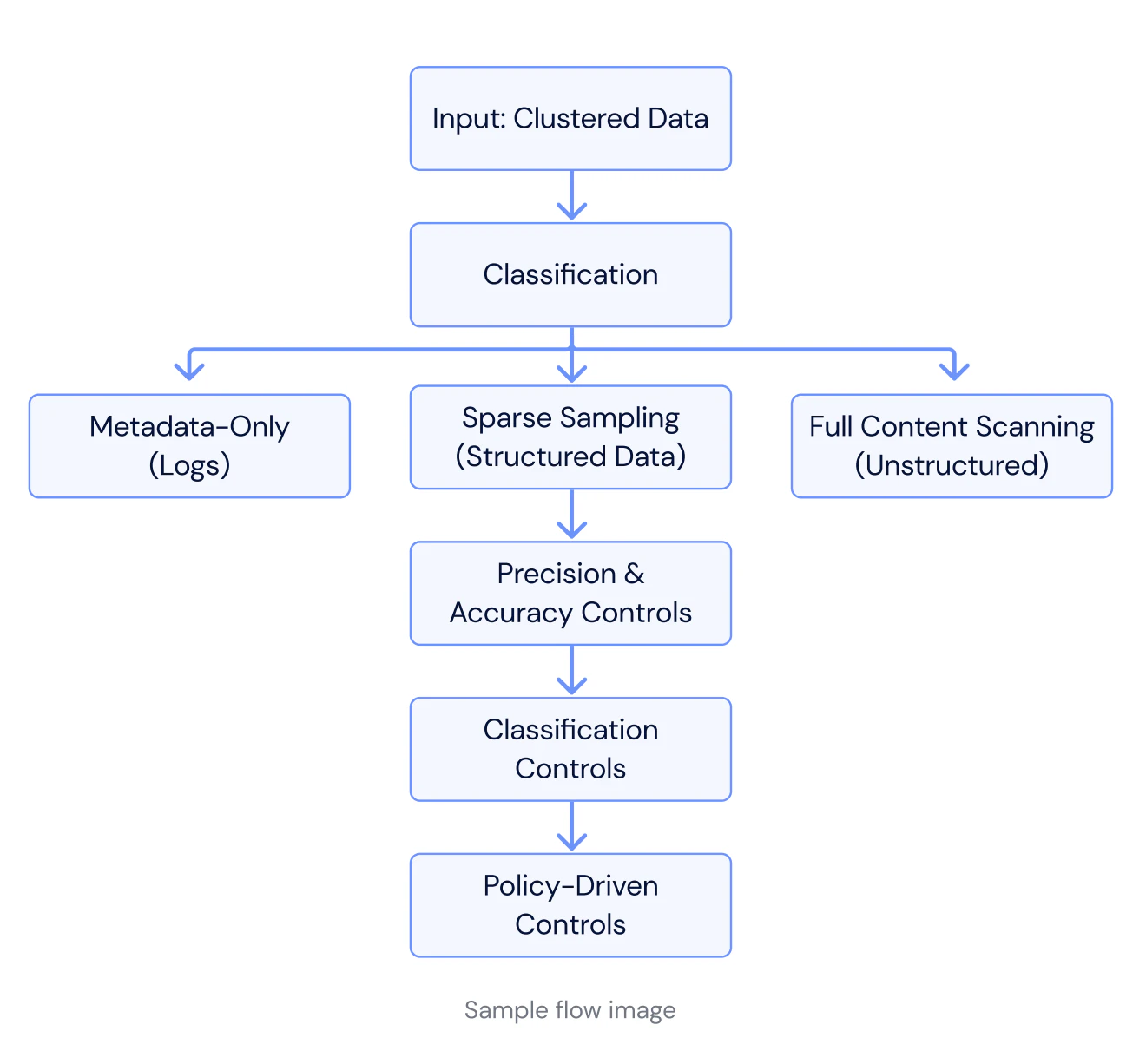
Data classification works by discovering where data lives, categorizing it by sensitivity, and applying controls that match each level. The goal is to right-size security: enough to protect critical data, not so much that it slows the business down.
The process of putting this in place will involve cross-disciplinary teams and stakeholders from multiple ranks of your organization. Together, you'll move through the following steps, which we'll look at in a little more detail below.
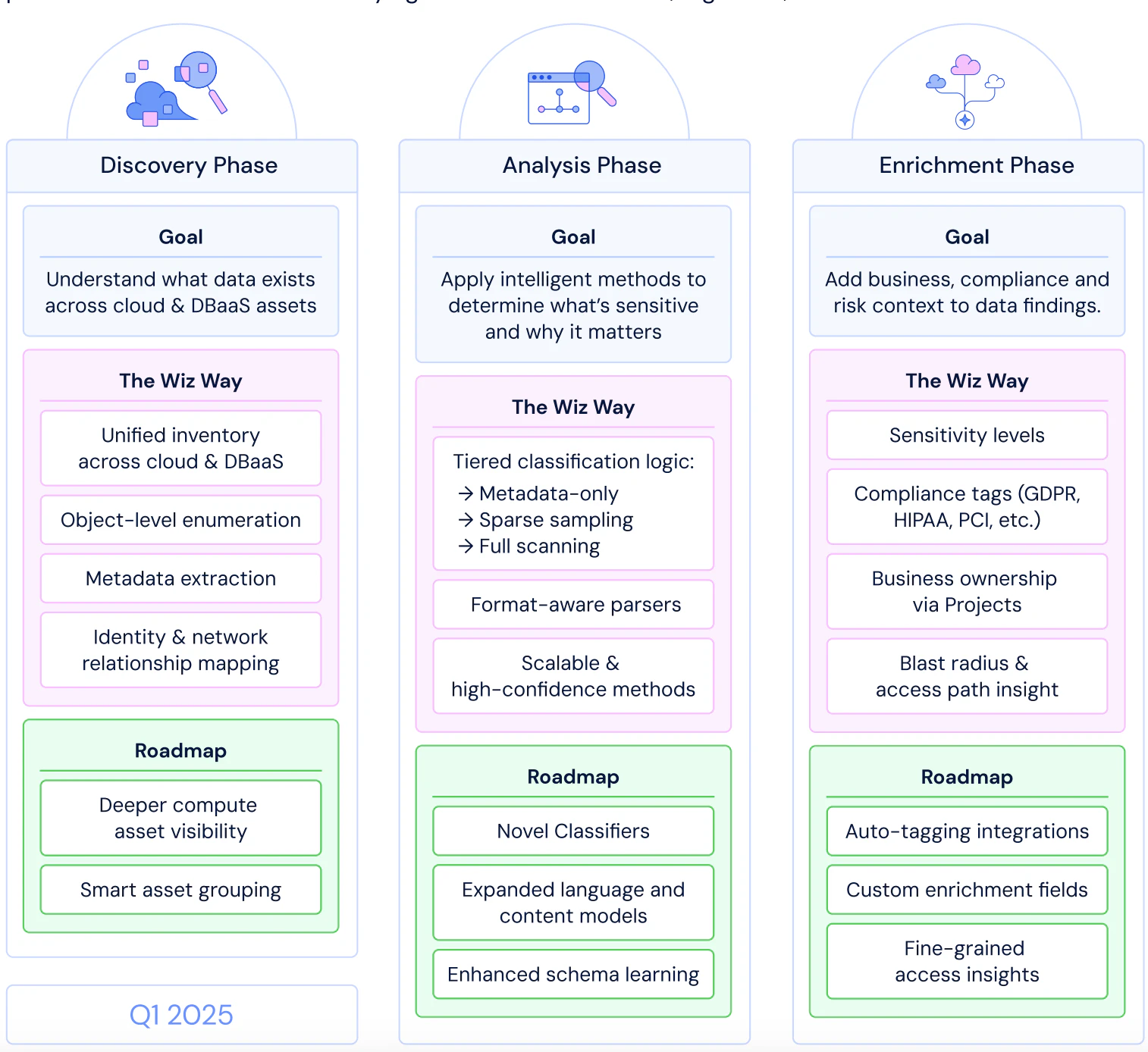
Comprehensive Cloud Data Inventory: Before classification can begin, you need complete visibility into where data lives across multi-cloud environments. This includes:
Multi-cloud coverage across major providers (AWS, Azure, GCP) and managed data platforms (data warehouses, databases)
Deep resource identification for all storage types including object storage, databases, file storage, data warehouses, containers, and ephemeral storage
Metadata collection that captures crucial elements like resource identifiers, creation timestamps, access patterns, region settings, IAM policies, network accessibility, encryption details, and more
Relationship mapping between identities, infrastructure, and data access to provide graph-based visibility of which users have access to sensitive data
This foundational mapping, continuously and automatically refreshed, ensures no blind spots across hybrid and multi-cloud environments.
Object Inventory & Pattern Analysis: Once you know where data lives, you need to understand what those assets contain. This involves:
Scalable object enumeration that adapts based on storage type, whether it's cloud-native snapshots, data warehouses, or unstructured data stores
Advanced metadata extraction and analysis to help fuel classification without inspecting full content
Content sampling and fingerprinting techniques that provide insight with minimal performance impact
Semantic clustering to transform individual objects into meaningful, contextual groups based on patterns and similarities
This intelligent organization of data makes it easier to surface sensitive patterns and understand business context, enabling more accurate classification while optimizing performance.
Tiered Classification Methodologies: Rather than using a one-size-fits-all approach, effective classification employs multiple strategies based on data type and context:
Metadata-Only Classification: For well-defined data types like operational logs or cloud-native telemetry, classification can be achieved without scanning content by analyzing naming conventions and patterns.
Sparse Sampling: For large, repetitive datasets like database backups, intelligent sampling classifies content quickly and confidently by validating similarity and incrementally expanding the sample until statistical confidence is reached.
Full Content Scanning: For heterogeneous, unstructured datastores where sensitive data may be embedded unpredictably, deep content inspection identifies embedded sensitive information.
This tiered approach optimizes for both accuracy and performance at scale, ensuring resources are allocated efficiently while maintaining classification accuracy.
Adaptive Classifiers: Tailoring 'Sensitive' to Your Environment: A key innovation in modern data classification is the ability to define what 'sensitive' means in your specific environment. Advanced classification systems can learn from the actual data in your environment to highlight patterns that matter to your business, even when they don't match generic templates. This complements standard classification libraries and custom rules to align with internal policies, contracts, and compliance frameworks.
Enrichment and Precision Controls: Once classification is complete, each finding should be enriched with layered context:
Sensitivity Levels: Tag data as public, internal, restricted, or highly confidential
Compliance Tags: Apply regulatory frameworks like GDPR, HIPAA, PCI DSS, CCPA
Business Context: Map data to ownership teams and business units
Risk Profile: Include potential impact, blast radius, and access paths
To ensure classification results are trustworthy and actionable, implement:
Confidence scoring to assign severity levels for prioritization
False positive reduction through ignore rules
Human-in-the-loop review for validation
Continuous feedback loops to improve classification over time
Policy-driven customization allows you to align classification with your organization's specific standards and risk appetite through custom rules, policy templates, and nomenclature customization.
Remediation: Discovering and classifying sensitive data is essential, but the real value comes from remediating issues to improve your security posture. An effective remediation framework should address these five key areas:
Reduce: Eliminate stale, duplicated, orphaned, or shadow data to mitigate risk and decrease cloud costs, effectively controlling data sprawl.
Restrict: Tighten IAM and network access controls by removing unused or excessive permissions, minimizing potential attack vectors.
Relabel: Ensure all data assets are accurately labeled in accordance with internal policies and industry standards to enhance data governance.
Relocate: Enforce data residency requirements by storing data only in authorized regions, addressing compliance needs and reducing legal risks.
Reconfigure: Implement appropriate encryption, retention policies, versioning controls, and other security configurations to protect data integrity.
Effective remediation strategies should combine manual investigation capabilities, automated remediation workflows, and customized automation to streamline the resolution process. By addressing these five areas systematically, organizations can transition from reactive security practices to proactive data protection.
Watch 12-min demo
See how Wiz discovers and classifies cloud data from code to runtime.

Benefits of classifying cloud data
While handling data is complex, classifying cloud data lets you use your data more securely. Not only that, but knowing exactly what and where your sensitive data is lets you save money and save time when it counts the most, during an audit or security incident. Here are some other benefits:
Enhanced data governance and compliance: Cloud data classification gives you clarity on data ownership and can improve your consistency in data handling. And with a clear audit trail, compliance reporting becomes much simpler.
Better risk management: Cloud data classification helps you prioritize your security efforts and understand where you can improve your program. Insight into data sensitivity helps with risk assessment and management, and it also helps you create business continuity plans that make sense based on actual risk.
Reduced attack surface: Cloud data classification lets you build uniformity and consistency into your security program. This minimizes unauthorized access and lets you target security controls to focus on your most sensitive data.
Faster incident response and breach containment: Finally, cloud data classification helps you deal with incidents in progress. You'll know exactly where your sensitive data resides, so you can focus containment efforts. You'll also have a better understanding of the impact and scope, which helps you contain the blast radius and prioritize remediation efforts.
What is Data Security in 2026?
Data security in 2026 demands a shift from perimeter defenses to continuous, context-aware protection across cloud, SaaS, and on-prem environments.
Mehr lesen
Data security and classification
Cloud data classification is an important step on the way to implementing granular access controls and encryption based on data sensitivity levels. This is the key to least privilege, zero trust, and many other best practices.
Understanding the level of confidentiality and risk for each data type lets you put safeguards in place to protect your most sensitive assets. More importantly, it's a key enabler for moving towards a data-centric security approach.
Traditional approaches
Traditional approaches to security tend to be perimeter-focused, building "castle walls" around your environment. Traffic is checked at the "gate." The drawback? Once a user is inside, it's easy to gain access to sensitive data.
Network-centric approaches build on perimeter-focused techniques by adding access limitations through micro-segmentation and other measures like behavioral traffic analysis. This approach can protect endpoints, networks, and applications. But without a deep awareness of where your crown jewel data is located, it can't ensure airtight coverage where you need it.
Data-centric security approach
A data-centric approach, on the other hand, works from the assumption that perimeters and networks can and might be breached. So it focuses on protecting the data itself.
Data-centric security is platform-agnostic and works well for today's distributed workforce. And it saves teams work because monitoring and alerting are prioritized based on classification levels. Data-centric tools let you know immediately when your most essential assets are at risk, so you can lock down your data and minimize exposure.
But data-centric security works from the assumption that you know exactly where your data is and what type of data it is. So you first need to find and classify all your data, an extremely daunting job.
Fortunately, today's data security posture management (DSPM) tools are up to the task.
The role of DSPM in data classification
Finding and classifying sensitive data across sprawling cloud environments is hard to do manually, and siloed tools miss how exposure connects to identity and configuration. DSPM closes that gap by adding data-centric security to your existing stack. Modern solutions do this in a few ways:
Complete visibility: Builds one inventory of data across cloud stores and managed databases.
Context-aware analysis: Flags sensitive data and ties it to the identities and configurations around it.
Prioritized remediation: Surfaces the exposures that matter and supports both manual and automated fixes.
Wiz DSPM
Wiz builds data classification into Wiz AI-APP, its AI Application Protection Platform and the natural evolution of CNAPP for cloud and AI applications. Classification is native to the platform, not a separate tool bolted on afterward. Wiz DSPM, part of Wiz Cloud, discovers and classifies data agentlessly, then places each finding on the Security Graph alongside vulnerabilities, network exposure, and identity permissions. That context is what turns a sensitivity label into a real answer about which data is exposed and who can reach it.
You shouldn't have to choose between data-centric security and the traditional network and application controls you already run. Both matter, so Wiz supports both in one place, with no agents to deploy and a single view to manage.
Because Wiz correlates data findings with identity, configuration, and vulnerability context on the Security Graph, your team sees which exposures actually matter, including sensitive data flowing into AI datasets and pipelines, so you can:
Uncover hidden vulnerabilities and apply consistent policies
Assess data risks alongside other cloud risks (to capture more threats)
Enhance compliance with regulatory requirements thanks to continuous assessments
Rolling this out is straightforward, and everything lives behind a single view, so nothing falls through the cracks. Request a demo to explore how Wiz can secure your cloud environment.
Protect your most critical cloud data
Learn why CISOs at the fastest companies choose Wiz to secure their cloud environments.
