

What is a GRC analyst?
A GRC analyst is a professional responsible for ensuring an organization meets legal, regulatory, and internal security requirements while managing IT and security risks. They act as a bridge between technical teams and business leadership. Their goal is to create a unified approach to risk management that protects the organization without slowing down operations.
The role is built on three pillars:
Governance: Establishing policies and procedures that dictate how the organization operates.
Risk: Identifying and mitigating threats to the organization's assets and data.
Compliance: Ensuring adherence to external regulations and internal standards.
GRC analysts work across security, IT, legal, and business teams. Unlike a pure compliance officer who might focus strictly on legal requirements, a GRC analyst focuses on the intersection of technology, risk, and regulations. They translate complex compliance requirements into actionable technical security controls.
As organizations move to the cloud, the GRC role has expanded. Analysts now address cloud-specific risks like misconfigurations, identity management, and data exposure. They ensure that Information Security GRC strategies adapt to modern infrastructure while maintaining regulatory adherence.
Guide to Data Governance and Compliance
This Guide to Data Governance and Compliance in the Cloud provides a straightforward, 7-step framework to help you strengthen your cloud governance approach with confidence.

GRC Analyst vs. Related Roles
| Role | Primary Focus | Key Stakeholders | Core Deliverables | Typical Metrics |
|---|---|---|---|---|
| GRC Analyst | Governance, risk, and compliance integration across IT and security | Security teams, IT operations, compliance officers, executive leadership | Risk registers, compliance reports, policy documentation, control testing results | Control effectiveness rate, audit findings count, policy exception rate, compliance drift MTTR |
| Compliance Analyst | Regulatory adherence and audit coordination | Legal, audit teams, regulators | Compliance gap assessments, audit evidence packages, regulatory filings | Audit pass rate, compliance coverage %, regulatory filing timeliness |
| IT Auditor | Independent assessment of IT controls and processes | Internal audit, external auditors, audit committee | Audit reports, control deficiency findings, remediation tracking | Audit findings by severity, remediation completion rate, audit cycle time |
| Risk Analyst | Enterprise risk identification and quantification | Risk management, business units, executive leadership | Risk assessments, risk heat maps, loss event analysis | Risk exposure by category, risk mitigation progress, incident frequency |
This table clarifies that GRC analysts uniquely bridge technical security implementation with compliance requirements, while related roles focus more narrowly on audit, legal compliance, or enterprise risk.
Core responsibilities of a GRC analyst
GRC roles are diverse, spanning policy development, risk assessment, compliance monitoring, and security awareness.
Governance and policy management
GRC analysts develop, implement, and maintain security policies and procedures that align with business objectives. They create governance frameworks that clearly define roles, responsibilities, and accountability for security across the organization. This ensures everyone knows who is responsible for what.
They establish standards for critical areas like data handling, access control, and incident response. A major part of their job is promoting ethical conduct and ensuring policies reflect the current threat landscape and regulatory changes. They work closely with stakeholders to ensure these policies are practical, enforceable, and integrated into daily operations.
Risk assessment and management
A GRC specialist identifies, evaluates, and prioritizes IT and security risks across the organization. This process involves identifying assets, determining vulnerabilities, evaluating threats, and calculating the potential impact on the business.
Risk analysis: They conduct analyses to understand the likelihood and severity of different threats.
Mitigation: They implement controls to mitigate identified risks and reduce the organization's attack surface.
Monitoring: They continuously monitor risk levels and adjust strategies as new threats emerge or infrastructure changes.
They document these findings in risk registers and communicate the risk status to leadership and stakeholders. This transparency helps the organization make informed decisions about security investments.
Compliance monitoring and audit management
GRC auditors and analysts ensure adherence to legal, industry, and internal standards such as GDPR, HIPAA, PCIDSS, SOC 2, and CMMC 2.0, with 51% of professionals citing regulatory navigation as a top challenge.
They track compliance status across multiple frameworks and identify gaps that need remediation. A key responsibility is maintaining evidence of security controls to demonstrate compliance to auditors and regulators. They also monitor regulatory changes and update compliance programs to keep the organization current.
Example Control Mapping:
When a CSPM tool identifies an unencrypted S3 bucket containing customer data, a GRC analyst maps this finding to multiple framework controls:
SOC 2: CC6.1 (Logical and Physical Access Controls) - encryption protects data from unauthorized access; CC6.7 (Transmission of Data) - encryption protects data in transit and at rest
ISO 27001: A.10.1.1 (Policy on the use of cryptographic controls) - encryption requirements; A.18.1.5 (Regulation of cryptographic controls) - compliance with encryption regulations
NIST SP 800-53: SC-28 (Protection of Information at Rest) - cryptographic protection for data at rest; SC-13 (Cryptographic Protection) - FIPS 140-2 validated encryption
PCI DSS: Requirement 3.4 (Render PAN unreadable) - encryption of cardholder data at rest
This multi-framework mapping enables the analyst to demonstrate how remediating one finding satisfies multiple compliance requirements, streamlining audit evidence and reducing redundant work.
In application GRC, they work with technical teams to translate compliance requirements into specific security configurations, addressing application-specific risks. This ensures that applications are built and maintained according to required standards.

Security awareness and training
GRC cybersecurity efforts rely heavily on people. Analysts develop and deliver security awareness programs to educate employees about threats and best practices. They create training materials tailored to different roles and risk levels within the organization.
They measure the effectiveness of security training through testing, simulations, and metrics. Their goal is to foster a security-conscious culture where employees understand their role in protecting the organization. They also communicate security policies and updates to ensure organization-wide understanding and compliance.
Essential skills and qualifications for GRC analysts
Successful GRC analysts combine technical knowledge, analytical capabilities, and communication skills to bridge security and business needs.
Technical knowledge and security frameworks
GRC security requires a strong understanding of risk assessment methodologies and cybersecurity principles. Analysts must be knowledgeable about security frameworks like the NIST Cybersecurity Framework (CSF), ISO 27001, CIS Controls, and COBIT.
They need familiarity with network fundamentals, cloud security concepts, common vulnerabilities, and security benchmarks like CIS Benchmarks. As organizations adopt cloud-native technologies, understanding identity and access management (IAM), container and Kubernetes security, and infrastructure as code (IaC) is increasingly important. They must understand how security controls translate into technical implementations across different environments.
Analytical and research capabilities
A GRC analyst needs critical thinking skills to identify security gaps and assess complex risk scenarios. Data analysis abilities are essential for interpreting security metrics, audit findings, and compliance reports.
Research: They must research emerging threats, new regulations, and evolving best practices.
Problem-solving: They need to develop practical solutions that balance security requirements with business operations.
Evaluation: They must analyze the effectiveness of existing controls and recommend improvements.
Communication and documentation skills
Excellent written communication is essential for creating policies, procedures, and audit reports. GRC roles often involve translating complex technical concepts into language accessible to non-technical stakeholders.
Presentation skills are important for reporting to leadership and conducting security awareness training. Documentation plays a critical role in maintaining audit trails and demonstrating compliance. GRC analysts must facilitate collaboration between security teams, IT operations, developers, and business units.
Certifications and education
Valuable certifications for a GRC specialist include Security+, CISA (Certified Information Systems Auditor), CISM (Certified Information Security Manager), and CCSK (Certificate of Cloud Security Knowledge). ISO 27001 Lead Implementer/Lead Auditor and CRISC (Certified in Risk and Information Systems Control) are also commonly valued for demonstrating governance and risk management expertise.
Educational backgrounds vary widely. Professionals often enter the field from IT audit, accounting, cybersecurity, or compliance-specific roles. Continuous learning is essential as threats evolve and new regulations emerge. Specialized certifications for frameworks like SOC 2 or regulations like HIPAA can also be highly valuable.
GRC analyst career path and salary expectations
GRC roles offer diverse career progression opportunities as organizations increasingly prioritize governance, risk, and compliance.
Entry-level: Positions often start with compliance coordination or junior security analyst roles.
Mid-level: Progression leads to senior GRC analyst or GRC specialist positions with broader responsibilities and strategic involvement.
Leadership: Advancement opportunities include GRC manager, compliance director, or chief risk officer.
Analysts can specialize in areas like cloud security compliance, privacy regulations, or industry-specific frameworks. There is a growing demand for GRC professionals as regulatory requirements expand and cloud adoption accelerates, with the GRC software market projected to reach $37.71 billion by 2030. Salary ranges vary based on experience, location, industry, and company size, with competitive compensation reflecting the critical nature of the role.
GRC analyst interview questions for 2026
A GRC analyst sits between technical security teams and business leadership. They turn complex cybersecurity issues into clear, risk-based recommendations that the business can act on.
Leggi di più
Modern challenges facing GRC analysts in cloud environments
Cloud adoption has fundamentally changed the GRC landscape, introducing new complexities that require evolved approaches to GRC cybersecurity:
Managing compliance across multi-cloud environments: Maintaining consistent security policies across AWS, Azure, GCP, and hybrid infrastructures is challenging. Each cloud provider has different native security controls and compliance tools. Traditional compliance approaches designed for static data centers do not scale to dynamic cloud environments and shared-responsibility models. Agentless, API-based inventory and configuration assessment make continuous evidence collection feasible across dynamic accounts, projects, and subscriptions without impacting workload performance. Information Security GRC now requires maintaining visibility into ephemeral resources like containers and serverless functions.
Addressing identity and access management complexity: Cloud environments create complex identity challenges with service accounts, API keys, and role-based access controls. Implementing least privilege is difficult when effective permissions span identities, roles, trust relationships, and services across accounts and subscriptions. Unifying entitlement analysis with resource posture and data context helps prioritize excessive permissions that create real attack paths, not just theoretical risk. Tracking who has access to what resources and identifying overly permissive permissions remains challenging, as does preventing exposed credentials and secrets in code repositories, configuration files, and CI/CD pipelines.
Keeping pace with rapid infrastructure changes: DevOps practices and continuous deployment create challenges for traditional change management processes. Auditing configurations is difficult when infrastructure is defined as code and deployed automatically. GRC roles now include adapting audit processes to review code repositories and CI/CD pipelines rather than just production systems. Detecting configuration drift is challenging when infrastructure is constantly evolving, making automated compliance monitoring necessary to keep pace with cloud deployments.
Securing AI and machine learning workloads: Governing AI applications and ensuring responsible AI practices is an emerging challenge in GRC cybersecurity. AI models, training data, and inference endpoints present unique risks including training data exposure through model inversion attacks, model poisoning via malicious training data, and prompt injection attacks on LLMs. GRC analysts apply emerging frameworks like NIST AI Risk Management Framework (AI RMF), ISO/IEC 42001, and EU AI Act requirements to inventory AI models, assess systems against risk categories (bias, privacy, security, safety), implement controls for model versioning and access control, document AI system purposes and data sources, and monitor AI behavior for drift and anomalies. A unified platform that inventories AI services, correlates data sensitivity with model access, and validates exposure paths helps align AI security posture with existing cloud governance frameworks.
How GRC analysts support business objectives and risk management
Effective GRC programs enable organizations to move faster by reducing uncertainty and building trust with customers and partners. GRC analysts help organizations make informed decisions about accepting, mitigating, or transferring risks.
They protect business reputation by preventing security incidents and demonstrating responsible data handling. Compliance certifications and security attestations enable market expansion and customer acquisition, particularly in regulated industries.
Balancing needs: Analysts balance security requirements with business needs, finding practical solutions that don't impede innovation.
Efficiency: They contribute to operational efficiency by streamlining audit processes and reducing redundant security controls.
Culture: They build a security culture where employees understand how their actions impact organizational risk.
By providing leadership with visibility into security posture and risk exposure, they support strategic planning.
Tools and technologies transforming the GRC analyst role
Modern GRC platforms and automation tools are evolving the analyst role from manual documentation to strategic risk management.
GRC platforms and integrated solutions
Dedicated GRC platforms consolidate policy management, risk assessments, and compliance tracking in unified systems. They offer features like automated evidence collection, workflow management, and centralized audit trails.
Integrated platforms connect compliance activities with underlying technical controls. Platforms that correlate misconfigurations, vulnerabilities, identities, and data exposure in a unified graph allow GRC teams to map issues to specific controls (e.g., mapping unencrypted S3 buckets to SOC 2 CC6.1). Modern GRC security tools provide dashboards and reporting capabilities that give leadership real-time visibility into compliance status. Platforms that integrate with cloud security tools are essential for automatically validating control effectiveness.
Cloud security posture management integration
Cloud security posture management tools provide continuous visibility into cloud configurations and compliance status, with 67% of organizations planning CSPM adoption within the next year.
Mapping findings: Solutions map findings to specific control requirements—for example, unencrypted S3 buckets to SOC 2 CC6.1 (logical access), ISO 27001 A.10.1 (cryptographic controls), and NIST SP 800-53 SC-28 (protection of information at rest)—streamlining evidence collection and audit reporting.
Reducing workload: Automated scanning reduces manual audit work and provides real-time compliance monitoring.
Context: Tools correlate security risks with business context to enable risk-based prioritization.
This integration is vital for Information Security GRC in modern environments.
Automation and continuous monitoring
Automation transforms GRC from periodic assessments to Continuous Controls Monitoring (CCM), where evidence is produced directly from cloud telemetry and APIs, enabling real-time validation of security controls without manual testing. CCM tied to real cloud telemetry reduces manual evidence requests and shortens audit cycles by providing auditors with continuously updated, timestamped proof of control effectiveness.
Continuous monitoring enables faster detection of compliance drift and security issues. Automation reduces manual workload, allowing GRC roles to focus on strategic activities. Automated workflows route remediation tasks to appropriate teams and track completion.
Customer Story: Bouygues Telecom used Wiz to automate vulnerability and incident management. They integrated with ServiceNow to automatically assign tickets to relevant teams and track remediation through a single pane of glass, significantly reducing the burden on their cloud team.
How Wiz streamlines governance, risk, and compliance operations
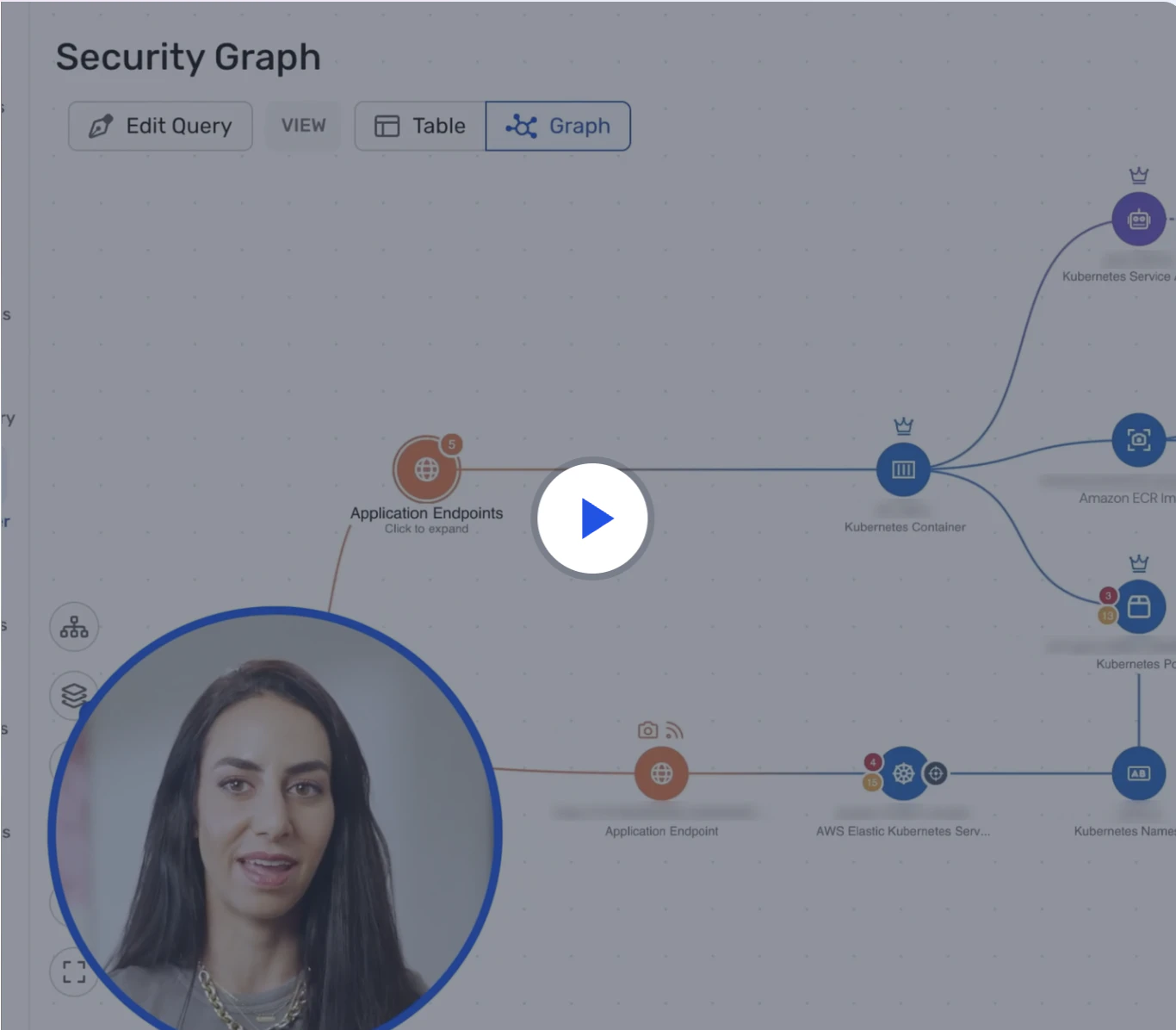
Wiz provides GRC analysts with comprehensive visibility into cloud security posture across multi-cloud environments through agentless scanning. The Wiz Security Graph correlates misconfigurations, vulnerabilities, and policy violations with business context. This enables risk-based prioritization that aligns with compliance objectives.
Wiz automates compliance monitoring across frameworks like SOC 2, ISO 27001, NIST SP 800-53/NIST CSF, and CIS Benchmarks, providing continuous validation of security controls. Built-in evidence collection and audit trails automatically document security controls and remediation activities, reducing manual audit preparation time.
Wiz integrates with existing GRC workflows through ServiceNow, JIRA, and other platforms. This enables automated assignment of compliance issues to appropriate teams. Real-time dashboards give GRC analysts immediate visibility into compliance drift and emerging risks across cloud infrastructure.
Request a demo to explore how Wiz can secure your cloud environment.
100+ Built-In Compliance Frameworks
See how Wiz eliminates the manual effort and complexity of achieving compliance in dynamic and multi-cloud environments.
