

What are code analysis tools, and why do they matter?
Code analysis tools scan your code, dependencies, and configurations to surface security vulnerabilities, quality issues, and compliance gaps before they reach production. They are automated systems that examine code instead of relying on manual review alone. Security-focused analysis covers SAST, SCA, IaC, secrets, and DAST, distinct from general code quality or static linting.
AI copilots now generate functions, wire up infrastructure, and open pull requests in minutes. Wiz's State of AI in the Cloud 2026 found 80% of organizations use AI IDE extensions and at least 71% use an AI coding assistant. Insecure patterns spread through a codebase before anyone reviews them.
Pointing a traditional scanner at that volume of code finds everything and prioritizes nothing. A vulnerable dependency is one alert among a thousand, until you connect it to deployment reality: the workload is internet-exposed and holds credentials to a database with customer records. Now it's the first thing your team fixes this morning.
That's why context-aware analysis has become the practical baseline. When a tool ties a code-level issue to where it runs, who owns it, and what it can reach, teams spend their time on the handful of issues that represent real, reachable risk.
Secure Coding Best Practices [Cheat Sheet]
Want to build security into your code from the start? This cheat sheet provides quick reference patterns for preventing common vulnerabilities.

Top 10 code analysis platforms compared
The platforms below cover the well-known options security teams actually shortlist, from unified ASPM suites to focused SAST engines. Solutions are listed in no particular order.
Wiz Code
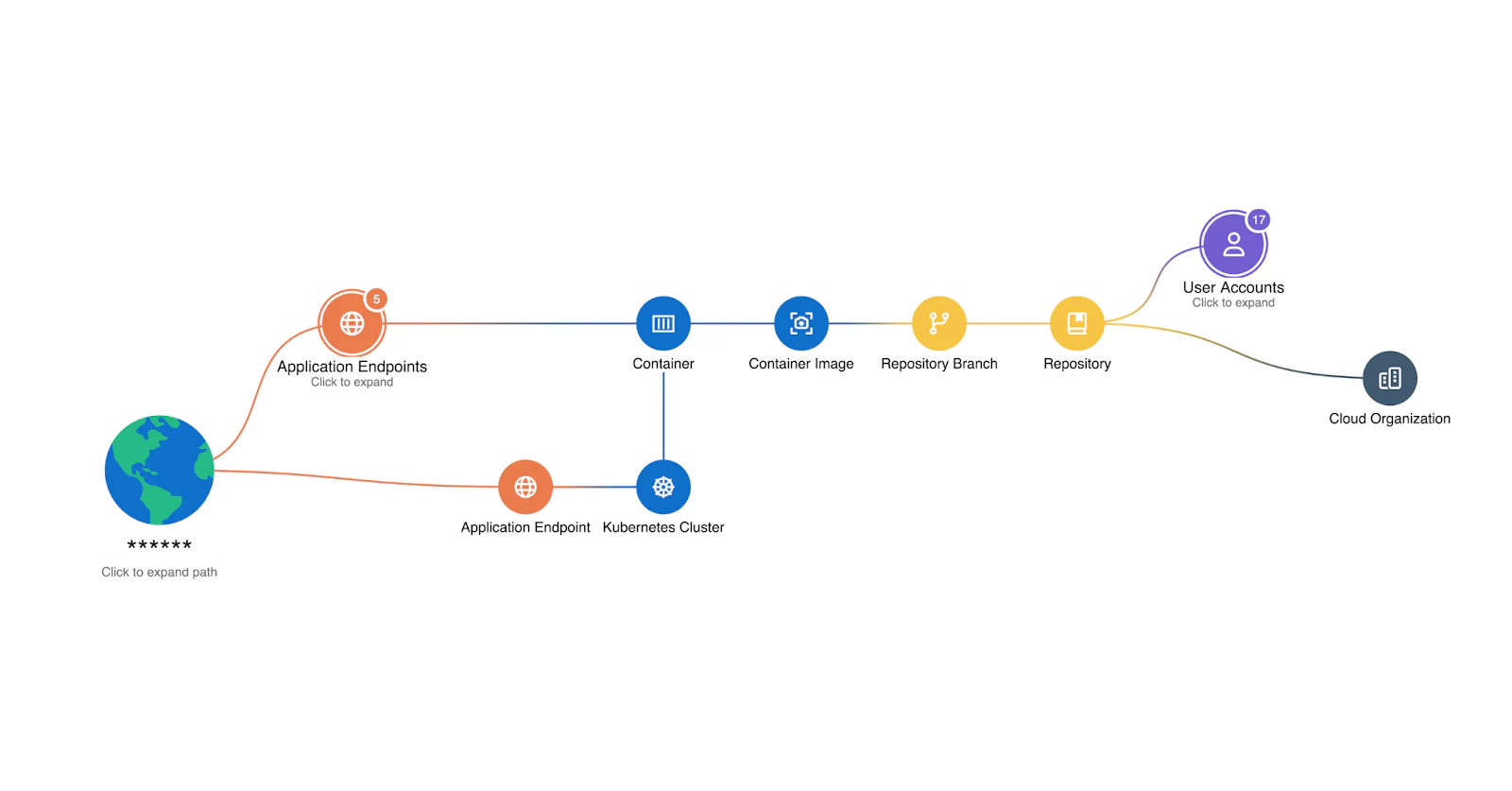
Wiz Code is an AI-powered Application Security Posture Management (ASPM) solution that provides unified visibility across the entire SDLC. It is built on the Wiz Security Graph, which ties code-level issues to runtime context, attack paths, and clear ownership. Wiz Code provides native code scanning with Software Composition Analysis (SCA), Static Application Security Testing (SAST), Secrets and Sensitive Data Scanning, Infrastructure-as-Code Scanning, and more.
Pros
Wiz Security Graph helps users detect threat paths and mitigate them. Wiz Code aggregates findings from various scanning tools into a single view, strengthening application security posture management (ASPM) and cloud native application protection (CNAPP).
The platform's core strength is its ability to link code security issues to their runtime context, automatically assigning ownership to shorten the remediation process. It also correlates code security with data security, preventing unmanaged sensitive data from getting into repositories and deployed applications.
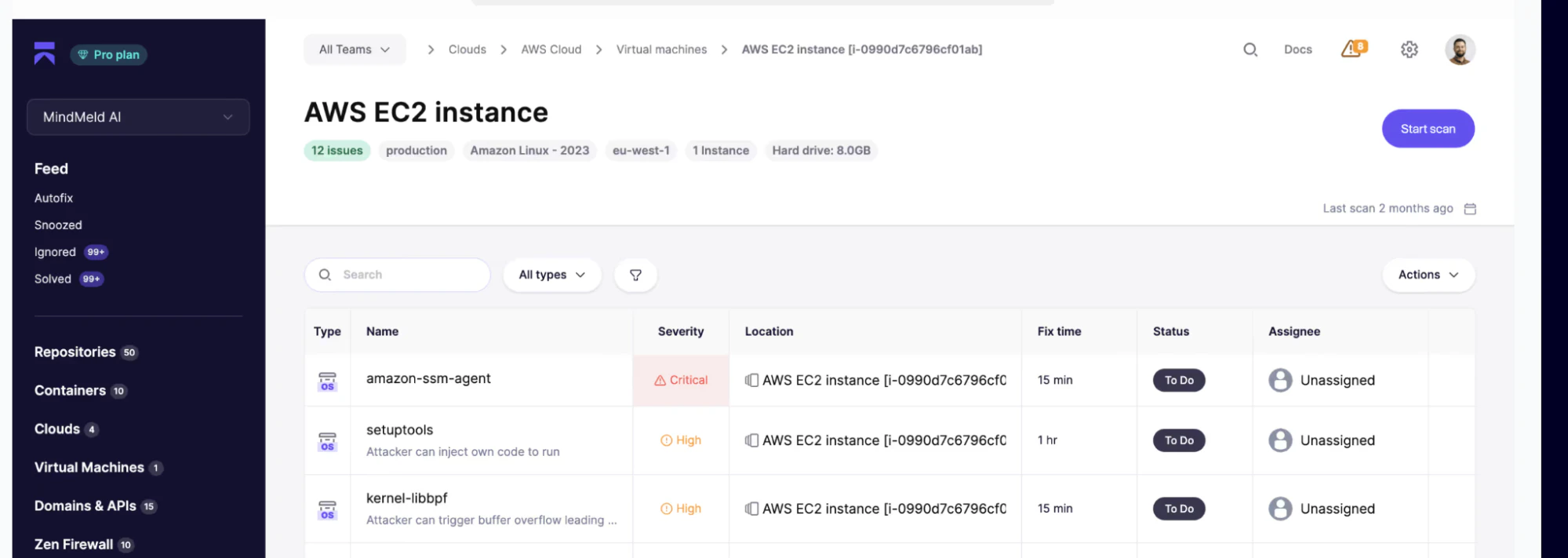
Wiz Code delivers AI-powered fix suggestions natively, not as an add-on. Its AI agents suggest contextual, secure code fixes directly in pull requests. That workflow helps teams drive toward “Zero Critical” risks across code and CI/CD. One Wiz customer, Cushman & Wakefield, addresses significant code issues within an hour of new systems going live. Wiz also offers continuous runtime protection monitoring (with the Wiz Sensor) and comprehensive compliance checks against over 100 compliance frameworks like OWASP Top 10.
Snyk
Snyk is a popular AI-native AppSec platform emphasizing the use of AI for remediation and risk analysis.
Pros
Users get comprehensive scanning for SAST, SCA, IaC, and containers, giving developers real-time feedback within their workflows.
Snyk’s AI-native risk prioritization, powered by its DeepCode AI engine, helps teams focus on the most critical vulnerabilities. Its AI assistants embed security checks into developer workflows to reduce remediation time.
Checkmarx
Checkmarx is a popular application security tool with comprehensive scanning capabilities.
Pros
This tool excels in API security, with both API discovery and API issue prioritization by correlating findings across scanning tools. Users also benefit from SCA with features like malicious package protection, transitive dependency scanning, and license risk management.
The platform supports dozens of languages and frameworks and integrates well with DevSecOps workflows through its AI DevOps agent and unified risk management. The AI-powered AppSec Insights agent offers up visibility across various metrics, e.g., risk trends, AppSec posture, and SLA goals.
Aikido Security
Aikido Security is an all-in-one platform offering comprehensive scanning coverage, including SAST, SCA, DAST, and container security.
Pros
Its cloud posture features include workload risk detection, cloud misconfiguration checks, and permission issue detection. The solution offers runtime protections against common attacks and bots, plus issue deduplication to speed remediation.
Aikido Security has its own version of a security graph for reachability analysis, allowing it to identify issues that could lead to an exploitable attack path, helping teams focus on vulnerabilities that pose a real threat. One-click AI fixes and IDE integration support a solid developer experience.
Mend
Mend has positioned itself as an AI-native AppSec platform offering LLM agentic workflows, AI-powered remediation, AI model risk analysis, and AI component risk simulation.
Pros
Mend features the traditional SAST, SCA, and DAST tools, while its impressively low MTTR is due to an emphasis on advanced AI remediation capabilities.
Other key strengths include unified visibility across code, dependency update automation (Mend Renovate), and container security to help eliminate silos.
Mend's advanced risk prioritization uses a full call graph to identify only the most exploitable issues, effectively reducing noise.
Watch 5-minute demo
Watch the demo to learn how Wiz Code scans infrastructure as code, container images, and CI/CD pipelines to catch risks early—before they reach the cloud.

DeepSource
DeepSource is a unified DevSecOps platform with a strong developer experience and integrates directly with major CI/CD tools, plus a VS Code extension.
Pros
Its key strengths include a focus on low false positives, supported by reachability analysis and broad scanning coverage, including IaC files and secrets.
Users also gain from the platform’s AI-based Autofix, customizable security gates based on CVSS and EPSS, and comprehensive code quality checks. Another core strength of DeepSource is its support for customized code security policies and rules; this helps teams consistently enforce their specific coding standards and security requirements.
SonarQube
Known for a great developer experience, SonarQube is a mature platform used by more than 7 million developers across over 400,000 organizations.
Pros
Featuring integrations into major CI/CD pipelines and IDEs, users enjoy strong scanning coverage, including SAST, IaC analysis, and secrets detection, and support for over 35 languages.
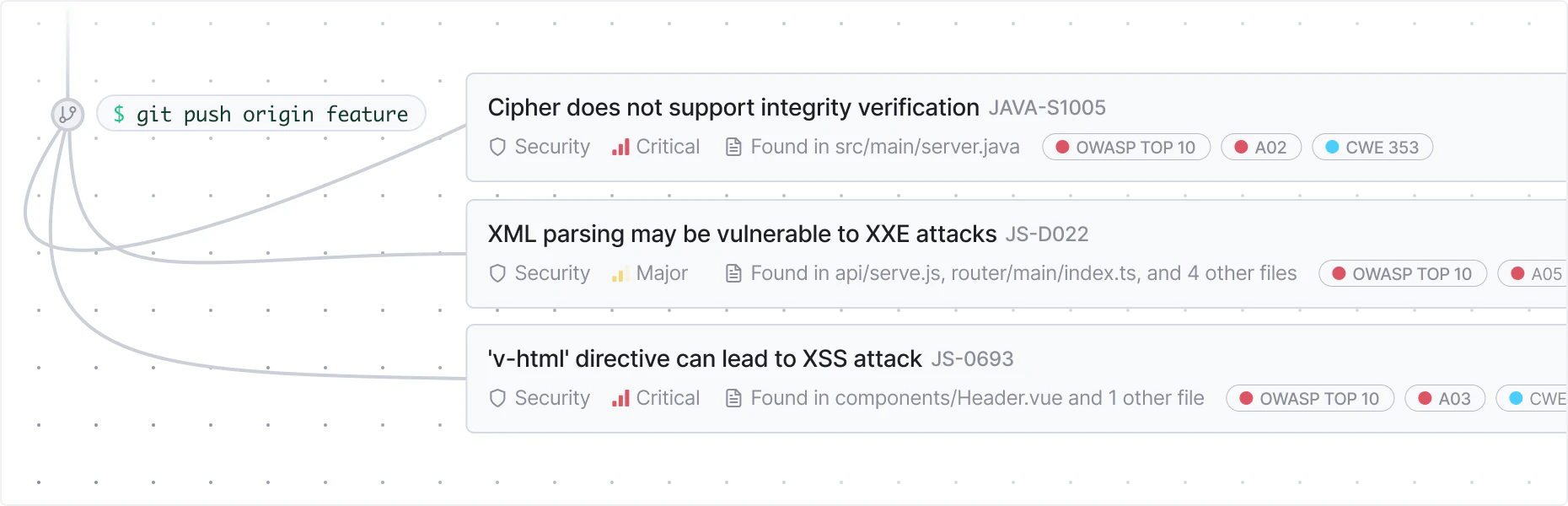
The platform's AI tools, such as AI Code Assistance and CodeFix, aid in securing AI-generated code and automating fixes. SonarQube also excels in customization, supporting custom code rules and providing detailed compliance reporting for standards like OWASP and NIST with policy-as-code capabilities.
Semgrep
Semgrep is a modern, SAST-first tool that emphasizes a strong developer experience and minimal false positives.
Pros
Semgrep’s engine is open source, while the managed platform adds commercial features, making it suitable for teams ramping up AppSec and DevSecOps.
Its core strengths lie in its data-flow analysis, which uses advanced taint tracking to reduce noise and identify truly exploitable issues. Meanwhile, its SCA Supply Chain feature uses reachability analysis to focus remediation on the small percentage of vulnerable dependencies that are actually reachable in the code.
The Semgrep platform is highly customizable, allowing teams to write their custom security rules, and offers excellent workflow integration with CI/CD (Semgrep GitHub Action), IDEs, and issue trackers.
Veracode
Veracode is a mature AppSec platform with decades of experience, featuring a comprehensive suite of tools including SAST, DAST, and SCA.
Pros
Its strengths include full SDLC coverage, a vast vulnerability database, and a unique package firewall that allows for highly customized security policies.
Veracode provides a strong developer experience, including a feature-rich CLI and a paid AI-driven remediation tool called Veracode Fix.
The solution’s discovery scans feature helps analyze the full web application perimeter, while its capabilities for root cause analysis and tracking risks to their origin shortening the remediation process.
コードセキュリティ (Code Security)
コードセキュリティは、セキュアコーディングとも呼ばれ、アプリケーションやシステム用に記述されたコードが脆弱性や脅威から保護されるように設計されたプラクティス、方法論、およびツールを指します。
もっと読む

GitHub Advanced Security (GHAS)
GitHub Advanced Security (GHAS) is the integrated security suite designed for organizations operating within the GitHub ecosystem.
Pros
GHAS’s strength lies in providing security capabilities directly within the developer workflow, offering both SAST via CodeQL and supply chain defense through Dependency Review and Dependabot. GHAS natively includes secrets scanning with push protection to detect and prevent credentials from reaching repositories, mitigating instant lateral movement risks. It also uses AI with features like Copilot Autofix to automatically generate remediation suggestions for code scanning alerts, speeding up fix cycles.
What are the most important capabilities of a code security platform?
Four capabilities separate a strong code security platform from a noisy one: scanning coverage, developer experience, risk prioritization and cloud context, and compliance reporting. The sections below break down what to look for in each.
Comprehensive scanning coverage
Look for platforms that integrate code vulnerability scanning tools that support multiple analysis types:
Static application security testing (SAST): A "white-box" method that analyzes source code for vulnerabilities before it's executed, shifting security left in the SDLC.
Dynamic application security testing (DAST): A "black-box" method that tests the running application by simulating attacks. This helps emulate real-world scenarios.
Software composition analysis (SCA): This evaluates third-party components for vulnerabilities and licensing issues.
Secrets scanning: Unlike traditional SAST, secrets scanning must cover the entire codebase, including the history, for hardcoded credentials and keys to prevent initial access and lateral movement risks. Choose tools that go beyond simple pattern matching by providing secrets validation, such as checking if exposed API keys are active and usable (exploitability), to verify immediate risks. Wiz's State of Code Security 2025 found 61% of organizations had secrets exposed in public repositories.
Infrastructure as Code (IaC) scanning: This evaluates IaC and cloud resource configuration files for misconfigurations or risks pre-deployment.
Developer experience and workflow integration
A developer-first platform should:
Prioritize tools that support your technology stack, e.g., programming languages, development frameworks, container images, and cloud platforms.
Enable seamless integrations into dev workflows, including IDEs, CI/CD pipelines, and VCS, to provide real-time feedback.
Offer built-in, AI-powered fix suggestions and automated remediation. Modern platforms should use Generative AI to deliver contextual, secure code fixes directly into developer environments (IDEs and PRs).
Code-to-cloud traceability in dev workflows: Prioritize tools that identify owners automatically and trace cloud issues back to the originating code and pipeline for faster fixes.
Risk prioritization and cloud context
Contextual analysis helps you focus on the most exploitable risks while reducing false positives. In practice, that means a vulnerability tied to an internet-exposed workload with access to sensitive data rises above one buried in code that never runs.
How can you identify platforms that tick this box? Look for tools that:
Avoid silos, instead offering a unified picture with easy-to-understand insights by combining findings from different tools and processes.
Map potential attack paths from code vulnerabilities to sensitive data or infrastructure.
Correlate source code with the application context and service deployment, e.g., cloud configuration, identity permission, resource ownership, network exposure, and data sensitivity.
Compliance capabilities
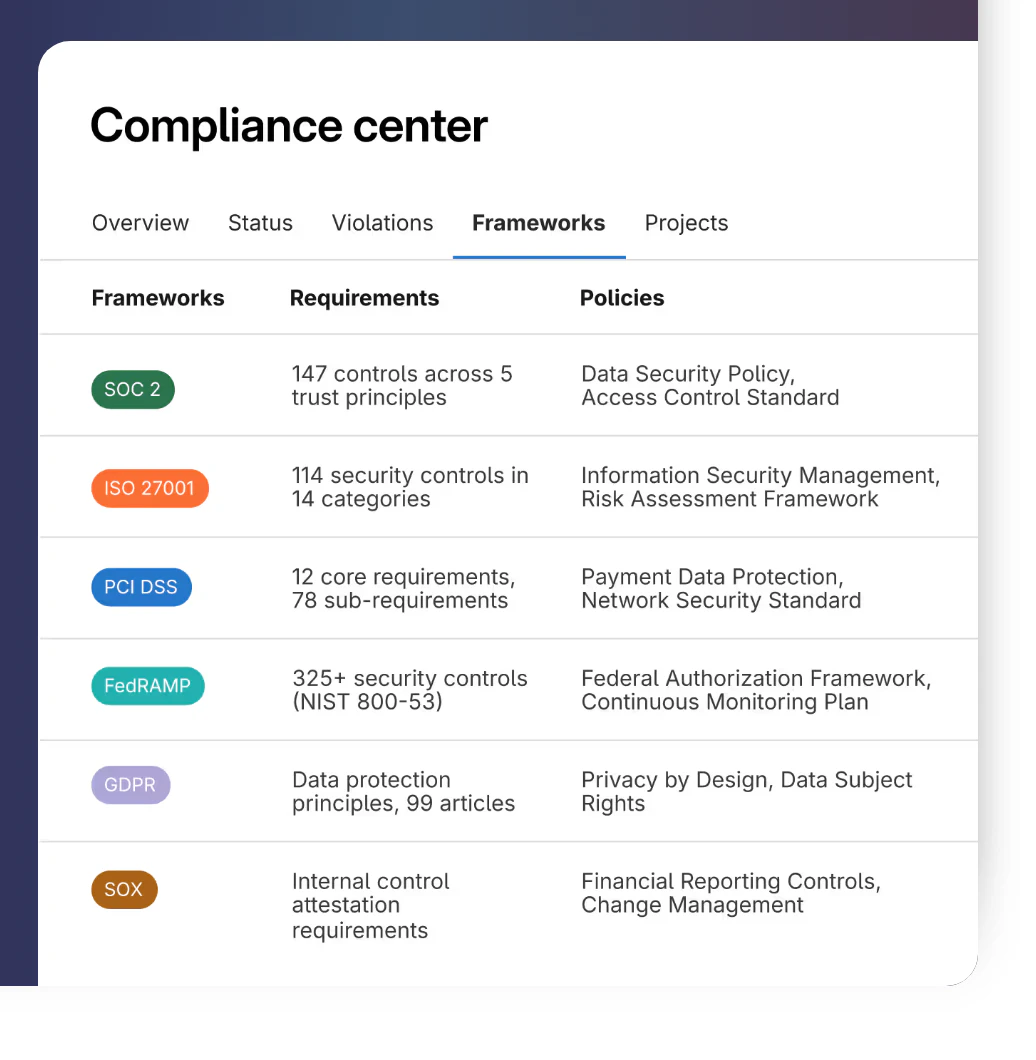
Strong compliance support covers the frameworks your auditors care about: SOC 2, ISO 27001, PCI DSS, HIPAA, and NIST’s SSDF.
Policy-as-code turns those requirements into rules the platform enforces automatically, so a misconfiguration or an exposed secret fails a check in the pipeline instead of surfacing during an audit months later. Look for the ability to write custom policies, version them alongside your code, and apply them consistently across every repository and environment.
For the audit itself, the platform should produce evidence you can hand to an assessor without assembling it by hand: a timestamped record of which policies ran, what they flagged, who resolved each finding, and when. Reporting that maps cleanly to specific framework controls is what lets you answer an assessor's request in minutes instead of days.
How to choose the right code analysis tool
The right tool depends less on a feature checklist and more on how your team builds. Start with your stack and workflow, then weigh coverage, developer experience, cloud context, and compliance against what actually slows you down today.
Fast-moving product teams shipping across many languages should weight breadth of coverage and developer experience most heavily: a scanner that speaks every language in your repos and lands feedback inside the IDE and pull request cuts the noise that trains developers to ignore alerts. Regulated teams should prioritize compliance reporting and policy-as-code, since audit trails and framework coverage matter more once auditors are involved.
If you're consolidating point tools, weigh whether the platform connects findings across code, cloud, and runtime, rather than handing you another silo to correlate by hand. That's an architectural decision, not a feature comparison: most scanners ask "is this code vulnerable?" A code-to-cloud approach, like Wiz's Security Graph, asks "is this vulnerable code deployed, exposed, and reachable?"
Match the architecture to your problem. If manual correlation is your bottleneck, weight cloud context heavily. If it isn't, coverage and developer experience may matter more.
Building code security on code-to-cloud context
No single tool covers every need. Most code analysis tools do one job well, but few connect application security posture management (ASPM) and cloud security posture management (CSPM) with the developer experience in one place. That gap is where teams lose time correlating findings by hand.
Some tools focus on narrower problems: Aikido and Snyk lean on reachability analysis, Checkmarx on risk prioritization. Wiz Code and Aikido both extend into cloud security, but few platforms connect ASPM and CSPM with developer experience in one place.
Wiz Code takes a different approach by linking code vulnerabilities to real cloud context. Using the Security Graph, it connects issues in code to cloud configurations, resource ownership, and business impact, so teams can understand and fix what matters fast. This is where code-to-cloud context and graph-powered prioritization show their value, and it matters even more as AI generates code faster than any team can review it by hand.
To see how these approaches come together in real workflows, Wiz Code offers a useful illustration. Get a demo to explore how Wiz can secure your cloud environment.
Get a personalized demo
Learn what makes Wiz the platform to enable your cloud security operation
