

What is cloud vulnerability management?
Cloud vulnerability management (VM) is the continuous process of identifying, classifying, prioritizing, and remediating security vulnerabilities across cloud environments. CISA defines a security vulnerability as “any attribute of hardware, software, process, or procedure that could enable or facilitate the defeat of a security control.” This systematic approach ensures you can protect your cloud infrastructure from evolving threats while maintaining operational efficiency.
The shift to cloud-first operations makes this discipline essential. Cloud vulnerability management is now a requirement for comprehensive IT protection as cloud environments have become the standard for modern enterprises.
These cloud environments inherently feature more advanced VM capabilities to tackle emerging threats, making them well suited for continuous, automated security programs. Frameworks such as the NIST CSF 2.0 provide structured guidance for building these programs at scale.
See how Wiz identifies "Toxic Risk" in 12 minutes.
Watch an on-demand tour of our vulnerability management dashboard. We’ll show you how to move past basic CVE scanning and start visualizing how vulnerabilities, identities, and secrets combine to create real-world attack paths.

How cloud VM differs from traditional vulnerability management
Cloud vulnerability management differs from traditional VM in four fundamental ways:
The pace of infrastructure change
The scale of asset inventory
The ephemerality of workloads
The depth of integration required with DevOps workflows
Traditional tools were designed for static, agent-accessible environments and cannot address these characteristics without significant workarounds.
| Dimension | Traditional VM | Cloud VM |
|---|---|---|
| Infrastructure pace | Static, change-controlled | Continuous, API-driven provisioning |
| Asset lifespan | Months to years | Minutes to hours (ephemeral) |
| Scanning method | Agent-based, scheduled | Agentless, continuous |
| Coverage scope | Servers and endpoints | VMs, containers, serverless, IaC |
| DevOps integration | Minimal, post-deployment | Embedded in CI/CD pipelines |
| Context for prioritization | CVSS score alone | CVSS plus exposure, identity, and data sensitivity |
Context is one of the most important factors in cloud vulnerability management. Cloud-based tools weave in identities, secrets, and exposures, as well as internal and publicly available exploit data and threat intelligence, to accurately and continuously identify and prioritize vulnerabilities.
With Wiz Research finding that 61% of organizations have secrets exposed in public repositories, credential scanning throughout the development lifecycle is essential.
The shared responsibility model
Cloud security operates under a shared responsibility model that divides obligations between the cloud provider and the customer. Understanding this division and its responsibility tiers is foundational to scoping a VM program correctly.
Provider-managed: The cloud provider secures the underlying infrastructure, including physical data centers, hypervisors, and network fabric.
Customer-managed: The customer is responsible for securing workloads, data, identity configurations, and application code deployed on the provider's infrastructure.
Shared: Certain layers, such as operating system patching in managed services or network controls, require coordinated effort from both parties depending on the service model (IaaS, PaaS, SaaS).
This division determines where vulnerability management tooling must operate. Because customers own the security of everything they deploy, scanning and prioritization tools must cover workloads, containers, serverless functions, and IaC configurations that sit squarely in the customer's domain.
The 6 most common cloud vulnerabilities
Cloud environments are exposed to a distinct set of vulnerability patterns that differ from those found in traditional on-premises infrastructure. The six categories below represent the most common sources of exploitable risk in cloud security deployments and form the foundation for any effective VM program.
1. API vulnerabilities
APIs enable different cloud services to integrate and interact seamlessly, making them critical infrastructure components. Enterprises use multiple kinds of API architectures for their needs, including REST, SOAP, RPC, and GraphQL. However, this connectivity creates significant security exposure.
API vulnerabilities can compromise entire cloud environments through multiple attack vectors. According to OWASP, the most dangerous threats include broken object-level authorization (BOLA) and broken authentication. Cybercriminals frequently exploit these weaknesses to launch lateral attacks across connected systems.
2. Unencrypted data
There are considerable benefits to storing data in the cloud, including cost savings, accessibility, and scalability. However, data needs to be encrypted to remain safe. Threat actors struggle to abuse or make use of encrypted data, even if they manage to breach an enterprise's cloud defenses.
Unencrypted data results in more destructive data breaches, many of which can be hard to recover from. According to Wiz's 2025 Cloud Data Security Snapshot, 54% of cloud environments have exposed VMs and serverless functions containing sensitive data.
3. Misconfigurations
Security misconfigurations are mistakes in the security settings of cloud technologies like VMs, containers, container registries, and virtual appliances. Cloud misconfigurations can include exposed data, overprivileged identities, and weak password protocols or credential hygiene.
There are a lot of reasons for cloud misconfigurations, many of them stemming from the tendency to prioritize developmental agility over safety.
4. Shadow IT
Shadow IT refers to any cloud resource that is commissioned without the official authorization of your IT department. Shadow IT is an increasingly common and inevitable occurrence in modern organizations.
Various personnel and teams within your organization may choose to self-optimize performance and productivity by commissioning third-party resources. This choice to sidestep official (and potentially complex) commissioning processes can lead to hidden vulnerabilities and a lack of visibility across cloud environments.
5. Poor visibility
Unlike previous eras when only select IT personnel could alter your organization's IT infrastructure, a broad range of professionals can now commission cloud resources. Modern cloud environments are constantly in flux, making visibility challenging. This can create blind spots and allow cloud vulnerabilities to fester unnoticed.
For example, the insurance company Trygg-Hansa was fined $3 million by the Swedish Authority for Privacy Protection when it was revealed that the data of roughly 650,000 customers was exposed for almost two and a half years. Poor visibility is often the cause of cloud vulnerabilities and data exposure going unnoticed for long periods.
6. Suboptimal IAM
The number of human and machine identities interacting with an enterprise cloud environment is immense. Identity access management (IAM) vulnerabilities are essentially mistakes in the privileges bestowed on these identities, and these can be dangerous attack vectors.
Overprivileged identities, both human and machine, are a major cloud security vulnerability because they enable higher degrees of access and activity for account hijackers.
Challenges in cloud vulnerability management
Even with the right tools and processes in place, cloud vulnerability management introduces operational challenges that traditional security programs weren’t designed to handle. Understanding these challenges is the first step toward building a program that accounts for them.
Alert fatigue from volume: Cloud environments generate thousands of vulnerability findings per scan cycle. Without contextual filtering, security teams spend more time triaging false positives than remediating real threats.
Ephemeral asset coverage: Containers, serverless functions, and auto-scaling instances can spin up and terminate in minutes. Traditional agent-based scanners can’t install and report fast enough to cover these short-lived workloads.
Multi-cloud tool fragmentation: Organizations running workloads across AWS, Azure, and GCP often rely on provider-native security tools that don’t share data or provide a unified risk view. This fragmentation creates blind spots at the boundaries between clouds. A cloud native application protection approach helps consolidate these disparate signals.
Velocity mismatch between DevOps and security: Development teams ship code multiple times per day, while security review cycles often operate on weekly or monthly cadences. This gap means vulnerabilities can reach production before they are ever assessed.
Shared responsibility confusion: Teams frequently misunderstand which security obligations belong to the cloud provider and which belong to the customer. This confusion leads to gaps where neither party is actively scanning or remediating.
Best practices for prioritizing cloud vulnerabilities
Risk-based prioritization is the practice of ranking vulnerabilities by the actual threat they pose to your specific environment, using contextual factors like exploitability, asset exposure, and business impact rather than severity scores alone. The practices below describe how to apply this approach across scanning, triage, and remediation workflows.
Cloud-specific context determines vulnerability criticality. A medium-severity vulnerability in an internet-exposed container with admin privileges poses far greater risk than a critical vulnerability in an isolated development environment.
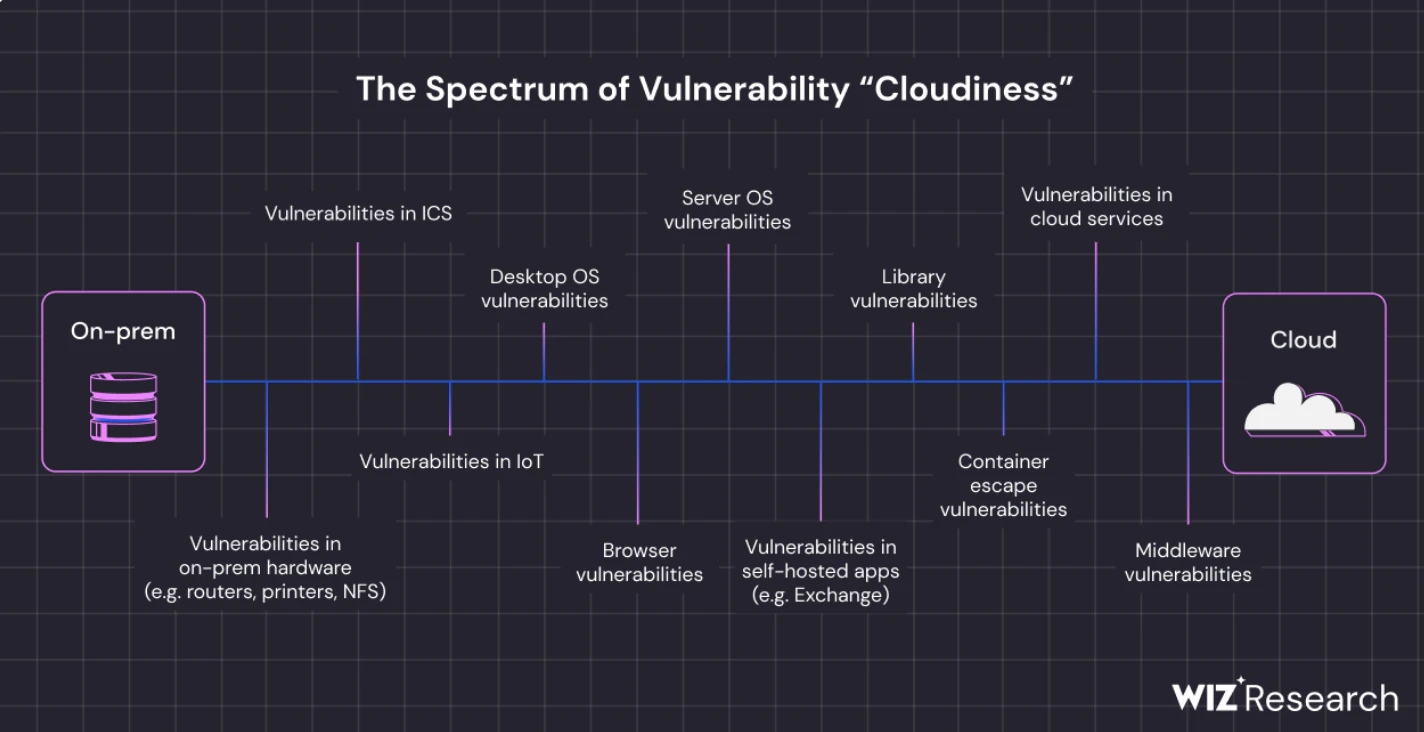
Understand the cloud value of technologies
Assess each technology's potential impact on cloud operations before investing remediation resources. Focus prioritization efforts on systems that directly affect cloud security posture and business operations.
High-impact cloud technologies include servers, containers, CDNs, serverless functions, Kubernetes clusters, and virtual machines. Lower-impact technologies like printers, routers, and isolated on-premises infrastructure typically don't create cloud exposure paths.
View your cloud vulnerabilities from a threat actor's perspective
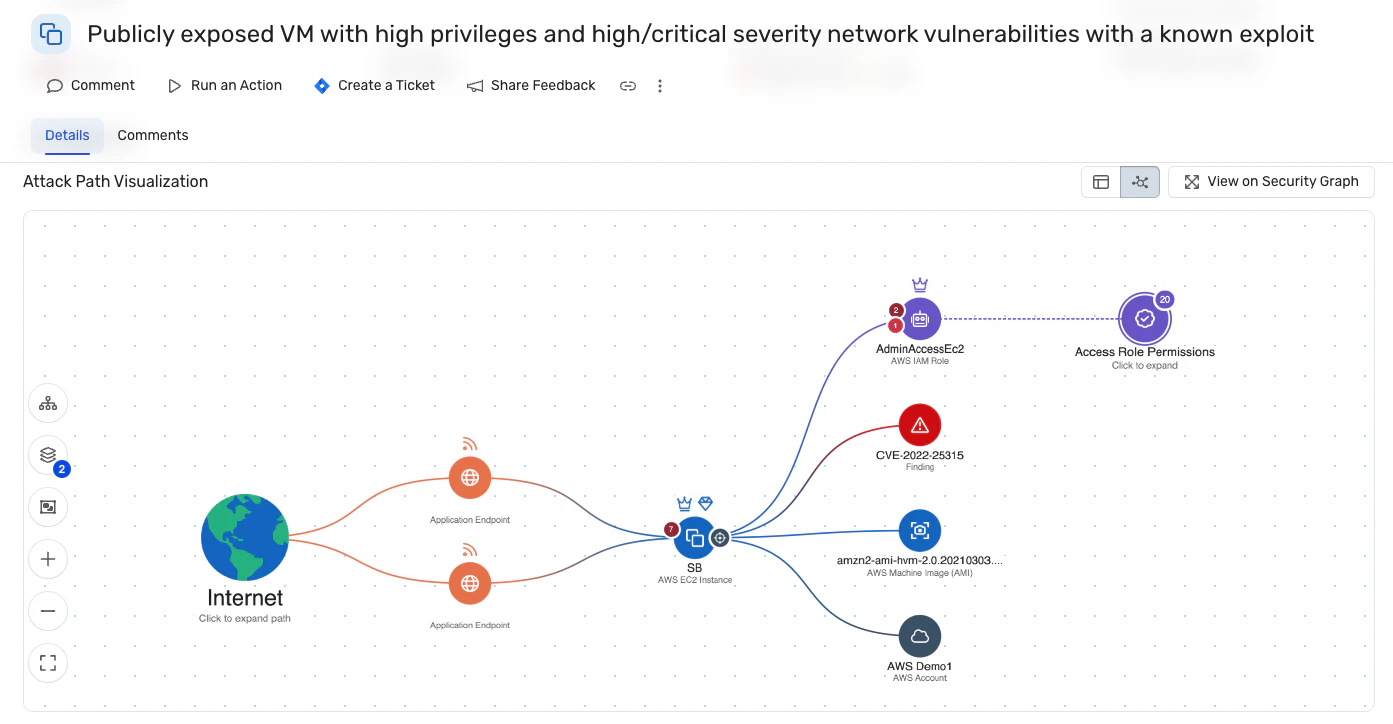
Think like an attacker to prioritize like a defender. Understanding threat actor motivations helps identify which vulnerabilities pose the greatest risk to your environment and business operations.
Common attacker objectives include data exfiltration, credential theft, cryptomining, supply chain compromise, and lateral movement. Map your vulnerabilities against these goals to focus on exposures that enable high-impact attacks.
Certain vulnerabilities may be exploited to facilitate direct attacks, and others may be exploited as a first step in a more complex attack. Viewing cloud vulnerabilities from the point of view of cybercriminals can help you understand the attack path, context, and how they may attempt to exploit a potential cloud vulnerability.
The MITRE ATT&CK Cloud Matrix provides a structured framework for mapping these adversary techniques.
Utilize CVSS metrics and threat intelligence
CVSS scores provide standardized vulnerability severity ratings from 0 (none) to 10.0 (critical), offering a consistent baseline for initial risk assessment.
However, CVSS alone doesn't reflect business-specific risk. A critical-rated vulnerability in an isolated system may pose less threat than a medium-rated vulnerability in internet-exposed infrastructure. Use CVSS as a starting point, then layer in business context, threat intelligence from sources like CISA KEV, and environmental factors for accurate prioritization.
Embrace multiple layers of prioritization
Layered prioritization delivers a more accurate risk assessment than any single factor alone. Modern cloud environments require multiple risk filters working together to identify true business impact.
Effective prioritization combines multiple risk factors: vulnerability severity, asset criticality, network exposure, data sensitivity, and threat intelligence. The more comprehensive your filtering approach, the better your organization can focus resources on vulnerabilities that actually threaten business operations.
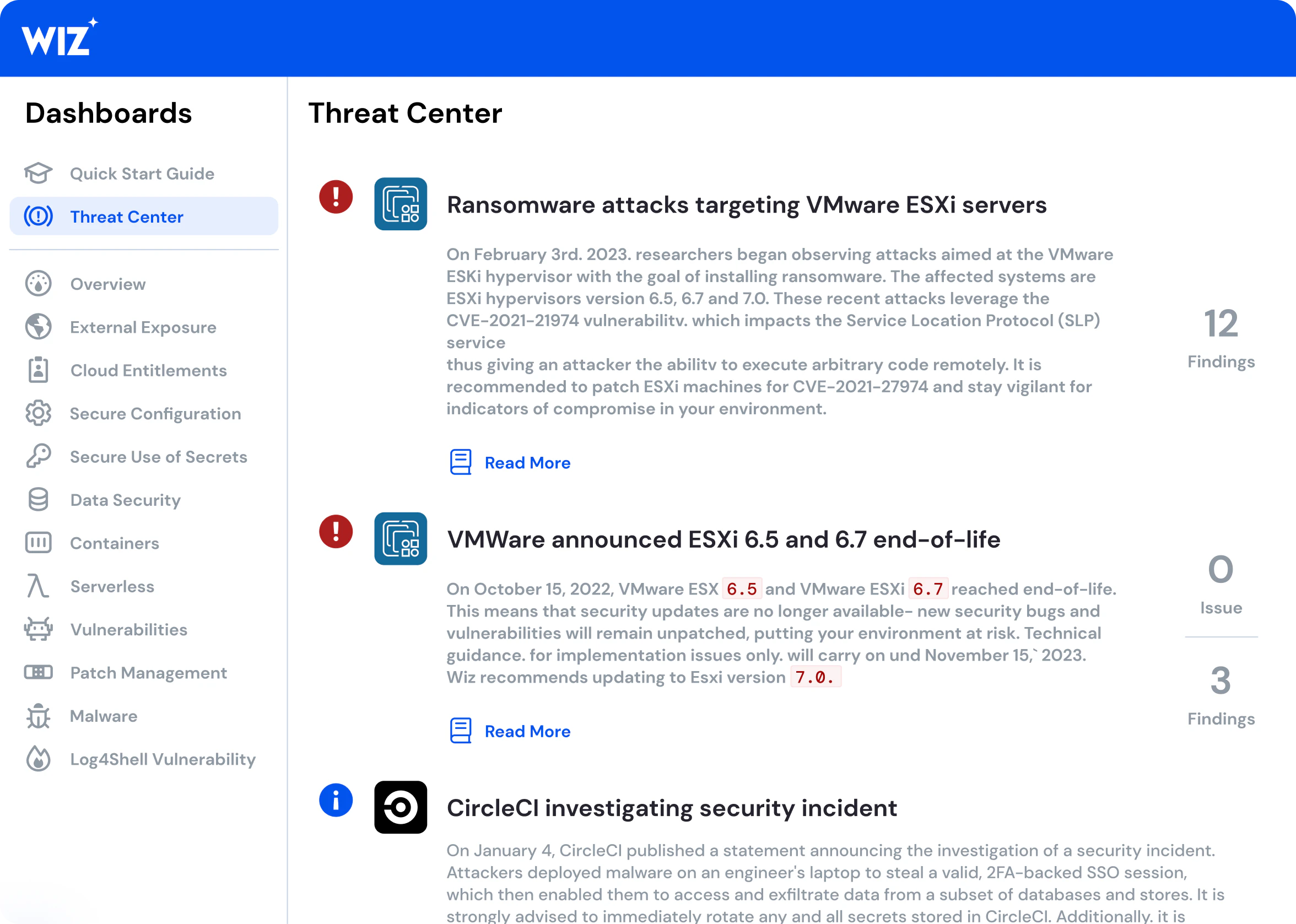
The CVE Database: Curated Vulnerability Intelligence by Wiz
Wiz's CVE Database curates CVE data to create easy-to-navigate profiles that cover the entire vulnerability timeline, exploit scenarios, and mitigation steps.
Explore database
Integrate scanning into CI/CD pipelines
Shifting vulnerability detection into CI/CD pipelines means scanning code, infrastructure-as-code templates, and container images at the commit, build, and deploy stages, before they ever reach production. This approach catches vulnerabilities when they are cheapest and fastest to fix, rather than after deployment when remediation requires coordination across teams and environments.
Key integration touchpoints include pre-commit hooks for secrets detection, build-stage IaC scanning for misconfigurations, container image scanning in registries, and deployment gate policies that block critical findings from reaching production. Wiz Code provides native CI/CD integration that connects these touchpoints into a single workflow.
Pipeline scanning also reinforces the shared responsibility model introduced earlier. By embedding security checks into developer workflows, organizations ensure that the customer-managed layers of the cloud stack are continuously validated without slowing release velocity.
AWS Vulnerability Management Best Practices [Cheat Sheet]
This 8-page cheat sheet breaks down the critical steps to fortifying your AWS security posture. From asset discovery and agentless scanning to risk-based prioritization and patch management, it covers the essential strategies needed to safeguard your AWS workloads.

Key features for cloud vulnerability management tools
Selecting a cloud vulnerability management solution requires evaluating capabilities across coverage, prioritization, integration, and operational fit. The features below represent the core requirements for any solution expected to operate effectively in dynamic, multi-cloud environments.
Essential capabilities include:
Prioritized cloud vulnerabilities: Effective prioritization means ruling vulnerabilities out as confidently as ruling them in. Every cloud vulnerability management tool should be able to prioritize cloud vulnerabilities based on business-specific factors.
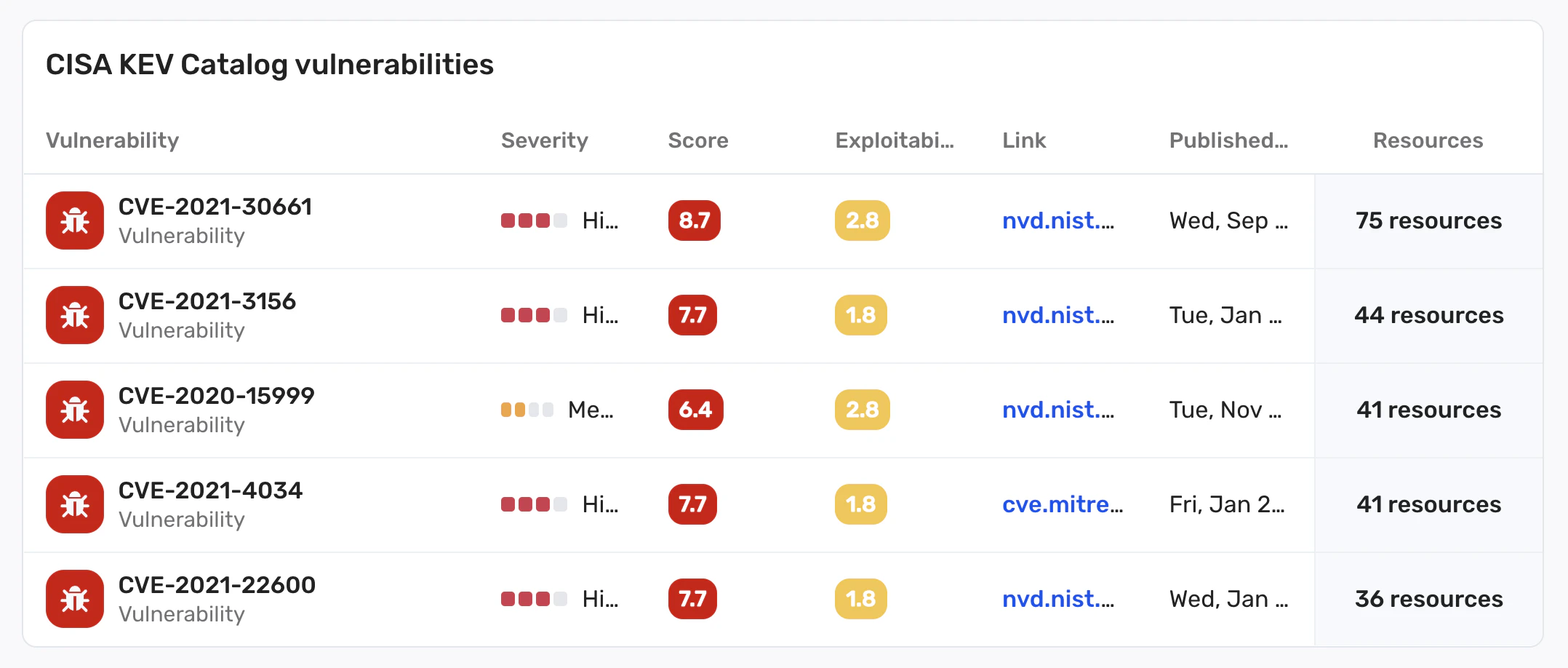
Agentless scanning: Agent-based scanners have been effective in the past, but the cloud calls for quicker, less complicated, and more accurate scanning capabilities. Agentless scanners offer simpler deployment, high efficiency, and cost savings. They are also more DevOps and CI/CD-friendly, a necessity for high-octane enterprises.
Extensive cloud vulnerability catalogs: There are thousands of vulnerabilities that can impact cloud-based operations. Cloud vulnerability management tools need to be informed by multiple vulnerability catalogs that include vulnerabilities across cloud technologies. They should also ideally be supported by an independent vulnerability intelligence and research program that actively catalogs unknown vulnerabilities and stays on top of new cybersecurity threats and trends.
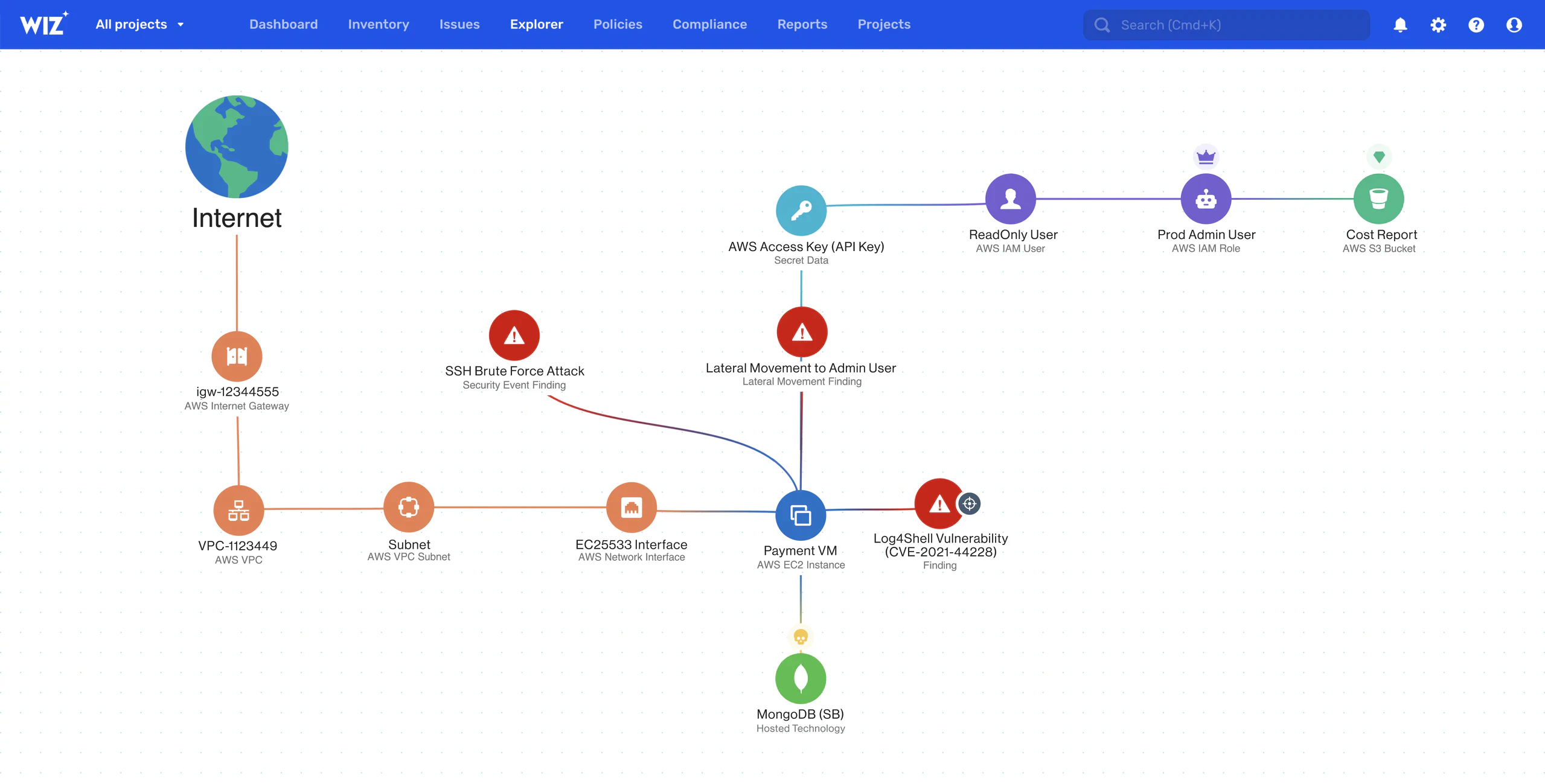
Cross-cloud coverage: Most modern cloud-based infrastructures are a combination of disparate IaaS, PaaS, and SaaS services and technologies from multiple providers. An effective cloud vulnerability management tool needs to be compatible and operate directly across these complex and ever-changing cloud architectures.
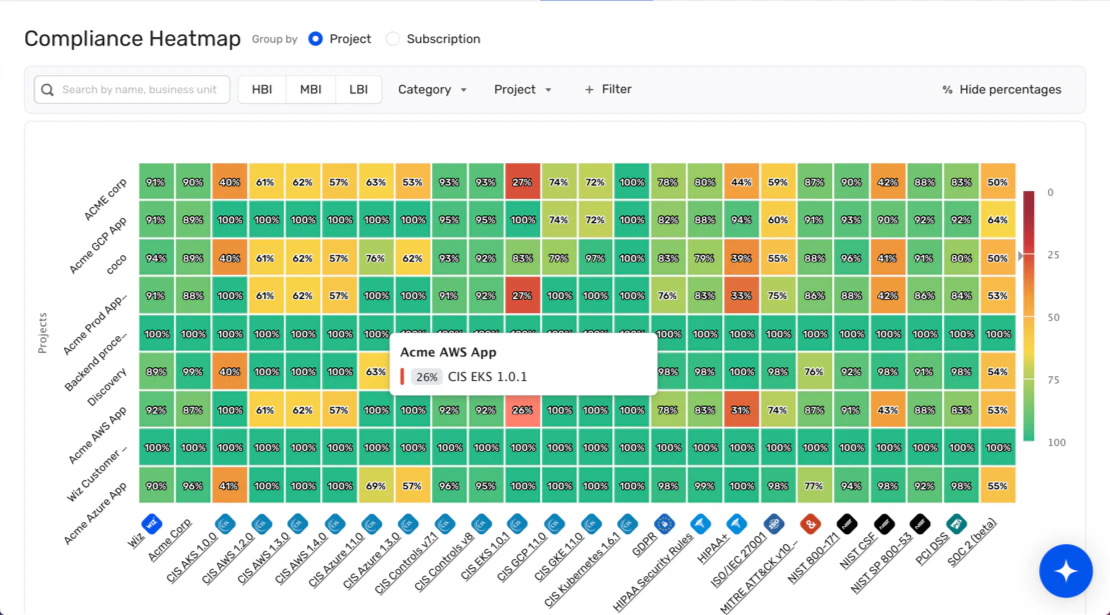
Flexible compliance capabilities: Cybersecurity and compliance work hand in hand, each influencing the other. Cloud compliance can become extremely complex and troublesome if neglected, especially as certain regulations like PCI DSS require vulnerability assessments by approved vendors. Cloud vulnerability management tools should feature options to conform to these standards as well as be manually configured to the specific needs of a particular organization.
Traditional VM tools only produce simple table-based reports with a basic snapshot of vulnerabilities at a given time. Advanced vulnerability management solutions consolidate information from multiple scans and show what's changed over time.
How to implement cloud vulnerability management
Implementing cloud vulnerability management means establishing a repeating process of discovery, assessment, prioritization, remediation, and verification across all cloud environments. Because cloud infrastructure changes continuously, your program must be designed to run as an ongoing cycle rather than a discrete project.
1. Discover and inventory all cloud assets
You can’t protect what you can’t see. The first step is to create a comprehensive inventory of all assets in your cloud environment. This includes:
Virtual machines
Containers
Serverless functions
Databases
Storage buckets
An agentless approach is best for achieving full coverage quickly.
2. Implement continuous and automated scanning
Once you have visibility, set up automated scans to continuously look for vulnerabilities across your entire asset inventory. Scanning should be an ongoing process that identifies new vulnerabilities in existing assets and checks new assets as they are deployed.
3. Prioritize vulnerabilities with context
Instead of just relying on CVSS scores, prioritize vulnerabilities by correlating them with other risk factors. As CISA recommends, organizations should establish a classification scale (e.g., critical, high, medium, low) with a defined remediation timeframe for each level.
For example, a vulnerability on an internet-exposed server with high privileges and access to sensitive data is far more critical than an isolated one. This contextual approach helps you focus on what truly matters and reduces alert fatigue.
4. Remediate and validate fixes
Assign clear ownership for remediation and provide developers with the context they need to fix issues quickly. After a patch is applied, rescan the asset to validate that the vulnerability has been successfully resolved. This closes the loop and ensures the risk is eliminated.
Datavant saw a 51% reduction in vulnerabilities and prevention of net-new critical and high issues after implementing this approach at scale.
5. Integrate security into the development lifecycle
Shift security left by integrating vulnerability scanning directly into your CI/CD pipeline. Scan Infrastructure as Code (IaC) templates and container images before they are deployed to prevent new vulnerabilities from ever reaching your production environment. A platform like Wiz enables this entire step-by-step implementation at scale, providing a single pane of glass to manage risk from code to cloud.
패치 관리란 무엇입니까? 이점, 프로세스 및 모범 사례
패치 관리는 취약성을 해결하고, 버그를 수정하고, 전반적인 시스템 성능을 개선하기 위해 소프트웨어 시스템 및 애플리케이션에 대한 업데이트를 계획, 테스트 및 적용하는 프로세스입니다.
더 알아보기
Measuring success: KPIs for cloud vulnerability management
Measuring the effectiveness of a cloud vulnerability management program requires tracking a focused set of metrics that reflect both security outcomes and operational efficiency. The most useful KPIs connect directly to remediation speed, coverage completeness, and risk reduction over time.
Mean time to remediate (MTTR): This measures the average time it takes for your team to fix a vulnerability after it has been discovered. Tracking MTTR for critical vulnerabilities is especially important, as it shows how quickly you are closing your most significant security gaps. For example, Shell reduced detection time from 3-14 days to near real-time after adopting agentless scanning.
Scan coverage: This measures the percentage of your cloud assets that are being actively scanned for vulnerabilities. The goal should be complete coverage to ensure there are no blind spots in your environment.
Reduction in critical vulnerabilities: Monitor the overall number of critical and high-severity vulnerabilities over time. A downward trend indicates that your program is successfully reducing the most significant risks to your organization.
Remediation rate: This is the percentage of discovered vulnerabilities that are successfully remediated within a specific timeframe. It helps you understand the efficiency of your remediation workflows and team capacity.
SLA compliance rate: Track the percentage of vulnerabilities remediated within your defined service-level agreements. This metric connects security performance to business commitments and helps identify where process bottlenecks slow down response.
The Wiz approach to cloud vulnerability management
Wiz approaches cloud vulnerability management as a unified, continuous process that covers every layer of the cloud environment without requiring agents or manual configuration.
Wiz's agentless scanning connects to cloud environments via API and reads the full runtime state of every workload (including VMs, containers, serverless functions, and data stores) across AWS, Azure, GCP, and other providers.
The Wiz Security Graph then maps relationships between vulnerabilities, network exposure, permissions, and sensitive data to surface the findings that represent actual attack paths rather than theoretical risk. Wiz’s Cloud Data Security Snapshot report found that 12% of cloud environments have publicly exposed containers with high- or critical-severity vulnerabilities and known exploits.
For teams adopting shift-left practices, Wiz Code integrates vulnerability detection directly into CI/CD pipelines, scanning IaC templates and container images before deployment. This extends the same contextual prioritization into the development lifecycle so vulnerabilities are caught before they reach production.
As you expand into AI workloads, Wiz AI-APP provides visibility into AI models, training data, and inference pipelines, ensuring that emerging AI attack surfaces are covered by the same unified platform. Whether the risk sits in a misconfigured storage bucket or an exposed machine learning endpoint, Wiz delivers a single view of what matters and what to fix first.
See how Wiz can secure your cloud from code to production. Get a demo to experience unified vulnerability management in action.
Get a 1-on-1 walkthrough of Wiz Cloud
Most scanners give you a list of 10,000 "critical" CVEs. Join a live walkthrough to see how Wiz uses the Security Graph to find the 10 that actually have a path to your sensitive data.
