


What is Terraform security?
Terraform security is the set of practices that protect Terraform-managed infrastructure as code (IaC) environments. Security is central to IaC adoption across multi-cloud environments because Terraform creates a unified, consistent approach to building and managing cloud resources and data sources.
IaC Security Best Practices [Cheat Sheet]
The guide explains what IaC scanning is, why teams rely on Terraform/K8s/CloudFormation scanning tools, and why these checks alone lead to repeat misconfigs without production context.

The expanding scope of IaC risk
IaC has evolved beyond simple syntax checks and provider-level misconfigurations. Modern threats now span multiple layers of the stack and introduce systemic risks across cloud environments. Below are key risk areas:
Template misuse at scale: Terraform automates infrastructure creation, but insecure defaults embedded in shared templates can propagate vulnerabilities across all environments.
Pipeline exposure: IaC pipelines integrated with CI/CD tools and GitHub accelerate deployment, but if pipeline runners have excessive permissions or repos leak secrets, attackers can compromise provisioning end-to-end.
Configuration sprawl: IaC bakes configuration decisions into reusable code. Without guardrails, this codifies misconfigurations and risk.
Unsecured state files: Terraform state files often store plaintext secrets when teams skip encryption or fail to secure remote backends.
Untrusted modules: Pulling third-party or community modules can introduce malicious logic or unverified configurations.
Misconfigurations by design: Common cloud risks—including public S3 buckets, open security groups, and exposed Kubernetes clusters—often originate directly in IaC.
Non-human identity sprawl: Terraform creates and manages IAM roles, service accounts, and cloud permissions at scale. Overly permissive defaults, long-lived credentials, and orphaned identities embedded in IaC quietly expand the attack surface and facilitate lateral movement across cloud environments.
IaC accelerates deployment and standardizes infrastructure, but it also introduces repeatable security vulnerabilities. Therefore, teams must treat IaC security as essential—not optional—and apply strong controls across every step of the workflow.


The shared responsibility of IaC teams
All teams working with Terraform Cloud contribute to the security of the environment. Effective collaboration relies on clear ownership, and here’s how it breaks down:
Developers: Build secure foundations by securing templates, writing input validation rules, and referencing least-privilege roles. They enhance security by avoiding hard-coded secrets and storing sensitive values in managed secret systems.
Security teams: Enforce guardrails by governing encryption, identity and access management (IAM), and compliance. They reinforce these standards by integrating policy as code tools that block noncompliant infrastructure before deployment.
Operations teams: Maintain alignment between the desired state and the runtime environment by monitoring for drift and remediating configuration gaps before attackers exploit them. They maintain continuous oversight by reviewing state changes, tracking module updates, and verifying the cloud environment matches its intended configuration.
This shared responsibility model keeps Terraform deployments consistent, secure, and resilient as teams scale their IaC practices.
Why does Terraform security matter?
Terraform security matters because the choices inside IaC templates directly shape the reliability, compliance, and resilience of the cloud environment. Organizations rely on Terraform to scale environments across multiple clouds, so any security weakness in a template can rapidly compromise business continuity, create financial exposure, and degrade operational performance.
Here’s an overview of the importance of Terraform security:
Misconfigurations scale as fast as your code
IaC accelerates deployment and improves consistency, but it also amplifies the impact of insecure configurations. A single vulnerability in a Terraform module becomes a recurring pattern across all environments that use it. For example, when developers reuse a module that creates an Amazon Simple Storage Service (S3) bucket with public read permissions, a single template can produce dozens of open buckets in minutes.
This type of misconfiguration creates real financial and reputational risk because attackers can scan for exposed storage resources at scale. Ultimately, IaC gives teams the power to propagate secure or insecure configurations with equal efficiency.
Compliance and audit readiness
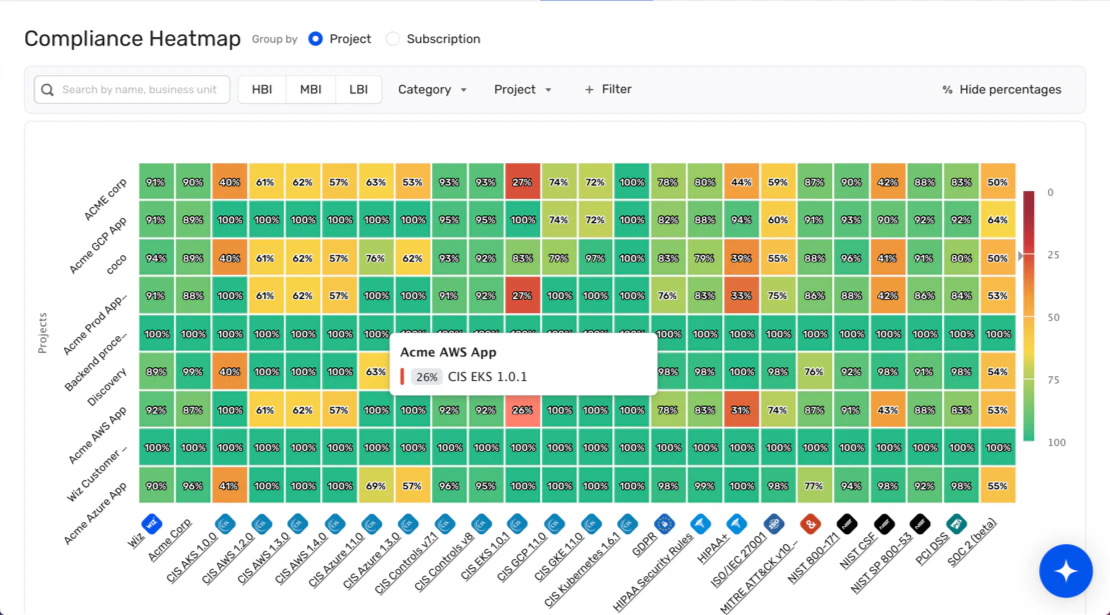
IaC creates durable, reviewable artifacts that auditors use to understand how teams provision and manage cloud resources. Templates support these controls by defining security group rules, IAM roles, encryption settings, and network configurations.
When IaC templates fail to meet regulatory requirements or internal policies, the organization compromises its audit trail. This misalignment weakens governance and makes compliance checks harder to pass because auditors need evidence of consistent guardrails across the environment. Effective Terraform security provides consistent, validated IaC, preserves compliance documentation, and supports predictable reviews across annual certifications and internal assessments.

IaC drift in security
IaC drift occurs when the live cloud environment diverges from the configuration defined in Terraform. This divergence weakens security posture because the declared configuration and the actual runtime environment no longer match. As a result, teams lose visibility into actual exposure, and attack paths appear where the code indicates there is no risk.
Organizations manage drift risk by frequently running Terraform plans to detect unexpected changes. They also enforce policy as code tools that block unauthorized updates before deployment.
Software Supply Chain Best Practices [Cheat Sheet]
Whether you're locking down GitHub Actions, generating SBOMs, or investigating a suspicious package, this cheat sheet will help.

What are common Terraform security risks?
Terraform establishes predictable patterns that strengthen cloud environments, but it also creates risks when teams build IaC workflows without guardrails. These risks often escalate as organizations scale across multiple clouds, adopt more modules, and integrate Terraform into continuous integration and continuous delivery pipelines.
Below are some common risks teams often encounter, along with clear examples and practical ways to mitigate exposure:
Misconfigured resources and overpermissive IAM
Defining resources with weak defaults or granting IAM roles excessive permissions creates immediate risk. For instance, a security group that allows inbound traffic from all sources, or an IAM role with full administrative access, opens an unnecessary attack surface. These misconfigurations replicate across all environments that use the same module, exposing storage, compute, and networking resources to external threats.
Mitigation strategies include the following actions:
Teams enforce least-privilege roles that limit access to the smallest set of actions for each workload.
Developers use module scanning tools like Checkov, tfsec, and Wiz to ensure every configuration follows approved policies.
Organizations validate resource definitions before deployment to prevent high-risk permissions from reaching production.
Insecure storage of Terraform state files
Terraform state files capture the full shape of a cloud environment and often include sensitive data such as resource identifiers, encrypted data keys, and configuration metadata. When teams store state locally or in unsecured backends, attackers gain both a detailed map of the environment and a shortcut to high-value resources.
Mitigation strategies include the following actions:
Teams use remote backends with strong access controls, server-side encryption, and tightly scoped IAM policies.
Organizations classify state files as sensitive assets and restrict access using least-privilege principles.
Developers encrypt state data at rest and in transit to prevent unauthorized disclosure.
Teams implement a layered state strategy by separating Terraform state files across logical boundaries such as environment, account, workload, or trust zone to reduce blast radius and limit cross-environment exposure.
Insecure or outdated modules and dependencies
Terraform modules accelerate development, but outdated or unverified modules expose organizations to supply chain risk. A module with a deprecated encryption configuration or a dependency that references obsolete API behavior creates security gaps that attackers can exploit. Teams that download modules from untrusted registries create additional supply chain exposure because malicious code may emerge in the module itself.
Mitigation strategies include the following actions:
Developers can pin module versions to ensure consistent behavior across environments and avoid unexpected upgrades.
Teams can validate module sources by reviewing code, checking provider integrity, and using registries that offer signed modules.
Organizations can track dependency updates and verify that all modules follow internal security standards.
Uncontrolled IaC drift and unmanaged environments
IaC drift occurs when the deployed cloud environment no longer matches the Terraform configuration. Drift develops when teams apply manual updates in the console, modify resources outside the planned workflow, or maintain separate environments with outdated templates. This divergence creates blind spots in the cloud environment because the declared configuration no longer reflects the real security posture.
Mitigation strategies include the following actions:
Teams run regular drift detection processes to identify discrepancies between the Terraform configuration and the runtime environment.
Organizations use runtime scanning tools to continuously monitor cloud resources and detect configuration changes.
Security teams enforce policies that block unauthorized changes and maintain alignment across all environments.
Teams adopt GitOps workflows where Terraform changes flow through version control, code review, and automated pipelines, making Git the single source of truth for infrastructure state.
Lack of visibility and unified security posture
Organizations lose visibility when Terraform environments scale faster than their ability to validate configurations across production, staging, and development. Separate teams may define resources independently, and pipelines may automatically create infrastructure without a central review. This fragmentation creates inconsistent environments that weaken the security posture and limit the ability to track real exposure.
Mitigation strategies include the following actions:
Teams integrate IaC scanning with a cloud-native application protection platform (CNAPP) or DSPM tools to validate the runtime state.
Organizations correlate Terraform definitions with actual cloud resources to confirm that the deployed environment reflects the intended design.
Security teams can unify visibility across environments by consolidating findings and prioritizing remediation based on real risk.
Actionable DevOps Security Best Practices [Cheat Sheet]
This cheat sheet is designed for DevOps Engineers, AppSec teams, and Cloud Architects with DevOps tips that go beyond the basics.

What are Terraform security best practices?
Implementing Terraform security best practices transforms risk awareness into practical controls that protect cloud environments and support predictable deployments across every stage of the IaC lifecycle.
Executing these practices strengthens the entire workflow by enforcing guardrails before deployment, protecting state files, validating templates continuously, monitoring runtime configurations, and maintaining trusted modules. Combining these approaches keeps environments aligned with security and compliance requirements while maintaining development velocity.
Adopt policy as code for continuous compliance
Policy as code enforces security requirements before Terraform provisions any infrastructure. Tools like HashiCorp Sentinel, OPA, and Wiz evaluate Terraform plans to block changes that violate internal rules or regulatory standards. This automation gives security teams a consistent way to verify encryption, identity boundaries, network segmentation, and tagging without slowing down deployments.
Effective policy as code practices include the following actions:
Teams use Sentinel or OPA policies to review every Terraform plan and prevent noncompliant resources from reaching production.
Organizations rely on Wiz policies to enforce controls that validate encryption configurations, IAM boundaries, and resource exposure across multi-cloud environments.
Developers maintain local policy tests to validate templates early and reduce friction during code reviews.
Use the Wiz and Hashicorp integration to minimize risks and boost productivity––early and consistently.

Secure and version-control Terraform state files
State files contain sensitive metadata and direct references to cloud resources. When teams don’t protect these files, attackers can gain insight into the infrastructure layout and access paths to critical assets. Securing and version-controlling Terraform state gives teams a reliable, auditable system for tracking changes and protecting sensitive values.
Effective state management practices include the following actions:
Teams store state files in remote backends like Amazon S3 with SSE-KMS or equivalent encryption controls.
Organizations rotate IAM roles that access state, monitor access logs, and restrict the bucket to approved runners only.
Developers use version-controlled locking mechanisms like DynamoDB to prevent conflicts during concurrent runs.
The following code snippet demonstrates how to configure an Amazon S3 backend for Terraform with encryption enabled to keep your state files securely stored:
terraform {
  backend "s3" {
    bucket         = "my-terraform-state"
    key            = "global/s3/terraform.tfstate"
    region         = "us-east-1"
    encrypt        = true
    dynamodb_table = "my-lock-table"
  }
}
Validate all IaC code in CI/CD pipelines
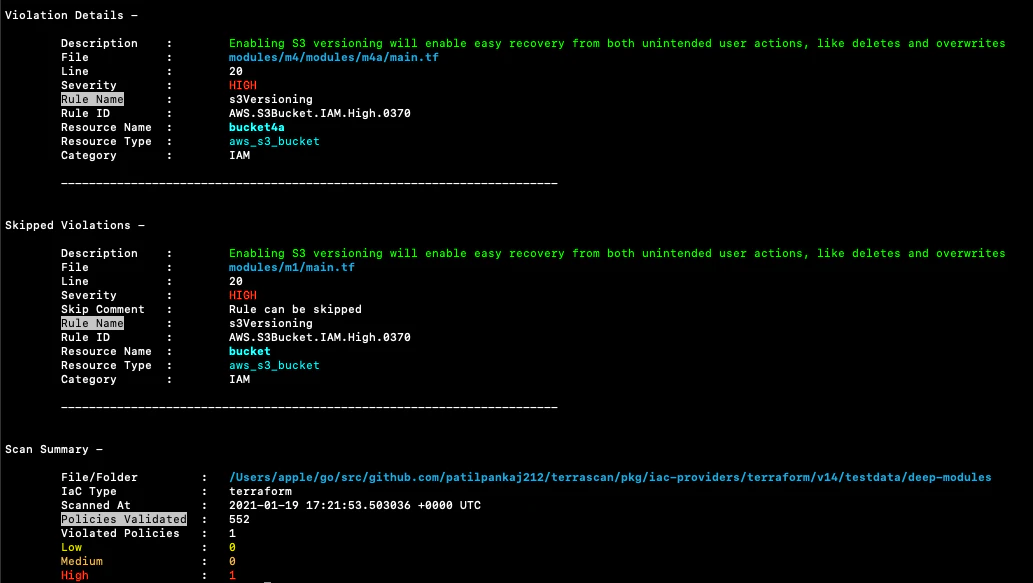
Terraform templates require continuous validation throughout development, review, and deployment. CI/CD pipelines enforce this requirement by scanning every change before merge or apply. Tools like tfsec, Checkov, and Wiz analyze Terraform configurations, detect misconfigurations, and surface issues well before infrastructure reaches production.
Effective CI/CD validation practices include the following actions:
Teams run tfsec or Checkov on every pull request to identify misconfigurations and prevent insecure templates from merging.
Organizations integrate Wiz IaC scanning into CI/CD workflows to evaluate Terraform plans and verify configurations against real cloud policies.
Developers combine static analysis with plan-based checks to maintain consistency across all environments.
Detect and remediate IaC drift automatically
When drift occurs, teams lose visibility into actual exposure, and their security assumptions break down. Automated drift detection closes this gap by identifying unmanaged changes and ensuring that Terraform remains the accurate source of truth.
Effective drift remediation practices include the following actions:
Teams schedule Terraform operations to identify unexpected changes and support rapid remediation.
Organizations rely on Wiz drift detection to monitor runtime environments continuously and surface configuration differences at scale.
Developers investigate drift immediately and update either the code or the environment to restore alignment.

Standardize and verify modules
While Terraform modules accelerate development, they also create consistent patterns that amplify both secure and insecure behaviors. Maintaining an internal module registry with strict review processes ensures teams use trusted building blocks for storage, networking, compute, and identity resources.
Effective module governance practices include the following actions:
Teams sign modules and store them in an internal registry that enforces review and approval processes.
Organizations verify module versions and restrict production deployments to approved releases.
Developers audit module dependencies regularly to ensure providers, APIs, and patterns remain up to date.
Platform teams create and maintain Golden Modules that encode secure defaults, least-privilege access, and approved architectures, giving developers a safe starting point without slowing delivery.
Enforce ownership and governance through mandatory tagging
Terraform security does not stop at configuration correctness. Teams also need clear ownership and governance for every deployed resource. Without enforced metadata, security findings stall because responders lack the context to act quickly.
By mandating standardized ownership and governance tags in Terraform, organizations make sure every resource carries accountability from the moment of creation.
Effective ownership enforcement practices include the following actions:
Teams use Terraform variables to require tags such as Owner, CostCenter, Environment, and DataClassification on every resource.
Organizations enforce tagging policies through policy as code to block deployments that omit required governance metadata.
Security and SOC teams rely on these tags to route alerts and enrich findings with ownership and business context, accelerating incident response and aligning findings with the correct application or team.
This approach ensures that when a security alert fires, teams can immediately identify who owns the resource, what data it handles, and how critical it is to the business.
Integrate IaC posture into runtime monitoring
Terraform defines the desired infrastructure state, but actual security risks emerge in the runtime environment. Integrating Terraform posture with runtime validation aligns both perspectives and helps teams detect deviations, enforce policies, and reduce overall risk. CNAPP platforms like Wiz connect Terraform scans with cloud runtime telemetry to maintain unified visibility.
Effective runtime integration practices include the following actions:
Teams correlate Terraform definitions with runtime findings to confirm that resource exposure matches the intended design.
Organizations use CNAPP dashboards to track security posture from code to cloud and prioritize remediation based on real risk.
Developers adjust Terraform templates to address runtime issues like open ports, weak IAM roles, or exposed storage buckets.


How Wiz helps teams secure their Terraform and IaC environments
Wiz strengthens Terraform and IaC environments by connecting the desired infrastructure state defined in code with the actual security posture running in the cloud. This connection creates a unified workflow that helps teams enforce policies consistently, detect configuration drift, and evaluate how IaC decisions affect runtime risk.
Our platform bridges the gap between configuration intent and operational reality, enabling teams to build secure, compliant, and scalable cloud environments. Here’s how:
Policy enforcement from code to cloud
Wiz enforces IaC policies at two key stages: before deployment and after provisioning. During pre-deployment, it scans Terraform plans and blocks insecure or noncompliant resources. After deployment, Wiz re-validates the live environment to ensure encryption, identity boundaries, and network rules align with the original configuration. This full lifecycle approach helps teams maintain consistent policy controls from code to cloud.
Drift detection and contextual visibility
Wiz detects IaC drift by continuously monitoring cloud environments and comparing runtime configurations with the intended state defined in Terraform. Drift introduces risk by reflecting unmanaged changes, outdated templates, or manual updates that bypass IaC workflows. Wiz provides context around every change by mapping drift findings to cloud assets, identities, exposure paths, and business impact.
Integration into CI/CD and Terraform pipelines
We integrate directly into CI/CD and Terraform pipelines through agentless scanning and API-driven checks. This integration allows teams to evaluate every Terraform change without installing agents or modifying workloads. Wiz reviews Terraform plans, evaluates configuration changes, and provides actionable results that developers and security teams can use in pull requests or pre-apply checks to strengthen and accelerate security.
Unified view for DevOps and security teams
Wiz provides a single dashboard that shows how IaC misconfigurations translate into runtime risk. This unified view equips DevOps and security teams with a shared source of truth that replaces fragmented reports or siloed checks. Wiz correlates Terraform definitions with active cloud resources to reveal which misconfigurations remain theoretical and which ones affect running workloads.
Want to see how your Terraform configurations impact your AWS security posture? Run our free AWS Security Assessment today to uncover misconfigurations and identity risks across your cloud.
See for yourself...
Learn what makes Wiz the platform to enable your cloud security operation

FAQ
Below are common questions about Terraform security.