

What are code analysis tools?
Code analysis tools are automated systems that examine code, dependencies, and configurations to uncover security vulnerabilities, code quality issues, and compliance gaps. This guide focuses on security-oriented code analysis (SAST, SCA, IaC, secrets, DAST) rather than general code quality or static linting.
These tools often come as part of a unified DevSecOps platform—a comprehensive solution for managing and remediating security risks via real-time monitoring, AI-guided fixes, dependency management, and threat path analysis.
Unified platforms have become essential due to:
Rapid release cycles that can introduce numerous security flaws
The increasing complexity of SDLCs, making traditional manual code scanning insufficient for proper security
This post will explore the top 10 code security platforms to see just how well they secure modern cloud-native applications. But let’s first start with the key criteria you need to be on the lookout for when assessing these tools.
Secure Coding Best Practices [Cheat Sheet]
Want to build security into your code from the start? This cheat sheet provides quick reference patterns for preventing common vulnerabilities.

What are the most important capabilities of a code security platform?
When deciding on a code security framework that best fits your needs, the primary features to focus on include scanning coverage, developer experience, security context, risk prioritization, and compliance and reporting capabilities.
Comprehensive scanning coverage
Look for platforms that integrate code vulnerability scanning tools that support multiple analysis types:
Static application security testing (SAST): A "white-box" method that analyzes source code for vulnerabilities before it's executed, shifting security left in the SDLC.
Dynamic application security testing (DAST): A "black-box" method that tests the running application by simulating attacks. This helps emulate real-world scenarios.
Software composition analysis (SCA): This evaluates third-party components for vulnerabilities and licensing issues.
Secrets scanning: Unlike traditional SAST, secrets scanning must cover the entire codebase, including the history, for hardcoded credentials and keys to prevent initial access and lateral movement risks. Choose tools that go beyond simple pattern matching by providing secrets validation, such as checking if exposed API keys are active and usable (exploitability), to verify immediate risks.
Infrastructure as Code (IaC) scanning: This evaluates IaC and cloud resource configuration files for misconfigurations or risks pre-deployment.
Developer experience and workflow integration
A developer-first platform should:
Prioritize tools that support your technology stack, e.g., programming languages, development frameworks, container images, and cloud platforms
Enable seamless integrations into dev workflows, including IDEs, CI/CD pipelines, and VCS, to provide real-time feedback
Offer built-in, AI-powered fix suggestions and automated remediation. Modern platforms should use Generative AI to deliver contextual, secure code fixes directly into developer environments (IDEs and PRs).
Code-to-cloud traceability in dev workflows: Prioritize tools that identify owners automatically and trace cloud issues back to the originating code and pipeline for faster fixes.
Risk prioritization and cloud context
Contextual analysis helps you focus on the most exploitable risks while also reducing false positives.
How can you identify platforms that tick this box? Look for tools that:
Avoid silos, instead offering a unified picture with easy-to-understand insights by combining findings from different tools and processes.
Map potential attack paths from code vulnerabilities to sensitive data or critical infrastructure.
Correlate source code with the application context and service deployment, e.g., cloud configuration, identity permission, resource ownership, network exposure, and data sensitivity.
Compliance capabilities
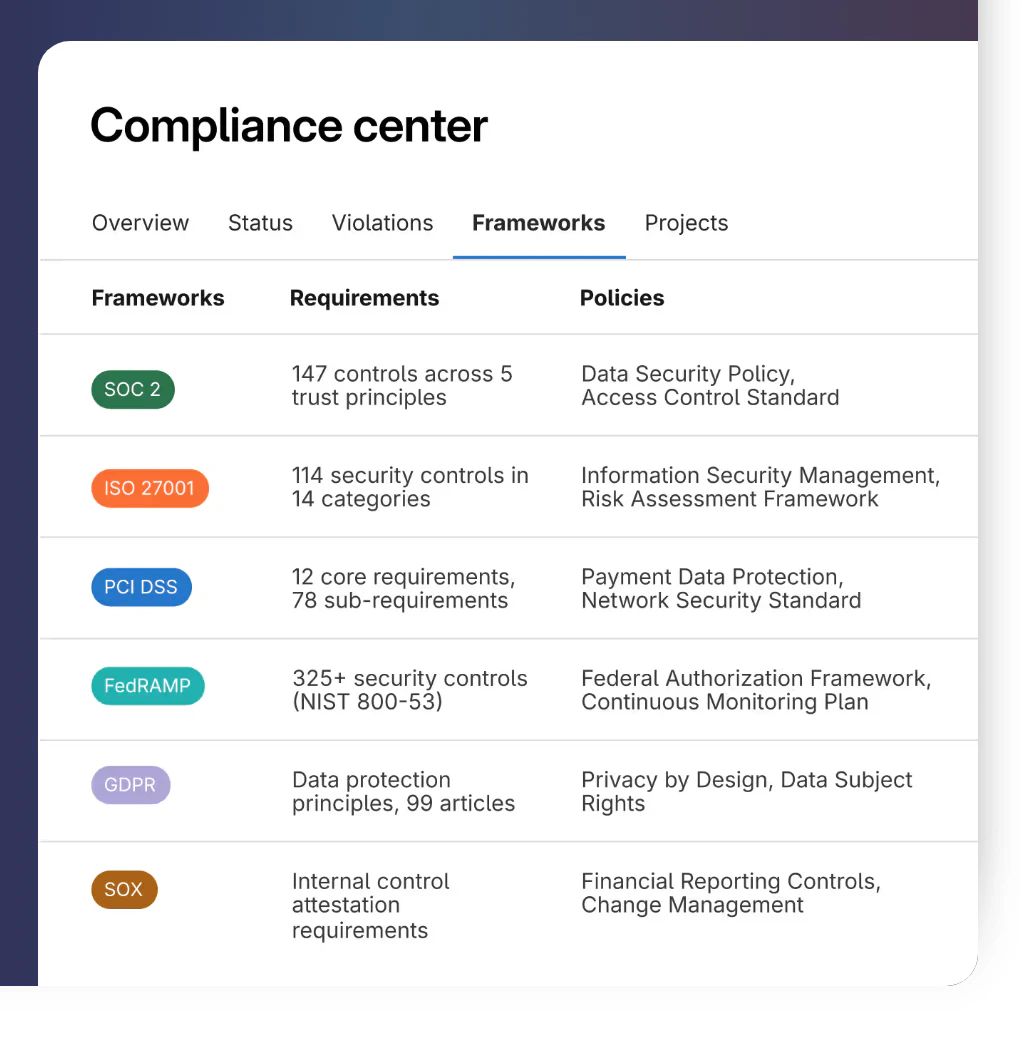
Does the platform support regulatory frameworks, e.g., SOC 2, ISO 27001, PCI DSS, HIPAA, and NIST’s SSDF?
Also, look for policy-as-code capabilities for consistent security standard enforcement and tooling for audit trails, reporting, and compliance documentation.


Top 10 code analysis platforms compared
Wiz Code
Wiz Code is an AI-powered Application Security Posture Management (ASPM) solution that provides unified visibility across the entire SDLC. It is built on the Wiz Security Graph, which ties code-level issues to runtime context, attack paths, and clear ownership. Wiz Code provides native code scanning with Software Composition Analysis (SCA), Static Application Security Testing (SAST), Secrets and Sensitive Data Scanning, Infrastructure-as-Code Scanning, and more.
Pros
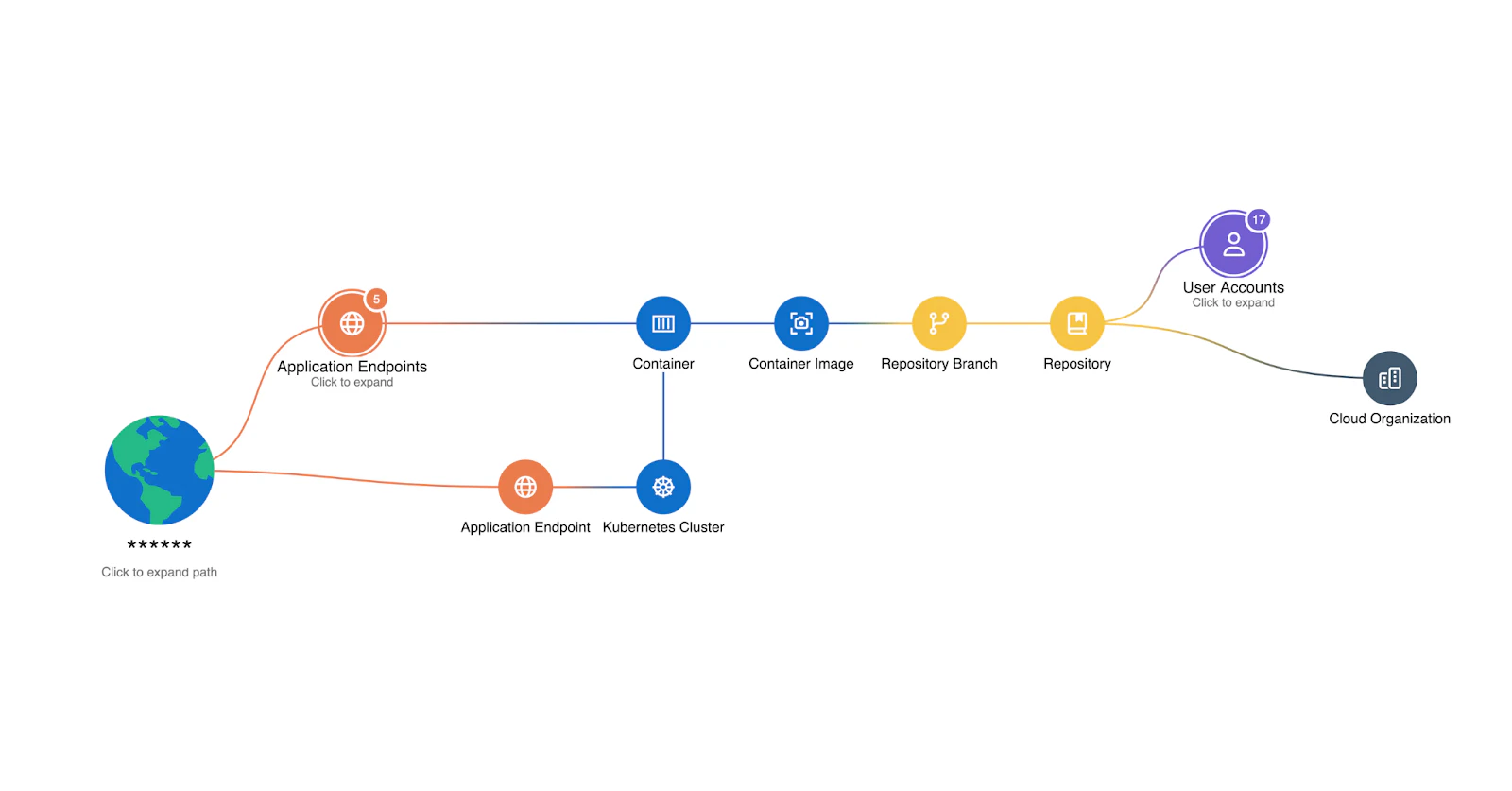
Wiz Security Graph helps users detect threat paths and mitigate them. Wiz Code aggregates findings from various scanning tools into a single view, enhancing application security posture management (ASPM) and cloud-native application protection (CNAPP).
The platform's core strength is its ability to link code security issues to their runtime context, automatically assigning ownership to streamline remediation. It also correlates code security with data security, preventing unmanaged sensitive data from getting into repositories and deployed applications.
Built-in AI Remediation. Wiz Code delivers AI-powered fix suggestions natively, it is not an add-on or integration. Wiz’s AI agents and assistants suggest contextual, secure code fixes directly in Pull Requests. This accelerated remediation workflow helps teams achieve “Zero Critical” risks in Code & CI/CD environments. Furthermore, Wiz offers continuous runtime protection monitoring (with the Wiz Sensor) and comprehensive compliance checks against over 100 frameworks like OWASP TOP10 CI/CD, and more.
Snyk
Snyk is a popular AI-native AppSec platform emphasizing the use of AI for remediation and risk analysis.
Pros
Users get comprehensive scanning for SAST, SCA, IaC, and containers, giving developers real-time feedback within their workflows.
Snyk’s AI-native risk prioritization, powered by its DeepCode AI engine, helps teams focus on the most critical vulnerabilities. Its AI assistants embed security checks into developer workflows to reduce remediation time.
Checkmarx
Checkmarx is a popular application security tool with comprehensive scanning capabilities.
Pros
This tool excels in API security, with both API discovery and API issue prioritization by correlating findings across scanning tools. Users also benefit from SCA with features like malicious package protection, transitive dependency scanning, and license risk management.
The platform supports dozens of languages and frameworks and integrates well with DevSecOps workflows through its AI DevOps agent and unified risk management. The AI-powered AppSec Insights agent offers up visibility across various metrics, e.g., risk trends, AppSec posture, and SLA goals.
Aikido Security
Aikido Security is an all-in-one platform offering comprehensive scanning coverage, including SAST, SCA, DAST, and container security.
Pros
Its cloud posture features include workload risk detection, cloud misconfiguration checks, and permission issue detection. The solution offers runtime protections against common attacks and bots, plus issue deduplication to streamline remediation.
Aikido Security has its own version of a security graph for reachability analysis, allowing it to identify issues that could lead to an exploitable attack path—and helping teams focus on vulnerabilities that pose a real threat. One-click AI fixes and IDE integration support a solid developer experience.
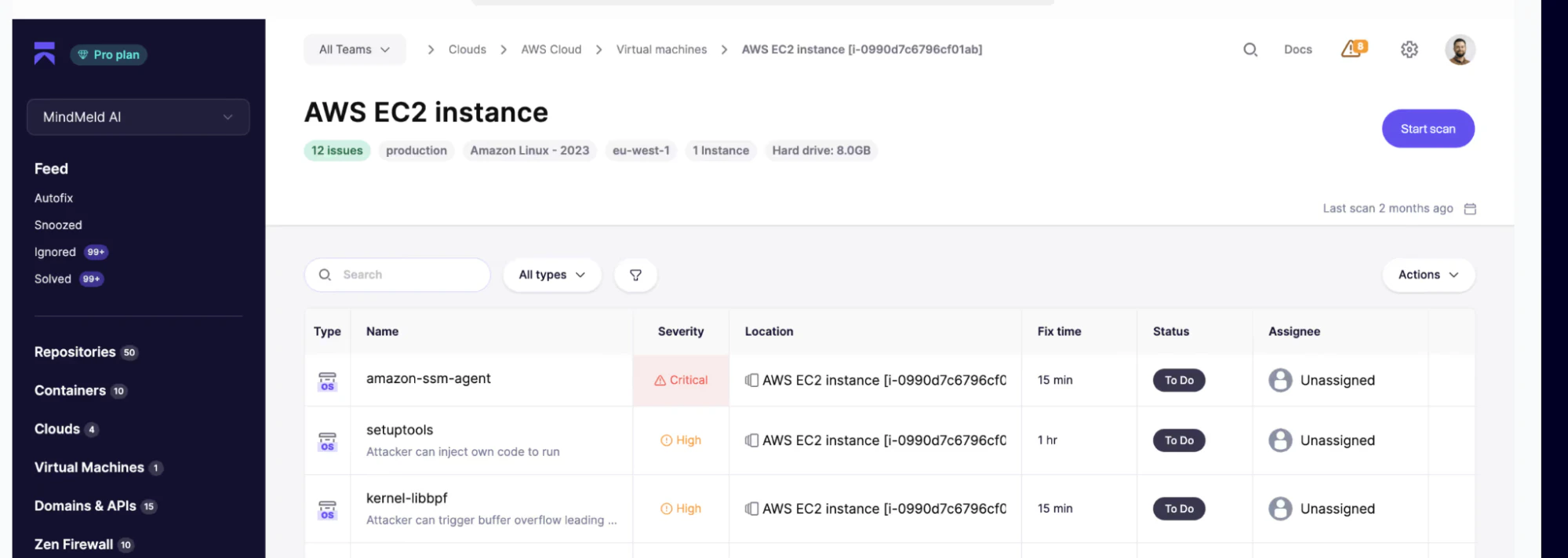
Mend
Mend.io has positioned itself as an AI-native AppSec platform offering LLM agentic workflows, AI-powered remediation, AI model risk analysis, and AI component risk simulation.
Pros
Mend features the traditional SAST, SCA, and DAST tools, while its impressively low MTTR is due to an emphasis on advanced AI remediation capabilities.
Other key strengths include unified visibility across code, dependency update automation (Mend Renovate), and container security to help eliminate silos.
Mend's advanced risk prioritization uses a full call graph to identify only the most exploitable issues, effectively reducing noise.
Watch 5-minute demo
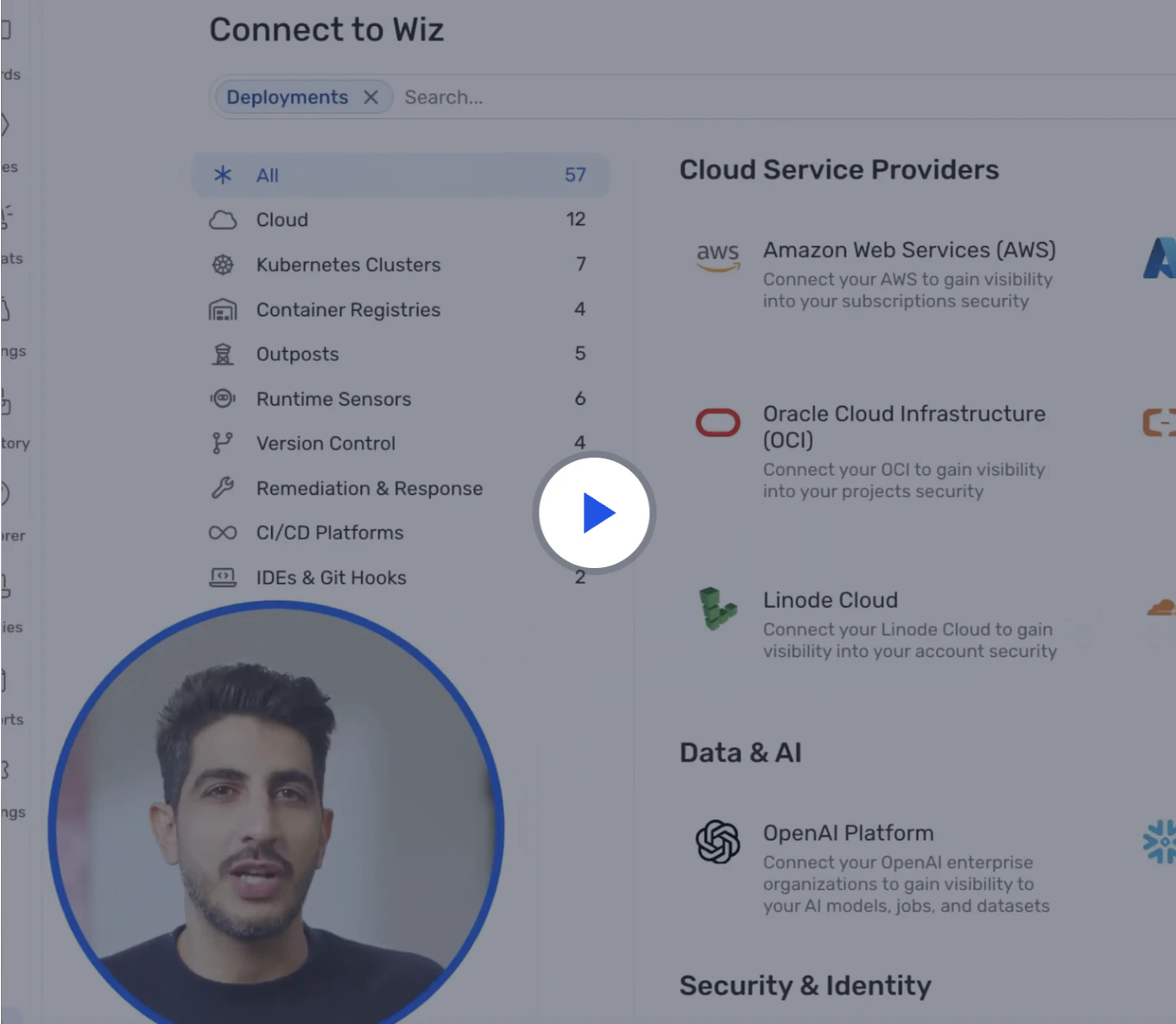
Watch the demo to learn how Wiz Code scans infrastructure as code, container images, and CI/CD pipelines to catch risks early—before they reach the cloud.
Watch now
DeepSource
DeepSource is a unified DevSecOps platform with a strong developer experience and seamless integration with major CI/CD tools, plus a VS Code extension.
Pros
Its key strengths include a focus on low false positives, supported by reachability analysis and broad scanning coverage, including IaC files and secrets.
Users also gain from the platform’s AI-based Autofix, customizable security gates based on CVSS and EPSS, and comprehensive code quality checks. Another core strength of DeepSource is its support for customized code security policies and rules; this helps teams consistently enforce their specific coding standards and security requirements.
SonarQube
Known for a great developer experience, SonarQube is a mature platform with over 400,000 users.
Pros
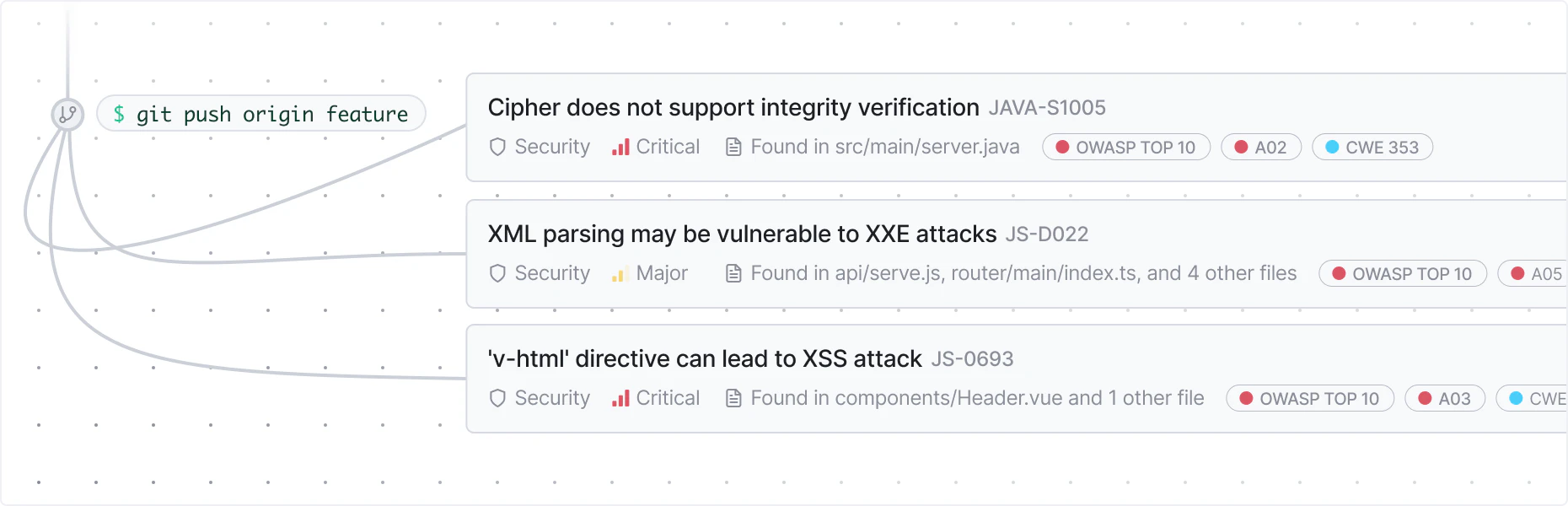
Featuring integrations into major CI/CD pipelines and IDEs, users enjoy strong scanning coverage, including SAST, IaC analysis, and secrets detection, and support for over 35 languages.
The platform's AI tools, such as AI Code Assistance and CodeFix, aid in securing AI-generated code and automating fixes. SonarQube also excels in customization, supporting custom code rules and providing detailed compliance reporting for standards like OWASP and NIST with policy-as-code capabilities.
Semgrep
Semgrep is a modern, SAST-first tool that emphasizes a strong developer experience and minimal false positives.
Pros
Semgrep’s engine is open source, while the managed platform adds commercial features, making it suitable for teams ramping up AppSec and DevSecOps.
Its core strengths lie in its data-flow analysis, which uses advanced taint tracking to reduce noise and identify truly exploitable issues. Meanwhile, its SCA Supply Chain feature leverages reachability analysis to focus remediation on the small percentage of vulnerable dependencies that are actually reachable in the code.
The SemGrep platform is highly customizable, allowing teams to write their custom security rules, and offers excellent workflow integration with CI/CD (Semgrep GitHub Action), IDEs, and issue trackers.
Veracode
Veracode is a mature AppSec platform with decades of experience, featuring a comprehensive suite of tools including SAST, DAST, and SCA.
Pros
Its strengths include full SDLC coverage, a vast vulnerability database, and a unique package firewall that allows for highly customized security policies.
Veracode provides a strong developer experience, including a feature-rich CLI and a paid AI-driven remediation tool called Veracode Fix.
The solution’s discovery scans feature helps analyze the full web application perimeter, while its capabilities for root cause analysis and tracking risks to their origin streamline the remediation process.
GitHub Advanced Security (GHAS)
GitHub Advanced Security (GHAS) is the integrated security suite designed for organizations operating within the GitHub ecosystem.
Pros
GHAS’s strength lies in providing security capabilities directly within the developer workflow, offering both SAST via CodeQL and crucial supply chain defense through Dependency Review and Dependabot. GHAS natively includes secrets scanning with push protection to detect and prevent credentials from reaching repositories, mitigating instant lateral movement risks. It also leverages AI with features like Copilot Autofix to automatically generate remediation suggestions for code scanning alerts, accelerating fix cycles.
Segurança de código (Code Security)
A segurança de código, também conhecida como codificação segura, refere-se às práticas, metodologias e ferramentas projetadas para garantir que o código escrito para aplicativos e sistemas esteja protegido contra vulnerabilidades e ameaças.
Leia maisGitLab Ultimate
GitLab Ultimate is a unified DevSecOps platform tightly integrated with the popular GitLab ecosystem.
Pros
This comprehensive suite stands out with its powerful container security, secrets detection, fuzz testing, SAST, and advanced DAST, all of which are natively integrated into the CI/CD pipeline.
Its AI tools, like GitLab Duo, help with automated remediation and test generation, while a rich set of compliance and auditing features, including support for SOC 2 and ISO 27001, make it a good solution for strict compliance requirements.
Conclusion
The current code security landscape reveals a fragmented market where no single platform offers a complete, end-to-end security solution for every need. While many code analysis tools excel in specific areas, few provide a truly unified approach to application security posture management (ASPM), cloud security posture management (CSPM), and developer experience.
Tools like SonarQube and Semgrep prioritize a shift left strategy, focusing on SAST to catch issues early, while GitLab Ultimate's strength lies in its tight integration with its CI/CD platform, which can limit broader adoption. Similarly, solutions like Mend prioritize AI-driven security and securing AI components at the expense of unified risk management.
A critical differentiator among these tools is their ability to establish a strong security context and provide a unified risk management framework. Several solutions clearly excel in specific contextual areas: Aikido and Snyk are strong in reachability analysis, Checkmarx in risk prioritization, and both Wiz Code and Aikido in cloud security.
Wiz Code takes a different approach: it links code vulnerabilities to real cloud context. Using the Security Graph, it connects issues in code to cloud configurations, resource ownership, and business impact — helping teams understand and fix what matters fast. This unique approach enables a solid understanding of threat paths and blast radii, allowing for efficient attack path analysis and granular ownership assignment. Wiz brings together ASPM and CSPM scanning coverage to offer a more complete view of risk, supporting teams as they work to secure their environments.
From our perspective, application security is moving toward a model of interconnected visibility, where teams can understand vulnerabilities within the full context of their application environments.
To understand what code-to-cloud context and graph-powered prioritization look like in real workflows, Wiz Code provides a useful illustration of how these approaches come together.
Get a personalized demo
Learn what makes Wiz the platform to enable your cloud security operation
