

What is a cloud security analyst?
Cloud security analysts observe and analyze activities and signals across cloud environments. Their primary accountabilities include surfacing and mitigating cloud threats and proactively fine-tuning cloud security controls to prevent unauthorized access and cyber incidents.
These analysts are part of broader security teams that include roles like SOC analysts. While all roles share the common goal of securing digital environments, SOC analysts focus on real-time monitoring, threat hunting, and incident response, while cloud security analysts zero in on the cloud's unique misconfigurations, exposure, and vulnerabilities.
The cloud security analyst’s main jurisdiction is public cloud services, private clouds, and hybrid clouds. Setting aside perimeter-based strategies, cloud security analysts are experts at understanding and securing the ephemeral, identity-centric, and API-stitched architectures across contemporary enterprise clouds.
AWS Security Specialty Exam Prep Guide
Preparing for an AWS security certification? This guide covers the domains, study strategies, and hands-on labs you need.

Cloud security analyst vs traditional security roles
Older IT environments are far less dynamic than today’s cloud setups, which means traditional security teams had far different strategies and tools. Static defenses were the norm, and network and endpoint security and malware response were common roles and responsibilities.
Cloud security’s a whole different ballgame. There are obvious overlaps, but for cloud security analysts, monitoring and managing IAM exposure, configuration posture, and API activity is the primary focus.
Cloud security analysts wrestle with unique cloud-specific complexities, including differences in how vendors handle IAM (AWS IAM, Azure RBAC, and GCP IAM), variations in shared responsibility models, and interpreting signals from cloud-native tools like GuardDuty, Defender for Cloud, and Security Command Center.
Core responsibilities
Here’s what the day-to-day work of a cloud security analyst looks like.
Continuous monitoring and threat detection
These cloud security specialists analyze alerts from CNAPP, CSPM, CIEM, and SIEM tools, distinguishing critical risks from lower-priority findings and benign changes by weighing factors like likelihood versus impact, business context, and existing/compensating controls. Basically, context reveals real risk: A publicly exposed S3 bucket with test data differs from one holding customer PII.
Effective monitoring requires understanding signals across AWS CloudTrail logs, Azure Activity Logs, GCP Cloud Audit Logs, VPC Flow Logs, Kubernetes audit logs, load balancer and CDN logs, control plane logs from Kubernetes and managed cloud services, and more.
Beyond logs, a big part of the job is building cloud detections: writing rules, tuning thresholds, mapping activity to the cloud MITRE ATT&CK matrix, and pulling in context from data classification, DLP, KMS, and secrets management tools.
Learn more about cloud security monitoring.
Cloud incident response support
Cloud IR is primarily an SOC responsibility, but cloud security analysts play a crucial role by collecting, analyzing, and deriving actionable security insights from telemetry across ephemeral workloads and persistent services.
Cloud security analysts also support SOC teams in investigations by monitoring cloud environments, identifying anomalous signals, such as sudden IAM policy changes and suspicious API calls, and triaging threats based on criticality.
Access and configuration governance
Cloud analysts evaluate IAM permissions, enforce least-privilege, and detect public exposure. This means reviewing service account permissions, identifying unused roles, and flagging toxic combinations, such as publicly accessible resources with overly permissive IAM policies.
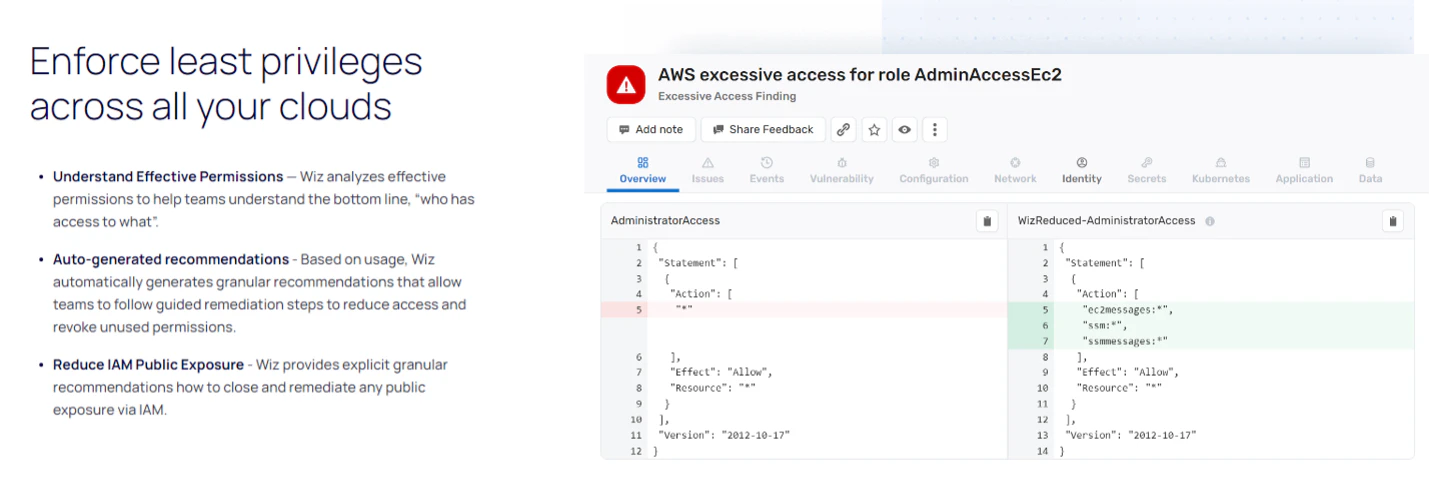
Configuration governance extends to network controls, encryption settings, logging configurations, and service-specific security features.
Compliance support and posture checks
For the most part, GRC teams own compliance. But compliance has an important prerequisite that cloud security analysts deliver: full-stack visibility.
Cloud security analysts support compliance by conducting cloud posture checks and setting up monitoring and scanning mechanisms, powered by intricately-tuned algorithms. From an audit perspective, providing evidence of compliance and surfacing noncompliant findings across PCI-DSS, HIPAA, SOC 2, or ISO 27001 is another key part of the role.
Posture vs runtime awareness
Cloud security spans configuration posture (CSPM) and live activity analysis (SIEM/runtime). Posture analysis identifies misconfigurations and excessive permissions. Runtime analysis detects active threats such as compromised credentials, data exfiltration, cryptomining, or lateral movement. Analysts need fluency in both.
Across these responsibilities, the success of a cloud security analyst is measured by coverage of critical assets, accuracy in prioritizing real risk over noise, speed of detection and response, reduction in high-risk exposure over time, and overall security impact on the business.
Essential cloud security skills and qualifications
Building a cloud security career as an analyst means developing practical cloud security skills that go well beyond any single tool or platform.
Below are the core cloud security skills you’ll need to build and grow in the role.
Technical cloud security skills
Cloud security analysts must be comfortable navigating IAM, VPC networking, storage, compute services, and telemetry across AWS, GCP, and Azure. You can get started without heavy scripting, but Python, Bash, or Go make you far more effective once you move past the junior stage.
Hands-on comfort with Linux and Windows environments, container platforms like Docker and Kubernetes, and core networking concepts such as the OSI model rounds out the technical foundation needed to operate effectively.
Security analysis comes next, with a mix of technical depth and defensive intuition. This means surfacing cloud vulnerabilities, privilege paths, and exposure, and then triaging risks based on real-world impact, business context, and cross-cloud factors.
Soft cloud security skills
Communication skills hold serious weight. Engineers need actionable remediation guidance, not just "fix this vulnerability" orders. Context on exploitability and impact is key. Leadership needs business context explaining how misconfigurations could result in data exfiltration and regulatory fines.
Analysts that collaborate well succeed.The best analysts act as enablers, helping teams understand risk, offering remediation options, and automating controls.
Analytical investigation skills are paramount. Analysts must reconstruct attack timelines from fragmented logs, identify patterns in noisy telemetry, and connect seemingly unrelated events.
Certifications
AWS Certified Security – Specialty, AZ-500, CCSP, and CCSK demonstrate foundational knowledge. They're helpful for getting past HR filters at the start of a cloud security career. But hands-on capability matters more. Experience on projects that involve securing cloud environments, automating controls, analyzing logs, and developing detection mechanisms carries more weight.
Watch 12-min demo
See how Wiz unifies the cloud security workflows analysts work with daily—from posture and identity to runtime detection.

Career path and salary expectations
Cloud security career trajectories are diverse, but some paths have a pretty logical flow. At the junior level, cloud security analysts are usually focused on alert triage, basic scripting, and CloudSec fundamentals. As they move into mid-level roles, they get pulled deeper into the cyber kill chain, supporting incident response and tuning cloud security controls. Senior analysts operate at a higher level, shaping detection strategy, tooling decisions, and cross-team collaboration.
The U.S. Bureau of Labor Statistics reports a median pay of roughly $125K for information security analysts overall, but cloud security specialists often command higher compensation due to their specialization and market demand.
In the U.S., entry-level cloud security analysts often start in the $75k-$100k range. With experience, compensation commonly moves into the low to mid six figures, and in senior, high-impact roles at larger organizations, total compensation can flirt with the $180k-$200k range.
For cloud security analysts, there is no hard ceiling on where this path can lead. With enough technical depth, leadership skill, and business acumen, some analysts eventually grow into senior cloud security specialists or even executive tracks like CISO.
Challenges in real-world cloud security
Breadth of required knowledge: Analysts are expected to have working knowledge and cloud security skills across a pretty broad surface area, from cloud platforms and networking to identity, containers, Kubernetes, application security, AI services, and incident response workflows.
Alert fatigue and fragmented tooling: You'll manage alerts from CSPM, CIEM, CNAPP, SIEM, vulnerability scanners, and runtime protection tools. Correlating findings across tools requires manual effort unless you have unified platforms.
On-call and shift expectations: Security doesn't pause for weekends. Analysts rotate through on-call schedules and respond to after-hours incidents.
Prioritization difficulty: Not every finding is equally critical. Analysts must assess exploitability, exposure, and business impact to prioritize remediation.
Tools and technology ecosystem
CNAPP, CSPM, and CIEM platforms provide configuration and identity risk visibility. These tools scan cloud environments for misconfigurations, evaluate IAM permissions, and flag toxic combinations.
SIEM and log pipelines enable detection and IR. Analysts query CloudTrail, VPC Flow Logs, Kubernetes audit logs, and application logs to investigate incidents.
IaC and secret scanning tools like Terraform, Checkov, and Gitleaks shift security left by identifying issues before deployment.
Runtime monitoring, vulnerability scanning, and workload telemetry provide live visibility. Tools monitor container runtime behavior, scan images for vulnerabilities, and collect telemetry to detect anomalies. Learn more about cloud security tools.
How Wiz supports cloud security analysis
Wiz supports cloud security analysis end-to-end by unifying visibility, prioritization, and remediation across cloud, code, data, and runtime environments. Through a combination of agentless and agent-based scanning, Wiz provides context-aware insights across multi-cloud and hybrid environments, covering configurations, workloads, identities, APIs, secrets, and source code.
The Wiz Security Graph supports contextual risk prioritization. It correlates vulnerabilities, misconfigurations, network exposure, identities, sensitive data, and runtime signals to reveal real attack paths. This context allows analysts to focus on exploitable risk rather than isolated alerts, prioritizing issues based on real-world impact.
Wiz also has full code-to-cloud coverage, surfacing SAST findings through Wiz Code and mapping them to deployment context so teams understand which vulnerabilities are truly exploitable. Exposed secrets are detected and prioritized using graph-based analysis, while built-in data security posture management capabilities help discover and govern sensitive data across the environment.
Also, AI-assisted investigations with Wiz’s SecOps AI Agent significantly expedite threat analysis. Analysts query the Security Graph in natural language and receive instant answers. For real-time detection, Wiz Defend and the Wiz Sensor apply threat detection rules across cloud and workload telemetry, giving analysts visibility into suspicious activity as it happens. Ready to see how Wiz supports comprehensive cloud security analysis? Get a demo to explore the unified platform in your own environment.
See Wiz in Action
Explore how the Wiz Security Graph connects vulnerabilities, identities, and runtime signals to surface the risks that matter.
