

What are application security frameworks?
Application security frameworks are structured sets of guidelines, controls, and best practices that help you build and maintain secure software. They provide a shared language for developers, security engineers, and leadership to talk about application risk, set priorities, and measure progress.
Without a framework, security efforts tend to be reactive and inconsistent. According to the 2025 Wiz State of Code Security Report, 56% of organizations have secrets exposed beyond company-owned repositories, highlighting how quickly gaps compound when teams lack coordinated controls.
One team might run static analysis while another skips it entirely. A framework turns that patchwork into a coordinated program with clear expectations at every stage of development.
These frameworks range from highly technical checklists (like OWASP ASVS) to broad organizational models (like NIST CSF). The right choice depends on what you're trying to accomplish and where your gaps lie.
Why application security frameworks matter
Standardization across teams and projects: Frameworks create a consistent baseline for security practices, so every application goes through the same rigor regardless of which team builds it. This consistency reduces the chance that a single overlooked vulnerability becomes a breach.
Compliance and regulatory alignment: Many industries require adherence to specific security standards. Frameworks like NIST CSF and ISO/IEC 27034 map directly to regulatory requirements, making audits smoother and reducing the overhead of proving compliance.
Catching threats before they ship: Frameworks push teams to identify and address risks early in the development process rather than scrambling after an incident. This shift-left approach catches vulnerabilities when they're cheapest and easiest to fix.
Get the Application Security Best Practices [Cheat Sheet]
A quick-reference framework covering vulnerability scanning, developer remediation workflows, and code-to-cloud risk prioritization.

Top application security frameworks
No single framework covers every scenario. Some are best suited for hands-on verification of individual apps, while others help you build a mature program across an entire organization. The frameworks below represent the most widely adopted options, each with a different focus and level of prescriptiveness.
Many security teams end up drawing from more than one framework. The key is understanding what each framework does well so you can layer them effectively.
Application security frameworks compared
The table below compares the five frameworks across the dimensions that matter most when choosing where to start.
| Framework | Focus | Best for | Prescriptiveness | Compliance alignment |
|---|---|---|---|---|
| OWASP ASVS | Application-level verification | Web app security testing | High | PCI DSS, SOC 2 |
| OWASP SAMM | Program maturity | Building/benchmarking an AppSec program | Medium | Flexible |
| NIST CSF | Organizational risk management | Cross-industry, board-level communication | Low–Medium | HIPAA, FISMA, SOC 2 |
| ISO/IEC 27034 | Application lifecycle security | Large enterprises, ISO 27001 environments | High | ISO 27001, GDPR |
| CIS Controls | Prioritized defensive actions | Teams needing a practical starting point | Medium | PCI DSS, HIPAA, SOC 2 |
1. OWASP Application Security Verification Standard (ASVS)
The OWASP Application Security Verification Standard (ASVS) is a detailed catalog of security requirements for designing, developing, and testing web applications. OWASP is the nonprofit foundation behind it and several other widely used security tools and standards.
ASVS organizes its requirements into three levels:
Level 1 covers low-assurance applications where basic security controls are sufficient.
Level 2 targets most business applications that handle sensitive data and need stronger defenses.
Level 3 is reserved for high-value, critical systems like healthcare platforms, financial infrastructure, and military applications that demand the most thorough verification.
The standard covers:
Authentication
Session management
Input validation
Cryptography
Error handling
Data protection
Communications security
Secure configuration
Each area includes specific, testable requirements tied to the appropriate verification level.
ASVS works well as a measuring stick during code reviews, penetration testing, and security assessments. You can adopt it incrementally, starting with Level 1 and progressing as your security posture matures.
It also provides a common reference point for communicating security expectations to your third-party vendors and development partners.
2. OWASP Software Assurance Maturity Model (SAMM)
OWASP SAMM takes a different angle than ASVS. Instead of verifying individual applications, it helps organizations assess and improve their overall software security program. Think of it as the program-level complement to ASVS's technical checklists.
SAMM organizes security activities across five business functions:
Governance
Design
Implementation
Verification
Operations
Within each function, it defines specific security practices and measures them across three maturity levels:
Level 1 represents an initial, ad-hoc approach.
Level 2 signals a structured and repeatable process.
Level 3 reflects an optimized program with continuous improvement built in.
The model is especially useful when you need to benchmark where your AppSec program stands today and build a realistic roadmap for improvement. It gives leadership a clear picture of progress without drowning them in technical details.
Teams that pair SAMM with ASVS get both the strategic direction and the tactical requirements they need.
3. NIST Cybersecurity Framework (CSF)
While the NIST Cybersecurity Framework (CSF) was originally designed for critical infrastructure, its flexible structure has made it one of the most widely adopted frameworks across industries and organization sizes. It organizes cybersecurity activities into five core functions:
Identify: Focuses on understanding your assets, business environment, and risk landscape
Protect: Covers the safeguards you put in place, from access controls to security training
Detect: Deals with monitoring and identifying security events in real time
Respond: Outlines how to contain and mitigate incidents once they occur
Recover: Addresses restoring services and incorporating lessons learned.
Each function breaks down into categories and subcategories that map to specific security outcomes. This hierarchical structure makes it straightforward to connect NIST CSF with other frameworks and regulatory requirements.
Many organizations use NIST CSF as their umbrella framework, then layer in more prescriptive standards like ASVS or CIS Controls for specific domains.
NIST CSF is particularly valuable for communicating security posture to non-technical stakeholders. Its language is accessible enough for board-level conversations while remaining precise enough for security teams to act on.
4. ISO/IEC 27034
ISO/IEC 27034 is the international standard dedicated specifically to application security. It provides a framework for integrating security into every phase of the application lifecycle, from requirements gathering through deployment and decommissioning.
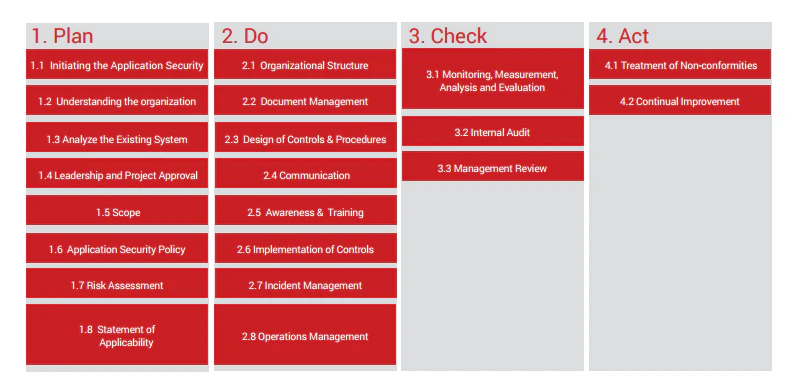
The standard introduces the concept of an Organization Normative Framework (ONF), which acts as a centralized repository of security controls, best practices, and processes that an organization applies across all its applications. Each application then gets its own Application Normative Framework (ANF) derived from the ONF, tailored to its specific risk profile.
ISO/IEC 27034 is particularly relevant for organizations that already operate within the ISO 27001 ecosystem. It extends information security management principles directly into the application layer, creating a direct connection between enterprise security governance and development practices.
The certification process is rigorous and resource-intensive, which makes it most practical for large enterprises and organizations in heavily regulated industries. Smaller teams may find more immediate value in OWASP-based frameworks while working toward ISO certification over time.
5. CIS Controls for application security
The Center for Internet Security (CIS) Controls are a prioritized set of actions designed to defend against the most common cyberattacks. While the full set of 18 controls covers everything from asset inventory to penetration testing, several controls map directly to application security concerns.
Control 16, for example, focuses specifically on application software security. It covers practices like establishing secure coding standards, applying security testing throughout the development process, and managing third-party software risks.
In practice, these controls matter because 26% of cloud breaches involve exploiting public-facing applications. CIS organizes controls into Implementation Groups (IGs) that help you prioritize based on your size and risk profile.
Version 8 reorganized the controls and introduced the Implementation Group model, making it easier for organizations of any size to adopt the framework incrementally. CIS Controls work well as a practical starting point for teams that need clear, actionable security steps without the overhead of a comprehensive certification process.
How to choose the right application security framework
Choosing the right framework depends on your organization's security maturity, compliance obligations, and development workflows. While there’s no universal answer, evaluating a few critical factors will narrow the field:
Run a gap analysis first. Before picking a framework, map your current security controls against a baseline like NIST CSF or CIS Controls. The gaps you find will point you toward the framework that addresses your most urgent needs.
Account for industry-specific threats. Financial services, healthcare, and government organizations face different threat landscapes and regulatory pressures. Pick a framework that speaks directly to the risks and compliance requirements in your sector.
Be honest about your security maturity. A highly prescriptive framework like ISO/IEC 27034 can overwhelm a team that is just getting started. OWASP SAMM's maturity model helps you meet yourself where you are and build from there.
Plan for scalability. Your framework should grow with you. Consider how well it handles multi-cloud environments, microservices architectures, and increasing application portfolios.
Map to your compliance requirements. If you need to demonstrate adherence to SOC 2, PCI DSS, HIPAA, or similar standards, choose a framework that maps cleanly to those requirements. NIST CSF and ISO/IEC 27034 both offer strong regulatory alignment.
Evaluate integration with existing tools. The best framework is one your teams will actually use. If your CI/CD pipeline, SAST/DAST scanners, and specific compliance standards already align with a particular framework's controls, that's a significant advantage.
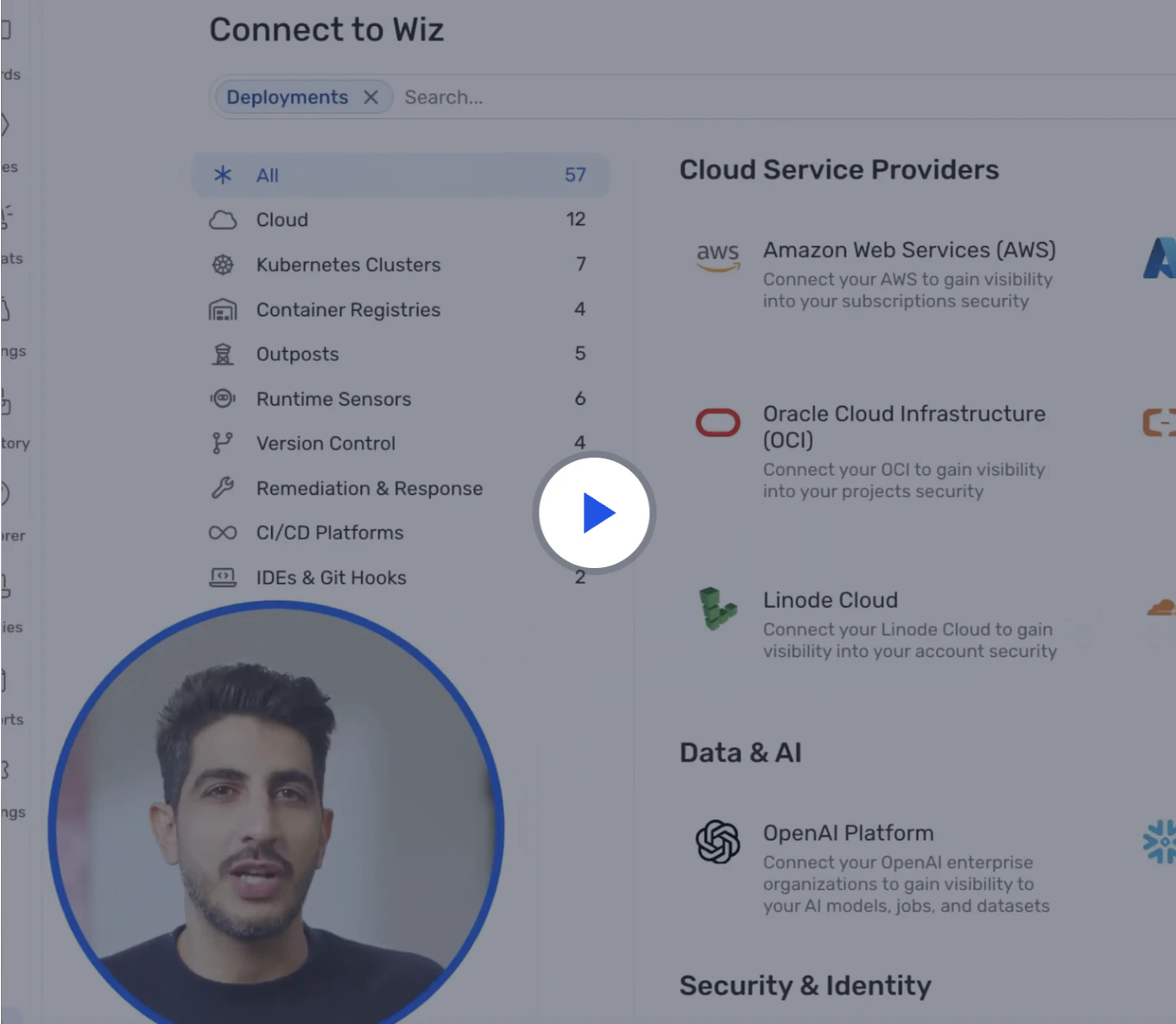
Watch 5-minute demo
Watch the demo to learn how Wiz Code scans infrastructure as code, container images, and CI/CD pipelines to catch risks early—before they reach the cloud.
Watch now
How to implement an application security framework
Adopting a framework is less about a one-time rollout and more about building habits that stick. Start small, measure results, and expand deliberately. Trying to implement everything at once is the fastest way to stall out.
Assess your current state. Use a model like OWASP SAMM to benchmark your existing security practices across governance, design, implementation, verification, and operations. This baseline tells you where to focus first and helps you set realistic goals.
Start with a pilot. Pick one application or one development team and apply the framework there. Work through the rough edges in a contained environment before scaling across the organization. Document what works and what creates friction.
Map controls to your SDLC. Align each framework requirement to a specific stage in your development lifecycle. Security requirements belong in planning, threat modeling fits into design, static analysis runs during builds, and dynamic testing happens in staging. Clear ownership at each stage prevents controls from falling through the cracks.
Automate wherever possible. Manual security checks do not scale. Integrate SAST, DAST, SCA, and infrastructure-as-code scanning directly into your CI/CD pipelines so that compliance verification happens automatically with every commit and deployment.
Measure and iterate. Track metrics that matter, such as vulnerability density, mean time to remediate, percentage of builds passing security gates, and framework coverage scores. Review these numbers quarterly, adjust your priorities, and raise the bar as your teams mature.
Secure your applications from code to cloud with Wiz
Wiz Code connects your application security framework requirements directly to your development workflows. It scans code repositories, container images, and infrastructure-as-code templates to surface vulnerabilities, misconfigurations, and compliance violations before they reach production. Wiz Code maps findings directly to OWASP ASVS requirements and NIST CSF controls, giving teams a clear line of sight between code-level vulnerabilities and framework compliance.
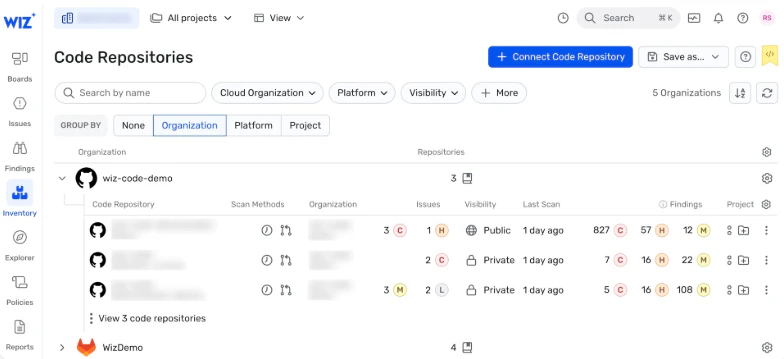
As AI-generated code becomes a larger share of what teams ship, scanning that code with the same rigor as human-written code is not optional. Wiz AI-APP extends visibility into AI-generated code patterns, third-party AI models, and AI pipelines so security teams can verify that automated output meets the same framework standards as everything else in the codebase.
Rather than treating framework compliance as a separate audit exercise, Wiz embeds security checks into the places where developers already work. Pull request annotations, IDE integrations, and automated policy enforcement turn framework controls into guardrails that run continuously.
The result is faster feedback loops, fewer production vulnerabilities, and a security program that actually scales with your development velocity.
Schedule a demo to see how Wiz connects code-level findings to cloud runtime context so your team can prioritize what matters most.
See How Wiz Operationalizes AppSec Frameworks
Get a demo of how Wiz Code scans IaC, container images, dependencies, and CI/CD pipelines, mapping findings to frameworks like OWASP ASVS, NIST SSDF, and CIS Controls.
