
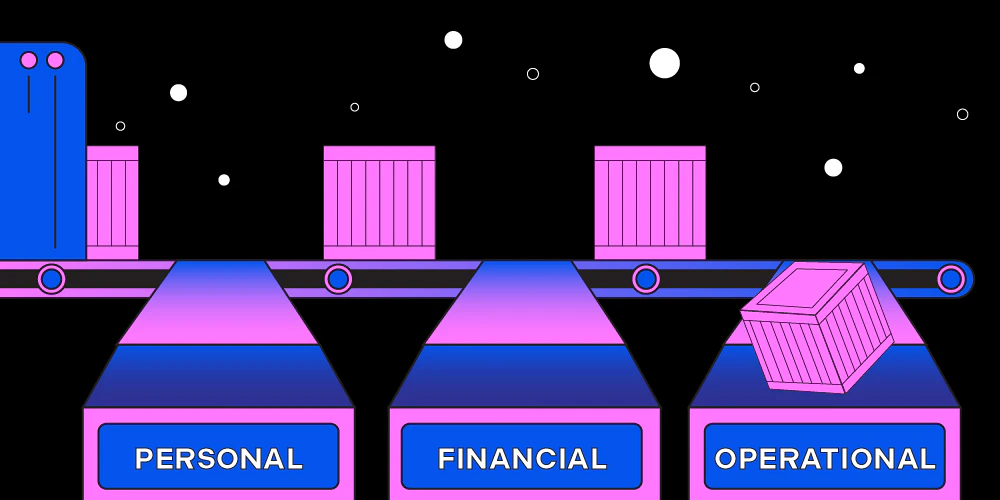
What is data categorization?
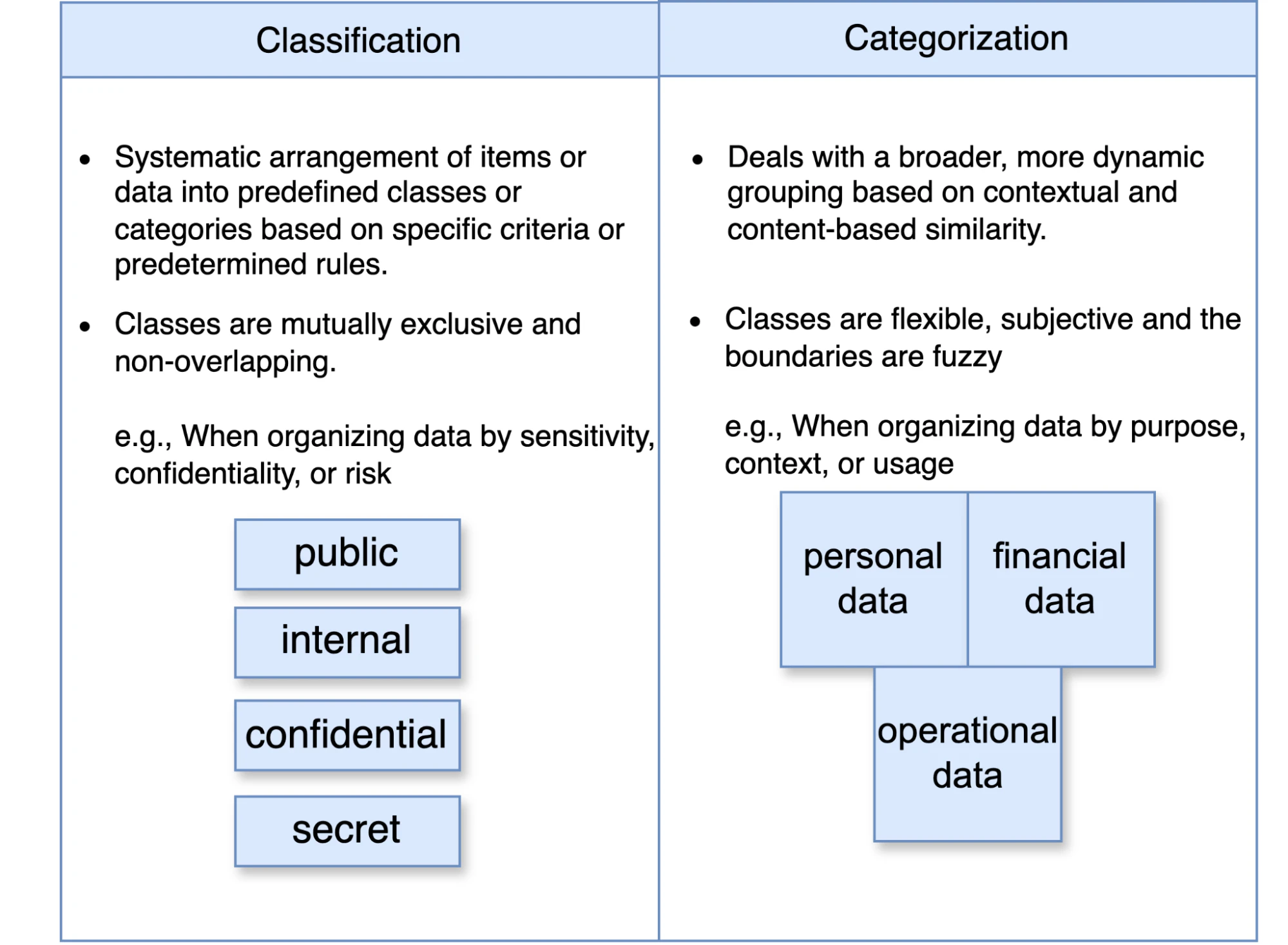
Data categorization is the process of grouping data based on shared attributes like content type, context, or intended use. Unlike data classification, which assigns mutually exclusive sensitivity labels, categorization allows a single data element to belong to multiple groups simultaneously.
A customer transaction record, for example, might be categorized as both "financial data" and "customer data" depending on how different teams need to use it.
In cloud architectures, data is spread across buckets, databases, logs, snapshots, and SaaS integrations. Categorization gives you a practical map of what you have before you try to secure it.
Cloud Data Security Snapshot - Current Exposure Trends
Wiz Research analyzed hundreds of thousands of cloud accounts across organizations of all sizes to assess the current state of data security in the cloud.

Data classification vs. categorization
Over the last few years, data security vendors have begun offering sensitive data classification to filter risks by impact. But sometimes, what they call classification is really categorization and vice versa. If you're a practitioner looking to implement DSPM, it's important to understand the differences to achieve your security goals.
Categorization and classification are both data management strategies that aid in strategic decision-making. Categorizing similar types into accessible groups makes information easier to use and understand, helping decision-makers draw insights and make informed choices.
Classification also involves organizing data into groups, but it primarily focuses on protection and compliance. For example, data labeled as "confidential" is usually encrypted and accessible only to authorized personnel.
The MECE framework distinction
The MECE framework helps distinguish these two approaches. Classification follows MECE principles: each data element receives exactly one sensitivity label, and all possible labels together cover every scenario.
Categorization is intentionally non-MECE because the same data can belong to multiple groups based on different use cases. A hierarchical taxonomy can reduce overlap in categorization, but some flexibility is expected by design.
Why overlap matters in categorization
Categorization inherently allows for overlap because data can belong to multiple categories based on its content, context, or use case. For instance, a financial transaction record might be categorized both under "customer data" and "financial data."
Unlike classification, which strictly enforces mutually exclusive categories for compliance and security purposes, categorization focuses on making data more accessible and contextually meaningful across different teams and use cases.
By leveraging structured taxonomies and metadata tagging, organizations can minimize overlap and bring more order to their categorization efforts while maintaining the flexibility needed to support multiple data contexts.
How categorization and classification work together
Data is first identified, then categorized. DSPM solutions automatically detect data across siloes and label it based on contextual and content-based similarities. Categorization boundaries can be fuzzy because data elements often qualify for multiple categories.
Once categorized, data is classified by sensitivity using impact values (low, moderate, or high) across confidentiality, integrity, and availability to identify risk profiles that could lead to breaches.
Categorization is foundational for understanding what data you have and where it lives, but it's one piece of a broader DSPM strategy. Wiz DSPM extends beyond categorization by integrating security insights, access controls, and attack path analysis—helping organizations like Colgate-Palmolive reduce external exposure issues by 44%.
Types of data categories
Organizations typically categorize data along four dimensions, each serving different operational and security needs.
| Category Type | Description | Considerations |
|---|---|---|
| Data content | Categorizing data based on its subject matter or intended use | Financial details, personally identifiable information (PII), health records, and operational data. Note that certain content types are subject to strict regulatory limitations. |
| Context | Taking into account where and how data is used or created | Data sorted by business processes, project requirements, or user roles. Marketing team data might be categorized differently from R&D team data, reflecting their different contextual uses. |
| Storage location | Organizing data based on where it's stored | On-premises servers, cloud environments, or hybrid setups. Each storage location may have different security and access protocols, making it important to sort data accordingly to ensure proper management and protection. |
| Data structure | Categorizing data based on its format and structure | Structured data (relational databases with clear schema), unstructured data (non-relational databases without schema), and semi-structured data (JSON or XML files with tags or markers to separate semantic elements). |

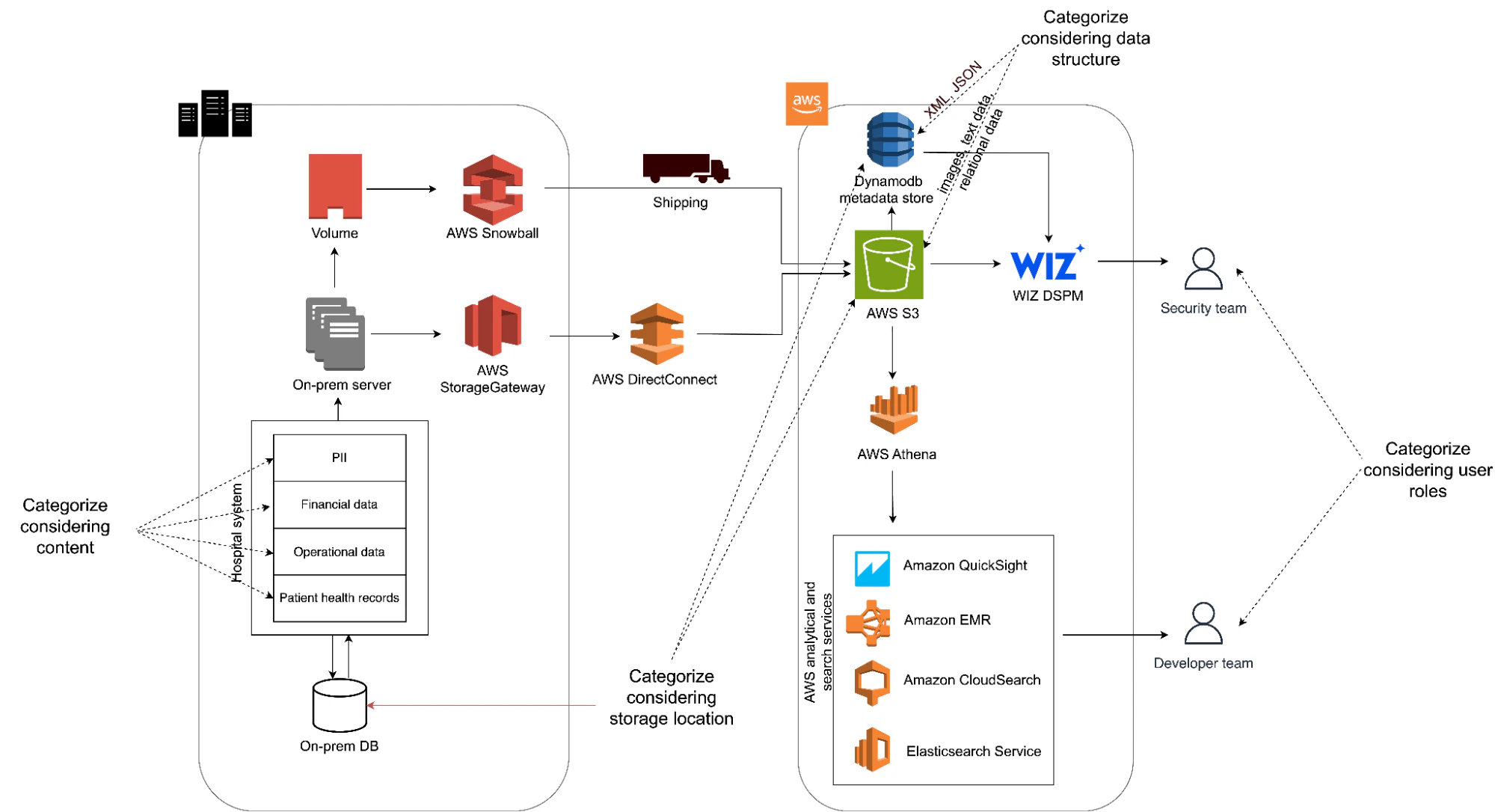
Healthcare Categorization Example
Imagine a healthcare application running in an AWS environment that's designed to handle, store, and secure large amounts of data. This data can be categorized based on content, context, storage, and structure.
Strategies for effective data categorization in your organization
Smaller organizations often start with manual categorization using spreadsheets or tagging systems to establish initial groupings. As data volume grows, automation becomes essential because data spreads across siloes faster than teams can track manually.
Data Governance & Compliance Guide
Data governance and compliance are central to the DSO mandate.

Data categorization tools
Automated tools solve the scale problem that manual categorization can’t address. Cloud native options include Amazon Macie for AWS environments, Microsoft Purview for multi-cloud data governance, and Google Cloud's Sensitive Data Protection, which finds and classifies sensitive data like PII or secrets directly in storage.
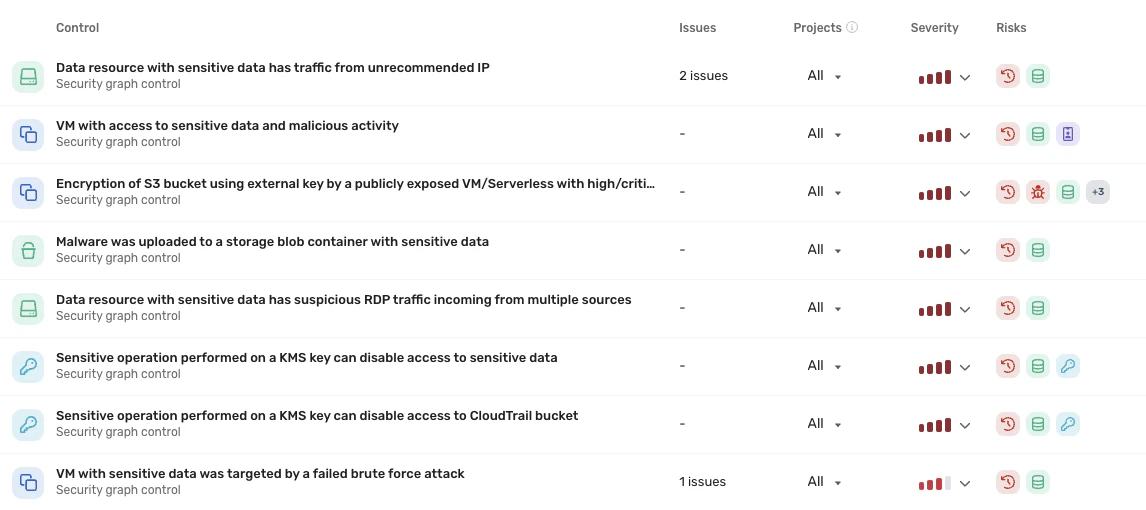
DSPM solutions extend categorization into actionable security by connecting data context with risk factors:
Risk-based prioritization: Automatically assesses sensitivity and exposure to highlight high-risk assets requiring immediate attention
Access control analysis: Maps which identities have access to categorized data and flags excessive permissions
Data movement tracking: Monitors how data flows across environments to detect unauthorized transfers or shadow data
Attack path prevention: Correlates data exposure with exploitable paths that adversaries could use to reach sensitive assets
Developing a data taxonomy for categorization
Data taxonomy is the systematic structuring of data into categories (parent nodes), subcategories (terminal nodes), and attributes. This organization reduces the fuzziness in boundaries, makes the data easier to navigate, and maintains consistency across an application's architecture.
A taxonomy sets specific rules for categorization, such as:
Defining what falls within the scope
The definitions of each category
How these categories are interconnected
The purpose of each category
If all you have is a category name without any contextual metadata, it might lead to significant data sparsity, complicating security efforts.
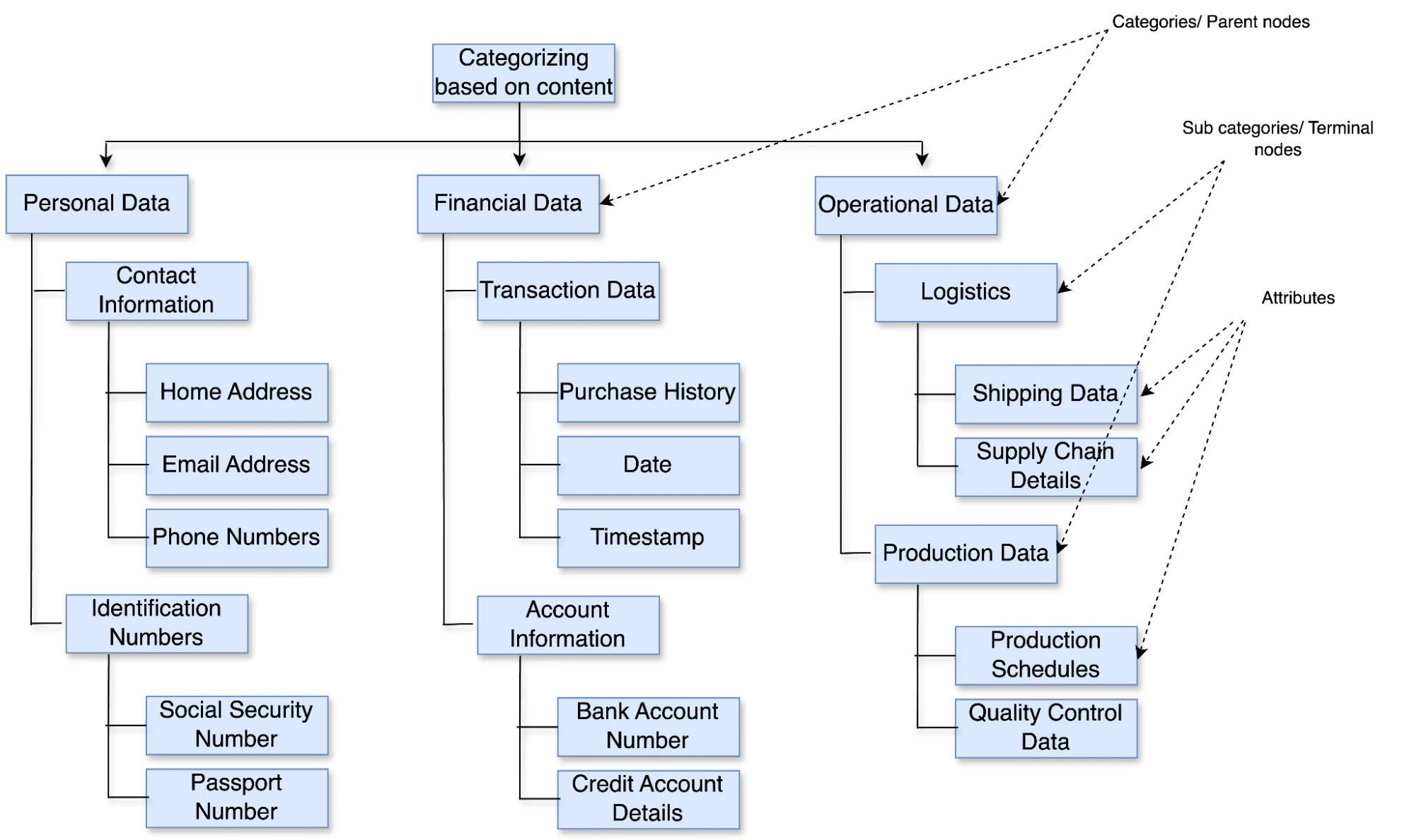
You can improve the organization and searchability of a taxonomy with metadata tagging, which lets you add descriptive labels to categories and subcategories.

Data governance and policies
Several governance frameworks require documented data categorization, including:
ISO 8000: Organizes data by domains (supplier, product, operational) with quality standards per domain
COBIT: Assigns ownership and controls to each data domain aligned with business objectives
GDPR: Requires documented categories of personal data, data subjects, and processing activities
HIPAA: Distinguishes protected health information (PHI) from non-PHI through designated record sets
CCPA: Mandates disclosure of personal information categories, source categories, and third-party categories
How Wiz approaches data categorization
Wiz DSPM automatically discovers and categorizes data across cloud environments, then connects that context to access permissions and attack paths. Instead of just showing where data lives, Wiz maps who can reach it and how adversaries might exploit that access.
This approach extends to AI workloads as well. Wiz identifies where sensitive data flows into AI training datasets and model pipelines, helping you understand which data categories are used to train or fine-tune models. When a training dataset contains PII or confidential business data, Wiz surfaces that exposure alongside broader attack-path context.
Schedule a demo to see how Wiz can help you turn data categorization into actionable security insight.
Protect your most critical cloud data
Learn why CISOs at the fastest companies choose Wiz to secure their cloud environments. Get a demo
