What is the A2A Protocol? Components, Use Cases, and Security
Equipo de expertos de Wiz
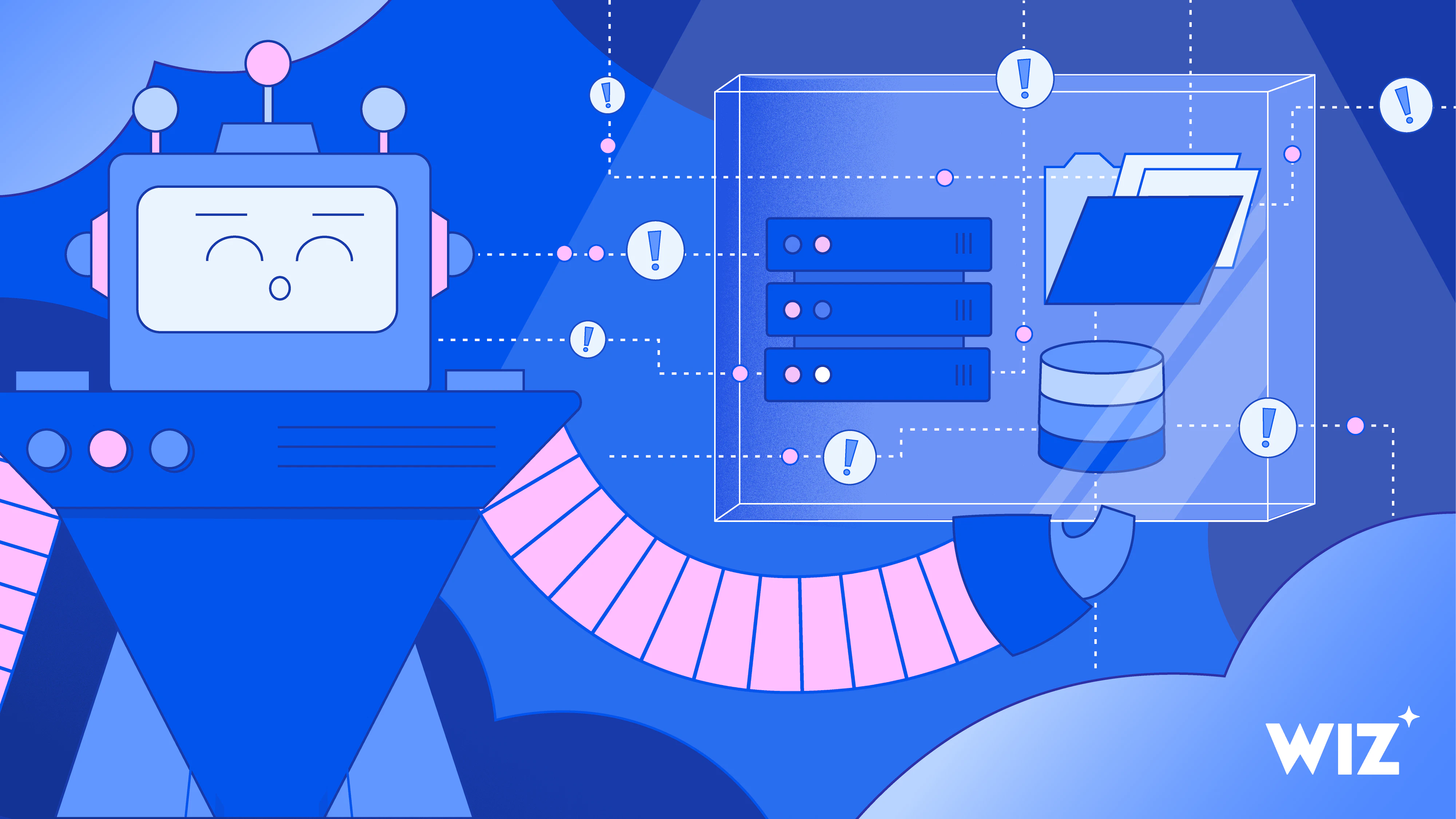
The A2A protocol is an open standard that lets independent AI agents discover each other and coordinate tasks. Learn how it works and how to secure it.
Bienvenido a CloudSec Academy, tu guía para navegar por la sopa de alfabeto de los acrónimos de seguridad en la nube y la jerga de la industria. Cortar el ruido con contenido claro, conciso y elaborado por expertos que cubra los fundamentos de las mejores prácticas.
Descubre cómo Wiz convierte los fundamentos de la seguridad en la nube en resultados reales.
The A2A protocol is an open standard that lets independent AI agents discover each other and coordinate tasks. Learn how it works and how to secure it.
AI code review uses AI to flag bugs and security flaws in pull requests before they merge. Learn how it works, its benefits, limits, and best practices.
AI detection and response (AIDR) is a security capability that monitors your AI systems, prompts, agents, models, and the data pipelines feeding them, then acts when something goes wrong.
Offensive security is a proactive way to test defenses by attacking your own systems the way a real adversary would.
Mira cómo Wiz convierte la visibilidad instantánea en una remediación rápida.

AI data integration is the use of machine learning, natural language processing, and large language models to automatically connect, clean, map, and move data from many sources into a single, unified view.
Code review is the practice of having someone other than the author read a code change before it merges.
Purple teaming is a collaborative validation loop: emulate a realistic procedure, observe what the defensive stack sees, improve the control, and retest.
AI cost management is the practice of tracking, attributing, optimizing, and governing spend across the entire AI lifecycle, including managed inference APIs, self-hosted GPU compute, vector data pipelines, and model fine-tuning
Penetration testing finds exploitable weaknesses; red teaming measures whether attackers can turn those weaknesses into real attacks before your teams detect and stop them.
API sprawl becomes a security risk when API creation outpaces inventory, ownership, and lifecycle controls.
Red teaming evaluates how well your organization detects, contains, and responds to realistic attacks by using ethical hackers to pursue specific objectives.
API discovery is the process of finding, mapping, and cataloging every single API across your entire digital estate, including your public-facing cloud accounts and your on-premises data centers.
Business logic vulnerabilities are flaws in how an app enforces its own rules, letting attackers misuse valid features. See the types, examples, and prevention.
In this article we'll cover a tried-and-true governance strategy, a practical five-layer operating model, and guidance on how to operationalize it using the right people, processes, and platforms.
La seguridad en la nube se refiere a un conjunto de políticas, controles, procedimientos y tecnologías que trabajan juntos para proteger los sistemas, los datos y la infraestructura basados en la nube.
La gestión de la postura de seguridad en la nube (CSPM) describe el proceso de detección y solución continua de riesgos en entornos y servicios en la nube (por ejemplo, contenedores S3 con acceso de lectura público). Las herramientas CSPM evalúan automáticamente las configuraciones de la nube en función de las mejores prácticas de la industria, los requisitos normativos y las políticas de seguridad para garantizar que los entornos en la nube sean seguros y estén gestionados de forma adecuada.
eBPF provides deep visibility into network traffic and application performance while maintaining safety and efficiency by executing custom code in response to the kernel at runtime.
SAST (Static Application Security Testing) analyzes custom source code to identify potential security vulnerabilities, while SCA (Software Composition Analysis) focuses on assessing third-party and open source components for known vulnerabilities and license compliance.
La gestión de vulnerabilidades implica identificar, gestionar y remediar continuamente las vulnerabilidades en los entornos de TI, y es una parte integral de cualquier programa de seguridad.