Advanced Container Security Best Practices [Cheat Sheet]

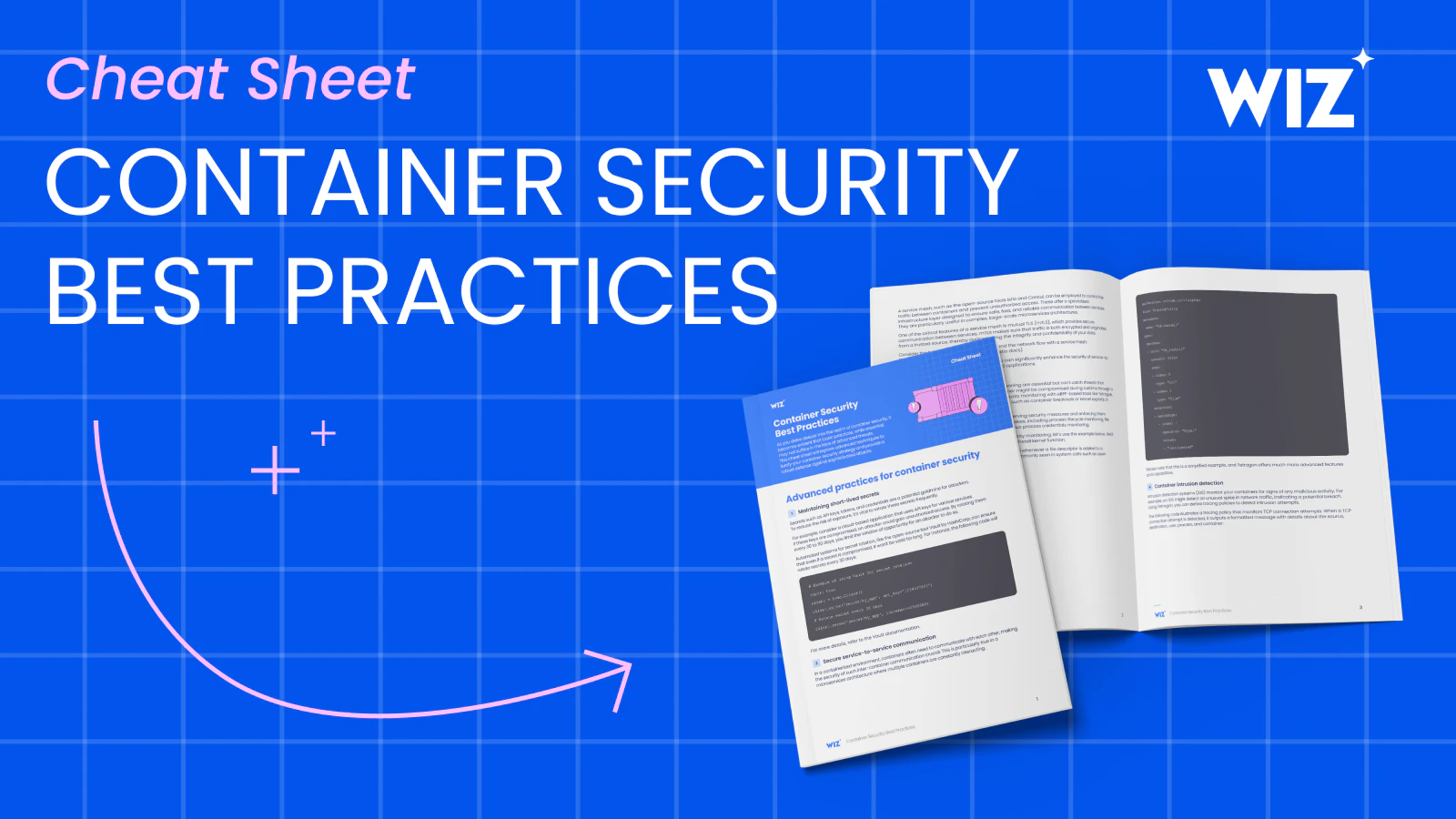
Get the Cheat Sheet
Key Takeaways
- Security must extend beyond image scanning:While pre-deployment scanning is critical, runtime threats and misconfigurations require defense-in-depth approaches.
- Built-in and open-source tooling can go a long way:From OPA to Tetragon, Vault to Cosign, the cheat sheet gives you practical examples of how to use top tools for container security automation and observability.
- Environment-specific guidance matters:Security best practices vary depending on whether you’re running containers in Kubernetes, Docker, OpenShift, or serverless container services like Fargate.
After reading this cheat sheet, you'll be able to:
Strengthen container security across build, deploy, and runtime stages using battle-tested techniques.
Enforce zero trust principles, detect container-level intrusions, and secure inter-service communication.
Apply the right open-source tools and policies for your Kubernetes, Docker, or cloud-native container environments
This cheat sheet is designed for:
DevSecOps and security engineers looking to go beyond container basics
Platform teams managing Kubernetes, Docker, or OpenShift environments
Cloud security architects enforcing policies across container platforms
Anyone securing container workloads across the SDLC
What's included?
Short-lived secrets management: Rotate secrets automatically with tools like Vault to reduce the window of exposure.
Secure service-to-service traffic: Use service meshes and mTLS to encrypt and authenticate internal container traffic.
Runtime threat detection with eBPF: Monitor container behavior in real-time using tools like Tetragon.
Intrusion detection policies: Detect unusual activity like suspicious TCP connections at the container level.
Zero trust architecture for containers: Enforce strict access policies using OPA and verify all requests—even internal ones.
Automated security enforcement: Prevent risky configurations (like exposed ports or root containers) before they deploy.
Admission controllers and image signing: Block bad configurations at the API layer and ensure only trusted images are used.
Environment-specific best practices: Tailored security checklists for Kubernetes, Docker, OpenShift, and cloud provider services (EKS, ECS, Fargate).
The Container Security Toolkit





Obtén una demostración personalizada
¿Listo para ver a Wiz en acción?
"La mejor experiencia de usuario que he visto en mi vida, proporciona una visibilidad completa de las cargas de trabajo en la nube."
David EstlickCISO
"Wiz proporciona un panel único para ver lo que ocurre en nuestros entornos en la nube."
Adam FletcherJefe de Seguridad
"Sabemos que si Wiz identifica algo como crítico, en realidad lo es."
Greg PoniatowskiJefe de Gestión de Amenazas y Vulnerabilidades