

What is attack surface assessment in cloud security?
Attack surface assessment is the process of identifying, mapping, and continuously evaluating all the ways an attacker could access or move through your environment.
In cloud security, this goes far beyond traditional perimeter scanning. Your attack surface includes not just internet-facing servers, but identities, APIs, workloads, data stores, and the relationships between them – many of which change constantly by design.
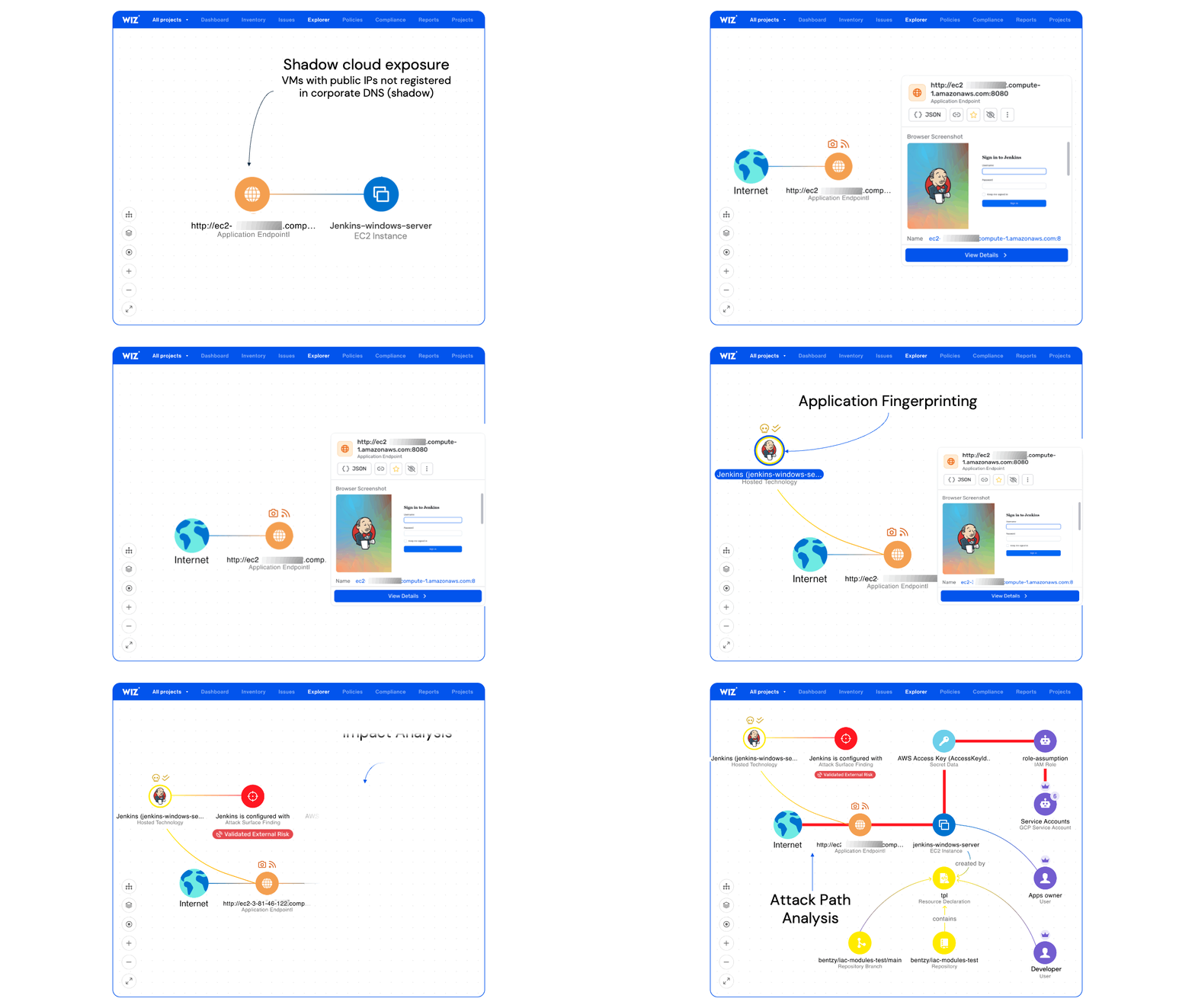
In simple terms:
The attack surface is every possible entry point, exit point, and path an attacker could use
Attack surface assessment is understanding which of those paths actually exist, which are exposed, and which could lead to meaningful impact if exploited
In cloud environments, attack surface assessment must account for:
Ephemeral infrastructure that appears and disappears automatically
Identity-driven access instead of network boundaries
Distributed APIs and service-to-service communication
Shared responsibility between cloud providers and customers
Because of this complexity, an assessment is not a one-time scan or checklist. It’s a continuous process that gives security teams an attacker’s-eye view of their environment and a clear baseline for understanding real exposure.
Stop chasing CVEs. Prioritize true exposures
Learn how Wiz Cloud surfaces toxic combinations across misconfigurations, identities, vulnerabilities, and data—so you can take action fast.

Why attack surface assessment is critical for cloud security
In the cloud, infrastructure is dynamic by default. Resources are created, modified, and destroyed automatically through code, often without direct human involvement. As a result, attack surfaces can change multiple times a day – sometimes within minutes – making periodic or point-in-time assessments ineffective.
Another major shift is that identity replaces the network as the primary security boundary. Instead of breaching a firewall, attackers frequently exploit overly permissive roles, compromised credentials, or misconfigured trust relationships. A single identity with excessive permissions can open access to dozens of services, APIs, and data stores across accounts and regions.
APIs further expand cloud attack surfaces. Modern applications expose functionality through internal and external APIs, many of which are undocumented, short-lived, or automatically generated by cloud services. These APIs are often protected by authentication rather than network controls, making them easy to miss without continuous discovery.
Cloud architectures also amplify blast radius. A small misconfiguration – such as a publicly accessible resource or an overly permissive role – can cascade into widespread exposure when combined with other weaknesses. Attackers exploit these chained conditions rather than isolated vulnerabilities.
Because of this, effective cloud attack surface assessments must:
Be continuous rather than point-in-time
Account for identities, APIs, and relationships – not just assets
Model how attackers could move laterally after initial access
Focus on exploitable paths to sensitive data or critical systems
Without this shift, organizations are left reacting to incidents instead of understanding and reducing exposure ahead of time.
Attack surface monitoring: Your first line of cloud defense
Attack surface monitoring involves continuously identifying and tracking internet-reachable assets. In cloud-native environments, where endpoints, identities, and services
Leggi di più

What makes up a cloud attack surface
Cloud attack surfaces aren’t defined by a single type of asset. They’re made up of multiple exposure domains that intersect and reinforce each other, often in ways that aren’t obvious when viewed in isolation.
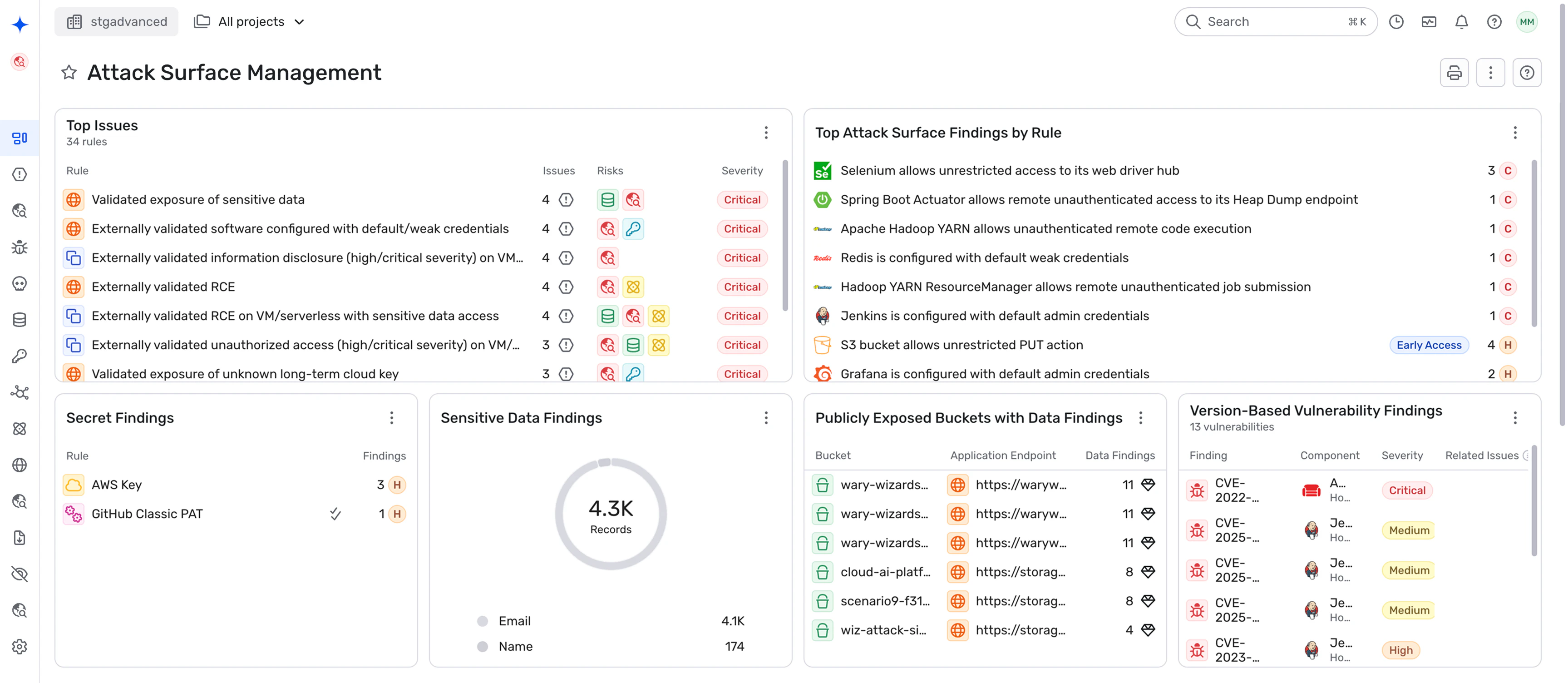
At a high level, cloud attack surfaces are composed of the following elements.
Internet-facing assets
These are the most visible entry points and include public IPs, domains, load balancers, exposed virtual machines, storage services, and externally reachable APIs. Because these assets are reachable from the internet, they’re often the starting point for initial access – but not always the most damaging on their own.Identities and access paths
In cloud environments, identities are often more powerful than networks. Human users, service accounts, roles, and machine identities define what actions can be performed once access is gained. Overly permissive roles, unused credentials, and complex trust relationships can create powerful attack paths that bypass traditional perimeter defenses entirely.Workloads and software components
Virtual machines, containers, serverless functions, and the software running inside them expand the attack surface through vulnerabilities, insecure configurations, exposed ports, and runtime behaviors. These workloads frequently inherit permissions from cloud identities, increasing their potential impact if compromised.APIs and service-to-service communication
Modern cloud environments rely heavily on APIs – both public-facing and internal. These APIs may be undocumented, ephemeral, or automatically generated by cloud services. Weak authentication, excessive privileges, or missing validation can turn APIs into high-risk entry points, especially when combined with compromised identities.Sensitive data and data flows
Attack surface assessments must also account for where sensitive data lives and how it moves. Databases, object storage, analytics platforms, and data pipelines often sit behind multiple layers of access control. The true risk emerges when exposed assets or identities can reach sensitive data through indirect paths.Relationships and dependencies between assets
Individually, many assets may appear low risk. The real danger lies in how they connect. A publicly exposed service, a vulnerable workload, and an overly permissive identity can form a chained path that leads directly to critical systems or data. These relationships define the effective blast radius of any compromise.
Cloud attack surface assessments don’t look at these elements in isolation. They evaluate how exposure, access, and relationships combine to create realistic attack paths – revealing which parts of the environment actually matter from an attacker’s perspective.
Attack surface mapping: Complete visibility guide
Attack surface mapping identifies externally reachable entry points and shows what those entry points expose inside your environment, including internal resources, identities, and data.
Leggi di più

What cloud attack surface assessments actually do
Good cloud attack surface assessments don’t just tell you what exists in your environment – they tell you what’s exposed, what’s reachable, and what actually puts you at risk.
At a minimum, they help teams keep up with constant change. New cloud resources, APIs, and identities appear all the time through automation and infrastructure-as-code. An effective assessment keeps pace with that churn, so security teams aren’t working from an outdated or incomplete picture.
More importantly, strong assessments separate presence from exposure. A workload, API, or vulnerability might exist in your environment, but that doesn’t automatically make it dangerous. What matters is whether it’s reachable, whether it can be abused, and what it connects to. Effective assessments focus on those questions instead of treating every finding as equally urgent.
They also look beyond initial access. Most real cloud attacks don’t succeed because of a single misconfiguration – they succeed because multiple small weaknesses line up. A cloud attack surface assessment connects those dots, showing how an attacker could move from an exposed entry point to more sensitive systems, identities, or data once they’re inside.
That context is what enables meaningful prioritization. Instead of chasing long lists of alerts, teams can focus on the handful of issues that actually create exploitable paths to high-impact assets. A low-severity misconfiguration that leads to sensitive data often matters far more than a critical vulnerability on an isolated system.
Ultimately, attack surface assessments exist to support better decisions. They give security teams clarity about where risk truly lives, help them explain priorities to stakeholders, and make remediation efforts more targeted – so time spent fixing issues actually reduces real exposure.
How organizations operationalize cloud attack surface assessments
In practice, cloud attack surface assessments don’t work as a one-off exercise. Teams that get real value from them treat assessment as something that runs continuously in the background, not as a quarterly project or a static report.
The first shift is moving away from static inventories. In cloud environments, asset lists go stale almost immediately. New resources, APIs, identities, and permissions are constantly created through automation and infrastructure-as-code. Effective teams stop asking “what do we have?” and instead focus on what just changed and whether those changes introduced new exposure.
Another critical shift is combining outside-in discovery with inside-out analysis. Outside-in views show what attackers can see from the internet – public assets, exposed services, reachable APIs. That perspective is essential, but incomplete. On its own, it doesn’t explain what happens after initial access.
Inside-out analysis fills that gap by looking at vulnerabilities, configurations, identities, and permissions across internal cloud resources to understand blast radius and lateral movement potential. This is where unified vulnerability management becomes central to operationalizing attack surface assessments.
Rather than treating vulnerabilities as isolated findings on individual workloads, unified vulnerability management evaluates them in context. A vulnerability is assessed based on where it exists, whether the workload is reachable, what identity it runs as, and what that identity can access. A low-severity vulnerability on an exposed service with broad permissions can represent far more risk than a critical vulnerability buried deep in an isolated system.
By connecting outside-in exposure with inside-out vulnerability and identity context, teams can see which weaknesses actually form viable attack paths. This unified view allows them to prioritize remediation based on real exploitability and impact, not raw severity scores or alert volume.
Operationalizing assessments also means pushing context closer to the teams responsible for fixing issues. When findings live only in security dashboards, remediation slows down. Teams that make progress tie exposure back to owners – specific services, repositories, or cloud accounts – so fixes happen where day-to-day work already occurs.
Over time, mature organizations use cloud attack surface assessments as a feedback loop, not just a detection mechanism. Patterns emerge around which services introduce the most exposure, which identity policies are consistently too permissive, and which types of changes tend to create risk. That insight feeds back into design decisions, guardrails, and deployment practices, reducing exposure before it reaches production.
When done well, cloud attack surface assessments stop feeling like a separate security activity. They become a shared, continuously updated understanding of risk – one that helps teams keep pace with cloud change while focusing remediation on what actually matters.

From attack surface assessments to exposure management
On their own, attack surface assessments and vulnerability management solve different parts of the same problem.
Attack surface assessments focus on what is exposed: internet-facing assets, reachable APIs, entry points, and the ways attackers can gain initial access. They answer the question, “What can an attacker see or touch from the outside?”
Unified vulnerability management focuses on what could be exploited inside the environment: vulnerable workloads, misconfigurations, overly permissive identities, and the relationships that determine blast radius. It answers the question, “If something is compromised, what could an attacker actually do next?”
Exposure management emerges when these two views are combined.
Instead of treating exposure and vulnerabilities as separate concerns, exposure management looks at how they intersect. An exposed asset only matters if it leads somewhere. A vulnerability only matters if it’s reachable. Exposure management connects those dots, showing which combinations of exposure, vulnerabilities, and permissions create real attack paths to sensitive data or critical systems.
This shift changes how risk is understood and acted on. Rather than tracking attack surface growth on one side and vulnerability counts on the other, teams focus on reducing exploitable exposure – the specific conditions that attackers can realistically chain together. That’s why two environments with the same number of vulnerabilities can have very different risk profiles depending on exposure and access paths.
In practice, exposure management turns cloud security into a prioritization problem instead of a volume problem. Security teams stop asking, “How many issues do we have?” and start asking, “Which issues actually put us at risk right now?” Remediation efforts become more targeted, more defensible, and easier to explain to stakeholders.
This is also what allows exposure reduction to be measured meaningfully. Improvements aren’t just reflected in fewer findings, but in fewer viable attack paths, smaller blast radius, and less sensitive data reachable from exposed entry points. That’s the outcome organizations are ultimately after – not perfect configurations, but reduced real-world risk.
How Wiz supports cloud attack surface assessments and exposure management
Wiz supports cloud attack surface assessments by bringing together outside-in exposure discovery and inside-out vulnerability context into a single, continuously updated view of risk. Rather than treating attack surface visibility and vulnerability management as separate workflows, Wiz connects them to show which conditions actually create exploitable exposure.
From an outside-in perspective, Wiz Attack Surface Management (ASM) continuously discovers internet-facing assets across cloud accounts, domains, APIs, and application endpoints. This includes resources created through automation, infrastructure-as-code, and third-party integrations that often escape traditional inventories. The goal isn’t just to list what’s public, but to understand what is reachable and changing as the environment evolves.
That external view is then enriched with inside-out context through unified vulnerability management. Wiz correlates exposed assets with vulnerabilities, misconfigurations, identities, and permissions across cloud workloads. Vulnerabilities aren’t evaluated in isolation – they’re assessed based on reachability, privilege, and potential blast radius. This allows teams to see when a vulnerability on an exposed service creates a real path to sensitive data or critical systems, and when it doesn’t.
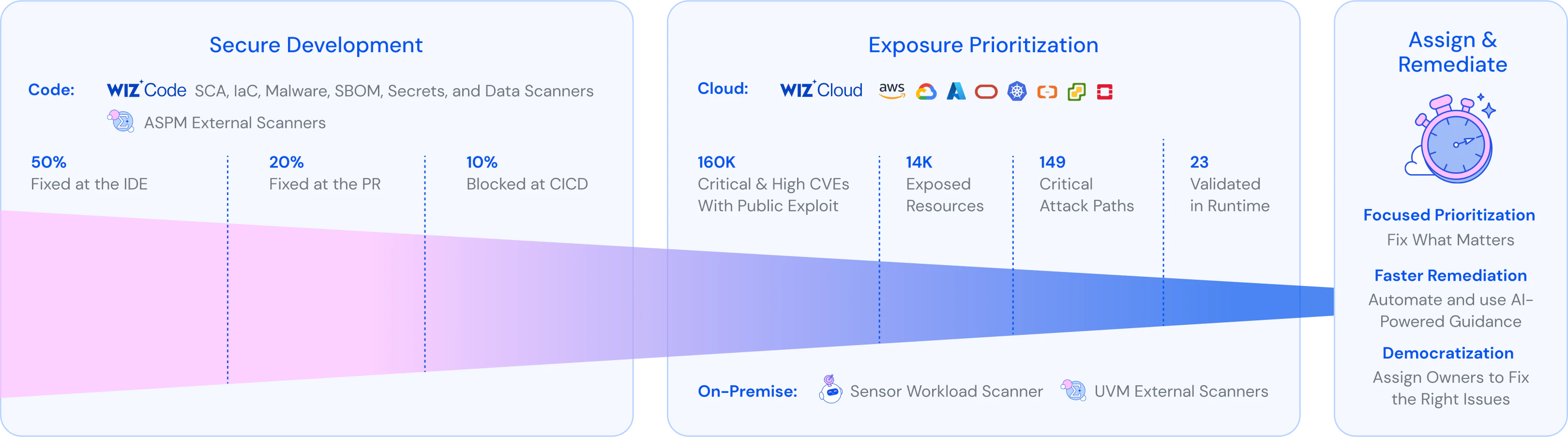
At the center of this approach is the Wiz Security Graph, which models relationships between assets, identities, network exposure, and data. By analyzing these relationships, Wiz highlights real attack paths – the chained conditions an attacker could realistically exploit – so teams can focus remediation on the issues that meaningfully reduce risk. This turns attack surface assessments from static reporting into an ongoing prioritization mechanism.
Wiz also helps operationalize these assessments by connecting findings back to ownership and remediation workflows. Exposures are tied to the cloud accounts, services, or repositories responsible for them, making it easier for security teams to work with engineering and platform teams to fix the right issues first. As environments change, Wiz continuously reassesses exposure, ensuring that attack surface insights stay current rather than becoming outdated snapshots.
Together, these capabilities allow organizations to move beyond asset counts and vulnerability volume toward exposure management – reducing the number of viable attack paths, shrinking blast radius, and focusing effort where it has the greatest impact on real-world risk.
Stop chasing CVEs. Prioritize true exposures
Learn why CISOs at the fastest growing companies choose Wiz to secure their cloud environments.
