

What is attack surface discovery?
Attack surface discovery (ASD) is the continuous, automated process of identifying and mapping every asset, connection, and service an attacker could target across your entire digital footprint (cloud, hybrid, and on-premises environments). Think of it as mapping every visible door and hidden entry point—including public-facing components like APIs, cloud workloads, and exposed services.
The goal is simple: knowing what you have before attackers do.
ASD is an essential first step in attack surface management (ASM), laying the groundwork for external ASM (EASM) to prevent initial breaches and internal ASM (IASM) to stop lateral movement.
2025 Gartner® Market Guide for Cloud-Native Application Protection Platforms (CNAPP)
Security teams are consolidating tools, aligning workflows, and prioritizing platforms that offer end-to-end context. The 2025 Gartner® Market Guide for Cloud-Native Application Protection Platforms (CNAPP) explores this shift and outlines what security leaders should consider as the market matures.

Why attack surface discovery is critical for cloud-based apps
Cloud environments often expand faster than security teams can track and secure. That leads to cloud breaches caused not by sophisticated attacks but by misconfigurations and forgotten assets, which are low-hanging fruit for threat actors. For example, in October 2025, Microsoft warned of an uptick in Azure Blob Storage attacks taking advantage of incorrectly configured storage containers and weak access controls.
ASD turns these unknown risks into manageable data you can act on before attackers do. Beyond continuously mapping known assets, it also spots shadow IT, exposed APIs, and misconfigured public cloud services. This eliminates blind spots so that your team can find and fix unknown or unmanaged vulnerabilities, drastically reducing the overall attack surface and cutting your total external threat exposure.


How attack surface discovery works: Technical approaches and methods
Effective ASD is achieved through a combination of tools and approaches:
1. External scanning and enumeration
Tools like internet-wide scanners, passive DNS monitoring, and recon tools map domains, IPs, subdomains, and DNS records to discover open ports, APIs, SSL certificates, and other exposed services that attackers might exploit.
Strengths: Useful for discovering forgotten and unmanaged public-facing assets and services, including shadow IT
Limitations: Provides external view only and cannot find internal network misconfigurations and hidden risks
2. Cloud-native discovery via provider APIs
ASD tools use AWS, Azure, and GCP APIs to inventory workloads, storage, and configurations in real time, detecting misconfigured security groups, exposed identities, configuration drift, and cross-account trust issues.
Strengths: Enables continuous attack surface monitoring across dynamic cloud environments
Limitations: Requires authenticated access to cloud accounts and relies on vendor API permission models
3. Asset correlation and ownership mapping
ASM platforms ingest and normalize asset data from sources like CMDBs, tagging frameworks, and asset management tools to eliminate duplicates, assign ownership, and add context and accountability.
Strengths: Contextualizes risk using asset data from across security and IT systems
Limitations: Challenging because data often lives in silos across many systems, demanding complex, sometimes manual normalization
4. Vulnerability and exposure analysis tools
Vulnerability scanners discover and classify known software vulnerabilities and configuration weaknesses. They also enrich discovery data with attack surface intelligence vulnerabilities and exposure insights.
Strengths: Prioritizing real-world risk by correlating vulnerabilities with threat intelligence, exploits, and asset context
Limitations: Often generate false positives and struggle to correlate findings across multiple scanning tools and asset sources
5. Continuous monitoring and alerting platforms
These platforms maintain live visibility into the changing attack surface and map potential attack paths (ideally visually) to simplify response.
Strengths: Reduces response time and enables faster, automated remediation through integration with SOAR and SIEM tools
Limitations: Effectiveness is limited and blind spots remain if data is inconsistent or if the platform isn’t integrated well with core discovery tools
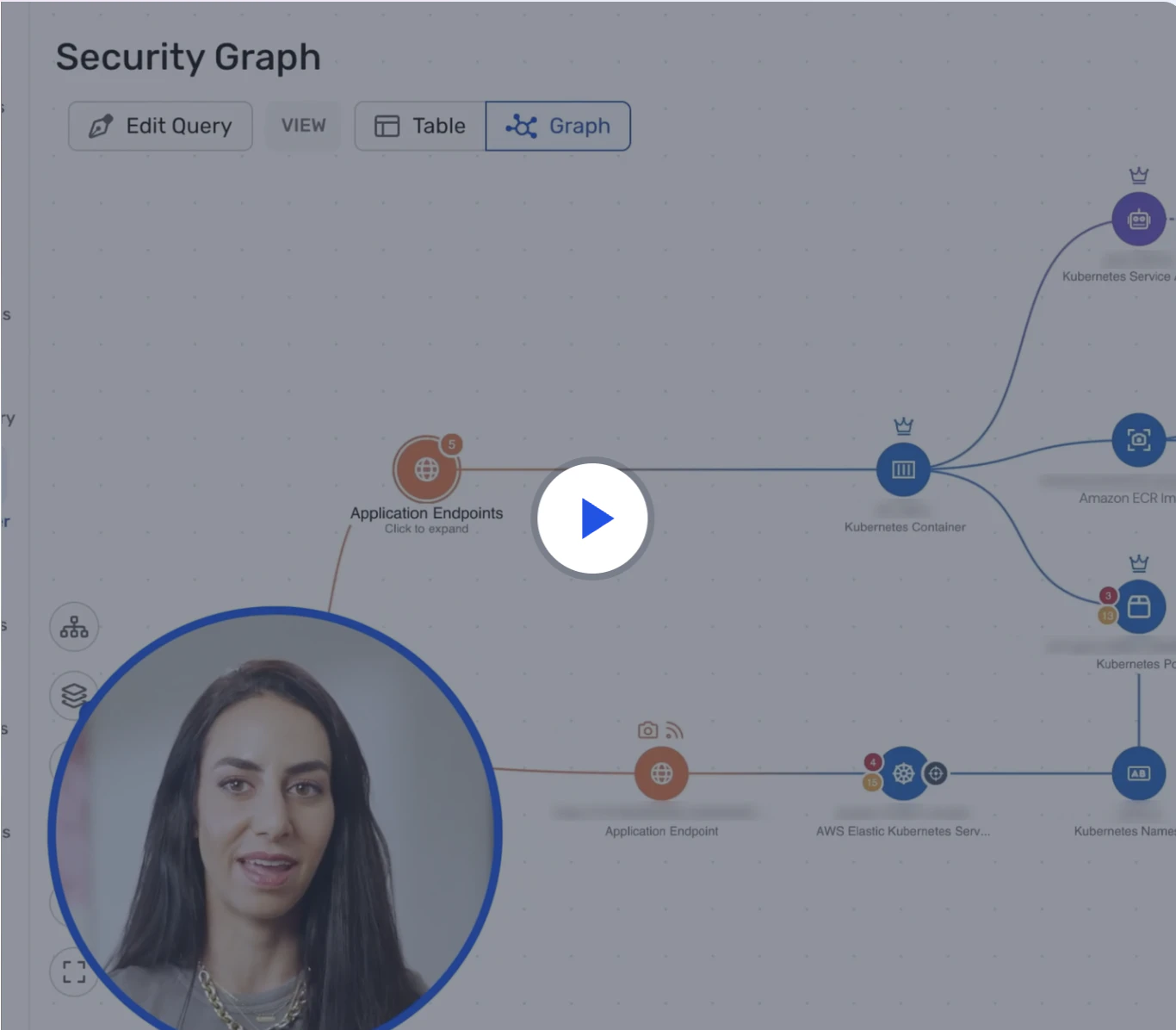
See Wiz in action
Learn about the full power of the Wiz cloud security platform. Built to protect your cloud environment from code to runtime.
Watch 12-minute demo
Key capabilities of effective attack surface discovery solutions
1. Monitoring and coverage
Continuous attack surface monitoring tracks multi-cloud, hybrid, and third-party environments, with real-time visibility whenever a new asset or exposed service appears. Beyond external scores like CVSS, effective tools use threat intelligence and business context to help you focus on actual, high-impact risks—not just noise.
2. Data enrichment and prioritization
Choose a solution with cloud attack surface visualization that maps complex asset relationships like subdomains and cloud instances. And by integrating attack surface intelligence, which tracks trends, your ASD solution should help you focus on the most critical issues across your code-to-cloud environment.
3. Integration and workflow
An ASD solution should cut operational friction by connecting seamlessly with DevSecOps workflows. For example, automatically updating CMDBs and asset inventories helps ensure better governance and compliance and also provides the context you need to address risks quickly.
Attack surfaces vs. attack vectors: What security teams need to know
This blog post will explain strategies for attack surface management (ASM) that integrate both attack surface reduction and attack vector defense into one continuous process, helping you meet the requirements of leading security frameworks like Gartner’s Continuous Threat Exposure Management (CTEM) framework.
Read more

Business and security benefits of continuous discovery
As your organization begins proactively managing its attack surface, several important KPIs will help demonstrate ROI and the overall success of your security program.
| Benefit | KPI(s) | How ASD achieves it |
|---|---|---|
| Reduces risk | Number of unknown/shadow IT assets% without owner | Eliminates unknown or unmanaged assets; clarifies inventory scope |
| Unified view of risk | Total asset countAttack surface growth rateExposure dwell time | Provides unified exposure management, tracking scale and change over time |
| Simplified compliance | Third-party/supply chain risk score | Enables continuous monitoring of cloud assets and third-party vendors; supports audit readiness |
| Faster incident response | Mean time to discovery (MTTD)Time to detect new internet-facing asset | Delivers asset context for immediate risk detection |
| Lower operational costs | Number of critical/high severity exposures (prioritized by exploitability) | Prioritizes high-exploitability fixes that meaningfully reduce risk |
| Stronger collaboration | Mean time to remediation (MTTR) | Eliminates friction by aligning security, DevOps, and cloud teams |
| Proactive defense | Exposure reduction rate | Transforms visibility into proactive defense, measurably reducing external risks |


How Wiz's approach solves cloud-native attack surface discovery
Wiz ASM is a modern cloud native application protection platform that delivers context-driven attack surface management, combining agentless scanning and multi-cloud normalization with exploitability validation to secure today’s complex environments. Here’s how Wiz ASM strengthens discovery and management across all your clouds:
Dynamic scanning and DNS resolution: Wiz ASM automates continuous discovery of all external-facing assets—domains, IPs, APIs, and application endpoints—across AWS, Azure, GCP, SaaS, AI, and custom domains, validating which exposures are real, reachable, and exploitable.
The Wiz Security Graph: The Wiz Security Graph correlates external exposures with internal cloud context, unifying ASM findings with misconfigurations, vulnerabilities, and sensitive data to show which exposures lead to real attack paths and business impact.
API risk reduction: Wiz evaluates exposed API endpoints against the OWASP API Top 10 and offers compliance tracking for 140+ frameworks, like PCI DSS and KEV (including PCI ASV scans), enriched with exploitability checks from ASM rules.
Wiz gives you powerful exposure validation and exploitability context using real-world techniques like weak credential checks, misconfiguration detection, sensitive-data exposure validation, and safe exploit testing.
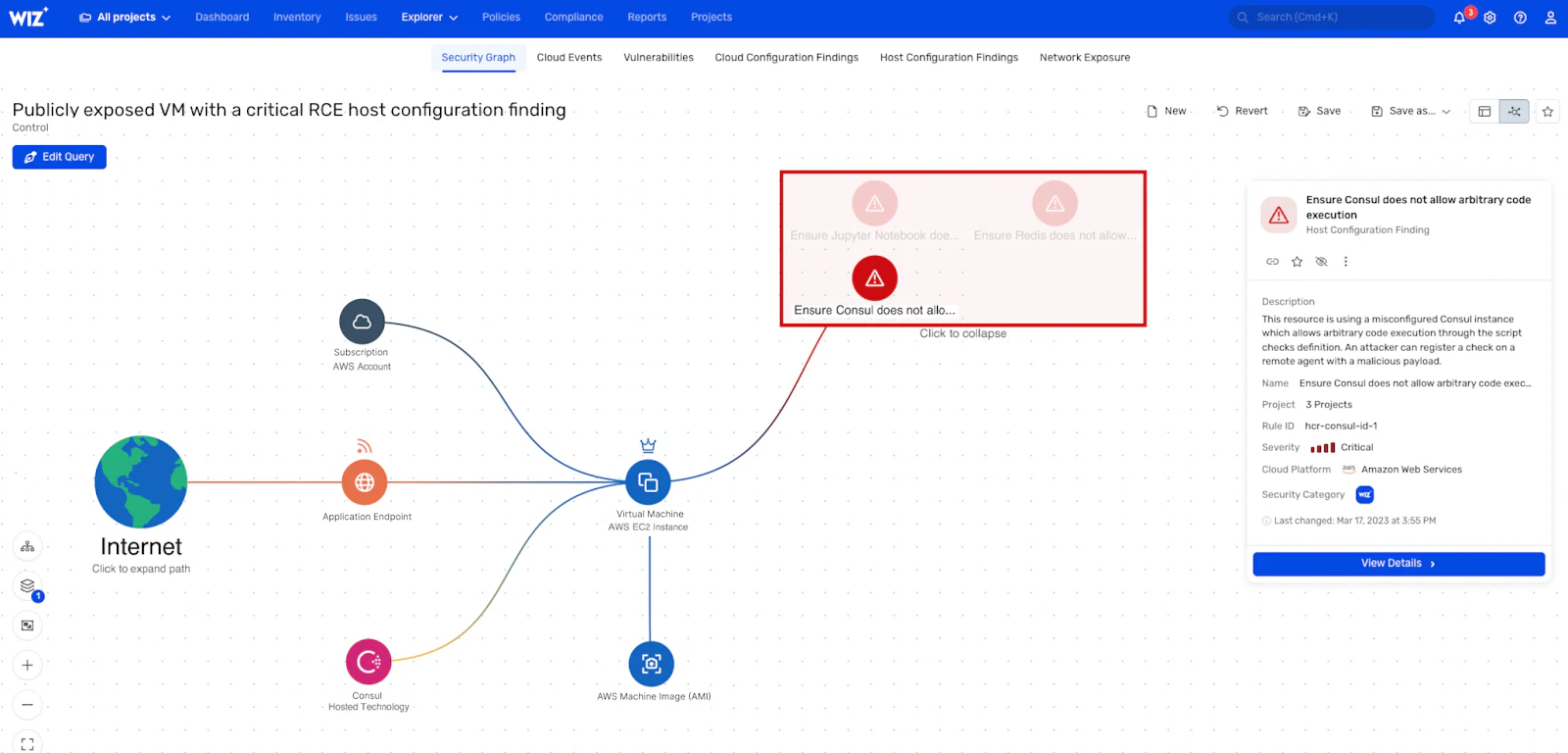
And with rapid, near-real-time scanning, Wiz ASM detects new or modified external assets as they appear; reduces MTTR by identifying the right owner; and connects exposures to developers, services, and business units for direct action. You’ll get discovery plus validated risk context through attack path analysis and toxic combination identification.
Attack surface discovery is just the beginning. Try this free Wiz demo to start focusing on truly exploitable exposures—and cut real risk across every environment.
Uncover Vulnerabilities Across Your Clouds and Workloads
Learn why CISOs at the fastest growing companies choose Wiz to secure their cloud environments.
