


What is cloud migration security?
Cloud migration security is the practice of protecting data, applications, and infrastructure during a transition from on-premises environments to cloud platforms. The migration window creates temporary blind spots where traditional security controls no longer apply and cloud-native protections aren't yet in place.
Misconfigurations, exposed data in transit, and IAM lapses during this period are among the most common causes of breaches in newly migrated environments, raising the stakes as cybercrime is projected to cost the global economy US$13.82 trillion by 2028.
Expose cloud risks no other tool can
Learn how Wiz Cloud surfaces toxic combinations across misconfigurations, identities, vulnerabilities, and data—so you can take action fast.

Key Drivers of Cloud Migration
Organizations migrate to the cloud for several interconnected reasons:
Agility and scalability: On-demand resources let teams provision infrastructure in minutes rather than weeks—enabling some organizations to increase application modernization velocity by 300%. But rapid scaling also means security controls must keep pace.
Cost optimization: Pay-as-you-go models eliminate up-front hardware investments, though cost savings can evaporate if security incidents force remediation or compliance penalties.
Improved resilience: Cloud providers offer built-in disaster recovery and high availability, but these benefits depend on proper configuration during migration.
End-of-life infrastructure: Aging hardware and unsupported software force migration decisions, often on compressed timelines that increase security risk.
Digital transformation: Cloud-native capabilities enable new products and customer experiences, making migration a business imperative rather than just an IT initiative.
Security bolted on at the end of a migration rarely works, propagating misconfigurations, affecting access controls, and exposing sensitive data without anyone noticing. The organizations that migrate successfully treat security as a continuous thread running through every phase: before, during, and after the transition.
Migrate to the cloud, safely
Safeguard your cloud migration with a foundation for cloud security that drives operational efficiency.
Learn more
Types of cloud migration: Security considerations
The security implications of your cloud migration strategy can vary depending on the approach you choose. Six common cloud migration strategies and their security considerations include:
Rehosting (lift-and-shift): This involves simply moving existing IT assets to the cloud with minimal changes. While fast and cost-effective, it might not leverage the full security benefits of cloud providers. Ensure the cloud provider offers robust security features and prioritize data encryption throughout the process.
Replatforming: Here, you migrate applications to the cloud while making some modifications to leverage cloud-native features. This offers an opportunity to improve security by implementing features like access controls and automated patching offered by the cloud platform.
Refactoring: This involves a more substantial overhaul of the application code to fully exploit cloud capabilities, and it presents an excellent chance to bake security best practices into the application's core design. Leverage secure coding principles and integrate security features offered by the cloud platform.
Repurchasing: This involves replacing existing applications with cloud-based Software-as-a-Service (SaaS) offerings. SaaS providers typically handle core security aspects, but ensure the chosen SaaS solution aligns with your overall security posture.
Retiring: Applications deemed obsolete or no longer essential can be retired during migration. This reduces your attack surface and simplifies security management.
Retaining: Certain applications might not be suitable for cloud migration due to security concerns or technical limitations. Carefully evaluate the risks and benefits of retaining these applications on-premises versus implementing additional security measures to enable cloud migration.
The optimal migration strategy depends on your specific needs and security requirements. Consider factors like application complexity, data sensitivity, and desired level of cloud integration when making your decision. From a security standpoint, refactoring and repurchasing often offer the most significant potential for improvement, while rehosting requires extra vigilance to maintain a secure environment.
Security Leaders Handbook
The strategic guide to cloud security

Cloud migration security best practices by phase
Pre-migration security considerations
Laying a solid foundation of security measures three to six months before cloud migration is paramount:
Identify which assets carry the most risk. Classify data based on sensitivity—confidential data like customer PII requires encryption at rest and in transit, while public marketing content needs minimal controls.
Map potential threats to each data category. Look for potential unauthorized access, data breaches, and denial-of-service attacks. This classification drives every subsequent security decision during migration.
Catalog every asset moving to the cloud. Take note of your applications, databases, servers, and network devices.
Map the dependencies between assets. A database that feeds three downstream applications creates a different risk profile than a standalone reporting tool. This mapping often reveals security gaps that existed in your on-premises environment but went unnoticed.
Fix gaps before migration. Avoid importing them into your cloud environment.
When choosing a secure migration strategy, review popular options and evaluate the security posture of each. Always prioritize secure data transfer methods like encryption at rest and in transit during migration, and utilize cloud provider tools or manage your own encryption keys for enhanced control.
Security best practices during migration
Migrating your data and applications to the cloud requires a vigilant approach to security. Here are some essential best practices to ensure a secure transition:
Enforce least-privilege access. From day one, require multi-factor authentication for all accounts.
Audit access patterns continuously. Any anomaly during the migration window warrants immediate investigation since attackers know this is when defenses are weakest.
Implement encryption. Encrypt your data at rest (stored in the cloud) and in transit (during migration) using industry-standard algorithms like AES-256.
Establish data loss prevention (DLP) policies. Implement data loss prevention (DLP) solutions to safeguard sensitive data. DLP tools monitor and prevent unauthorized data exfiltration attempts, such as uploading confidential data to unauthorized cloud storage services.
Leverage cloud security features. Utilize your cloud provider’s security features, such as security groups and firewalls. These tools allow you to restrict access to your cloud resources and define network traffic control policies.
Segment your cloud environment. Implement network segmentation to isolate critical resources within your cloud environment. This minimizes the potential impact of a security breach by limiting lateral movement within the network.
Monitor your network traffic. Continuously monitor network traffic for suspicious activity that might indicate a security threat.
Post-migration security management
Once workloads are running in the cloud, migration security transitions into ongoing posture management. Here are key practices for ongoing security management:
Implement centralized logging. Centralize logging through a SIEM to correlate events across your new cloud environment.
Schedule regular vulnerability scans. Scan often and prioritize patching based on exploitability and business impact, not just CVSS scores.
Define incident response procedures. Specify incident response policies for your cloud architecture before you need them. The first 90 days post-migration are critical since this is when misconfigurations introduced during the transition typically surface.
Assess continuously. Utilize Cloud Security Posture Management (CSPM) tools to assess your cloud security posture and identify misconfigurations in your cloud environment.
Automate security tasks. Leverage CSPM tools to automate security tasks like configuration management and vulnerability scanning.
Patch operating systems. Regularly patch operating systems, applications, and firmware within your cloud environment. Consider automating patch deployment processes to ensure timely patching and minimize the window of vulnerability.
What is Cloud Security Monitoring? Benefits, Challenges, and Best Practices
Leggi di più

What are the security risks during cloud migration?
Migration creates a temporary window where your environment is in flux. Identities, data, and workloads exist in two places at once, and that overlap is where most problems start. Below are the risks that matter most during this transition.
1. Data compromise
The first and most obvious challenge that companies have to reckon with is the threat of data compromise, either in the form of exfiltration or accidental exposure. According to IBM's Cost of a Data Breach Report 2023, the financial fallout of data breaches has been rising steadily over the past few years, including a 15% increase in the last three. During cloud migration, data sprawl and compromise can be a result of many factors, including misconfigurations in cloud resources.
APIs are also potential attack vectors because they are susceptible to numerous threats and vulnerabilities. According to Google Cloud, only 4 out of every 10 companies have a robust API security plan in place. Almost half of the others have a basic API security plan in place, which is unlikely to withstand the evolving tools and tactics of threat actors.
2. Identity access management (IAM) lapses
Digital identities can be either humans or machines. Mistakes or oversight in the access privileges of these digital identities can broaden an organization's attack surface and increase the probability of data breaches. Poorly configured IAM controls mean that attackers can use one attack vector for initial access and then move laterally to expand the scale of damage.
3. Environment sprawl and visibility gaps
Cloud migration often triggers uncontrolled environment growth. The ease of spinning up new resources in AWS, Azure, or GCP means teams provision faster than security can track. Within months, organizations discover shadow accounts, orphaned storage buckets, and test environments that never got decommissioned.
This sprawl creates visibility gaps that attackers exploit. Traditional monitoring tools designed for static on-premises infrastructure can't keep pace with resources that appear and disappear hourly. Without real-time visibility across all cloud accounts and regions, security teams can't identify misconfigurations, track data movement, or detect compromises until significant damage has occurred.
4. Understanding shared responsibility
Entry into the world of cloud computing means that businesses will likely be procuring SaaS, PaaS, and IaaS services from multiple cloud service providers (CSPs), like Azure, Google Cloud, and AWS. Businesses need to understand which security responsibilities belong to them and which belong to their CSPs. Failure to delineate security roles and responsibilities can lead to confusion, data breaches, compliance failures, and slow time to remediation.
Furthermore, DevOps environments can be rife with security challenges and need robust security mechanisms across all stages of software development life cycles (SDLCs). The biggest challenge here is to ensure continued agility without compromising security, a balance that numerous companies fail to achieve. Wiz's State of Code Security Report 2025 found that 61% of organizations have secrets exposed in public repositories, underscoring the need for secure development practices during and after migration.
5. New compliance requirements
Compliance can be a challenge in any IT infrastructure because standards like GDPR, HIPAA, ISO 27001, CCPA, PCI DSS, and SOX can be complex to navigate and uphold. However, during cloud migrations, companies are confronting an unfamiliar set of regulatory requirements. In the world of compliance, businesses don't get a grace period to settle into their new IT ecosystem.
That's why it's vital to know the ins and outs of data privacy obligations as well as all industry and federal regulations. In 2021, the Luxembourg National Commission for Data Protection (CNDP) fined Amazon $887 million for data privacy failures. While global giants like Amazon can withstand such failures, the vast majority of others can't.
6. Insider threats and skills gaps
Migration amplifies people-related risks from two directions. First, the transition window increases insider threat exposure. Temporary elevated permissions, rushed timelines, and unfamiliar tools create opportunities for both malicious activity and honest mistakes. An employee who wouldn't normally have access to production data might receive broad permissions to facilitate the migration, then retain that access indefinitely.
Second, most security teams lack deep cloud-native expertise. This gap means organizations often rely on tooling choices that can partially offset the skills shortage, such as agentless platforms with guided remediation that reduce the expertise required to identify and fix issues.


How Wiz can help secure your cloud migration journey
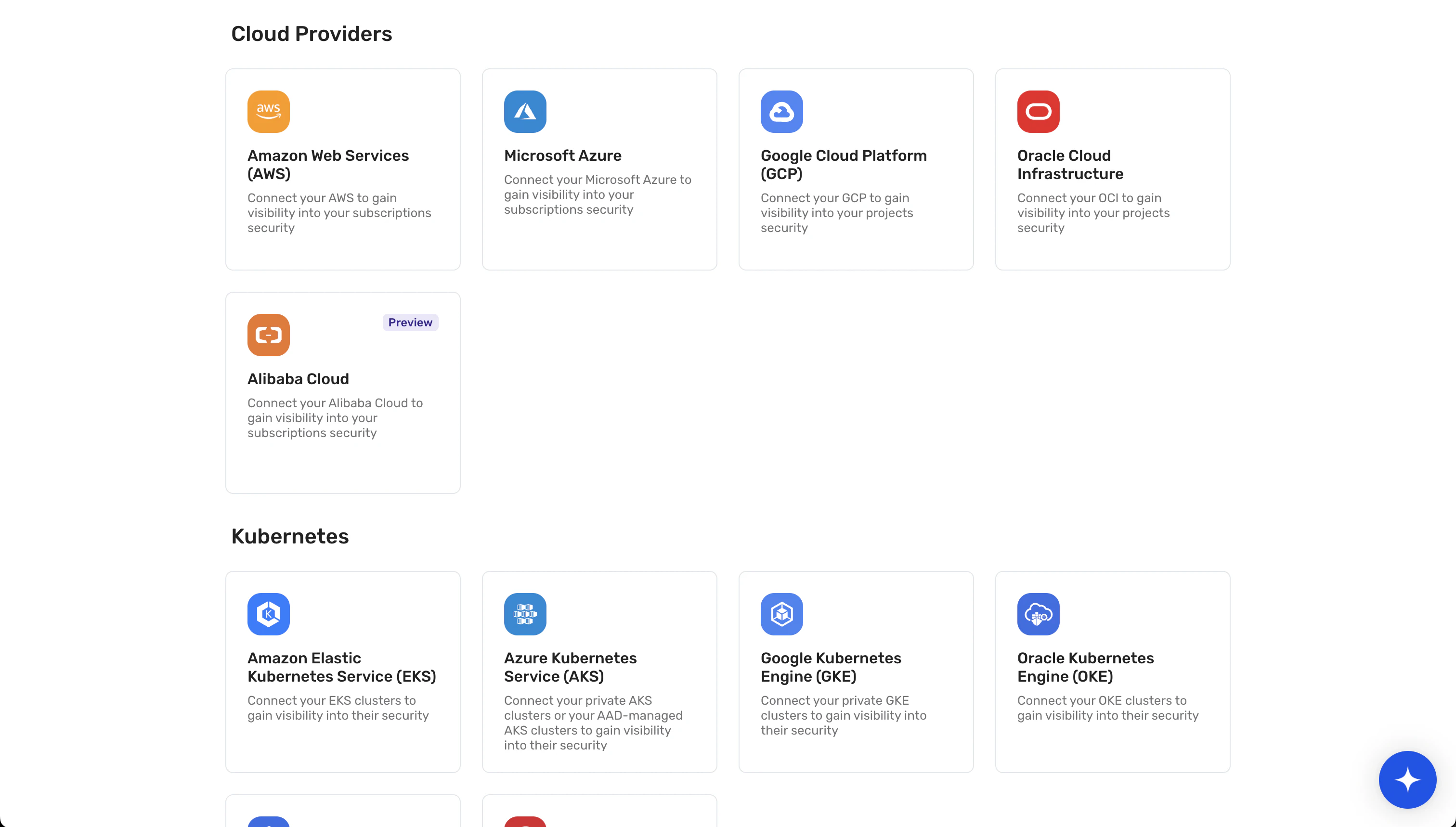
Visibility gaps and hybrid environment challenges are exactly what Wiz was built to solve. Wiz's agentless architecture connects to AWS, GCP, Azure, and other cloud providers through APIs, delivering full visibility across your environment within minutes rather than the weeks required for agent-based deployments.
Wiz also correlates vulnerabilities, misconfigurations, exposed data, and identity risks into prioritized attack paths. Your team sees which issues actually matter based on exploitability and business impact, not just severity scores.
Schedule a demo to see how Wiz can provide continuous visibility throughout your migration journey, from the first workload you move to ongoing posture management after the transition is complete.
Accelerate your cloud migration
Learn why CISOs at the fastest growing organizations choose Wiz to give them the visibility required to migrate to the cloud.
