
What is cloud data security?
Cloud data security encompasses the technologies, policies, and processes that safeguard data throughout its lifecycle—whether at rest in storage buckets or in transit between applications—across public, private, and hybrid cloud environments. It addresses where data lives, who can access it, and how it moves between services.
This discipline is grounded in three foundational principles known as the CIA triad:
Confidentiality ensures only authorized users can access sensitive data.
Integrity guarantees data remains accurate and unaltered.
Availability means data is accessible when legitimate users need it.
Cloud Data Security Snapshot - Current Exposure Trends
Wiz Research analyzed hundreds of thousands of cloud accounts across organizations of all sizes to assess the current state of data security in the cloud.

Why cloud data security matters
As organizations adopt IaaS, PaaS, and SaaS models, data spreads across storage buckets, databases, and managed services, often without centralized visibility. The attack surface expands faster than security teams can monitor.
Attackers increasingly target cloud-specific vectors such as misconfigured storage permissions, overly permissive service accounts, and exposed API endpoints. Ransomware operators now prioritize cloud backups, while phishing campaigns harvest credentials for cloud consoles rather than on-premise systems—a threat compounded by the fact that phishing attacks have risen by 1,265% since 2022.
Traditional perimeter defenses weren't designed for environments where the perimeter itself is distributed across multiple providers and regions.

The challenges of securing data in the cloud
Securing cloud data presents several persistent challenges that must be addressed proactively. Data breaches often stem from common pitfalls like the following.
The evolving threat landscape
Cloud environments are increasingly targeted by modern threat actors leveraging scalable, service-based attack models. Advanced persistent threats (APTs) now prioritize cloud identities and long-term access over traditional network footholds, while ransomware-as-a-service (RaaS) lowers the barrier to entry for financially motivated attackers.
At the same time, cloud-specific phishing campaigns focus on credential harvesting for SaaS platforms and cloud consoles, bypassing perimeter defenses entirely.
According to data from the Verizon Threat Research Advisory Center, stolen credentials are the main entry method into victim networks, accounting for 49% of access vectors.
As organizations shift workloads off-premises, attackers are adapting just as quickly.
AI adoption and data risk
AI adoption is reshaping where sensitive data lives in the cloud, and where attackers can reach it. Wiz's Cloud Threats Retrospective 2026 found that more than 85% of organizations now run AI in their environments, but only 13% have adopted AI-specific posture management, and a quarter don't even know which AI services are running.
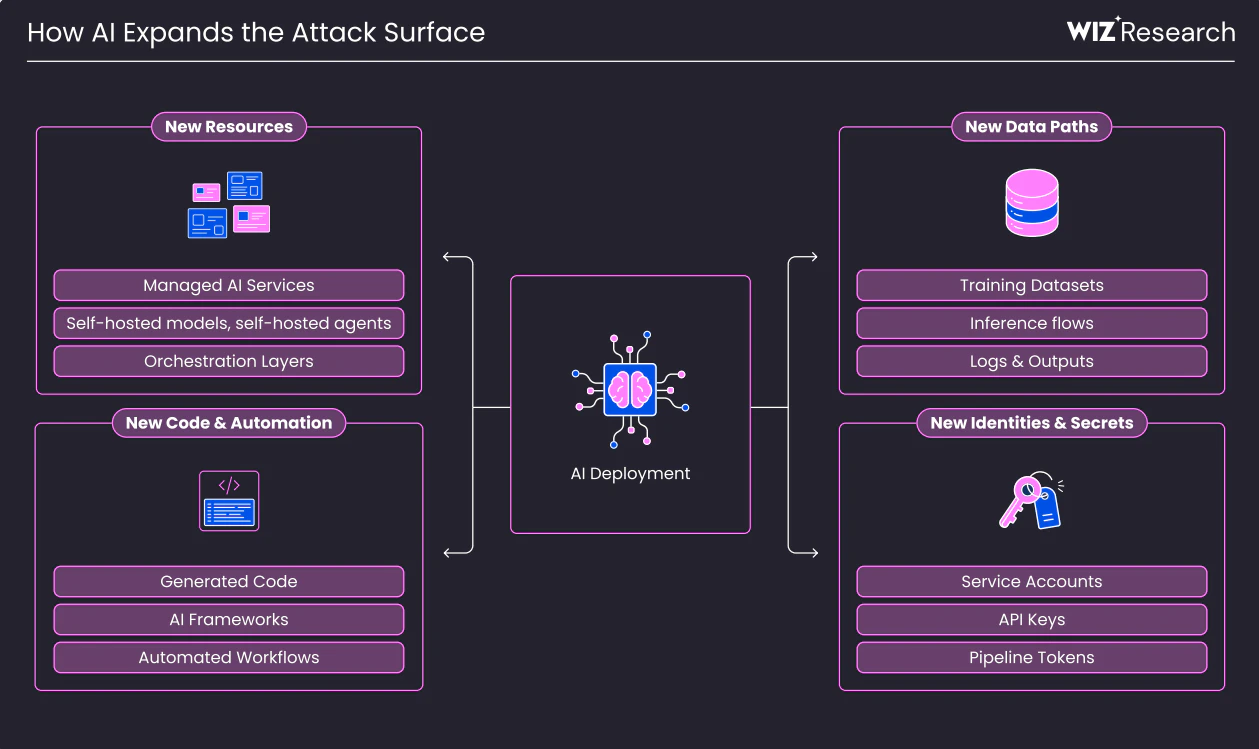
The result is a wave of new services, identities, and pipeline tokens sitting close to sensitive data—and threat actors are already exploiting them—from leaked API keys at 65% of Forbes AI 50 companies to supply chain attacks like s1ngularity that weaponized installed AI CLI tools for post-compromise reconnaissance.
Misconfigurations
A single misconfigured storage bucket can expose millions of records to the public internet within hours. Unlike sophisticated attacks that require specialized skills, misconfigurations stem from human error during routine setup and administration, making them common and preventable.
The impact cascades across multiple dimensions:
Data exposure: Publicly accessible databases and storage buckets allow anyone with the URL to download sensitive information.
Unauthorized access: Overly permissive IAM policies grant users or services access to data they should never see.
Compliance failures: Misaligned encryption or retention settings trigger regulatory violations that carry legal penalties.
Loss of visibility: Logging disabled by default means security teams can't detect or investigate suspicious access patterns.
Lack of visibility
Data access within and outside the network may be invisible, which can significantly impact cloud security. With a clear view of who is accessing your data, from where, and how frequently, safeguarding your assets becomes more manageable, especially in multi-cloud and hybrid scenarios.
A lack of visibility can lead to:
Data breaches: Without visibility, you can't detect unauthorized access, leading to potential breaches.
Compliance issues: Inadequate tracking hampers your ability to comply with industry regulations, risking costly fines and reputational damage.
Insider threats: Without monitoring, it's difficult to identify malicious activity from internal users.
Expanded attack surface
An expanded attack surface due to cloud environment flexibility and scalability presents unique security challenges, such as:
Dynamic scaling: Cloud services continually scale up and down to meet demand, making it difficult to define and secure the environment's boundaries.
Complex integrations: Integrating various remote devices, third-party applications, and public networks can be more complicated and introduce vulnerabilities.
Expansive threat perimeter: Cloud environments often face threats like brute-force and organized DDoS attacks, targeting the expansive, less-defined perimeter.
Unpatched liabilities: Unpatched vulnerabilities can go unnoticed in a constantly changing environment, leading to potential exploits.
Complex environments
Modern cloud environments have several complicated components, including:
Multi-cloud and hybrid setups: Integrating and securing data across cloud providers and on-premises systems demands the right tools to maintain uniform security measures.
Virtual machines and containers: Each virtual machine or container needs individual security configurations. Misconfigurations can lead to vulnerabilities.
APIs and Kubernetes clusters: The extensive use of APIs for inter-service communication and the orchestration of containers via Kubernetes clusters expand the attack surface.
Multi-tenant risks
Multi-tenant public cloud environments present challenges because multiple customers are hosted on shared infrastructure. This increases the risk of unauthorized data access or leakage through:
Data commingling: Different tenants' data residing on the same physical or virtual servers can lead to accidental or malicious data access.
Security gaps: One tenant's weaknesses can compromise the shared environment.
Compliance requirements
Failing to comply with compliance standards can result in legal penalties and financial losses. Challenges in achieving compliance include:
Regulatory changes: Frequent changes in regulatory standards necessitate continuous updates, and regulatory fragmentation across jurisdictions can be challenging to keep up with.
Multi-cloud environment coverage: Comprehensive coverage needs to be maintained across multi-cloud environments
Up-to-date documentation: Documentation for audits and assessments must constantly be kept up to date, creating an administrative burden.
Distributed storage complexity
Distributed data storage across multiple providers, as well as data sovereignty laws based on the data's country of physical location, add layers of complexity through:
Inconsistent security policies: Providers may use different security measures, requiring uniformity in protection levels.
Increased vulnerability: Disparate storage locations can create targets for cyberattacks.
Data synchronization issues: Keeping distributed data synchronized across all locations can be technically demanding.
Management overhead: More resources and tools are required to manage security policies and compliance across various platforms.
Shadow IT
Shadow IT—unvetted software or services implemented by employees without IT approval—introduces vulnerabilities that threat actors can exploit, making cloud data security even more challenging.
Key risks include:
Weak security controls: Unauthorized cloud services lack the same security measures as approved ones, increasing the risk of data breaches.
Human error: Employees may unintentionally share or expose sensitive data stored in unauthorized cloud services.
Malware: Cybercriminals can use malware, often introduced through phishing attacks, to steal data from unauthorized cloud services.
Data Governance & Compliance Guide
Data governance and compliance are central to the DSO mandate.

What strong cloud data security delivers
Data is one of your organization's most valuable assets. Treating its protection as a strategic capability—not just a compliance task—pays off across security, compliance, and operations:
Protection against breaches and unauthorized access. MFA, role-based access controls (RBAC), and encryption in transit and at rest keep sensitive data out of attackers' hands — even when other defenses fail.
Easier compliance with HIPAA, GDPR, and PCI-DSS. Continuous monitoring and automated assessments simplify audits and reduce exposure to legal and reputational fallout.
Customer trust as a differentiator. Transparent breach response, published certifications, and clear data-handling policies turn security from a defensive cost into a competitive advantage.
Lower breach cost and downtime. Data breaches now average $4.44M globally, with cloud incidents often costing more. Proactive controls shrink both likelihood and blast radius.
Faster recovery when things go wrong. Snapshots, backups, and tested DR protocols restore operations quickly — including failover to alternative cloud or on-premises infrastructure.
Visibility and control over data assets. Knowing where sensitive data lives and how it flows lets you prioritize risk by actual exposure and pull audit evidence without manual work.
Who is responsible for securing data in the cloud?
Multi-cloud adoption complicates responsibility for securing cloud data. Under the shared responsibility model, cloud providers secure infrastructure—physical data centers, hypervisors, and network hardware. Customers own everything deployed on top: data classification and encryption, identity and access management, application security, and platform configuration.
The boundary is often misunderstood. AWS secures S3 itself, but customers must configure bucket policies, enable encryption, and restrict public access. A misconfigured bucket is the customer's responsibility, not AWS's, even when the breach occurs on AWS infrastructure.
At scale, this division becomes overwhelming. Organizations running workloads across multiple providers must understand and enforce distinct responsibility boundaries for each provider, often without unified visibility into gaps.
11 best practices for implementing cloud data security
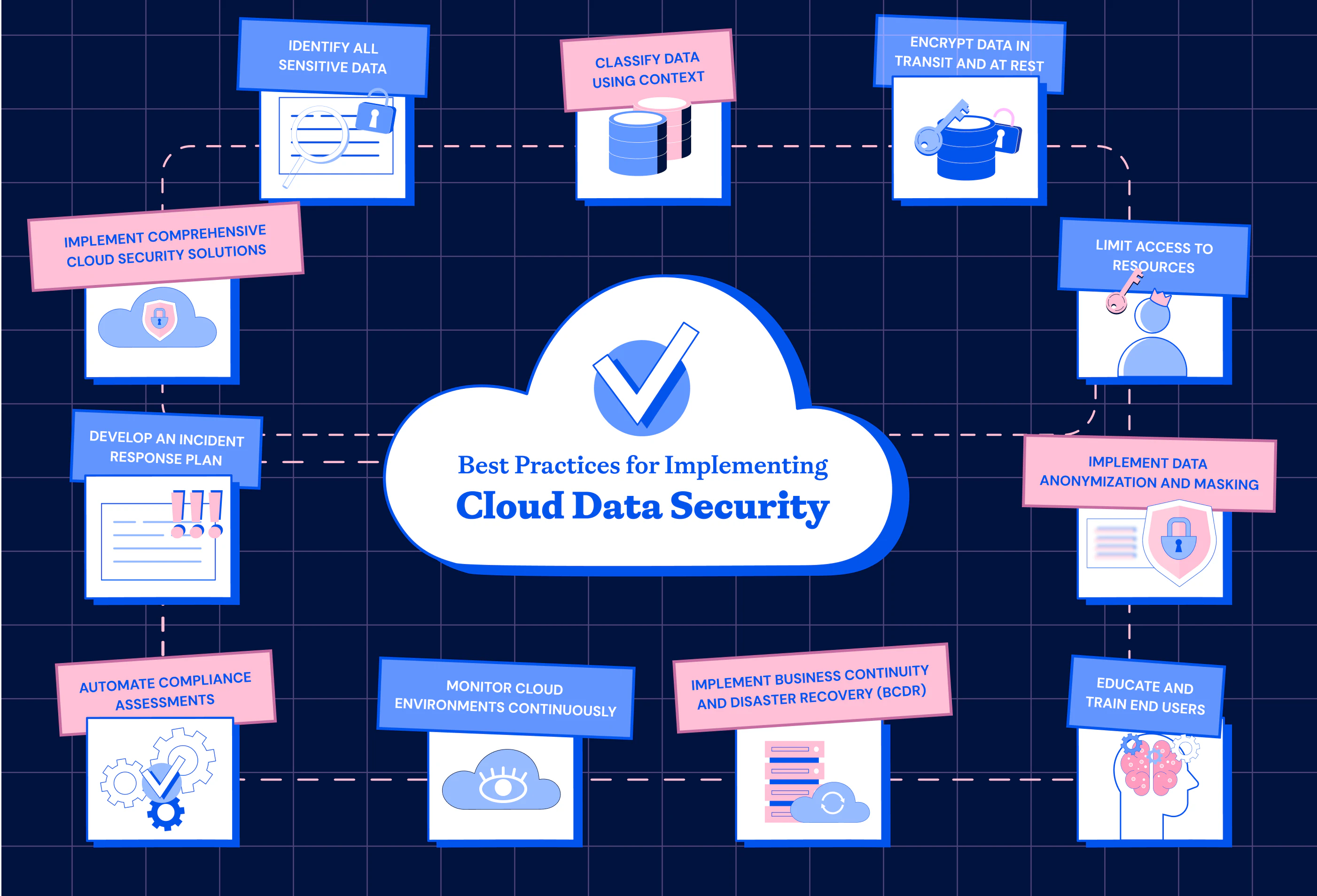
The following best practices form the foundation of effective cloud data security:
1. Identify all sensitive data and AI workloads
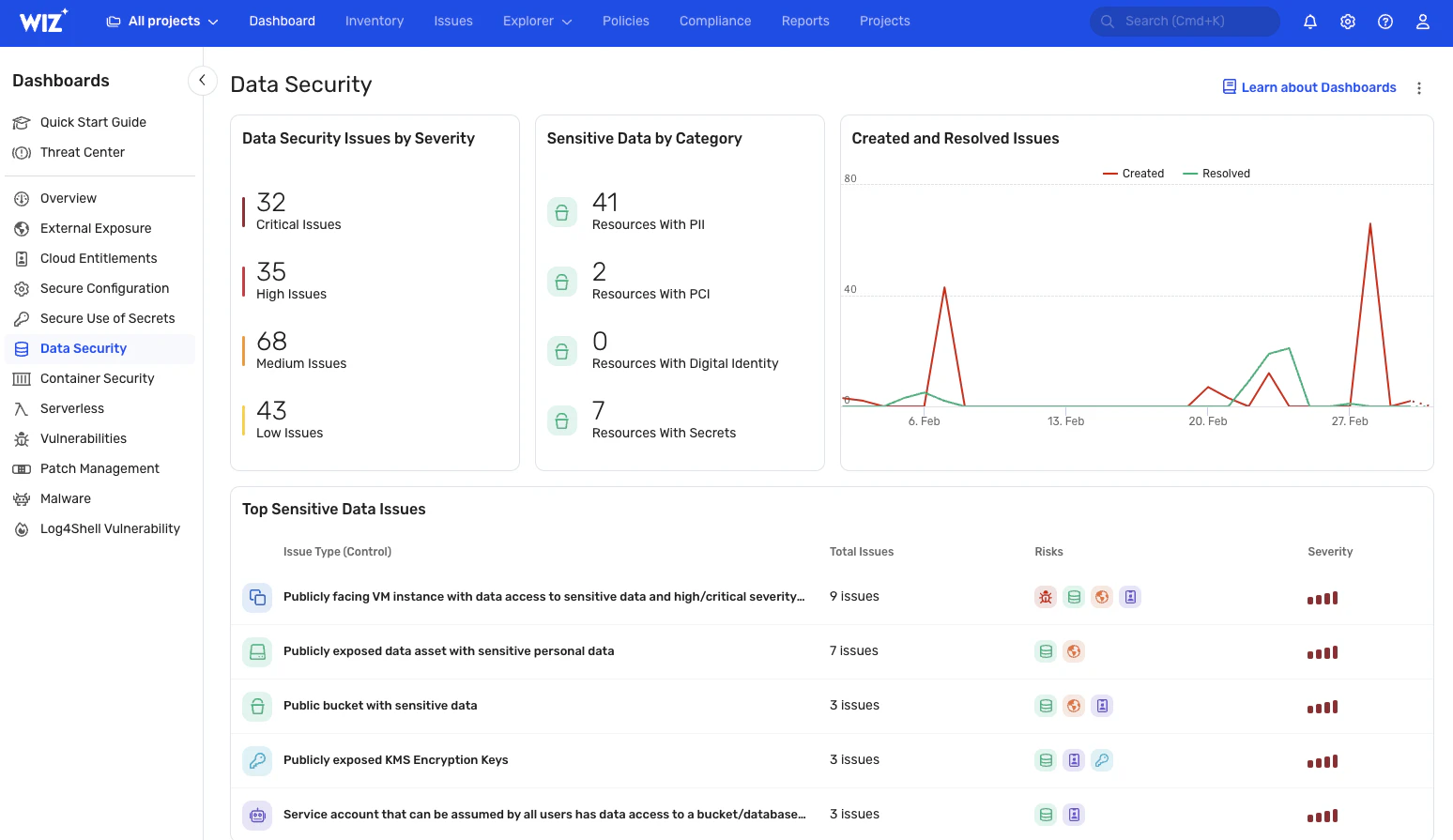
You can't protect what you don't know exists, and that now includes more than just data. Continuous, agentless discovery should surface sensitive information and every AI workload touching it across:
On-premises systems
Cloud storage and databases
Data in transit
Shadow data created outside official processes
AI workload inventory
Point-in-time scans miss data and agents created between assessments, while agent-based approaches create blind spots in both. Maintain a complete, always-current inventory, including exposed APIs, forgotten snapshots, duplicated datasets, and the AI components most teams don't realize they're running.
2. Classify data using context
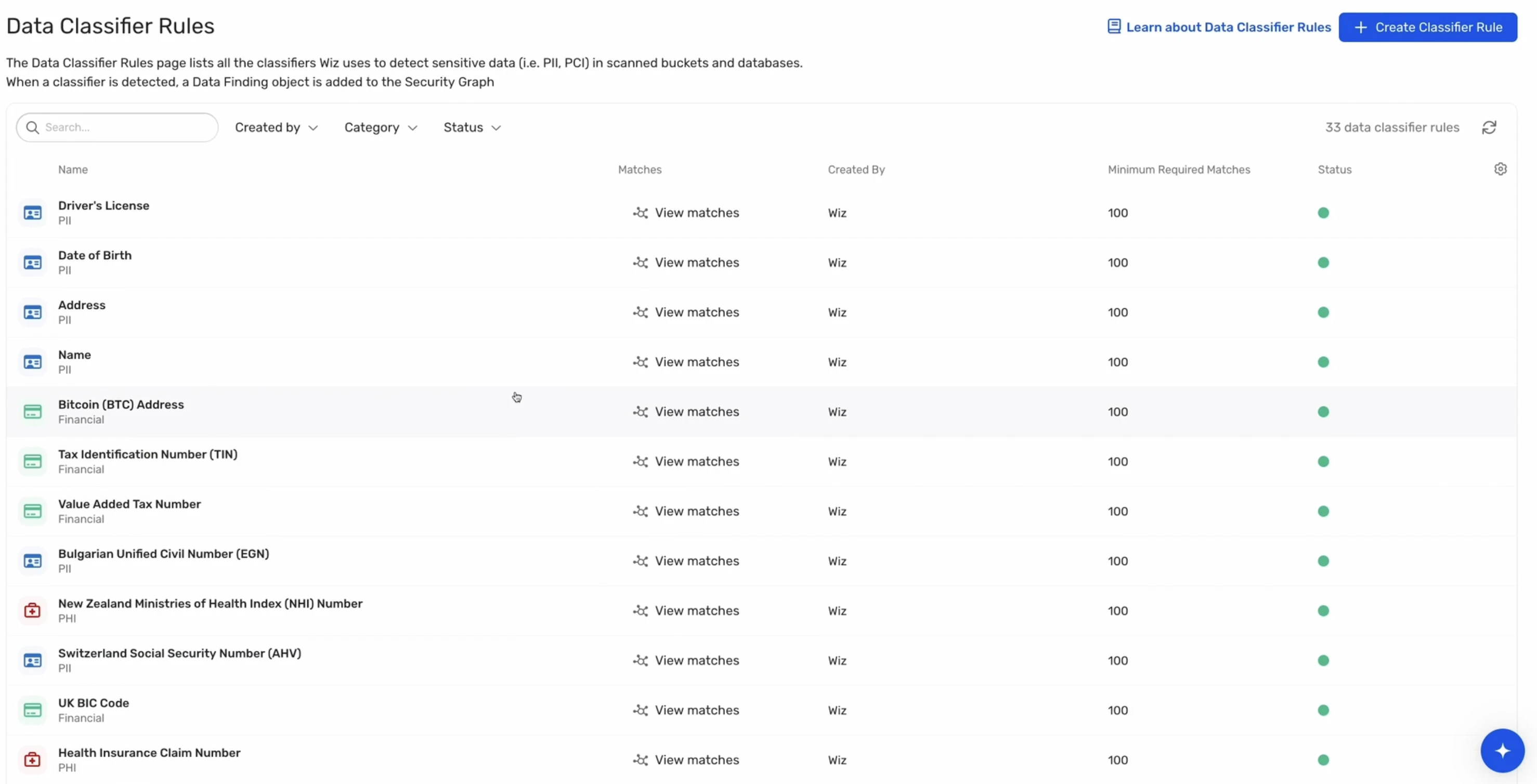
Classify data by type, sensitivity level, and applicable regulations, scanning for PII, PHI, and PCI across your storage ecosystem. Go beyond static labels by classifying how data moves, who uses it, and usage patterns to proactively identify attack paths and prioritize alerts.
3. Encrypt data in transit and at rest
While cloud providers offer default encryption, implement customer-managed keys through AWS KMS, Azure Key Vault, or Google Cloud KMS to control key rotation, access policies, and revocation. For highly regulated data, use client-side encryption before uploading to ensure data is encrypted before leaving your environment.
4. Limit access to resources
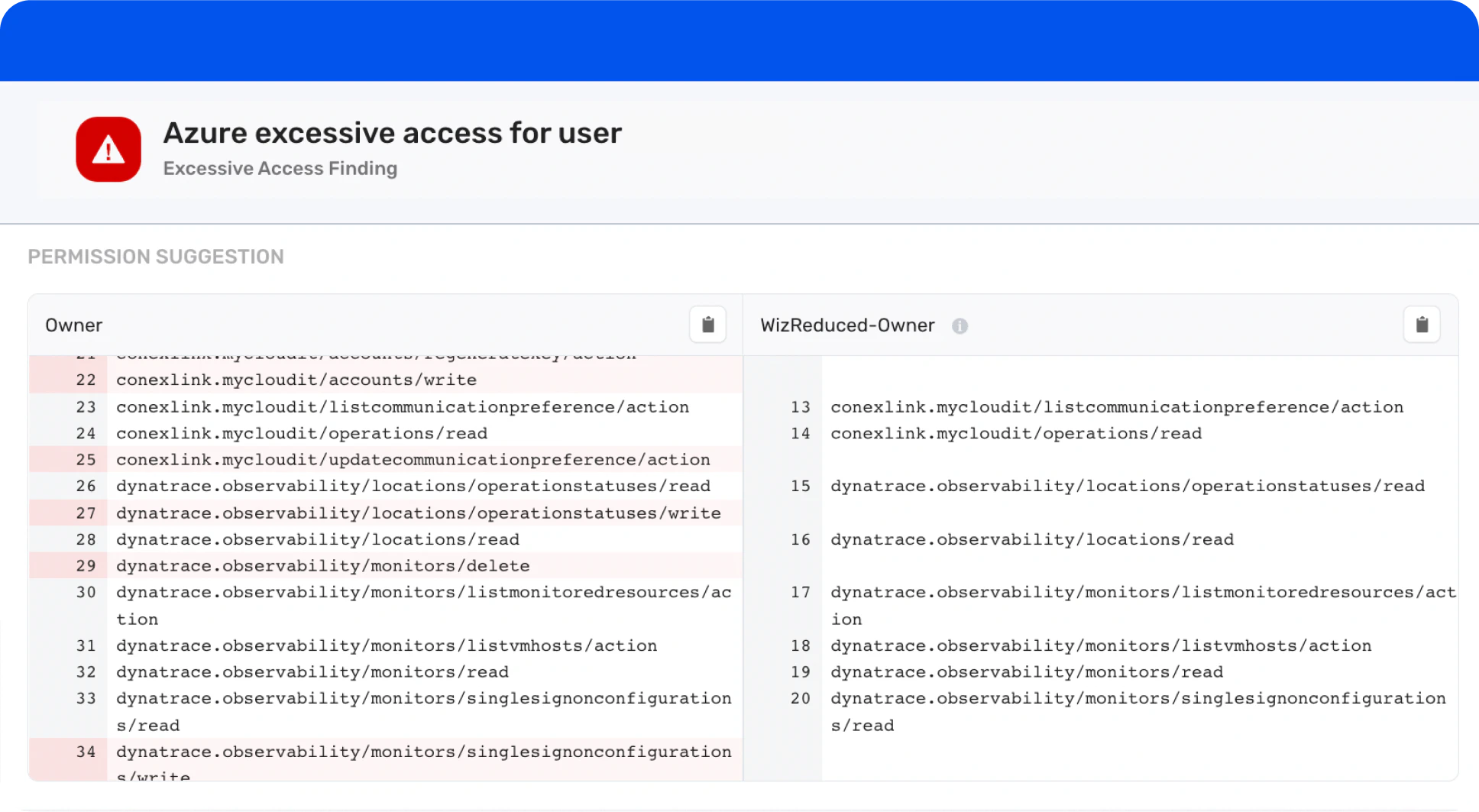
Enforce least-privilege access through RBAC, attribute-based access controls (ABAC), and Zero Trust principles, and apply the same standard to AI agents and machine identities—not just human users.
Agents typically authenticate with valid credentials and act faster than any reviewer can intervene, so over-permissioned non-human identities often pose more risk than over-permissioned employees. Issue short-lived, scoped credentials per task, and combine identity controls with encryption and end-user device security, such as MFA, to create defense in depth.
5. Implement data anonymization and masking
Protect sensitive data by anonymizing and masking it to conceal identifiable information. Apply k-anonymity, l-diversity, and t-closeness to make individual data points indistinguishable within groups. Pseudonymization enhances security by replacing private identifiers with pseudonyms while preserving data utility for analysis and compliance.
Apply the same discipline before data hits LLMs or RAG pipelines. Sanitize prompts and source documents to strip PII, secrets, and regulated fields before they're embedded into a vector store or sent to a model—once sensitive data is encoded into embeddings or cached in a model's context, you've effectively lost control of where it goes next.
6. Educate and train end users
Continuous training helps employees recognize and mitigate threats through simulated phishing exercises and security protocol education. Cover data encryption, password management, secure data handling, and prompt security—specifically, why employees should never paste source code, customer records, credentials, or other company secrets into public chatbots.
Anything pasted into a third-party LLM may be logged, used for training, or retained in ways your DLP controls can't see, and it leaves your environment the moment the user hits enter. Build this into the same security-conscious culture that reduces accidental breaches elsewhere.
7. Implement business continuity and disaster recovery (BCDR)
Follow the 3-2-1-1-0 backup rule:
Maintain three copies of data beyond the original,
stored across two types of media,
with one copy offsite (typically cloud BCDR)
one offline,
and zero errors verified across all copies.
This ensures fast recovery and operational continuity.
8. Monitor cloud environments continuously
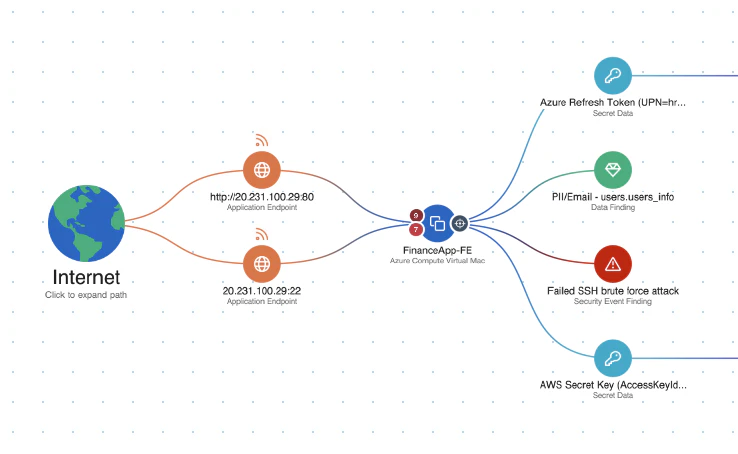
Dynamic cloud environments require real-time detection of risks, threats, and vulnerabilities. Continuous monitoring identifies policy violations and suspicious activities before they escalate, while regular audits catch misconfigurations and unauthorized access early.
9. Automate compliance assessments
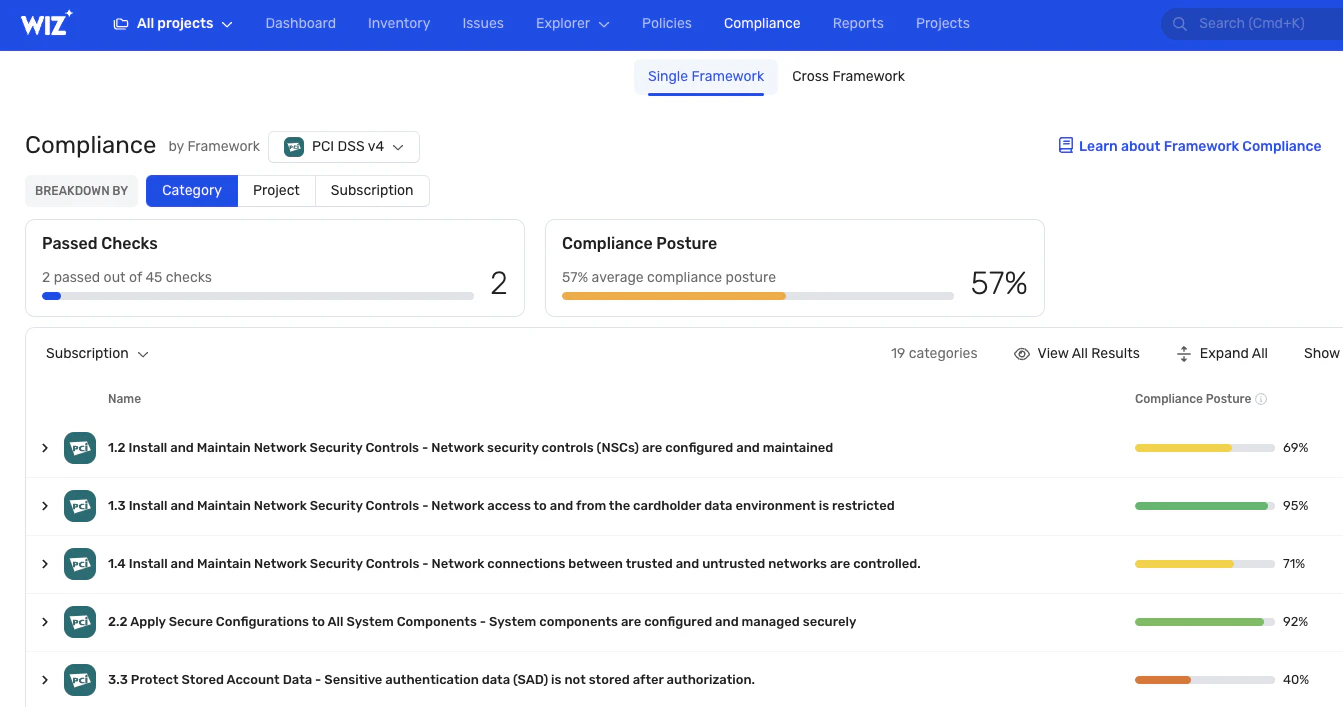
Automated compliance software streamlines assessments, corrective action planning, and security policy-based controls testing. Real-time detection of regulatory violations and continuous security updates replace error-prone manual spot checks.
10. Develop an incident response plan
Build a response playbook for common attack vectors with clear procedures, assigned roles, and updated contact lists for internal and external stakeholders. Establish communication protocols and regularly test your plan through simulations to ensure the team can respond effectively when incidents occur.
11. Implement comprehensive cloud security solutions
Point solutions like CSPM, DLP, SIEM, CIEM, KSPM, and DSPM often create security silos that leave gaps. A cloud native application protection platform (CNAPP) unifies these capabilities with API discovery and serverless security, providing comprehensive visibility and control across your cloud environment.
How Wiz unifies cloud data security across complex environments
Fragmented tools create fragmented visibility. When vulnerability scanners, identity management, and data classification operate in siloes, security teams end up correlating findings rather than remediating risks.
Wiz brings cloud data security into a single platform. Its agentless architecture scans AWS, Azure, GCP, and other providers to discover where sensitive data lives, who can access it, and what attack paths lead to exposure.
By correlating misconfigurations, vulnerabilities, identity permissions, and data classification in a single security graph, Wiz surfaces critical risks instead of thousands of disconnected alerts—extending to AI training data and model pipelines as organizations adopt new workloads.
See how unified visibility transforms your cloud data security posture. Get a demo to explore how Wiz connects the dots across your cloud environment.
Protect your most critical cloud data
Learn why CISOs at the fastest companies choose Wiz to secure their cloud environments.
