
What CSPM Is Today
Cloud Security Posture Management (CSPM) continuously identifies configuration risks across your cloud infrastructure, including compute, storage, networking, and identity settings. It catches the mistakes that turn into breaches: public storage buckets, overpermissive IAM roles, unencrypted databases, and exposed management ports.
CSPM of the past focused on three things: detecting configuration drift when resources deviate from secure baselines, flagging policy violations that break security rules, and mapping findings against compliance frameworks like CIS, SOC 2, and PCI-DSS.
This was valuable when cloud footprints were small and static. But modern environments expose the limits of this approach. Multi-cloud architectures, ephemeral containers, serverless functions, and AI workloads have changed what "posture" actually means. A misconfiguration in isolation is rarely the problem. The problem is a misconfiguration connected to sensitive data, exposed to the internet, and tied to an overprivileged identity.
That is why standalone CSPM falls short. It can tell you that something is misconfigured. It cannot tell you whether that misconfiguration is actually exploitable, how it connects to other risks, or where it falls in your priority queue. Configuration findings without context are just noise.
CSPM remains foundational for cloud security. But the question is no longer whether you need posture management. The question is whether your posture management can actually help you prioritize.
The CSPM Buyer's Guide
Navigating the alphabet soup of cloud security tools is challenging – CSPM? CNAPP? CDR? We've simplified your decision-making process and laid all the criteria for a modern CSPM solution.

Core Capabilities to Look for in a CSPM
When evaluating CSPM tools, focus on capabilities that enable prioritization, not just detection. The goal is not more alerts. The goal is knowing which alerts matter.
Near Real-Time Assessment
Cloud environments change constantly. A secure configuration can drift to insecure in minutes through a developer's CLI command, an IaC deployment, or an automated scaling event.
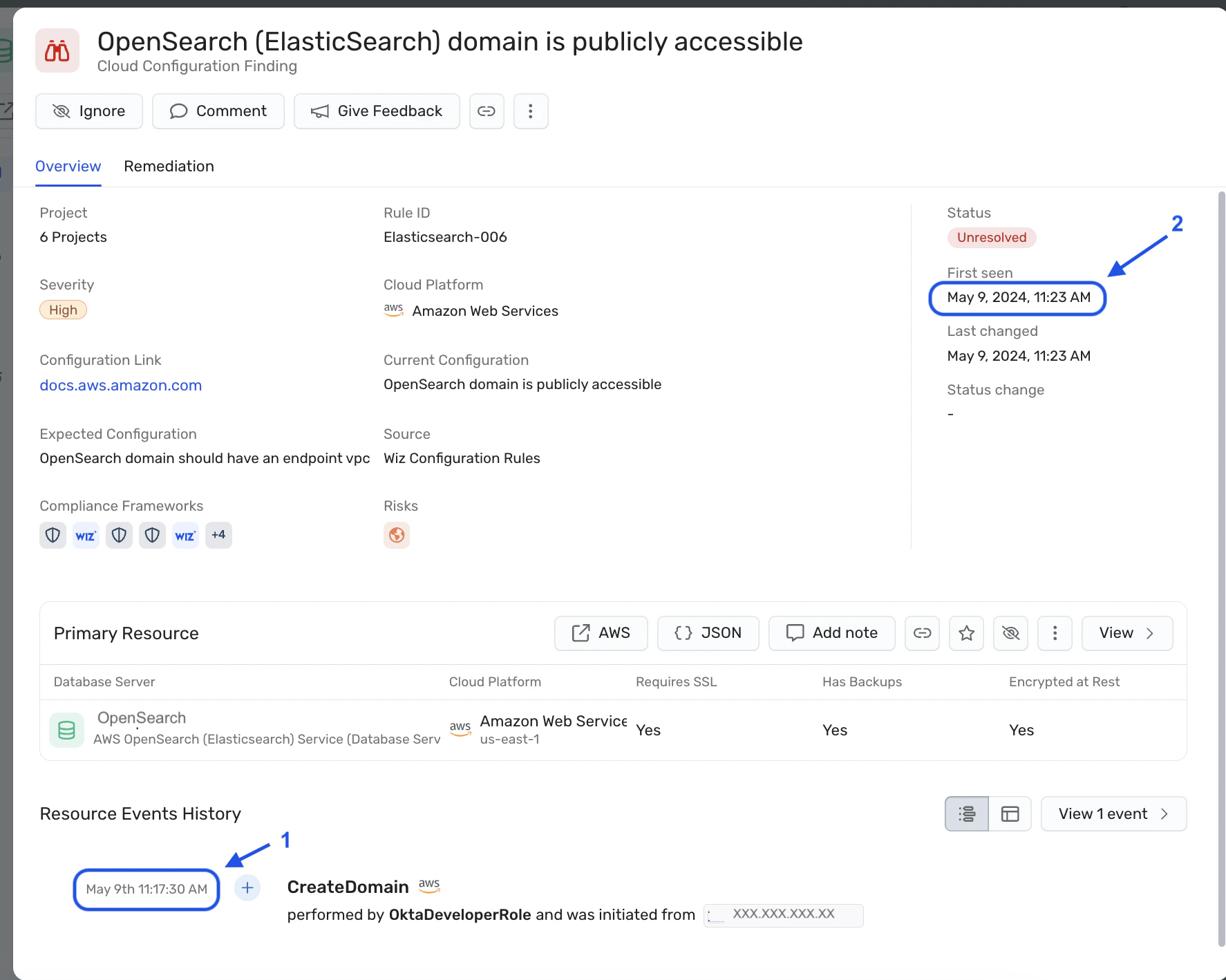
Your CSPM must detect changes as they happen, not on a scheduled scan cycle. Look for continuous monitoring via cloud control plane APIs (CloudTrail, Activity Logs, Audit Logs), detection latency measured in minutes rather than hours, and immediate visibility into newly created resources.
Near real-time matters most for ephemeral infrastructure. A container that spins up, runs for 10 minutes, and terminates will not appear in a tool that scans nightly. If your CSPM cannot keep pace with your infrastructure, it cannot protect it.
Agentless Architecture with Full Coverage
Agent-based approaches cannot cover modern cloud environments. You cannot install agents on managed databases, serverless functions, or PaaS services. In ephemeral workloads, agents often fail to deploy before the resource terminates.
Agentless CSPM uses cloud APIs to assess your entire environment without touching workloads. This means visibility across VMs, containers, serverless, PaaS, and managed services with zero performance impact and no deployment overhead. Coverage scales automatically as you add resources.
Agentless should be the foundation. Runtime sensors can supplement for specific deep-inspection use cases, but they should not be required for posture visibility.
Asset Discovery and Relationship Mapping
You cannot secure what you cannot see. But a flat inventory is not enough. You need to understand how resources connect to each other.
Effective CSPM maps relationships between compute resources and the data they access, identities and the permissions they hold, network paths and exposure to the internet, and code repositories and the infrastructure they deploy.
This relationship mapping is the foundation for attack path analysis. Without it, you are looking at isolated findings with no way to assess real-world risk.
Context-Driven Risk Prioritization
Severity scores without context are misleading. A "critical" misconfiguration on a test server with no data is noise. A "medium" issue on a production database exposed to the internet is an emergency.
Look for tools that correlate posture findings with network exposure, data sensitivity, vulnerability status, and identity risk. Is this resource reachable from the internet? Does it store sensitive information? Does the workload have known CVEs? Is it connected to overprivileged credentials?
This correlation surfaces toxic combinations, scenarios where individually moderate risks combine into critical attack paths. A public bucket is not inherently critical. A public bucket containing customer PII, connected to a vulnerable EC2 instance with an overprivileged IAM role? That is an attack waiting to happen.
Attack Path Visualization
The most dangerous risks are not single misconfigurations. They are chains. An attacker does not exploit one issue in isolation. They chain together a public entry point, a lateral movement opportunity, and access to sensitive data.
Your CSPM should model these paths explicitly: visualizing how an attacker could move from initial access to crown jewels, identifying the specific resources and permissions in each path, and prioritizing paths based on blast radius and business impact.
A security graph that models resources as nodes and relationships as edges makes this analysis possible. Without graph-based correlation, you are left manually connecting dots across spreadsheets.
Code-to-Cloud Traceability
Misconfigurations originate in code. Terraform modules, CloudFormation templates, Kubernetes manifests. Fixing them in production is treating symptoms. Fixing them at the source prevents recurrence.
Look for correlation between runtime findings and source repositories, automatic identification of the IaC template that deployed a misconfigured resource, and routing of issues to the team that owns the code rather than just the team that operates the infrastructure.
This shifts remediation left and scales security with your engineering velocity.
Multi-Cloud Consistency
If you operate across AWS, Azure, and GCP, your CSPM must normalize policies across providers. Each cloud has different services, different APIs, and different security models.
Effective multi-cloud CSPM provides unified policy definition that applies consistently everywhere, provider-specific context for accurate assessment, a single dashboard for cross-cloud visibility, and coverage for cloud-native services beyond just VMs.
Avoid tools that require separate policy sets or configurations per cloud. That complexity creates gaps.
Compliance Automation
Compliance frameworks like CIS, NIST, PCI-DSS, SOC 2, and HIPAA should not require manual mapping. Your CSPM should map technical findings to control requirements automatically, generate audit-ready reports on demand, detect drift from compliance baselines continuously, and support custom frameworks for internal policies.
This turns weeks of audit prep into a simple export.
Watch 12-min demo
See how Wiz gives security teams unified visibility across cloud misconfigurations, identities, and attack paths.

Why CSPM Works Best as Part of a CNAPP Strategy
Standalone CSPM focuses on cloud configurations in production, but configuration risk often originates earlier in the lifecycle and only becomes dangerous when combined with other exposures.
A posture finding may show that an S3 bucket allows public access. On its own, that does not indicate real risk. To understand impact, teams need to know whether sensitive data is stored in the bucket, whether connected workloads contain exploitable vulnerabilities, whether identities have excessive permissions, whether there is a reachable path from the internet, and whether the issue was introduced through infrastructure as code.
This level of context requires visibility across code, cloud resources, workloads, identities, data, and network exposure, all correlated together.
This is the modern CNAPP approach. Rather than treating CSPM as an isolated control, CNAPP connects posture management with code security, workload vulnerability management, identity risk analysis, data security posture management, and cloud detection and response in a single platform.
When these capabilities share a unified data model, risk correlation becomes automatic. The platform can surface that a misconfiguration introduced in IaC deployed a public resource that contains sensitive data, is connected to a vulnerable workload, uses overly permissive credentials, and is reachable from the internet. Instead of scattered alerts, teams see a single prioritized attack path.
The operational benefits are significant. Correlated risk reduces alert noise and speeds prioritization. Code to runtime visibility enables root cause remediation rather than repeated firefighting. A unified platform simplifies operations while eliminating blind spots created by disconnected tools.
Standalone CSPM remains a critical foundation for posture visibility, but in modern cloud environments it delivers the greatest value when embedded within a full code to runtime CNAPP strategy.
Questions to Ask CSPM Vendors
Use these questions to move beyond surface level claims and understand how a platform actually manages cloud risk.
Detection and Coverage
How quickly are configuration changes detected after they occur?
What level of coverage do you provide across serverless functions, managed databases, containers, and cloud native PaaS services?
Do you require agents for posture visibility, and if so, which resource types depend on them?
Risk Prioritization
How does the platform determine which findings represent real risk versus low impact noise?
Can you demonstrate an attack path that combines multiple posture issues into a single risk scenario?
How are vulnerability data, identity permissions, data sensitivity, and network exposure incorporated into prioritization?
Platform Architecture
Is the platform designed around agentless visibility by default, or does it rely heavily on deployed agents?
How are relationships between cloud resources modeled and maintained?
Do you use a graph based security model, and can security teams explore or query those relationships directly?
Remediation and Root Cause
Can posture issues be traced back to the infrastructure as code that introduced them?
How are findings routed to the appropriate engineering or operations teams?
Do you provide metrics on remediation timelines or risk reduction over time?
Platform Integration
Is CSPM delivered as a standalone tool or as part of a broader cloud security platform?
What capabilities are included across code security, workload protection, identity risk, data security, and threat detection?
How are insights correlated across these domains to surface higher risk scenarios?
Red Flags to Watch For
Posture assessments limited to scheduled scans rather than continuous monitoring
Agent requirements for basic visibility across cloud resources
Disconnected modules that do not share risk context
No attack path analysis or relationship based modeling
Severity scores presented without environmental or business context
Measuring CSPM Success
Effective CSPM should be evaluated based on how well it reduces real cloud risk, not simply how many findings are generated or closed.
Time to Value
Measure how quickly meaningful visibility is achieved after deployment. Agentless platforms should begin surfacing posture risks across cloud environments within hours rather than weeks.Mean Time to Remediation (MTTR)
Track how long high risk posture issues remain unresolved. Breaking MTTR down by severity and by owning team helps identify operational friction and prioritize process improvements.Reduction in Exploitable Misconfigurations
Monitor trends in posture issues that form real attack paths. A decline in correlated high risk scenarios, often referred to as toxic combinations, is a stronger indicator of security improvement than raw finding volume.Signal-to-Noise Ratio
Evaluate what percentage of alerts represent actionable risk versus low impact issues. Strong correlation and prioritization should concentrate attention on the most critical scenarios.Coverage Across Cloud Resources
Assess what portion of your cloud environment is continuously evaluated, including serverless services, managed platforms, and newly provisioned resources. Visibility gaps often translate directly into risk blind spots.Developer and Engineering Engagement
Track whether remediation workflows are actively used by development teams, particularly for issues traced back to infrastructure as code. CSPM integrates naturally into engineering processes rather than operating solely within security teams.
How Wiz Approaches CSPM
Wiz delivers CSPM as a foundational capability within a unified, code to runtime CNAPP platform rather than as an isolated posture management tool.
At the core of Wiz is the Wiz Security Graph, which connects every cloud resource, identity, vulnerability, and data exposure into a single contextual model. This unified view allows Wiz to automatically correlate misconfigurations with network exposure, exploitable vulnerabilities, excessive permissions, and sensitive data.
Instead of producing long lists of isolated findings, Wiz surfaces complete attack paths that reflect how real attackers move through cloud environments. A publicly accessible bucket, for example, is only prioritized when it connects to sensitive data, vulnerable workloads, and risky identities in a way that creates real breach potential.
To power this correlation at scale, Wiz is agentless by design and continuously scans cloud environments through native APIs. Organizations gain rapid visibility across virtual machines, containers, serverless services, PaaS resources, and managed cloud services, often achieving full coverage within hours.
Wiz also connects posture risk back to its source through code to cloud traceability. Misconfigurations are mapped directly to the infrastructure as code that introduced them, enabling development teams to remediate issues at the root and prevent recurrence.
Prioritization is driven by real risk rather than static severity scores. By focusing on toxic combinations and correlated attack paths, security teams spend time addressing the exposures most likely to lead to compromise.
By unifying CSPM with code security, workload protection, identity risk, data security, and cloud detection and response, Wiz removes the operational friction of managing disconnected tools and manual correlation, delivering a complete view of cloud risk in a single platform.
See the CSPM demo teams call their “wake-up moment”
Get a personal demo of Wiz CSPM and watch how quickly it reveals the real paths attackers could take in your environment — and how to shut them down.
