

Understanding compliance management fundamentals
Compliance management is the ongoing process of aligning your organization's operations with external regulations and internal policies. This means identifying which rules apply to your business, implementing controls to meet those requirements, monitoring adherence over time, and documenting evidence that proves you are following the rules.
The process involves several core components working together. First, you need to identify which regulations, standards, and frameworks apply to your specific situation. Then you implement technical and procedural controls that satisfy those requirements. Continuous monitoring tracks whether those controls remain effective, while documentation creates the audit trail that proves compliance to regulators and stakeholders.
It is important to distinguish between two types of compliance. Regulatory compliance covers external laws like GDPR for data privacy in Europe or HIPAA for healthcare information in the United States. Internal governance refers to your company's own policies and standards that may go beyond what regulations require, often expressed as control objectives (what security outcomes you must achieve), technical standards (specific configurations and settings), and baseline requirements (minimum security configurations for all resources). For example, a company might require encryption for all data stores even when regulations only mandate encryption for specific data types, or enforce multi-factor authentication for all users when regulations only require it for privileged accounts.
Compliance management creates a framework that reduces risk and brings consistency to operations. However, it is not just about avoiding penalties. Proper compliance allows organizations to enter new markets, win enterprise customers who require vendor compliance certifications, and build trust with stakeholders who need assurance that their data is protected.
Guide to Data Governance and Compliance
This Guide to Data Governance and Compliance in the Cloud provides a straightforward, 7-step framework to help you strengthen your cloud governance approach with confidence.

Why compliance management matters for modern organizations
Non-compliance carries significant financial consequences. Regulatory fines can reach into the millions. GDPR violations can result in fines up to €20 million or 4% of global annual revenue, whichever is higher. This dual-threshold structure means even smaller organizations face significant financial exposure, while large enterprises risk penalties that scale with their revenue. Beyond fines, organizations face legal costs from enforcement actions, business disruption during investigations, and the expense of emergency remediation efforts.
Reputational damage often exceeds the direct financial penalties. Customers lose trust when their data is mishandled, and that trust is difficult to rebuild. Competitors who maintain strong compliance postures gain an advantage when prospects evaluate vendors based on security and privacy practices.
On the positive side, effective compliance management delivers operational benefits:
Standardized processes: Compliance requirements force organizations to document and standardize how they handle sensitive data and critical systems.
Reduced inefficiencies: Clear policies eliminate confusion about proper procedures and reduce time spent on ad-hoc decisions.
Clearer accountability: Defined controls and ownership make it obvious who is responsible for maintaining compliance in each area.
Cloud adoption has created new compliance challenges that traditional periodic audits cannot address. Organizations increasingly adopt compliance automation tools to monitor cloud infrastructure continuously, replacing manual quarterly or annual reviews with real-time visibility into configuration changes, policy violations, and control effectiveness. Dynamic infrastructure that scales automatically, multi-cloud deployments spanning different providers, and rapid deployment cycles through CI/CD pipelines all make traditional compliance approaches inadequate. Resources spin up and down constantly, making point-in-time audits nearly meaningless.
Compliance requirements now extend beyond traditional IT security to cover data privacy, AI systems, and supply chain risk. Regulations like the EU AI Act introduce new obligations for organizations deploying artificial intelligence, with phased enforcement beginning in 2025 for prohibited AI systems and extending through 2026–2027 for high-risk AI applications. Organizations using AI in cloud environments must assess their systems against these requirements and implement controls before enforcement deadlines. Supply chain security requirements mean you are responsible for the compliance posture of your vendors and dependencies.
The bottom line is that compliance is no longer a once-per-year audit exercise. It is a continuous operational requirement that must be embedded into how organizations build and run their systems.


The compliance management process
The compliance management lifecycle operates as a continuous cycle rather than a one-time project. Organizations move through six core stages repeatedly, refining their approach as regulations evolve and their environment changes.
Identification and scoping
Organizations must first identify which regulations, standards, and frameworks apply to their business. This depends on factors like industry, geographic locations where you operate, types of data you process, and customers you serve. A healthcare company processing patient data in the US needs HIPAA compliance, while a company selling to European consumers must address GDPR.
Mapping regulatory requirements to specific systems, workloads, and business processes comes next. You need to understand which applications handle regulated data, which infrastructure components support those applications, and which teams are responsible for each area. This scoping exercise determines where compliance controls must be applied.
Tracking evolving regulations across multiple jurisdictions presents an ongoing challenge. Laws change, new regulations emerge, and enforcement priorities shift. Organizations need processes to monitor regulatory developments and assess their impact.
Risk assessment and gap analysis
Once you know which requirements apply, you evaluate your current state against those requirements to identify gaps. This assessment reveals where your existing controls fall short of what regulations demand.
Not all gaps carry equal risk. Assessing which gaps create the highest risk based on likelihood of exploitation and potential impact helps prioritize remediation efforts. A gap that exposes sensitive customer data to the internet requires more urgent attention than a documentation deficiency.
Risk-based prioritization ensures you address the most critical compliance gaps first rather than treating all findings equally.
Policy and control implementation
Organizations translate compliance requirements into specific policies, procedures, and technical controls. A regulation requiring data encryption becomes a policy mandating encryption for data at rest and in transit, supported by technical controls that enforce encryption on storage systems and network connections.
Controls fall into two categories:
Preventive controls: These block non-compliant actions before they occur, such as access controls that prevent unauthorized users from viewing sensitive data.
Detective controls: These identify violations after they happen, such as audit logs that record who accessed what data and when.
Documentation matters significantly here. You need clear mapping between each compliance requirement and the specific controls that satisfy it. This documentation proves to auditors that you have addressed each requirement intentionally rather than accidentally.
Monitoring and continuous assessment
Traditional compliance relied on periodic audits, which were annual assessments that captured a snapshot of compliance posture at a single point in time. Cloud environments require continuous monitoring because infrastructure changes constantly.
Organizations track control effectiveness through automated scanning and monitoring tools. These tools detect configuration drift, which happens when systems gradually move away from their compliant baseline due to changes, updates, or human error.
Manual monitoring simply does not scale in dynamic cloud environments where resources are created and destroyed automatically. Automation is essential for maintaining visibility into compliance posture across thousands of cloud resources.
Remediation and corrective action
When monitoring identifies compliance violations or gaps, organizations must address them through remediation. This involves fixing the immediate issue, such as reconfiguring a misconfigured resource, revoking excessive permissions, or encrypting unprotected data.
Prioritization based on risk severity and regulatory deadlines determines remediation order. Some violations require immediate attention due to active exposure risk, while others can be scheduled into normal maintenance windows.
Root cause analysis prevents recurring issues. If a misconfiguration keeps reappearing, you need to understand why. Perhaps a deployment template contains the error, or developers lack training on proper configuration.
Reporting and evidence collection
Organizations document their compliance posture for auditors, regulators, and internal stakeholders through regular reporting. Reports summarize compliance status, highlight areas of concern, and track remediation progress over time.
Evidence requirements vary by framework but typically include logs showing system activity, screenshots or configuration snapshots proving control implementation, and attestations from responsible parties confirming procedures are followed.
Maintaining continuous evidence collection reduces audit preparation time dramatically by eliminating manual, point-in-time evidence gathering. Instead of spending weeks collecting screenshots, exporting logs, and documenting control implementations before each audit, organizations with continuous evidence collection maintain audit-ready reports that map controls to framework requirements automatically, producing evidence packages in hours rather than weeks.
Watch 12-min demo
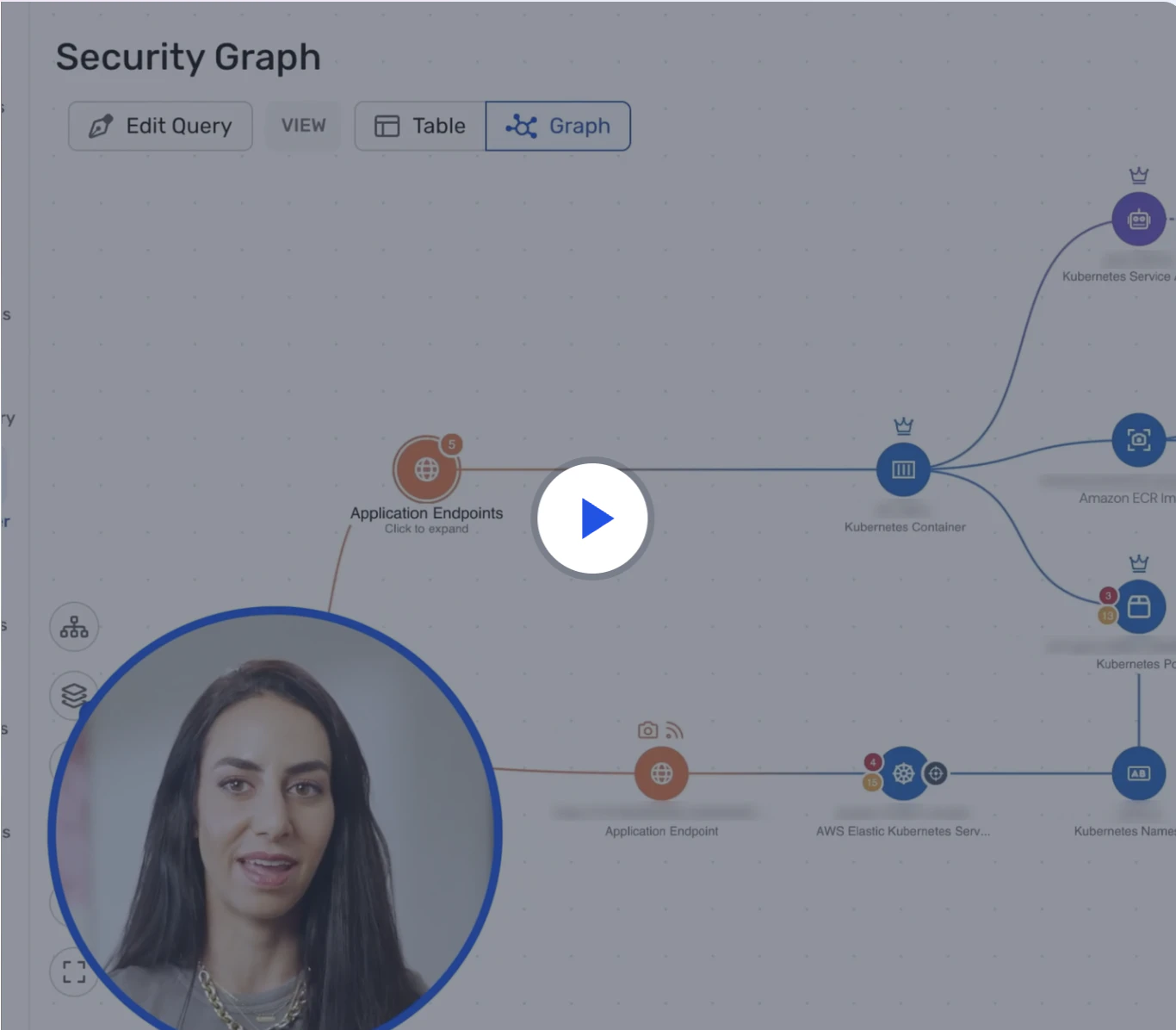
Watch the demo to learn how Wiz Cloud finds toxic combinations across misconfigurations, identities, data exposure, and vulnerabilities—without agents.
Watch now
Common compliance frameworks and regulations
Organizations must navigate a complex landscape of compliance frameworks. Some frameworks are prescriptive, specifying exact technical requirements like encryption algorithms or password lengths. Others are principles-based, defining outcomes you must achieve while leaving implementation details to your discretion.
Data privacy and protection regulations
GDPR (General Data Protection Regulation) governs how organizations handle personal data of European Union residents. It requires explicit consent for data collection, gives individuals rights to access and delete their data, and mandates breach notification within 72 hours.
CCPA (California Consumer Privacy Act) and similar US state privacy laws give consumers control over their personal data. These laws require disclosure of data collection practices and provide opt-out rights for data sales.
HIPAA (Health Insurance Portability and Accountability Act) protects healthcare information in the United States. It requires administrative, physical, and technical safeguards for protected health information (PHI) and imposes strict breach notification requirements.
These regulations apply to cloud workloads that process or store personal data. This means organizations must ensure their cloud infrastructure and applications meet these requirements.
Industry-specific compliance standards
PCI DSS (Payment Card Industry Data Security Standard) applies to any organization that handles payment card data. It specifies requirements for network security, access control, encryption, and monitoring.
SOC 2 (Service Organization Control 2) provides a framework for service organizations to demonstrate security controls to customers. It covers five trust service criteria: security, availability, processing integrity, confidentiality, and privacy.
FedRAMP (Federal Risk and Authorization Management Program) establishes security requirements for cloud service providers serving US government agencies. Authorization requires extensive documentation and third-party assessment, but opens access to the federal market.
These standards connect directly to specific technical controls and audit requirements.
Security and infrastructure frameworks
NIST Cybersecurity Framework provides a risk-based approach to managing cybersecurity. It organizes security activities into five functions: Identify, Protect, Detect, Respond, and Recover.
ISO 27001 is an international standard for information security management systems. Certification requires implementing a comprehensive set of security controls and undergoing third-party audits.
CIS Benchmarks provide prescriptive configuration guidelines for secure systems. They specify exact settings for operating systems, cloud platforms, and applications.
These frameworks connect directly to cloud security posture management.
SOC Reports Explained: Types, Trust Criteria & Compliance
SOC reports are third-party proof of your organization's security posture, validating its approach to controls around security, privacy, availability, data processing integrity, and confidentiality.
Leggi di più

Key challenges in building effective compliance programs
Building effective compliance programs requires overcoming several operational challenges that make compliance management difficult in practice.
Keeping pace with regulatory change: Regulations evolve faster than many organizations can adapt their controls. New laws emerge, existing regulations are updated, and enforcement interpretations shift. Tracking regulatory updates across multiple jurisdictions and frameworks requires dedicated attention. Translating legal language into technical requirements that engineers can implement adds another layer of complexity.
Scaling compliance across distributed environments: Multi-cloud environments create scaling challenges for compliance. Each cloud provider has different native controls, different configuration options, and different terminology. Microservices, containers, and serverless architectures create ephemeral resources that exist for minutes or seconds, making them difficult to audit using traditional approaches. Maintaining consistent compliance policies across development, staging, and production environments requires automation and standardization.
Bridging security and development teams: Security teams enforcing compliance and development teams prioritizing velocity often find themselves in tension. Manual compliance checks create bottlenecks in CI/CD pipelines, slowing releases and frustrating developers. Making compliance requirements understandable and actionable for developers, rather than presenting them as abstract policy documents, requires translation and tooling.
Managing evidence and audit readiness: Collecting evidence for audits across multiple systems demands significant manual effort when done traditionally. Point-in-time audits create gaps between audit periods where compliance drift can occur undetected. Maintaining audit trails for ephemeral cloud resources that no longer exist by audit time presents particular challenges.


Best practices for successful compliance management
Organizations that build effective compliance programs follow proven approaches that address the challenges outlined above.
Automate compliance monitoring and assessment
Automated scanning eliminates manual configuration checks and reduces human error. Instead of relying on periodic manual reviews, automated tools continuously scan infrastructure for compliance violations and misconfigurations.
Continuous monitoring detects compliance drift in real-time rather than waiting for periodic audits. When a resource configuration changes in a way that violates compliance requirements, automated monitoring identifies the issue immediately.
Integrating compliance checks into CI/CD pipelines prevents violations before deployment. Rather than discovering compliance issues in production, organizations can block non-compliant configurations from being deployed in the first place.
Implement risk-based prioritization
Organizations should focus remediation efforts on compliance violations that create the highest business risk. Not every violation carries equal weight. A publicly exposed database containing customer data presents more risk than a missing tag on an internal development resource.
Correlating compliance findings with other security context improves prioritization. A compliance violation on a resource that also has known vulnerabilities, is publicly exposed, and contains sensitive data deserves higher priority than an isolated finding.
Accepting that not all compliance violations require immediate remediation prevents alert fatigue. Risk-based prioritization helps teams focus on what matters most rather than treating every finding as equally urgent.
Create shared responsibility between teams
Compliance ownership should extend beyond security teams to include developers, operations, and business units. When compliance is everyone's responsibility, issues get addressed faster and prevention becomes more effective.
Policy-as-code expresses compliance requirements in machine-readable formats that can be automatically enforced. Instead of PDF documents that developers must interpret, policy-as-code provides executable rules that integrate into development workflows.
Providing developers with clear remediation guidance, rather than just flagging violations, accelerates fixes. Telling a developer exactly how to fix a misconfiguration is more effective than simply reporting that a violation exists.
Maintain continuous evidence collection
Organizations should collect compliance evidence automatically rather than scrambling during audits. Automated evidence collection captures configuration states, access logs, and control effectiveness continuously.
Immutable audit logs combined with configuration state snapshots prove compliance posture at specific points in time. Logs capture who accessed what resources and when (activity evidence), while configuration snapshots document how resources were configured (state evidence). Together, these artifacts demonstrate both that controls were implemented correctly and that they operated as intended throughout the audit period.
Automated reporting reduces audit preparation time and improves accuracy. Instead of weeks of manual evidence gathering, organizations can generate audit-ready reports in minutes.
New American Funding automated compliance assessments and reporting using Wiz's built-in frameworks, reducing manual compliance work and enabling faster reporting to auditors.
Spiegazione della conformità alla sicurezza dei dati
La conformità alla sicurezza dei dati è un aspetto critico della governance dei dati che comporta l'adesione alle norme e ai regolamenti incentrati sulla sicurezza stabiliti dagli organismi di vigilanza e regolamentazione, comprese le agenzie federali.
Leggi di più

How Wiz enables continuous compliance across cloud environments
Wiz treats compliance as continuous risk management rather than periodic auditing, providing the visibility and automation needed to maintain compliance across dynamic cloud environments.
The platform's agentless architecture uses cloud-native APIs with read-only permissions to scan entire environments—compute instances, containers, serverless functions, and managed services—without deploying agents or impacting production workloads.
The Wiz Security Graph correlates compliance findings with vulnerabilities, misconfigurations, identity risks, and data exposure, helping teams understand which violations create actual risk versus which are lower priority.
Wiz provides built-in assessment against over 140 compliance frameworks, including GDPR, HIPAA, PCI DSS, SOC 2, ISO 27001, FedRAMP, NIST frameworks, and CIS Benchmarks. Organizations can assess compliance posture against multiple standards simultaneously without building custom rule sets.
The platform generates audit-ready reports with evidence mapped directly to framework controls, eliminating weeks of manual evidence collection. Wiz's unified CNAPP approach gives security and development teams shared visibility and consistent policy enforcement, enabling faster collaboration on remediation.
Most importantly, Wiz prioritizes violations based on actual exploitability and business impact, transforming compliance from reactive checkbox exercises into proactive risk reduction.
Ready to move from compliance checklists to continuous risk reduction? Get a demo and see how Wiz makes regulatory requirements manageable across your entire cloud environment.
100+ Built-In Compliance Frameworks
See how Wiz eliminates the manual effort and complexity of achieving compliance in dynamic and multi-cloud environments.
