AI Security Graph

Wiz エキスパートチーム
Main takeaways AI security graphs:
  • AI security graphs help teams understand how AI risks actually become exploitable by modeling relationships between models, data, identities, and cloud infrastructure – rather than treating AI findings in isolation.

  • Context matters more than volume: by correlating AI-specific issues with exposure, permissions, and sensitive data access, security graphs surface the risks that can realistically be abused, not just what exists.

  • AI environments demand continuous visibility, since models, endpoints, and permissions change rapidly across cloud services, managed AI platforms, and self-hosted infrastructure.

  • Wiz operationalizes AI security graphs by grounding them in real cloud context, using its Security Graph and AI-SPM capabilities to map AI risks to concrete attack paths teams can prioritize and remediate.

Understanding AI security graphs in modern cybersecurity

An AI security graph is a graph-based model that maps how AI systems actually operate in the cloud. Instead of analyzing models, infrastructure, identities, or data in isolation, it represents them as interconnected nodes – such as AI models, training pipelines, cloud services, service accounts, and data stores – and the relationships between them, including permissions, data flows, and network exposure.

This relationship-first approach is what differentiates security graphs from traditional security tools. Most point solutions focus on a single layer: a vulnerability scanner looks at software flaws, an IAM tool reviews permissions, and a data security tool tracks sensitive data. Each produces valid findings, but none explain how those findings combine to create real risk. AI environments amplify this gap because AI workloads span multiple layers at once – code, infrastructure, identities, data, and runtime behavior.

AI security graphs address this by continuously mapping how those layers connect as environments change. As models are retrained, endpoints are redeployed, permissions are adjusted, or new data sources are introduced, the graph updates to reflect the current state of the environment. This allows security teams to reason about risk based on relationships, not snapshots.

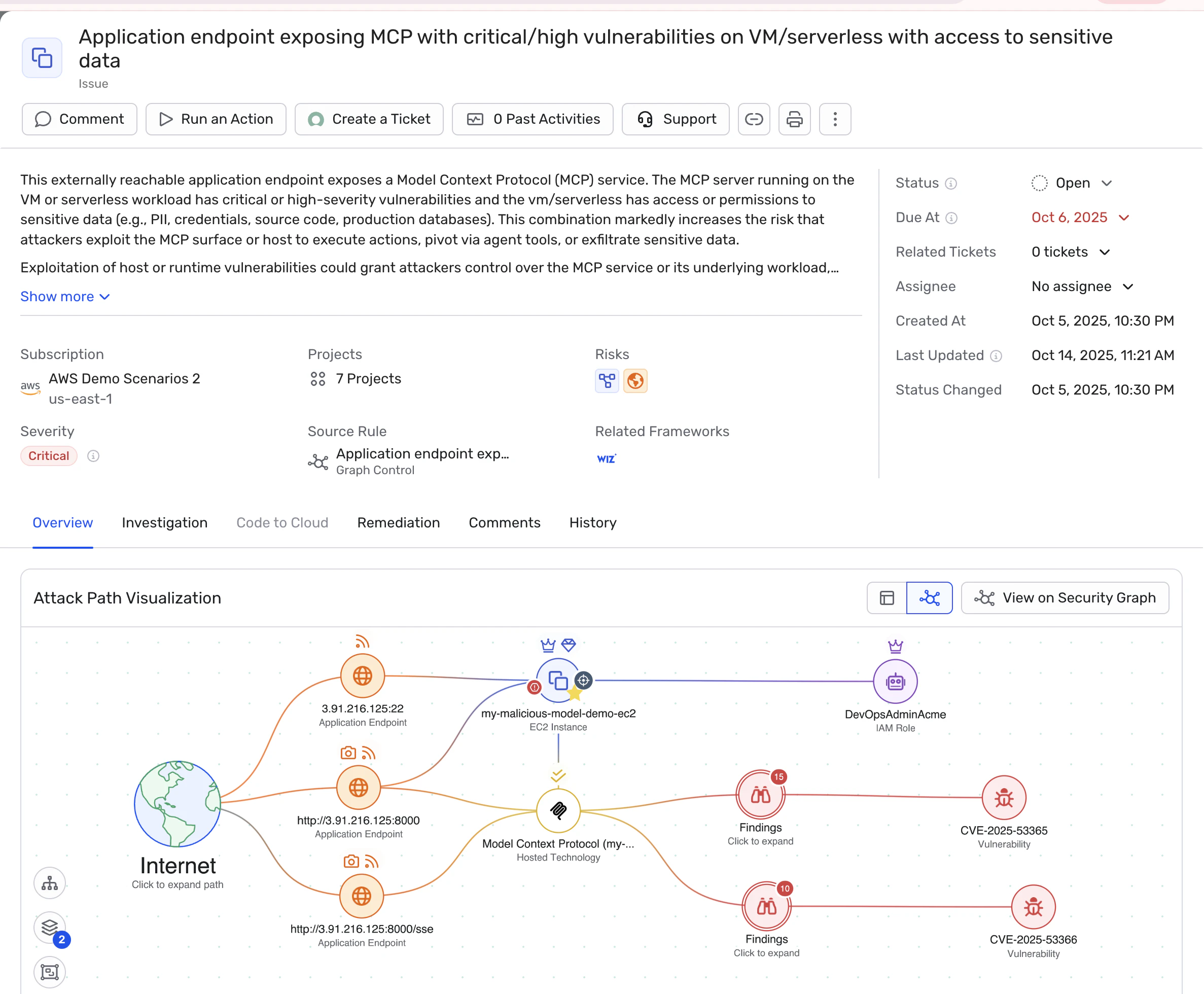
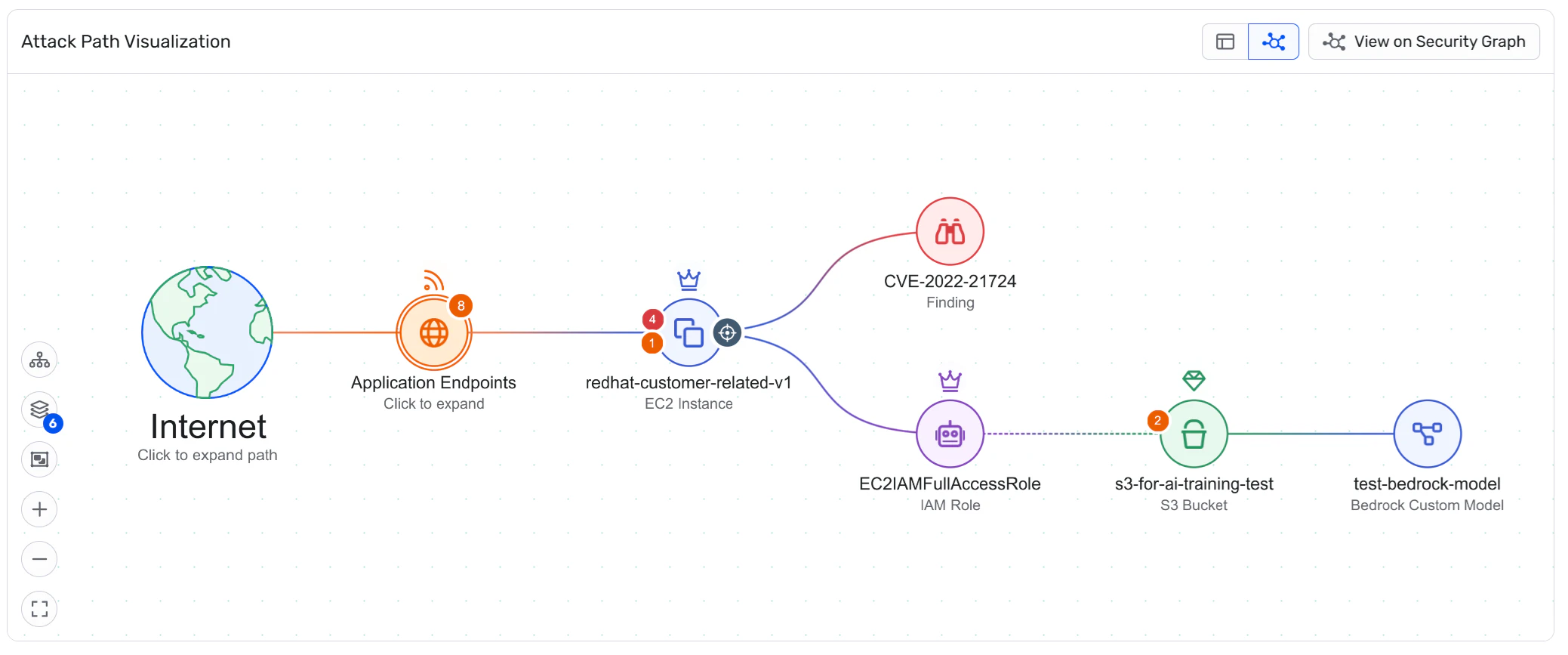
That context becomes critical for AI security because most serious failures don’t stem from a single misconfiguration. Risk emerges when multiple conditions align – for example, a publicly exposed inference endpoint running under an over-privileged service account that can access sensitive training data. Individually, each issue might seem manageable. Together, they form an exploitable attack path.

By modeling these connections explicitly, AI security graphs make it possible to identify what Wiz and others often describe as “toxic combinations” – situations where exposure, permissions, and data access intersect in ways attackers can realistically abuse. Instead of asking “What vulnerabilities do we have?”, teams can answer a more meaningful question: Which AI systems are actually at risk, and why?

Accelerate AI Innovation, Securely

Learn why CISOs at the fastest growing companies choose Wiz to secure their organization's AI infrastructure.

Wiz がお客様の個人データをどのように取り扱うかについては、当社のプライバシーポリシーをご確認下さい: プライバシーポリシー.

Advantages of AI security graphs for cloud environments

AI security graphs aren’t just a new way to visualize assets – they change how teams understand and prioritize risk in complex cloud environments. By focusing on relationships instead of isolated findings, they help security teams move from awareness to action.

Complete visibility into the AI attack surface

AI environments grow quickly and unevenly. Models are trained in one place, deployed in another, and connected to data sources and services across multiple clouds. Security graphs provide a continuous inventory of this landscape, automatically discovering managed AI services, self-hosted models, training pipelines, inference endpoints, and the infrastructure that supports them.

This visibility is especially important for identifying shadow AI – models, notebooks, or pipelines created outside approved workflows. By mapping these assets alongside their permissions and network exposure, security teams can understand not just what exists, but which AI systems introduce real risk.

Contextual risk prioritization

Most AI-related findings aren’t dangerous on their own. A misconfiguration, an exposed endpoint, or an over-permissioned identity only becomes critical when combined with other factors. AI security graphs make these relationships explicit by correlating AI issues with cloud exposure, identity permissions, and sensitive data access.

This enables attack path analysis: showing how an attacker could move from an initial foothold to a meaningful outcome, such as model manipulation or data exfiltration. Instead of triaging long lists of alerts, teams can focus on the small number of AI risks that are actually exploitable and tied to business impact.

Faster investigation and response

When an AI vulnerability or misconfiguration is discovered, speed matters. Security graphs accelerate investigations by showing dependencies and blast radius immediately – what models are affected, what data they can access, and which identities or services are involved.

This reduces the need for manual correlation across tools and teams. Security engineers can trace issues from exposed cloud resources back to the AI pipelines and deployments they support, making it easier to contain risk and prioritize remediation.

Stronger governance and compliance

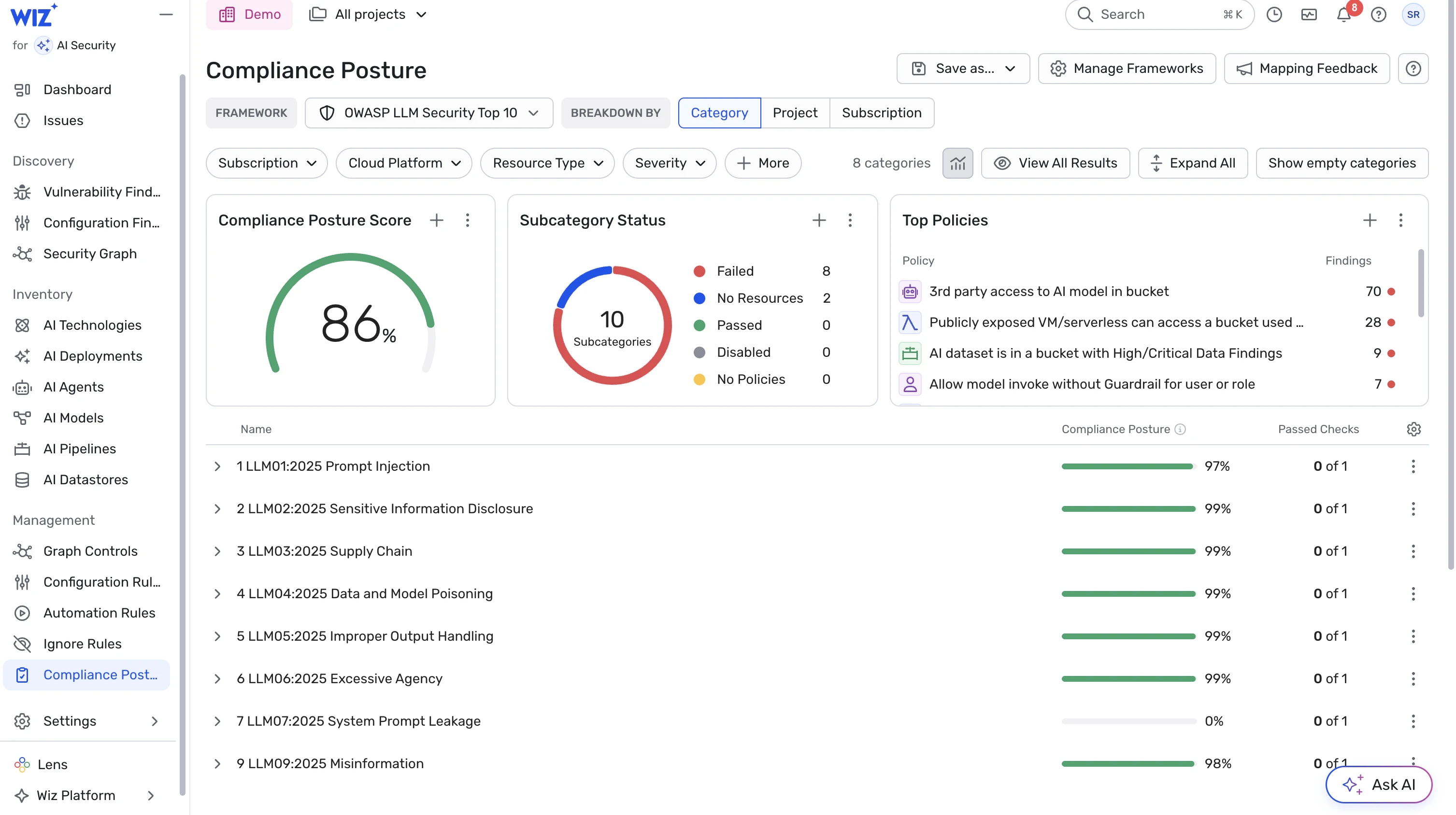
As regulations and internal governance requirements evolve, organizations need a reliable way to inventory AI systems and demonstrate control. AI security graphs support this by maintaining an up-to-date view of AI assets, their configurations, and how they interact with data and infrastructure.

Measure against OWASP Top 10

This makes it easier to enforce policies consistently – such as restricting where sensitive data can be used for training, or ensuring only approved identities can deploy models – and to generate evidence for audits without relying on manual tracking or outdated documentation.

Common use cases and applications

AI security graphs become most valuable when applied to real operational problems. Rather than abstract risk scoring, they help teams answer concrete questions about how AI systems are built, deployed, and exposed in cloud environments.

Securing AI model development pipelines

During model development, security risks often emerge long before a model reaches production. Training pipelines may rely on shared infrastructure, permissive service accounts, or external datasets that introduce unintended exposure.

AI security graphs help teams understand how training jobs, model artifacts, data sources, and identities connect. This makes it easier to identify risky configurations – such as training environments with internet exposure or access to sensitive data – and to trace how those risks could carry forward into downstream deployments.

Protecting AI inference endpoints

Inference endpoints are one of the most visible – and most targeted – components of an AI system. When these endpoints are publicly accessible or poorly authenticated, they can be abused to extract sensitive information, manipulate outputs, or overload infrastructure.

By mapping inference services alongside network exposure, identity permissions, and data access, AI security graphs show which endpoints are reachable, what they can access, and how misuse could impact other parts of the environment. This helps teams prioritize hardening efforts based on actual exposure, not just configuration drift.

Managing AI supply chain risk

AI teams frequently depend on pretrained models, open-source libraries, and external APIs to move quickly. While this accelerates development, it also introduces supply chain risk that’s difficult to track with traditional tools.

AI security graphs help surface where third-party components are used, how they’re integrated, and what access they inherit. By correlating this information with cloud permissions and data flows, security teams can identify situations where compromised dependencies could realistically affect production systems.

Detecting AI-specific threats in cloud environments

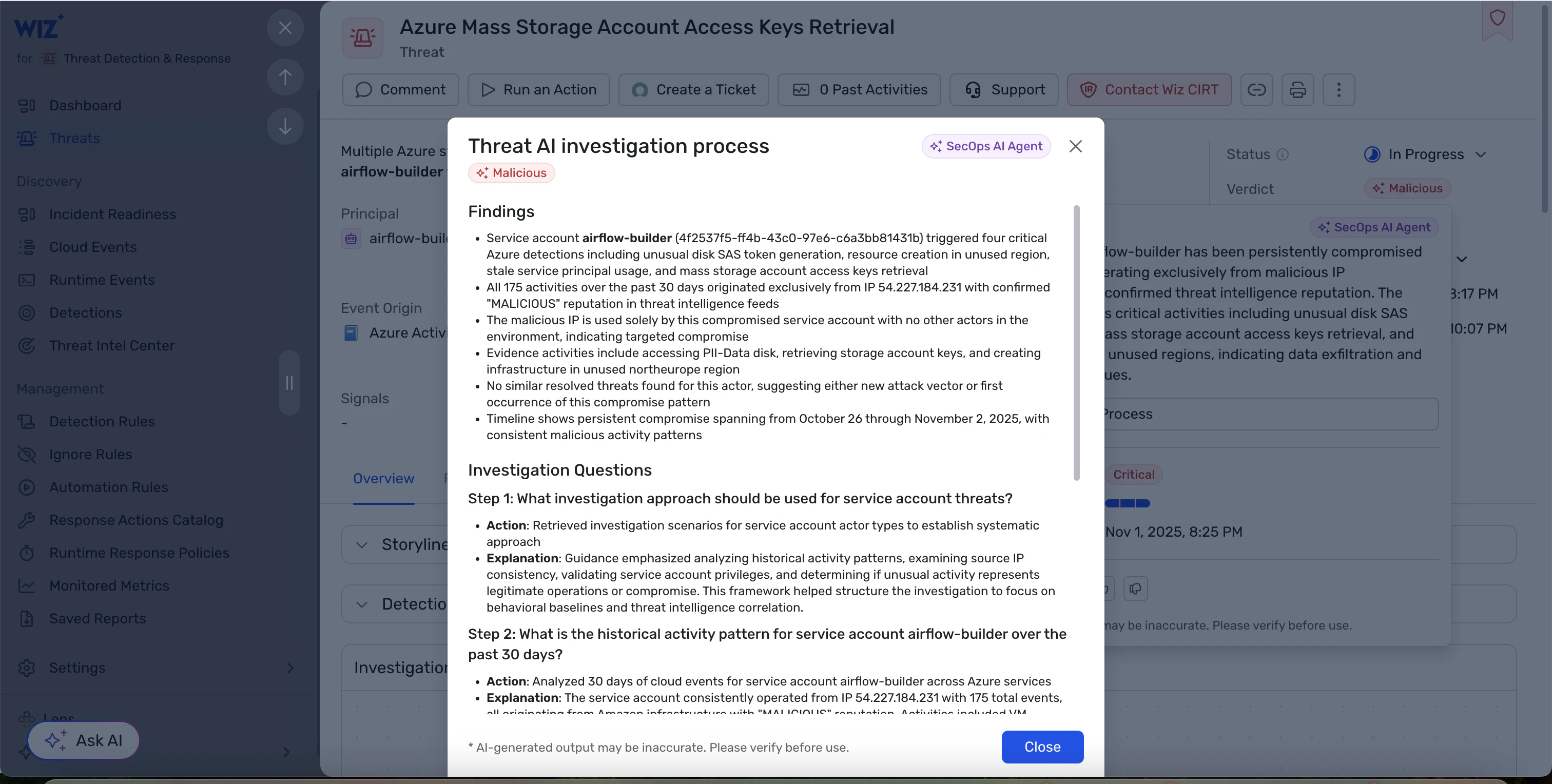
Some threats target AI systems directly, while others exploit the cloud infrastructure that supports them. These include credential abuse, privilege escalation, data poisoning opportunities, and unauthorized access to models or training data.

AI security graphs provide a way to detect these risks in context – connecting AI-specific issues to broader cloud attack patterns such as lateral movement or exposed services. This allows teams to treat AI security as part of their overall cloud threat model, rather than a separate or specialized discipline.

Get an AI-SPM Sample Assessment

In this Sample Assessment Report, you’ll get a peek behind the curtain to see what an AI Security Assessment should look like.

Wiz's approach to AI-powered security graphs

Wiz approaches AI security graphs as an extension of cloud security fundamentals, not a separate or speculative discipline. Rather than attempting to infer agent intent or model behavior in isolation, Wiz focuses on validating the cloud security controls that ultimately determine what AI systems can do in practice.

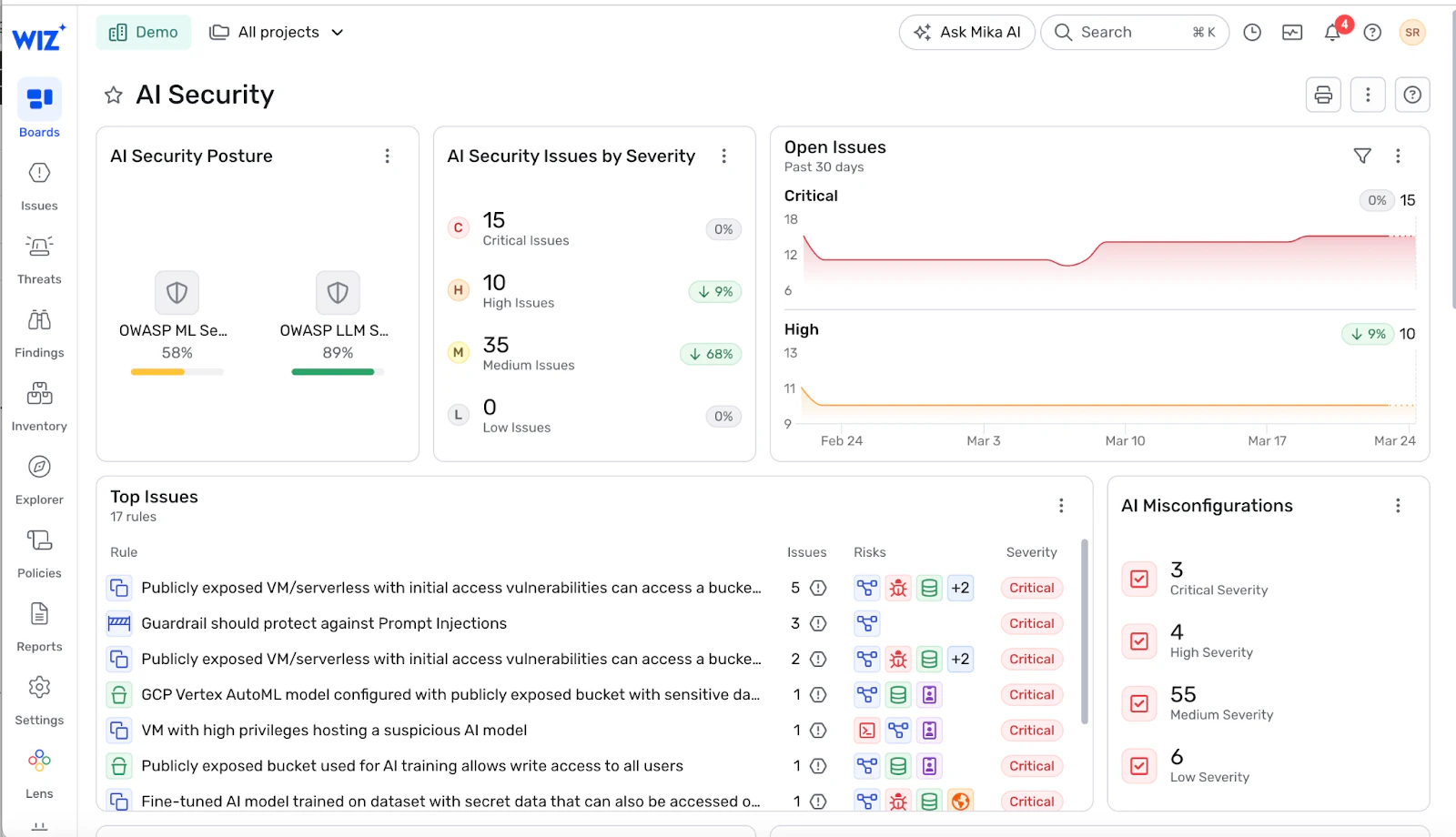
Wiz's AI security dashboard

At the core of this approach is the Wiz Security Graph. The graph continuously maps cloud resources and their relationships – including identities, permissions, network exposure, and data access – and treats AI workloads as first-class assets within that model. This includes managed AI services, notebooks, training pipelines, model storage, inference endpoints, and the infrastructure they rely on.

Wiz AI Security Posture Management (AI-SPM) builds on this foundation by identifying AI-specific risks – such as exposed AI services, over-permissioned service accounts used by training jobs, insecure model storage, or sensitive data accessible to AI pipelines – and correlating them with broader cloud context. This allows teams to understand not just that a risk exists, but whether it creates a realistic attack path.

Because the Security Graph connects findings across domains, Wiz can surface situations where AI risks intersect with cloud misconfigurations, identity weaknesses, or sensitive data exposure. For example, an exposed training environment combined with excessive permissions and access to sensitive datasets represents a materially different risk than any of those issues on their own.

Wiz Research reinforces this model by grounding AI security in observed cloud failure modes. Research findings – such as exposed AI data stores, misused non-human identities, leaked model secrets, or vulnerabilities in AI infrastructure – feed back into detection logic and risk modeling. This helps ensure that AI security is driven by real attacker behavior and infrastructure weaknesses, rather than hypothetical AI misuse.

By unifying AI security with cloud security posture management, Wiz enables teams to evaluate AI risk using the same operational questions they already trust: what is exposed, who has access, what data is at risk, and how those conditions combine. This makes AI security actionable without requiring organizations to adopt entirely new security models or workflows.

See how a graph turns AI and cloud risk into clear action. Get a personalized demo of the unified approach to code-to-cloud security – no fluff, just the context you need to fix what matters.

Accelerate AI Innovation, Securely

Learn why CISOs at the fastest growing companies choose Wiz to secure their organization's AI infrastructure.

Wiz がお客様の個人データをどのように取り扱うかについては、当社のプライバシーポリシーをご確認下さい: プライバシーポリシー.