
What to look for in a software engineer interview?
Hiring effective software engineers requires looking beyond raw coding speed. With software developer employment projected to grow 17.9% from 2023 to 2033, competition for talent makes it essential that, in modern cloud-native environments, the best engineers balance technical proficiency with security awareness and architectural foresight. You want candidates who understand that writing code is only the first step; maintaining, securing, and scaling that code is where the real work happens.
Look for engineers who proactively think about failure modes, data privacy, and system resilience. A strong candidate doesn't just solve the immediate problem but asks about the broader context: How will this scale? What permissions does this service need? What's the blast radius if this component fails? How will we detect misuse in production?
Strong engineers understand the context their code runs in, including network exposure, IAM permissions, data sensitivity, and operational dependencies. This context-aware mindset distinguishes engineers who build sustainable systems from those who only ship features.
Secure Coding Best Practices [Cheat Sheet]
This cheat sheet is designed for software developers and security engineers to provide practical tips and coding examples to write secure code from the start and reduce vulnerabilities.

Technical interview questions for software engineers
Technical interviews often rely on rote memorization, but the goal should be to evaluate how a candidate approaches problems they haven't seen before. The questions below cover coding fundamentals, algorithms, and technical reasoning. It is critical to calibrate these questions based on the role. An intern should demonstrate potential and grasp of basics, while a senior engineer or tech lead must demonstrate deep expertise in trade-offs and optimization.
Data structures and algorithms questions
These questions assess a candidate's grasp of computer science fundamentals. While day-to-day work may not always require implementing a linked list from scratch, understanding time complexity (Big O notation) and space complexity is vital for writing efficient code.
1. "Walk me through how you would reverse a linked list."
What you learn: This tests basic pointer manipulation and logical sequencing.
Strong answer: The candidate explains the iterative or recursive approach clearly, handling edge cases like empty lists or single-node lists.
Red flags: Confusion about pointers or references; failure to handle null checks.
2. "Explain the time complexity trade-offs between different sorting algorithms."
What you learn: Verifies knowledge of Big O notation and when to apply specific algorithms (e.g., QuickSort vs. MergeSort).
Strong answer: Discusses worst-case vs. average-case scenarios and mentions space complexity constraints.
Red flags: Memorized answers without understanding why one algorithm is faster than another in specific contexts.
3. "How would you detect a cycle in a graph?"
What you learn: Tests knowledge of graph traversal algorithms like DFS (Depth First Search) or BFS (Breadth First Search).
Strong answer: Explains DFS with recursion stack tracking for directed graphs, or visited/parent node tracking for undirected graphs. Mentions handling disconnected components and avoiding false positives.
Red flags: Confuses linked list cycle detection (tortoise and hare) with graph cycle detection, or cannot explain how to track visited state during traversal.
4. "How do hash tables work, and how would you handle collisions?"
What you learn: Assesses understanding of data retrieval efficiency and underlying data structures.
Strong answer: Explains hashing functions and collision resolution strategies like chaining or open addressing.
Red flags: Thinks hash tables always provide O(1) access without caveats regarding collisions.
5. "Given a binary search tree, how do you validate that it is valid?"
What you learn: Tests recursion logic and tree traversal properties.
Strong answer: Uses a recursive approach passing min/max constraints down the tree.
Red flags: Checks only immediate children without considering the entire subtree constraints.

System design questions
System design questions are essential for mid-level and senior software engineer interview questions. They reveal how a candidate thinks about distributed systems, scalability, and reliability.
6. "Design a URL shortening service like bit.ly."
What you learn: Tests ability to handle high read/write ratios and database schema design.
What to look for: Discussion on hashing, collision handling, and redirection mechanisms.
| Score | Criteria |
|---|---|
| 4 - Excellent | Discusses hashing strategy, collision handling, database schema, read/write ratio optimization, caching layer, and analytics tracking. Proactively addresses security (rate limiting, abuse prevention). |
| 3 - Good | Covers core functionality (hash generation, storage, redirection) with reasonable scalability discussion. May miss caching or analytics. |
| 2 - Adequate | Understands the basic flow but struggles with scale considerations. Needs prompting to discuss database choices or collision handling. |
| 1 - Below expectations | Cannot articulate a coherent design or misunderstands fundamental requirements (e.g., thinks URLs are stored as-is without shortening). |
7. "How would you architect a real-time notification system?"
What you learn: Evaluates knowledge of protocols (WebSockets vs. polling) and message queues.
What to look for: Consideration of load balancing, message delivery guarantees, and fan-out architecture.
8. "Design a scalable file storage system."
What you learn: Tests understanding of data sharding, replication, and consistency.
What to look for: Discussion on database sharding, blob storage, and CDN usage for retrieval.
9. "How would you design a rate limiter for an API?"
What you learn: Assesses knowledge of protecting services from abuse and managing traffic.
What to look for: Algorithms like token bucket or leaky bucket; discussion on distributed state (e.g., using Redis).
10. "Design a chat application like WhatsApp."
What you learn: Tests end-to-end system design including storage, real-time communication, and offline states.
What to look for: Senior candidates should proactively raise security considerations like end-to-end encryption and metadata privacy.
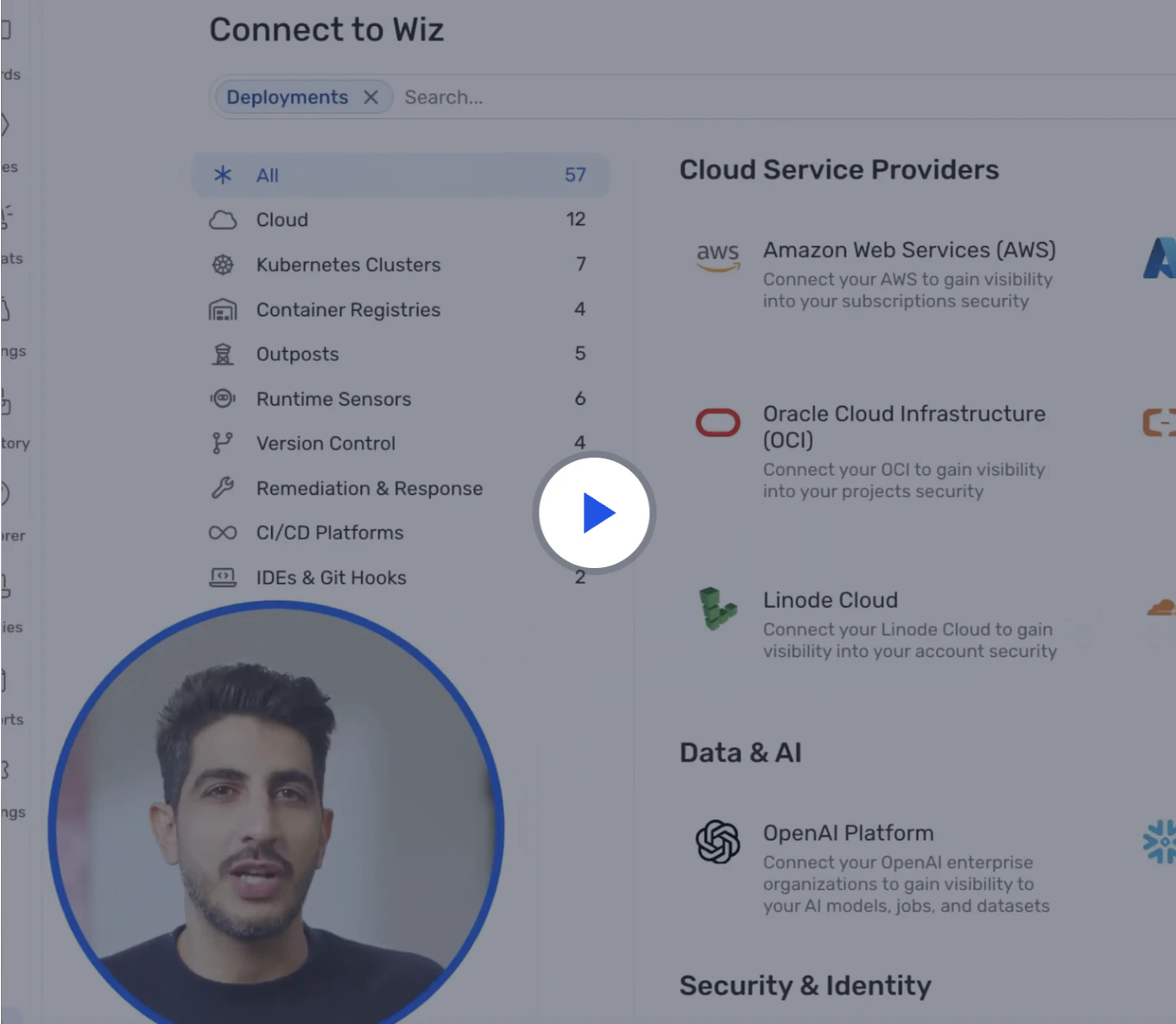
Watch 5-min demo
Learn about the full power of the Wiz cloud security platform. Built to protect your cloud environment from code to runtime. Watch now
Watch now
Debugging and troubleshooting questions
Real-world engineering involves fixing broken things. These software developer interview questions reveal a candidate's systematic approach to root cause analysis and production debugging.
11. "Describe a difficult bug you fixed and your debugging approach."
What you learn: Reveals persistence and methodology.
What to look for: A structured approach (reproducing the issue, isolating variables, logging, fixing, and preventing recurrence).
12. "How would you diagnose a production service returning intermittent 500 errors?"
What you learn: Tests operational awareness and familiarity with monitoring tools.
What to look for: Checking stack traces, server logs, recent deployments, and resource usage (CPU/Memory).
13. "Walk me through how you would investigate a memory leak."
What you learn: Assesses understanding of memory management and profiling.
What to look for: Using profilers, analyzing heap dumps, and identifying object retention patterns.
Code quality and development practices questions
These questions determine if a candidate fits into a modern software development life cycle (SDLC). You want engineers who value code review, unit testing, and automation.
14. "How do you approach writing testable code?"
What you learn: Tests knowledge of dependency injection and modularity.
What to look for: Emphasis on unit testing, mocking external dependencies, and keeping functions small.
15. "What do you look for when reviewing a colleague's pull request?"
What you learn: Reveals their standard for quality and collaboration style.
What to look for: Checks for readability, maintainability, security flaws, and test coverage, not just syntax errors.
16. "Describe your experience with CI/CD pipelines."
What you learn: Operational maturity and familiarity with continuous integration and continuous deployment.
What to look for: Experience automating tests, builds, and deployments. Candidates familiar with shift-left security practices in pipelines are increasingly valuable for secure software delivery.
DevSecOps engineer roles and career progression
DevSecOps acts as a natural extension of traditional DevOps, weaving security into every phase of the software development lifecycle (SDLC). The main goal? To shift security left and make it a major consideration for everyone instead of an afterthought for a select few.
Leer más

Behavioral interview questions for software engineers
Software engineer behavioral interview questions are critical for assessing soft skills. A brilliant coder who cannot collaborate is a liability. Use the STAR method (Situation, Task, Action, Result) to guide candidates toward specific, measurable examples.
Teamwork and collaboration questions
17. "Tell me about a time you disagreed with a technical decision made by your team."
What strong answers show: Professionalism, ability to use data to persuade, and willingness to commit even if they disagree ("disagree and commit").
Red flags: Bad-mouthing teammates or insisting they were right without evidence.
18. "Describe a situation where you had to work with a difficult colleague."
What strong answers show: Empathy, conflict resolution, and focus on shared goals.
Red flags: Avoidance of the problem or escalating immediately to management without trying to resolve it personally.
19. "How do you handle receiving critical feedback on your code?"
What strong answers show: Growth mindset and separation of ego from work.
Red flags: Defensiveness or taking technical critique personally.
20. "Tell me about a time you had to explain a complex technical concept to a non-technical stakeholder."
What strong answers show: Communication skills and ability to simplify cross-functional collaboration.
Red flags: Using jargon to confuse the stakeholder or condescending tone.
Problem-solving and adaptability questions
21. "Describe a time you had to learn a new technology quickly to complete a project."
What strong answers show: Learning agility and resourcefulness.
Red flags: Complaining about the lack of training or documentation.
22. "Tell me about a project that failed and what you learned from it."
What strong answers show: Accountability and ability to derive lessons from failure.
Red flags: Blaming external factors entirely; claiming to have never failed.
23. "How do you prioritize when you have multiple urgent tasks?"
What strong answers show: Prioritization skills and communication with stakeholders about trade-offs.
Red flags: Trying to do everything at once and burning out, or hiding the workload issue.
Leadership and initiative questions
These are essential tech lead interview questions or for senior roles where influence without authority is required.
24. "Describe a time you mentored a junior developer."
What strong answers show: Investment in team growth and patience.
Red flags: Viewing mentorship as a burden or "doing it for them" instead of teaching.
25. "Tell me about a technical improvement you championed at your previous company."
What strong answers show: Initiative and ownership beyond assigned tasks.
Red flags: Passive execution of only what is assigned.
26. "How do you make decisions when you don't have complete information?"
What strong answers show: Decision-making under ambiguity, risk assessment, and iterative approaches.
Red flags: Analysis paralysis or reckless guessing.
Experience and background questions
These questions verify the technical depth and career progression claimed on the resume. They help you understand if the candidate has simply used a tool or truly understands it.
27. "Walk me through the most complex project you've worked on."
Guidance: Look for the candidate's specific contribution. Did they own the architecture or just implement a small piece? Ask about the "why" behind their choices.
28. "What programming languages are you most comfortable with and why?"
Guidance: This reveals domain expertise. A strong candidate understands the strengths and weaknesses of their primary language (e.g., Java's verbosity vs. Python's speed).
29. "Describe your experience with cloud platforms (AWS, GCP, Azure)."
Guidance: For modern roles, understanding managed services vs. IaaS is crucial. Look for practical experience with cloud-native patterns.
30. "What aspects of software engineering are you most passionate about?"
Guidance: This helps align the candidate with the role. A candidate passionate about UI/UX might not enjoy a backend data pipeline role.
How Wiz supports engineering teams building secure software
Hiring skilled software engineers is the first step; enabling them to build securely is the second. Once you bring talent on board, you need to ensure they have the tools to integrate security into their workflows without slowing down development velocity.
Wiz Code embeds security guardrails directly into the developer environments your new hires will use every day, from IDEs to pull requests and CI/CD pipelines. The goal is guardrails, not gates: developers receive fast, actionable feedback without waiting for security reviews or slowing delivery cycles.
Instead of forcing engineers to become security experts, Wiz provides automated feedback where it matters most:
IaC Scanning: Detect misconfigurations in Terraform, CloudFormation, and Kubernetes manifests before deployment.
Secrets Scanning: Prevent hardcoded credentials from reaching your repositories, catching API keys, passwords, and tokens in pre-commit hooks.
Software Composition Analysis (SCA): Identify vulnerable dependencies in third-party libraries with remediation guidance.
SAST (Static Application Security Testing): Catch code-level vulnerabilities like SQL injection, cross-site scripting, and insecure deserialization before they reach production.
This approach empowers your engineering team to ship secure code faster, maximizing the value of the talent you work so hard to hire. By bridging the gap between security and development, Wiz helps you build a culture where security is an enabler, not a blocker. Get a demo to see how Wiz Code integrates security into your development workflow.
A unified approach to cloud security
See why Wiz is one of the few cloud security platforms that security and devops teams both love to use.
