
Software engineer resume example
Below is an annotated template demonstrating how to weave modern cloud security and business impact into your professional history.
[YOUR NAME] [your.email@email.com] | linkedin.com/in/[yourprofile] | github.com/[yourhandle]
Summary Senior Software Engineer with 8+ years of experience building high-scale distributed systems in Go and Python. Managed 200+ microservices while maintaining a 99.9% security SLA. Expert in cloud-native architecture with a focus on reducing security friction and maintaining developer velocity. Proven track record of leveraging runtime context to prioritize engineering efforts and secure the full code-to-cloud lifecycle.
Technical Skills
Languages: Go (Expert), Python, TypeScript, Rust (Proficient).
Cloud & Infra: AWS (EKS, Lambda, S3), Infrastructure as Code, Kubernetes, Container Orchestration.
DevOps/CI/CD: CI/CD Pipelines, GitOps, Monitoring & Observability.
Security: Reachability Analysis, SCA/SAST, IAM Policy Least-Privilege, Secrets Management.
Professional Experience
Senior Software Engineer | CloudScale Systems | 2022 – Present
Architected a multi-region microservices mesh handling 50k+ requests/sec, reducing global latency by 15% through optimized gRPC communication.
Pioneered a risk-prioritized remediation workflow that utilized runtime context to filter vulnerability scans, reducing the developer security backlog by 60% by focusing only on "reachable" exploits.
Eliminated toxic combinations in production by refactoring IAM roles and network policies, closing security gaps where over-privileged identities overlapped with publicly exposed workloads.
Automated IaC scanning in the CI/CD pipeline, catching 98% of misconfigurations (like unencrypted volumes) before they reached the staging environment.
Software Engineer | DataFlow Tech | 2019 – 2022
Migrated a monolithic legacy application to a containerized architecture on EKS, improving deployment frequency from bi-weekly to multiple times per day.
Developed a custom sidecar proxy for internal auditing, ensuring SOC 2 compliance across all microservices without requiring manual developer instrumentation.
Integrated automated secrets detection into pre-commit hooks, preventing the accidental exposure of cloud credentials in over 200+ private repositories.
Swap generic adjectives for hard numbers. Instead of "Experienced software engineer skilled in cloud technologies and security," write: "Senior Software Engineer with 8+ years experience... managed 200+ microservices while maintaining a 99.9% security SLA."
Secure Coding Best Practices [Cheat Sheet]
This cheat sheet is designed for software developers and security engineers to provide practical tips and coding examples to write secure code from the start and reduce vulnerabilities.

How to structure a software engineer resume
Structure varies by experience level, but certain patterns consistently perform well across hiring contexts. The sections below walk through what to include and how to organize each part effectively.
Contact and summary section
Start with the basics: a professional email address, your LinkedIn profile URL, and a link to your GitHub if you have public work worth showing. Avoid outdated email domains or unprofessional handles.
Your summary should function as an elevator pitch in 2-3 sentences. Capture your experience level, technical focus, and what you're seeking. A software engineer summary sample might follow this format: "5 years of experience building distributed backend systems using Python and Go. Focused on high-availability services and cloud infrastructure. Seeking senior engineering roles at product-focused companies."
Technical skills section
Organize skills by category rather than dumping everything into one block. Group them into languages, frameworks, cloud platforms, DevOps tools, and security. This structure helps reviewers quickly find what they're looking for.
Focus on depth over breadth. It's better to show proficiency in fewer technologies than superficial exposure to many. Here's how to approach each category:
| Skill Category | What to Include | What to Avoid |
|---|---|---|
| Languages | Primary languages with proficiency indicators | Every language ever touched |
| Cloud Platforms | AWS/Azure/GCP services actually used in projects | Generic "cloud experience" |
| DevOps/CI/CD | Specific tools and pipeline experience | Outdated deployment methods |
| Security | Scanning tools, secure coding practices, secrets management | Leaving this section empty (a common gap that hurts candidates) |
Experience section
Use the STAR method adapted for engineering: describe the Situation and Task briefly, then focus most of your bullet points on Actions and Results. Hiring managers want to know what you did and what happened because of it.
Show progression from junior to senior responsibilities across your roles. For cloud-native and DevSecOps work, mention pipeline ownership, security scanning integration, and infrastructure automation specifically. Mid-level and senior software engineer resumes should demonstrate end-to-end ownership of systems rather than just listing features shipped.
Projects and open source
Projects matter most for early-career engineers or career changers who lack extensive professional experience. When including them, focus on your specific role, the technologies you used, and measurable outcomes.
If you link to GitHub repositories, ensure they have clear READMEs and represent quality work. A messy repository with no documentation can hurt more than it helps. Select projects that demonstrate relevant skills for the roles you're targeting.
Education and certifications
Placement depends on experience level. Recent graduates should lead with education since it's their strongest signal. Experienced engineers place it at the bottom since work history matters more.
Cloud certifications from AWS, GCP, or Azure can add value but don't replace demonstrated experience. They work best as supplements to practical work. Bootcamp graduates should emphasize projects and skills over credential details, since hiring managers care more about what you can do than where you learned it.
Watch 5-min demo
Learn about the full power of the Wiz cloud security platform. Built to protect your cloud environment from code to runtime.
Watch now
What technical skills should a software engineer resume highlight in 2026
The skills that mattered five years ago aren't the same ones hiring managers prioritize today. Modern engineering roles expect familiarity with distributed systems, automation, and security practices.
Core programming and system design
Foundational languages like Python, Java, Go, and JavaScript/TypeScript remain in high demand across most engineering roles. Data structures, algorithms, and system design continue as evergreen requirements that appear in technical interviews.
For senior roles, demonstrating architectural thinking matters significantly. Showing that you can design systems for scale, reliability, and maintainability separates senior candidates from those who only implement features.
Cloud-native development skills
Containers, Kubernetes, serverless architectures, and infrastructure as code signal modern engineering capability. According to the CNCF 2025 Annual Survey, 82% of organizations now run Kubernetes in production environments. Employers increasingly expect engineers to understand the full deployment lifecycle, not just write code that someone else deploys.
Multi-cloud experience adds value as organizations actively avoid vendor lock-in. Understanding how to build portable, cloud-agnostic systems shows adaptability that hiring teams appreciate.
Software engineer job description: role, skills, and job description
Software engineer job description is a summary of the role: engineers design, develop, test, and maintain software, plus key skills and duties for hiring teams.
Leer más

CI/CD and DevOps proficiency
Pipeline construction following CI/CD security best practices, automated testing, and deployment strategies like blue-green or canary releases are now standard expectations. When presenting this experience, describe what you built, what it automated, and what outcomes it produced.
Shift-left practices that catch issues earlier in development are increasingly expected. Teams want engineers who can identify problems before code reaches production, not after.
Security-conscious development
The shift-left security movement has changed what engineering teams expect from developers. Skills that differentiate candidates include dependency scanning, secrets management, secure coding practices, and understanding code-to-cloud risk.
Engineers who can articulate how they've secured their own code and pipelines through practices like vulnerability scanning signal the maturity that separates senior candidates, especially when IBM's Cost of a Data Breach Report shows breach costs averaging USD $4.4M globally.
In interviews, be ready to explain code-to-cloud impact: where your service runs, what resources it can access, and how you reduce blast radius through least privilege and network segmentation. This framing demonstrates systems thinking that separates senior candidates from those who only think about code in isolation.
Presenting compliance experience
If you've built systems for regulated environments, make that visible. Compliance experience signals maturity and opens doors at enterprises with strict security requirements.
Example compliance bullets:
Implemented audit logging meeting SOC 2 Type II evidence requirements
Designed data encryption architecture supporting HIPAA PHI protection standards
Built network segmentation controls for PCI-DSS cardholder data environment
Automated compliance evidence collection, reducing audit preparation time from 2 weeks to 3 days
Keep compliance mentions specific to your technical contribution rather than listing frameworks you've heard of. Hiring managers want to see what you built, not what policies you read.
The Secure Software Development Framework (SSDF)
NIST’s Secure Software Development Framework (SSDF) is a structured approach that provides guidelines and best practices for integrating security throughout the software development life cycle (SDLC).
Leer más
How to optimize your resume for ATS and AI screening
Applicant tracking systems filter resumes before humans see them. Understanding how they work helps you get past the first gate without gaming the system, especially as 93% of recruiters plan to increase their AI use in 2026.
Match job description language naturally. Incorporate relevant terms in context rather than keyword stuffing. Use standard section headers like Experience, Education, and Skills that ATS systems recognize and parse correctly. The goal is alignment, not repetition. Use variations of key terms throughout your resume rather than repeating the same phrase multiple times.
Format for machine readability. PDF format is generally safe for most ATS systems, but follow the employer's preferred format if specified in the job posting. Avoid complex formatting, tables within the experience section, graphics, headers/footers, and multi-column layouts that break parsing. Clean structure with consistent formatting helps both ATS systems and human reviewers. Simple formatting that renders correctly across different viewing methods serves you better than creative designs that may not parse properly.
Skip the tricks, as they backfire. The temptation to game AI systems with white text, hidden keywords, or prompt injection grows as more companies use automated screening. These tricks damage credibility when discovered, and recruiters increasingly verify claims. The best strategy remains demonstrating real skills through well-written, specific descriptions. Authenticity performs better long-term than any shortcut.
30 common software engineer interview questions for 2026
Software engineer interview questions for 2026: Technical, system design, and behavioral picks with what to look for, red flags, and hiring tips by level.
Leer más

Secure code with Wiz
Modern engineering teams value the ability to build securely without slowing down. This skill set appears increasingly in job requirements and interview expectations.
Wiz Code enables developer-security collaboration by scanning infrastructure as code, containers, and pipelines, and prioritizing findings based on runtime context, so teams fix the misconfigurations and vulnerabilities that actually create risk before deployment. Engineers who understand these workflows and can demonstrate that understanding on their resumes stand out to organizations building cloud-native applications.
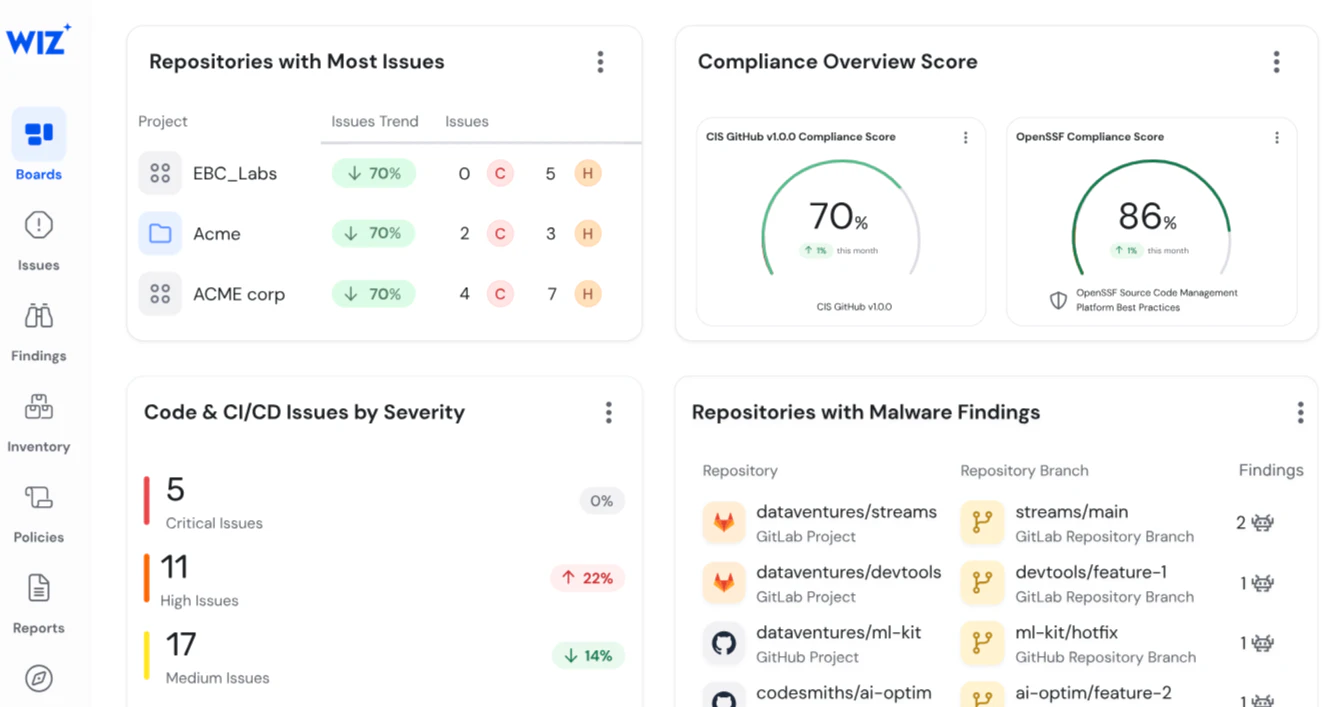
At Scalable Capital, Wiz reports that 95% of Wiz users are developers or engineers. They've embedded security into developer workflows, enabling engineers to proactively manage vulnerabilities as self-service. This model represents where the industry is heading.
Wiz helps development teams ship secure code faster by providing context on which risks matter most, connecting findings from code to cloud runtime. Organizations building secure cloud applications need engineers who understand the full code-to-cloud lifecycle.
Get a demo of Wiz to see how cloud context helps teams prioritize and fix the risks that matter most in modern development workflows.
A unified approach to cloud security
See why Wiz is one of the few cloud security platforms that security and devops teams both love to use.
