

Why cloud security knowledge is now essential for cloud engineers
If you're hiring cloud engineers today, you need to ask a different set of questions than you did five years ago. The role has fundamentally changed—and so have the stakes.
Cloud infrastructure isn't static anymore. We've moved from predictable servers in data centers to dynamic, cloud-native architecturesthat spin up and down in seconds. This shift has placed cloud engineers directly on the front lines of security, whether they're ready for it or not.
The shared responsibility model makes this clear: cloud providers like AWS, Azure, and GCP secure the infrastructure (physical data centers, hypervisors, managed service platforms, and the network backbone). You're responsible for everything you build on top of it—workloads, data, identities, access policies, operating systems, and application code.
When engineers don't fully understand this model, security gaps emerge. Misconfigurations slip through. Infrastructure drifts. Access controls become overly permissive. That's why DevSecOps has become the standard—organizations are embedding security checks directly into developer workflows, CI/CD pipelines, and infrastructure-as-code templates from day one.
The result? Security knowledge isn't a nice-to-have for cloud engineers anymore. It's a baseline requirement.
Hiring security-aware engineers delivers tangible business value: faster deployments, reduced risk, and fewer production incidents. When engineers have unified visibility across multi-cloud environments, they can identify and fix security issues without slowing down development velocity.
The questions below will help you identify candidates who don't just understand cloud infrastructure—they understand how to build it securely from the ground up.
AWS Security Best Practices [Cheat Sheet]
This cheat sheet goes beyond the essential AWS security best practices and offers actionable step-by-step implementations, relevant code snippets, and industry- leading recommendations to fortify your AWS security posture.

10 cloud engineer interview questions
Use these questions to uncover whether candidates can apply context by linking code, identities, infrastructure, and data to prioritize what truly matters. These questions are designed for hiring managers to assess real-world problem-solving abilities, not just memorized facts. These cloud engineer security interview questions help you assess whether candidates can apply DevSecOps principles in real-world scenarios.
Strong candidates will demonstrate that they understand both infrastructure design and its security implications.
How do you approach securing infrastructure as code (IaC) templates?
Infrastructure as Code (IaC) is the process of managing infrastructure through code files rather than manual configuration. You want to see if the candidate understands how to scan these files for security issues before deployment.
Strong answers should mention specific strategies:
Scanning for misconfigurations: Checking code for errors before it reaches the cloud.
Using validation tools: Leveraging tools like Terraform validation to catch syntax errors.
Implementing guardrails: Setting up automatic checks in the CI/CD pipeline to block bad code.
Explain how you would detect and respond to a misconfigured S3 bucket
Cloud storage misconfigurations represent a common cause of data exposure incidents. Public S3 buckets, overly permissive access policies, and missing encryption controls create attack paths that adversaries actively exploit.
Strong answers should include these steps:
Define a Data Perimeter: Use VPC Endpoint policies and Service Control Policies (SCPs) to ensure S3 access is restricted to authorized identities within your organization, effectively moving beyond simple 'Public Access' toggles.
Enforce encryption: Enable default encryption (SSE-S3 or SSE-KMS) and create bucket policies that require TLS in transit and encryption at rest.
Validate access policies: Use AWS IAM Access Analyzer for S3 to detect unintended external access and overly permissive policies across accounts.
Monitor and audit: Enable CloudTrail data events for S3 and S3 server access logs to track who accessed what data and when.
Bonus: Strong candidates mention org-level guardrails (AWS Organizations SCPs, Azure Policy) and centralized security findings to reduce configuration drift across hundreds of accounts.
Cloud engineer job description (template, skills, salary)
A cloud engineer is a technical expert responsible for architecting, implementing, and managing an organization's cloud infrastructure and services. This role involves working across the full cloud lifecycle, from initial planning and design to deployment and ongoing optimization.
Leer más

How do you manage secrets and credentials in cloud environments?
Secrets management involves securely storing sensitive information like passwords and API keys. You want to ensure the candidate knows how to prevent credential exposure.
Strong answers should highlight these best practices:
Use managed secret stores: Leverage cloud-native secrets managers (AWS Secrets Manager, Azure Key Vault, GCP Secret Manager) and avoid hardcoding credentials in source code or environment variables.
Prefer temporary credentials: Use IAM roles with AWS STS, Azure Managed Identities, or GCP Workload Identity to issue short-lived tokens instead of long-lived API keys.
Automate rotation and scope: Rotate secrets automatically, scope them to least privilege, and audit access patterns to detect anomalous usage.
Describe your approach to implementing least privilege access in cloud environments
The principle of least privilege means giving users only the access they strictly need to do their jobs. This question tests the candidate's understanding of Identity and Access Management (IAM).
Strong answers should discuss these tactics:
Analyze effective permissions: Review what access identities actually use versus what they're granted; right-size roles and policies based on usage patterns.
Remove unused access: Revoke dormant permissions and stale accounts; enforce multi-factor authentication (MFA) for privileged roles and sensitive operations.
Implement just-in-time access: Grant time-bound, temporary elevated permissions through approval workflows with session limits using AWS STS, Azure PIM, or GCP IAM Conditions.
Look for CIEM patterns like measuring effective permissions across identity, network, and data layers. Strong candidates identify toxic combinations, for example, an overprivileged service account with network access to sensitive databases and no MFA requirement.
How would you secure a Kubernetes cluster from the ground up?
Kubernetes security involves protecting the container orchestration platform from threats. You are looking for knowledge of container security, network segmentation, and runtime protection.
Strong answers should include these layers:
Access control: Enforce RBAC with least privilege; separate admin access from application access using namespaces and service accounts.
Supply chain security: Scan and sign container images; pin base images to specific digests; verify image provenance and SBOM (Software Bill of Materials).
Workload hardening: Enforce Pod Security Admission (PSA) at the 'Restricted' level and integrate Admission Controllers (like OPA or Kyverno) to validate image provenance and block containers with root privileges or dangerous Linux capabilities.
Network segmentation: Implement Kubernetes NetworkPolicies to control pod-to-pod traffic; restrict egress to known endpoints; segment namespaces by trust level.
Secrets protection: Use external secret stores (AWS Secrets Manager, HashiCorp Vault); enable encryption at rest for etcd; avoid mounting broad service account tokens.
Observability: Enable audit logs and runtime visibility to detect anomalous API calls, privilege escalations, and suspicious process execution.
Kubernetes Clusters: A Security Review
A Kubernetes cluster consists of a group of node machines designed to run applications within containers.
Leer más
What steps would you take to investigate a potential security incident in your cloud environment?
Incident response is the organized approach to addressing and managing the aftermath of a security breach. This question reveals whether the candidate has a systematic investigation approach across cloud audit logs, identity changes, network flows, and runtime detections. Speed matters because early detection and containment significantly reduce breach impact.
Strong answers should include these actions:
Scope the incident: Triage signals across cloud audit logs (CloudTrail, Azure Activity Log, GCP Cloud Audit Logs), identity changes, control-plane API calls, runtime detections, and data access patterns.
Preserve evidence: Execute automated forensic imaging of EBS volumes and memory while the resource is live; prioritize snapshots before termination to handle the ephemeral nature of cloud workloads.
Contain the threat: Revoke exposed credentials and sessions; quarantine compromised instances using security groups; block malicious indicators; disable risky network paths and permissions.
Trace root cause: Map lateral movement and privilege escalation paths through identity relationships; document the attack timeline; extract lessons learned for prevention.
How do you ensure compliance across multiple cloud providers?
Compliance involves adhering to laws, regulations, and guidelines relevant to your business. This question tests the candidate's ability to manage rules across AWS, Azure, and GCP simultaneously.
Strong answers should focus on automation:
Standardize controls: Implement consistent security policies across AWS, Azure, and GCP using policy-as-code frameworks (OPA, Sentinel, Cloud Custodian).
Continuous monitoring: Automatically assess infrastructure against compliance frameworks like SOC 2, ISO 27001, NIST 800-53, HIPAA, PCI DSS, CIS Benchmarks and detect drift in real time.
Automate evidence: Generate compliance reports and evidence artifacts mapped to specific control requirements for auditors without manual data gathering.
Describe how you would implement network segmentation in a cloud environment
Network segmentation is the practice of dividing a network into smaller parts to improve security. You want to see if the candidate understands how to limit an attacker's movement.
Strong answers should mention these concepts:
Macro-segmentation: Isolate environments (prod, dev, staging) and workloads using VPCs/VNets, subnets, and routing boundaries; use separate accounts or subscriptions for strong isolation.
Microsegmentation: Enforce least-privilege network flows with Security Groups/NSGs at the instance level and Kubernetes NetworkPolicies at the pod level.
Private connectivity: Use private endpoints (AWS PrivateLink, Azure Private Link, GCP Private Service Connect) to access cloud services without internet exposure; restrict egress with allow-lists and egress filters.
Zero trust networking: Require strong authentication and authorization between services using mutual TLS, identity-aware proxies (Istio, Envoy), and service mesh architectures.
How do you balance security requirements with development velocity?
DevSecOps is a culture that merges development, security, and operations to improve safety without slowing down. You are looking for a collaborative mindset.
Strong answers should include these strategies:
Automating checks: Running security tests automatically so developers don't have to wait.
Providing tools: Giving developers easy-to-use security tools.
Implementing guardrails: Creating safety nets that prevent bad deployments without blocking good ones.
What's your approach to vulnerability management in dynamic cloud environments?
Vulnerability management is the continuous process of identifying and fixing security weaknesses. This question tests understanding of how to handle resources that change frequently.
Strong answers should include these approaches:
Continuous visibility: Scan across VMs, containers, serverless functions, and managed services (RDS, Lambda, Cloud Run) to maintain an up-to-date vulnerability inventory.
Contextual prioritization: Rank vulnerabilities by combining internet exposure, identity paths to sensitive data, proximity to critical assets, and active exploit availability (CISA KEV, EPSS scores).
Automated remediation: Deploy patches through automated pipelines; update golden images and base container images; implement safe rollback mechanisms for failed updates.
Watch 12-min demo
See how agentless scanning secures encrypted workloads across AWS, Azure, and GCP without compromising data protection.
Watch now
Evaluating responses and identifying red flags
You need to assess technical depth versus surface-level knowledge. Candidates who can trace issues from cloud runtime back to code and propose prevention guardrails in CI/CD typically operate well in modern cloud security models. Look for candidates who understand security trade-offs and connect technical decisions to business risk reduction.
Use this lightweight rubric to score each answer (0–10 total):
Technical depth (0–2 points): Names specific cloud-native controls, tools, and services; explains trade-offs between security and usability.
Contextual thinking (0–2 points): Prioritizes risks by exposure, identity paths, data sensitivity, and exploit availability not just severity scores.
Collaboration mindset (0–2 points): Integrates security into Dev, Platform, and FinOps workflows; proposes guardrails that enable rather than block.
Compliance awareness (0–2 points): Maps controls to frameworks (SOC 2, ISO 27001, NIST 800-53); understands evidence requirements.
Communication clarity (0–2 points): Explains complex concepts simply; proposes actionable remediation plans with clear ownership.
Communication skills are vital when discussing technical security topics. You should look for candidates who can explain complex risks simply.
Watch out for these common red flags:
Security as an afterthought: Treating security as something to add at the end.
Lack of automation: Relying on manual processes for security checks.
Siloed thinking: Failing to see how infrastructure decisions affect other teams.
Ask follow-up questions to probe deeper into their answers. Best candidates will connect their technical decisions to business outcomes and risk reduction.
How Wiz supports security-focused cloud engineering teams
The goal of these questions isn't just to find a cloud expert, but to find a team player who views security as a core component of engineering excellence. A candidate who can answer these questions with depth is someone who will help your organization move away from "reactive" security and toward a proactive, "secure-by-design" culture.
When you pair high-context engineers with tools that provide unified visibility, you eliminate the friction that usually exists between security and development teams. The result is a more resilient infrastructure and a faster, more confident deployment cycle. Wiz supports this by providing a Cloud-Native Application Protection Platform (CNAPP) that unifies security capabilities across the entire stack—from code to cloud to runtime.
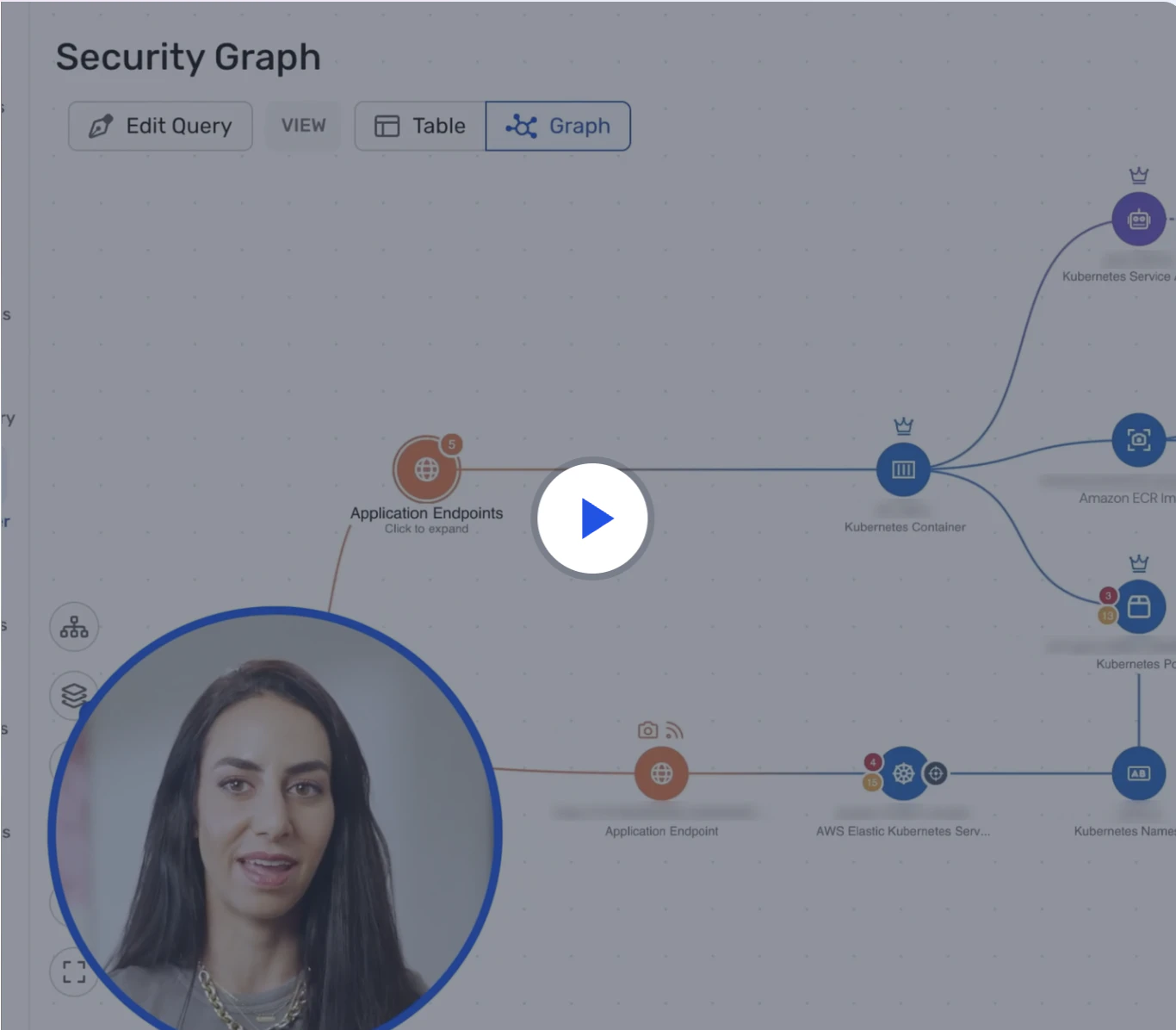
The Power of the Security Graph: Instead of presenting a flat list of vulnerabilities, Wiz uses a graph-based model to show how different risks interact. It identifies "toxic combinations"—for example, a vulnerable workload that also has high-privilege access and is exposed to the internet.
Context-Driven Prioritization: By understanding the relationships between identities, network paths, and data, your team can move away from chasing thousands of low-level alerts and focus on the handful of critical attack paths that actually put the business at risk.
Operational Velocity: With built-in remediation guidance and integration into existing developer workflows, engineers can fix issues faster and get back to building.
By providing a single source of truth for both security and engineering, Wiz empowers teams to work faster and more effectively, turning security from a bottleneck into a competitive advantage.
Request a demo to see how Wiz empowers security-focused cloud engineering teams to work faster and more effectively.
See for yourself...
Learn what makes Wiz the platform to enable your cloud security operation
