The Open-Source CNAPP Toolkit
With a CNAPP, your team is empowered to pick and choose solutions that best fit your security capability and cost requirements. This article reviews the best open-source CNAPP tools for 2024.
Get grounded in the core concepts of cloud security. These articles cover foundational models, shared responsibility, architectural risks, and cross-cloud practices that help secure any environment.
Descubre cómo Wiz convierte los fundamentos de la seguridad en la nube en resultados reales.

With a CNAPP, your team is empowered to pick and choose solutions that best fit your security capability and cost requirements. This article reviews the best open-source CNAPP tools for 2024.
Learn the foundational elements of cloud security posture management (CSPM). Find out how to improve cloud security and how to unify your cybersecurity.
Cloud app security involves ensuring that both cloud-native and cloud-based apps are protected from vulnerabilities through the use of proper tools and practices.

SIEM stands for Security Information and Event Management. It is a unified platform that combines Security Information Management (SIM) and Security Event Management (SEM).
Misconfigurations, weak access controls, and data exposure put your Azure workloads at risk. Follow these 9 proven security best practices to stay protected.
A comprehensive checklist that hits all the key pillars and cornerstones of a strong cloud security program.
This article offers an extensive examination of Azure environments’ most pressing security risks along with suggested approaches for effectively mitigating these challenges.
In this article, we’ll discuss typical cloud security pitfalls and how AWS uses CSPM solutions to tackle these complexities and challenges, from real-time compliance tracking to detailed risk assessment.

AWS vulnerability scanning identifies security flaws across EC2 instances (including secrets mistakenly stored in user data), containers, Lambda functions, and other compute resources.
Attack surface scanning is the process of continuously discovering and monitoring internet-facing assets to identify entry points attackers can exploit.
Agentless scanning vs agent-based scanning compares API-based assessments requiring no software installation with host-based agents for deep runtime visibility
This FAQ is designed to help teams evaluate whether Wiz is the right cloud security solution for them by answering the most common technical, strategic, and logistical questions.
Attack surface discovery (ASD) is the continuous, automated process of identifying and mapping every asset, connection, and service an attacker could target across your entire digital footprint (cloud, hybrid, and on-premises environments).
This blog post will explain strategies for attack surface management (ASM) that integrate both attack surface reduction and attack vector defense into one continuous process, helping you meet the requirements of leading security frameworks like Gartner’s Continuous Threat Exposure Management (CTEM) framework.
Learn what IAM security is, why it matters, and best management practices to protect identities, enforce access control, and secure your cloud environments.
Agentless scanning inspects cloud environments for security risks without installing software agents on workloads, using cloud provider APIs and snapshot analysis instead
Successful security programs utilize runtime signal analysis with cloud context to eliminate unnecessary alerts and focus on exploitable threats—active malicious behaviors, suspicious identity patterns, and attack paths—not just static vulnerabilities.
Despite the costs and challenges involved, achieving solid cloud network defenses is an opportunity for SMBs to reinforce cloud operations and maximize their cloud investments.
Discover essential AWS security best practices to protect your cloud environment, reduce risks, and ensure compliance with ease.
Serverless security is the extra layer of protection designed for applications built on a serverless architecture. In this type of cloud computing, you write the code (functions) but the cloud provider handles the servers. This creates a different security approach.
Cloud ransomware is malware that targets data in cloud environments by exploiting features and APIs to encrypt, exfiltrate or destroy data.
Master Amazon S3 security essentials and best practices to safeguard valuable application, business, or customer data from leaks and security breaches.
10 essential best practices to securing your Google Cloud environments
External Attack Surface Management (EASM) refers to the process of identifying, analyzing, and managing an organization's external attack surface.
Discover what cloud network security is and learn tips for unifying your multi-cloud environment to boost security and compliance with full visibility.
Cloud infrastructure entitlement management (CIEM) is a security process that helps organizations manage and control access rights to cloud resources.
Continuous Threat Exposure Management (CTEM) has emerged as a proactive approach to cybersecurity, enabling security teams to identify, assess, and mitigate threats—in real-time, which is key. However, despite its growing popularity, there are still many questions surrounding CTEM. In this blog post, we'll delve into the top seven questions that cybersecurity practitioners often ask about CTEM—see if you’ve been looking for answers to these yourself!
Facing the attack surface head-on requires investing in top-tier solutions. Platforms that combine agentless discovery, context-based risk prioritization, and seamless developer workflow integration are your best bet.
Cloud transformation is the process of moving IT assets to cloud environments to achieve better agility and efficiency.
Rapid7 vs. Tenable: Compare cloud security capabilities, vulnerability management, and threat detection to see which platform better protects your cloud environment.
Cloud security testing is the process of evaluating your entire cloud infrastructure for security risks and misconfigurations—proactively, systematically, and continuously.
Learn the use cases and limitations for Google Cloud security tools, plus why a CNAPP fills in the gaps and offers a unified view for holistic cloud security.
Discover the top 11 cloud security vulnerabilities and real-world examples so you can learn how to protect your cloud environment, customers, and business.
In this article, we’ll go through six of today’s leading cloud security platforms so you can see which one offers the best fit for your organization's unique security needs.
Exposure management is when companies identify, assess, and mitigate the risk posed by exposed resources, such as networks, applications, data, and other assets.
All major cloud providers have adopted a CSPM solution to help organizations handle their part of the shared responsibility model. In Azure, CSPM is a critical component in making sure your infrastructure is secure, compliant, and resilient to cybersecurity threats.
The difference between market leaders and niche solutions? Comprehensive coverage without operational compromises. This post provides a practical blueprint for judging those claims and selecting technology that truly fits your organization.
IAM plays a central role in defining and managing security permissions and access policies, which is why it’s a key attack surface.
Cloud entitlements are access and administrative privileges that define what resources users can access and how they can interact with those resources.
This guide provides a straightforward comparison between CrowdStrike’s security offerings and other cybersecurity tools in the marketplace.
Cyber asset attack surface management (CAASM) is a security practice that gives teams unified visibility and control over all enterprise assets—cloud, SaaS, on-prem, and beyond. It helps eliminate blind spots and reduce risk by correlating asset data from across your environment and tools. CAASM enables teams to query, prioritize, and act from a single source of truth.
Attack surface analysis is a cybersecurity practice that identifies and evaluates all potential access points, external and internal, that an attacker could exploit.
Let's compare on-premises and cloud security, examine their differences, and explore key cloud-specific security concepts to help you choose the best approaches to security for your entire organization.
Smart CIEM beats basic visibility. The best platforms prioritize real attack paths and provide actionable fixes, not just permission inventories.
Looking for a Wiz alternative? Learn why Wiz stands apart and when it may take multiple tools to match its coverage.
Choosing between role-based access control (RBAC) and attribute-based access control (ABAC) sets up how your cloud stack determines who may do what, where, and when. This blog post shows you the functional differences between the two models.
A VPC is a logically isolated private network within a public cloud that users can fully configure.
In this guide, we’ll show you how to choose a CNAPP that cuts through complexity and gives your team a real path to security: with full-stack visibility, runtime protection, and developer-friendly workflows.
Cloud service providers offer on-demand, scalable computing resources like storage services, applications, and cloud-based compute. Using a structured checklist can help your business select a cloud provider that has the features you need to meet your security goals.
Compare 10 essential cloud security tool types and their key features and learn how to consolidate your security stack with CNAPP solutions for better protection.
Learn the principles of cloud workload protection platforms (CWPP), how to apply them, and why a unified cloud security platform offers enhanced protection.
Unauthorized access refers to any successful or attempted access to systems, services, or data without the proper permissions. These incidents can result from misconfigurations, credential theft, or flaws in identity and access management—and often go unnoticed without proper detection mechanisms in place.
Aimed at verifying security, compliance, and operational resilience, a cloud security audit is a structured evaluation of an organization's cloud environments, infrastructure, configurations, access controls, and security policies.
In this post, we’ll look at why CNAPP solutions are gaining momentum, then outline essential features to look for before drilling down into today’s top five CNAPP solutions based on industry reviews.
Cloud native application protection platforms (CNAPPs) are essential, both for organizations and for the future of cloud security. Find out more in our latest.
Explore CWPP vs. CSPM to learn more about their roles and differences and why a unified CNAPP may offer the best cloud security strategy for your organization.
Cloud service providers (CSPs) are companies that offer on-demand computing resources—including servers, storage, databases, and networking—hosted in the cloud and accessible through the web.
This article breaks down the relationship between CNAPPs and ASPM, clarifies how they overlap, and explains why organizations benefit most from a platform that brings both together.
Attack surface management is an end-to-end security process that involves discovering all potential entryways into IT environments, weighing their importance, and finding ways to secure or minimize them.
Managed cloud security helps organizations scale protection across cloud environments by outsourcing key operations like detection, response, and compliance monitoring.
A maturity model isn’t just a framework—it’s your roadmap to evolving beyond compliance checklists. Start with foundational controls (like asset inventory and basic IAM hygiene) and progress to advanced practices like threat modeling and runtime protection.
A CNAPP, or Cloud Native Application Protection Platform, is an integrated security solution that unifies multiple cloud security capabilities—like CSPM, CWPP, CIEM, and IaC scanning—into a single platform.
Both approaches are unique, but they function as complementary cybersecurity frameworks for managing threats and vulnerabilities in modern IT systems. Together, EM and VM are essential for minimizing your attack surface, ensuring regulatory compliance, and preventing breaches.
Compare the top CSPM solutions (including key features and limitations) based on your security and compliance needs.
Explore the top Azure security tools by category, from compliance and threat detection to network protection, so you can achieve strong cloud security.
In this blog post, we’ll explore the differences between public and private cloud models and provide use cases and best practices to help you choose the best cloud strategy for your business.
Software as a service (SaaS) refers to cloud-based software applications that can be accessed over the internet without any installation or maintenance on local devices.
Learn cloud native security essentials like the 4 Cs framework and how to implement them in your DevSecOps operations to improve your cloud environment.
Both CNAPP and CASB protect enterprise IT environments, but businesses have to understand their differences, specifically in terms of focus, capabilities, and operationalization, to make an informed decision about which solution is better for them.
Role-based access control (RBAC) is a must-have for securing access in today’s dynamic, cloud-native world.
Get the hybrid cloud security best practices, challenges, and strategies you need to protect your cloud environment with a cloud-native unified solution.
Security posture is the overall defensive strength of an enterprise’s IT infrastructure, which comprises hardware, software, practices, policies, and personnel.
Learn to navigate the complexities of cloud security, including the knowledge and tools required to build a robust and proactive defense against ever-evolving cyber threats.
While CDR and CNAPP are often discussed as separate approaches, CDR capabilities should be viewed as essential components within a comprehensive CNAPP strategy, not as competing alternatives.
An attack surface is refers to all the potential entry points an attacker could exploit to gain unauthorized access to a system, network, or data.
13 essential best practices for every organization + the common tools and services that can support them
AWS security groups (SGs) are virtual firewalls for your EC2 instances that control both inbound and outbound traffic.
To help you make an informed decision, we've crafted a comprehensive comparison of AWS and Azure security, empowering you to select the cloud provider that seamlessly integrates with your unique needs.
11 native tools for IAM, data protection, network and application protection, compliance management, and threat detection
Microsoft Defender and CrowdStrike Falcon are two of the most widely adopted security platforms in the enterprise market.
Cloud configuration management is the process of defining, enforcing, and maintaining consistent cloud resource configurations across environments. This includes automating deployment, monitoring compliance, preventing misconfigurations, and ensuring security, cost efficiency, and operational reliability.
Cloud attacks are malicious activities that target cloud data and infrastructure. By exploiting cloud vulnerabilities, attackers try to access and tamper with cloud data by exfiltrating sensitive information or disrupting operations.
Cloud security architecture is a broad set of principles designed to guide the implementation of security controls, practices, and solutions within a cloud computing environment.
Cloud management refers to the monitoring, maintenance, and operation of data, apps, and infrastructure hosted on the cloud.
Learn how and why the financial industry is often targeted and discuss best practices for remediating these evolving security challenges.
Cloud security refers to a set of policies, controls, procedures, and technologies that work together to protect cloud-based systems, data, and infrastructure.
A security misconfiguration is when incorrect security settings are applied to devices, applications, or data in your infrastructure.
Shadow IT is an employee’s unauthorized use of IT services, applications, and resources that aren’t controlled by—or visible to—an organization’s IT department.
8 essential cloud security best practices that every organization should start with
A cloud operating model is a set of practices and procedures that organizations follow for effective management of their cloud resources.
Public cloud security is a set of procedures and policies that secure public cloud environments like AWS, Azure, and GCP.
Enterprise cloud security is the comprehensive set of practices, policies, and controls used by enterprises to protect their data, applications, and infrastructure in the cloud.
Agentless and agent-based systems are both valid approaches for cloud security. There is no single right answer when deciding which to choose, as each comes with its own advantages and drawbacks.
Defense in depth (DiD)—also known as layered defense—is a cybersecurity strategy that aims to safeguard data, networks, systems, and IT assets by using multiple layers of security controls.
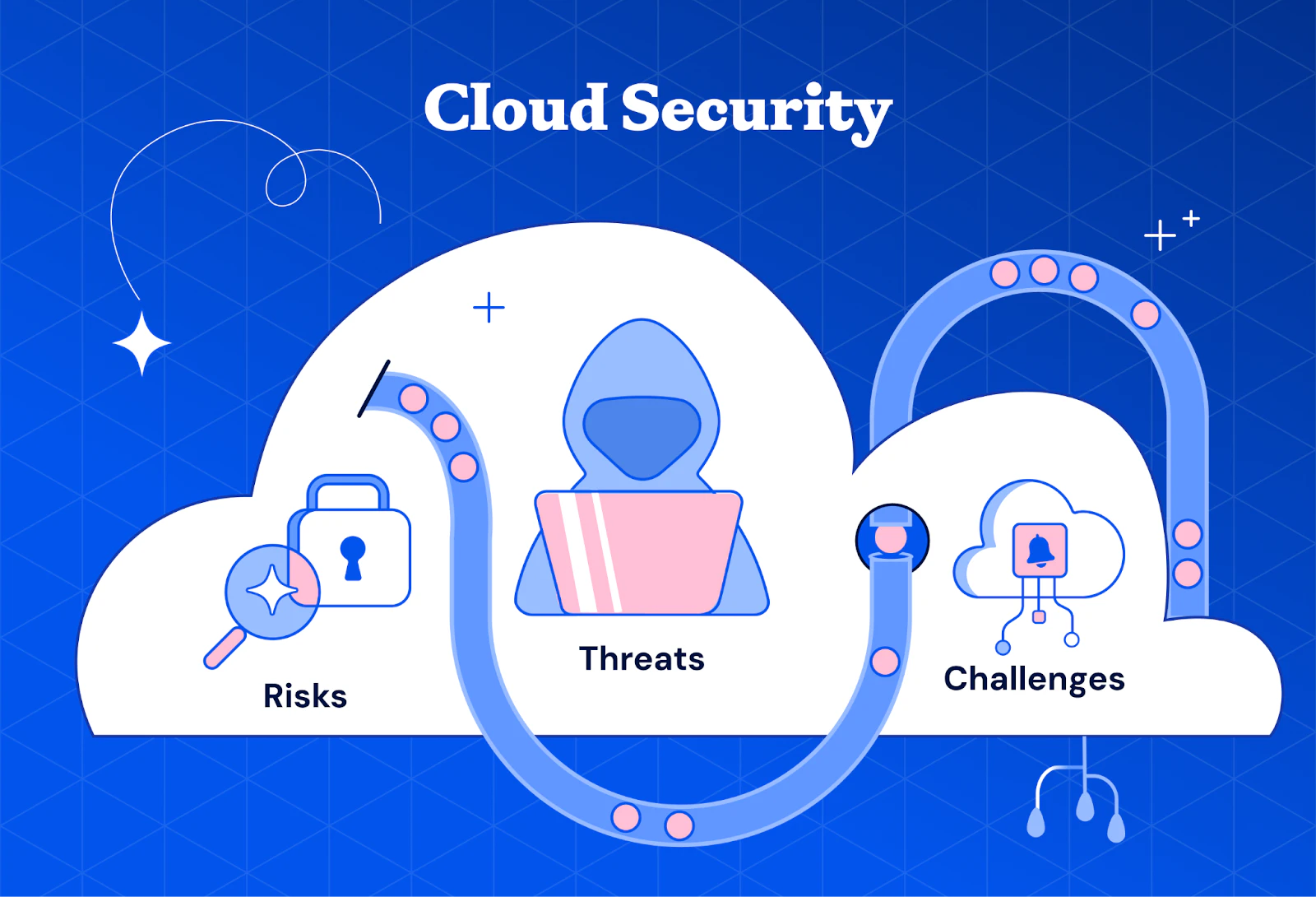
Uncover the top cloud security issues affecting organizations today. Learn how to address cloud security risks, threats, and challenges to protect your cloud environment.
Cloud infrastructure security describes the strategies, policies, and measures that organizations implement to protect cloud-based systems, data, and infrastructure from threats and vulnerabilities.
Cloud identity security is the practice of safeguarding digital identities and the sensitive cloud infrastructure and data they gatekeep from unauthorized access and misuse.
Multi Cloud Security is the combination of strategies, controls, and technologies designed to address the complex challenges of a multi cloud environment.
The principle of least privilege (PoLP) is a cybersecurity concept in which users, processes, and devices are granted the minimum access and permissions necessary to perform their tasks.
In this article, we will explore the challenges of managing permissions, the risks associated with improper access controls, and how major cloud providers handle permissions. We’ll also take a look at best practices and advanced solutions like cloud infrastructure entitlement management (CIEM).
In this article, we’ll explore what cloud risk management entails and take an in-depth look at the tools that can keep your systems safe.
Defense in depth is often considered a basic concept in any effective security strategy.
Cloud workload security protects workloads as they move across cloud environments through monitoring, access controls, encryption, and segmentation.
Linux security ensures the confidentiality, integrity, and availability of Linux-based systems and protects them from hackers, brute-force attacks, and other cyber threats.
As cloud adoption grows, the only way to mitigate risks and access the full spectrum of cloud capabilities is to prioritize visibility. Read on to learn more about cloud visibility—and how to achieve it.
Cloud sprawl is a phenomenon that involves the unmanaged growth of cloud-based resources and services.
Discover the similarities between CSPM and DSPM, what factors set them apart, and which one is the best choice for your organization’s needs.
Cloud migration security is a facet of cybersecurity that protects organizations from security risks during a transition to cloud environments from legacy infrastructure, like on-premises data centers.
This post discusses CSPM and SSPM in depth to reveal their respective use cases. You'll also learn how CSPM and SSPM complement each other to strengthen your overall security posture.
This article examines common AWS security challenges, including identity and access control gaps, data exposure risks, and monitoring blind spots.
In this article, we'll compare CIEM and IAM to explain how these crucial techniques help reduce your attack surface.
Explore common security missteps in detail and learn actionable recommendations to help organizations strengthen their GCP environments.
The shared responsibility model is a framework establishing cloud security responsibilities between cloud service providers (AWS, GCP, Azure) and customers.
A cloud security strategy is the combination of the measures, tools, policies, and procedures used to secure cloud data, applications, and infrastructure.
Cloud encryption is the process of transforming data into a secure format that's unreadable to anyone who doesn't have the key to decode it.
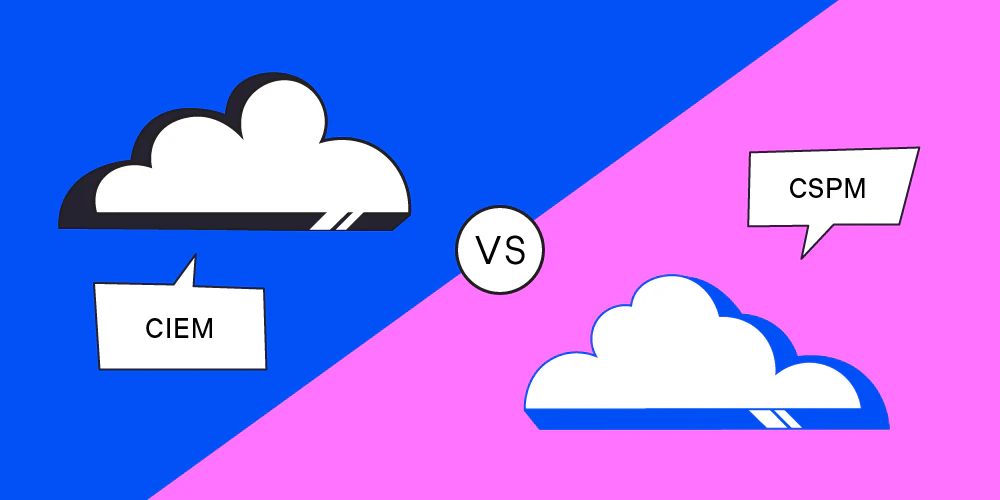
CSPM focuses on securing cloud infrastructure by identifying and remediating misconfigurations, while CIEM centers on managing and securing user identities and access permissions within cloud environments, addressing threats related to unauthorized access and entitlements.
Learn where CNAPP and CSPM overlap, where they differ, and which one is right for your organization.
Private cloud security is a term that describes the tools and techniques used to secure private cloud environments.
Configuration drift is when operating environments deviate from a baseline or standard configuration over time.