

What is cloud risk management?
Cloud risk management is the ongoing practice of finding, ranking, and reducing the security risks tied to the workloads, data, and identities you run across single-cloud, multi-cloud, and hybrid environments. That work decides how confidently your team can ship, because one unmanaged risk in a single account can open a path straight to your most sensitive data.
Every resource you spin up adds configuration, access, and exposure that someone has to account for. The provider secures the underlying infrastructure, but the settings, permissions, and data layered on top stay yours to manage. Cloud risk management is how you keep that side of the line under control as the environment shifts.
Good programs treat this as a cycle rather than a one-time review. You map what you have, judge which weaknesses actually connect into an attack path, fix the ones that matter first, and repeat as new resources appear. Done well, it turns a sprawling cloud footprint into a set of decisions your team can reason about.
Cloud Visibility Playbook
Get 10 practical steps for closing visibility gaps across your cloud environments

Common cloud security risks
A handful of risk patterns show up in almost every cloud environment, no matter which provider you run on. Knowing them by name makes it easier to name the fix instead of reacting to another alert.
Limited visibility: You cannot secure a resource you do not know exists, and cloud accounts spin up new ones constantly. Agentless discovery across every account, region, and service gives you a full inventory to work from.
Misconfigurations: A public storage bucket or an over-permissive security group is easy to create by accident. Wiz's Cloud Data Security Report found publicly exposed databases without sufficient access controls across most cloud environments. Each one becomes straightforward to correct once you can see it in the context of what it exposes.
Unpatched vulnerabilities: Known CVEs in running workloads give attackers a foothold. Ranking them by whether the workload is actually reachable and exploitable tells you which handful to fix first.
Unauthorized access and identity risk: Over-privileged users, stale keys, and forgotten service accounts widen the blast radius of any single mistake. Right-sizing permissions keeps access matched to what each identity genuinely needs.
Sensitive data exposure: Regulated or high-value data in the wrong location is a risk you can retire. Map where that data lives and which access paths lead to it, then close the ones that should not be open.
The phases of cloud risk management
In effective cloud risk management, there are four essential steps:
Identifying assets: The first step is identifying cloud resources that might have a potential impact on business continuity if and when their integrity, confidentiality, or availability is compromised.
Identifying potential threats: Next, it’s important to understand the cloud threat landscape’s relationship to the assets identified in step 1. Leveraging enhanced threat modeling and identifying security incidents and vulnerabilities that map to threats being exploited in the wild are the best ways to make sure teams see the full scope of the threat landscape. Wiz found that cloud intrusions in 2025 most often began with vulnerabilities, exposed secrets, or misconfigurations, which is why threat identification focuses on those first.
Prioritizing risks: Based on the blast radius and evolution of identified threats, it’s critical to prioritize them and add contextual information. Adding contextual information provides the necessary background required to mitigate these risks. Active monitoring and reporting on the threats should also be a part of this process.
Taking actions: Finally, implement patches for vulnerabilities, ensure proper access with strict IAM policies, put stricter security controls and firewall rules in place, and take other appropriate remediation measures.
On-premises risk vs. cloud risk
There are key differences when it comes to managing on-premises risks and cloud risks. One of the most crucial differences between the two is the location of the data center. With on-premises systems, companies are responsible for managing their own physical data centers—and maintaining the security of those data centers. Alternatively, when it comes to the cloud, security responsibilities are shared between the cloud provider and the customer.
One commonality between on-premises and cloud-based solutions? Both have profound risk profiles, especially when it comes to scalability, data visibility, and the shared responsibility model. Let’s take a closer look at how they stack up:
Scalability: With on-premises systems, scaling up often necessitates purchasing new hardware. The cloud, on the other hand, is inherently scalable. Customers pay for what they use without having to provision hardware separately,
Data visibility: Monitoring on-premises systems is easier for IT teams because they have full and privileged access to all the assets under their management. This isn’t the case for the cloud. Although most cloud service providers offer enhanced monitoring solutions, there are still some blind spots that can make data visibility fragmented when working with a hybrid- or multiple-cloud service model.
Shared responsibility models: As we’ve seen, with on-premises systems, organizations take 100% of the responsibility for securing infrastructure and applications. In turn, this demands dedicated workers and sophisticated software that streamlines managing and monitoring security across the entire infrastructure.
With the adoption of the cloud, security responsibilities are shared between the cloud vendor and the organization. The vendor is responsible for security of the cloud, while organizations are responsible for security within the cloud, which can ultimately lighten the load for organizations.
Apart from the similarities and differences mentioned above, there are multiple cloud security risks that depend on the nature of the cloud ecosystem in use.
Watch 12-min demo
See how Wiz Cloud finds toxic combinations across misconfigurations, identities, data exposure, and vulnerabilities without agents.

Best practices for managing cloud risk
Strong cloud risk management comes down to a handful of habits that keep visibility high and response fast. These practices help teams cut noise and focus on the risks that matter.
1. Develop a comprehensive risk management strategy
Implementing a strategic plan to identify all cloud resources and then performing threat modeling and vulnerability scanning are key parts of assessing risk. With this information, you can efficiently prioritize risks you identify and come up with a comprehensive solution.
To strengthen your systems, take steps like implementing robust security layers, enforcing stricter IAM policies, and controlling access to cloud resources based on the principle of least privilege.
2. Use a configuration management tool
Modern toolings are versatile and can be customized to suit your needs. Still, managing configurations on your own can be challenging and often leads to misconfigurations or overlooked best practices. Investing in a configuration management tool ensures cloud resources are appropriately configured according to your requirements (and also in adherence to industry standards).
3. Leverage continuous monitoring and incident response
Deploy a fully equipped CNAPP solution that offers CSPM, CWPP, vulnerability management, CIEM, KSPM, DSPM, and CDR to continuously monitor your resources across cloud environments. Implement SIEM solutions that help aggregate application log data and provide real-time alerts on any suspicious activities, notifying security teams right away so that they can respond.
4. Implement a zero-trust architecture
It’s a well-known tenet of cybersecurity that no resource—whether within or outside the network—should be trusted, and every request should be treated as if it originated from an untrusted network. All access requests must be authorized and authenticated based on identity, location, and the sensitivity of the resource. Additionally, ensure granular access by leveraging the principle of least privilege.
5. Emphasize employee training and awareness
Continuous learning and improvement is an important means of developing a security-aware culture. A shared, working knowledge of cloud security helps teams spot and contain breaches quickly when they happen.
How Wiz helps manage cloud risk
Managing cloud risk rarely comes down to collecting more data. It comes down to whether misconfigurations, identities, exposures, sensitive data, and AI workloads sit in one place or scatter across tools that never compare notes. Wiz keeps them together on a single Security Graph, using an agentless deployment that reads your cloud APIs in minutes and maps every resource. From there you see which risks chain into a reachable attack path, not thousands of disconnected alerts.
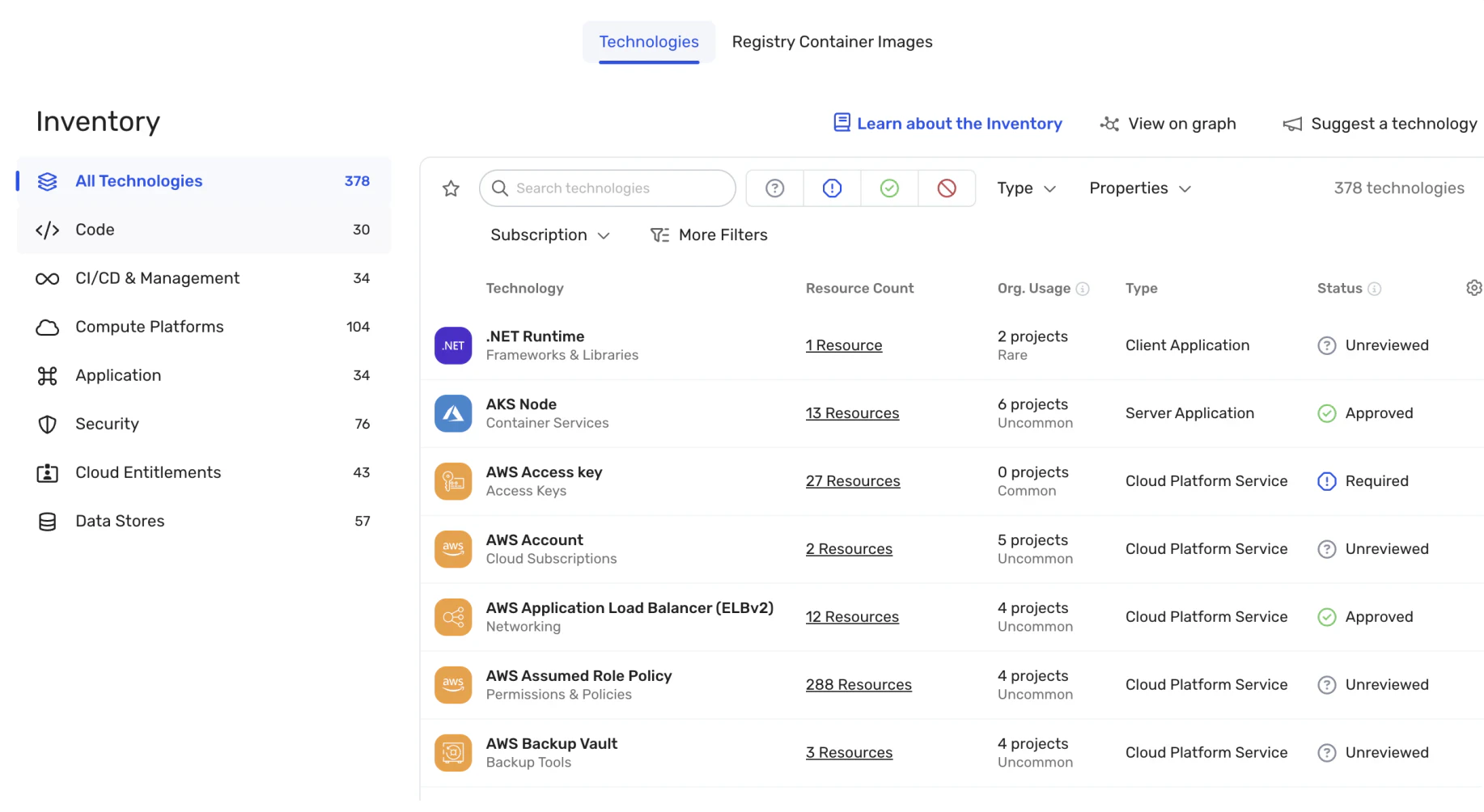
Wiz CSPM: correlates misconfigurations with identities and network exposure to surface toxic combinations, not raw alert counts.
Wiz CIEM: maps over-privileged identities and lateral movement paths so you can right-size access.
Wiz DSPM: finds sensitive data across your estate and flags the paths that reach it.
Wiz AI-APP: the AI Application Protection Platform discovers the AI models, agents, and pipelines running in your cloud, including shadow AI, and judges their risk on that same graph.
Wiz Defend: adds runtime detection for in-memory and ephemeral threats that never touch disk.
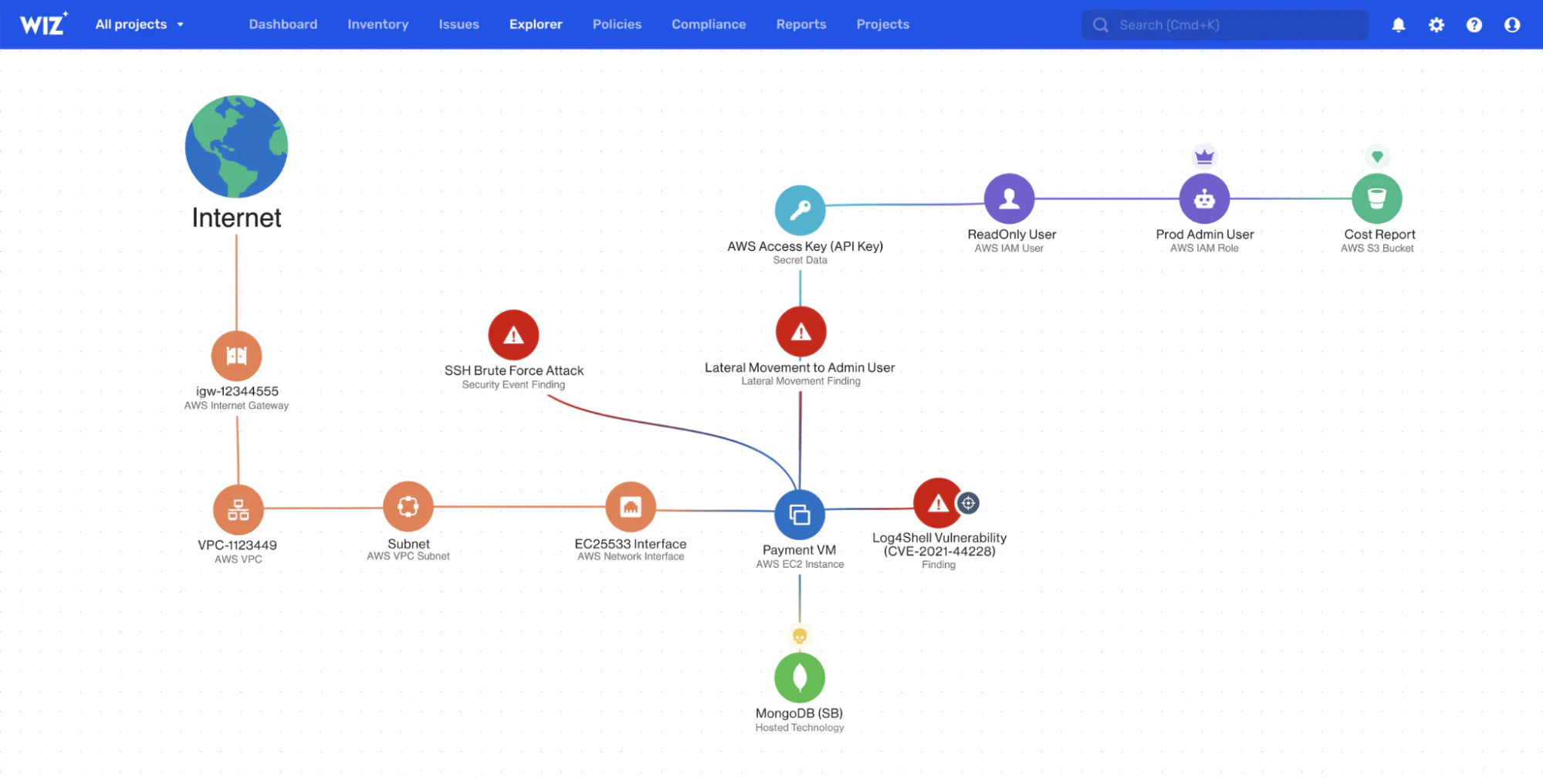
Because every capability reads from that same context model, AI risk shows up next to cloud risk in one view instead of a separate console. Wiz AI-APP is the natural evolution of that CNAPP approach, so posture and runtime protection reach your models and agents the same way they reach the rest of your estate.
Ready to see it in your own environment? Request a demo to explore how Wiz can secure your cloud environment.
Catch code risks before you deploy
See how Wiz maps risk across code, cloud, and runtime in a single graph so your team fixes what matters first.
