

Vulnerability management: A refresher
Vulnerability management is the systematic process of discovering, assessing, and fixing security weaknesses across your IT infrastructure before attackers can exploit them. This proactive approach identifies risks like misconfigured cloud applications, unpatched software, and overprivileged systems.
Without proper vulnerability management, your organization faces constant exposure to cyber threats. Attackers actively scan for these weaknesses, turning unaddressed vulnerabilities into entry points for data breaches and system compromises. According to research, 60% of breach victims were compromised due to an unpatched known vulnerability for which a patch was available but not applied.
A typical vulnerability management process features a six-step lifecycle: discover, assess, prioritize, remediate, validate, and report. Vulnerability management can strengthen your overall security posture, prevent data breaches and leaks, enhance operational efficiency, empower developers and other teams, and improve compliance for cloud-based businesses of all scales and backgrounds.
AWS Vulnerability Management Best Practices Cheat Sheet
Secure your AWS environment with this definitive guide to cloud defense. From agentless visibility to automated patching, get the essential blueprint for hardening your workloads and neutralizing risks before they scale.

What are the most common vulnerability management challenges?
Vulnerability management programs often face several practical obstacles, with these few topping the list:
Alert fatigue: Security teams are overwhelmed by thousands of findings, many of which lack context or clear prioritization. This makes it hard to focus on what actually matters.
Incomplete asset visibility: Visibility is especially limited in cloud and hybrid environments where resources are constantly changing. Without a full inventory, critical exposures can go undetected, which is especially concerning since the exploitation of public-facing applications represented 30% of initial access vectors in 2024.
Siloed tools and manual processes: Silos and manual work can slow down remediation, as teams struggle to coordinate across security, DevOps, and engineering.
Lack of integration: When vulnerability management and other security or IT systems are disconnected, it creates duplicated effort, inconsistent reporting, and missed opportunities to automate fixes or share context. A unified approach connects discovery, prioritization, and remediation across the entire technology stack for a more effective approach.
Vulnerability management best practices and recommendations
Every organization should start with these essential best practices for vulnerability management.
1. Discover, prioritize, remediate, validate, report, and monitor
Every step in a vulnerability management lifecycle is critical. So your vulnerability management solution should properly accommodate these six steps:
| Step | Description |
|---|---|
| 1. Discover | The first step is to map each component within the IT environment that's susceptible to vulnerabilities. Create a comprehensive inventory of all digital assets, detect shadow IT, and engage in continuous monitoring. |
| 2. Prioritize | Once the landscape is mapped out, it's vital to prioritize detected vulnerabilities based on threat intelligence and real-time data. This includes risk assessments, evaluations of business goals and overall strategy, and regulatory requirements. |
| 3. Remediate | Kickstart the remediation process, beginning with the most critical issues first. This involves developing a strategic remediation plan that covers patching, decommissioning, and reconfiguring vulnerable assets. Engage various departments during the remediation process to ensure synergy and rapid response. |
| 4. Validate | After remediation, it's crucial to validate the measures' efficacy. Organizations must thoroughly verify that remediation efforts successfully resolved vulnerabilities. It's also vital to stay vigilant and identify potential new vulnerabilities that may have emerged during the remediation phase. Establish a feedback loop to ensure continuous learning and improvement. |
| 5. Report | Foster a culture of transparency and continuous improvement by documenting all the processes and outcomes in detailed reports. These comprehensive reports will help create a cohesive enterprise approach to vulnerability management and help analyze trends and forecast potential future vulnerabilities, enabling proactive defense. |
| 6. Monitor | Keep an eye out for new vulnerabilities with automated tools and processes, and periodically assess potential risks and management policies for continual optimization. The goal is to maintain and repeatedly improve your systems to keep up with a changing digital landscape and upcoming threats. |
2. Establish a vulnerability management program and put it into use
Effective vulnerability management programs integrate seamlessly with your existing security operations rather than operating in isolation. Modern programs go beyond simple vulnerability scanning to provide business-context prioritization, ensuring you address the most critical risks first.
Your program should connect vulnerability data with threat intelligence, asset criticality, and business impact assessments. This unified approach prevents security teams from chasing low-risk issues while critical vulnerabilities remain unaddressed. Plus, the program should encompass all six stages of the vulnerability management lifecycle, as outlined above.
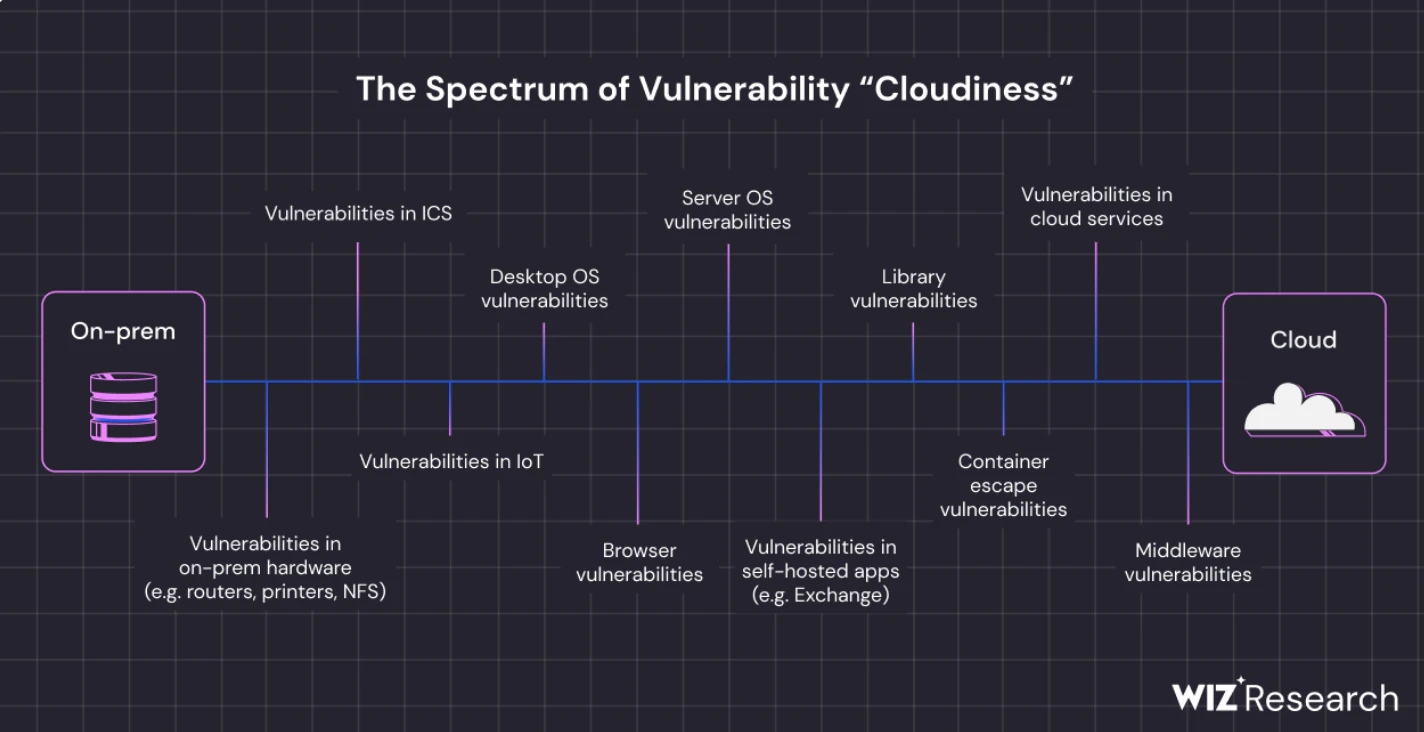
Holistic vulnerability management programs are paramount because threat actors, such as the Lazarus Group, exploit vulnerabilities in Windows Internet Information Services (ISS) to gain initial access into enterprise IT environments. Gaining initial access is rarely a dramatic event, but it can mature into large-scale cybersecurity disasters.
3. Secure your cloud-native applications with end-to-end views
Complete cloud visibility ensures you can identify and remediate vulnerabilities across every component of your infrastructure, from development through production. Cloud environments introduce complexity through dynamic scaling, ephemeral resources, and distributed architectures that traditional security tools struggle to monitor.
Modern cloud-native applications span multiple resource types: virtual machines, containers, serverless functions, and managed services. Each component introduces potential vulnerabilities that require continuous monitoring throughout their entire lifecycle.
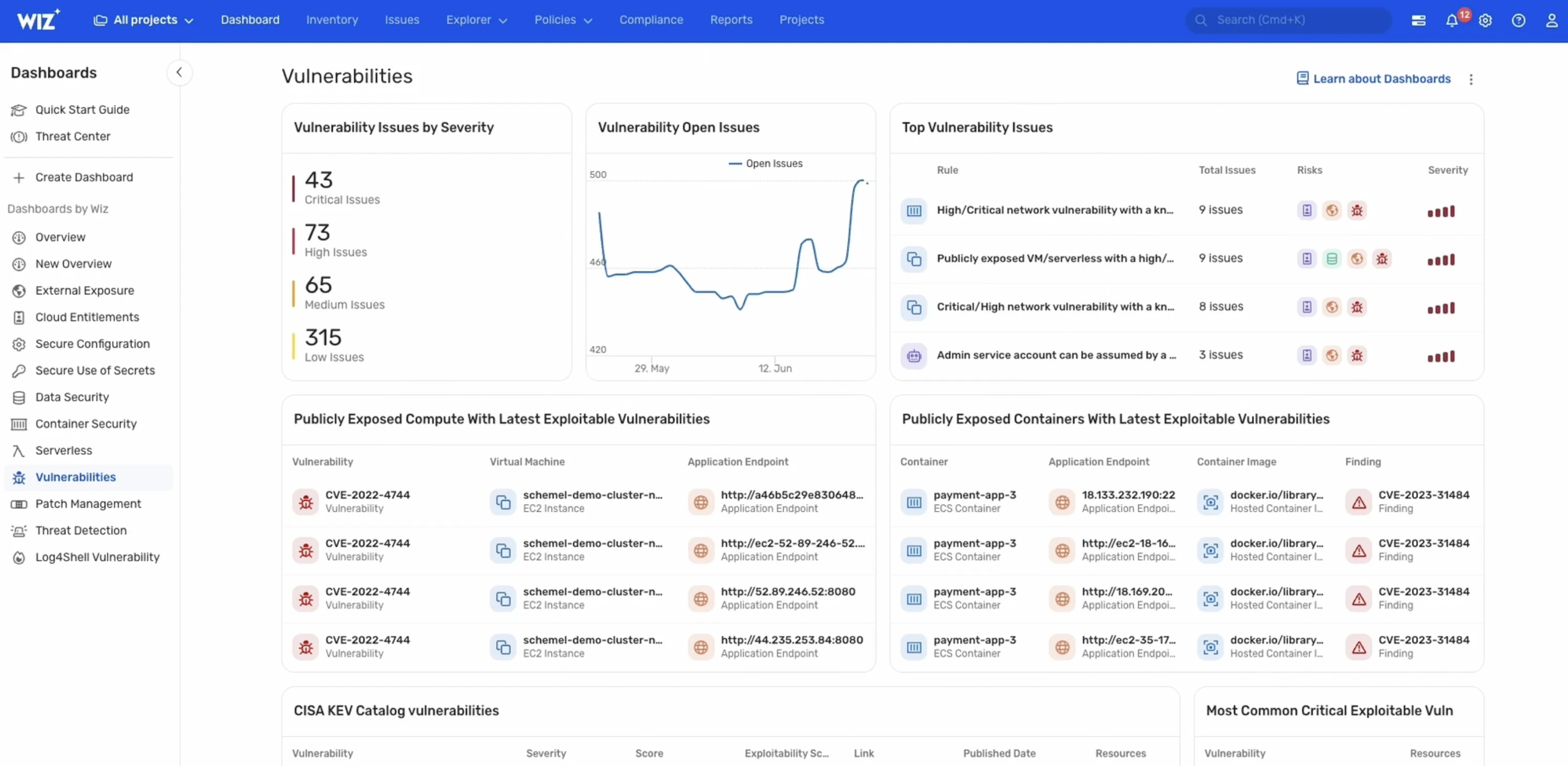
Without comprehensive coverage, critical vulnerabilities, like CISA KEV exploits and hidden dependencies, can remain undetected, creating attack paths that bypass your security controls.
Double-check and validate every instance of vulnerability identification and remediation to ensure recognized risks have been successfully mitigated and no new vulnerabilities and unknown risks were introduced during remediation. Put reporting mechanisms in place to document vulnerability management activities: insights generated from this data can be crucial to optimizing your vulnerability management posture.
A lack of end-to-end views can cause hidden vulnerabilities to fester. Our researchers identified a vulnerability in Azure Active Directory (AAD) that exposed Bing.com and could have facilitated access for threat actors. Further red teaming of this vulnerability, dubbed #BingBang, revealed that it can be leveraged to alter Bing.com search results and exfiltrate the Office 365 credentials of Bing users.


4. Configure policies
Vulnerability management policies should address organization-specific vulnerabilities and cybersecurity circumstances without neglecting industry benchmarks. No organization should resort to using default policy configurations because they rarely address an organization's nuanced business-, region-, and industry-specific requirements.
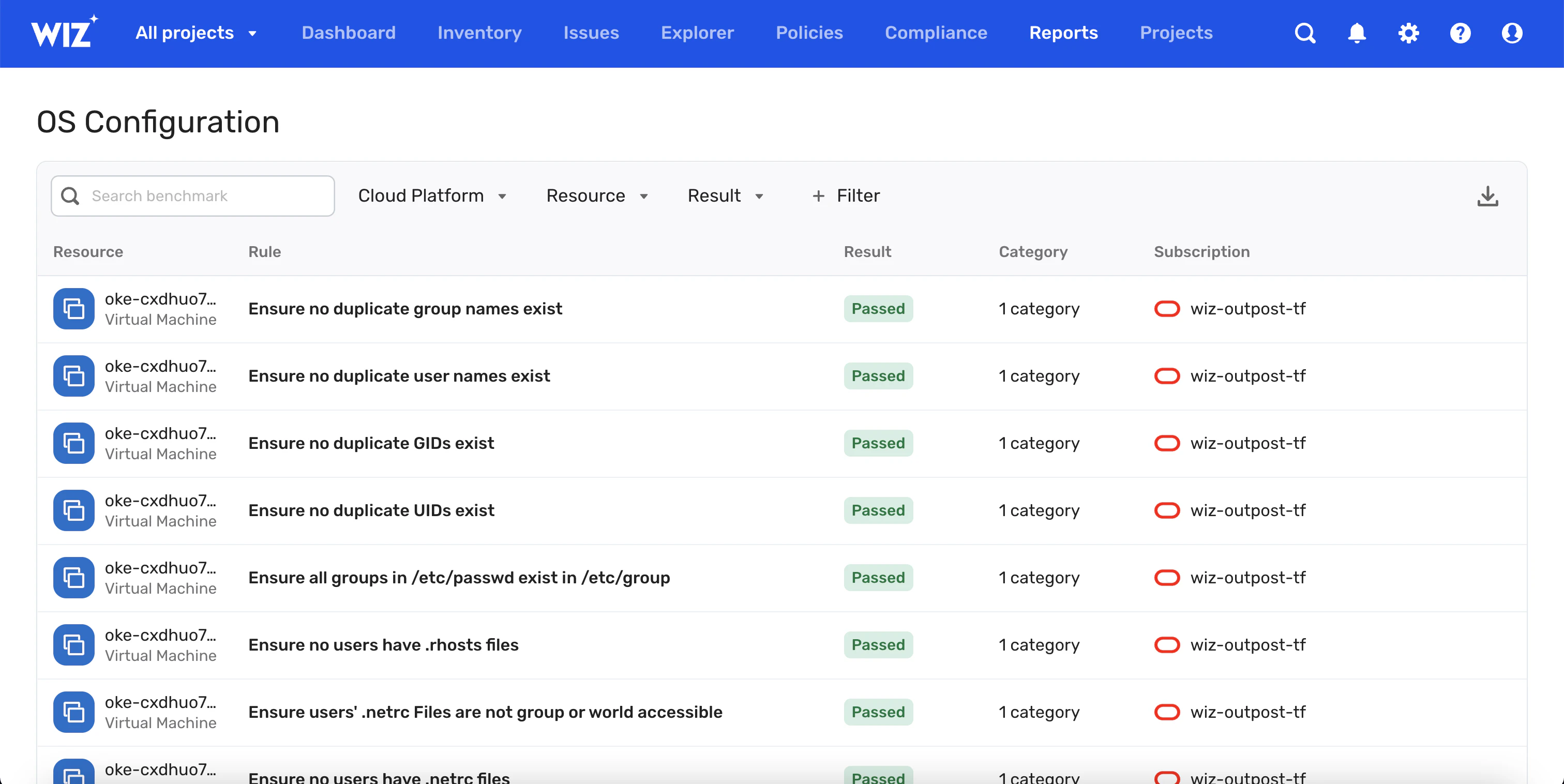
Vulnerability management solutions that offer highly customizable security policy options are the most effective way to fulfill internal and external policy requirements. Your vulnerability management solution should enable you to customize policies that address every business, security, and compliance complexity that may surface.
5. Assess vulnerabilities in build time and deployment time
If you wait until deployment to sort out vulnerabilities, you've got your work cut out for you. Always tackle vulnerabilities early.
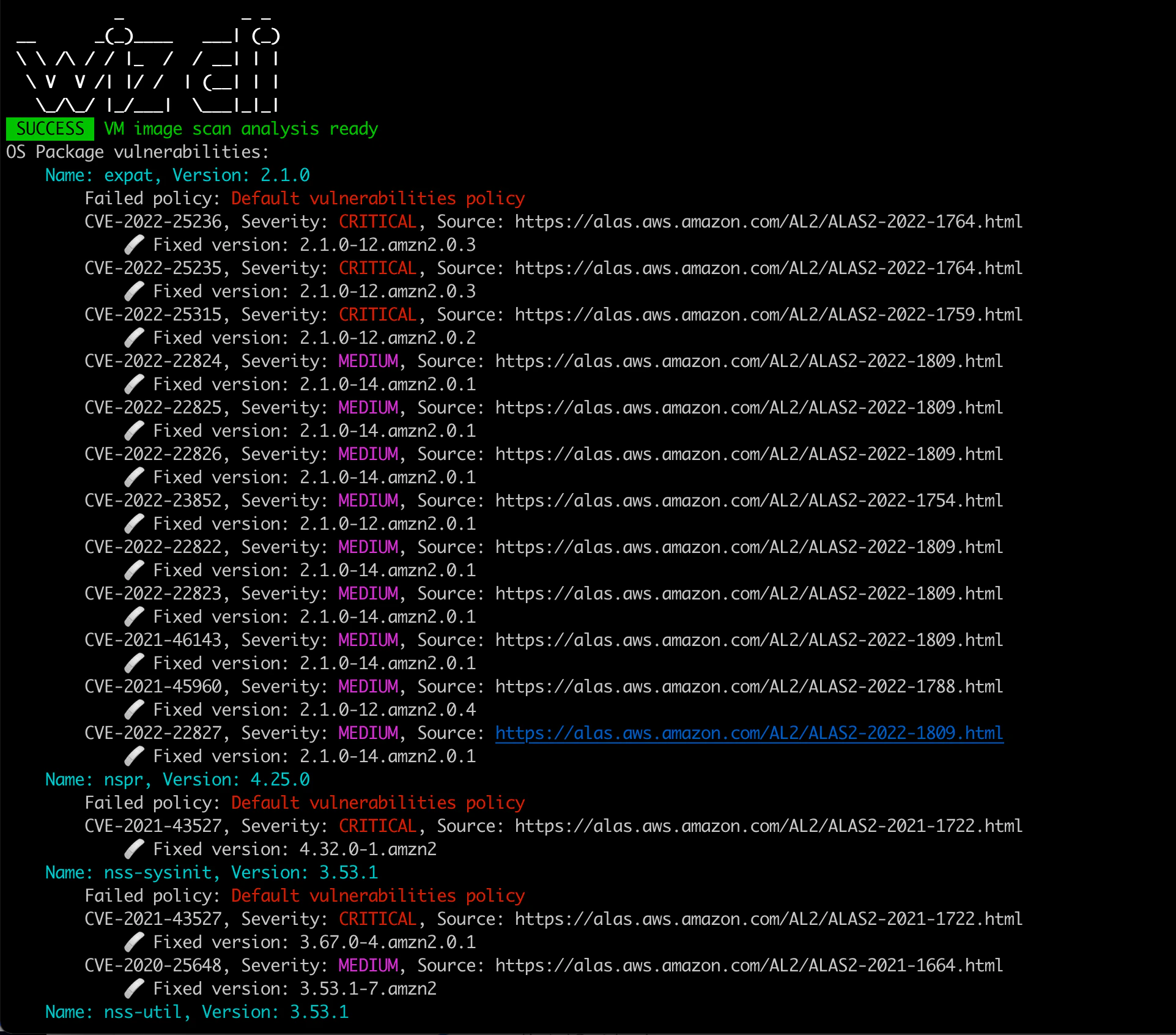
Vulnerability management policies, processes, and practices should be configured to address vulnerabilities in both build time and deployment time. Scanning CI/CD pipelines and container registries can help identify and remediate critical vulnerabilities before deployment. All known and unknown risks, vulnerabilities, dependencies, and misconfigurations in the build and deployment phases must be cataloged to optimize future analyses and assessments.
Integrating vulnerability scanning tools into CI processes enhances the chances of identifying and remediating software vulnerabilities and dependencies, and by conducting in-depth vulnerability assessments in build time, you can greatly reduce risks related to deployment time.
6. Leverage vulnerability management tools
Vulnerability management tools directly impact your organization's breach risk by determining how quickly you can identify and remediate security weaknesses, so don’t compromise on tooling quality.
Research shows that most data breaches stem from unpatched known vulnerabilities—risks that effective vulnerability management tools would have detected and prioritized for remediation. According to Ponemon Institute's Costs and Consequences of Gaps in Vulnerability Response report, organizations without proper tooling often discover they were vulnerable only after an incident occurs.
Although it may seem like a no-brainer to focus security efforts on online workloads, this strategy can backfire. The safer route is to tackle vulnerabilities before they catch the attention of potential attackers. As such, treating both staging and production environments with the same security gravitas is important. A solid agentless scanner can change the game for security teams, letting them resolve potential issues before they’re online.
Traditional VM tools only produce simple table-based reports with only a basic snapshot of vulnerabilities at a given time. Advanced vulnerability management solutions consolidate information from multiple scans and provide information on what has changed over time.
The abundance of vulnerability management tools can be overwhelming. To narrow down the list, evaluate the complexity of your IT environment, the depth of required assessments, the surrounding threat landscape, cybersecurity budgets, and compliance needs to see what fits.
7. Choose highly integrable vulnerability management solutions
Integration capabilities determine whether your vulnerability management solution enhances or disrupts your existing security operations. Effective solutions connect with your current tools—SIEM platforms, ticketing systems, and security orchestration tools—to create unified workflows.
Your vulnerability data becomes actionable when it includes business context, like asset criticality, network topology, and existing security controls. Tools that operate in isolation create additional work rather than streamlining security operations.
Choose solutions that provide contextual visualization and reporting, so you can better understand how vulnerabilities relate to your specific infrastructure and business priorities.
Watch 12-min demo
Learn about the full power of the Wiz cloud security platform. Built to protect your cloud environment from code to runtime.

8. Map all assets and assess exposure
Complete asset inventories form the foundation of effective vulnerability management, ensuring no systems remain hidden from security assessments. Cloud environments span multiple providers and service types, each requiring specialized scanning approaches.
Your asset mapping should cover all cloud platforms—AWS, Azure, Google Cloud, and hybrid environments—while identifying relationships between resources. Understanding these connections helps you assess how vulnerabilities in one system could impact others through lateral movement or privilege escalation.
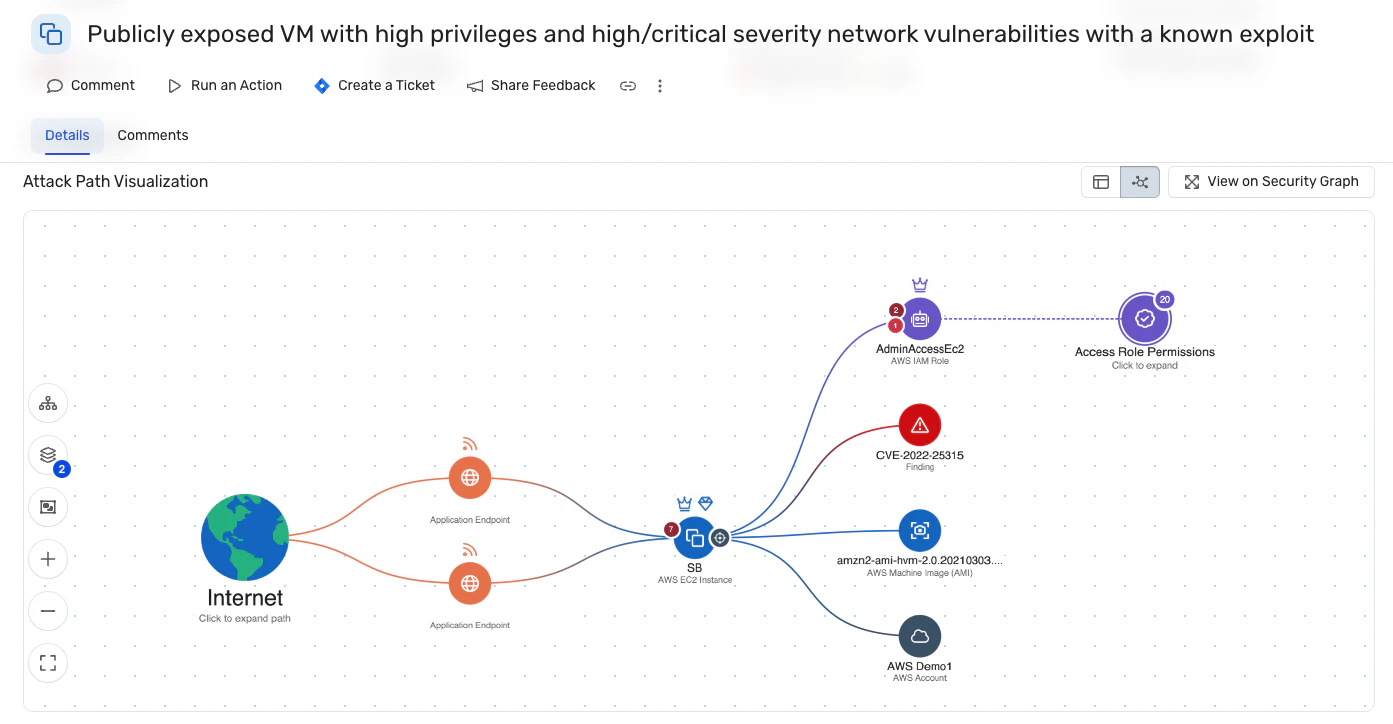
It's critical to evaluate the exposure and privilege entitlements of all cloud-native IT assets and reduce the risk of data breaches and other cybersecurity disasters. The Novant Health data breach illustrates the consequences of suboptimal exposure assessment. The breach compromised the data of over 1.3 million patients because of a security misconfiguration in Meta Pixel, a JavaScript tracking script that evaluates advertising performance.
What is AWS vulnerability scanning?
AWS vulnerability scanning identifies security flaws across EC2 instances (including secrets mistakenly stored in user data), containers, Lambda functions, and other compute resources.
Leia mais
9. Fuel vulnerability management lifecycles with threat data
Threat intelligence integration transforms vulnerability management from reactive patching into strategic risk reduction. By combining vulnerability data with active threat intelligence, you can prioritize vulnerabilities that attackers are currently exploiting over theoretical risks.
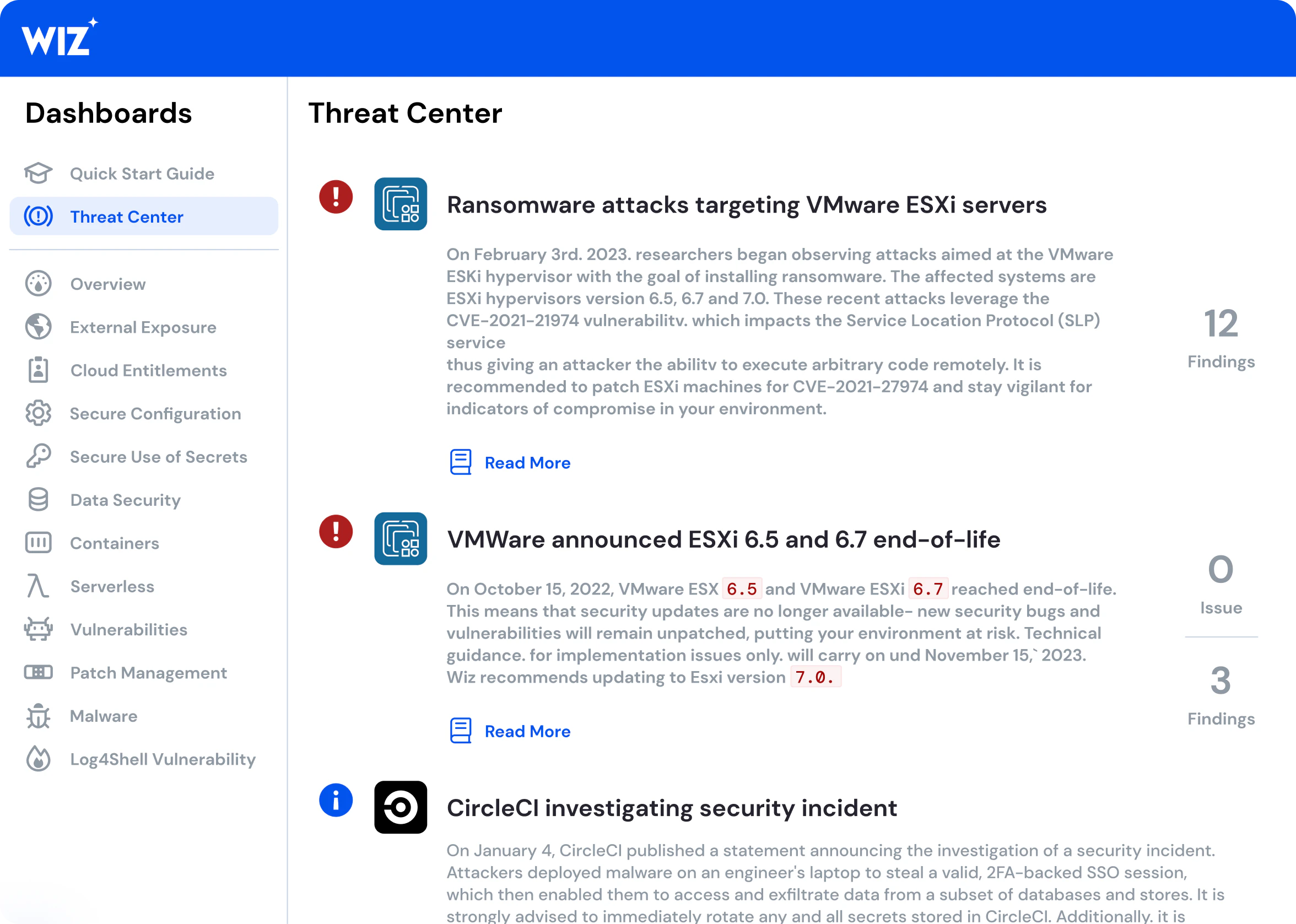
This intelligence-driven approach helps you focus remediation efforts on vulnerabilities with known exploits, active campaigns, or high business impact. Rather than treating all vulnerabilities equally, you address the ones that pose immediate danger to your organization.
Cross-program data sharing ensures vulnerability management aligns with broader security initiatives, creating a unified defense strategy rather than isolated security activities.
10. Champion cross-team collaboration for vulnerability remediation
Cross-team collaboration accelerates vulnerability remediation by connecting security insights with operational expertise, a process made more critical as teams become more distributed. With remote work surging in popularity over the last several years, clear alignment between security, developers, and engineers is essential for program success.
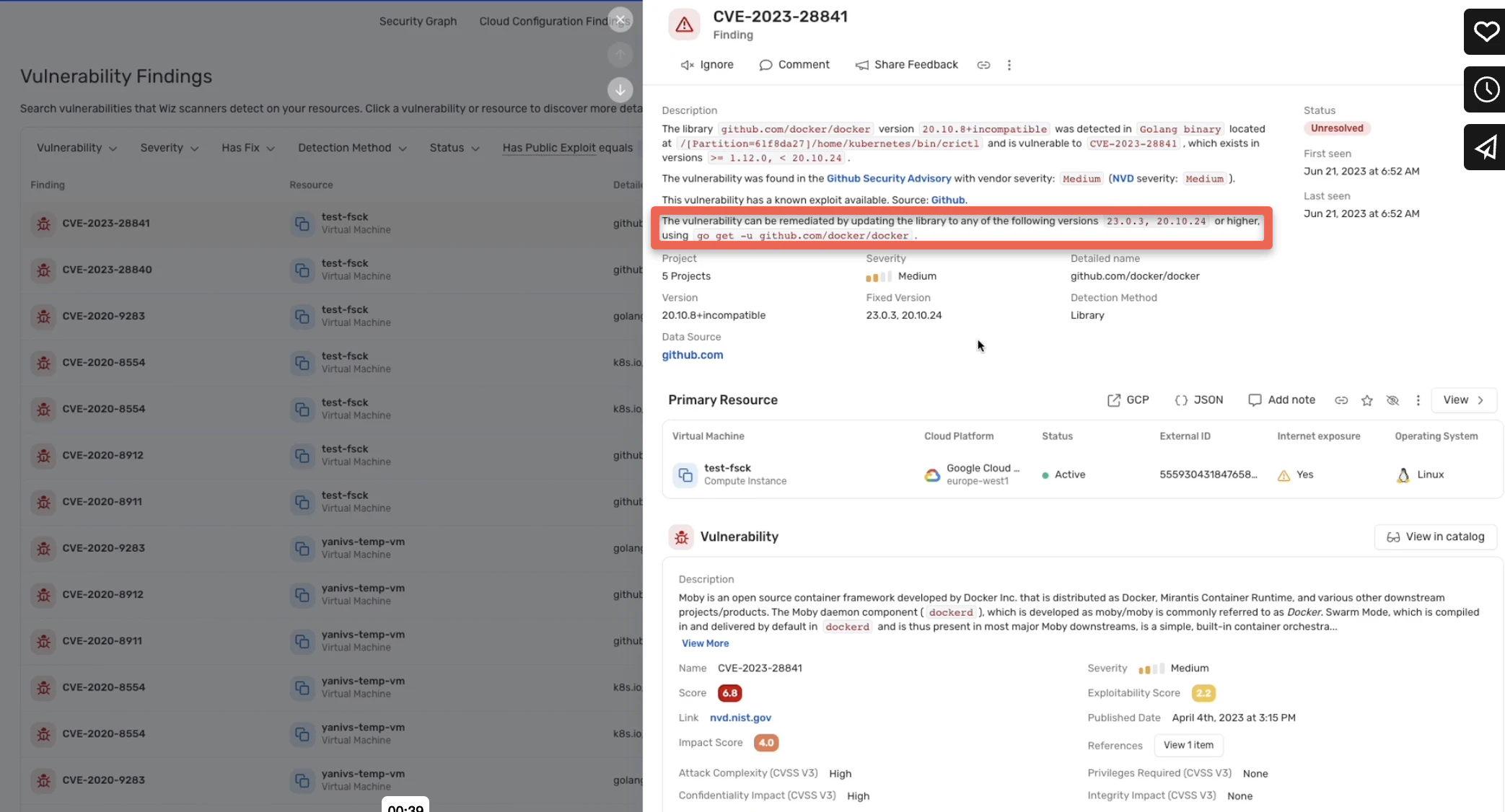
Effective collaboration ensures vulnerabilities are remediated within business-appropriate timelines. Development teams understand system dependencies and can implement fixes without disrupting operations, while security teams provide threat context and prioritization guidance.
This shared responsibility model prevents vulnerabilities from lingering due to unclear ownership or conflicting priorities between security and operational teams.

11. Integrate with other enterprise security solutions
We mentioned earlier that vulnerability management is just one component of a security stack. So it's critical to identify and integrate with all parallel cybersecurity programs and solutions that your enterprise is stewarding, including security configuration management (SCM), security information and event management (SIEM), and log management.
Your vulnerability management vendor should be able to integrate vulnerability management solutions with other security programs. This can help create a more robust cybersecurity posture, nurture a collaborative environment that champions the sharing of security intelligence and reports, and create streamlined cross-program remediation routes.
Vulnerability Management Buyer's Guide
This guide helps your security and dev teams finally start speaking the same language while giving you everything you need to objectively choose or replace your VM solution.

Go beyond the basics with Wiz
Wiz's vulnerability management solution provides a comprehensive set of capabilities that go beyond basic vulnerability management best practices. Wiz can help organizations quickly and effectively identify, prioritize, and remediate vulnerabilities across their cloud environments with the following capabilities:
Agentless scanning: Agentless scanning doesn’t require any software to be installed on workloads being scanned. This makes it easier to deploy and manage Wiz, and it also reduces the overhead of scanning workloads.
Continuous scanning: Wiz continuously scans workloads for vulnerabilities, helping ensure new vulnerabilities are identified and prioritized quickly.
Deep contextual assessments: Wiz goes beyond simply identifying vulnerabilities. It also provides deep contextual assessments of vulnerabilities, including information about the severity of the vulnerability, the exploitability of the vulnerability, and the impact of the vulnerability on the organization's environment.
Risk-based prioritization: Wiz uses a risk-based approach to prioritize vulnerabilities. When prioritizing vulnerabilities, it takes into account factors like the severity of the vulnerability, the exploitability of the vulnerability, and the impact of the vulnerability on the organization's environment. This helps organizations focus on the most critical vulnerabilities first.
AI Security: Wiz’s Security Graph surfaces harmful risk combinations across AI models, securing the full pipeline against supply chain attacks and other vulnerabilities.
Ready to see how Wiz can transform your vulnerability management program? Request a demo to explore how our agentless platform unifies vulnerability discovery, prioritization, and remediation across your entire cloud infrastructure.
See Wiz in Action
Watch how leading security teams use Wiz to eliminate critical risks across AWS, Azure, and Google Cloud.

Other security best practices you might be interested in: