What is managed cloud security?
Managed cloud security is the practice of outsourcing key cloud protection functions, like threat detection, configuration auditing, compliance reporting, and incident response, to specialized third-party security providers. These services are typically delivered via cloud-native tooling and 24/7 monitoring across multi-cloud environments.
Modern cloud environments evolve faster than most security teams can respond to. As organizations scale across cloud vendors, the challenge isn't just protecting assets, it's also difficult to maintain visibility, reduce misconfigurations, and respond to threats in real time. Managed cloud security addresses these challenges directly by outsourcing critical operations to providers with the tools and expertise needed to secure complex cloud environments at scale.
These providers typically operate on a 24/7 model, delivering protection across hybrid and multi-cloud setups through cloud-native platforms. Many providers integrate with third-party CNAPP platforms, such as Wiz, to unify capabilities like CSPM, ASPM, container security, and code security into a single workflow.
This model emerged in response to the growing gap between cloud adoption and internal security capacity, with the cloud security market projected to reach $97.9 billion by 2033. According to the Wiz Cloud Threat Retrospective 2026, 80% of documented cloud intrusions in 2025 began with vulnerabilities, exposed secrets, or misconfigurations. These are entry points that managed providers are purpose-built to close.
As organizations move away from on-prem, cloud security changes. Traditional tools are no longer effective, and security now depends on cloud-native context, automation, and a shift-left approach.
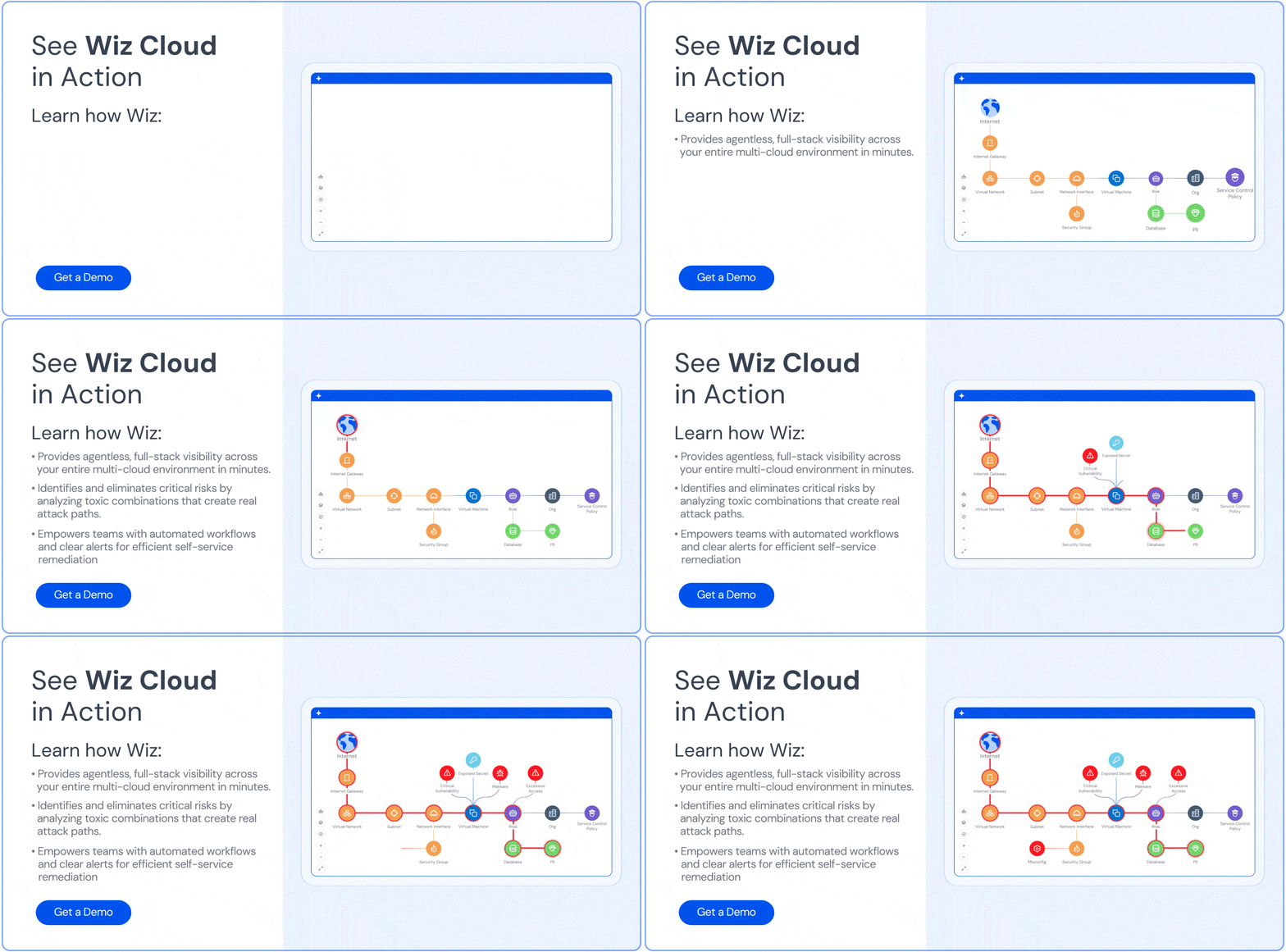
Watch 12-minute demo
Watch the demo to learn how Wiz Cloud finds toxic combinations across misconfigurations, identities, data exposure, and vulnerabilities—without agents.
Watch now
MDR vs. CNAPP vs. managed cloud security
Managed Detection and Response (MDR) is often confused with broader managed cloud security services. While MDR focuses on detecting and responding to threats, typically using XDR platforms, managed cloud security encompasses a wider range of services, including compliance enforcement, posture management, and DevSecOps integration. Many providers combine MDR-like capabilities with CNAPP platforms for a more unified offering.
Core functions of managed cloud security
Managed cloud security providers deliver a set of operational capabilities designed to protect cloud infrastructure, workloads, and data at scale. These core functions typically include:
24/7 threat detection and response
Managed security providers maintain continuous oversight by collecting and analyzing telemetry from cloud workloads, network traffic, IAM events, and API activity around the clock.
Using SIEM, XDR, and behavioral analytics, they detect anomalies such as lateral movement, unauthorized privilege escalation, or data exfiltration attempts. Automated response mechanisms, often orchestrated via SOAR platforms, can isolate compromised resources, revoke credentials, or trigger alerts in real time. Threat intelligence feeds (e.g., MITRE ATT&CK, commercial IOCs) further refine detection logic.
These services operate under strict SLAs, often guaranteeing incident triage within minutes. Additionally, retrospective analysis ensures previously benign activity is re-evaluated as new threat intel becomes available, enabling continuous risk mitigation even for stealthy, long-dwell attacks that evade initial detection.
Vulnerability and patch management
As cloud environments constantly change, with new services, rebuilt containers, and updated packages, managed security services keep pace by scanning infrastructure, containers, and code for vulnerabilities on a rolling basis and handling patches as they emerge.
Crucially, these findings are contextualized and factor in exploitability, exposure paths, and blast radius to focus attention where it matters most. These efforts often tie into broader CNAPP and ASPM strategies that consolidate risk from dev to production.
Compliance and reporting
Managed providers automate the mapping of cloud configurations to compliance controls, ensuring regulatory alignment keeps pace with development velocity. According to the Thales 2025 Cloud Security Study, organizations increasingly rely on automated tooling to maintain compliance across complex cloud environments. This capability is typically powered by CSPM tooling, which continuously audits infrastructure, flags drift from policy, and generates evidence for auditors. By eliminating manual spreadsheet-based audits, this function reduces overhead while improving audit readiness.
Security architecture design and hardening
Managed security providers strengthen cloud environments through guidance on identity policies, workload segmentation, network isolation, and encryption enforcement. These preventative measures limit the potential impact of vulnerabilities.
To further strengthen security, architecture reviews may include infrastructure-as-code (IaC) scanning, container security support, and shift-left practices, ensuring that security is integrated early in the development process.
Toolchain integration and platform coverage
Effective managed cloud security integrates with an organization's existing toolchain, including cloud-native platforms such as CNAPP, CSPM, ASPM, and container or code security tools.
These integrations enable managed providers to ingest real-time telemetry, enforce security policies, and correlate risk across the development and production lifecycle. They integrate directly with developer workflows, like CI/CD pipelines, infrastructure-as-code (IaC), and version control systems, to enable shift-left security, where vulnerabilities and misconfigurations are caught before production. This ensures that issues are surfaced directly in developers' workflows and that security incidents trigger the appropriate alerts, tickets, or playbooks.
The goal is full-stack visibility and synchronized remediation across teams, reducing friction and response time in dynamic, multi-cloud environments.
Security Leaders Handbook: The Strategic Guide to Cloud Security
Learn the new cloud security operating model and steps towards cloud security maturity. This practical guide helps transform security teams and processes to remove risks and support secure cloud development.
Download guide
Benefits of managed cloud security
Managed cloud security delivers measurable advantages across security posture, operational efficiency, and organizational agility. The cloud security market growing at 11.5% CAGR reflects the increasing value organizations find in these services.
Expert-level security without full-time hires: Gain access to specialized cloud security knowledge and advanced tooling without building a large in-house team.
Continuous compliance: Automate evidence collection, policy mapping, and audit preparation across regulatory frameworks like HIPAA, PCI DSS, and GDPR.
Reduced operational costs: Outsourcing security operations often proves more cost-effective than maintaining equivalent in-house capabilities at scale. Organizations like Aon have seen results by consolidating their security stack, with Aon consolidating 10+ security tools into a unified platform.
Faster incident response: Threat detection and 24/7 monitoring minimize downtime and contain security incidents before they escalate.
Scalable coverage: Security measures grow alongside cloud infrastructure without requiring proportional headcount increases.
Fully managed vs. co-managed security models
Organizations can choose between fully managed and co-managed cloud security models based on the control they want to retain, the complexity of their environment, and the maturity of their internal security team.
The table below compares the two models across structure, trade-offs, and fit:
| Fully Managed | Co-managed | |
|---|---|---|
| Model description | Provider handles all aspects of cloud security operations | Security responsibilities are shared between the provider and the internal team |
| Pros |
|
|
| Cons |
|
|
Fully managed model
Startups and SMBs: Smaller organizations often lack the resources and expertise for full-scale cloud security. A fully managed model gives them access to always-on protection, from posture management and vulnerability scanning to incident detection.
Fast-growing SaaS companies: As engineering teams scale quickly, security often lags behind. Fully managed models allow growing SaaS companies to enforce consistent controls, like identity guardrails, IaC scanning, and vulnerability remediation, without needing to grow the security team at the same rate.
Organizations new to cloud security: Businesses that are cloud-first but new to cloud security need help establishing a secure baseline. A fully managed model helps them ramp up quickly with out-of-the-box policies, automation, and context-driven prioritization. For example, Blackstone, the world's largest alternative asset manager, used Wiz to consolidate core cloud security functions into a single platform.
Digital-native teams without dedicated security hires: In product-led tech startups or teams focused solely on innovation (e.g., AI/ML or gaming), security isn't always a core competency. A fully managed model ensures that critical protections, such as data loss prevention and workload isolation, are enforced without distracting developers from core product development.
Co-managed model
Enterprises with internal security teams: Larger organizations often want to stay hands-on with incident response, policy enforcement, or architectural decisions, but they still need external support for scale or around-the-clock coverage. A co-managed model allows internal teams to retain strategic control while offloading high-volume tasks. For instance, an insurance company implemented a co-managed SIEM to receive real-time threat intelligence and monitoring, allowing its small IT team to focus on longer-term security planning.
Regulated industries: In sectors like government, finance, and healthcare, organizations must adhere to strict requirements for data handling, access control, and internal audits. Co-managed security services can help these organizations maintain compliance by automating tasks like vulnerability scanning, log ingestion, and alert correlation.
Organizations undergoing cloud transformation: Companies shifting from legacy infrastructure to modern cloud platforms often need hands-on guidance but don't want to relinquish control. A legal firm working with Ntiva, a consulting company, used a co-managed model during their cloud migration, maintaining compliance and uptime while strengthening their cloud posture with expert support.
Global enterprises with regional compliance needs: Multinational corporations operating in multiple jurisdictions may require localized visibility and control to meet region-specific regulations (e.g., GDPR, CCPA, PDPA). A co-managed model enables global oversight from a central team while delegating tactical monitoring and remediation to regional security units.
Evaluating and selecting a managed security provider
Visibility: The provider should offer full-stack visibility, from cloud assets and configurations to vulnerabilities and identity exposures. Without this context, it's impossible to prioritize or respond effectively. Look for agentless or API-based platforms that provide continuous coverage without operational drag.
Multi-cloud and environment-specific coverage: Now that cloud environments have become more fragmented, support for AWS, Azure, GCP, containers, and Kubernetes is essential. Research shows that 49% of respondents believe cloud complexity is the #1 inhibitor to security success. Providers should offer consistent policies and detection logic across services and regions.
Integration with existing workflows: Security needs to work with engineering and DevOps, not block them. Providers should integrate with CI/CD pipelines, ticketing systems, IaC tools, and SIEMs to embed security into day-to-day processes.
Transparency and support model: Ask how alerts are triaged, who monitors your environment, and whether you get access to detection logic and remediation steps. Avoid black-box tools; favor providers who are open about what's being flagged and why.
Scalability and shift-left capabilities: Providers should support IaC scanning, container image analysis, and code-to-cloud traceability to catch issues earlier in the software development lifecycle. These abilities become more important as organizations adopt microservices and scale rapidly.
How Wiz supports managed cloud security

Wiz is purpose-built to support organizations adopting a managed cloud security model. Its agentless architecture deploys rapidly, with Bridgewater deploying across 200 cloud accounts in hours. This directly addresses many of the operational and visibility challenges covered throughout this article, ranging from fragmented tooling to scaling security across cloud environments.
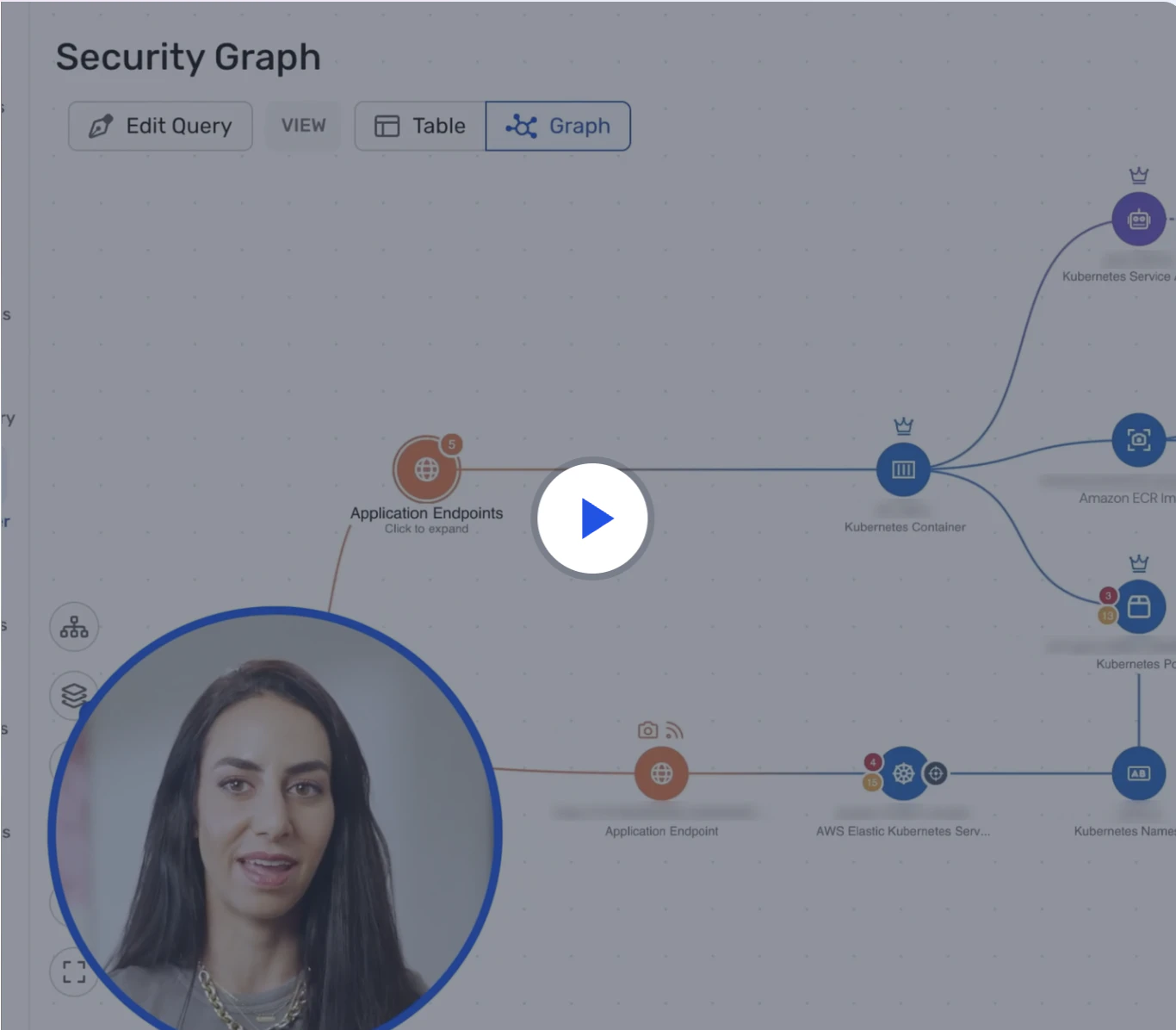
The Wiz Security Graph maps relationships across cloud assets, identities, workloads, and data into a single prioritized view, without agents. Managed providers and internal teams get consistent, actionable risk context across AWS, Azure, GCP, and Kubernetes from one interface rather than reconciling multiple consoles.
Wiz surfaces misconfigurations and vulnerabilities at the pull request stage, before code reaches production. Managed providers can trace a runtime finding back to the exact line of code that introduced it, cutting remediation time without adding friction to development workflows.
For co-managed deployments, Wiz gives a central provider full visibility across the entire environment while allowing individual business units to manage their own findings and workloads. Each team sees what's relevant to them; the provider sees everything.
Wiz continuously scans for sensitive data exposure and policy violations, maintaining compliance with standards like HIPAA, PCI DSS, and GDPR. The Wiz Cloud Data Security Snapshot found that 54% of cloud environments have exposed VMs containing sensitive information, reinforcing the need for continuous monitoring.
For organizations working with managed providers, Wiz gives both sides the context, speed, and control needed to secure complex cloud environments effectively. See for yourself: Get a demo.