

What is the vulnerability management lifecycle?
A vulnerability management lifecycle is a repeatable, continuous process for finding, prioritizing, and fixing security weaknesses before attackers can exploit them. This means your team moves from reactive firefighting to proactive risk reduction across every asset in your environment.
The lifecycle typically includes six stages: identification and assessment, prioritization, remediation and mitigation, verification and validation, reporting, and continuous monitoring and improvement. Each stage feeds into the next, creating a closed loop that adapts as new threats emerge and your infrastructure changes.
A vulnerability management program uses these stages to create a strategic approach to enhancing cybersecurity. Rather than attending to new vulnerabilities only as they emerge, security teams can continuously search for weaknesses in their systems, prioritize the most critical vulnerabilities, and implement protective measures before attackers strike.
Below, you'll learn the stages of the vulnerability management lifecycle and how to use management tools, steps, and techniques to fortify your cloud environments.
Vulnerability Management Buyer's Guide
This guide helps your security and dev teams finally start speaking the same language while giving you everything you need to objectively choose or replace your VM solution.

The 6 stages of the vulnerability management lifecycle
The National Institute of Standards and Technology (NIST) adds more than 2,000 new security vulnerabilities to the National Vulnerability Database monthly. Since no security team has the resources to monitor them all, organizations can rely on a vulnerability management lifecycle to pinpoint and address the threats that matter most.
Each stage of the lifecycle involves specific techniques and tools to help you effectively manage risks. Here's a closer look at each.
1. Identification and assessment
Effective vulnerability management starts with knowing exactly what you need to protect. In cloud environments, this includes virtual machines, containers, serverless functions, databases, and network components that can spin up or down without warning.
Cloud-native discovery tools like AWS Config, Azure Resource Graph, and Google Cloud Asset Inventory help maintain an accurate, real-time inventory. Without this visibility, severe vulnerabilities on overlooked resources can sit undetected—often for 197 days to detect—while your team focuses elsewhere.
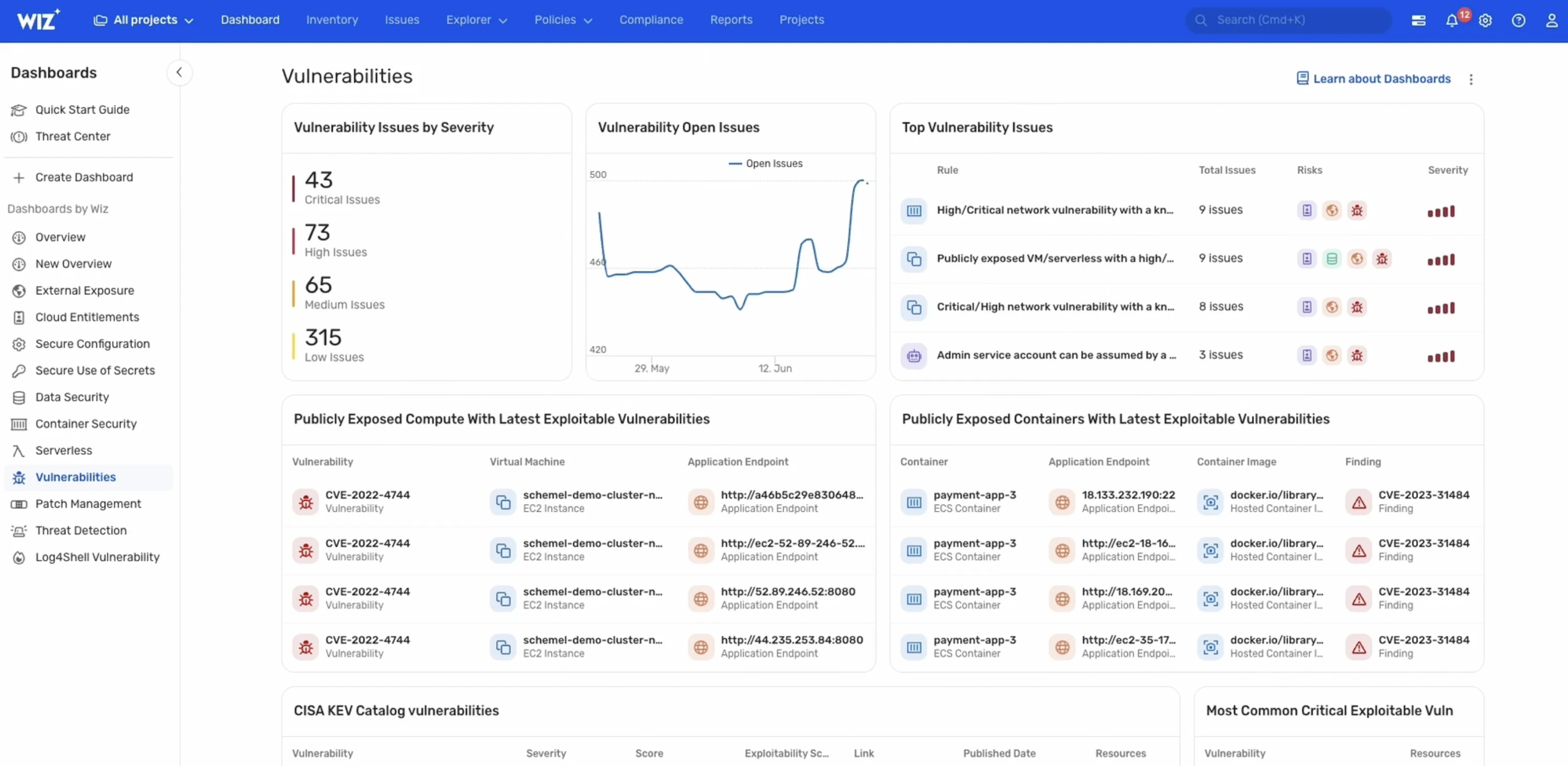
Once you've identified the assets you need to protect, you're ready to run robust vulnerability scans using cloud native tools like Amazon Inspector, Azure Security Center, and Google Cloud's Web Security Scanner. Comprehensive scans of network devices, applications, cloud environments, and endpoints provide valuable insights into security vulnerabilities, misconfigurations, and compliance issues.
The final step of this stage involves manual testing, including penetration testing and detailed security assessments. Manual checks complement automated vulnerability scanning by uncovering complex vulnerabilities that scanning tools may have missed. Combining broad coverage with targeted checks ensures a thorough evaluation of your cloud environment to reveal critical security gaps.
2. Prioritization
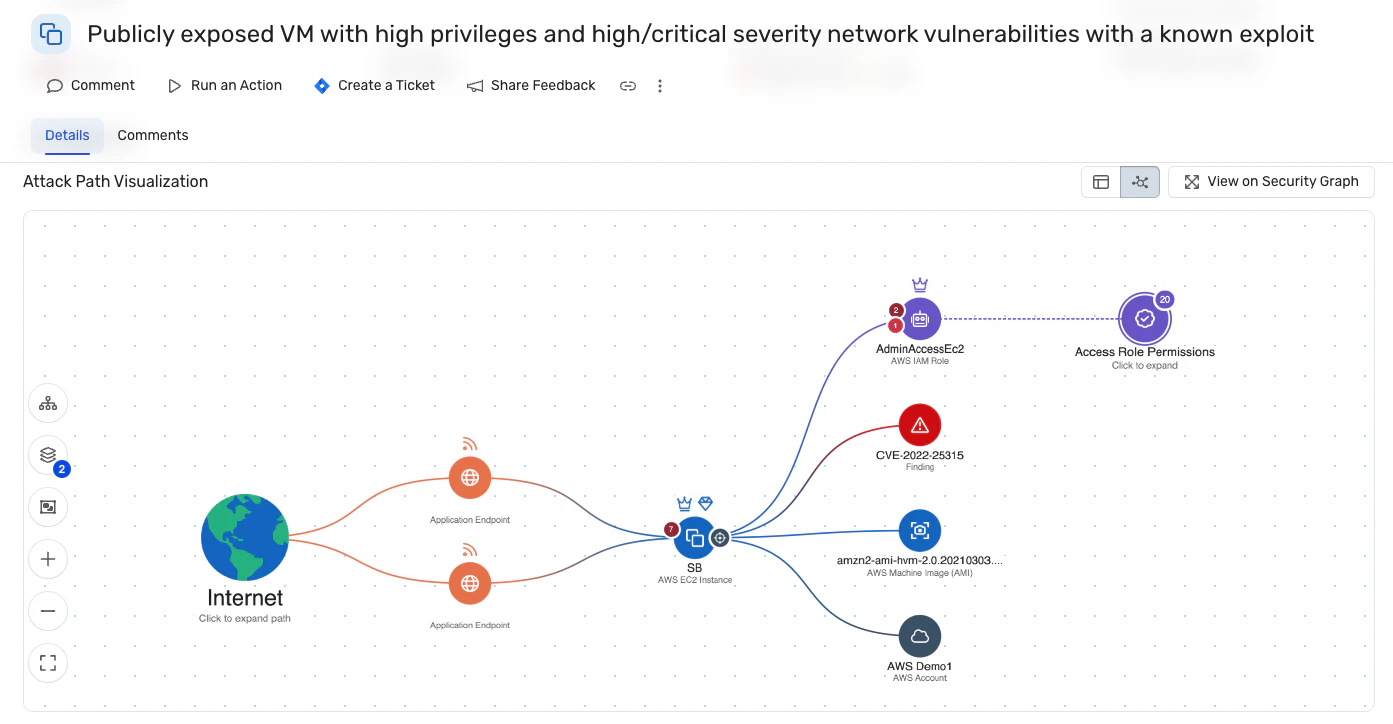
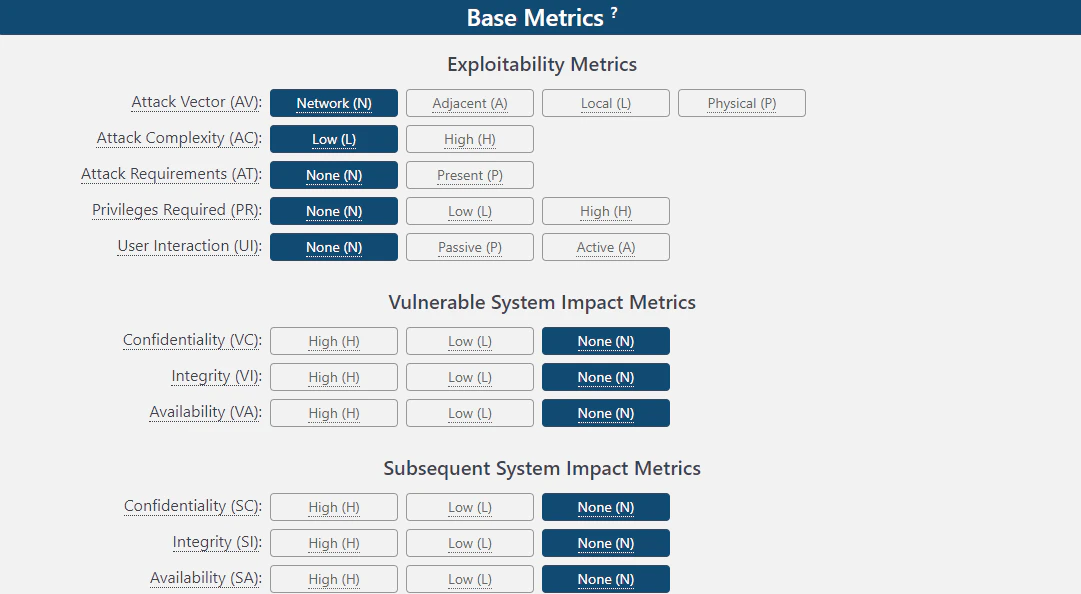
Prioritization determines which vulnerabilities get fixed first based on actual risk to your organization, not just severity scores. CVSS alone is not enough because it does not account for your specific environment.
When prioritizing, consider these factors:
Asset and business criticality: Focus on high-value targets like databases with sensitive data and mission-critical applications. Use external ratings like CVE and CVSS as a starting point, not the final answer.
Exploit availability: Prioritize vulnerabilities with known exploits or active targeting, such as the CrushFTP VFS sandbox vulnerability. Exploit prediction systems like EPSS and threat intelligence feeds help identify which issues attackers are actually using.
Quantitative risk modeling: Apply models like FAIR to translate technical severity into financial, legal, and operational impact so remediation efforts reflect real business risk.
3. Resolving vulnerabilities in the cloud
Once you know which vulnerabilities matter most, you need to decide how to address them. Resolution does not always mean patching. Depending on the situation, you may remediate, mitigate, or accept the risk.
Remediation
Remediation involves applying a permanent fix: patching the operating system, correcting a misconfiguration, or removing a vulnerable asset entirely. Complete remediation is not always possible. Zero-day vulnerabilities may not have patches available yet, and some fixes require more resources than the risk justifies.
🛠️ Action step: Leverage cloud native remediation tools like AWS Shield, Azure Security Center, and Google Cloud Armor to defend against distributed denial-of-service attacks, deploy web application firewalls, and enforce security policies.
Mitigation
Implement security controls and best practices to increase the difficulty of exploiting a vulnerability and reduce impact if exploitation occurs. Configuration hardening, such as having stricter authentication and authorization, disabling unnecessary services, and enforcing least-privilege access, helps minimize attack surfaces and improve your overall security posture.
🛠️ Action step: Create incident response plans for identified vulnerabilities to reduce the impact of potential cyberattacks.
Acceptance
Determine when it's appropriate to accept a vulnerability, such as when exploitation risk is low or the potential impact is minimal. In cases where attempting resolution may not justify the cost or effort, it may be better to acknowledge the risk and monitor the situation rather than take immediate action.
Contextualized features by CNAPPs like Wiz can help your team prioritize issues to focus on what matters first.
Watch 12-min demo
Learn how Wiz connects the dots across your entire cloud, enabling teams to own the vulnerability management life cycle together through a single, unified lens.

4. Verification and validation in the cloud
Applying a fix does not guarantee the vulnerability is gone. Verification confirms that patches, configuration changes, and security controls actually work as intended.
Verify applied fixes: Run automated scans, manual tests, and security assessments to confirm that each remediation addressed the underlying issue.
Conduct validation processes: Re-run vulnerability scanners against the same assets to catch any gaps or regressions introduced during the fix.
Document validation results: Record the vulnerability, the fix applied, the validation method, and the outcome. This audit trail supports compliance requirements and helps teams learn from past remediation efforts.
Risk Based Vulnerability Management: How to Prioritize the Threats That Actually Matter
Mehr lesen

5. Reporting
Reporting translates technical vulnerability data into information that different stakeholders can act on. Executives need risk trends, security teams need remediation queues, and auditors need compliance evidence.
Comprehensive documentation: Record all identified vulnerabilities, impact assessments, remediation steps, and validation results. This creates an audit trail and tracks progress over time.
Key metrics: Track mean time to remediate, vulnerability aging, SLA compliance rates, and risk reduction trends to measure program effectiveness.
Stakeholder communication: Provide regular updates tailored to each audience. Executive dashboards show risk posture trends while operational reports show open vulnerability queues and SLA breaches.
6. Monitoring and improvement
Vulnerability management does not end after verification. New vulnerabilities emerge constantly, and your environment changes with every deployment. Continuous monitoring closes the loop by feeding discoveries back into the identification stage.
Continuous monitoring: Use automated tools, intrusion detection systems, SIEM platforms, and cloud-native monitoring to detect new vulnerabilities and infrastructure changes in real time.
Periodic reassessments: Schedule regular scans and security assessments to catch new threats and evaluate whether existing controls remain effective.
Feedback loop: Analyze incidents and assessment results to identify root causes and process gaps. Use these insights to refine prioritization criteria and remediation workflows.
Continuous improvement: Review and update your vulnerability management processes regularly to incorporate new technologies, address emerging threats, and adapt to changing business requirements.
AWS Vulnerability Management Best Practices [Cheat Sheet]
From asset discovery and agentless scanning to risk-based prioritization and patch management, this guide covers the essential strategies needed to safeguard your AWS workloads.

Frameworks and standards for vulnerability management
Industry frameworks provide consistent scoring, prioritization models, and compliance alignment for vulnerability management programs.
CVSS v3/v4: A standardized severity scoring system. Use it to rank vulnerabilities consistently, but combine it with other factors since CVSS does not reflect your specific environment.
EPSS: A data-driven model estimating exploit probability within a given timeframe. Pair it with CVSS to prioritize based on both severity and likelihood of exploitation.
NIST SP 800-40: US government guidance for vulnerability and patch management. Use it to structure remediation processes and meet federal compliance requirements.
ISO/IEC 27001: An international standard for information security management systems. Its controls strengthen governance and support compliance maturity across industries.
While these standards provide a foundation for vulnerability management, they aren't the end-all, be-all solution. Your team needs a way to automate unified vulnerability management, distribute roles effectively, and provide full visibility into your multi-cloud environment.
Dimitri Lubenski, the head of technology and innovation at Siemens, articulated this need after adopting Wiz for security: "Protecting our infrastructure is no longer concentrated in one team; the responsibility is distributed across the organization."


Wiz's approach to vulnerability management
Understanding the lifecycle is one thing. Running it efficiently across hybrid and multi-cloud environments is another. That's where Wiz comes in—turning the six-stage process into a unified, automated workflow that scales with your infrastructure.
Wiz brings everything into one platform. You get agentless scanning across cloud, code, and on-prem environments—no deployment headaches, just complete visibility. Our security graph does the heavy lifting by connecting vulnerabilities to network exposure, identity permissions, and sensitive data, so you can see which risks actually matter to your business.
Wiz's Unified Vulnerability Management (UVM) pulls findings from cloud workloads, container images, infrastructure as code, and your existing third-party scanners into a single prioritized queue. Instead of sorting through thousands of alerts, you get context-aware risk scoring that factors in exploitability, reachability, and real business impact.
But what about the assets you don't even know you have? Wiz Attack Surface Management (ASM) extends your visibility beyond your known cloud estate to uncover shadow IT, forgotten resources, and external-facing assets that traditional scanners miss. By continuously mapping your Internet-exposed attack surface, Wiz ASM finds vulnerabilities on assets you didn't know existed—before attackers do.
When your vulnerability tools are fully integrated, the dots connect themselves. This streamlined approach replaces manual coordination with automated clarity, ensuring your experts stay focused on high-impact wins and a safer environment for everyone.
The bottom line? One prioritized queue instead of thousands of disconnected alerts. Want to see how this works in your environment? Schedule a demo or get a personalized vulnerability assessment.
Uncover vulnerabilities across your cloud
Book a demo to see how Wiz helps devs and security teams own the vulnerability management life cycle together, from code to cloud.
