


Why traditional API security falls short
APIs are now the dominant attack surface for global organizations, with 87% reporting a related incident last year. Yet, traditional API security tools treat endpoints in isolation from the cloud resources and identities they connect to.
According to the Wiz Cloud Threats Retrospective 2026, well-known risks—vulnerabilities, exposed secrets, and misconfigurations—account for roughly 80% of documented cloud intrusions. The problem isn't just the bugs; it's the velocity at which these risks spread across complex cloud environments.
Most security programs struggle with three structural blind spots:
Zero visibility: Teams ship new versions and debug endpoints faster than anyone updates central inventories.
No runtime context: Scanners flag weaknesses but can't tell you if an endpoint is internet-facing, which identity it runs as, or what data it can reach.
Fragmented signals: Gateway, application, and cloud audit logs live in separate silos, dragging investigations out from minutes to hours.
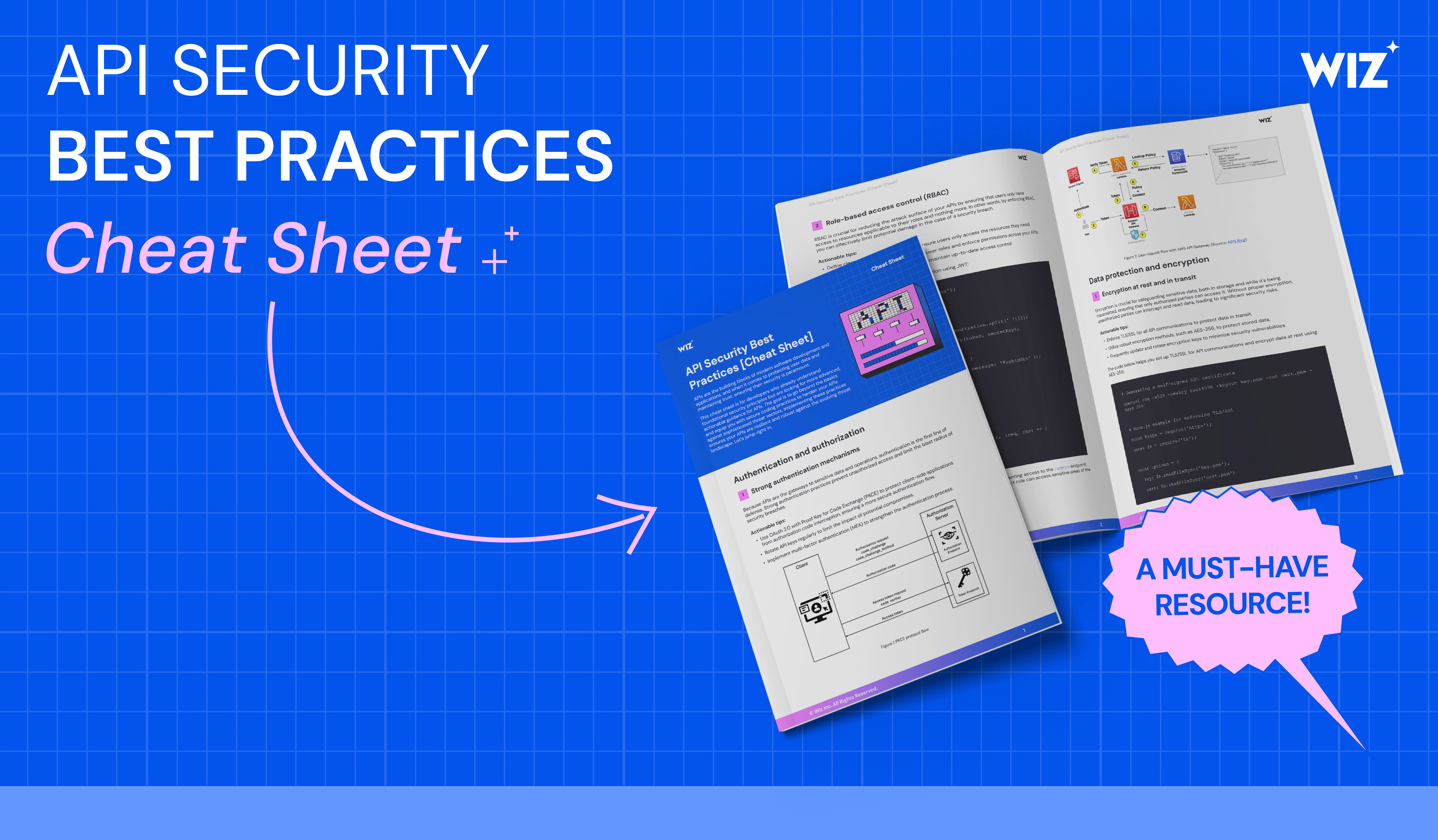
Advanced API Security Best Practices [Cheat Sheet]
Download the Wiz API Security Best Practices Cheat Sheet to master advanced API security. Implement proven techniques to harden your infrastructure and ensure secure, high-performance API management across the lifecycle.

The breaking point: Tool sprawl & toxic combinations
Compounding these gaps is a massive operational hurdle. The Wiz 2026 CISO Budget Benchmark Report found that 58% of organizations run more than 25 security tools, and nearly half of CISOs state that tool sprawl and cloud complexity actively hold back their security programs.
Without a unified platform to connect API risks to infrastructure exposure, security teams chase fragmented alerts while missing the exact toxic combinations that create breach paths.
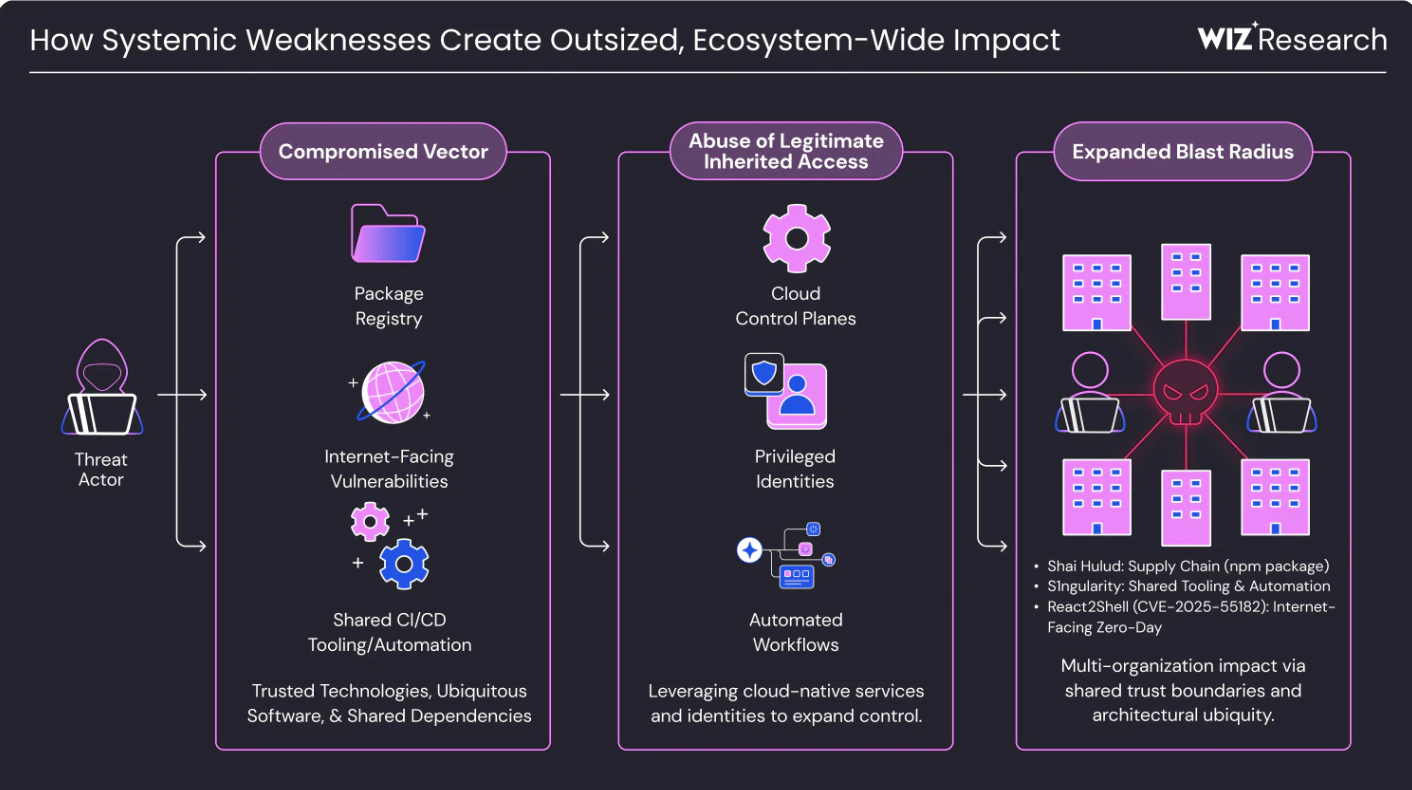
Example: An old /v1/admin endpoint might look internal in a spec, but a misrouted ingress rule can expose it publicly. Without combined discovery and exposure context, you only find out after an attacker weaponizes it.
OWASP API Security Top 10: Critical risks you must address
The OWASP API Security Top 10 identifies the most critical risks attackers exploit against APIs. Three of the top five OWASP API risks relate directly to authorization failures—Broken Object Level Authorization (BOLA), Broken Object Property Level Authorization, and Broken Function Level Authorization—making access control the most recurring theme in the list.
Broken Object Level Authorization (BOLA): APIs that don't properly check if a user should access a specific object can leak or expose sensitive data. Always validate user permissions for object requests.
Broken Authentication: Weak or missing authentication mechanisms let attackers impersonate legitimate users or bypass identity verification entirely. Enforce strong authentication flows, disable default credentials, and implement token expiration and rotation policies.
Broken Object Property Level Authorization: Failing to restrict access to sensitive object properties can expose confidential information. Make sure users can only access properties they're allowed to see.
Unrestricted Resource Consumption: APIs that don't limit resource usage can be abused, leading to denial of service or high cloud bills. Set sensible rate limits and quotas.
Broken Function Level Authorization: Not checking if a user is allowed to perform a certain action can let attackers escalate privileges. Always enforce authorization for every function or endpoint.
Unrestricted Access to Sensitive Business Flows: APIs that expose sensitive business processes without controls can be abused or used for fraud. Protect critical flows with extra checks and monitoring.
Server Side Request Forgery (SSRF): APIs that fetch URLs or resources on behalf of users can be tricked into accessing internal systems. Validate and restrict outbound requests.
Security Misconfiguration: Default settings, verbose error messages, or unnecessary features can open up vulnerabilities. Harden your API configuration and keep it simple.
Improper Inventory Management: Not keeping track of all your APIs, versions, and endpoints can leave old or undocumented APIs exposed. Maintain a complete, up-to-date API inventory.
Unsafe Consumption of APIs: Trusting data from third-party APIs without validation can introduce vulnerabilities. Always validate and sanitize data from external sources.
Addressing these risks is a great way to strengthen your API security program.
12 API security best practices and recommendations
With the right safeguards in place, you can reduce vulnerabilities, build more resilient apps, and strengthen your API security tools and strategy.
1. Implement continuous API discovery
When you manage hundreds of APIs across teams, manual tracking fails to keep pace with development velocity. Automated scanning identifies and catalogs every API across your infrastructure as it appears.
An Amaki Technologies study showed the percentage of organizations with a full API inventory dropped to just 27%, making automated discovery essential for comprehensive security coverage. This gap is further compounded by the explosion of AI infrastructure. The Wiz State of AI in the Cloud 2026 report reveals that 81% of cloud environments use managed AI services, and 90% run self-hosted AI software. Yet, despite this massive adoption, 25% of organizations still lack visibility into which AI services are running in their environment.
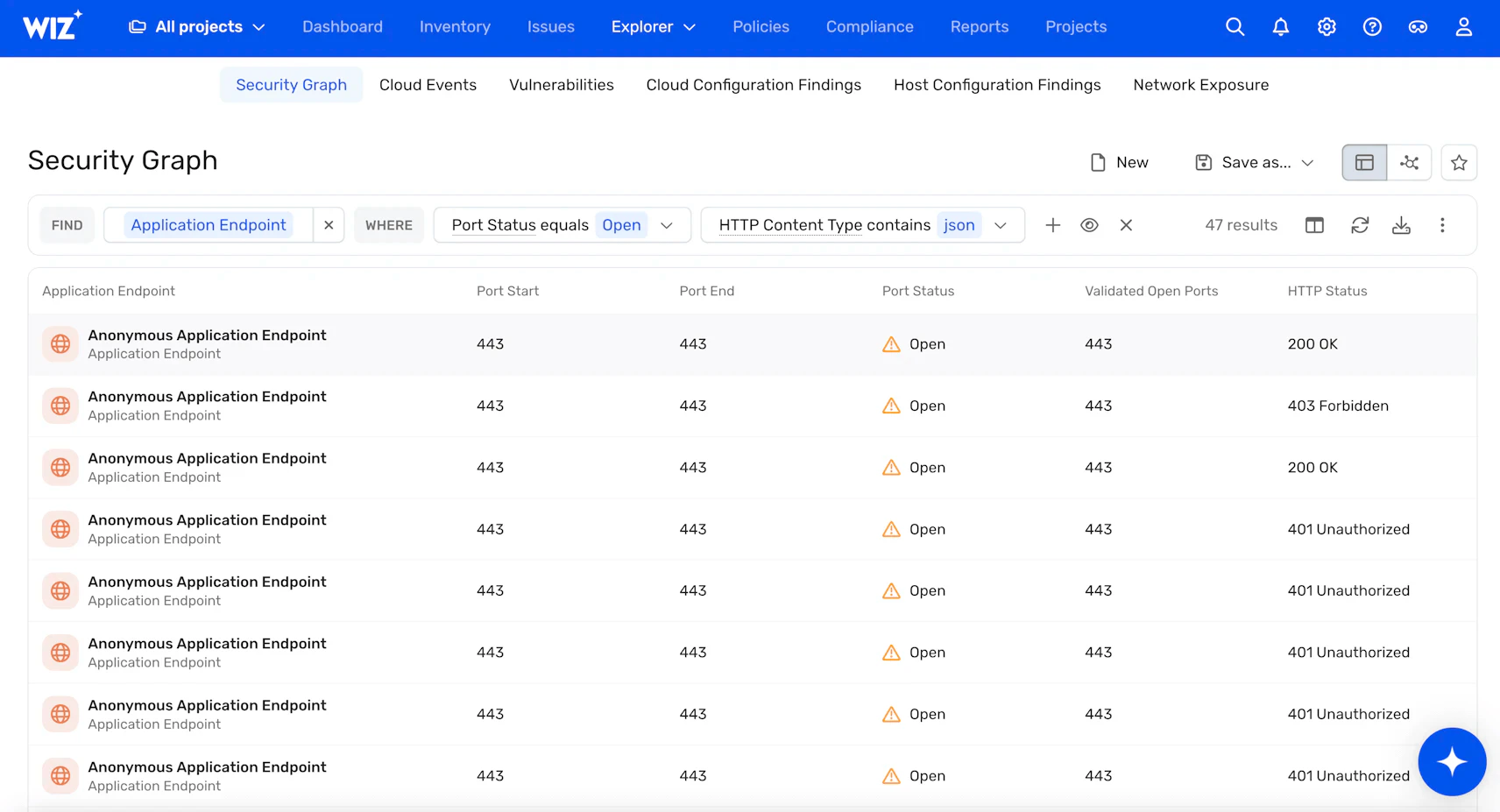
Continuous API discovery helps you identify shadow APIs and unmapped AI endpoints before attackers do. For example, developers may create a vulnerability when they deploy an API endpoint like /old_endpoint or spin up an unmonitored machine learning model endpoint, leaving it exposed. Implement a system to detect unauthorized or forgotten APIs so you can bring them into compliance or decommission them.
2. Encrypt traffic in every direction
Data moving between clients and servers needs protection from interception. TLS encryption secures this traffic, preventing attackers from capturing sensitive information during transmission.
HTTPS with valid SSL certificates: Required for all API communications
TLS 1.2 or higher: Defends against man-in-the-middle attacks
End-to-end encryption: Protects API keys and authentication tokens throughout their lifecycle
Modern TLS versions automatically defend against message tampering and forgery attempts. This makes encryption your first line of defense against network-based attacks, especially as 4% of cloud environments expose sensitive data through misconfigured HTTP/S endpoints.
3. Authenticate and authorize everything
// Example JWT validation
const jwt = require('jsonwebtoken');
const token = JWT_TOKEN";
const secret = SECRET_KEY";

try {
 const decoded = jwt.verify(token, secret);
 console.log(decoded);
} catch(err) {
 console.log("Invalid token.");
}
Verifying who makes a request is different from controlling what they can access. Authentication confirms identity through credentials or tokens, while authorization determines which resources that identity can reach.
JSON Web Tokens (JWT): Stateless verification that scales across distributed systems
OAuth 2.0: Delegates access to third-party applications without exposing credentials
OpenID Connect (OIDC): Adds an identity layer on top of OAuth for user authentication
These protocols allow users to grant limited access to applications without exposing their primary credentials. This reduces the risk of credential theft and misuse, particularly since fewer than 45% of customers enforce MFA for ROPC, according to Wiz data.
4. Follow the principle of least privilege
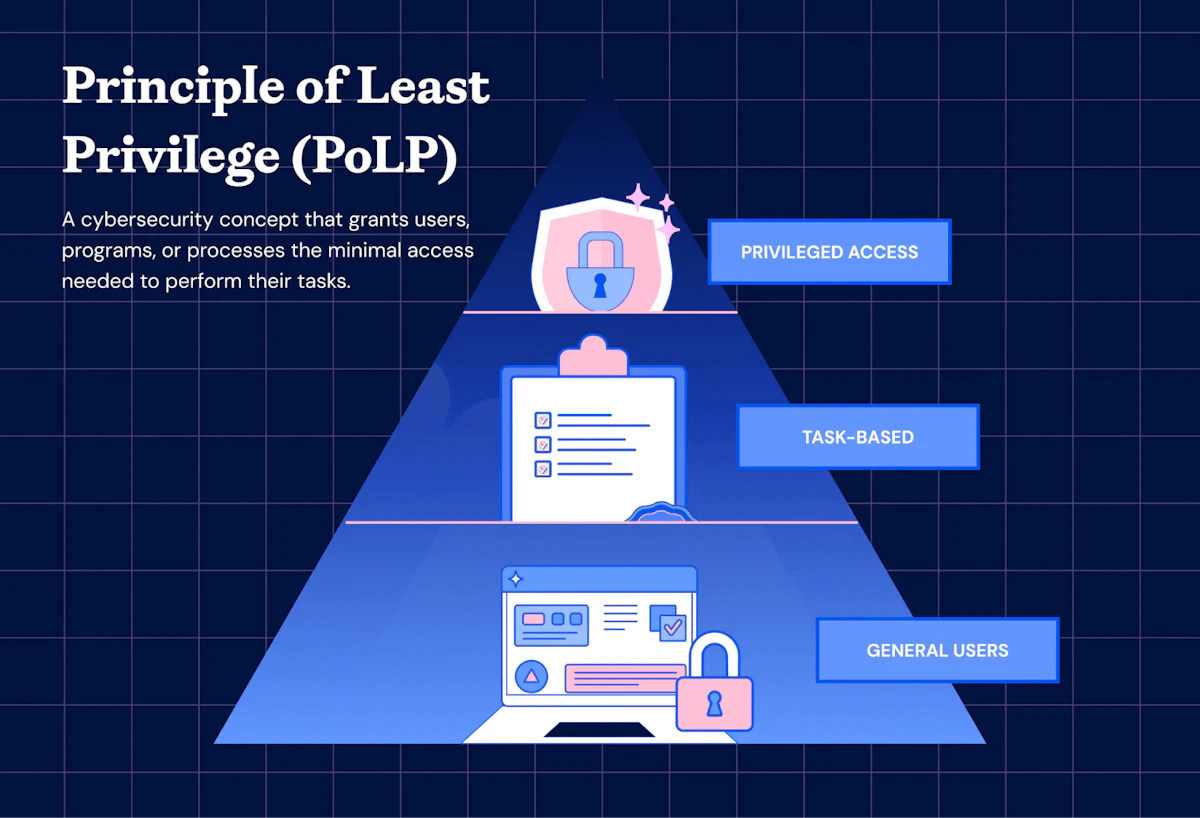
Every user, system, and automated service account interacting with your API should receive only the minimum access rights required for their role. In modern cloud ecosystems, this extends heavily to machine-to-machine communications.
The Wiz research notes that 57% of organizations have deployed self-hosted AI agents, and 80% have adopted Model Context Protocol (MCP) servers. These orchestration layers introduce massive control plane risks. If an autonomous agent or API service account is overprivileged, it creates an aggressive attack path where an actor can hijack the entity to move laterally through sensitive cloud data stores.
Following the principle of least privilege (PoLP) limits the potential damage a malicious actor can inflict if they gain access.
5. Be diligent about API documentation
Because APIs expose more endpoints than traditional web applications, outdated API documentation can lead to misuse or unintended vulnerabilities. Furthermore, AI-assisted code generation has altered how code is shipped. Wiz Research found that 80% of organizations now use AI IDE extensions ("vibe coding"), and roughly 1 in 5 organizations using these platforms have systemic security weaknesses due to insecure, AI-generated defaults.
When code is generated and changed at this velocity, auto-generating and auditing API documentation (via tools like Swagger or Redoc) is non-negotiable to ensure that security defaults are explicitly validated and not blindly accepted.
6. Validate your data
// Example input validation
const { check, validationResult } = require('express-validator');

app.post('/user', [
 check('username').isAlphanumeric(),
 check('password').isLength({ min: 5 })
], (req, res) => {
 const errors = validationResult(req);
 if (!errors.isEmpty()) {
 return res.status(400).json({ errors: errors.array() });
 }
 // Continue processing
});
Strict input validation blocks injection attacks before malicious data reaches your back end. Libraries like express-validator in Node.js enforce these checks automatically. Schema validation ensures data structure and size match expected formats, preventing buffer overflow attacks and malformed payloads from causing harm.
7. Limit data exposure
Your API should return only the data that is necessary for its function. Excessive data exposure increases the risk of unintended data breaches.
Always encrypt sensitive data, such as passwords, credit card numbers, and personal identification information, both at rest and in transit. Object-relational mapping (ORM) tools can also help you effectively filter out sensitive data.
8. Introduce rate limiting and throttling
DDoS attacks overwhelm APIs with traffic until services fail. Rate limiting restricts how many requests a single IP can make within a timeframe, blocking brute-force attempts before they consume resources. Content delivery networks distribute traffic across multiple servers, absorbing spikes that would otherwise crash a single origin.
9. Use gateways to centralize security controls
A gateway creates a single entry point where you enforce security policies before requests reach backend services. This centralization simplifies management across dozens or hundreds of APIs. From the gateway, you can:
Apply rate limits
Require TLS encryption
Validate inputs
Block common attack patterns, like injection or cross-site scripting
10. Test your APIs regularly
Scheduled vulnerability scans catch configuration errors and known weaknesses before attackers find them. Testing should cover both API endpoints and the workloads that support them.
Nuclei, an open-source scanner, uses YAML templates to detect specific vulnerabilities and misconfigurations across your API surface.
11. Conduct diligent API key management
API keys function like passwords, so you must safeguard them diligently. The widespread exposure of secrets—with 61% of organizations having secrets exposed in public repositories, according to Wiz's State of Code Security Report 2025—makes credential scanning critical.
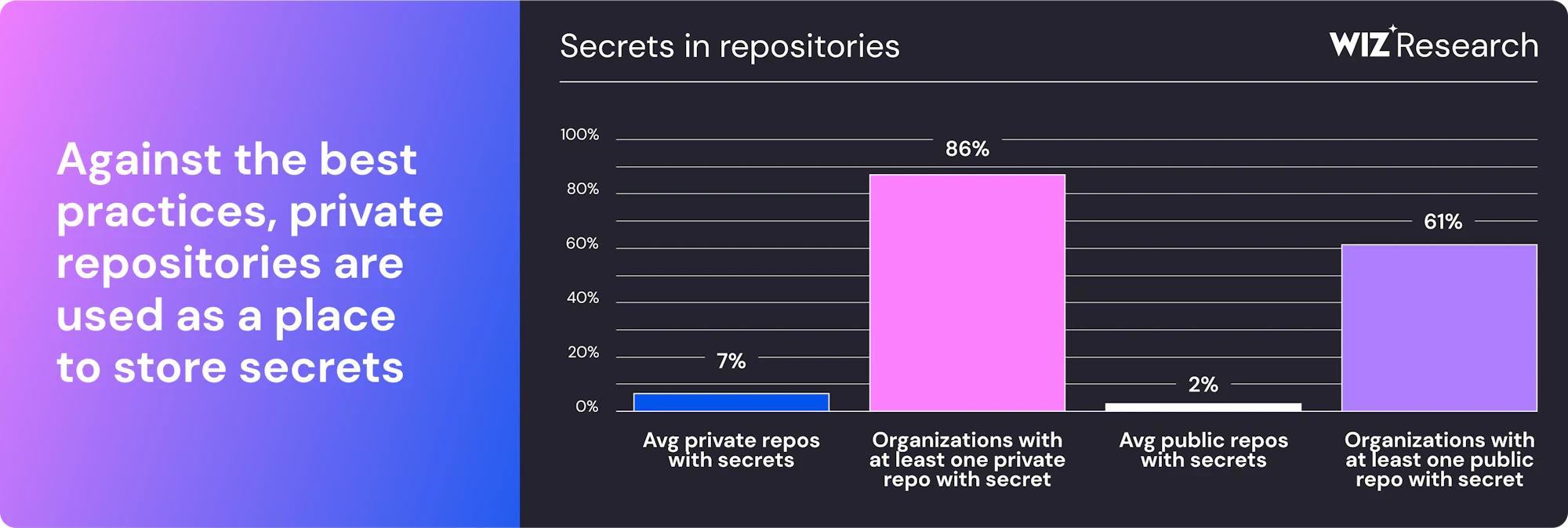
Rotate your API keys regularly to prevent unauthorized access, and use short-lived tokens for added security. You can also securely store your API keys using environment variables or secret management tools.
12. Implement comprehensive auditing and logging
Auditing is what makes API security measurable. You need logs that let you answer who called what, from where, and what they touched.
At a minimum, capture these fields for every request:
Caller identity: User ID, client ID, service account, token issuer, and the auth method used
Request target: Endpoint, method, version, and the object identifier you authorized against
Outcome: Status code, authorization decision, and error type for failures
Abuse signals: Rate limit events, unusual spikes per identity, and repeated 401 or 403 patterns
Route logs to a central place, alert on high-signal patterns, and set retention that matches your incident response and audit needs. Gateways help, but you still need app-side logs for object-level and business-flow decisions.


Real-world API security examples
Securing your APIs requires a multifaceted and continual approach. Here are some examples of successful and unsuccessful API security.
When API security goes wrong
On Dec. 30, 2024, the US Department of the Treasury disclosed that Chinese state-backed hackers stole data from government workstations through a compromised API key. BeyondTrust, the cybersecurity vendor, issued a security advisory on Dec. 8 warning that attackers used the key to access its Remote Support services and reset passwords.
The root cause: a single compromised API key gave attackers enough access to reset passwords in a third-party remote support service. Without key rotation, scoped permissions, or anomaly detection on that credential, the blast radius grew unchecked.
Continuous security testing, monitoring, and cloud native solutions prevent incidents like this.
When companies choose a proactive approach to API security
Artisan, which safeguards thousands of patients' fertility data, needed to improve its cloud posture to protect patient and financial data while streamlining SOC and HIPAA compliance.
The company chose Wiz to strengthen data protection and secure product deployments.
If you don't have layers of security measures in place, you're not going to be at the table very long. We need to be ahead of the curve, and working with Wiz has helped us to do that.
Matthew MazzarielloDevelopment Manager, Artisan
Wiz gives Artisan a holistic view of its cloud environment and helps the team prioritize the exposures that matter most. By unifying cloud posture with API visibility, Artisan's security team can trace risk from an exposed API endpoint to the sensitive patient data it connects to, turning what would be a fragmented investigation into an immediate, prioritized finding.
Watch 12-min demo
Learn what makes Wiz the platform to enable your cloud security and API security operations.

Advanced API security: Zero trust and real-time monitoring
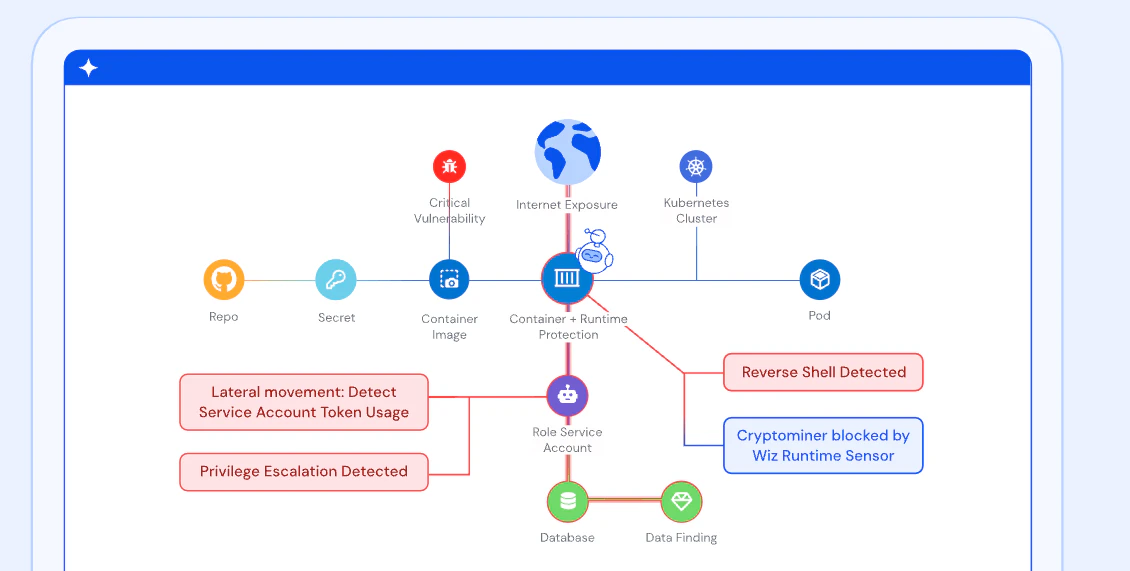
Zero trust treats every API request as potentially hostile. Each call requires fresh authentication rather than relying on session state or network perimeter trust. For service-to-service communication, mutual TLS ensures both sides verify identity before exchanging data. This is critical, as APIs connect cloud applications to AI services where a single weak endpoint can expose sensitive training data.
Secure your APIs with comprehensive logging and real-time monitoring for holistic defense. Implement multi-factor authentication using OAuth 2.0 or OpenID Connect, and add risk-based adaptive authentication for API access.
Solutions like Wiz Defend provide incident response planning tailored to API threats while ensuring compliance with GDPR, CCPA, and the OWASP API Security Top 10.
OWASP API Security Top 10 Risks and How to Mitigate Them
The OWASP API Security Project offers software developers and cloud security practitioners guidance on preventing, identifying, and remediating the most critical security risks facing application programming interfaces (APIs).
Leer más

How Wiz strengthens API security across your cloud
Wiz API-SPM discovers every API endpoint across your cloud, documented in specs, detected at runtime, or exposed on your attack surface. The platform assesses each API for authentication gaps, excessive data exposure, and OWASP API Security Top 10 misconfigurations, then prioritizes risks by connecting vulnerabilities to cloud context.
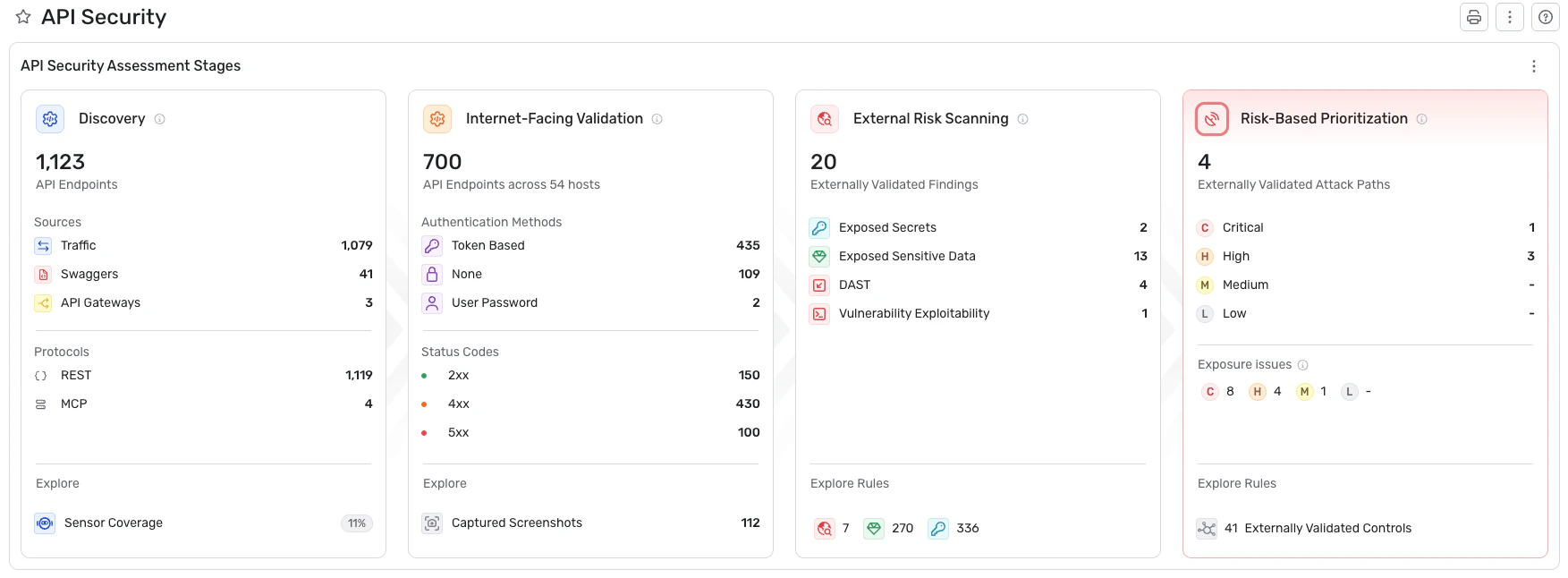
All of this runs in a single platform, so you can enforce policies, assess exposure with Attack Surface Scanner, and track API risk from build to runtime in one place.
Discover: Build a complete API inventory from Runtime Sensor, API gateways, attack surface signals, or specifications. Identify managed, unmanaged, shadow, and zombie APIs, then classify endpoints to eliminate blind spots.
Assess: Validate external exposure and dynamically test APIs for OWASP API Security Top 10 risks. Identify authentication and authorization misconfigurations, and scan for sensitive data exposure.
Prioritize: Leverage toxic combinations such as sensitive data processing, external exposure, identity permissions, and network reachability to surface the most critical issues first.
This context extends to APIs serving AI workloads, where a misconfigured model endpoint can expose training data faster than teams expect. Request a demo to see how Wiz secures your APIs and cloud environment.
An agentless, contextual approach to API security
Learn how Wiz enables customers to easily identify exposed APIs across their environment, complete with the full context of their execution layer.

FAQs about API security best practices
Other security best practices you might be interested in: