

What is an AppSec engineer?
An application security engineer (AppSec engineer) secures the software development lifecycle by integrating security practices into design, code, and deployment workflows. These engineers use threat modeling, secure code reviews, and CI/CD pipeline security tactics to identify vulnerabilities before code reaches production. By shifting security left, organizations reduce remediation costs and prevent exploitable flaws from reaching live environments.
AppSec Best Practices [Cheat Sheet]
This cheat sheet is for developers, AppSec engineers, DevSecOps practitioners, and security-conscious teams who already know the basics—but want practical, advanced strategies they can apply immediately.

Why application security matters today
Cloud technologies, microservices architectures, and CI/CD pipelines have changed application security. Today’s application security risks span code, framework, build pipeline, and third-party library vulnerabilities.
The speed and scale of the cloud compounds these risks: Modern applications rely on hundreds of third-party dependencies. When a vulnerability exists deep within these layers, it creates a risk profile identical to a bug in your proprietary code, and it could become a path to customer data.

On top of that, APIs and microservices sprawl. Distributed teams spin up endpoints without full documentation, deprecated APIs remain exposed, and automated pipelines push changes to production in minutes, leaving little room for manual review.
At the same time as these shifts, compliance standards like SOC 2, ISO 27001, and PCI DSS increasingly require security controls to be enforced and documented throughout the development lifecycle.
The lesson? Early-stage AppSec has become non-negotiable.
Core responsibilities of AppSec engineers
AppSec teams use SAST and SCA tools to scan source code for insecure patterns like injection flaws or vulnerable dependencies. If a scanner detects a potential risk, an engineer triages the finding to determine its real-world exposure and reachability. This is where context matters most: knowing whether a vulnerable component is actually deployed, internet-exposed, or connected to sensitive data turns a scanner alert into an actionable risk assessment. If the vulnerability is exploitable, the engineer works with the developer to issue a fix that addresses the root cause within the CI/CD pipeline.
Here’s a quick summary of the day-to-day responsibilities of an AppSec engineer:
Reviewing application designs with teams to surface security risks early through threat modeling
Running and tuning SAST, SCA, and IaC scanning tools to reduce noise and prioritize real risk
Identifying insecure coding patterns and explaining practical remediation to developers
Triaging security findings and helping teams prioritize fixes based on exposure and impact
Validating that fixes address root causes, not just the immediate symptoms
Learning from production incidents and feeding lessons back into design and pipeline checks
Must-have technical skills for AppSec engineers
Secure coding and application fundamentals
AppSec engineers need working knowledge of at least one common application language (such as Java, Python, Go, or JavaScript) and the ability to read unfamiliar code. AppSec engineers should also know how to trace data flow, understand trust boundaries, and spot where untrusted input reaches sensitive operations.
Foundational knowledge of common vulnerability classes, such as injection flaws, XSS, and broken authentication or authorization, helps AppSec engineers recognize insecure patterns early in design reviews and code changes. AppSec engineers need to understand where cryptography is required and how it is implemented. That includes TLS for data in transit, encryption at rest with envelope encryption or KMS-managed keys, and secure hashing for credential storage. AppSec engineers also need to spot common mistakes such as hardcoded keys, weak algorithms, and secrets embedded in source code or CI/CD pipelines.
Application and platform basics
A basic understanding of how modern applications are deployed and scaled helps AppSec engineers assess real-world exposure and blast radius. Knowing whether workloads run on VMs, containers, or serverless platforms affects how risk is evaluated and where security controls belong.
API design is another core skill. REST and GraphQL introduce different attack surfaces, and small design decisions can lead to excessive data exposure or broken access controls. (Because APIs are easy to create and hard to inventory, they’re one of the fastest-growing parts of the application attack surface.)
Another key knowledge area? Foundational awareness of infrastructure as code (IaC), which lets AppSec engineers connect application risks back to deployment configurations.
API security fundamentals and automation
AppSec engineers should be familiar with common API risks, such as broken object-level authorization, weak authentication, and overexposed data. Experience with API security testing and container image scanning helps teams catch these issues earlier in the lifecycle.
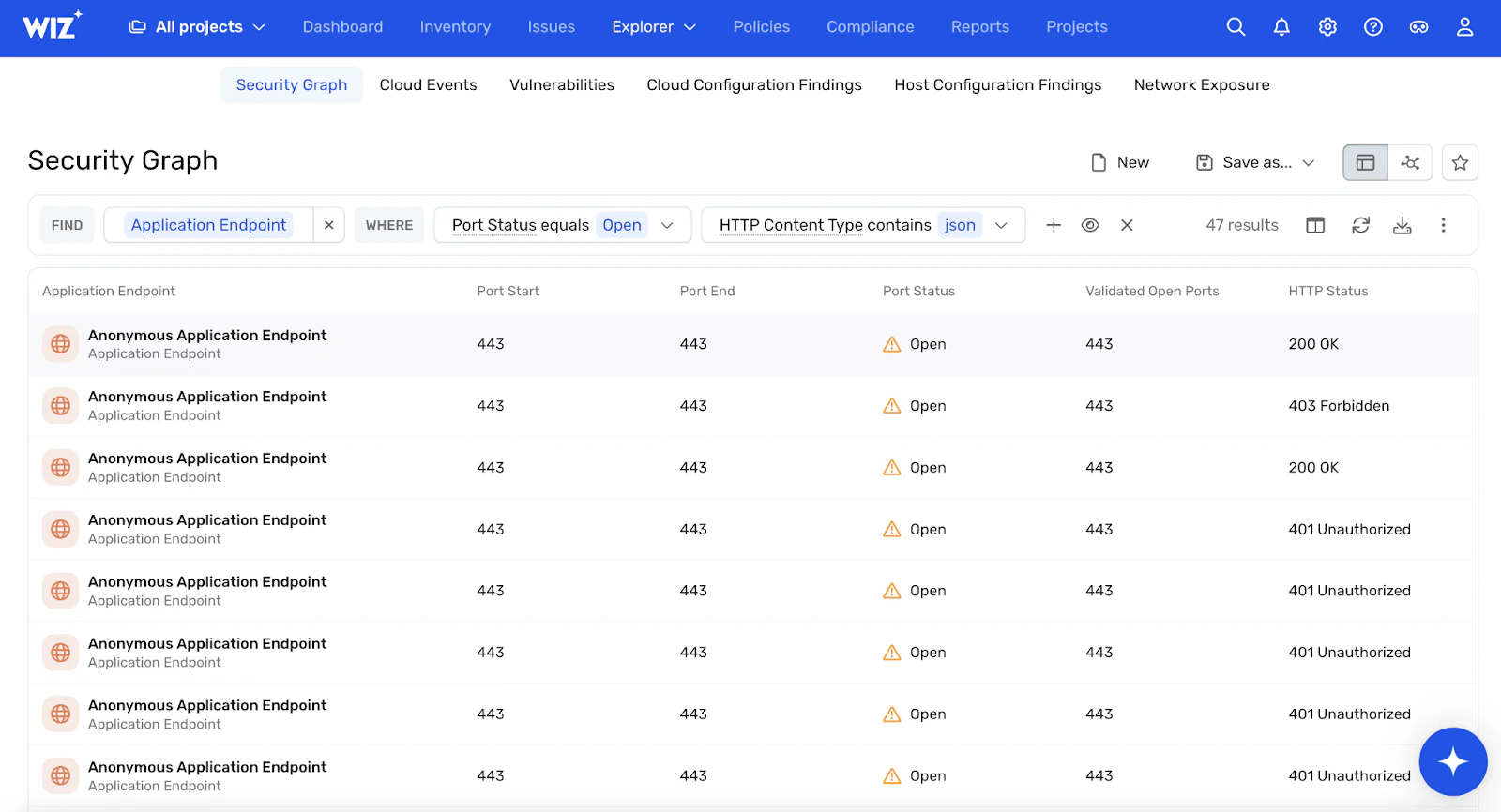
Understanding how security checks run in CI/CD workflows is increasingly important. And familiarity with SAST and SCA, along with awareness of concepts like policy as code (PaC) and SBOMs, helps AppSec engineers support automated security controls without slowing down development teams.
Watch 5-min demo
Learn about the full power of the Wiz cloud security platform. Built to protect your cloud environment from code to runtime.

Critical soft skills and developer empathy
Technical skills alone aren’t enough for AppSec engineers. Soft skills round out technical depth, like the ability to…
Explain security issues in developer-friendly language so recommendations get adopted
Provide clear, actionable remediation guidance, including concrete code examples
Collaborate during design and code reviews so security fits naturally into existing workflows
Balance security improvements with delivery timelines by weighing risk and business context
Influence outcomes without formal authority across engineering teams
Application security engineer salary expectations and career path
An AppSec career path typically expands from hands-on reviews to broader security influence as responsibilities and impact grow.
Joining application security teams
Most AppSec engineers start as developers, but common transition paths also come from QA, security-adjacent roles, or operations. QA engineers bring testing discipline and defect analysis, security practitioners bring vulnerability knowledge and learn development workflows, and operations engineers extend infrastructure security experience into application-layer risk.
Early AppSec roles typically focus on learning core tools, common vulnerability patterns, and how security fits into development workflows.
Growing in the role
As AppSec engineers gain experience, they take ownership of security reviews for specific services, support secure development practices across multiple teams, and build confidence in threat modeling and remediation. The role becomes less about individual findings and more about actively improving how teams build software securely.
How the AppSec engineer role evolves
With experience, AppSec engineers begin leading threat modeling sessions, tuning scanners across multiple repos, and helping teams adopt shared libraries and templates to prevent entire classes of bugs.
In some organizations, senior AppSec engineers help shape secure development practices, advise on application design decisions, or specialize in areas like API security or cloud-native workloads.
These expectations vary widely by company and aren’t required early, but understanding how the role can evolve helps new AppSec engineers focus on strong fundamentals first.
Application security engineer salary trajectory
Application security engineer salary ranges vary widely by region, company size, and industry but are generally higher than those for many generalist security roles. Entry- to mid-level AppSec roles are often paid competitively due to their specialization, with additional variation between startups, large technology companies, and regulated industries such as finance.
The ranges in the table below are illustrative estimates based on public application security engineer salary aggregates and vary by company, location, and role scope.
| Career stage | US (tech hub) | Europe (major cities) | APAC (major cities) |
|---|---|---|---|
| Entry | $80–110K | €50–80K | $60–100K equivalent |
| Mid | $110–170K | €80–120K | $90–150K equivalent |
| Experienced | $160–220K+ | €110–160K | $120–200K equivalent |
Modern challenges in application security engineering teams
Application security failures usually stem from a gradual accumulation of risk as cloud environments expand. Here are some of the persistent challenges that modern application security teams have to solve:
API sprawl and shadow APIs: Distributed teams deploy new services that often bypass central inventories. These shadow APIs and forgotten endpoints create blind spots that prevent security teams from identifying exposed data paths before an attacker exploits them.
Third-party dependency risk: Modern applications use third-party and transitive libraries that introduce vulnerabilities without direct changes to the proprietary codebase. For example, the XZ Utils backdoor (CVE-2024-3094) demonstrated how a compromised upstream maintainer can inject a backdoor into a widely trusted library. In this case, the malicious code targeted the SSH authentication path through liblzma and could enable unauthorized remote access on affected Linux distributions.
False positive fatigue: When scanners generate large volumes of low-context findings, teams start tuning them out. Once alert fatigue sets in, genuinely serious issues are more likely to be missed, not because teams don’t care but because everything looks equally urgent.
Velocity vs. security: CI/CD pipelines move code from commit to production in minutes, leaving little time for manual review. Security works best when checks are built into the tools and workflows developers already use. Automation helps with scale, but adoption comes from meeting teams where they work.
Internal and external AI risks: Many AppSec teams now employ AI-assisted tools and practices. While this accelerates delivery, it can introduce insecure code, hallucinations, and hidden vulnerabilities. AI also enables malicious actors to automate exploitation and scale attacks. As teams build more AI-powered applications, risks such as prompt injection, data leakage, and model manipulation further expand the attack surface.
Application security engineer job description
An application security engineer is a security professional who protects software applications from threats throughout the entire development process.
En savoir plus

Tools that AppSec engineers commonly use
AppSec engineers rely on a small set of core tool categories to discover and triage application risks:
Application security testing (SAST, SCA): Tools like Semgrep, CodeQL, and Checkmarx scan source code for insecure patterns, while SCA tools such as Dependabot and OWASP Dependency-Check flag known vulnerabilities in third-party libraries.
Dependency management and SBOMs: SBOMs help AppSec engineers track direct and transitive dependencies to understand supply chain risk and pinpoint where vulnerable components are used.
Secrets detection: Tools like GitGuardian and TruffleHog scan commits for leaked API keys, tokens, and passwords before credentials reach source control.
IaC scanners: IaC scanners review Terraform and CloudFormation templates for misconfigurations and unsafe defaults before deployment.
API security testing: API security testing tools discover undocumented endpoints, broken authorization logic, and excessive data exposure that static analysis can miss.
Container image scanners: Tools like Trivy, Grype, and registry scanners identify vulnerable base images and packages before workloads go live.
Getting started: An AppSec engineer's cheat sheet
Don't just memorize vulnerability names. Focus on how vulnerabilities happen at the code and design level.
Practice reading and reviewing real code by contributing to open-source projects or reviewing pull requests.
Learn how security tools fit into development workflows by studying CI/CD pipelines and team operations.
Build experience gradually by supporting teams rather than expecting to take on immediate responsibilities.
Don't chase every fancy new tool. Prioritize fundamentals like authentication, authorization, input validation, and secure data handling.
How Wiz supports application security teams
By correlating cloud configuration, findings from code scanning, API security signals, and container security signals, Wiz helps AppSec engineers see how individual issues combine into exploitable attack paths.
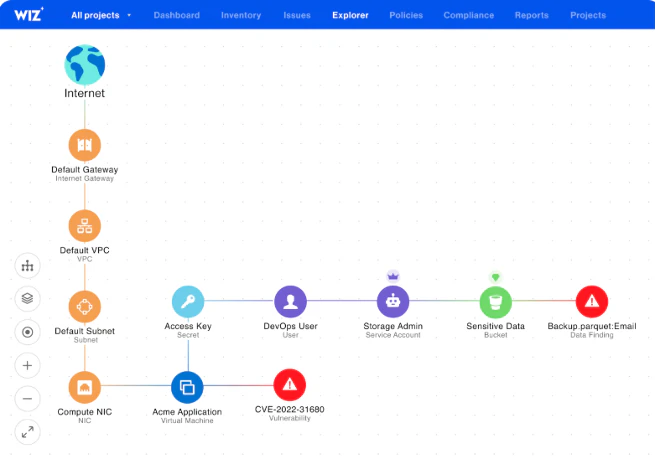
The Wiz Security Graph connects vulnerabilities to real-world exposure, making it clear which findings affect internet-facing services versus internal tools. Issues that aren’t reachable or exposed can be deprioritized so that risks affecting public-facing applications get the attention they need.
For AppSec teams building AI applications, Wiz AI Application Protection Platform (AI-APP) extends the same contextual, risk-based approach to the AI stack. It maps training data, models, dependencies, and tooling across code, cloud, and runtime so teams can surface exploitable risks rather than theoretical ones.
Wiz also fits into the tools developers already use, including Jira, Slack, and CI/CD platforms, so remediation integrates naturally into existing workflows. AppSec engineers can create tickets with the context developers need to fix issues.
Want to see how contextual risk prioritization works in practice? Request a demo to explore how the Wiz Security Graph connects code vulnerabilities to real-world cloud exposure.
Catch code risks before you deploy
Learn how Wiz Code scans IaC, containers, and pipelines to stop misconfigurations and vulnerabilities before they hit your cloud.
