



Understanding GCP’s pricing structure
To control Google Cloud spend, you first need to understand how the platform charges for resources. GCP’s billing is usage-based, but the pricing model you choose can drastically change your costs:
On-demand pricing: This is the most flexible option. You pay for resources per second, with a one-minute minimum. It’s simple to use and works well for unpredictable or bursty workloads. That said, on-demand pricing is also the most expensive model, which makes it less suitable for steady, long-term use.
Committed use discounts (CUDs): If you can predict your workloads, CUDs offer significant savings. By committing to a specific number of vCPUs, memory, or GPUs for one- or three-year terms, your team can reduce costs by up to 57% compared to on-demand pricing. Before purchasing, analyze at least 30–90 days of historical usage to identify stable workloads that consistently consume resources. Overcommitting can lead to wasted spend if utilization drops below the committed level.
Sustained use discounts (SUDs): For eligible VM families, once usage exceeds 25% of the month, discounts apply automatically and increase with longer runtime. TL;DR: This approach lets you capture savings without making upfront commitments.
Regional pricing variations: GCP prices differ depending on where you deploy. For example, a c4-standard-4 VM in Iowa (us-central1) typically costs less than the same VM in Tokyo (asia-northeast1); regional price differences can be material. Compliance, latency, and availability needs often drive region choices, but cost differences can add up.
Billing rules and free tiers: Many core GCP compute services use per-second billing (with minimums), which helps reduce waste for variable workloads. However, it's important to note that certain considerations apply to storage costs. Storage classes come with minimum durations (30 days for Nearline, 90 for Coldline, and 365 for Archive). Free tiers exist, but the machines available, such as an E2-micro VM per month in select regions, are only useful for testing.
2025 Gartner® Market Guide for CNAPP
The 2025 Gartner® Market Guide for Cloud-Native Application Protection Platforms (CNAPP) explores this shift and outlines what security leaders should consider as the market matures.

Hidden costs that catch teams off guard
Hidden costs are often overlooked in planning, but keep an eye out because they can significantly impact your bill:
Common hidden costs and how to avoid them
| Scenario | Gotcha | Mitigation |
|---|---|---|
| Cross-region BigQuery export | Egress fees for multi-region to region transfer | Co-locate datasets and storage |
| Load balancer cross-zone traffic | Cross-zone data billed at $0.01–$0.02/GB | Deploy backends in all zones |
| NAT gateway egress | Per-GB egress and hourly NAT charges | Use Cloud NAT for shared egress |
| Cloud NAT vs. instance-based NAT | Instance NAT incurs VM and IP costs | Prefer Cloud NAT for scale/cost efficiency |
| Early retrieval from Archive Storage | Full 365-day charge on early access | Plan retention; automate lifecycle policies |
Storage lifecycle transitions: Lower-cost storage tiers like Nearline, Coldline, and Archive come with minimum storage durations of 30, 90, and 365 days, respectively. If you move or delete data earlier, Google applies early deletion fees. For example, moving data out of Coldline after 60 days still triggers the full 90-day charge. Teams that automate storage transitions without accounting for these rules often face surprise costs.
Network egress: Data transfer charges are another common pitfall. While traffic within a zone is free, moving data across zones, regions, or out to the internet quickly adds up. For instance, inter-region egress between North America and Europe is often billed around $0.05 per GiB (rates vary by service and tier; see pricing). Moving data between GCP services can incur transfer fees when locations differ (for example, exporting from a multi-region BigQuery dataset to a different region in Cloud Storage).
API requests: Operations like BigQuery metadata lookups or Cloud Storage retrievals may seem minor, but they’re billed per request. At scale, millions of small API calls can translate into real costs.
Cold storage scenarios: A common hidden cost stems from teams prematurely retrieving data from Archive storage. Because Archive requires a minimum storage duration of 365 days, a retrieval after 30 days, for example, still incurs a full year’s charge.
By tracking these hidden costs, you can avoid unpleasant surprises and ensure that optimization efforts aren’t wiped out by overlooked fees.


Best practices for GCP cost optimization
In this section, we’ll go over some effective best practices for keeping your spending in check, even at a large scale.
Use committed use discounts effectively
As we’ve seen, CUDs significantly reduce costs compared to on-demand pricing. The best approach? Commit only to workloads that operate with predictable demand, such as production databases or always-on application servers. Avoid applying CUDs to development or bursty environments where usage is inconsistent. Google’s Recommender can help identify stable workloads suitable for CUDs, but remember to cross-check these recommendations against historical usage trends to prevent overcommitment.
Rightsize continuously
One of the biggest ways teams incur high costs is by having excessive resources. Teams often set up virtual machines or Kubernetes clusters with extra CPU and memory, just in case. GCP provides recommendations to rightsize these, but consistently implementing them is challenging. That's where Wiz can be a big help.
Wiz unifies cloud infrastructure, cost, utilization, and private pricing context to surface highly accurate cost optimization opportunities. By understanding both the actual cost over time and the actual utilization over time, Wiz identifies rightsizing opportunities that can help organizations trim cost.
Remove orphaned and idle assets
Abandoned assets accumulate silently and create recurring charges. Then there’s unattached persistent disks, snapshots, and idle IP addresses, which often remain in the environment long after projects end.
Automated discovery of unused assets can assist organizations in managing and reducing these costs. Wiz automatically surfaces cost optimization opportunities for orphaned or idle assets, and traces the assets back to their owners and source in code, enabling efficient remediation.
Centralize billing and budget alerts
Cloud costs are difficult to control when billing is fragmented across projects or teams. For clear accountability, consolidate billing accounts, enforce tagging policies, and enable budget alerts.
GCP’s Cloud Billing Budget API allows for alerts at the project or folder level. Taking things a step further, Wiz correlates billing data with configuration and risk findings. For example, spend linked to an over-permissioned service account or a misconfigured storage bucket can be flagged by Wiz, giving your team the context it needs to increase security and lower costs.
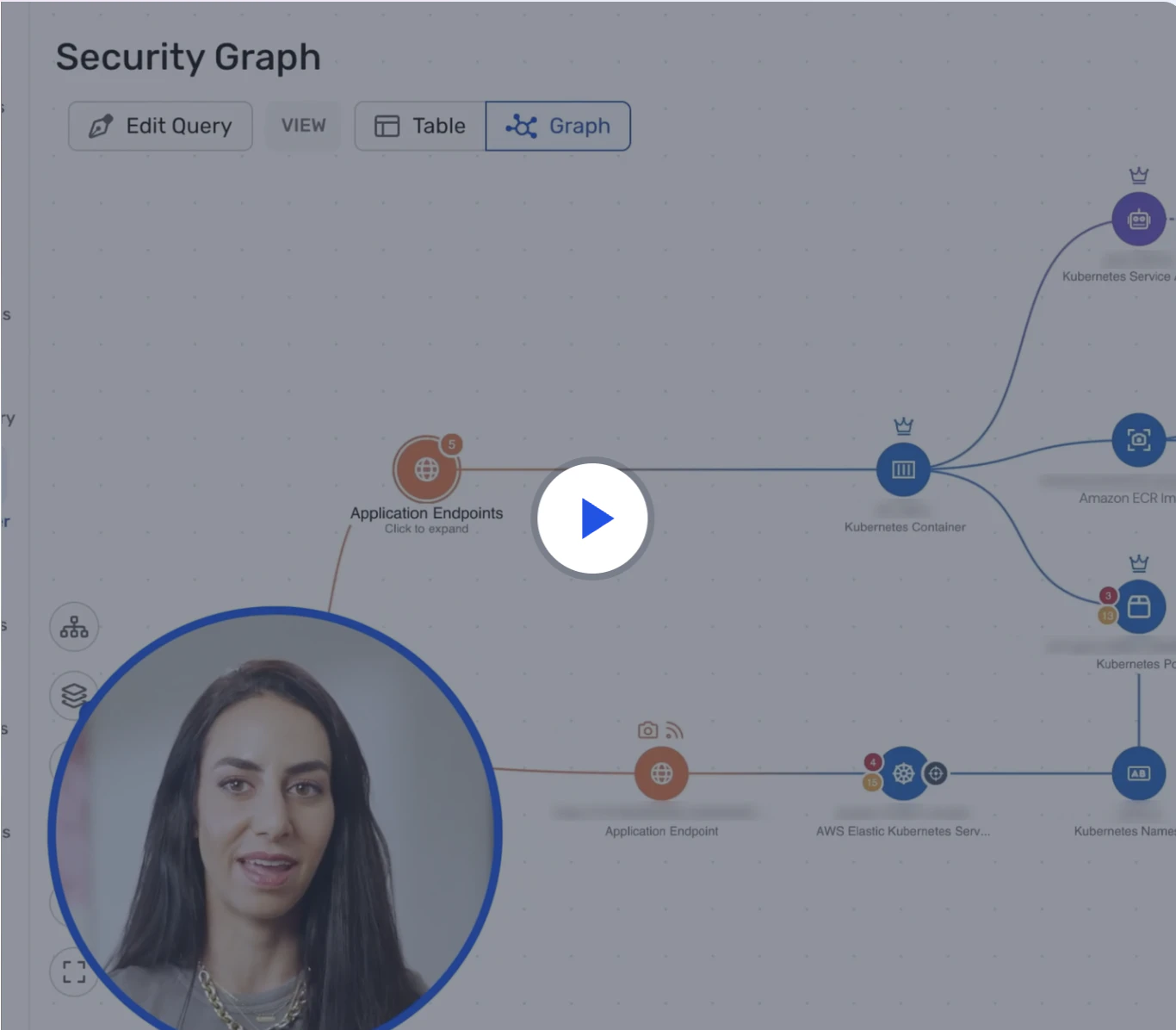
Watch 12-minute demo
Learn about the full power of the Wiz cloud security platform. Built to protect your cloud environment from code to runtime.
Watch now
Control data movement, storage, and egress
Keep data and compute co-located. Intra-zone traffic is free; inter-zone (same region) typically incurs $0.01–$0.02/GB, and inter-region or internet egress is higher. Remember: BigQuery cross-region exports are billed per GiB by source and destination.
Visualizing cross-region data paths alongside identity and network policies helps pinpoint high-cost flows and remove unintended exposure. Use Standard, Nearline, Coldline, and Archive with lifecycle rules, but plan for minimum storage durations and early deletion fees when objects are moved or rewritten. Autoclass and lifecycle transitions can stave off early deletion charges in common cases.
Keep an eye on AI
Vertex AI endpoints are billed as paid servers based on node-hour charges, even when idle, with billing in 30-second increments. Since autoscaling keeps nodes warm and deployments can't scale to zero, set conservative min replicas, cap max replicas, and schedule undeploys outside business hours. Monitor replica counts using the console's metrics.
For batch and training spend, batch prediction is charged post-completion and budget alerts may lag during long runs, so start with small benchmark jobs and monitor closely. Also note that training is billed from resource provisioning until the job ends, not just active compute, meaning you’ll want to meticulously size clusters and enforce quotas. One final point? Model Monitoring costs $3.50 per GB analyzed, plus BigQuery or logging expenses.
Automate governance at scale
Manual enforcement of cost policies simply won’t cut it in enterprise environments: Autoscaling, scheduled shutdowns for non-production workloads, and periodic reviews of commitments are essential. A single policy engine that evaluates cost, configuration, identity, and exposure signals prevents drift and enforces guardrails before changes hit production. Wiz enables teams to set up automation rules that send cost and risk findings into channels where teams already work—like Slack, Jira, and Terraform—allowing teams to act on cost anomalies or idle resource findings quickly and easily.
Google Cloud Security Best Practices
10 essential best practices to securing your Google Cloud environments
En savoir plus
Optimize your cloud spend with Wiz
Managing GCP billing and cost optimization is easier with the right visibility. Wiz Cloud Cost brings granular spend, usage, and ownership data into the Wiz Security Graph, helping teams identify and cut waste across GCP and other major clouds while staying secure.
Here are some key Wiz features that support GCP cost optimization:
The Wiz inventory builds a live inventory of cloud resources, enabling teams to identify shadow or zombie resources that could be inflating cost.
Wiz Cloud Cost unifies cloud infrastructure, cost, utilization, and discounted pricing context to identify accurate cost optimization opportunities, with Cost Explorer and more than 140 optimization rules to help teams investigate spend and act on waste faster.
Wiz Cloud Cost Monitors allow you to create custom rules to monitor cloud spend, detect anomalous usage, and receive alerts when spend exceeds specified thresholds for specific projects, teams, or products.
The Wiz Security Graph shows the relationships between cloud resources, costs, and security findings, enabling teams to investigate both cost overruns and security issues with full context.
Wiz Cloud Cost also helps teams track committed use discount utilization, review upcoming pricing changes, and attribute AI model spend, so GCP commitments and newer AI workloads do not become blind spots in your cost program.
Wiz’s automation rules and integrations can push actionable cost anomalies into tools like Slack and Jira.
Ready to boost your savings and security? Sign up for a Wiz demo and see how Wiz can help reduce both security risk and financial risk.
See for yourself...
Learn what makes Wiz the platform to enable your cloud security operation
