

What are SOC tools?
Security operations center (SOC) tools for cloud environments help teams detect, investigate, and respond to threats across distributed infrastructure. These tools collect logs, correlate security events, essential for generating high-quality alerts by correlating diverse signal sources, and automate incident response workflows that would otherwise require manual effort across dozens of services.
Cloud environments generate security events at a pace that traditional tools struggle to match. Misconfigurations, exposed APIs, and overprivileged identities create attack paths that change as fast as infrastructure scales. SOC teams need tools built for this reality, not retrofitted from on-premises architectures.
Open-source SOC tools reduce the cost barrier to building detection and response capabilities. They offer transparency into how detections work, flexibility to customize rules for your environment, and the ability to integrate with commercial platforms where gaps exist.
MCP Prompt Playbook for SOC
Equip your SOC team with ready-to-use prompts that accelerate investigation and response workflows.

Understanding SOC requirements in cloud environments
The unique challenges of cloud SOCs
Scalability gaps: Cloud infrastructure scales faster than traditional monitoring can keep up. A new workload can spin up, get compromised, and disappear before a legacy tool even registers it exists.
Ephemeral workloads: Containers and serverless functions may run for seconds or minutes. Traditional tools designed for persistent servers miss these short-lived resources entirely.
Decentralized logs: Cloud events scatter across services, regions, and accounts. Correlating a suspicious API call in one region with lateral movement in another requires tools that unify these data sources automatically.
Cloud-native attack paths: Attackers exploit misconfigured IAM roles, exposed storage buckets, and overprivileged service accounts. These risks don't map to traditional network-based detection models.
Critical SOC tool capabilities
Critical SOC tool capabilities
What essential functions should OSS cloud SOC tools have to solve the problems described above?
Continuous monitoring: Tools must track cloud workloads as they scale, detecting configuration drift and anomalous behavior, a capability central to a CTEM program that can reduce breaches by two-thirds, without requiring manual reconfiguration for each new resource.
Log collection and analysis:Centralized log aggregation pulls events from APIs, control planes, and workloads into a single view. This enables correlation across services that would otherwise require manual investigation.
Threat detection: Detection engines need current vulnerability data and threat intelligence feeds to identify indicators of compromise. Without regular updates, tools miss emerging attack techniques.
Incident response:Response capabilities should include prebuilt playbooks for common scenarios like credential compromise or data exfiltration, plus the flexibility to define custom workflows.
Automation: Manual triage doesn't scale in cloud environments. Tools should automate repetitive tasks like alert enrichment, ticket creation, and initial containment actions.
Key open-source tools for cloud SOCs
Building an open-source SOC stack typically requires combining tools across several categories: monitoring and log collection, threat detection, vulnerability scanning, and incident response. Some tools span multiple categories.Wazuh, for example, combines SIEM, XDR, and vulnerability detection in a single platform.
The tools below are organized by primary function.Each includes a brief overview of capabilities and deployment considerations.
Monitoring and log collection tools
Monitoring and log collection tools are mostly security information and event management (SIEM) tools. They collect and aggregate monitoring data from heterogeneous sources to detect potential security incidents. Our top three picks in this section are KubeArmor, Security Onion, and Graylog Open.
KubeArmor
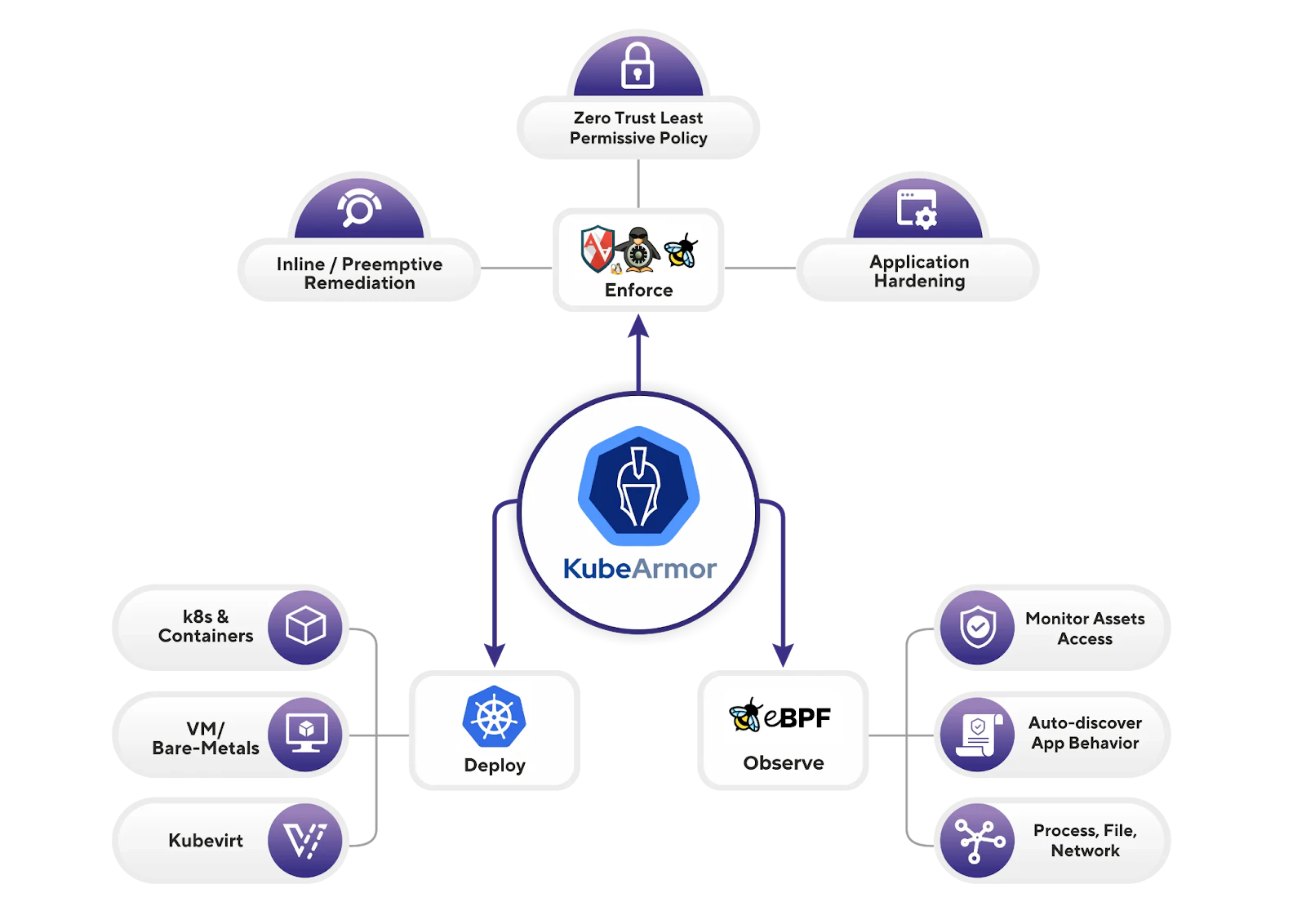
KubeArmor focuses on Kubernetes runtime visibility and policy enforcement, helping teams observe and constrain container behavior at runtime.
Key capabilities:
eBPF- and Linux Security Module (LSM)–based monitoring of pod behavior and system activity
Kubernetes-native security policies for workload hardening and runtime controls
Event logging and visibility into process, file, and network activity within clusters
KubeArmor is commonly used in container-centric environments where teams want runtime observability and policy enforcement tightly integrated with Kubernetes.
Security Onion
Security Onion is an open-source SIEM and intrusion detection platform designed for network-focused monitoring and analysis.
Key capabilities:
Signature-based detection, packet capture, and network traffic analysis
Support for honeypots and intrusion detection workflows
Multi-tenant architecture to support collaboration across SOC and IT teams
Security Onion is often deployed in environments where network visibility and packet-level analysis are a priority, either as a standalone platform or alongside other tools.
Graylog Open

Graylog Open is the self-managed, open-source edition of the Graylog log management and analysis platform.
Key capabilities:
High-throughput log ingestion for large cloud and hybrid environments
Centralized aggregation of logs from servers, containers, serverless workloads, and network devices
Flexible querying and parsing using Lucene-based search
Graylog Open is frequently used as a foundational log aggregation layer within SOC architectures, with additional detection or enrichment layered on top.
Threat detection and threat intelligence solutions
Threat detection tools uncover and respond to threats; threat intelligence toolsprovide SOC analysts with attacker TTPs and common IoCs to facilitate threat hunting. Some top OSS tools in this category are Wazuh and Yeti.
Wazuh
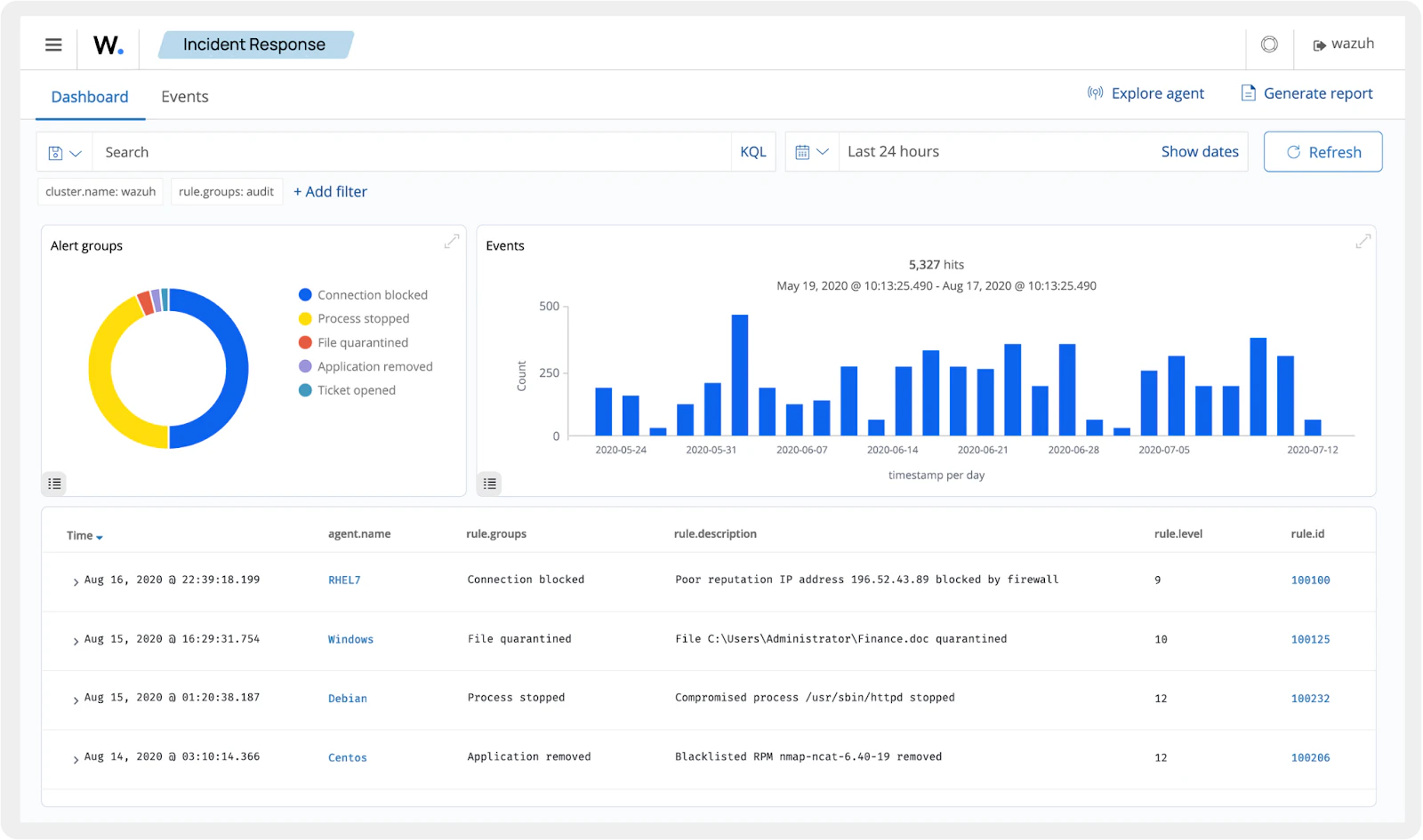
Wazuh combines SIEM, XDR, and vulnerability detection into a single open-source platform. Itdeploys lightweight agents on endpoints and cloud workloads that forward logs to a central indexer for analysis. The platform runs on Ubuntu, Red Hat, and other Linux distributions.
Core capabilities:
Log aggregation: Collects and normalizes events from cloud APIs, endpoints, and network devices into a unified data model
Threat detection: Applies rule-based and behavioral detection mapped to MITRE ATT&CK techniques
Active response: Executes automated containment actions like blocking IPs or isolating hosts when threats are detected
Vulnerability scanning: Identifies missing patches and misconfigurations across monitored assets
Compliance monitoring: Includes built-in checks for CIS benchmarks, PCI DSS, and HIPAA requirements
Watch 5-min demo
See how Wiz Defend detects and responds to threats across your cloud environment in real time.

Yeti
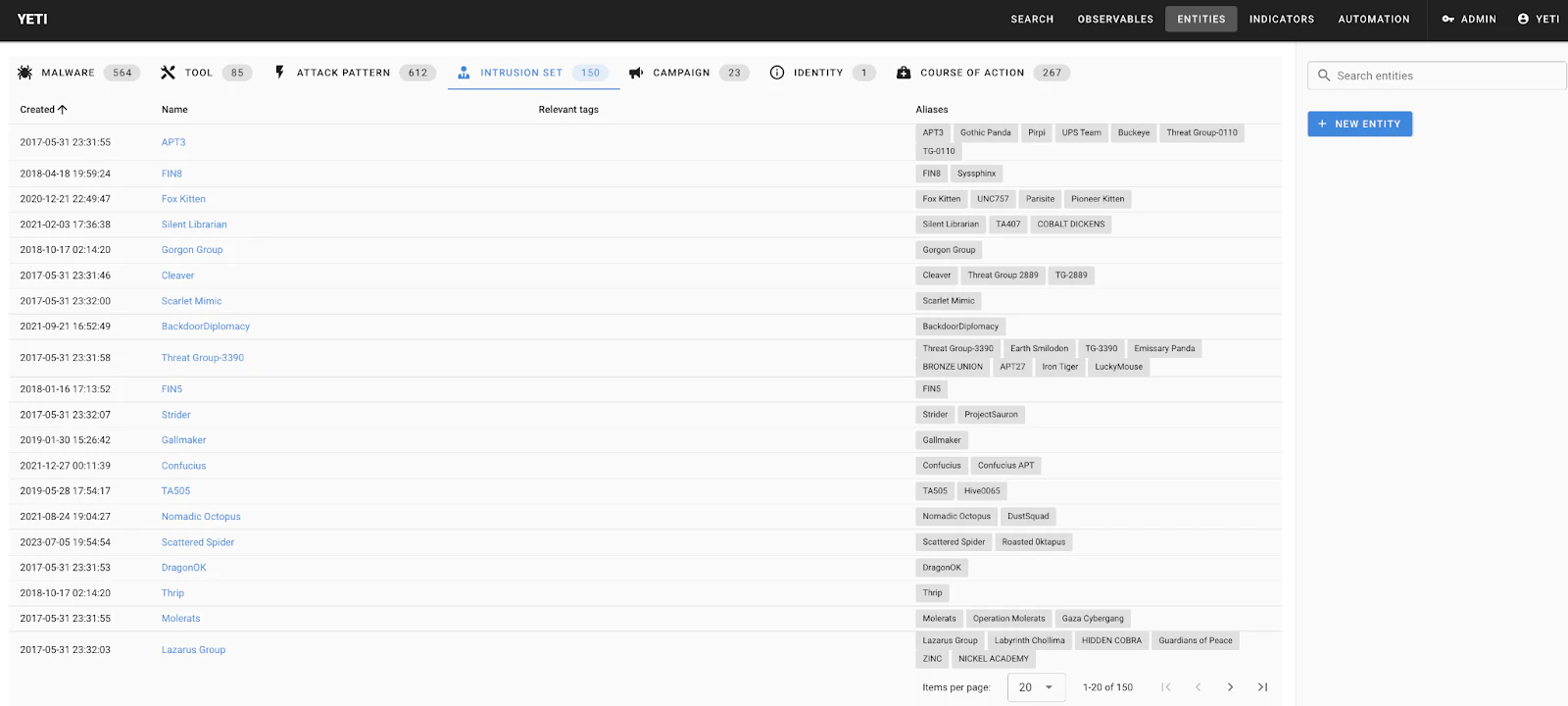
Yeti is a threat intelligence management tool designed to centralize and enrich threat data.
Key capabilities:
Storage and querying of IoCs, TTPs, and threat intelligence via REST APIs
Enrichment of threat data with contextual information such as IP reputation and domain data
Linking of indicators to tactics and risk classifications
Export of intelligence in formats suitable for SIEMs and detection platforms
Yeti is typically used to support threat hunting and intelligence-driven investigations.
Vulnerability scanning and asset management
This category of tools track and scan cloud assets to detect vulnerabilities and malware.
Aircrack-ng
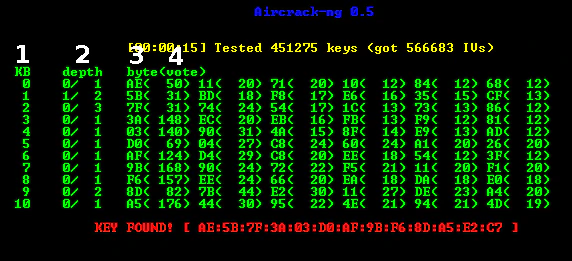
Aircrack-ng is a suite of command-line tools focused on wireless network assessment.
Key capabilities:
Passive and active monitoring of 802.11 wireless traffic
Packet capture and analysis
Support for testing wireless network configurations and encryption
Aircrack-ng is primarily used for wireless security testing rather than general cloud vulnerability management.
Codename SCNR
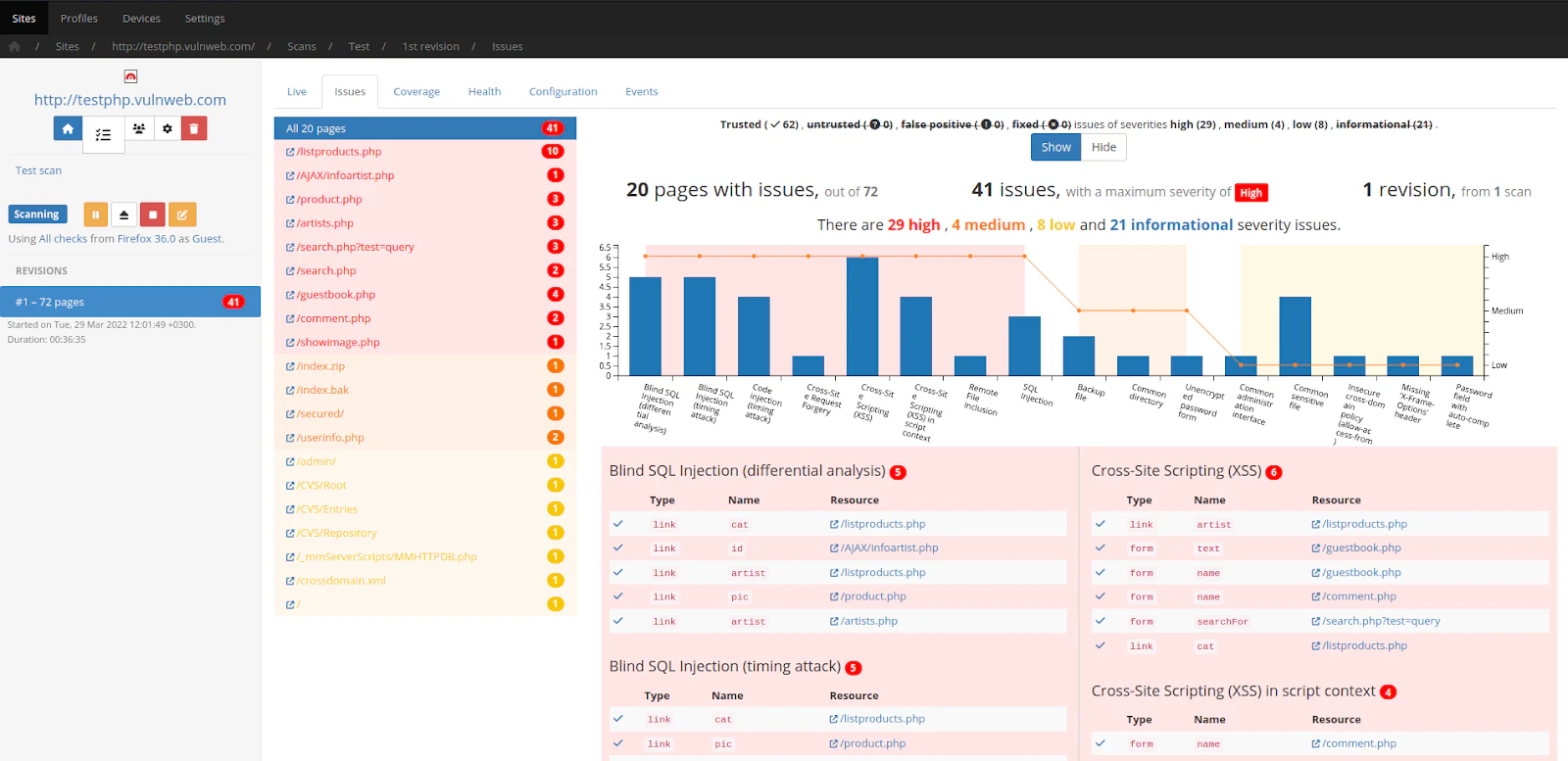
Codename SCNR is an open-source dynamic application security testing (DAST) tool designed for web application assessment.
Key capabilities:
Automated scanning of web applications and APIs
Identification of common web vulnerabilities such as injection flaws and input validation issues
REST API and CLI support for integration into testing workflows
Codename SCNR is commonly used during application testing phases rather than continuous cloud runtime monitoring.
Incident response and forensics tools
Incident response and forensics tools provide data on security incidents to enable SOC teams to dig into compromised systems and find attack paths and root causes.
Velociraptor
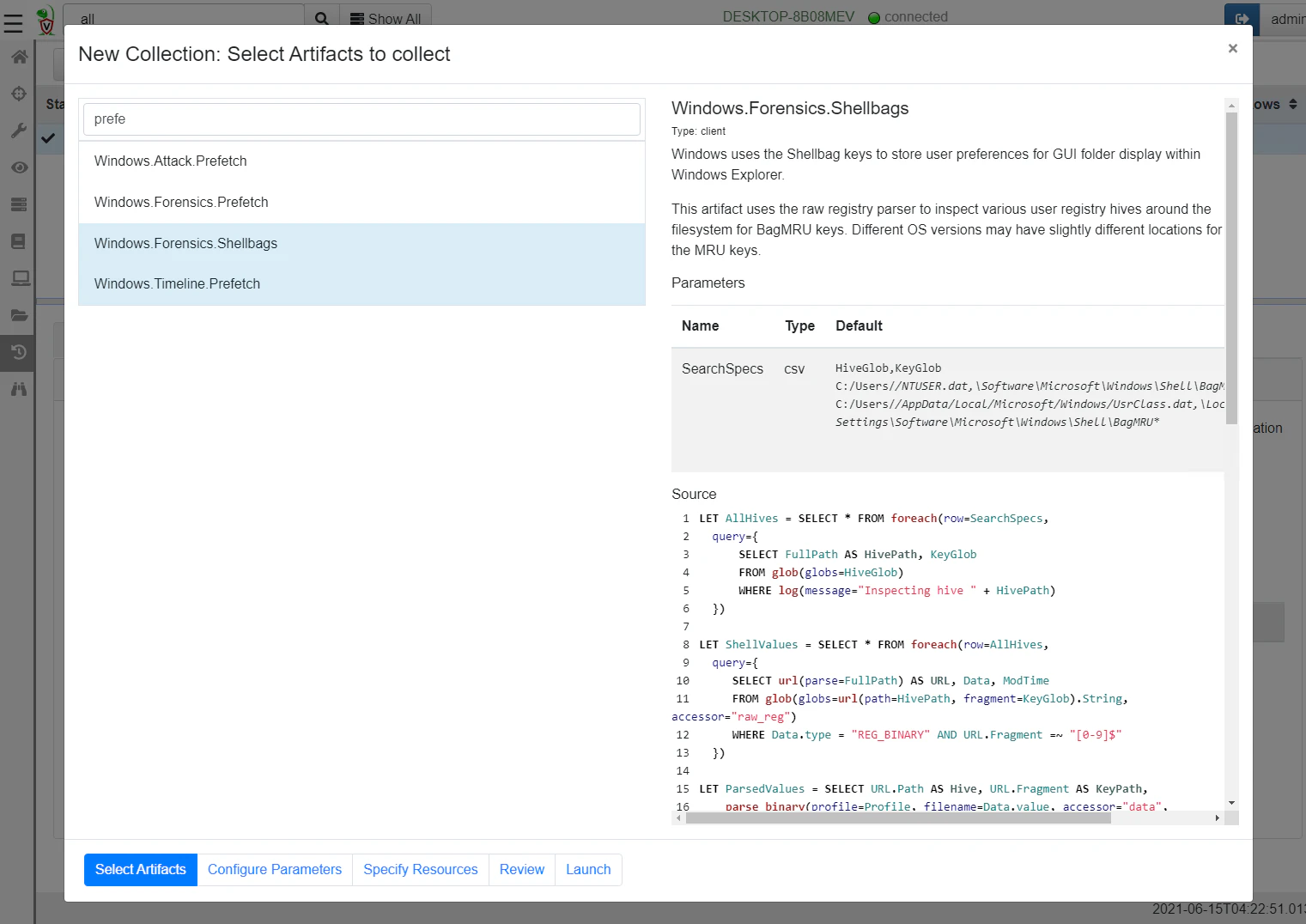
Velociraptor is a digital forensics and incident response platform focused on endpoint investigation.
Key capabilities:
Remote collection of forensic data across multiple endpoints
Threat hunting using Velociraptor Query Language (VQL)
Support for incident containment and post-incident analysis
Velociraptor is often used by IR teams for targeted investigations and large-scale endpoint data collection.
osquery
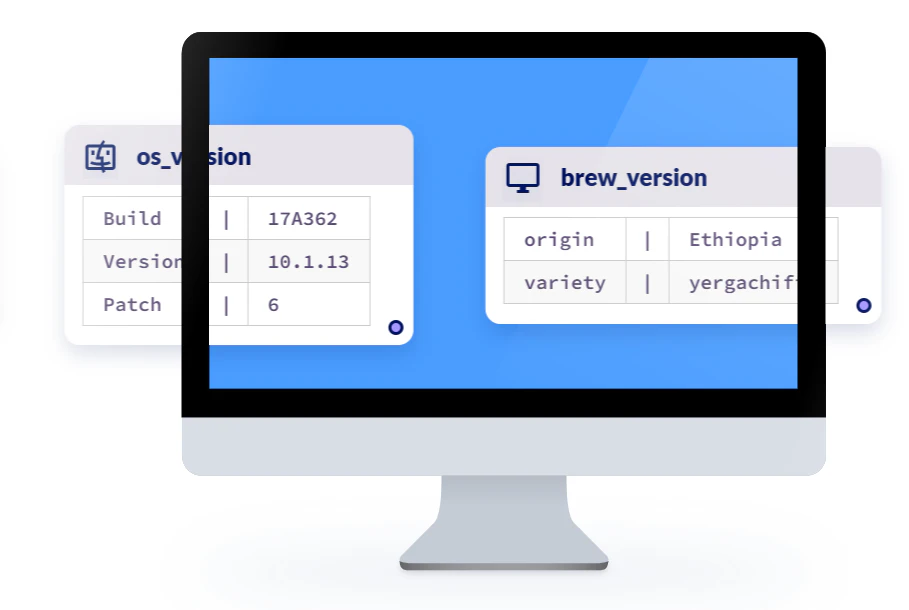
osquery exposes operating system data as relational tables that can be queried using SQL.
Key capabilities:
Scheduled and on-demand queries across Windows, macOS, and Linux systems
Visibility into processes, users, files, configurations, and system state
Prebuilt query packs for security monitoring and compliance checks
osquery is commonly used as a lightweight endpoint telemetry source within broader SOC workflows.
GRR Rapid Response

GRR Rapid Response (GRR) is an open-source remote forensics and incident response framework.
Key capabilities:
Client-server architecture for large-scale endpoint investigation
Remote collection of artifacts and indicators of compromise
Support for repeatable response workflows
GRR is typically used by experienced IR teams for deep forensic investigations across distributed environments.
Quick summary
Open-source SOC tools play an important role in modern security operations. They give security teams transparency, flexibility, and control across core functions such as log collection, monitoring, threat detection, and incident response. Tools like Wazuh, Security Onion, Velociraptor, and osquery are widely used because they can be adapted to different environments, extended through integrations, and tuned to match how individual SOC teams operate.
At the same time, cloud-native environments introduce patterns – such as ephemeral workloads, complex identity relationships, and highly distributed architectures –that often benefit from additional context and correlation. In these environments, many teams look to enrich the signals generated by open-source tools with cloud-aware insights that span identities, configurations, exposure, and runtime behavior.
This is why a “better together” approach is increasingly common. Open-source SOC tools provide the building blocks: collection, detection, investigation, and response. Cloud-native security platforms can complement those tools by adding contextual enrichment, cross-layer correlation, and prioritization –helping teams interpret signals faster and decide where to focus.
By combining open-source SOC tooling with cloud-native detection and response capabilities, organizations can build security operations that are both adaptable and scalable. The result isn’t replacing open source –it’s extending it, preserving the flexibility SOC teams value while adding clarity and context as cloud environments grow more complex.
Taking Your Open-Source SOC into the Cloud with Wiz Defend
Wiz Defend is designed to work alongside open-source SOC tools, enriching the signals they generate with cloud-native context and real-time correlation. Rather than replacing existing workflows, Wiz Defend helps SOC teams interpret what they're already seeing, faster, with more confidence, and across increasingly complex cloud environments.
Here's how Wiz Defend complements open-source SOC tooling and strengthens day-to-day SOC operations:
AI-powered investigation and remediation with Wiz Agents Wiz now brings autonomous AI agents directly into SOC workflows. Three specialized agents operate across the security lifecycle: the Red Agent acts as an AI-powered attacker, continuously probing web applications and APIs for exploitable logic flaws that traditional scanners miss. The Blue Agent automatically triages every threat detected in Wiz Defend, correlating runtime signals, cloud telemetry, and identity context to deliver a clear verdict with full reasoning, so analysts can skip hours of manual pivoting and focus on response. The Green Agent traces issues back to their root cause, identifies ownership, and generates environment-specific remediation steps, including opening pull requests directly in code. Together, these agents form a continuous loop: find the risk, fix it, and investigate threats in real time, all grounded in the Wiz Security Graph.
Agentic Workflows for orchestrated response Wiz Workflows bring these agents together with a flexible, drag-and-drop interface that lets security teams define how and when AI acts, and where human input is required. For example, teams can pull a Blue Agent investigation for a suspicious login, message the user in Slack to validate the activity, and escalate to SecOps if it's not recognized. They can also automatically trigger remediation when the Green Agent reaches a high-confidence verdict. This creates an adaptable model where AI operates as a force multiplier, and teams retain oversight and control.
Securing AI applications with Wiz AI-APP As organizations deploy AI-powered applications at scale, SOC teams face a new category of risk: prompt injection, shadow AI, misconfigured guardrails, and over-permissioned agents. The Wiz AI Application Protection Platform (AI-APP) secures AI applications end-to-end, mapping models, agents, tools, and data flows across infrastructure like AWS Bedrock, Azure AI, and Vertex AI. AI-APP connects signals across layers that traditional tools analyze in isolation, surfacing exploitable attack paths where, for example, an externally exposed agent with an authentication bypass can reach sensitive data through a chain of otherwise benign configurations. For SOC teams relying on open-source tooling, AI-APP adds the AI-native context needed to detect and respond to threats that don't fit conventional detection patterns.
Risk-based prioritization with cloud context Instead of treating all alerts equally, Wiz Defend helps prioritize based on real-world impact, factoring in exposure, asset criticality, identity privileges, and exploitability. This allows SOC analysts to focus on the issues most likely to matter, while still relying on their open-source tools for detection and telemetry.
If you're ready to see how cloud-native context transforms your SOC workflows, Get a demo to explore how Wiz Defend enhances detection, investigation, and response across your environment.
See Wiz Defend in action
Explore how Wiz Defend connects runtime signals, cloud identity, and exposure context to accelerate SOC investigations.

Related Tool Roundups