What is a container runtime?
Container runtimes are specialized software components that execute and manage containers on host systems. These runtimes ensure environment consistency by providing lightweight, portable environments that encapsulate applications and their dependencies. Standardizing containerization eliminates the common “It works on my machine” problem and enables apps to run across different environments while maintaining isolation from the host operating system. Since gaining mainstream adoption with Docker's 2013 launch, the technology has established the foundation for today's cloud-native architectures.
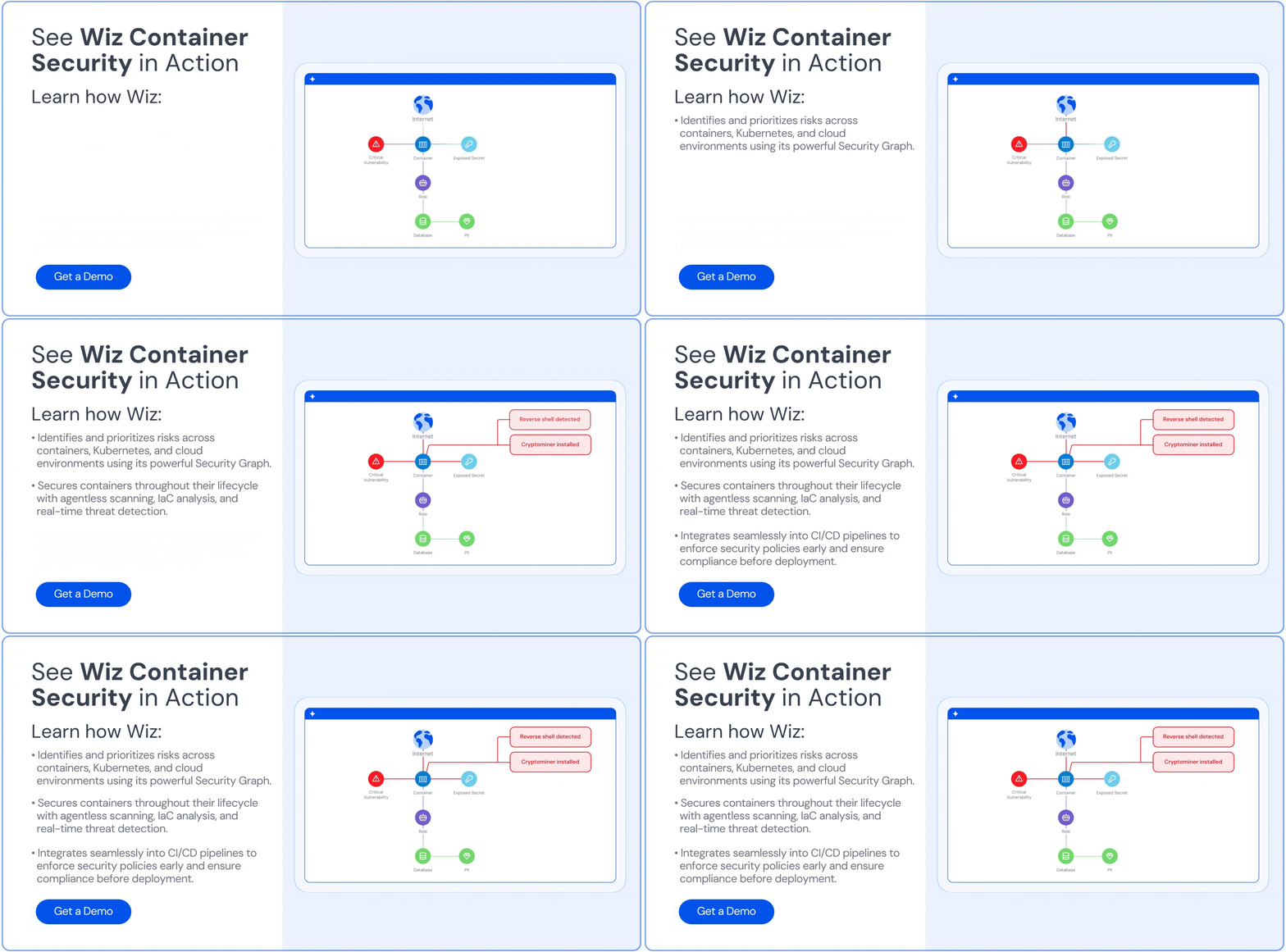
Take the 10-Minute Wiz Container Security Tour
In this short interactive tour, you’ll follow a real-world scenario where Wiz identifies exposed containers, visualizes the full attack path, and fixes the issue directly in code—all within minutes.

How do container runtimes work?
Container runtimes work by creating isolated environments for applications using features built into the host operating system. Unlike virtual machines—which virtualize hardware and require a complete operating system for each instance—containers increase efficiency by virtualizing at the OS level and sharing the host's kernel. Kernel sharing makes containers ideal for deploying microservices and achieving scalable, high-performance applications.
When you start a container, the runtime pulls the container image, sets up the necessary namespaces and cgroups for isolation and resource control, and launches the application process inside that environment. To ensure compatibility across different platforms and tools, most modern runtimes follow Open Container Initiative (OCI) standards. Docker and other industry leaders established those standards to maintain consistency throughout the ecosystem. Execution relies on technologies like namespaces, which have been part of the Linux kernel since roughly 2002.
Core functions and responsibilities of container runtimes
Execution of containers
Runtimes manage execution through four distinct phases:
Container creation: Create container environments based on specified images, setting up isolated namespaces and resource allocations.
Application startup: Launch containerized applications and establish necessary runtime configurations.
Lifecycle management: Monitor container health, automatically restart failed processes, and handle scaling operations.
Resource cleanup: Terminate containers gracefully and reclaim system resources once processes complete.
Interaction with the host operating system
Container isolation ensures containerized applications won’t interfere with the host system or other containers. Runtimes achieve isolation by leveraging Linux kernel features like namespaces for process isolation and cgroups for resource management. The underlying architecture maintains system stability while allowing multiple containers to run safely on the same host. Maintaining isolation is vital, as companies frequently cite security as their top challenge.
Resource allocation and management
Effective resource management prevents any single container from monopolizing system resources by enforcing limits on CPU, memory, and I/O. A controlled resource distribution enables multiple applications to run efficiently on shared infrastructure, making containerization ideal for modern multi-tenant cloud environments.
Container Security Best Practices [Cheat Sheet]
What's included in this 9 page cheat sheet? 1. Actionable best practices w/ code examples + diagrams 2. List of the top open-source tools for each best practice 3. Environment-specific best practices

Container runtimes vs. container engines
Container engines provide comprehensive container management platforms, while container runtimes focus specifically on executing containers. Engines manage broader responsibilities, such as image building, distribution, networking, and orchestration. Runtimes tackle the core task of starting and managing individual container processes.
Docker isn’t solely a container runtime—it's a complete containerization platform that includes a runtime component. Docker Engine combines multiple tools for building images, managing networks, and orchestrating containers, and uses containerd as its underlying runtime engine. Knowing the distinction clarifies the different layers of the container ecosystem.
What is a Container Engine?
A container engine is a software tool that automates the process of running applications in isolated, lightweight environments called containers.
Leer más

Types of container runtimes
Container runtimes generally fit into three main categories based on their functionality and abstraction level:
| Runtime Category | Abstraction Level | Core Functionality | Best For |
|---|---|---|---|
| Low-Level | Minimal / Direct | Interacts directly with the OS kernel (namespaces/cgroups) for container execution. | Fine-grained resource control and high-performance execution. |
| High-Level | Moderate / Managed | Adds image management, networking, and APIs on top of basic execution. | Comprehensive management and standard development environments. |
| Specialized | Context-Specific | Tailored for niche platforms or specific orchestrators like Kubernetes. | Edge computing, IoT, and optimized K8s deployments. |
Popular container runtime tools
Choosing the right container runtime tool depends on your specific use case, security requirements, and infrastructure needs. These tools represent the most widely adopted solutions in production environments:
| Tool | Abstraction Level | Infrastructure Needs | Security Profile | Best Use Case |
|---|---|---|---|---|
| Docker, Podman | High-Level | Comprehensive management for dev/production workflows. | Docker: Integrated patches. Podman: Rootless security. | Local development and CI/CD pipelines. |
| containerd, CRI-O | Management Layer | Industry-standard backends for K8s and Docker. | Secure by design, plus regular vulnerability scanning. | Production-grade K8s & Docker backends. |
| runC | Low-Level | Scenarios requiring direct interaction with container processes. | Basic, as it relies on host OS security features. | Scenarios needing high control and customization. |
| CRI-O (K8s-Specific) | Specialized | Tailored for Kubernetes and Edge computing. | Designed with Kubernetes-specific threat protection. | K8s deployments & IoT/Edge applications. |
For development environments: Docker provides the most comprehensive toolset with integrated build, shipping, and runtime capabilities.
For production Kubernetes: CRI-O offers optimized performance and security specifically designed for Kubernetes deployments.
For security-focused deployments: Podman's daemonless architecture reduces attack surface while maintaining Docker compatibility.
For minimal overhead: containerd and runC provide lightweight, focused runtime functionality without additional platform features.
The wide range of options reflects the evolving, diverse needs within containerization. Open-source communities meet these needs by building tailored solutions for diverse deployment strategies and operational requirements. Standards continue to evolve, as the February 2024 OCI Image and Distribution Specifications 1.1.0 release demonstrates.
While individual tools provide specific benefits, managing multiple systems often creates visibility gaps. Wiz offers a comprehensive, unified cloud security platform that consolidates container and Kubernetes security across your entire environment, outperforming standalone runtimes by correlating runtime data with cloud infrastructure risk.
What are the security implications of container runtimes?
Container security tackles unique risks that don't exist in traditional infrastructure. Unlike static virtual machines, containers share kernel resources and operate in dynamic environments, creating new attack vectors that require specialized protection strategies.
Security challenges include:
A larger attack surface: Containerized environments present a significantly larger attack surface than traditional workloads because of the sheer number of containers and their underlying images.
Shared kernel architecture: Because containers share the host’s kernel, securing the host alone isn’t enough. One vulnerability in the container setup can compromise the entire host system. It's vital to maintain secure, isolated configurations for every container to ensure overall system integrity and security.
Dynamic environments: The highly dynamic nature of containerized workloads poses visibility challenges, making it difficult for traditional monitoring tools to keep track.
Best practices for secure container deployment
Adopting a holistic security strategy is the only way to protect container deployments. An effective strategy encompasses everything from image creation to runtime monitoring, including:
Securing images: Scan container images to identify and remove vulnerabilities before deployment.
Securing registries: Implement access control and image signing in container registries.
Securing deployment: Harden the base host operating system, implement robust firewall rules, and use container orchestrators that provide secure API endpoints and enforce role-based access control (RBAC). Configure containers to run with the least privilege necessary. Avoid running containers with root or high privileges, and ensure that images exclude embedded secrets.
Monitoring container activity: Implement granular monitoring to gain visibility into container health and behavior.
You’ll need a solid grasp of container isolation, network security, and the vulnerabilities associated with container environments to build a strong, comprehensive security posture. For an in-depth exploration, dive into the details with our container runtime security blog post.
5 Signs You Need a New Container Security Solution
Allow Wiz to walk through five common signs that your container security solution is falling short and new approaches to securing your containerized apps and Kubernetes clusters.
Download now
Wiz for containers and Kubernetes
Secure container deployment requires understanding both runtime fundamentals and emerging security challenges. As containerized applications become mission-critical infrastructure, you’ll need comprehensive visibility across your container environments—from development through production.
Wiz offers a comprehensive container and Kubernetes security solution for teams that want to enhance their security posture. Our suite of tools provides a holistic approach to securing containers and Kubernetes, ensuring your applications stay protected from build time to real time. Wiz also provides secured container images with WizOS, which we continuously maintain at near-zero CVEs to reduce inherited vulnerabilities and supply chain risk.
To learn more about how Wiz can help secure your container environments and streamline your security processes, explore WizOS, or schedule a demo today to see the platform in action.