



What is SOC automation?
Security operations center (SOC) automation streamlines operations using rule-based logic and AI-powered systems to unify security information and event management (SIEM), security orchestration, automation, and response (SOAR), cloud detection and response (CDR), cloud security posture management (CSPM), threat intelligence platforms, ticketing tools, and AI SecOps agents. Automated workflows manage tasks from alert triage to incident response.
Modern SOC automation leverages AI-driven agents that simulate human investigations. AI ingests and analyzes vast datasets, identifies suspicious patterns, and recommends or executes responses based on predefined playbooks.
MCP Prompt Playbook for SOC
Put AI-driven SOC workflows into practice with ready-to-use prompts for triage, investigation, and response.

Why is SOC automation necessary for modern security teams?
SOCs face overwhelming alert volumes that often exceed what their team can handle. According to a 2025 industry survey, organizations reported receiving an average of 960 security alerts per day, though larger enterprises often exceeded 3,000. Nearly 40% of these alerts go uninvestigated due to limited analyst capacity. A growing backlog creates blind spots that allow real threats to slip through undetected.
As cyberattacks become more sophisticated and frequent, manual approaches can’t keep pace. Security teams risk SLA breaches, missed incidents, and growing fatigue when relying on manual workflows. SOC automation addresses these challenges by filtering out false positives, prioritizing high-risk alerts, and coordinating response actions across tools and environments.
AI-powered SOC automation augments, not replaces, security analysts. While automation handles high-volume tasks, humans make the final call on complex or high-risk issues. This human-machine collaboration preserves accountability while expanding coverage and improving security outcomes.
How does SOC automation work across SOC tiers?
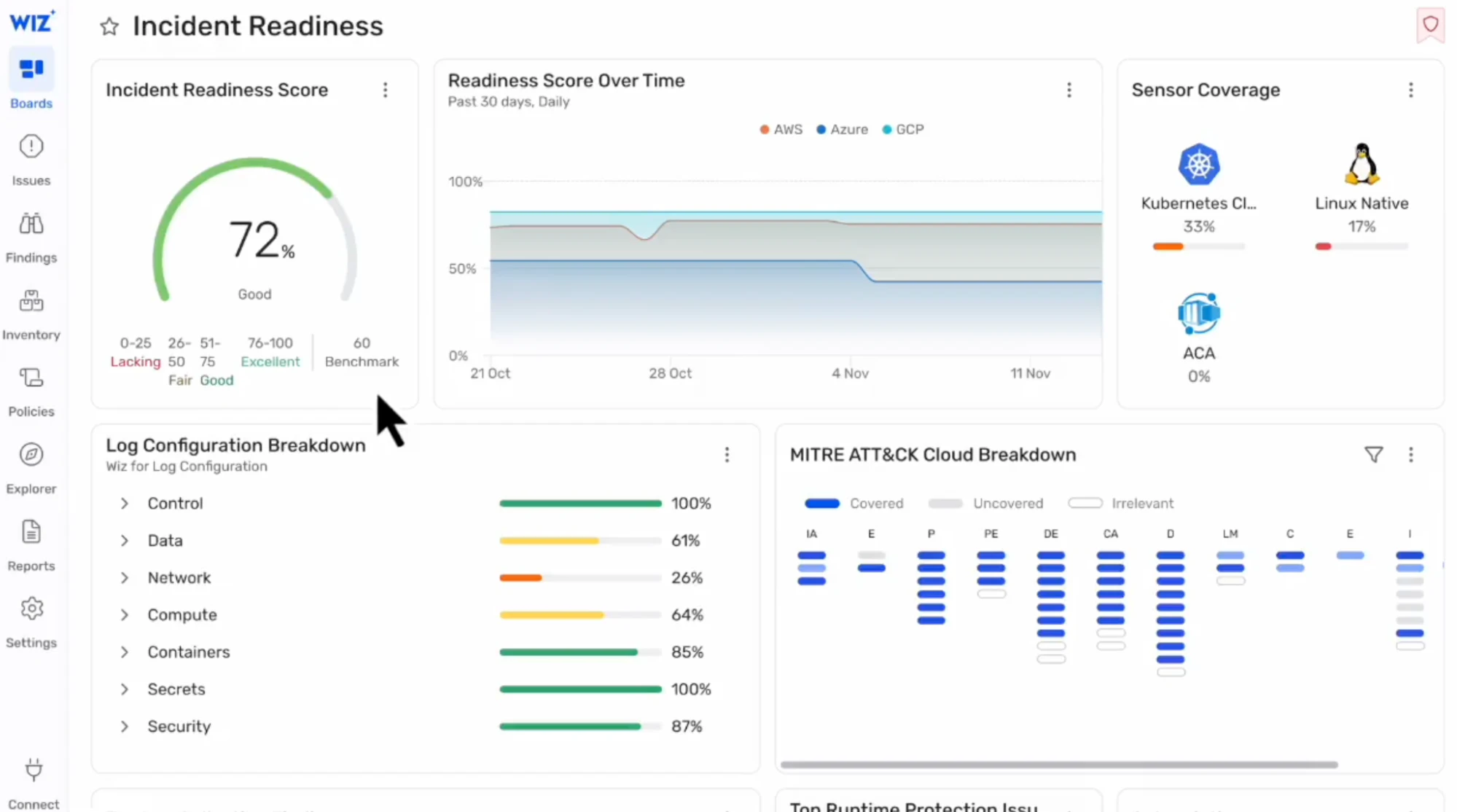
SOC automation organizes and accelerates security operations by coordinating tools and workflows across all SOC tiers, ensuring that alerts, threat intelligence, and response actions flow through a shared pipeline. Simplified pipelines allow analysts to spend less time on repetitive tasks and more on impactful decisions.
At its core, SOC automation orchestrates multiple systems—including SIEM for security alerts, SOAR for orchestration, CDR, CSPM, threat intelligence platforms, ticketing systems, and AI SecOps agents—so they work together in real time. Centralized data improves threat detection, alert triage, and response coordination without manual intervention.
What does the SOC automation pipeline look like?
An event triggers an alert to initiate the SOC automation pipeline. After SIEM ingests logs and network telemetry, automation tools enrich each alert with contextual threat data and historical patterns. AI-driven systems then correlate alert context to prioritize alerts, reducing noise and allowing security teams to focus on meaningful risk.
Once automation prioritizes alerts, automated playbooks guide actions such as containment, threat hunting, and escalation. For example, when the system detects suspicious lateral movement, automation may trigger a script to quarantine the affected endpoint and generate a ticket for analyst review.
Automation accelerates workflows and improves consistency in incident response at every step.
How do SOC tiers change in an automated SOC?
An automated SOC evolves the traditional tier model to support three dynamic roles:
Tier 1 analysts receive filtered, prioritized alerts to identify real threats faster.
Tier 2 investigators focus on complex correlations and deeper exploration of threats that automation flags as high risk.
Tier 3 experts manage escalated incidents, conduct advanced threat hunting, and refine playbooks in response to emerging threat intelligence.
Automation performs many tasks that once consumed Tier 1 and Tier 2 cycles, enabling human analysts to concentrate on judgment-driven work.
Which SOC workflows should you automate first?
When choosing what to automate first, distinguish among tasks your system can execute autonomously, those that require human confirmation, and those that need analyst approval. Focus on these candidates for early automation:
Alert triage and enrichment with contextual threat data
Correlation of events across tools and logs
Routine containment actions for known malicious indicators
However, workflows involving irreversible changes, such as deactivating production identities or shutting down critical workloads, should require explicit human approval.
What’s the role of security teams and human approval gates?
Human analysts are essential, especially for high-risk decisions and ambiguous scenarios. While SOC automation speeds investigation and containment, security teams provide oversight and judgment that automation can’t replicate. Security teams manage tasks such as:
Approving or denying containment actions on business-critical systems
Adjusting playbooks based on emerging vulnerability patterns
Refining detection logic and validating machine learning models
When automation flags a suspicious cloud login, the system enriches the alert with login history and geolocation before recommending actions. Analysts then review the recommendation, confirm legitimacy, and execute a containment workflow if necessary.
An end-to-end example: Suspicious cloud login
A typical automated workflow manages a flagged cloud login attempt by sequencing a set of remediation actions.
A user logs in from an unfamiliar location, triggering a SIEM rule. Automation enriches the alert with context by analyzing historical login patterns, VPN activity, and threat intelligence on known malicious IPs. An AI agent then correlates the behavior with recent phishing campaigns and elevates the alert’s priority. That correlation triggers a containment playbook that automatically issues multi-factor authentication challenges and restricts access to risky sessions.
Afterward, the analyst reviews the incident with full context, validates the response, and authorizes deeper remediation, including account suspension or an escalated investigation. The end-to-end flow enables rapid detection and response while keeping analysts focused on critical decisions that require human oversight.
What are common SOC automation use cases?
Security teams leverage SOC automation to accelerate threat detection, reduce manual workloads, and strengthen incident response. The following three high-value use cases show how automation improves outcomes for security teams within cloud-native environments:
AI-powered alert triage and prioritization
Security teams face thousands of daily alerts from SIEM, endpoint detection and response (EDR), and cloud telemetry. Automated workflows enrich each alert with contextual data, such as user behavior history, threat intelligence, and asset criticality. An AI agent then correlates these signals to prioritize real threats over noise, allowing analysts to focus on alerts that matter. Automation reduces investigation times, lowers alert fatigue, and increases efficiency across every workflow.
Accelerating incident response
Manual incident response drains valuable time as analysts gather logs, run queries, and execute containment actions. Automated SOC playbooks trigger containment steps in real time, including isolating compromised endpoints, blocking malicious IP addresses, and enforcing multi-factor authentication challenges.
Automating routine response tasks improves mean time to respond (MTTR) and reduces repetitive workloads, allowing analysts to address complex threats more quickly.
Continuous risk and exposure management
Automation continuously evaluates cloud configurations, network policies, identity permissions, and runtime behavior to identify vulnerabilities before attackers exploit them. When threats cross these risk thresholds, automated workflows escalate issues to SOC teams, generate tickets, and recommend mitigation steps.
Continuous risk assessments help security teams maintain better visibility into their security posture and adapt to changes in cloud environments without manual intervention.
Real-world example: Grammarly accelerates its SOC automation with Wiz
As Grammarly scaled from a consumer platform to an enterprise solution, its lean security team faced rising cloud complexity and pressure to maintain high standards. To streamline operations, Grammarly integrated Wiz and later adopted the MCP Server for Wiz to power its AI-enabled workflows. Integrating Wiz’s deep cloud context with natural language pipelines enables the team to pull ticket data, enrich it with context, and orchestrate actions using AI agents to automate alert triage.
Grammarly cut tier-1 investigation times from up to 45 minutes to just four—a 90% efficiency gain. These gains freed its engineers to focus on strategic efforts like threat hunting and detection engineering.
Grammarly’s success stems from a human-in-the-loop approach: starting small, iterating with real data, and scaling automation gradually. The result was faster response times, improved consistency, and more time for higher-value security work.
Watch 5-min demo
See how Wiz Defend automates detection, investigation, and response with full cloud context.

What tools and technologies enable SOC automation?
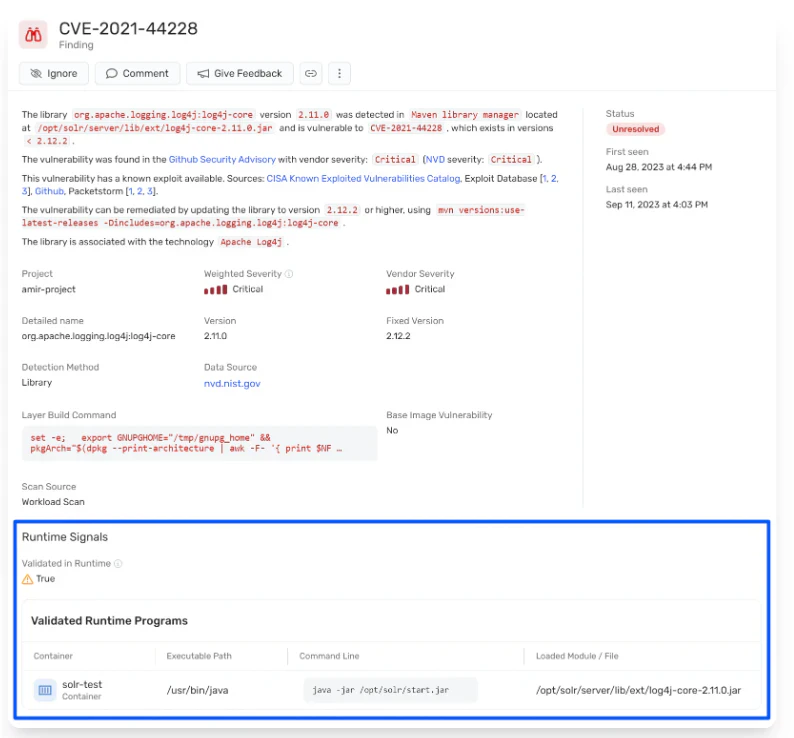
Effective SOC automation integrates multiple technologies to ingest data, trigger workflows, and take real-time action. Modern automation stacks feature these foundational tools:
SIEM: SIEMs centralize and analyze security data organization-wide. They trigger automation workflows using defined detection rules and integrate with downstream tools for investigation and response.
Extended detection and response (XDR): XDR platforms integrate data from endpoints, networks, cloud workloads, and identity systems to enable automation across a broader threat surface using advanced analytics and context-aware detections.
SOAR: SOAR platforms serve as the workflow engine for SOC automation, allowing teams to build and manage playbooks that standardize incident response, enrich alerts, and trigger actions across integrated systems.
Cloud-native security tools: Modern SOCs rely on cloud-native solutions for real-time visibility into cloud workloads, containers, and identities. Cloud-native automation ties directly to ephemeral infrastructure, including runtime detection, misconfiguration management, and cloud forensics.
AI agents and large language models: AI technologies automate tasks like alert triage, root cause analysis, and incident summarization. Generative AI agents reason through detection data, summarize incident scope, or suggest next steps in natural language to augment analysts without replacing their judgment.
These technologies form a layered architecture that supports end-to-end automation from detection through remediation. Selecting the right combination depends on your team’s size, maturity, and cloud footprint.
Who benefits most from SOC automation?
SOC automation delivers value across nearly every security role, with benefits that vary by team size, maturity, and operational needs. The following roles see a significant business impact:
Security analysts gain efficiency by offloading repetitive tasks like alert triage, log correlation, and evidence gathering. Automation reduces burnout and enables teams to focus on high-value investigations that require human insight.
Incident responders move faster with enriched alerts and standardized playbooks. Automated containment allows teams to shift their attention to verifying impact, coordinating stakeholders, and completing root cause analysis.
Security engineers and architects benefit from reduced complexity and increased consistency as automation minimizes configuration drift, improves detection coverage, and standardizes responses.
SOC managers and leaders achieve measurable gains in throughput and coverage without scaling headcount. Automation enables teams to respond to more alerts, lower their mean time to detect (MTTD) and MTTR, and maintain visibility, even with staffing constraints.
Cloud security teams benefit from automation that aligns with dynamic infrastructure, as automated checks for misconfigurations, identity misuse, or cloud-native threats help them keep pace with modern attack surfaces.
Automation delivers maximum value to teams struggling with alert volume, limited staffing, or hybrid cloud environments.
How SOC automation aligns with existing security frameworks
SOC automation enhances and accelerates established frameworks without requiring teams to abandon current processes. Automated workflows strengthen how teams implement these standards:
MITRE ATT&CK: Automation maps alerts and behaviors directly to ATT&CK techniques, which helps teams track adversary tactics more precisely. Automated mapping also supports faster validation and response to behaviors across the kill chain.
NIST Cybersecurity Framework: Automation drives all five functions: Identify, Protect, Detect, Respond, and Recover. Automated systems help teams detect threats in real time, respond with predefined actions, and maintain accurate records for recovery and compliance.
Zero Trust architecture: Zero trust models depend on rapid detection and enforcement. Automation enables real-time policy enforcement, identity-based segmentation, and continuous monitoring to align operational reality with zero trust principles.
By integrating into existing frameworks, SOC automation amplifies security posture without friction, ensuring faster and more consistent application of best practices across the threat detection and response lifecycle.
How to implement SOC automation in your environment
Scale your SOC automation using a clear roadmap that aligns with your security objectives, workflows, and team structure. A thoughtful strategy reduces risk, builds trust, and ensures automation delivers measurable outcomes.
Here are four steps to deploy SOC automation within your own workflows:
Inventory and map your current SOC workflows by documenting existing tools, data sources, alert types, and response processes. Establishing a baseline reveals time-intensive tasks and highlights data quality or integration gaps to address.
Prioritize high-impact automation candidates starting with high-volume, repetitive tasks such as alert triage, enrichment, containment for known bad indicators, and correlation across SIEM, endpoint, and cloud logs. Document expected benefits, including faster MTTD, reduced false positives, and improved security posture, to measure success.
Design and test playbooks with human approval gates that include clear execution conditions, required data inputs, and defined actions. Build in approval gates for irreversible decisions, such as disabling production identities or blocking network segments, and verify the logic in a staging environment before going live.
Roll out, measure, and iterate by deploying in phases and tracking metrics like alert backlog reduction, time saved per analyst, and MTTR improvement. Use analyst feedback to refine playbooks and address false positives over time.
What challenges and risks should you plan for?
Automation delivers strong benefits, but it also introduces risks that teams must plan for. Manage common challenges with solid preparation and governance:
Data quality and integration gaps
Security tools that produce inconsistent or incomplete data lead to poor automated decisions. Address these gaps by improving log normalization, standardizing data formats, and strengthening integrations across SIEM, CDR, EDR, and cloud sources. Establish validation checks to ensure automated workflows act on accurate and complete information.
Over-automation and loss of human judgment
Aggressive automation surfaces unwanted actions or erodes analyst trust. Preserve human judgment by embedding approval gates and defining when automation recommends actions or executes them. Regularly review automated actions and revise playbooks based on feedback from human analysts.
Skill gaps and change fatigue
Your teams may lack the skills to design, test, and maintain automated workflows, so invest in training on automation tools, playbook development, and analyst-friendly scripting. Encourage cross-team collaboration so security analysts, engineers, and automation specialists can share knowledge and reduce change fatigue.
AI-specific risks and stakeholder trust
AI capabilities introduce unique risks, including unexpected behavior and opaque reasoning. Mitigate these risks by requiring explainability, tracking decision-making, and logging actions for auditing. Communicate openly with stakeholders about AI activity, why you chose it, and how analysts retain control over it. Establish clear responsibility for AI-driven decisions so humans remain accountable.
Following a phased approach and planning for common challenges enables your SOC to implement automation that improves outcomes, boosts analyst confidence, and strengthens overall security posture.
How Wiz enables SOC automation and automates SOC workflows
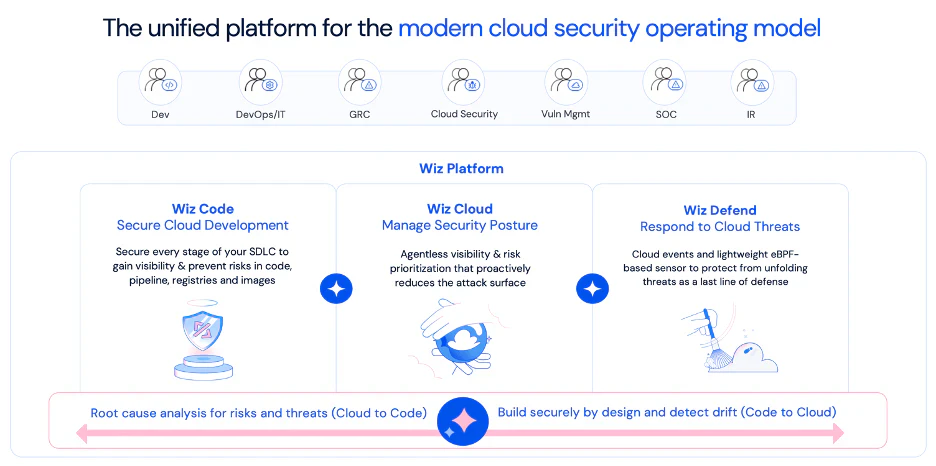
Wiz automates SOC workflows by connecting cloud context with runtime detection signals. Rather than treating alerts as isolated events, Wiz correlates findings across identity, infrastructure, and workload layers to surface threats that actually matter. With Wiz Agents & Workflows, teams can take SOC automation to the next level through AI-powered investigation and orchestration that removes manual bottlenecks while maintaining human control over critical decisions. Here's how this works in practice:
High-fidelity detection: Wiz CDR correlates runtime signals with cloud context through the Security Graph, which maps relationships between resources, identities, and data. This correlation eliminates false positives by showing whether a detected threat actually has a path to sensitive assets.
Automated investigation: Leveraging insights from the Security Graph, Wiz presents analysts with detected events alongside associated incidents. With the Blue Agent, every threat is automatically investigated using AI that reasons through cloud telemetry, runtime signals, and identity context to produce transparent verdicts with full evidence trails. This AI-powered investigation removes the manual pivoting that typically slows down triage, allowing analysts to review pre-investigated threats with clear reasoning and confidence levels. This way, Wiz removes time-consuming repetitive tasks like the manual querying that would ordinarily have been required to piece the details of attacks together and gather additional context.
Automatic correlation between runtime and cloud activity: The Wiz Runtime Sensor links container and workload events to control plane activity, so you can trace an attacker's movement from initial access through lateral movement across your cloud environment.
AI-driven containment recommendations: Wiz lets you define autonomous containment actions that are triggered when threats are detected. Through Agentic Workflows, teams can orchestrate how AI operates within their environment, from automated enrichment and correlation to human-in-the-loop approval for sensitive actions. For example, workflows can automatically trigger Blue Agent investigations, route high-confidence findings to automated containment, or request human approval via Slack before taking action on production workloads. And Wiz's AI-driven remediation guidelines take you through threat resolution step-by-step, without missing a beat.
Proactive risk validation and remediation: Beyond reactive response, the Red Agent continuously validates application logic to uncover complex vulnerabilities that traditional scanners miss, while the Green Agent investigates high-risk issues to identify root causes and generate environment-specific remediation guidance. This creates a continuous loop where risks are discovered, investigated, and resolved before they can be exploited.
SOC automation transforms how security teams operate, shifting focus from manual alert processing to proactive threat hunting. The key is ensuring your automation has the cloud context needed to prioritize real risks over noise. With Wiz Agents & Workflows bringing AI-powered decision support and orchestration into the platform, teams can now automate not just the repetitive tasks but also the complex reasoning and investigation that previously required manual effort, all while maintaining transparency and control. Ready to see how AI-powered SOC automation transforms your cloud security operations? Get a demo to experience how Wiz Defend unifies detection, investigation, and response with full cloud context.
See Wiz Defend in action
Explore how Wiz connects cloud context with runtime detection to automate investigation and response across your environment.

How do automated SOC solutions support compliance requirements for businesses that operate in regulated industries?
Automated SOC solutions help organizations maintain continuous compliance by enforcing consistent logging, detection, and response standards across cloud environments. They automatically generate audit trails, ensure critical alerts receive timely attention, and streamline evidence collection for frameworks such as HIPAA, PCI DSS, and ISO 27001. Automation also reduces the risk of human error in compliance-related workflows.
Can businesses in different regions adapt SOC automation tools to meet local cybersecurity regulations and needs?
Yes, most SOC automation platforms offer flexible configurations that let teams adapt playbooks, approval workflows, and data residency settings to align with local regulations, including GDPR in Europe and CCPA in California. Wiz supports region-specific data handling and customizable alerting to assist organizations with regional cybersecurity and privacy requirements.
Why should businesses consider integrating security automation platforms into their existing SOC workflows?
Integrating automation into existing SOC workflows improves detection speed, reduces manual triage effort, and enhances scalability. Security teams respond to more threats faster without burnout while maintaining oversight of high-risk decisions. Platforms like Wiz integrate with existing SIEM, SOAR, and ticketing systems to augment, not replace, human decision-making.