
De quoi se compose la chaîne d’approvisionnement de l’IA ?
La chaîne d’approvisionnement de l’IA décrit tout ce qui transforme des données brutes en un système d’IA de production opérationnel. Elle commence bien avant le déploiement d’un modèle et se poursuit pendant l’entraînement, le conditionnement et l’inférence. Chaque étape dépend de l’intégrité de la précédente. C’est pourquoi les faiblesses se propagent en cascade sur l’ensemble du système.
Renforcez votre sécurité cloud
Découvrez des pratiques avancées pour réduire les risques, mieux prioriser vos actions et protéger vos environnements cloud.

À la base se trouve la couche données. Elle regroupe les datasets utilisés pour entraîner et affiner les modèles, les pipelines qui déplacent les données entre systèmes, et les services d’étiquetage ou d’enrichissement qui orientent l’apprentissage. Ces datasets contiennent souvent des informations sensibles ou propriétaires. Ils deviennent donc une cible fréquente de falsification ou d’exfiltration.
Vient ensuite la couche développement, où les modèles sont conçus et entraînés. Elle inclut les architectures de modèles, les frameworks d’entraînement comme PyTorch ou TensorFlow, les systèmes de suivi d’expériences et les environnements de travail des data scientists. Les problèmes de sécurité ici ne ressemblent pas toujours à des vulnérabilités classiques. Des identifiants mal utilisés, une sérialisation non sûre ou des dependencies non fiables introduisent du risque avant même qu’un modèle n’atteigne la production.
La couche artefacts de modèles gère les outputs de l’entraînement. Les modèles entraînés, les poids, les fichiers de configuration et les métadonnées sont stockés dans des registres et des systèmes de versioning pour revue, validation et déploiement. Sans signature, contrôles d’intégrité et contrôles d’accès sur ces artefacts, des attaquants remplacent ou modifient des modèles sans signe évident de compromission.
La couche déploiement et inférence est le lieu où les modèles sont empaquetés et exposés. Elle inclut les container images, les runtimes de service, les plateformes d’orchestration comme Kubernetes, les passerelles API et les endpoints d’inférence. L’authentification, l’autorisation, la limitation de débit et le transport chiffré déterminent qui peut appeler un modèle et ce qu’il peut atteindre une fois en service. La visibilité sur les endpoints, les identités et les chemins réseau est critique ici. L’exposition est rarement évidente à partir de la seule configuration.
Enfin, la plupart des systèmes d’IA dépendent de composants tiers. Cela inclut les modèles préentraînés et les poids issus de hubs publics, les bibliothèques open source, les tokenizers, les fichiers de configuration, les API d’IA commerciales, les bases de données vectorielles et les services d’IA managés. Ces composants sont profondément intégrés aux workflows d’entraînement et d’inférence. Une compromission en amont se propage donc en silence jusqu’à la production.
Ce qui rend la chaîne d’approvisionnement de l’IA particulièrement difficile, c’est le lien étroit entre ces couches. Un dataset empoisonné corrompt un modèle. Un modèle altéré fuit des données pendant l’inférence. Un déploiement trop permissif expose tout l’aval. Sécuriser la chaîne d’approvisionnement de l’IA, c’est comprendre ces dependencies, et non seulement protéger chaque composant isolément.
Pourquoi la sécurité de la chaîne d’approvisionnement de l’IA devient incontournable
La sécurité de la chaîne d’approvisionnement de l’IA attire l’attention car l’IA est construite et déployée d’une façon nouvelle pour la plupart des organisations. Les équipes importent modèles, données et outils de nombreuses sources, les assemblent vite et les exposent via des API, souvent sans image claire de ce à quoi elles font confiance en chemin.
Il y a quelques années, l’IA restait surtout dans des environnements de recherche. Aujourd’hui, ces mêmes modèles tournent en production. Ils sont connectés aux données clients, aux systèmes internes et à la prise de décision automatisée. Ce basculement change la donne. Un modèle compromis n’est plus un simple problème technique. Il touche directement les utilisateurs, les résultats et les opérations métier.
La façon dont l’IA est assemblée rend aussi le risque supply chain plus facile à manquer. Les systèmes d’IA modernes s’appuient sur des modèles préentraînés, des bibliothèques open source, des datasets d’entraînement, des bases de données vectorielles et des services cloud managés. Une grande partie arrive comme une boîte noire. Les équipes savent parfois ce qu’elles utilisent, mais pas d’où cela vient, comment cela a été entraîné, ni ce que le composant peut encore atteindre une fois déployé.
L’exposition a aussi augmenté. Les modèles sont désormais souvent accessibles via des endpoints d’inférence, des interfaces de chat et des API. Les attaquants n’ont plus besoin du code source ni d’un accès aux fichiers pour interagir avec les systèmes d’IA. Ils les sondent directement. Dans certains cas, cela suffit pour extraire un comportement, inférer des données d’entraînement ou déclencher des actions dangereuses.
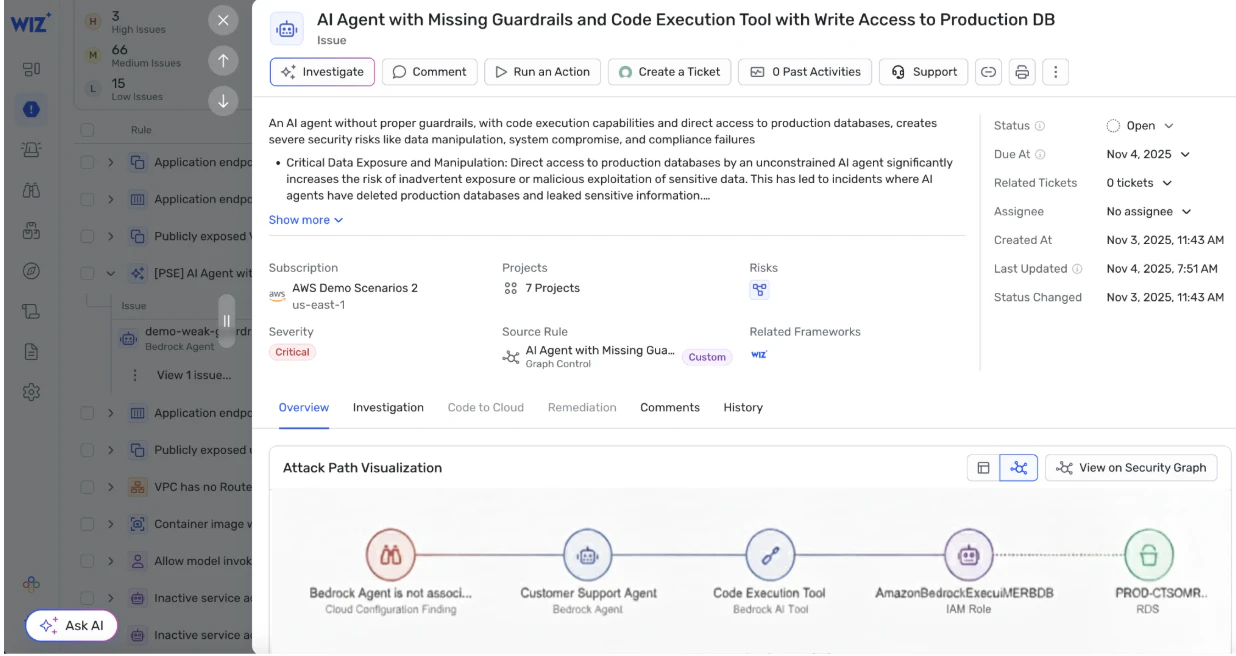
Ce qui complique encore le sujet, c’est que les problèmes ne ressemblent pas toujours à des pannes. Un dataset empoisonné ou un modèle implanté d’une porte dérobée se comporte normalement la plupart du temps. Les anomalies n’apparaissent parfois que sous des entrées ou des conditions précises. Elles passent alors facilement entre les mailles des tests et restent difficiles à diagnostiquer après déploiement.
Enfin, les attentes évoluent. Régulateurs, clients et partenaires demandent des réponses claires sur l’origine des systèmes d’IA et sur leur contrôle. Les questions de provenance, d’intégrité et de responsabilité ne sont plus théoriques. Elles apparaissent dans les audits, les revues d’achat et les échanges clients.
En résumé, la sécurité de la chaîne d’approvisionnement de l’IA compte davantage aujourd’hui car les systèmes d’IA sont plus connectés, plus exposés et plus critiques qu’il y a peu. Quand les organisations s’appuient sur l’IA pour un travail réel, comprendre et sécuriser sa construction devient inévitable.
Comment les attaques sur la chaîne d’approvisionnement de l’IA se produisent
La plupart des attaques sur la chaîne d’approvisionnement de l’IA ne commencent pas par une faille spectaculaire. Elles partent de petites compromissions dans des composants de confiance (environnements d’entraînement, dependencies ou artefacts de modèles) qui descendent ensuite discrètement jusqu’à la production.
Un point d’entrée fréquent est l’environnement d’entraînement et de runtime lui-même. Les workloads d’IA s’appuient souvent sur des pilotes GPU très privilégiés, des runtimes de containers et des bibliothèques bas niveau. Wiz Research a montré comment des vulnérabilités dans l’infrastructure liée à l’IA exposent des environnements entiers. Les attaquants élèvent alors leurs privilèges ou accèdent à des workloads sensibles sur des systèmes partagés.
Un autre chemin d’attaque fréquent passe par les bibliothèques et dépôts d’IA open source. De nombreuses équipes d’IA dépendent de frameworks et d’outils populaires tirés directement de GitHub ou de registres de paquets. Dans des incidents réels investigués par Wiz Research, des attaquants ont compromis des bibliothèques d’IA largement utilisées et injecté du code malveillant qui lançait du cryptominage une fois déployé, se propageant en silence dans les environnements d’entraînement et d’inférence.
Les artefacts de modèles et fichiers sérialisés forment un autre domaine à haut risque. Les modèles entraînés sont souvent traités comme des actifs statiques. Pourtant, des formats de sérialisation non sûrs exécutent du code au chargement du modèle. Wiz Research a documenté des attaques supply chain où des charges malveillantes étaient intégrées dans des artefacts de confiance. Le chargement du modèle devient alors lui-même un vecteur d’exécution.
Le risque supply chain apparaît aussi via les intégrations et dependencies tierces. Les pipelines d’IA importent fréquemment des modèles externes, des poids, des tokenizers et des fichiers de configuration. Quand des attaquants compromettent une dependency en amont, ce code malveillant se propage dans les workflows d’IA sans exploiter de vulnérabilités applicatives classiques.
Enfin, les endpoints d’inférence exposés offrent aux attaquants une interaction directe avec les modèles. Même sans accès à l’infrastructure ni au code source, les adversaires sondent les modèles par requêtes répétées. Ils extraient ainsi le comportement du modèle ou infèrent des données d’entraînement. Ces attaques se fondent facilement dans le trafic normal. Elles restent difficiles à détecter sans monitoring contextuel.
Ce qui rend ces attaques particulièrement dangereuses, c’est leur capacité à se dissimuler. Une dependency compromise ressemble encore à une bibliothèque légitime. Un modèle empoisonné se comporte normalement la plupart du temps. Un composant runtime vulnérable fonctionne comme prévu jusqu’à l’exploitation. Les attaquants n’ont pas besoin de compromettre tout le pipeline d’IA. Un seul maillon de confiance suffit, et la chaîne d’approvisionnement fait le reste.
Les défis pour sécuriser la chaîne d’approvisionnement de l’IA
Le principal défi pour sécuriser la chaîne d’approvisionnement de l’IA reste de savoir ce qui existe. Les actifs d’IA naissent souvent hors des workflows logiciels traditionnels, via des équipes data science, des notebooks d’expérimentation ou des pipelines ad hoc. Modèles, datasets et endpoints apparaissent vite sur les comptes cloud sans jamais passer par une revue de sécurité centralisée. Cela crée du shadow AI difficile à inventorier ou à gouverner.
Le guide pratique des responsables sécurité
Obtenez des conseils concrets pour structurer votre stratégie CloudSec et aligner vos équipes sur les priorités clés.

Même quand les actifs sont connus, la complexité des dependencies rend le risque difficile à raisonner. Un système d’IA s’appuie parfois sur des versions précises de bibliothèques open source, de pilotes GPU, de frameworks d’entraînement, de poids préentraînés et de sources de données externes. Une faiblesse à n’importe quelle couche (code, données ou infrastructure) mine tout le système. Pourtant, ces dependencies sont rarement suivies ensemble au même endroit.
Les environnements d’entraînement éphémères ajoutent une autre difficulté. De gros jobs d’entraînement démarrent parfois des milliers d’instances GPU pour une courte période, puis disparaissent. Les outils de sécurité traditionnels qui s’appuient sur des agents longue durée ou une revue manuelle manquent souvent ces environnements. Des angles morts apparaissent pendant certaines des phases les plus sensibles du cycle de vie de l’IA.
Valider les modèles et artefacts tiers reste aussi difficile. Les hubs et dépôts de modèles publics facilitent la réutilisation. Ils offrent toutefois peu de visibilité sur l’entraînement, les données utilisées ou d’éventuelles altérations des artefacts. Sans contrôles solides de provenance et d’intégrité, les équipes doivent faire confiance à des composants opaques dans des systèmes critiques.
La détection est compliquée par la nature probabiliste du comportement de l’IA. Un modèle compromis continue de produire des outputs plausibles. Il devient difficile de distinguer dérive naturelle, problèmes de performance et manipulation intentionnelle. Contrairement au logiciel traditionnel, il n’existe souvent pas d’unique output « correct » à valider.
Les frictions organisationnelles jouent aussi un rôle. Les systèmes d’IA traversent data science, ingénierie, sécurité et équipes plateforme, chacune avec ses priorités et ses outils. Sans visibilité partagée ni propriété claire, les risques supply chain tombent dans les interstices entre équipes au lieu d’être traités de bout en bout.
Enfin, sécuriser les chaînes d’approvisionnement de l’IA à l’échelle est plus dur dans les environnements multi-cloud. Les workloads d’IA sont souvent répartis entre fournisseurs pour accéder à des services ou du matériel précis. Appliquer des politiques et des contrôles cohérents devient alors difficile. Sans vue unifiée, les équipes sécurisent des environnements isolés tout en manquant des chemins d’attaque cross-cloud.
Comment la sécurité de la chaîne d’approvisionnement de l’IA s’inscrit dans la sécurité cloud
La sécurité de la chaîne d’approvisionnement de l’IA n’est pas une discipline séparée de la sécurité cloud. Elle ne se limite pas non plus au cloud. Certaines organisations exploitent des clusters d’entraînement on-prem, de l’inférence en edge ou des déploiements hybrides pour maîtriser le coût, la latence ou la résidence des données. Pourtant, l’infrastructure cloud reste le point de croisement de la plupart des chaînes d’approvisionnement de l’IA modernes.
Même quand les modèles sont entraînés ou déployés hors du cloud, des parties critiques du workflow y passent souvent. Les données d’entraînement sont stockées temporairement dans le stockage cloud. Les modèles sont tirés de registres hébergés dans le cloud. Les pipelines sont orchestrés via des services managés. Les systèmes d’inférence s’authentifient contre des identités cloud. Le risque de chaîne d’approvisionnement de l’IA apparaît donc fréquemment via les permissions cloud, l’exposition réseau et les chemins d’accès aux données.
En même temps, tous les risques de chaîne d’approvisionnement de l’IA ne sont pas cloud-native. Des poids de modèles open source compromis, des datasets tiers empoisonnés ou des vulnérabilités dans des frameworks ML introduisent du risque avant toute implication de l’infrastructure cloud. Ces problèmes naissent plus tôt dans le cycle de vie et suivent les modèles partout où ils s’exécutent.
Le cloud devient critique car c’est là que ces risques convergent et se combinent. Un modèle altéré est surtout dangereux derrière un endpoint public. Un dataset empoisonné a le plus d’impact quand il réentraîne des modèles qui touchent des données de production sensibles. Un framework ML vulnérable devient un incident grave sous une identité cloud trop privilégiée.
C’est pourquoi la sécurité de la chaîne d’approvisionnement de l’IA croise de si près les pratiques cœur de la sécurité cloud. La gestion de la posture cloud gouverne le stockage des données d’entraînement et des artefacts de modèles. La gestion des identités et des accès contrôle qui et quoi interagit avec les modèles et les pipelines. La sécurité des données protège les datasets sensibles, les embeddings et les logs d’inférence. Le vulnerability management sécurise les containers, les images et les dependencies utilisés pour entraîner et servir les modèles.
Ce qui change avec l’IA, c’est à quel point ces couches sont couplées. Un environnement cloud sûr reste fragilisé par un artefact de modèle non sûr. Un modèle de haute qualité devient un passif s’il s’exécute avec des permissions excessives. Le risque de chaîne d’approvisionnement de l’IA apparaît rarement comme une seule panne. Il naît de l’interaction entre données, modèles, dependencies, identités et chemins d’exposition.
Pour la plupart des organisations, une sécurité efficace de la chaîne d’approvisionnement de l’IA consiste à étendre les workflows de sécurité cloud existants aux actifs et dependencies spécifiques à l’IA, tout en reconnaissant les risques nés hors du cloud. La visibilité continue sur les liens entre modèles, données, infrastructure et identités permet aux équipes d’attraper le risque supply chain tôt, avant qu’il ne se propage dans les systèmes de production et les décisions métier critiques.
Comment Wiz aide à sécuriser la chaîne d’approvisionnement de l’IA
Wiz aide les organisations à sécuriser la posture de sécurité de l’IA sur toute la chaîne d’approvisionnement de l’IA. La plateforme rend visibles les actifs d’IA, l’infrastructure et l’exposition des données dans le même outil déjà utilisé pour gérer le risque cloud. Wiz ne remplace pas la gouvernance des modèles, les revues d’équité ni les évaluations de conformité réglementaire. En revanche, elle comble un écart critique en montrant comment les systèmes d’IA sont réellement exposés, abusés ou exploités dans de vrais environnements cloud.
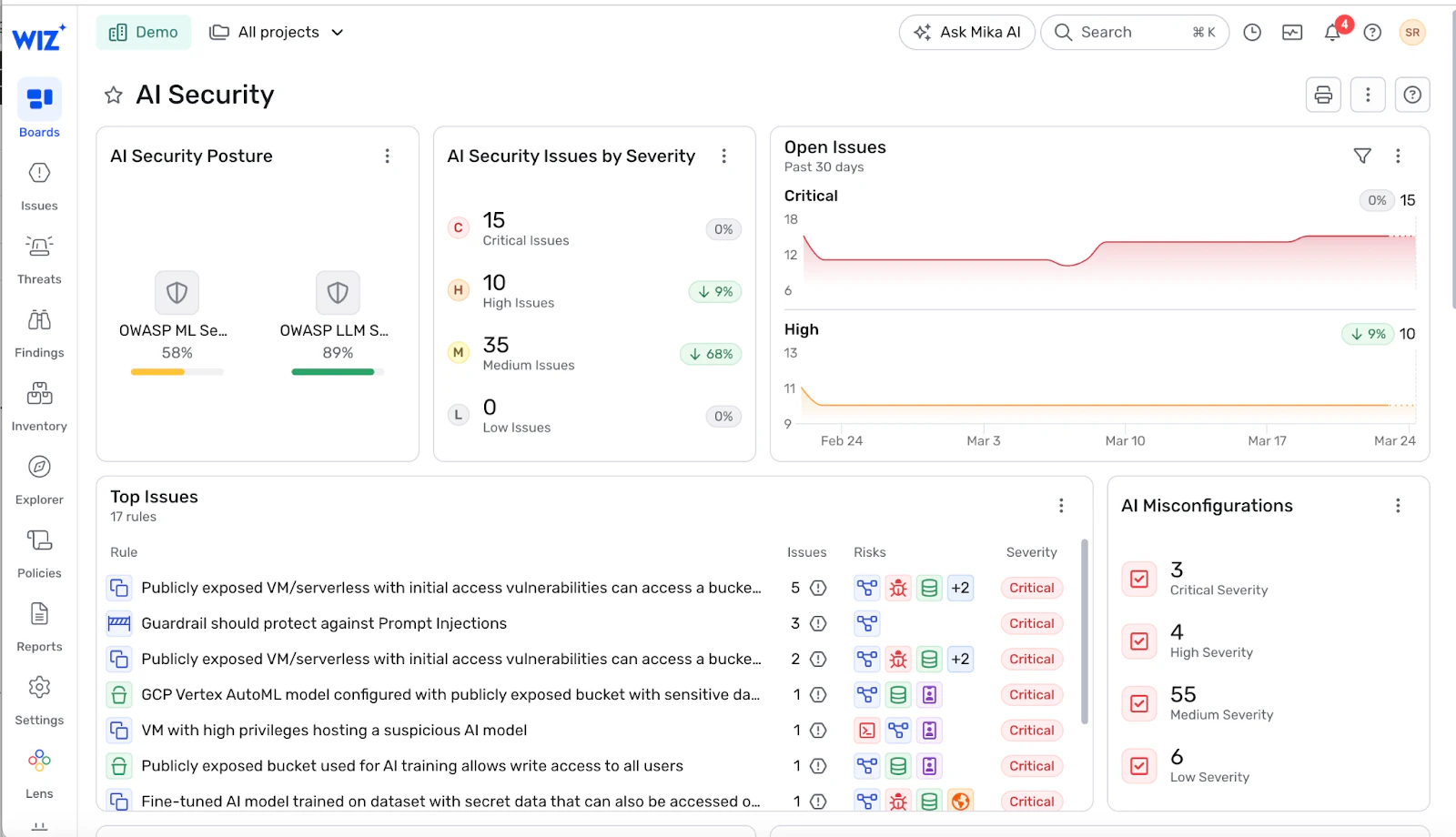
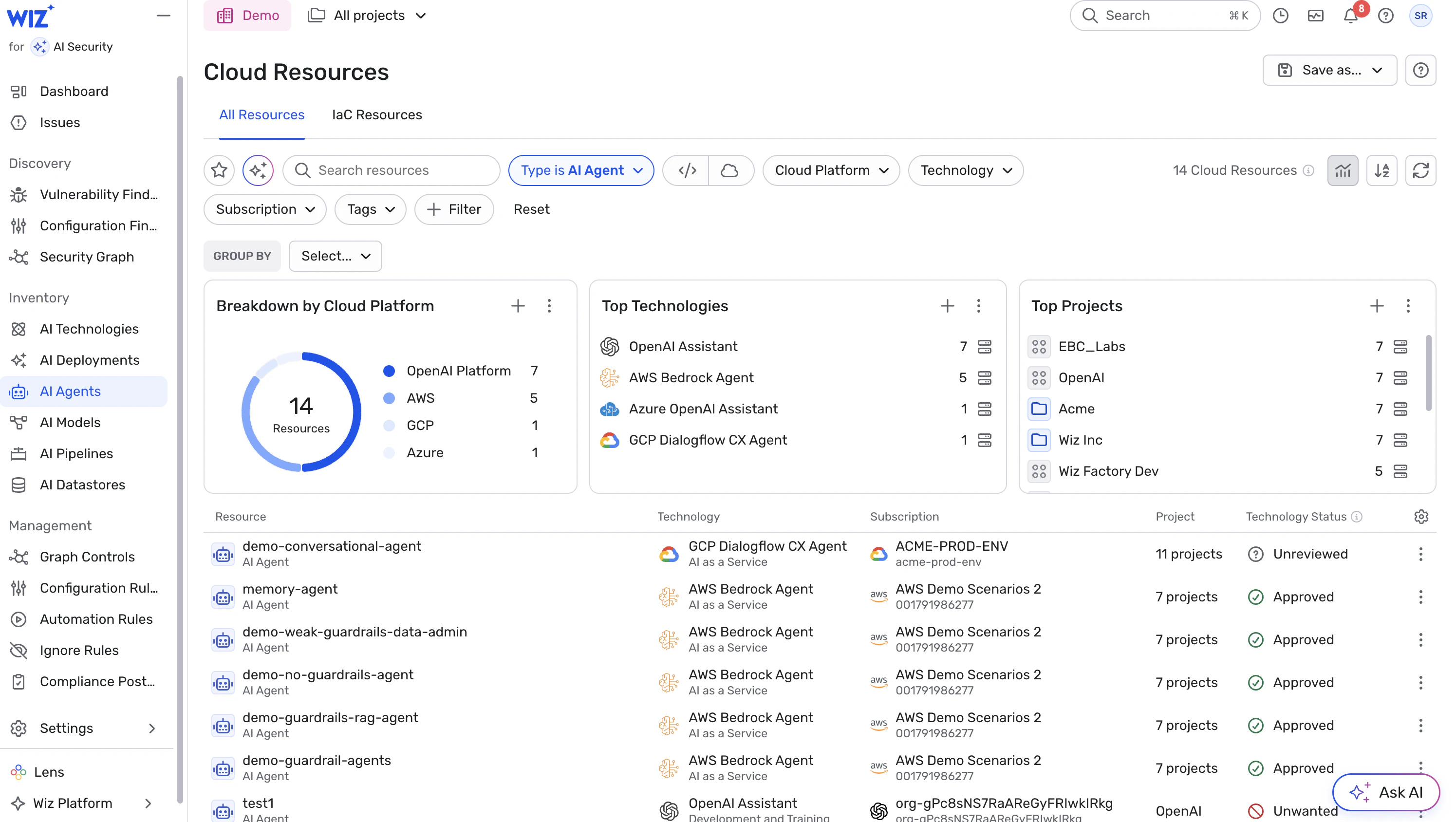
Grâce à une approche agentless, Wiz découvre en continu les services d’IA, les environnements d’entraînement, les endpoints de modèles, les emplacements de stockage et l’infrastructure de support sur AWS, Azure et GCP. Cela inclut des plateformes managées comme Amazon SageMaker et Bedrock, Azure OpenAI Service et Azure Machine Learning, Google Vertex AI, ainsi que des workloads d’IA personnalisés sur Kubernetes ou des machines virtuelles. Cette découverte crée de fait une AI Bill of Materials (AI BOM). Les équipes inventorient modèles, datasets, pipelines, identités et services, et font apparaître le shadow AI hors des contrôles standards.
Wiz corrèle ces actifs d’IA avec le contexte cloud via son Graphique de sécurité. Il relie identités, exposition réseau, vulnérabilités et données sensibles. Au lieu de signaler des erreurs de configuration isolées, Wiz révèle les chemins d’attaque, c’est-à-dire les combinaisons d’exposition, de permissions et d’accès aux données qui transforment de petits problèmes en vrai risque supply chain. Les équipes voient quels composants d’IA servent à exfiltrer des données, se déplacer latéralement ou permettre un accès non autorisé aux systèmes pilotés par l’IA.
Wiz soutient aussi la sécurité de la chaîne d’approvisionnement de l’IA sur tout le cycle de vie. La visibilité code-to-cloud relie les services d’IA exposés aux pipelines ou à l’infrastructure-as-code qui les ont introduits, pour des correctifs durables. À l’exécution, Wiz Defend surveille l’infrastructure d’IA pour des schémas d’abus comme le détournement de comptes de service, la data exfiltration ou le cryptominage. L’accent porte sur l’élargissement de la surface d’attaque cloud par l’IA, et non sur le jugement des outputs des modèles. Les équipes voient ainsi comment réduire le risque de chaîne d’approvisionnement de l’IA sur les modèles, les données et l’infrastructure cloud.
Pour voir comment Wiz aide les équipes sécurité à identifier et réduire le risque sur les modèles, les données et l’infrastructure cloud, Voir Wiz en action.
Découvrez Wiz en action
Voyez comment Wiz aide vos équipes à identifier, prioriser et corriger rapidement les risques dans le cloud.
