



Why does API compliance matter in cloud environments?
APIs are the conduits through which cloud resources interact, connect, and exchange data.
APIs now drive over 83% of all internet traffic, and the API management industry is projected to reach $17 billion by 2029. This surge reflects how central APIs are to cloud-native architectures—and why their compliance is under the microscope.
Think of APIs as the glue holding together federated cloud setups. Protecting them and making sure they’re compliant with federal and industry standards should be a top priority.
Advanced API Security Best Practices [Cheat Sheet]
Download the Wiz API Security Best Practices Cheat Sheet and fortify your API infrastructure with proven, advanced techniques tailored for secure, high-performance API management.

What exactly does API compliance involve?
API compliance includes technologies, strategies, and practices that guarantee that your APIs play by the rules. And by rules, we mean external regulations, standards across your sector, and your own internal security policies.
To achieve a strong API compliance posture in the cloud, you need code-to-cloud coverage. In other words, you need to build API compliance into your CI/CD pipelines, IaC, and runtime environments.
Despite its critical nature, API compliance is unfortunately not straightforward. Here’s why.
Regulatory and legal requirements
APIs help port sensitive data of all kinds—PHI, PII, business secrets, and more—across the cloud. Because of this, they have major compliance implications.
Most regulations do not explicitly mention APIs at all, focusing more broadly on protecting certain categories of data. But even when APIs aren't specifically mentioned in a regulation, having a strong API security posture can help you stay compliant by preventing unauthorized access to sensitive information.
Some regulations, however, like PCI DSS 4.0, explicitly outline API compliance requirements. These can include maintaining a complete API inventory, continuous vulnerability scanning and testing, real-time monitoring, input validation, and secure development practices to protect sensitive cardholder data.
What happens when APIs fail to meet regulatory standards? Big fines, loss of brand credibility, a deluge of lawsuits, and the ever-dreaded operational downtime.
Business and security implications
Remember the Life360 data leak? That incident is just one example of what can happen when you neglect APIs.
Unauthorized access, lateral movement, and data theft that stem from API exploitation can be disastrous. This is why threat actors have their crosshairs on cloud APIs. The solution? Don’t plaster on compliance controls as an afterthought. Instead, build them into development workflows and business-critical processes.


Common API compliance risks
What exactly makes APIs a compliance risk in the cloud? There are five critical challenges:
Misconfigured API gateways: Errors in API gateway settings—weak credentials, subpar access controls, or a lack of network segmentation—result in exposure and let adversaries bypass authentication controls.
Lack of API inventory: Not having a comprehensive, continuously updated, and prioritized list of every single API and API risk in the cloud will spell trouble, i.e., risk-ridden shadow, zombie, and orphaned APIs proliferating unseen.
Broken or weak authentication and authorization: APIs that have broken, weak, or misconfigured authentication and authorization can leave the door open to threat actors to access your organization's data and resources.
No continuous monitoring: Gaps in real-time visibility across cloud-based API architectures make swift issue detection and response virtually impossible. And this means API vulnerabilities can mushroom into large-scale noncompliance incidents.
No automated testing: Some compliance frameworks necessitate vulnerability management for APIs. This requires automating API testing at scale to uncover vulnerabilities, as well as the processes to drive them to remediation.
Toxic combinations of risks: Two or more criss-crossing cloud factors interacting to form new API risks and attack paths create a topology of new and often hidden pathways to mission-critical data and applications.
Bottom line: The more complex and distributed cloud environments are, the trickier it is to mitigate these issues.
So, how can you mitigate API compliance risks?
Navigating compliance frameworks with implications for APIs
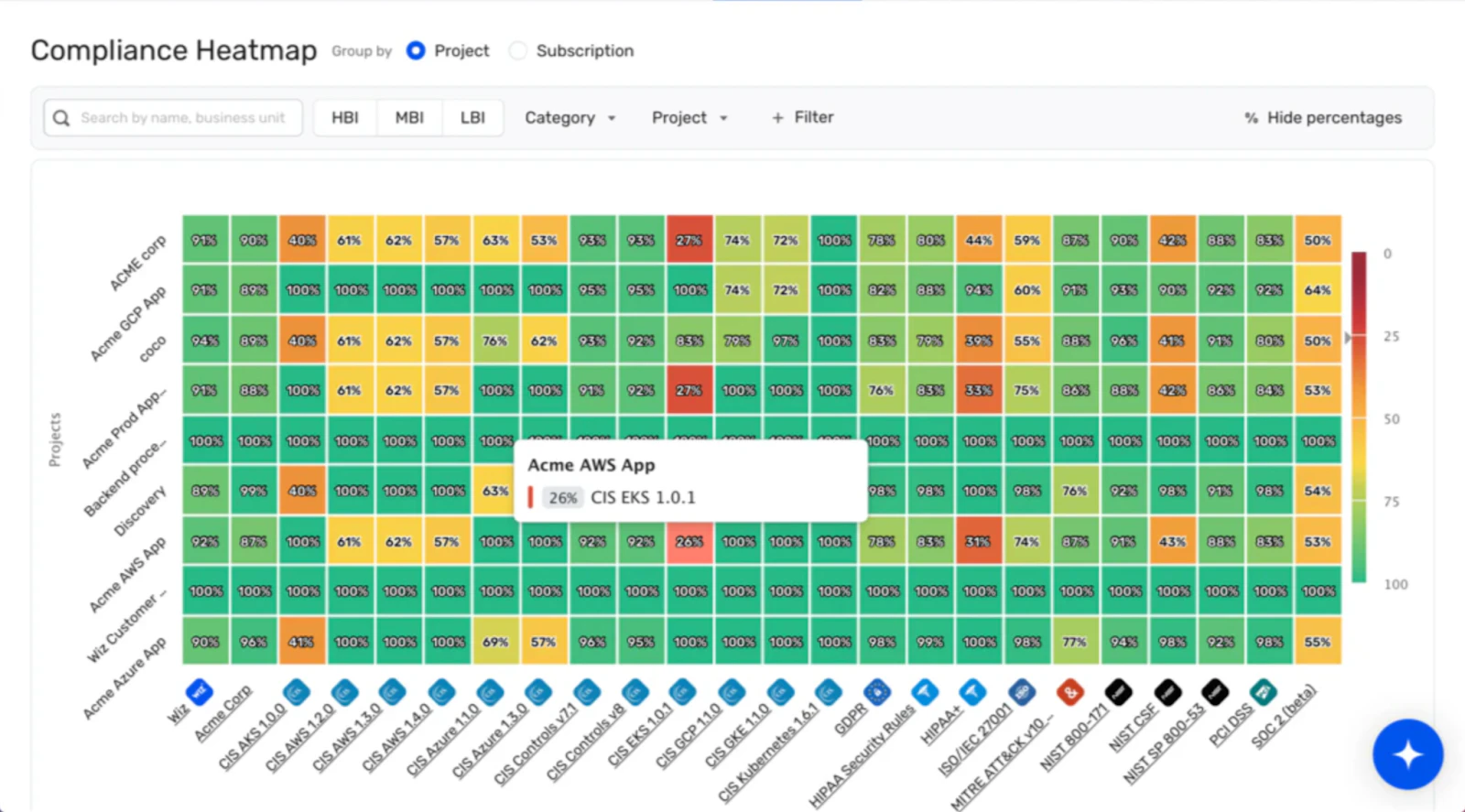
You’re not going to mitigate API compliance risk unless you’re familiar with the ins and outs of leading frameworks and standards. So let’s take a look at some data protection regulations, industry-specific frameworks, and emerging standards.
Data protection and privacy regulations
If your APIs handle sensitive data, then securing these APIs and ensuring proper authentication and authorization can help you stay compliant with data protection and privacy regulations like GDPR, CCPA, and PCI DSS.
GDPR
Under CCPA/CPRA, you need to be transparent about API data collection, processing, and retention practices. You must support the CCPA consumer rights to Know, Delete, Opt‑Out (of sale/share), and Correct. Under CPRA, you must comply with the Right to Limit the use of sensitive personal information.
PCI DSS 4.0 addresses the safeguarding of cardholder data, including securing APIs that store, process, or transmit CHD. It requires strong authentication and access controls, encryption, and vulnerability management, as well as secure SDLC practices for in‑scope systems.
Industry-specific standards
As if API compliance wasn’t tricky enough already, some sectors have extra API compliance obligations you need to fulfil. For example, how a manufacturing enterprise regulates its API posture might look completely different from that of a healthcare organization.
Speaking of healthcare, let’s zero in on HIPAA, a U.S. regulation with worldwide impact that governs how companies manage sensitive ePHI.
HIPAA is made up of three rules: a Privacy Rule, a Security Rule, and a Breach Notification Rule.
From an API standpoint, this means:
Addressing how APIs ingest and process ePHI
Establishing security controls to protect ePHI
Setting up disclosure and notification processes during breaches
Enterprise API compliance and security frameworks
On top of federal and industry-specific standards, businesses also have to work within security and compliance frameworks. These frameworks aren’t API-centric, but APIs play a major role in them.
The following are a few key frameworks and their impact on API compliance.
NIST Cybersecurity Framework
NIST CSF is centered around risk management, with a core function of organizing and prioritizing cybersecurity activities. Applied to APIs, this framework helps businesses systematically manage and improve their API security and compliance posture.
The five core functions of CSF are:
Identify
Protect
Detect
Respond
Recover
ISO 27001
ISO/IEC 27001:2022 sets the standard for an information security management system (ISMS). Relevant Annex A controls—like access control, secure development, cryptography, and logging/monitoring—apply directly to APIs.
OWASP API Security Top 10
OWASP API Security Top 10 (2023) is a leading resource for API security and a practical input to compliance programs. The list identifies the most critical API risks organizations should address.
CSA Cloud Controls Matrix (CCM)
CCM, from the Cloud Security Alliance, helps businesses beef up their API compliance posture in distributed and complex multi-cloud environments. This framework offers up almost 200 controls across 17 domains, including data security, logging and monitoring, and IAM, all of which can help secure and better manage APIs in the cloud.
Remember: Some of these frameworks aren’t legally mandatory, but following them makes it a lot easier to adhere to regulations that are. Frameworks serve as the cornerstone for an effective API compliance program.
Watch 12-min demo
Learn about the full power of the Wiz cloud security platform. Built to protect your cloud environment from code to runtime.
Watch now
Core components of a strong API compliance strategy
API compliance requirements can be complex and diverse, so don’t focus on isolated tools and strategies. What you need is a holistic strategy.
Below are a few key components to keep in mind.
Shift left security
To make sure your APIs are compliant, rely on proactive—instead of reactive—protection mechanisms.
What’s the best way to stay ahead of API issues? Build security controls as early into API lifecycles as possible. This includes design guardrails, code security, IaC scanning, CI/CD controls, and multiple rounds of testing and validation.
API security and compliance work hand in hand:
API security is about keeping your APIs safe from threats.
API compliance is about ensuring those security measures adhere to standards.
So when you’re shifting security left, the last thing you should do is build isolated security mechanisms like authentication systems or data encryption to address individual GDPR, HIPAA, or NIST provisions.
Instead, build a shift left strategy that centers around incorporating compliance measures into all phases of an API lifecycle to catch and remediate high-risk issues as quickly as possible.
Access controls
Enterprise compliance API strategies hinge on solid authentication, authorization, and access controls.
RBAC and ABAC are key here:
Role-based access controls (RBAC): Grant access privileges depending on pre-established user roles; this strengthens IAM and prevents malicious access.
Attribute-based access controls (ABAC): Provide access based on specific characteristics of a user or request; this enables a more granular and elastic IAM strategy.
And don’t forget API key management, i.e., controls and procedures for managing API keys. It’s critical to prevent illicit access and achieve proper API tracking.
For authentication and authorization, use the following:
OAuth2.0: An open standard to delegate access based on access tokens; enables access to APIs without compromising sensitive user information
OpenID Connect (OIDC): An identity layer to pair with OAuth; validates user legitimacy to prevent unsafe access
JSON Web Tokens (JWT): Self-contained tokens, typically signed (JWS) and optionally encrypted (JWE). Use TLS and, where needed, JWE or encrypted claims when handling sensitive data; secure sensitive data ported via APIs.
Then, of course, there’s Zero Trust. Don’t underestimate its importance to enterprise compliance API strategies. Zero trust principles like least privilege let you restrict API use to only the most relevant requests.
Data protection
All API compliance standards have a common demand: stringent data security. What security controls help you comply with data privacy requirements?
Granular access: Restricts API data permissions to legitimate users; reduces the possibility of unauthorized access or exposure
Audit logging: Documents the time and context of data access requests; improves transparency, accountability, and root cause identification
Data encryption: Renders at-rest and in-transit sensitive data as ciphertext; ensures adversaries can’t read sensitive information even if they breach your first line of defense
Pseudonymization: Replaces personal identifiers with artificial ones; severs ties between sensitive data and who it belongs to
Automated deletion: Uses API calls to programmatically erase information ad hoc or based on pre-established schedules; satisfies “right to erasure” laws
Data classification: Labels and categorizes data based on sensitivity, confidentiality, or business use; ensures APIs have specific rules to manage different data types
API rate limiting and throttling: Establishes limits for how often and how much APIs can be used; prevents disruptions and attacks like DDoS
Secure API connections: Uses the TLS/mTLS protocol to encrypt and fortify API traffic; prevents interception, impersonation, and inappropriate data access
Monitoring and auditing
You need unified, all-encompassing, and continuous visibility of your APIs to deliver a strong compliance posture. We’re talking logging mechanisms to keep track of every API call and response.
How can you uncover suspicious behavior before it escalates into an exploit? Adopt continuous monitoring, powered with advanced anomaly detection and behavioral analysis.
With compliance, achieving a solid compliance posture is just half of the puzzle; you also have to be able to demonstrate it. To show regulators that you’re on top of the compliance game, keep clean and comprehensive audit trails. Also, use tools that can generate both high-level reports and framework-specific API health reports.
API management: Fundamentals for cloud security teams
API management is about how you actually govern and protect your cloud app's biggest attack surface—your APIs—from day one.
En savoir plus
Must-haves for an API compliance solution
What features should your API compliance tool have? Let’s take a look. And remember: Many of these capabilities address challenges and bottlenecks that have plagued enterprises for years.
API discovery and inventory management
API compliance starts with knowing what APIs you have in your environments.
Step one? Ensure that your API security and compliance solution can continuously and automatically identify and map APIs across your estate. This includes shadow, orphaned, and zombie APIs—you know, the APIs that are neglected, unseen, or with nebulous ownership, i.e., major compliance blind spots!
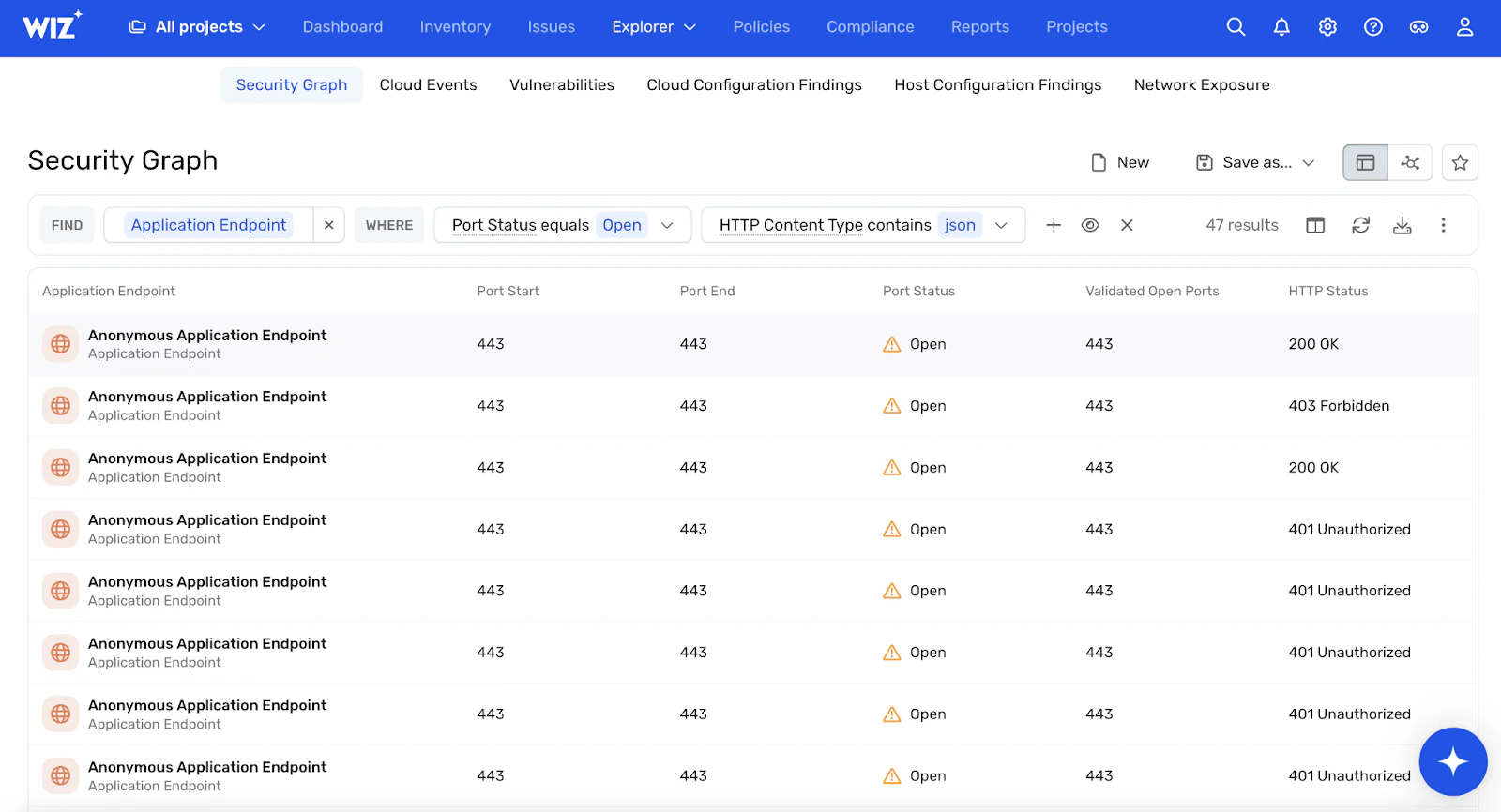
Automated API discovery tools should do more than just inventory every API. You need risk factors contextualized and correlated across every cloud layer. In other words, more than a long list of APIs, look for solutions that provide an interconnected and comprehensive picture of how they keep your environment together.
Automated policy enforcement
Consistent API policies are paramount, especially when you’re dealing with multiple disparate teams, tools, technologies, and processes. A policy-driven approach offers centralized controls over API security configurations and compliance health.
Automated enforcement is crucial here: The cloud’s simply too fast for manual policy enforcement and validation. Automation also delivers speed and accuracy.
Developer-centric API guardrails
The last frontier for strong API compliance is addressing the tension between fast development lifecycles and thorough compliance validation. Typically, we say you can’t ever afford to slow down your developers. But this is not the case if their speed comes at the cost of API compliance violations.
To ensure a strong API compliance posture and rapid development cycles, embed automation-driven and developer-friendly tools early into software pipelines. Democratizing these tools helps empower developers to adopt the "you build it, you secure it" mindset and be responsible for the APIs they spin up. The effect? High-octane dev environments—and no API compliance compromises.
How Wiz supports API compliance in the cloud
Wiz provides end-to-end visibility across the code-to-cloud lifecycle, letting organizations trace API compliance issues from runtime environments back to source code.
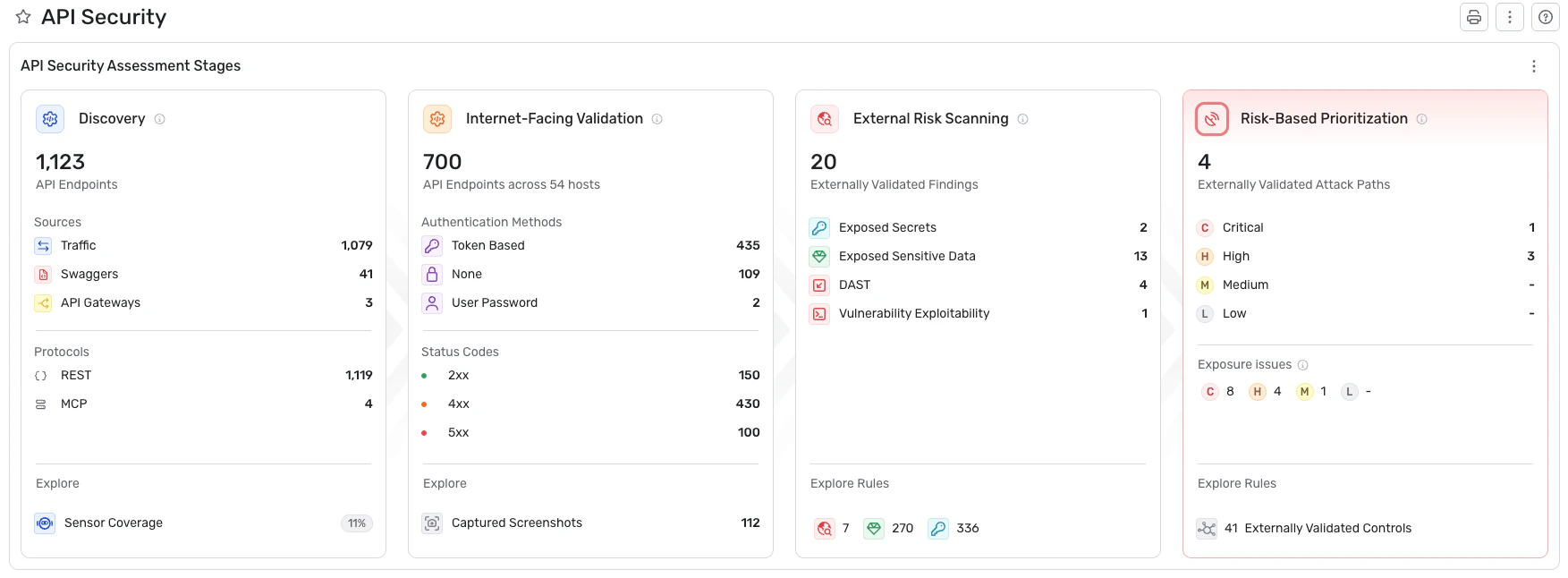
Wiz’s unified policy engine enforces consistent compliance rules across infrastructure-as-code templates, CI/CD pipelines, and runtime environments, so you can be sure your APIs meet regulatory requirements throughout their lifecycle.
Wiz API Security Posture Management (API SPM) complements that code-to-cloud visibility by continuously discovering APIs across cloud integrations, sensors, API management layers, and the external attack surface. It maintains a current API inventory, validates real exposure, and assesses APIs for authentication gaps, sensitive data exposure, and OWASP API Top 10 risks, which is especially useful for modern services that expose AI features through APIs or connect APIs directly to regulated data stores.
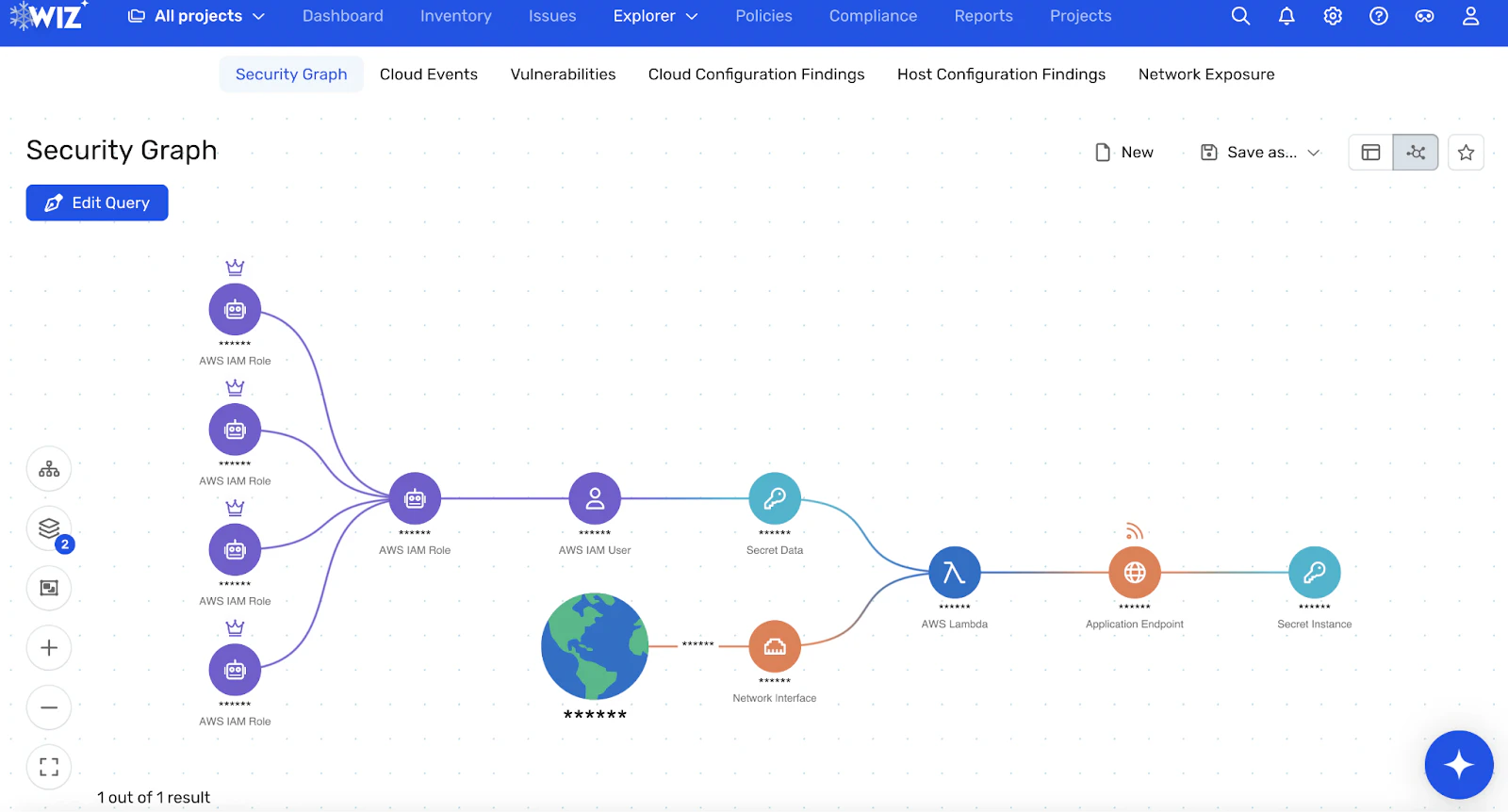
Then there’s Wiz’s Security Graph. It connects API SPM findings with API configurations, secrets, vulnerabilities, identities, and access patterns to provide contextual risk prioritization and faster remediation. That shared context helps teams spot toxic combinations that could turn an API gap into a real compliance issue, while automated detection and remediation guidance help them fix the APIs that matter most.
Ready to see how unified code-to-cloud security can strengthen your API compliance posture while accelerating development velocity? See how Wiz helps teams prevent compliance violations before they reach production. Get a demo today.
Secure your APIs with Wiz
Learn how Wiz gives security teams instant visibility into API exposure, misconfigurations, and attack paths — all in one platform.
