
CIEM vs. CSPM: What's the difference?
CIEM and CSPM are both cloud security tools that solve different problems in today's complex IT landscapes, where an estimated 87% of organizations use multi-cloud environments. CSPM focuses on securing your cloud's configuration, things like storage settings, network rules, and encryption. CIEM focuses on managing cloud identities and permissions, making sure users, service accounts, and applications only have the access they actually need.
Think of CSPM as protecting the structure of your cloud, while CIEM protects who can get in and what they can do. You need both to cover the full range of risks in a modern cloud environment.
The CSPM Buyer's Guide
Navigating the alphabet soup of cloud security tools is challenging – CSPM? CNAPP? CDR? We've simplified your decision-making process and laid all the criteria for a modern CSPM solution.

Understanding CSPM
What is CSPM?
Cloud Security Posture Management (CSPM) continuously monitors and secures cloud resource configurations to prevent misconfigurations that lead to breaches.
CSPM solutions automatically scan your cloud infrastructure against security best practices and compliance standards. They identify risks like exposed storage buckets, overly permissive network rules, and unencrypted databases. This visibility is crucial given that cloud misconfiguration is a significant cause of breaches according to Gartner research.
Role of CSPM in Cloud Security
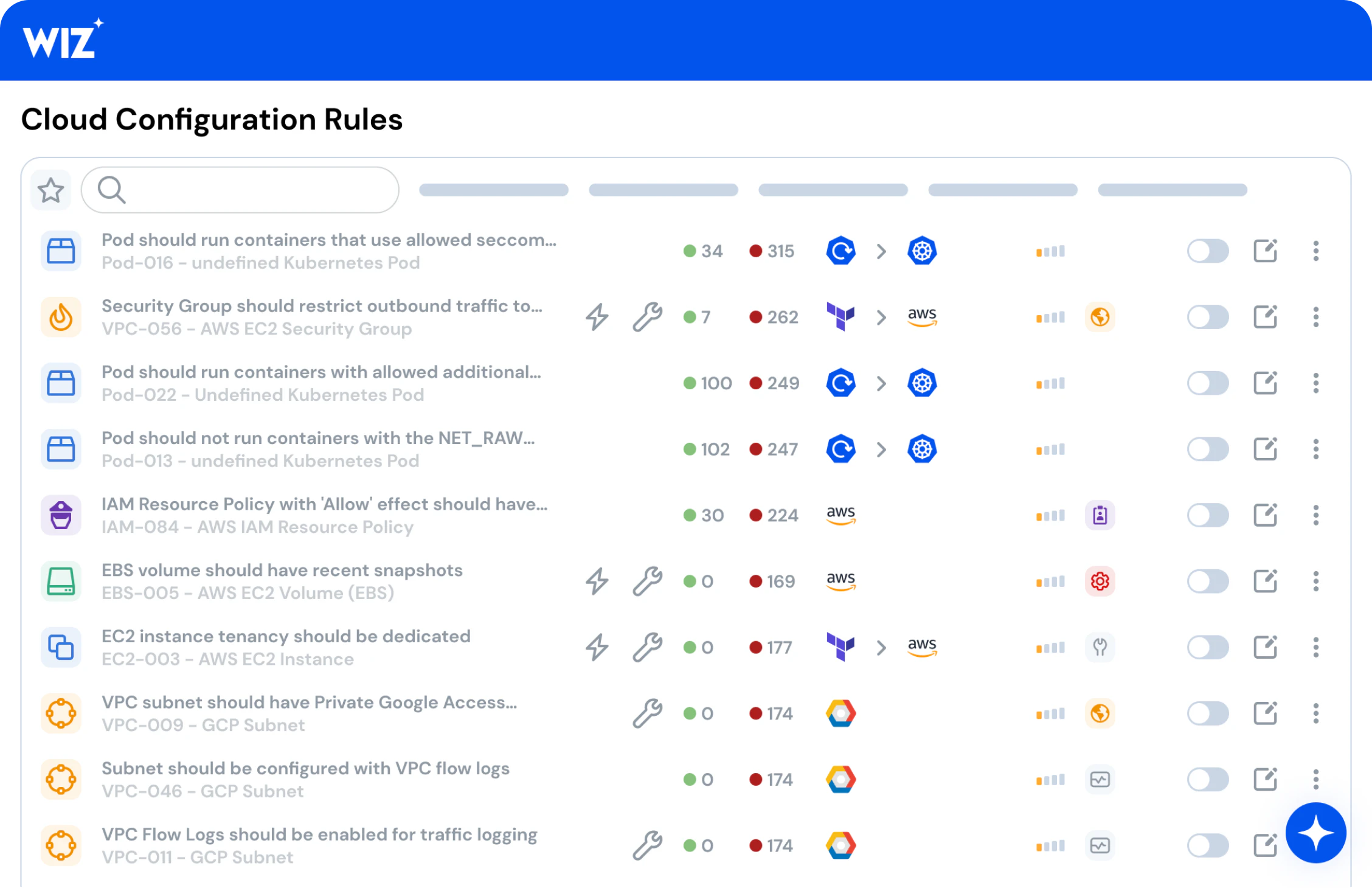
CSPM proactively prevents cloud breaches through continuous configuration monitoring and automated remediation.
Key functions include:
Real-time scanning: Monitors cloud resources against security baselines 24/7.
Instant alerts: Notifies teams immediately when it detects risky configurations.
Automated fixes: Remedies common misconfigurations without manual intervention.
This automation helps organizations close security gaps faster and maintain consistent protection across dynamic cloud environments.
Benefits of using CSPM
Risk mitigation: CSPM tools identify and address security misconfigurations, reducing the risk of data breaches and unauthorized access.
Compliance assurance: CSPM ensures that cloud resources comply with industry regulations and security standards, helping organizations maintain a compliant infrastructure.
Real-time monitoring: Continuous monitoring allows for timely detection and response to security issues, minimizing the impact of potential threats.
Cost optimization: By preventing misconfigurations that could lead to security incidents, CSPM helps reduce costs associated with data breaches and regulatory fines.
Understanding CIEM
What is CIEM?
Cloud Infrastructure and Entitlement Management (CIEM) controls who can access what in your cloud environment by managing user permissions and enforcing least privilege principles.
CIEM solutions discover all identities across your cloud infrastructure, analyze their effective permissions, and identify over-privileged accounts that create security risks. By preventing unauthorized access and reducing the attack surface from compromised credentials, CIEM addresses a critical vulnerability.
Role of CIEM in cloud security
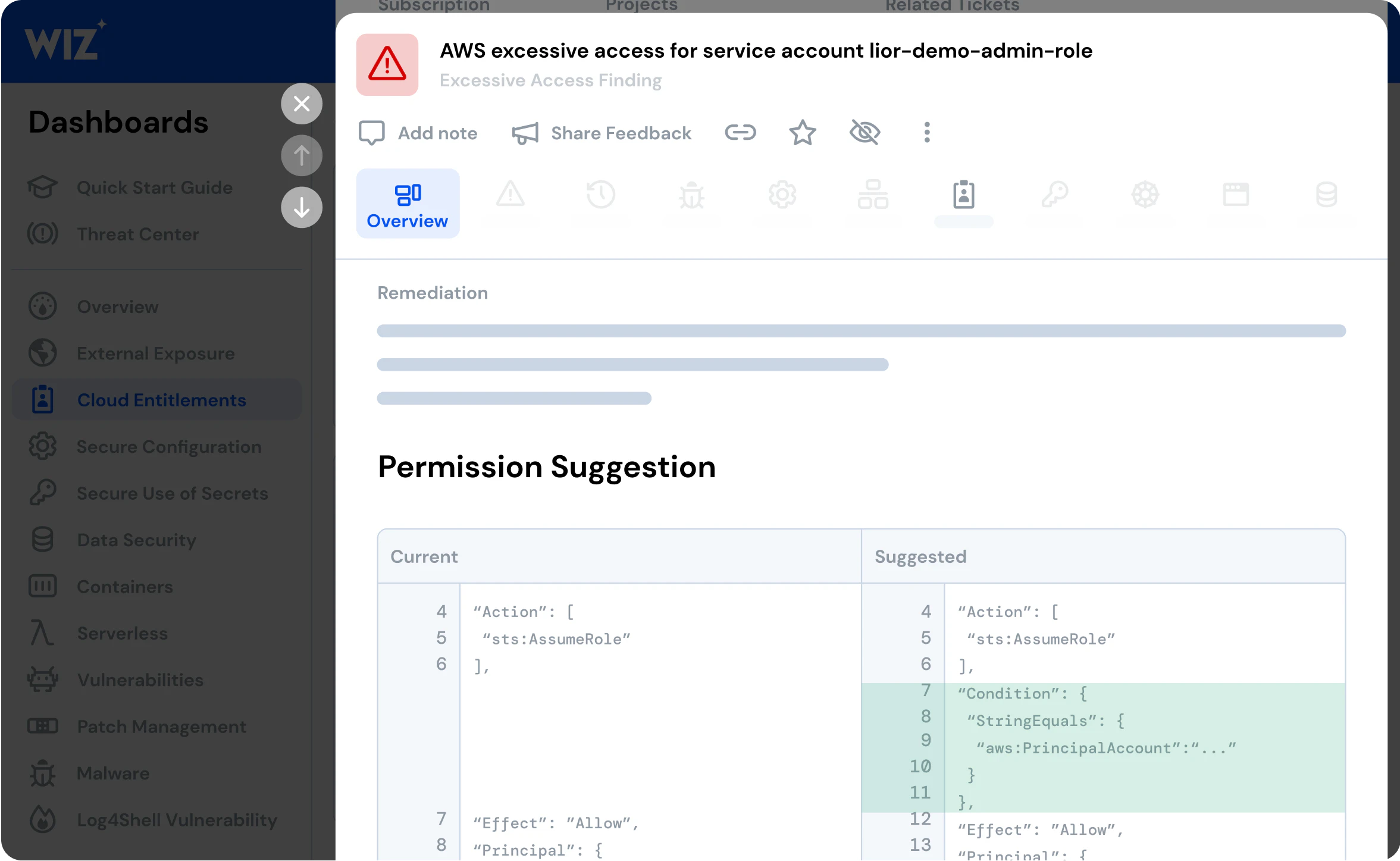
CIEM solves the identity chaos that emerges in complex multi-cloud environments where users accumulate excessive permissions over time.
CIEM provides complete visibility into who has access to what across all cloud platforms. It maps effective permissions, identifies unused or excessive privileges, and enforces least privilege access automatically. These capabilities prevent privilege escalation attacks and reduce the risk of insider threats.
Benefits of using CIEM
Identity governance: CIEM provides centralized control over identities, ensuring that users have the right access permissions and privileges.
Risk reduction: By enforcing least privilege and continuously monitoring access, CIEM helps organizations reduce the risk of insider threats and unauthorized access.
Compliance management: CIEM helps meet regulatory requirements by maintaining proper controls over user access and entitlements.
User behavior analytics: CIEM tools often incorporate user behavior analytics, allowing organizations to detect and respond to anomalous activities that may indicate a security threat.
Comparing CIEM and CSPM
As organizations navigate the complex landscape of cloud security, understanding the distinctions between CSPM and CIEM is crucial.
| Comparison | CSPM | CIEM |
|---|---|---|
| Focus Area | Configuration security | Identity and Entitlement Management |
| Primary Objective | Secure cloud infrastructure | Manages and secures user access and entitlements |
| Scope | Configurations and policies | User identities and access permissions |
| Visibility & Control | Provides visibility into cloud infrastructure settings and enforces security policies | Delivers comprehensive insights into user activities and enforces least privilege principles |
| Compliance | Ensures configurations align with industry regulations and compliance standards | Facilitates identity governance to meet regulatory requirements regarding user access |
| Example Use Cases | Detecting insecure VM configurations, identifying open storage buckets | Implementing least privilege principles, detecting anomalous user behavior |
| Attack Vectors Covered | Misconfigurations, insecure settings | Credential theft, privilege escalation, insider threats |
What limitations do CSPM and CIEM have when used in isolation?
Using CSPM or CIEM alone leaves gaps in your security strategy. CSPM can spot misconfigurations, but it won't catch if a user or service has dangerous permissions that attackers can exploit. CIEM can help you right-size access, but it won't alert you if a configuration exposes a database to the internet or if an entity turns off encryption.
Attackers often chain configuration and identity weaknesses. If you only use one tool, you might miss how these risks combine to create real attack paths. That's why relying on either CSPM or CIEM alone isn't enough for modern cloud security.
Watch 12-min demo
Watch how Wiz protects cloud environments from code to runtime.

Harmonizing CSPM and CIEM with CNAPP
The most effective cloud security strategy combines CIEM and CSPM.
Siloed security tools create dangerous blind spots. When CSPM and CIEM operate separately, teams miss critical attack paths that span both configuration and identity risks.
Cloud-native application protection platforms (CNAPPs), a term first coined by Gartner in 2021, solve this problem by unifying both capabilities. This integration reveals how misconfigurations and identity risks combine to create exploitable attack paths that neither tool would detect alone.
CNAPP transcends this limitation by:
Consolidating data: CNAPP aggregates data from disparate sources, including CIEM and CSPM, providing a holistic view of your cloud security posture. This eliminates manual correlation and facilitates informed decision-making.
Automating workflows: By automating threat detection and response processes, CNAPP improves efficiency and reduces the burden on security teams. This allows them to focus on strategic initiatives while maintaining continuous security vigilance.
Enhancing threat detection: CNAPP correlates data from multiple sources across the attack surface to identify and neutralize threats with unprecedented accuracy. This proactive approach minimizes the potential for successful cyberattacks.
Simplifying compliance management: CNAPP simplifies compliance efforts by ensuring alignment with industry standards and regulations. By consolidating security activities, organizations can demonstrate adherence with greater ease.
How to secure your cloud environment with integrated CIEM and CSPM
To truly secure your cloud, you need to connect the dots between configuration risks and identity risks. Start by using CSPM to continuously scan for misconfigurations and compliance gaps. At the same time, use CIEM to inventory all identities and permissions, flagging anything that's over-privileged or unused.
The real value comes from combining them. For example, if a storage bucket is public and a service account with broad permissions can access it, that's a critical risk. Unified platforms like Wiz automatically correlate these signals, so you see the full attack path and prioritize what to fix first. This approach helps you move from reactive alert-chasing to proactive risk reduction.
Wiz's approach combining CSPM and CIEM with CNAPP
Wiz unifies CSPM and CIEM capabilities within a comprehensive CNAPP platform that correlates risks across your entire cloud environment.
Rather than generating separate alerts for configuration issues and identity problems, Wiz identifies how these risks combine to create real attack paths. For example, it connects an exposed database to an over-privileged service account to show the complete path to data exfiltration.
This unified approach helps security teams focus on fixing the combinations that actually matter, rather than managing thousands of isolated findings from different tools.
Ready to see how Wiz unifies CSPM and CIEM to protect your cloud? Request a demo to explore how we can secure your environment.
A unified approach to cloud security
Learn why CISOs at the fastest growing companies unify their cloud security needs with Wiz.
