


What is Kubernetes vulnerability scanning?
Kubernetes vulnerability scanning is an automated security process that systematically inspects containerized environments for weaknesses, examining container images, cluster configurations, and runtime environments to identify exploitable vulnerabilities before attackers can leverage them.Container environments create unique security challenges that traditional scanning tools can't address effectively. Kubernetes clusters are dynamic—pods can be created, destroyed, or moved within seconds, making static security approaches inadequate. So unlike traditional infrastructure scanning, Kubernetes vulnerability scanning can accommodate this dynamic nature.
Key security gaps include:
Ephemeral workloads: Traditional scanners lose visibility when containers disappear
Configuration complexity: Misconfigurations in RBAC, network policies, or admission controllers can expose entire clusters, enabling namespace-crossing attacks
Runtime blind spots: Most vulnerabilities emerge during execution, not in static images
These factors combine to create attack surfaces that require continuous, specialized monitoring throughout the container lifecycle.
Kubernetes Security Best Practices Cheat Sheet
Get actionable best practices for securing your Kubernetes clusters, containers, and configurations.

The importance of Kubernetes vulnerability scanning
Organizations that implement continuous scanning can identify threats before deployment rather than during incidents. And by integrating scanning with regulatory frameworks like SOC 2 and PCI DSS, you can essentially automate compliance, as failure to comply can lead to an average annual cost of $14.8 million in penalties. Instead of manual audits, teams demonstrate continuous security posture through documented scan results.
Overall, customer trust strengthens when organizations can prove their container security practices: proactive vulnerability management shows customers that their data runs on hardened, monitored infrastructure.
Common vulnerabilities in Kubernetes
Navigating the Kubernetes ecosystem requires a thorough understanding of its security landscape. Recognizing these common security pitfalls is the first step towards fortifying your clusters against potential threats:
Misconfigurations: Misconfigurations of Kubernetes clusters can open the door to unauthorized access and exploitation. Simple oversights in security settings, such as overly permissive access controls or unchanged default configurations, can have dire consequences.
Inadequate access controls: Properly configuring access controls is crucial for securing a Kubernetes environment. Failure to implement role-based access control (RBAC) policies or to restrict access to Kubernetes APIs can lead to unauthorized access and potential data breaches.
Unpatched software: Kubernetes environments often consist of numerous components, including the Kubernetes control plane, container runtimes, and applications running within containers. Neglecting to apply security patches promptly leaves these components vulnerable to exploitation.
Container vulnerabilities: Containers, the building blocks of Kubernetes, can harbor hidden vulnerabilities, including container escape vulnerabilities, within their images. Without regular scanning and updating of container images, attackers can exploit these vulnerabilities to compromise the container and potentially the entire cluster.
The Kubernetes vulnerability scanning process
Kubernetes vulnerability scanning works most effectively when embedded throughout the container lifecycle. This continuous approach catches different types of risks at each stage—from insecure dependencies in development to runtime privilege escalations in production. Rather than discovering vulnerabilities after deployment, teams identify and fix issues when remediation costs less and impact remains minimal.
Here’s what application looks like across stages:
Before development: Static analysis
Static analysis prevents container vulnerabilities from reaching clusters. These tools scan Infrastructure-as-Code templates, Dockerfiles, and Kubernetes manifests before deployment to catch misconfigurations, like overly permissive RBAC policies or exposed secrets. With early detection, developers can fix issues in code rather than scrambling to patch running containers.
During deployment: CI/CD pipelines and admission controllers
Integrate vulnerability scanning into CI/CD pipelines to ensure every build is automatically scanned. This continuous scanning approach aligns with the DevSecOps philosophy of integrating security into the development process, enabling immediate feedback and remediation.
In addition to implementing automatic scanning, configure Kubernetes admission controllers to enforce security policies and prevent the deployment of non-compliant resources. For example, if you block the deployment of container images that fail vulnerability scans, only secure, compliant containers are deployed.
Admission controllers are a great way to keep an eye on what's being deployed to your Kubernetes clusters. They can intercept every configuration you apply to a cluster, as well as modify or verify it. This capability is great for many use cases. One very interesting controller is the Validating Admission Policy Controller. It offers a declarative way of creating a policy using the Common Expression Language.
Post-deployment: Runtime scanning and monitoring
Runtime scanning addresses threats that emerge after deployment. While static analysis catches known vulnerabilities, runtime tools detect active exploitation attempts, privilege escalations, and lateral movement within clusters.
Behavioral monitoring complements vulnerability detection by identifying anomalous activities like unusual network connections, unexpected file system changes, or containers attempting to access restricted resources. This dual approach ensures teams catch both known vulnerabilities and novel attack techniques targeting their specific environment.
Watch 12-min demo
See how Wiz delivers continuous scanning and runtime visibility across your Kubernetes and cloud environments.

Open-source Kubernetes vulnerability scanners
Open-source Kubernetes vulnerability scanners help teams automatically identify potential security weaknesses and configuration issues across their clusters. Because these tools are community-driven and transparent, they evolve quickly and benefit from shared expertise across the ecosystem. Using them gives developers and security teams meaningful visibility into their environments so they can resolve issues early and maintain a stronger overall security posture.
However, effective Kubernetes scanners must handle container-specific challenges. Look for tools that can scan both running and stopped containers, understand Kubernetes-native resources like ConfigMaps and Secrets, and correlate findings across the entire cluster topology. Your chosen scanner should also connect seamlessly with your container registry, CI/CD pipelines, and existing security tools without requiring extensive configuration or maintenance overhead.
Let’s look at a few top options:
Clair
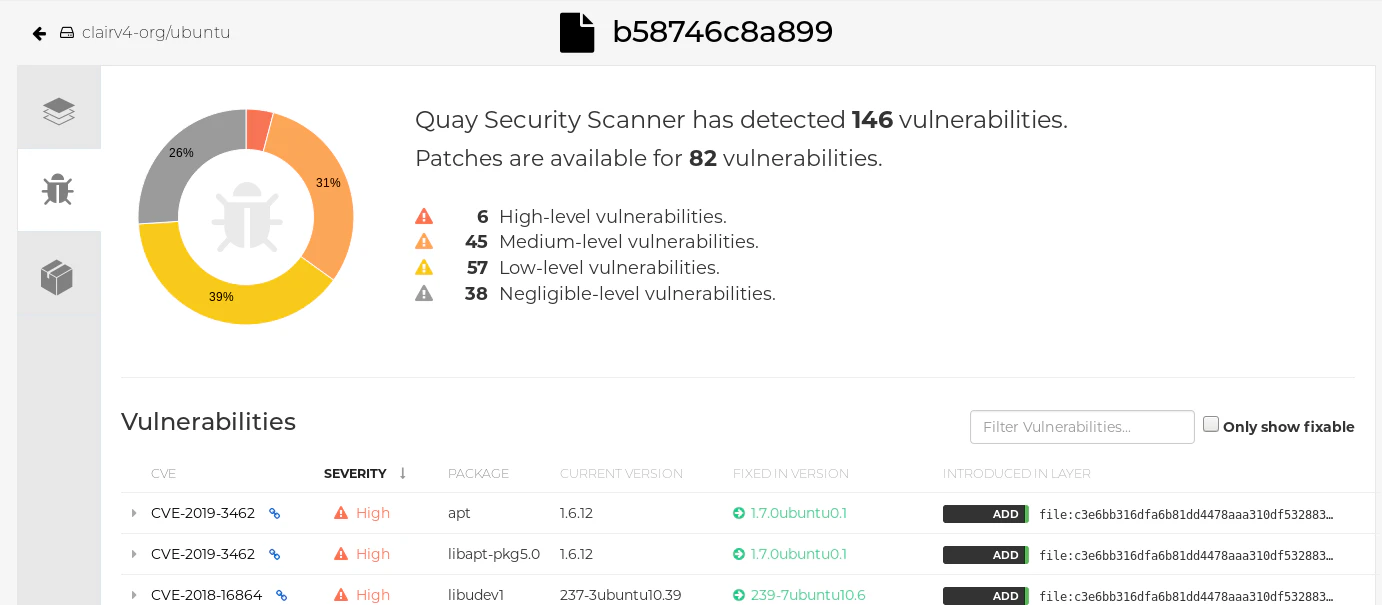
Clair is focused on container image scanning and examines container images for known vulnerabilities. It integrates with CI/CD pipelines, providing an automated way to ensure container images are free from security vulnerabilities before deployment. Clair stands out for its extensive vulnerability database and its ability to scan layers within container images, providing detailed insights and reports on potential security issues. This level of detail and integration makes Clair an essential tool for maintaining the security integrity of containerized applications.
Trivy
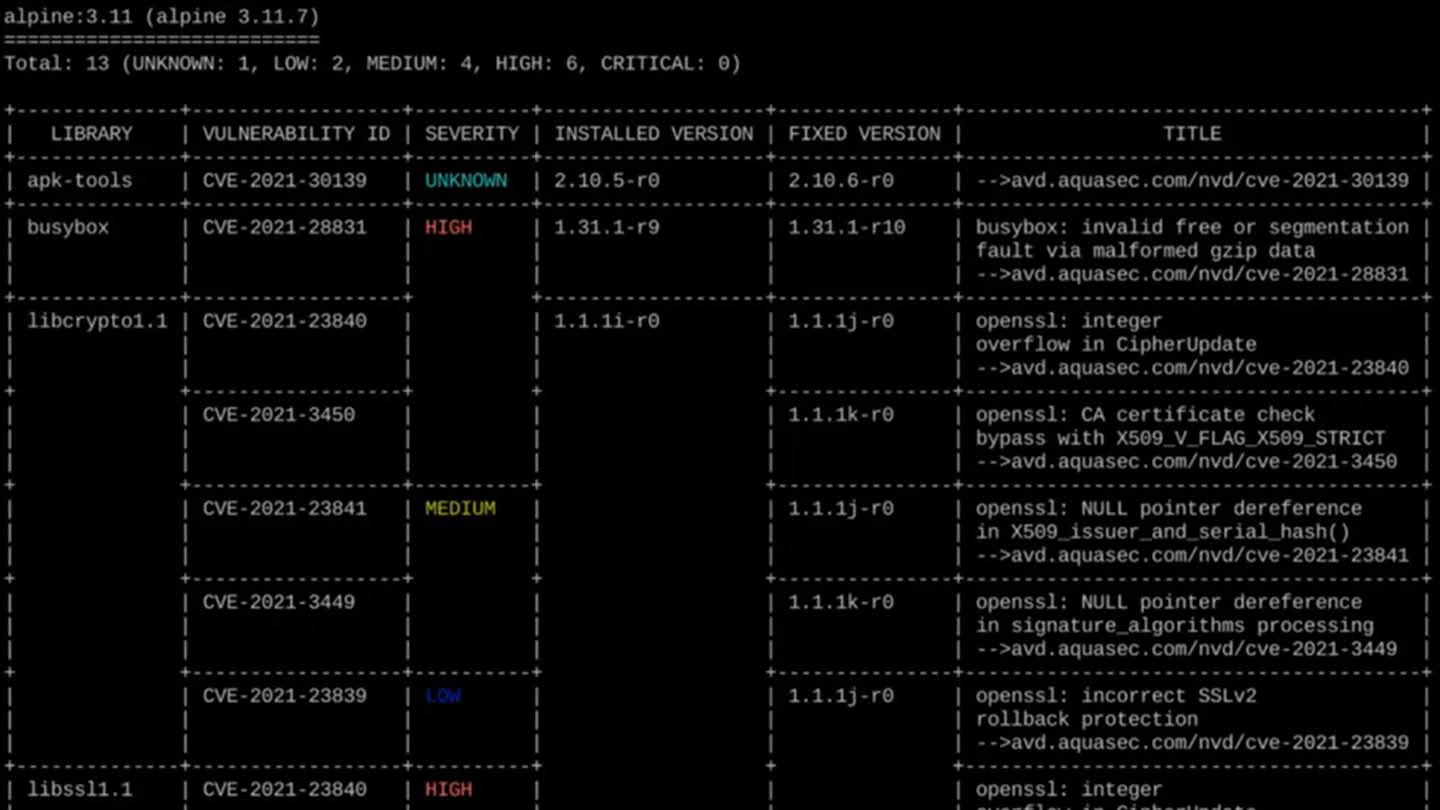
Trivy is a comprehensive vulnerability scanner that identifies security issues in container images and file systems. It's known for its simplicity and ease of integration into CI/CD pipelines, making it a popular choice for developers.
Kubescape
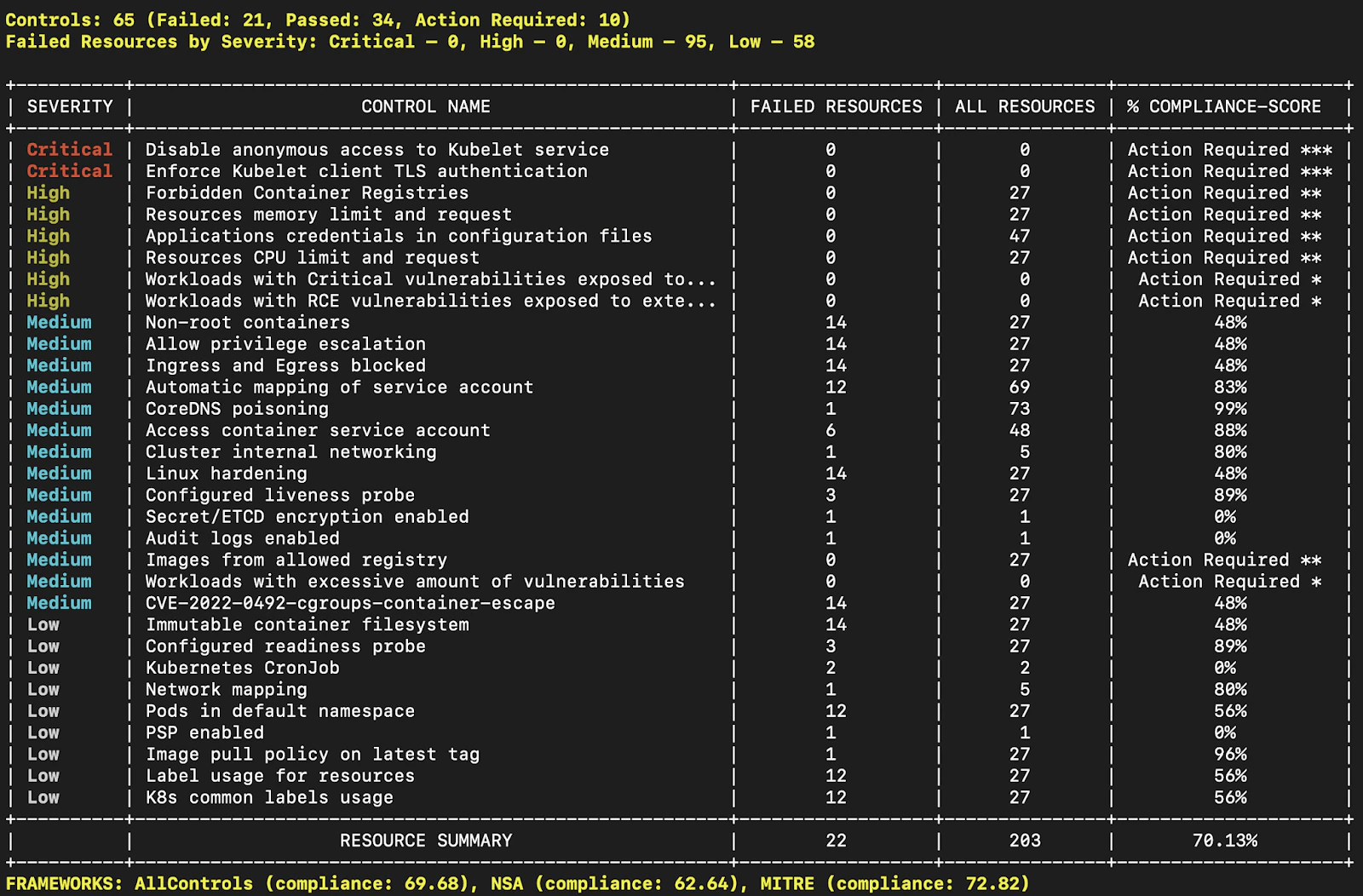
Kubescape is designed to scan Kubernetes clusters against several known security standards and benchmarks, such as the Enduring Security Framework (ESF) and the MITRE ATT&CK framework. It provides detailed reports on compliance and security posture, offering actionable insights for remediation.
kube-bench
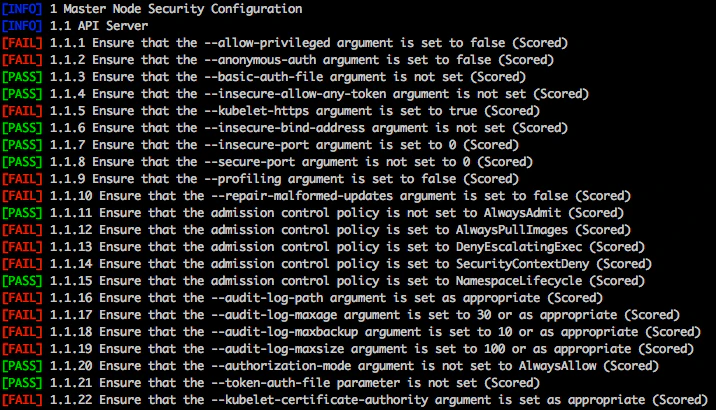
kube-bench is designed to check clusters against security benchmarks from the Center for Internet Security (CIS), which provides more than 100 CIS Benchmarks for over 25 different vendor product families. It runs various checks to ensure Kubernetes deployments are configured according to CIS best practices, helping you prevent common misconfigurations that could lead to security breaches.
Wiz's approach to Kubernetes vulnerability scanning
Kubernetes and cloud security evolve quickly, but with the right approach, teams can gain clear, continuous visibility into everything they run across their cloud environments. Wiz takes an agentless, cloud-native approach designed to simplify this complexity.
By bringing together signals from Kubernetes, containers, and cloud platforms, Wiz gives organizations a unified, context-rich view of their security posture. Its cross-cloud support—including AWS, Azure, Google Cloud, and Kubernetes—helps teams understand how risks connect across layers, streamline compliance, and make faster, informed decisions to keep cloud workloads secure.
Wiz Key features
Wiz provides a holistic view of your security posture with:
Container and Kubernetes security: Wiz offers specialized security solutions for containers and Kubernetes, enabling organizations to build containerized applications without compromising on security. Our all-in-one platform secures containers, Kubernetes, and cloud environments from build-time to real-time, addressing vulnerabilities at every stage of the development life cycle.
Cloud threat detection and response: Wiz provides advanced monitoring and threat detection capabilities, crucial for container security. This feature allows organizations to detect and respond to threats in real time, ensuring continuous security monitoring and rapid response to any potential incidents in their cloud environments. Real-time threat detection is vital to maintaining a robust security posture in dynamic cloud and containerized systems.
Vulnerability management: With Wiz, uncovering vulnerabilities across your clouds and workloads becomes effortless. Our tools scan virtual machines (VMs), serverless applications, containers, and appliances for vulnerabilities without the need for external scans or deploying agents.
Comprehensive compliance: Wiz ensures your cloud environments remain compliant with industry standards and regulations, such as PCI, GDPR, HIPAA, and CIS Benchmarks (which are essential for hardening Kubernetes clusters). Our automated compliance capabilities simplify the management of regulatory requirements.
Supply chain security: Wiz extends its security capabilities to the entire supply chain, from code to deployment. This ensures a comprehensive security approach, safeguarding not just the operational environments but also the underlying code and processes that contribute to the development and maintenance of applications.
Secure your Kubernetes environment with Wiz's comprehensive scanning
Securing Kubernetes requires more than just one-time checks. By integrating continuous vulnerability scanning into your workflows, you can catch issues before they reach production and respond quickly to new risks. Wiz provides a unified platform that brings together scanning, risk prioritization, and actionable guidance, helping you protect your clusters, containers, and cloud resources at every stage.
Ready to see how Wiz unifies Kubernetes vulnerability scanning with cloud-native security? Get a demo to explore how Wiz can protect your clusters, containers, and cloud resources from a single platform.
See Wiz in Action
Experience unified Kubernetes and cloud security with continuous scanning, risk prioritization, and actionable guidance.
