

What is Wiz?
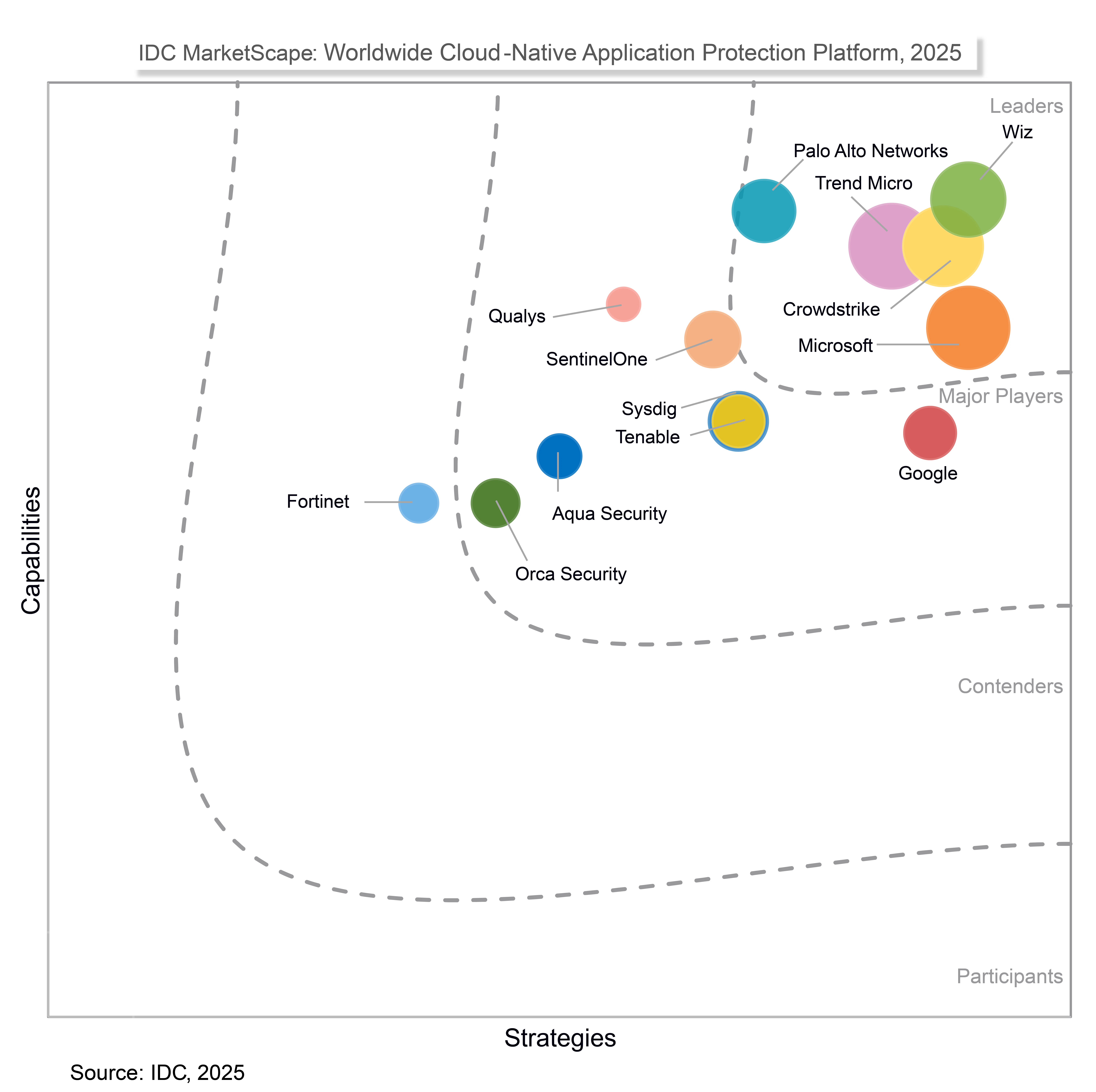
Wiz is a CNAPP platform designed specifically for modern cloud environments, offering coverage from development through runtime. Wiz was designed specifically for cloud environments from inception, with an agentless-first architecture. This approach enables rapid deployment and unified risk correlation across misconfigurations, identities, workloads, and data.
Its graph-based architecture (the Wiz Security Graph) gives security teams an interconnected view of their entire cloud stack, from code to runtime.
Wiz addresses cloud security through three integrated pillars: Wiz Code for secure development, Wiz Cloud for security posture management, and Wiz Defend for threat detection and response. Together, these form a unified platform where each pillar reinforces the others. These three components are integrated within a single platform, allowing each to share context and strengthen the others.
Core components
Broad visibility and scanning across multi-cloud environments – including AWS, Azure, GCP, and Kubernetes clusters – to help minimize blind spots.
Correlates signals across misconfigurations, vulnerabilities, identities, and network exposure to give teams a more interconnected view of cloud risks.
Highlights how different cloud resources may interact in ways that create new risks or attack paths.
Security Graph that correlates cloud signals across identity, network, workloads, and data for full attack-path analysis and exploitability context
Built-in CSPM, CIEM, DSPM, and vulnerability management capabilities
Extensive third-party support via the Wiz Integration (WIN) platform
AI Security Posture Management (AI-SPM) with visibility across AI pipelines, AI-BOM generation, and AI attack path analysis
Use cases
Cloud-first transformation: Support cloud-native strategies with rapid, agentless onboarding that delivers security at scale without slowing down innovation.
Full-stack visibility: Gain unified visibility across multi-cloud, container, and serverless environments, mapping relationships to reveal real attack paths.
Shift-left security: Empower developers with secure-by-design guardrails directly in IDEs and CI/CD pipelines, catching misconfigurations before production.
Runtime protection: Detect and investigate threats in live workloads with Wiz Defend and the Wiz Sensor, correlating runtime signals with identity and posture context.
Data & AI security: Govern sensitive data exposure and secure emerging AI/GenAI pipelines through Wiz’s AI-SPM and DSPM capabilities.
Rapid7 vs CrowdStrike: Cloud Security Detection Compared
Compare Rapid7 and CrowdStrike: features, threat detection, endpoint protection, and performance to help you choose the right solution for your team.
En savoir plus

Key considerations
Wiz covers a lot of ground when it comes to cloud security. A key advantage for many teams is the ability to deploy Wiz agentlessly, reducing installation requirements across environments.
As a purpose-built CNAPP, Wiz’s main consideration for buyers is that it’s a newer company compared to some long-established vendors.
What is CrowdStrike?
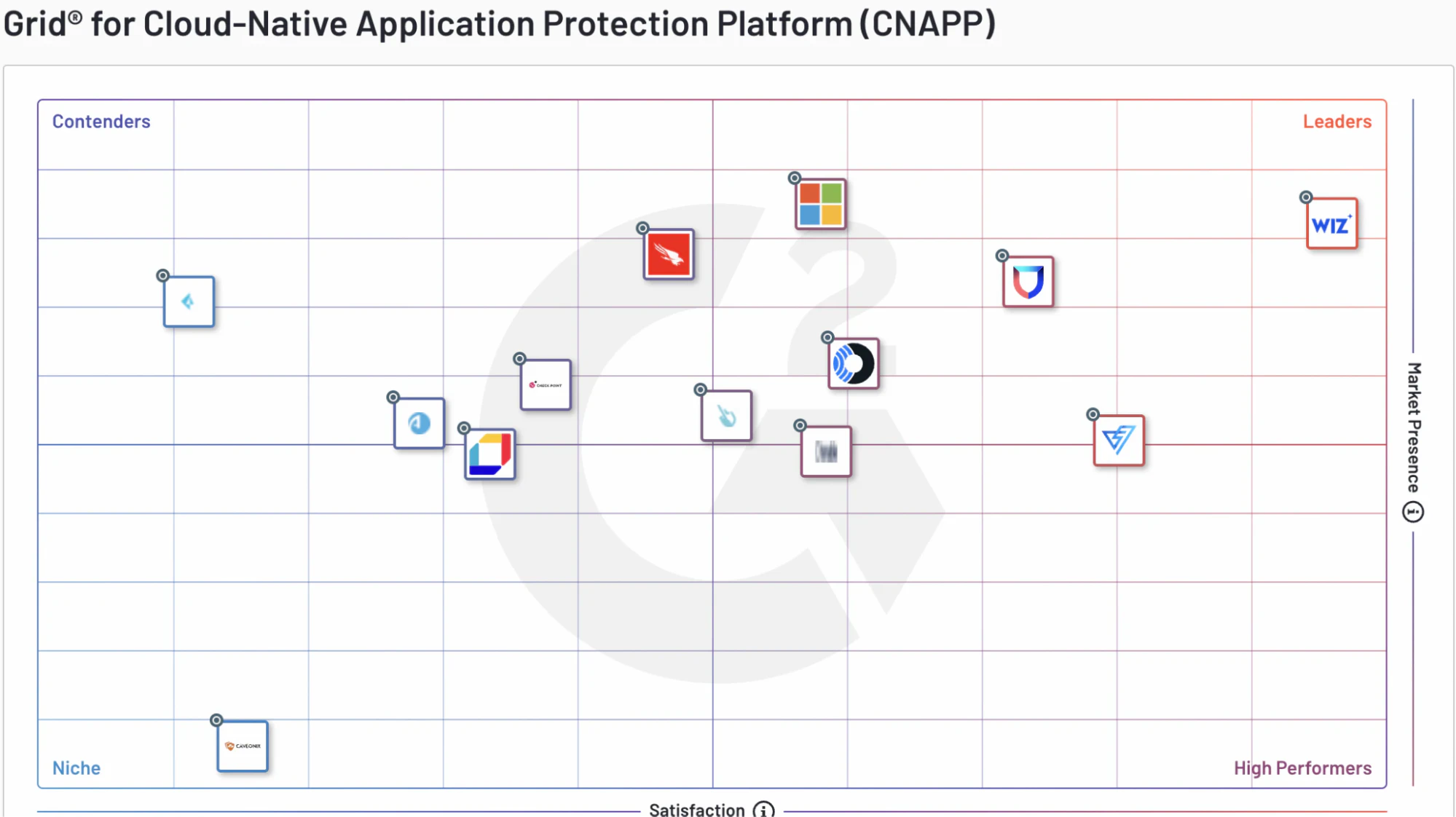
CrowdStrike is a well-established cybersecurity vendor best known for its endpoint detection and response (EDR) and workload protection capabilities. In recent years, CrowdStrike has extended into cloud security with its Falcon CNAPP platform, which builds on its agent-based foundation. Falcon now includes CSPM, ASPM, and DSPM features, and some deployment scenarios involve configuration to extend workload visibility and context.
Core components
Agent-based protections for endpoints, workloads, and cloud assets
Real-time AI-driven threat detection and response, powered by the CrowdStrike Threat Graph
Unified workload protection across servers, virtual machines, containers, and cloud services
AI-enhanced threat intelligence and proactive threat hunting
Use cases
Organizations with strong endpoint security needs and a growing cloud footprint
Enterprises focused on real-time anomaly detection and incident response
Businesses seeking unified protections across both cloud and on-premises environments
Teams that benefit from SOC-as-a-service to supplement internal expertise
Key considerations
CrowdStrike offers strong endpoint protection, rich threat intelligence, and expanding cloud security capabilities. CrowdStrike’s agent-based approach offers deep workload visibility and typically involves more upfront deployment planning compared to agentless models. Because Falcon capabilities are primarily agent-driven, coverage in fully serverless runtimes is different than in VM/container workloads, where agents are present.
Wiz vs. CrowdStrike compared
Here’s a side-by-side look at Wiz vs. CrowdStrike across critical cloud security attributes:
Deployment and architecture
Wiz’s agentless-first approach enables rapid API-based onboarding across multi-account clouds, typically connecting to AWS, GCP, and Azure services within minutes. This prioritizes speed and minimizes infrastructure changes.
CrowdStrike provides agentless options for cloud control‑plane visibility, while most workload/runtime protections rely on agents. Runtime deployment speed scales with the number of endpoints; CSPM can connect quickly via cloud APIs.
CrowdStrike combines agentless control-plane visibility with agent-based runtime protections. This model provides deep workload insights, though it may require more operational planning and deployment steps compared to agentless approaches.
Takeaway: Organizations that value rapid onboarding and minimal infrastructure changes may find agentless approaches advantageous, while those prioritizing deep runtime protection often choose agent-based approaches.
Cloud visibility and coverage
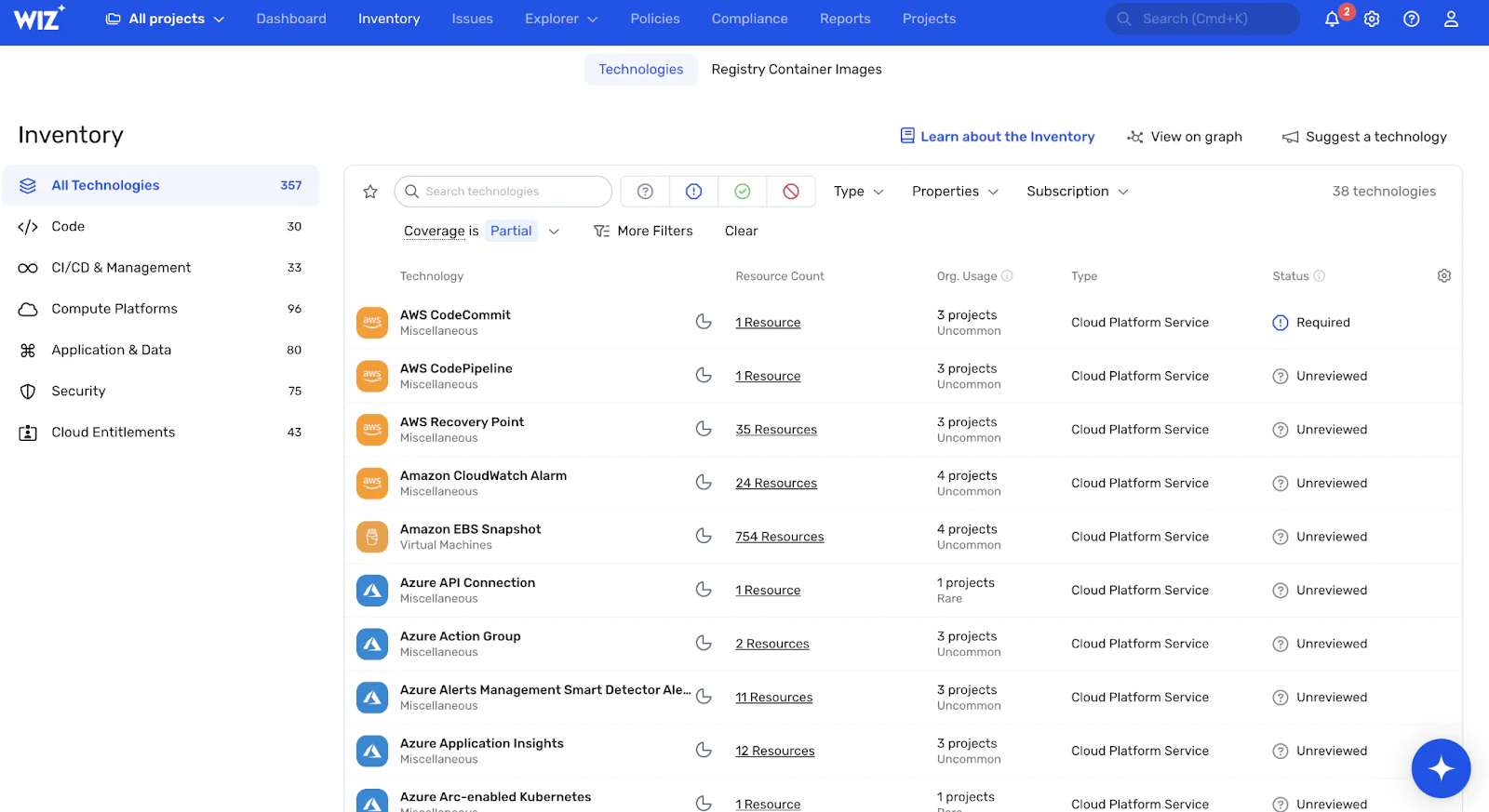
Wiz provides a graph-based visibility model that connects identities, misconfigurations, vulnerabilities, data, and runtime signals into a contextual risk view. This helps reveal potential attack paths and interrelated risks that might otherwise go unnoticed.
CrowdStrike offers strong workload-level visibility and has recently expanded its identity and data capabilities through acquisitions and platform updates. While these capabilities are maturing, organizations that already rely heavily on Falcon can benefit from a familiar, integrated experience.
Takeaway: Wiz emphasizes broad, contextual visibility across the cloud stack, while CrowdStrike offers strong workload and endpoint visibility that continues to expand through ongoing enhancements.
Context and risk prioritization
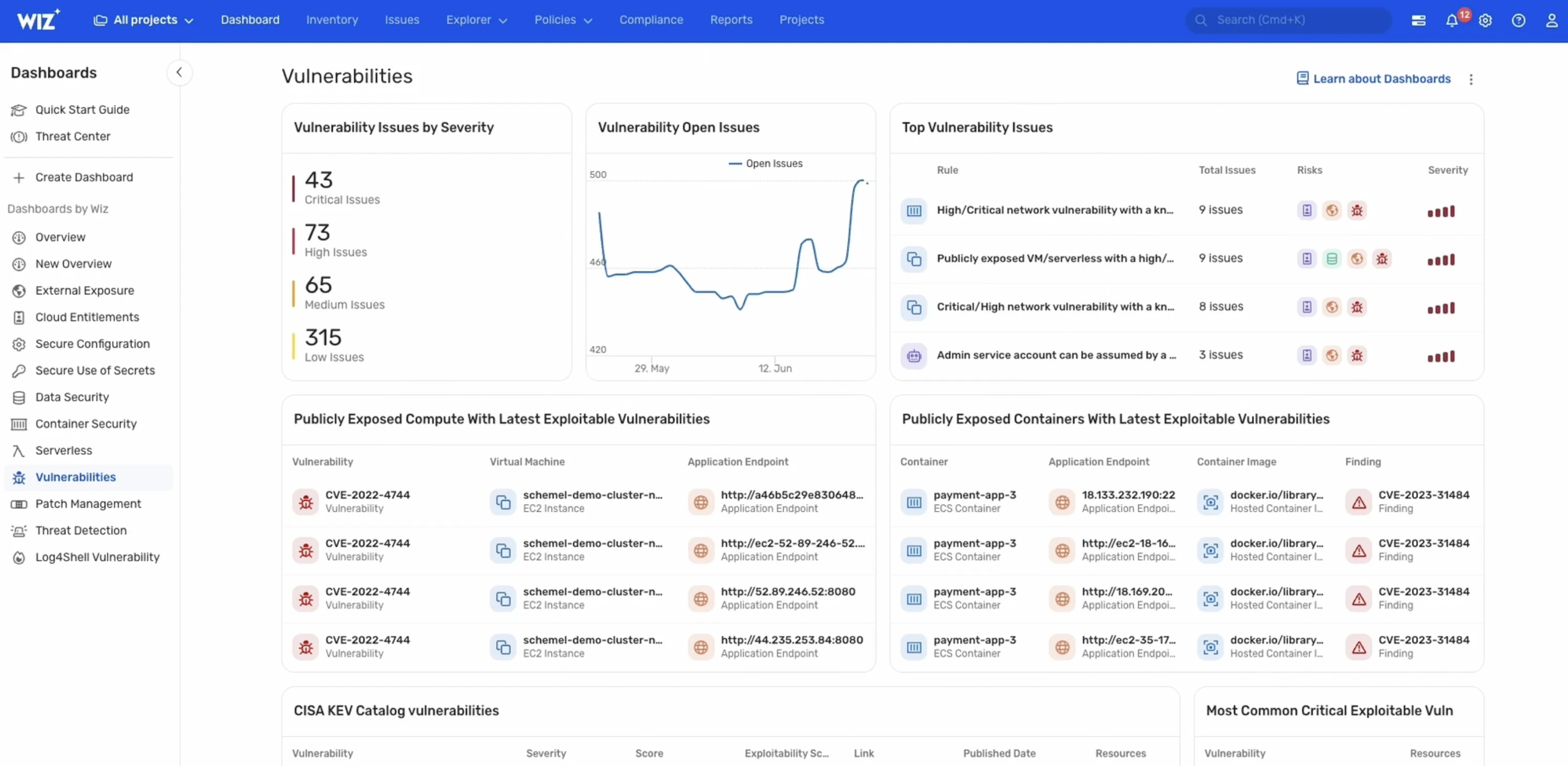
Wiz prioritizes risks by mapping exploitability across attack paths, factoring in network exposure, reachable identities, and proximity to sensitive data. This helps security teams focus on the issues most likely to be exploited.
CrowdStrike also applies risk scoring and correlation through its Threat Graph, with strong visibility in agent-based environments. Some teams may find its depth most effective in VM and containerized workloads where Falcon agents are present.
Takeaway: Both platforms use context to elevate the most relevant risks. Wiz applies this across the entire cloud environment through its Security Graph, while CrowdStrike emphasizes risk insights tied closely to its agent-based protections.
Runtime protection and threat detection
Wiz Defend provides runtime detection through a lightweight eBPF sensor integrated with the broader CNAPP, giving visibility across the cloud environment and correlating runtime signals with posture and identity context. This gives visibility across the entire cloud environment, surfacing high-fidelity threats and showing how they connect across workloads, identities, and configurations.
CrowdStrike has a mature track record in real-time runtime detection and response, drawing on its EDR heritage and global threat intelligence. Its strengths are particularly evident in environments with large endpoint and workload footprints.
Takeaway: Wiz unifies runtime context with posture and code insights, while CrowdStrike delivers proven runtime detection rooted in endpoint protection expertise.
Practical Guide to Cloud Threat Detection, Investigation, and Response
Learn how CDR fits into your SOC workflows.

Developer experience
Wiz Code integrates directly into developer workflows, from IDEs to CI/CD pipelines, enabling security guardrails early in the lifecycle. This helps developers remediate misconfigurations before they reach production. The Wiz Integration (WIN) platform extends compatibility with a broad set of developer and DevOps tools.
CrowdStrike also offers IaC scanning and DevSecOps integrations, with a focus that aligns closely to security operations workflows — an approach many enterprises prefer for runtime-driven guardrails.
Takeaway: Wiz emphasizes shift-left security with developer-friendly integrations, while CrowdStrike connects deeply with operational security workflows. Many organizations combine both approaches to bridge development and runtime security within a single strategy.
Operational overhead and maintenance
Wiz consolidates posture, code, and runtime security into a single platform, reducing handoffs between SecOps, CloudSec, and DevOps. Because it connects directly through cloud APIs, most updates and maintenance happen automatically with minimal disruption.
CrowdStrike, while lightweight, remains agent-driven for many capabilities. This offers granular workload visibility but may require additional effort for deployment, updates, and compatibility checks at scale.
Takeaway: Wiz is designed to minimize day-to-day operational tasks through agentless onboarding, while CrowdStrike provides deep coverage through its agent-driven model, which delivers granular workload visibility but also requires standard considerations for agent management at scale.
Wiz vs. CrowdStrike: Different approaches to cloud
Both Wiz and CrowdStrike play important roles in enterprise security, but they approach the problem from different starting points. CrowdStrike remains a strong choice for organizations with deep endpoint and workload protection needs, especially those already invested in its Falcon ecosystem.
Wiz takes a cloud-native approach from the outset, providing agentless visibility and contextual risk prioritization across multi-cloud environments. This helps security and engineering teams prioritize the risks that matter most across AWS, Azure, and GCP.
For cloud-first organizations seeking to connect posture management, runtime detection, and secure development in one platform, Wiz’s cloud-native design can fit well with those objectives, while CrowdStrike offers continuity for teams extending their existing Falcon-based ecosystems.
Many enterprises use both platforms in tandem – CrowdStrike for endpoint and workload protection, and Wiz for cloud-native visibility, code-to-cloud contextual risk prioritization, and cloud detection and response. This layered approach allows security teams to preserve existing Falcon investments while extending coverage across cloud environments.
Gartner® Market Guide for Cloud-Native Application Protection Platforms (CNAPP)
In this report, Gartner offers insights and recommendations to analyze and evaluate emerging CNAPP offerings.

Securing cloud environments with Wiz
As organizations move more workloads to the cloud, Wiz's point of view is that security needs to become embedded throughout every layer of the environment. Wiz follows this principle through a platform that unifies code, posture, identity, data, and runtime into a single interconnected view of cloud risk.
Wiz was designed to provide organizations with rapid visibility and context across AWS, Azure, GCP, and Kubernetes. By combining agentless scanning with optional eBPF runtime sensors, Wiz maps attack paths and helps teams focus on the most actionable issues within their cloud environments.
Here’s a breakdown of Wiz’s flagship features:
Secure development: Shift security left with Wiz Code, integrating into IDEs and CI/CD pipelines to catch misconfigurations and vulnerabilities before deployment.
Cloud infrastructure security: Agentless visibility and correlation across misconfigurations, vulnerabilities, identities, and network exposures, giving teams a full view of their cloud risk posture.
Runtime detection and response: Wiz Defend and the Wiz Sensor extend visibility into live workloads, map potential blast radius, and surface high-fidelity threats in context.
Data security: Built-in DSPM to discover, classify, and secure sensitive data across cloud environments.
AI security: AI-SPM to inventory AI services and models (AI-BOM), detect misconfigurations, and identify AI-specific risks such as prompt injection or malicious models.
See unified, code-to-cloud security in action. Request a Wiz demo
Watch 12-min demo
Watch the demo to learn how Wiz Cloud finds toxic combinations across misconfigurations, identities, data exposure, and vulnerabilities—without agents.
