

What is a SOC team?
A security operations center (SOC) team is a dedicated group of cybersecurity professionals responsible for monitoring, investigating, and responding to threats across an organization’s IT environment. Modern SOC teams monitor networks, endpoints, identities, cloud workloads, and control plane activity to identify suspicious behavior, investigate incidents, and contain threats before they spread.
This perimeter is expanding faster than most organizations realize. According to the Wiz 2026 State of AI in the Cloud Report, 68% of organizations running self-hosted AI models ingest them through third-party software. This transitive AI creates an inherited shadow attack surface that SOC teams must proactively inventory and monitor, even if the enterprise didn't explicitly deploy those models itself.
MCP Prompt Playbook for SOC Teams
Production-ready prompt blueprints for automated alert triage, deep incident investigation modeling, and code repository vulnerability analysis.

Why do modern enterprises need a dedicated SOC team?
In cloud-native and hybrid environments, security telemetry is overwhelming. Without a dedicated SOC team to parse the noise, fragmented security gaps quickly turn into catastrophic data breaches.
A high-performing SOC team is vital to solving the core operational challenges facing modern enterprise infrastructure:
Mitigating financial fallout: IBM research shows that organizations with severe security skills shortages incur average breach costs of $5.22 million, underscoring the fiscal necessity of dedicated defenders.
Intercepting lateral movement: An M-Trends 2025 report found that threat actors maintain a median dwell time of 11 days inside compromised networks. A responsive SOC interrupts attackers during this critical window, stopping privilege escalation in its tracks.
Reclaiming internal visibility: With 57% of compromises still discovered by external third parties, according to the same M-Trends report, organizations require an internal team capable of surface-level threat hunting and rapid root cause analysis.
Combating AI-accelerated exploitation: Cybercriminals are rapidly weaponizing AI to automate vulnerability discovery and code injection. Wiz Research found that AI-assisted analysis drastically compresses exploit timelines, even contributing to the discovery of 13 zero-day vulnerabilities in widely deployed cloud software. A modern SOC is the only line of defense capable of intercepting these machine-speed attacks.
An empowered SOC team drives down Mean Time to Respond (MTTR). Instead of drowning in alert fatigue, a modern SOC proactively addresses exposed assets, overprivileged identities, and toxic risk combinations before attackers ever find them.
What are the critical functions of a SOC team?
SOC teams operate across the full threat lifecycle, from early detection through remediation. Their core functions typically include:
24/7 monitoring: SOC teams continuously monitor networks, endpoints, identities, cloud workloads, and applications to identify suspicious activity, indicators of compromise (IoCs), and signs of attacker behavior.
Threat hunting: SOC teams proactively search for attacker activity, exposed attack paths, and suspicious behavior that may evade automated detections.
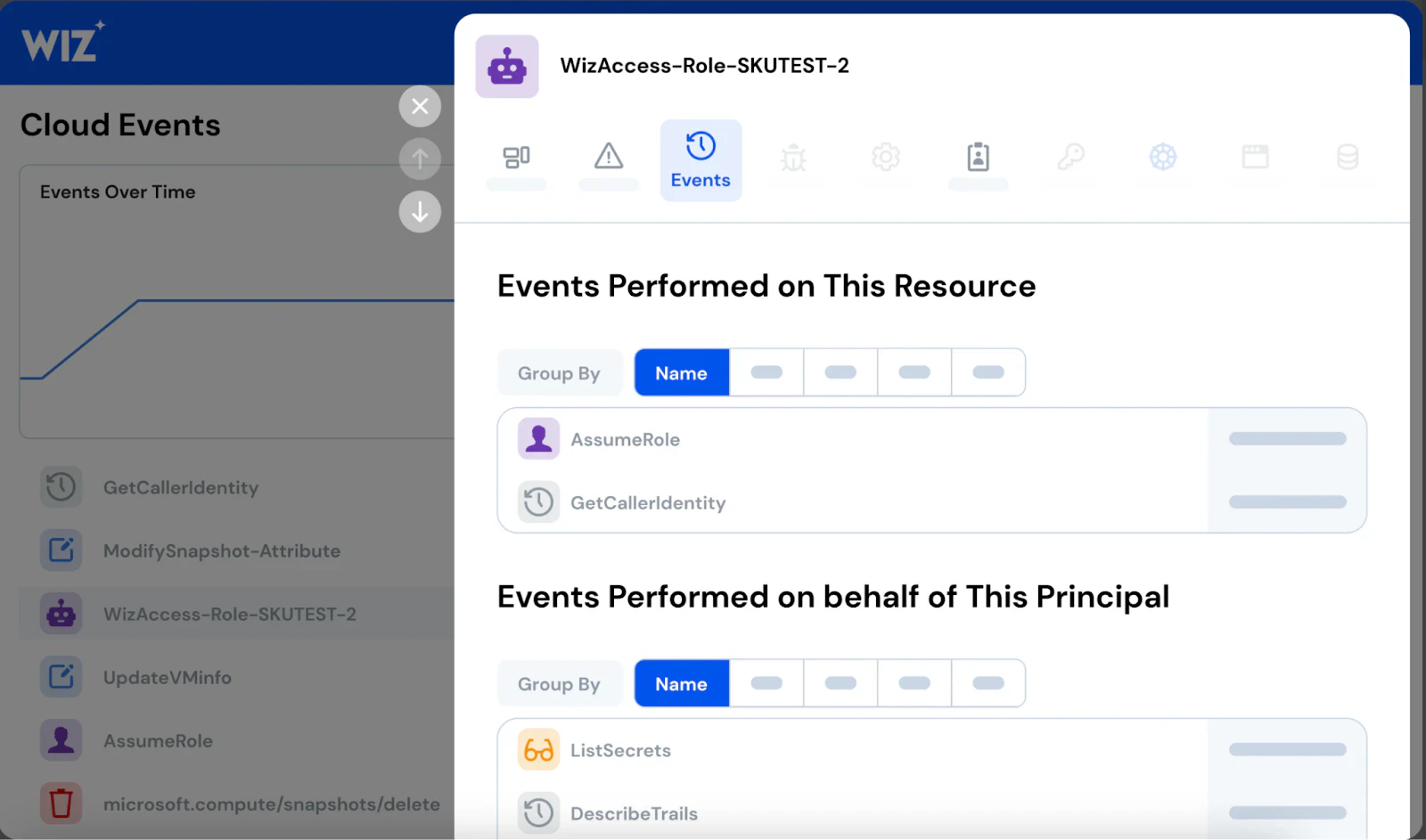
Incident triage: SOC professionals analyze alerts alongside business, identity, and infrastructure context to prioritize incidents based on risk and potential impact.
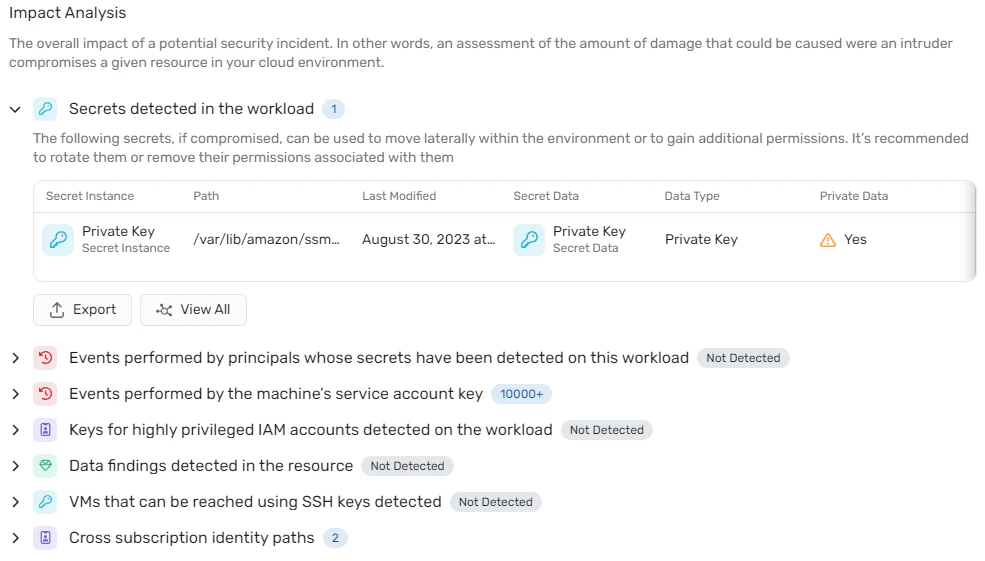
Incident response: When security incidents occur, SOC teams implement comprehensive incident response plans to contain the incident, limit the blast radius, and fix compromised systems.
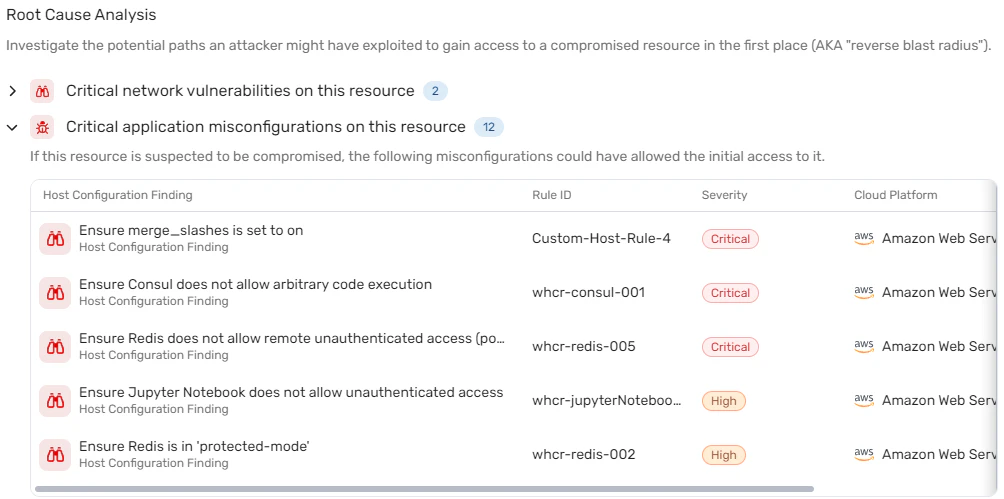
Remediation: After incidents are contained, SOC teams reduce ongoing risk by patching vulnerabilities, fixing misconfigurations, securing exposed data, and right-sizing overprivileged identities and accounts.
Proactive optimization: SOC teams use findings from investigations, threat hunting, and post-incident reviews to improve detections, strengthen controls, and reduce future attack paths.
What are the SOC team's roles and responsibilities?
SOC team roles and responsibilities are typically organized into tiers, with each level handling increasingly complex threats. Junior analysts triage incoming alerts, mid-level responders investigate escalated incidents, and senior threat hunters proactively search for attacker activity that evades automated detections. Supporting roles like security engineers, managers, and forensic investigators maintain detection infrastructure, coordinate response efforts, and analyze how incidents occurred.
The table below shows how responsibilities typically differ across core SOC roles and where each role fits within the incident lifecycle.
| Role | Primary focus | Main responsibility |
|---|---|---|
| Tier 1 SOC analyst | Alert triage | Validate alerts, identify false positives, escalate real threats |
| Tier 2 SOC analyst (Incident responder) | Incident investigation | Contain incidents, assess impact, coordinate response |
| Tier 3 SOC analyst (Threat hunter) | Proactive threat hunting | Identify hidden threats, improve detections, and analyze attacker behavior |
| SOC manager | Team operations | Manage workflows, staffing, escalation procedures, and reporting |
| Security engineer | SOC infrastructure | Maintain detection tooling, integrations, automation, and monitoring systems |
| Forensic investigator | Post-incident analysis | Investigate attack timelines, preserve evidence, and support root cause analysis |
Tier 1 SOC analyst
Tier 1 analysts review high volumes of alerts to identify legitimate threats, filter false positives, and escalate suspicious activity to Tier 2 responders.
Key responsibilities:
Reviewing alerts, alarms, and telemetry
Prioritizing incidents based on severity
Escalating suspicious activity for deeper investigation
Managing monitoring queues and basic detection tooling
Core skills: SIEM familiarity, alert triage, analytical thinking, and threat identification fundamentals.
Common certifications: CompTIA Security+ and GSEC.
Tier 2 SOC analyst (Incident responder)
Tier 2 analysts investigate confirmed incidents, assess attack scope, identify affected systems, and coordinate containment efforts.
Key responsibilities:
Investigating escalated security incidents
Assessing attack scope and affected resources
Coordinating containment and remediation actions
Turning investigation findings into actionable threat intelligence
Core skills: Incident investigation, threat intelligence analysis, containment coordination, and cross-team communication.
Common certifications: CISSP and GCIH.
Tier 3 SOC analyst (Threat hunter)
Tier 3 analysts proactively search for attacker activity that evades automated detections and help improve detection quality across the SOC.
Key responsibilities:
Investigating advanced threats and major incidents
Identifying exposed attack paths and exploitable weaknesses
Improving detections and telemetry coverage
Mentoring junior analysts and refining threat hunting workflows
Core skills: Threat hunting, forensic analysis, detection engineering, and attacker behavior analysis.
Common certifications: CISA and GSE.
SOC manager
SOC managers oversee team operations, escalation workflows, staffing, and incident coordination across the organization.
Key responsibilities:
Managing SOC staffing, training, and workflows
Coordinating cross-functional response efforts
Tracking operational metrics like MTTD and MTTR
Reporting incident trends and operational risk to leadership
Core skills: Team leadership, operational planning, incident coordination, and security governance.
Common certifications: CISM and GSLC.
Security engineer
Security engineers build and maintain the tooling, integrations, and telemetry pipelines that support SOC investigations and detection workflows.
Key responsibilities:
Maintaining detection tooling and telemetry infrastructure
Supporting detection engineering and infrastructure hardening
Implementing automation and security integrations
Collaborating with infrastructure and security teams
Core skills: Scripting, automation, cloud security, telemetry management, and infrastructure hardening.
Common certifications: CISSP and CEH.
Forensic investigator
Forensic investigators analyze incidents after containment to determine how attackers gained access, what systems were affected, and whether persistence mechanisms remain in the environment.
Key responsibilities:
Conducting post-incident forensic investigations
Reconstructing attacker timelines and movement
Preserving and analyzing digital evidence
Identifying root causes and persistence mechanisms
Core skills: Digital forensics, evidence preservation, attacker behavior analysis, and incident reconstruction.
Common certifications: GCFA and EnCE.
Empowering SecOps in the cloud: enhancing threat detection with Wiz and Google Security Operations
En savoir plus
What are the different types of SOC teams?
The right SOC model depends on your organization’s size, internal expertise, compliance requirements, and desired level of operational control. Most organizations choose between four primary SOC structures.
| SOC model | Best for | Main advantage | Main limitation |
|---|---|---|---|
| Dedicated SOC | Large organizations with internal security teams | Full operational control and internal expertise | Expensive to build and maintain |
| Managed SOC | Organizations with limited in-house resources | 24/7 monitoring without full internal staffing | Less direct operational control |
| Co-managed SOC | Teams needing additional expertise or coverage | Combines internal knowledge with external support | Requires strong coordination between teams |
| Global SOC | Multinational enterprises | Broad regional coverage and continuous operations | Operationally complex and resource-intensive |
itself.
Detect active cloud threats
Learn how Wiz Defend detects active threats using runtime signals and cloud context—so you can respond faster and with precision.

What are the benefits of having a SOC team?
A mature SOC team improves more than alert monitoring. Organizations with effective SOC operations can investigate incidents faster, reduce operational risk, improve detection accuracy, and strengthen security coordination across teams.
Robust incident response: A strong SOC team helps contain incidents faster when threats occur. Instead of discovering breaches weeks later through customers, partners, or external investigators, mature SOC operations can detect and respond earlier, limiting operational disruption and reducing recovery costs.
Fewer false positives: Effective SOC teams reduce false positives through tuned detections, contextual analysis, and better alert prioritization. This keeps analysts focused on legitimate threats instead of spending time triaging alert noise.
Real-time visibility: Continuous monitoring across cloud, identity, endpoint, and network activity helps security teams investigate suspicious behavior earlier, before attackers expand access across environments.
Stronger regulatory adherence: SOC operations support compliance efforts by maintaining audit trails, investigating security events, and responding to incidents in ways that align with frameworks like PCI DSS, HIPAA, and ISO 27001.
Enriched security ecosystem: Effective SOC teams improve coordination across security, infrastructure, engineering, and compliance teams. Faster investigations and clearer escalation paths help security issues get addressed earlier instead of remaining isolated inside the SOC.
Future-proof security: SOC teams continuously refine detections, response workflows, and investigation processes as attacker techniques evolve across cloud and hybrid environments.

Common SOC team challenges
Most SOC teams struggle for the same reason: they have plenty of signals, but not enough clarity to decide what matters first and who should act.
These are the problems that usually slow teams down:
Alert fatigue: High volumes of low-confidence alerts make it difficult to identify the small number of events that represent legitimate operational risk.
Tool sprawl: When telemetry, detections, and investigation data are spread across too many consoles, analysts spend more time correlating evidence than investigating threats.
Cloud investigation friction: Ownership is often split across accounts, projects, Kubernetes clusters, identities, and cloud services, making it harder to map incidents to real blast radius and business impact.
Autonomy expansion (agent & MCP risk): The rapid adoption of autonomous entities—with 57% of organizations deploying self-hosted AI agents and 80% adopting Model Context Protocol (MCP) servers—introduces high-risk, overprivileged control planes. If hijacked, these autonomous agents allow attackers to bypass human credentials and move laterally through sensitive data stores at machine speed.
Skills and coverage gaps: Hiring and retaining cloud-experienced responders remains difficult, and maintaining 24/7 investigation coverage becomes even harder without mature workflows, automation, and detection tuning.
Empowering SecOps in the cloud: enhancing threat detection with Wiz and Google Security Operations
En savoir plusBest practices for building a winning SOC team
Building an effective SOC team requires deliberate choices about structure, tooling, and talent development. Modern SOC teams need more than alert coverage alone. They also need clear escalation paths, strong investigation workflows, and enough operational context to prioritize real threats quickly across cloud and hybrid environments.
The best-performing SOC teams usually combine skilled analysts with mature processes, automation, and security platforms that reduce investigation friction instead of adding to it.
| Best Practice | Description |
|---|---|
| Choose the right SOC team model | Organizations should assess their internal expertise, coverage requirements, compliance obligations, and operational maturity when deciding between dedicated, managed, co-managed, and global SOC models. The right structure depends on how much investigation, response, and monitoring capability teams need to maintain internally. |
| Prioritize long-term strategies and goals | SOC teams should align detection, response, and staffing decisions with long-term business and security priorities. Without a clear strategy, teams can end up reacting to short-term alert volume instead of improving overall operational resilience and investigation capability. |
| Automate wherever possible | Automation helps SOC teams reduce repetitive triage work, enrich alerts with additional context, and accelerate escalation and remediation workflows. AI and automation also help analysts spend less time manually correlating evidence across tools and more time investigating legitimate threats. |
| Regularly upskill | Attack techniques, cloud platforms, and detection technologies evolve constantly. Organizations should continuously invest in analyst training, threat hunting exercises, cloud investigation skills, and cross-functional response readiness to keep SOC teams effective over time. |
| Provide SOC teams with a unified security platform | SOC teams work more effectively when investigations, telemetry, cloud context, identity activity, and risk signals are connected in a unified platform instead of spread across disconnected tools. Unified visibility helps teams reduce investigation friction and prioritize incidents faster. |
Improve MTTR with Wiz’s AI-powered remediation guidance using Microsoft Azure OpenAI service
En savoir plus

Essential SOC tools, technologies, and metrics
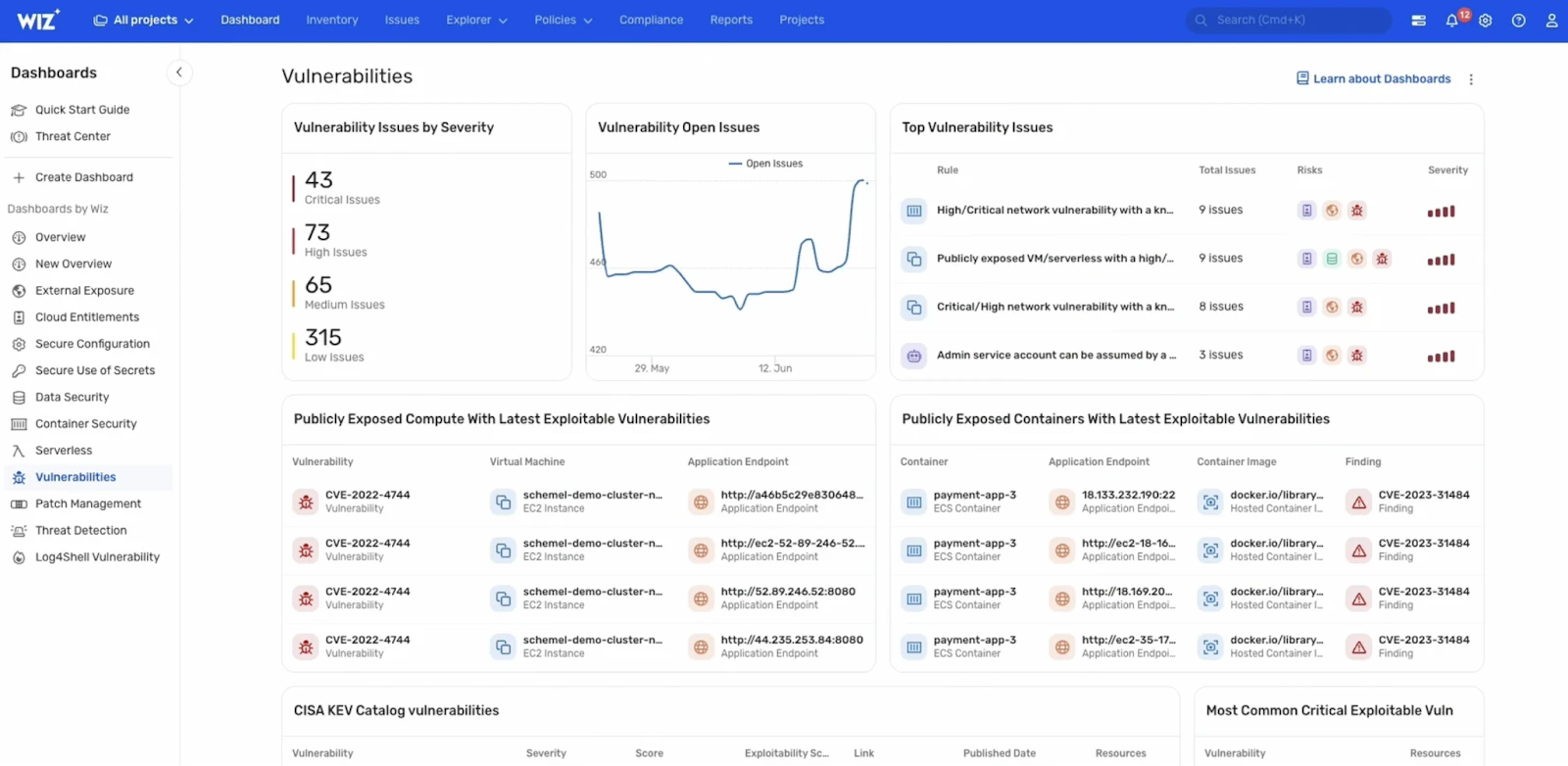
SOC teams rely on specialized SOC tools to collect, correlate, investigate, and respond to security activity across cloud, endpoint, identity, and network environments. Just as important are the operational metrics that help teams measure whether investigations, detections, and response workflows are actually improving security outcomes.
Core SOC tool categories include:
SIEM (Security Information and Event Management): Aggregates and correlates logs from across the environment to identify suspicious activity and support investigations
EDR (Endpoint Detection and Response): Monitors endpoint behavior and helps analysts investigate and contain malicious activity on devices and servers
CDR (Cloud Detection and Response): Extends detection and response capabilities to cloud workloads, APIs, identities, and control plane activity
SOAR (Security Orchestration, Automation, and Response): Automates repetitive investigation and response tasks while coordinating workflows across security tools and teams
Additional technologies like security graphs, runtime sensors, vulnerability scanners, and threat intelligence platforms help enrich investigations with operational context and attack-path visibility.
To evaluate SOC performance effectively, organizations typically track metrics such as:
Mean time to detect (MTTD)
Mean time to respond (MTTR)
False positive rates
Alert volumes
Remediation speed
Escalation and containment times
The exact metrics organizations prioritize often depend on their cloud footprint, compliance requirements, staffing model, and incident response maturity.
How Wiz can help your SOC team
Securing modern cloud environments requires real-time threat detection across a distributed ecosystem of autonomous agents, cloud workloads, and AI-driven infrastructure.
Wiz Defend helps SOC teams reduce this investigation friction by delivering native Cloud Detection and Response (CDR) that treats cloud and AI assets as core, interconnected infrastructure. Instead of pivoting between disconnected tools to understand whether an AI agent, a Kubernetes cluster, or an MCP server has been compromised, teams using Wiz Defend can immediately see affected resources, exposed identities, sensitive data, runtime activity, and potential attack paths in a unified security graph.
By correlating runtime events, cloud audit logs, and security findings into prioritized Wiz Issues, Wiz helps teams investigate threats with deep operational context and zero manual correlation guesswork. Continuous integrations with SIEM, SOAR, Jira, Slack, and ServiceNow also help automate escalation, remediation, and response workflows across teams. Wiz traces risks back to their source in code and Infrastructure-as-Code (IaC) templates so organizations can address the root cause of exposures instead of repeatedly fixing the same production issues.
Get a demo to see how Wiz Defend helps SOC teams investigate cloud threats faster and respond with total context.
Cloud-Native Incident Response
Learn why security operations team rely on Wiz to help them proactively detect and respond to unfolding cloud threats.
