

What is an AI Audit?
An AI audit is a structured review of AI models, data, pipelines, and infrastructure to confirm they are secure, compliant, and operating as intended. Rather than assuming AI systems behave correctly, audits measure them against defined technical, operational, and governance standards.
AI audits typically fall into two categories:
External audits are third-party or regulatory assessments that provide independent validation of AI systems.
Internal audits are ongoing reviews conducted by internal security, compliance, or risk teams.
Responsible AI audits examine both technical controls and organizational processes. On the technical side, auditors review security configurations, access permissions, and infrastructure exposure. On the governance side, they assess:
AI Security Starter Pack
Get the essential resources to kick off your AI security and audit program in one place.

Oversight models
Documentation practices
Accountability structures
An AI audit is not a model performance review, a penetration test, or a one-time certification exercise. Model validation focuses on whether an AI model performs as intended statistically, while AI security audits focus on whether AI systems resist threats and meet security and compliance expectations.
Why do organizations audit AI systems?
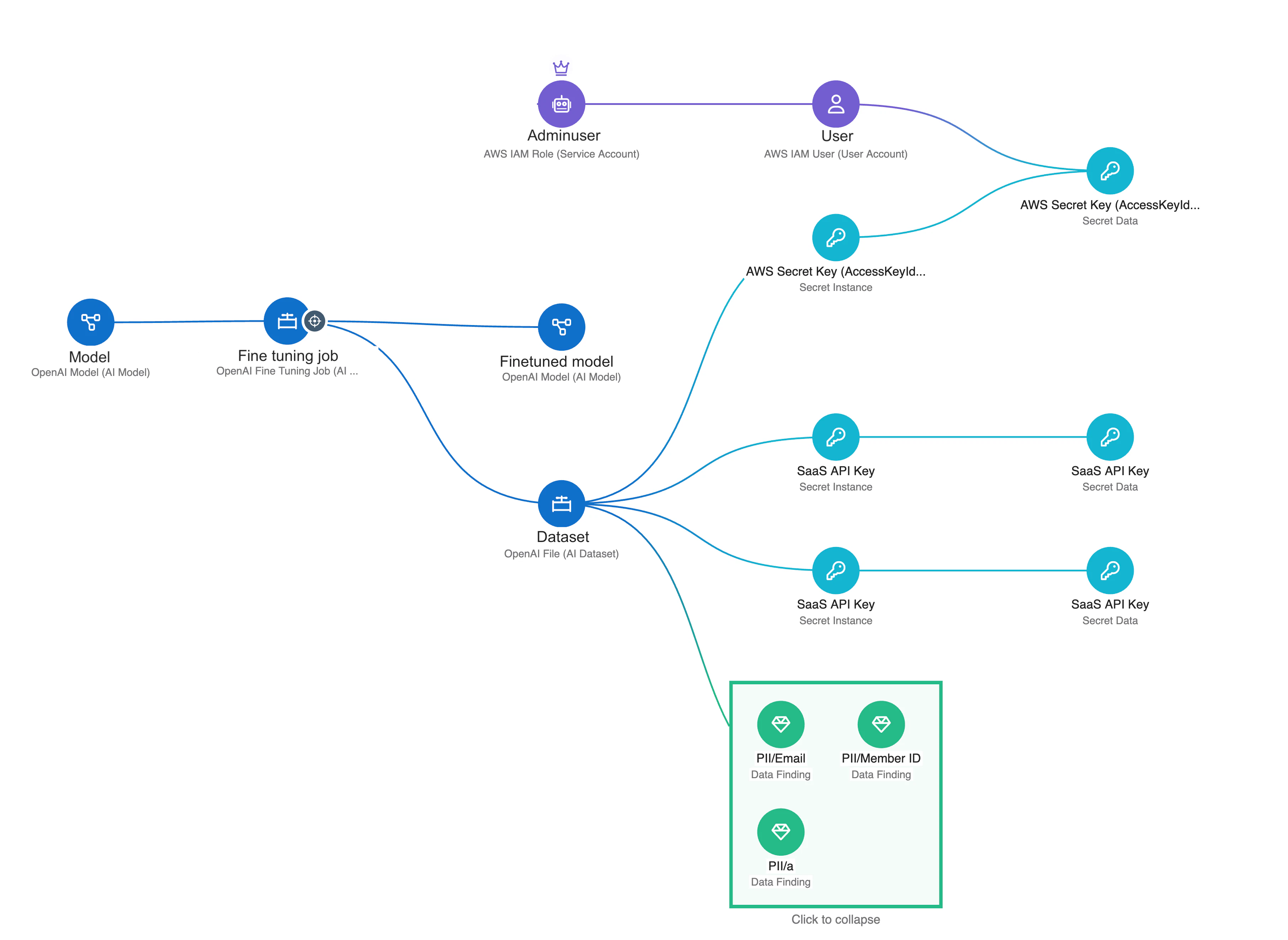
Organizations audit artificial intelligence systems because these systems increasingly influence customers, finances, and critical operations. The core drivers include the following factors:
Regulatory pressure: Regulations such as the EU AI Act, GDPR, and industry-specific rules explicitly address AI behavior, training data, and automated decision-making. Regular audits help organizations demonstrate compliance and document how AI risks are identified and managed over time.
Expanded attack surface: AI introduces new APIs, service identities, data flows, and integrations across cloud environments. According to Wiz's State of AI in the Cloud 2026 report, at least 81% of cloud environments now use managed AI services, up from 74% in early 2025. Each of those deployments creates new places where misconfigurations or weak controls can lead to unauthorized access or data exposure.
Operational reliability: Models can silently degrade as data changes and pipelines can become unstable. Audits surface these issues early, helping teams and stakeholders maintain consistent performance and avoid unexpected failures.
Organizational trust: Customers, partners, and regulators increasingly expect transparency around how AI systems are built, secured, and governed. Demonstrating regular audits helps organizations build confidence in their use of AI while reducing the likelihood of costly incidents.
What do AI audits evaluate?
AI audits examine four main areas: data, models, infrastructure, and governance. Each area answers different questions, and together they form a complete picture of your AI risk.
1. Data security and privacy
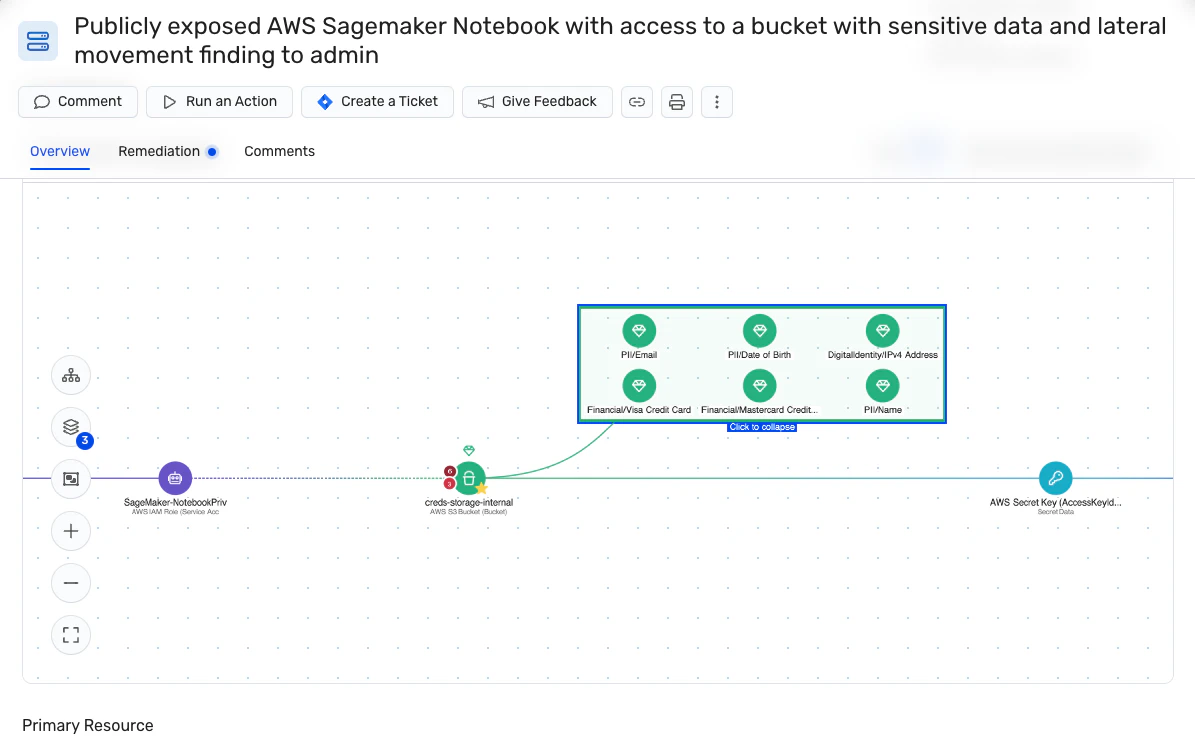
AI systems are only as safe as the data they use. Audits spend significant time on data security because training and inference pipelines often touch your most sensitive information.
Key areas include:
Training and inference data sources: Where your data comes from and whether it is stored securely
Access controls and encryption: Who can read, write, or export datasets, and whether data is encrypted at rest and in transit
Sensitive data exposure: Whether training sets contain personally identifiable information (PII), health records, or payment data, and whether the model can leak this information in its outputs
Data lineage and retention: Whether you can trace how data moved from raw sources to training sets, and whether retention policies are enforced
2. Model security and integrity
This area focuses on making sure your models are not tampered with, stolen, or silently replaced.
Audits examine how you protect model artifacts, containers, and deployment packages. They review your versioning and signing practices, like:
Whether you can verify which model version runs in production
Who approved it
Whether artifacts carry cryptographic signatures
Audits also check your defenses against model theft and extraction attacks, including access controls on model registries and API rate limiting. Supply chain trust matters here too. If you use open-source models or pre-trained weights, auditors want to know how you vet those external components.
Inside MCP Security: A Field Guide
Explore how emerging model and agent integration risks reshape the AI audit surface.

3. Infrastructure and deployment security
Most AI workloads run in cloud environments, so AI audits must evaluate your cloud security posture.
Audits look at the cloud configuration of AI workloads and check for misconfigurations such as publicly exposed storage buckets holding training data. They examine the network exposure of model endpoints and APIs, review identity and access management to ensure AI service accounts follow least privilege, and verify that API keys, database credentials, and model registry tokens are not hard-coded in notebooks or training scripts.
4. Compliance and governance
The governance dimension covers the process side of AI auditing, including how your organization manages and oversees AI systems.
Auditors check alignment with AI-related regulations, such as:
GDPR's Article 22 on automated decision-making
The EU AI Act
Sector-specific rules
Your internal policies
They verify that governance frameworks cover AI development, deployment approvals, and ongoing monitoring. They also review documentation of model purpose, limitations, and risk, and they verify that audit logging, real-time monitoring dashboards, and human oversight controls are in place and functioning.
Roles and responsibilities for AI audits
AI audits are not owned by a single team. Because AI systems span data, models, infrastructure, and governance, effective audits require coordination across multiple functions. The table below outlines how that responsibility typically divides:
| Audit function | Core audit responsibilities |
|---|---|
| Security and engineering |
|
| GRC and legal |
|
| Data and privacy |
|
The cross-functional nature of AI audits is a real challenge for CloudSec and SecOps managers. Knowing who to pull in—and when—prevents gaps, delays, and duplicated effort throughout the audit AI lifecycle.
Common AI auditing frameworks
Most organizations draw from multiple frameworks rather than relying on a single standard because each covers different needs:
Risk management
Governance
Documentation
Testing
Regulatory compliance
The EU AI Act functions as the regulatory layer in that mix, setting legal obligations for certain AI use cases, while frameworks like the NIST AI Risk Management Framework (AI RMF) and ISO/IEC 42001 help teams operationalize controls and evidence.
Because these frameworks are actively evolving, use them as reference points to define controls, evidence, and audit scope rather than as static checklists to satisfy line-by-line initiatives.
NIST AI Risk Management Framework (AI RMF)
The NIST AI RMF provides a structure for identifying, assessing, and managing AI risk across the full lifecycle. It organizes enterprise risk management into four functions:
Govern
Map
Measure
Manage
AI audits often use the NIST AI RMF to evaluate whether organizations have a repeatable audit process for identifying and managing AI risk over time.
ISO/IEC 42001
ISO/IEC 42001 is a management system standard for AI, similar in structure to ISO 27001 for information security. It focuses on defining AI governance structures, establishing documented controls, and demonstrating continuous improvement. Audits aligned to ISO/IEC 42001 emphasize organizational processes and ongoing governance rather than one-time technical checks.
EU AI Act requirements
The EU AI Act introduces legally binding obligations for AI systems through a phased enforcement timeline. The implementation of the Act is constantly evolving. Here are some key details to know:
Prohibited AI practices took effect in February 2025.
General-purpose AI (GPAI) model obligations became enforceable in August 2025.
Transparency rules for chatbots and limited-risk AI take effect in August 2026, and full enforcement powers for the EU AI Office begin that same month.
Following the May 2026 AI Omnibus political agreement, most high-risk AI system obligations have been extended to December 2027 for Annex III categories such as employment, biometrics, and critical infrastructure.
Formal adoption of the Omnibus is expected before the original August 2026 deadline.
Audit programs aligned to the EU AI Act focus on risk classification, training data governance, transparency, human oversight, and post-deployment monitoring.
OWASP ML Security Top 10
The OWASP ML Security Top 10 highlights common security risks specific to machine learning systems, including model theft, data poisoning, and inference abuse. AI audits use this framework to ensure security testing covers AI-specific attack patterns that traditional application security reviews often miss.
MITRE ATLAS
MITRE ATLAS provides a knowledge base of real-world adversarial techniques targeting machine learning systems. Rather than prescribing controls, ATLAS helps auditors understand how AI systems can be attacked in practice and where defensive controls may be weakest.
The importance of using the right AI tools for audits
More AI auditing and security tooling does not automatically mean better security outcomes. As CyberScoop reported, the surge in AI-assisted vulnerability reporting has created a real operational problem: security teams are flooded with unvalidated, speculative findings that consume time and attention without producing actionable results.
When it comes to AI audit programs: volume is not the goal.
The goal is verified, contextual findings that cybersecurity teams can actually act on. An AI audit tool that surfaces hundreds of theoretical misconfigurations without connecting them to real access paths, real data exposure, or real attack risk makes audit preparation harder, not easier. What matters is whether a tool can correlate signals across infrastructure, identity, and data to surface genuinely material findings—and suppress the ones that are not.
This is especially relevant as AI systems expand across cloud environments. The audit surface grows, but the capacity of security teams does not. The right tooling should help teams answer the questions that matter:
Which AI services are exposed
Which identities are overprivileged
Where sensitive data connects to reachable endpoints
Enabling AI audit readiness with Wiz
AI systems are not standalone applications. They run on cloud infrastructure, and AI risk cannot be separated from cloud risk. Effective audit readiness requires continuous visibility into your cloud environment, not periodic snapshots that go stale as configurations change—all while prioritizing threats and eliminating noise.
Wiz plays a critical role in enabling the security and cloud infrastructure portions of an AI audit. Wiz's agentless approach continuously discovers managed AI services, such as Amazon SageMaker and Google Vertex AI, along with the storage, identities, networks, containers, and APIs that support them. This gives security and audit teams an up-to-date AI bill of materials (AI-BOM) without deploying agents or impacting workloads.
At the core of Wiz is the Security Graph, which correlates AI services with cloud identities, network exposure, vulnerabilities, and sensitive data. Wiz's AI-SPM capabilities extend this coverage to managed AI services from OpenAI, Azure OpenAI, and Amazon Bedrock, and AI agent security brings the same visibility to agentic workflows.
These insights help security teams produce audit evidence for access control, data protection, logging, and cloud configuration. Used alongside governance processes, model validation, and regulatory oversight, Wiz helps organizations reduce blind spots and support defensible AI audit outcomes.
Request a demo to see how Wiz supports AI audit readiness, or review the AI Security Assessment Sample Report to see what an AI security assessment produces before committing. Ready to see how continuous cloud visibility strengthens your AI audit readiness? Request a demo to explore how Wiz can secure your cloud environment.
Want to see it in action?
See how Wiz discovers AI services and correlates cloud risk to support audit-ready evidence.
