

What is attack surface mapping?
Attack surface mapping answers two fundamental questions: What can an attacker actually reach right now, and how does it all connect?
Your attack surface includes every asset, service, identity, and entry point—across cloud, SaaS, and on-prem environments—that an attacker could reach or exploit. Attack surface mapping builds a continuously refreshed view of these exposures and presents them as a visual map.
2025 Gartner® Market Guide for CNAPP
The 2025 Gartner® Market Guide for Cloud-Native Application Protection Platforms (CNAPP) explores this shift and outlines what security leaders should consider as the market matures.

This continuous refresh draws from a mix of inputs: cloud asset inventory APIs (AWS Config and Resource Explorer, Azure Resource Graph, GCP Cloud Asset Inventory), cloud audit logs (AWS CloudTrail, Azure Activity Log, GCP Cloud Audit Logs), network telemetry (AWS VPC Flow Logs, Azure NSG flow logs, GCP VPC Flow Logs), external scanning, DNS and Certificate Transparency logs, and change-event hooks such as IaC pipeline events—each within known polling and ingest intervals.
Attack surface mapping complements and largely supersedes static inventories and point-in-time scans by providing continuous visibility. It correlates external exposure with internal cloud context and ties each risk to the right owner, repo, or pipeline so fixes happen without friction.
When done right, attack surface mapping gives you the information you need at a glance: It combines discovery, classification, and risk validation to separate real attack paths from background noise. And by showing how a single misconfiguration or exposed endpoint links to other resources, it clearly shows how small issues could escalate into broader compromise.
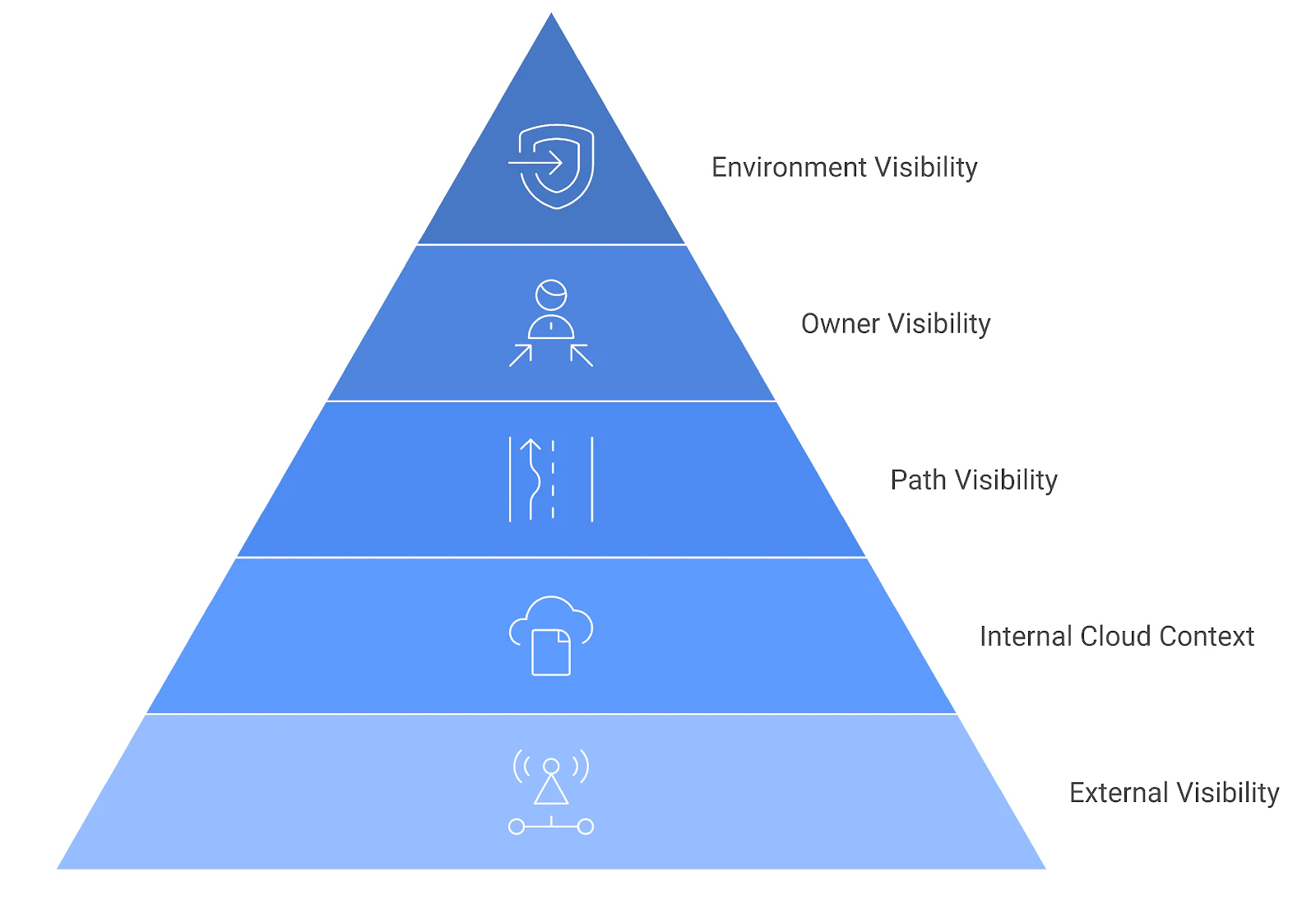
Defense in depth starts with layered attack surface mapping
Attack surface mapping gives you multiple layers of visibility at once, with each layer answering a different question so that teams can act quickly and confidently. These views are built on the same underlying assets, meaning context accumulates instead of being split across isolated tools.
The base layer shows external visibility—what the internet can reach, including IPv4 and IPv6 endpoints, plus provider-hosted services behind CDNs, WAFs, and load balancers.
From there, path visibility reveals how an attacker could move across connected resources. Owner and environment visibility provide the final context, tying exposure to the responsible team or repo and distinguishing production risk from staging, test, or ephemeral workloads.
TL;DR: By correlating external exposure precisely with internal cloud context, attack surface mapping gives you the clarity you need to act quickly instead of spending hours assembling that big picture yourself.
Why attack surface mapping is critical for modern security
Reason #1: The cloud moves fast
Traditional scanners worked well when environments changed slowly. In cloud environments, assets can appear, move, and disappear within minutes, meaning static checks are no longer enough.
When you’re deploying services, APIs, and identities at high velocity, you can’t rely on point-in-time inventories to understand what’s externally reachable. At the same time, shadow services, misconfigured endpoints, and unmanaged assets surface constantly across cloud and SaaS, creating blind spots attackers often find first.
Reason #2: Noise creates inefficiency
Your teams can’t afford to chase noise from scanners that flag theoretical risk. Attack surface mapping validates what’s actually exploitable, especially attack surface exposures tied to sensitive data or privileged access, to keep you focused on issues with immediate impact.
Reason #3: Connections are unclear
Cloud identity, network, and application attack surface layers are tightly interconnected, and many tools struggle to reveal the attack paths that link them. Context is also essential when it comes to ownership. When no one knows who owns an issue, MTTR increases quickly. Attack surface mapping clearly shows relevant attack paths, and it slashes MTTR by linking each exposure to the right engineer, service, or repo.
What you need for total asset visibility
It takes more than a single scan or data source to achieve complete visibility. You need a set of attack surface analysis tools and capabilities that work together to show what exists, what’s exposed, how it connects, and who’s responsible—without slowing your organization down.
The following elements work together to enable continuous attack surface mapping:
Asset discovery across cloud, SaaS, and on-premises environments
Ongoing validation of what’s externally reachable
Deep internal cloud context, including identities, services, and data stores
Attack path visualization, not just lists of issues
Reliable owner attribution for every exposed asset
Drift detection during deployments and configuration updates
Integration with IR, vuln management, and engineering workflows
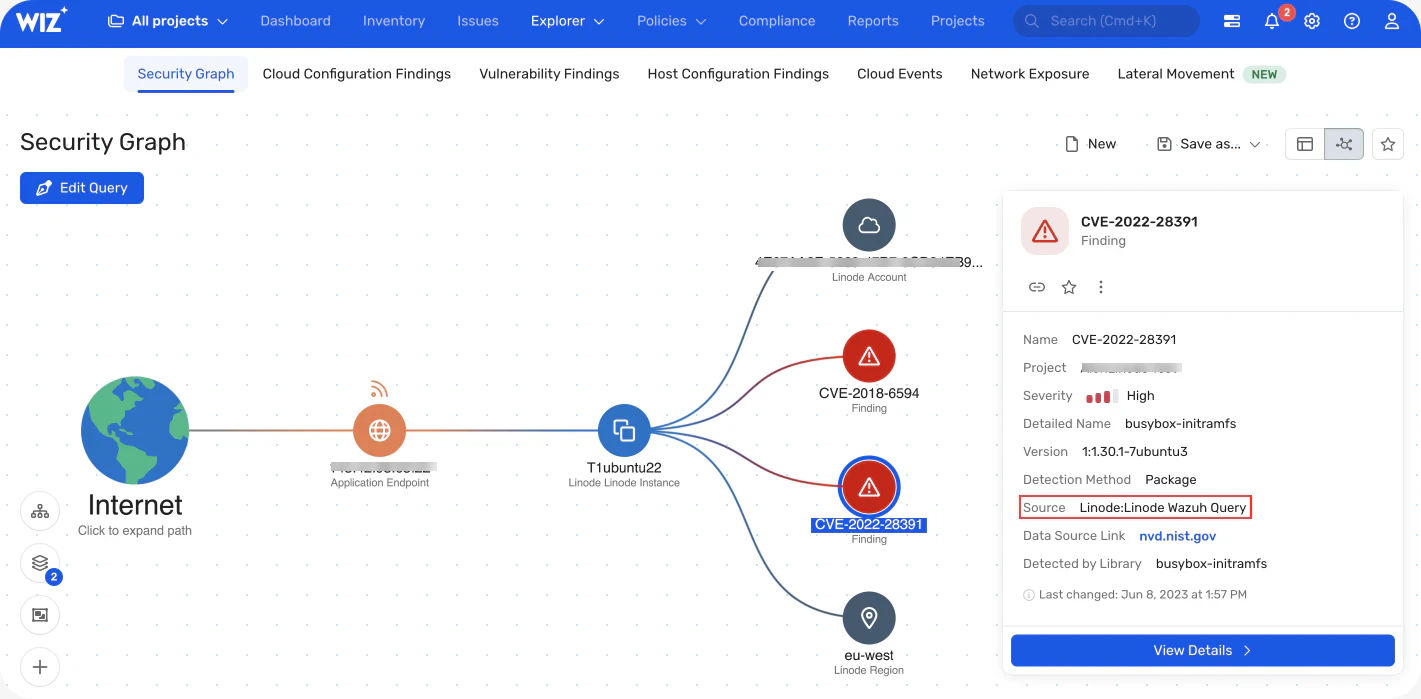
Core attack surface mapping techniques
The techniques described below map to the way security work happens in the real world, from initial discovery through validation, prioritization, and response. Together, they give you a practical way to understand exposure, confirm what’s exploitable, and route fixes without breaking existing workflows.
Discovery and enumeration
This stage uses outside-in discovery methods to…
Identify all public-facing domains, IPs, certificates, and API endpoints across cloud, SaaS, and on-prem environments.
Detect unknown, shadow, or ephemeral assets that aren’t tracked in inventories or DNS records.
Map external exposure back to internal cloud resources to eliminate blind spots.
Validation and exploitability checks
This stage focuses on confirming which exposures are actually reachable and exploitable so that teams can prioritize issues attackers could realistically take advantage of.
During this stage, attack surface mapping tools will…
Test exposures for real-world exploitability, pinpointing risks like default credentials, risky configurations, and exposed sensitive data.
Validate whether assets are reachable from the internet or are just theoretically exposed.
Use attacker-style, safe-by-design checks—banner or version inference, TLS and certificate validation, authentication flow validation, and passive data exposure checks—that avoid state changes in production. Coordinate active probes with change control and respect WAF/CDN rate limits to prevent disruption while confirming what can be weaponized.
Context and impact correlation
This stage connects exposure to impact by showing how externally reachable assets relate to identities, data, and other resources an attacker could move through. To provide this context and impact correlation, attack surface mapping tools will…
Combine external findings with internal cloud context to reveal connections to sensitive data or privileged roles.
Analyze identity, network, and service relationships to identify potential attack paths.
Use graph-based attack path analysis to trace how adversaries could move laterally through interconnected assets.
Classify assets by environment, such as production, staging, or test, to surface the highest-impact exposures.
Ownership and routing
To remove friction from remediation, attack surface mapping will…
Associate exposures with the relevant teams, services, or repos—leveraging tags/labels, service catalogs, and code-to-cloud lineage—to accurately assign remediation responsibility.
Connect risks to originating pipelines or IaC templates to streamline long-term fixes.
Continuous monitoring and drift detection
This stage keeps the attack surface current by catching new exposures as environments change, letting you find emerging risks and recurring patterns before they turn into incidents. Add pre-deployment policy gates in CI/CD to block newly introduced external exposure from reaching production. Attack surface mapping tools will help you…
Track new exposures created by deployments, drift, or configuration changes.
Monitor for changes in reachability or severity to catch emerging issues early.
Surface exposure trends and recurring patterns for ongoing program improvement.
Attack surface monitoring: Your first line of cloud defense
Attack surface monitoring involves continuously identifying and tracking internet-reachable assets. In cloud-native environments, where endpoints, identities, and services
Read more

Navigating cloud-native attack surface challenges
Cloud-native environments make exposure harder to understand because infrastructure changes so fast. Common cloud challenges include:
Dynamic, ephemeral environments: Assets don't stay in one place, addresses aren't stable, and workloads may exist for minutes instead of months. Dynamic IPs, ephemeral workloads, IPv6 addressing, CDN/WAF/proxy layers, and provider-hosted endpoints (for example, S3/Blob/GCS URLs, API Gateways, Kubernetes LoadBalancer/NodePort Services) introduce exposure that isn't tied to fixed DNS or a single corporate domain and is easy to overlook.
Expanding, fractured estates: As your cloud estate expands across multiple clouds, accounts, and teams, exposure spreads across environments with different owners and tools. Public assets live in separate accounts, responsibility is split, and no single team has a complete view.
Identity and API sprawl: Broad roles and misconfigurations create access paths that aren’t obvious, while new APIs appear faster than legacy scanners can reliably detect or classify.
Complex workloads: Containers and AI workloads extend the surface further through public endpoints, registries, model artifacts, and permissions.
Let’s be honest: Managing all of this can be a real operational challenge. But with automated discovery, deep context, and unified visibility, you can simplify the picture, focus on what matters, and stay in control as your cloud environments evolve. In the next section, we’ll share some tips to help you do just that.
Watch 12-min demo
Learn about the full power of the Wiz cloud security platform. Built to protect your cloud environment from code to runtime.
Watch now
Building an effective attack surface mapping program
Here are a few best practices to streamline your transition to an attack surface mapping program, including incorporating attack surface analysis into the SDLC.
| Obstacle | Solution |
|---|---|
| External assets aren’t consistently tracked and rely on manual registration or DNS | Establish continuous discovery across cloud, SaaS, and on-prem environments to reduce dependence on manual processes |
| Tool sprawl and data silos fragment visibility across scanners, cloud consoles, and teams | Correlate external exposures with internal cloud context and ownership to unify findings |
| Teams see what’s exposed but not why it matters | Correlate external exposure with sensitive data, identities, and privileged pathways |
| Alert fatigue from false positives and theoretical risk | Use automated risk validation to filter noise and focus on exposures attackers can actually exploit |
| Ownership is unclear, causing remediation delays | Assign clear ownership by mapping risks back to the responsible service, pipeline, or developer |
| Friction between security and engineering slows fixes | Integrate remediation into existing workflows, such as ticketing and chat tools |
| Teams fix individual issues but miss recurring causes | Review exposure risk trends to identify systemic issues in CI/CD, identity policies, or configuration baselines |
Integrating attack surface mapping with security operations
Attack surface mapping fits naturally into day-to-day security operations, feeding high-confidence mapping insights into SOC workflows and helping teams automate incident response. The examples below show how teams use it to validate exposure, prioritize action, and close the loop faster.
Typical SecOps workflow #1: Incident response
In this example, monitoring alerts have shown repeated unauthorized requests hitting a cloud-hosted API endpoint. Attack surface mapping confirms that the service is publicly reachable and is connected to other internal resources that could be targeted next.
SOC analysts triage the alerts, using attack surface mapping to confirm whether the affected asset is externally reachable.
Incident response teams investigate scope, with mapping context showing possible attacker paths through identities, networks, or misconfigurations.
The SOC team uses mapping attribution to route the issue to the correct owner, repo, or service.
Application and platform engineering teams apply containment measures and check mapping for any related exposed assets needing attention.
Security teams verify remediation by confirming the exposure no longer appears in the mapped surface.
Typical SecOps workflow #2: Vulnerability management
In this example, routine vulnerability scanning flags several high-severity vulnerabilities on cloud workloads. Attack surface mapping shows which vulnerabilities affect assets that are actually internet-reachable and tied to sensitive data or production access.
SOC team members refresh the asset inventory and use attack surface mapping to reveal unknown or unmanaged public-facing assets, including shadow assets outside corporate DNS.
SOC teams run scans with attack surface mapping to validate findings by checking which vulnerabilities correspond to real external exposure.
Security and risk teams use mapping context to prioritize issues connected with sensitive data, privileged access, or production workloads.
The SOC team assigns remediation based on mapping-driven ownership routing (using tags, service catalogs, and code-to-cloud lineage):
Infrastructure/IT team for infrastructure, server, and network fixes
Application development teams for vulnerabilities found in application code
Cloud platform teams for assets hosted in virtualized environments
Service or business owners for unmanaged or shadow IT resources
SOC teams confirm closure by ensuring the exposure is no longer reachable or exploitable
Attack surface reduction in the cloud
Attack surface reduction strategies help you keep up with fast-changing cloud environments by continuously identifying, validating, and shrinking the set of externally reachable assets and misconfigurations attackers can target.
Read more

Typical SecOps workflow #3: Change management
In this example, a team is rolling out a new microservice via an IaC-driven deployment. Attack surface mapping catches any new internet-facing endpoints or access paths introduced by the change before they become a problem.
Application teams define the new microservice and use attack surface mapping to understand which external entry points the service is intended to introduce.
Platform and cloud teams review upcoming infrastructure, application, or IaC changes; attack surface mapping predicts new internet-reachable assets before deployment.
DevOps teams deploy the microservice and use attack surface mapping to discover what actually becomes publicly reachable in real time.
Security operations teams refer to attack surface mapping to validate exploitability and prioritize newly exposed assets based on real attack paths. They assign fixes to engineering owners of the responsible service, code, or configuration.
Cloud operations teams monitor post-deployment changes while attack surface mapping helps detect exposure drift as the microservice scales or evolves.
How Wiz enables comprehensive attack surface visibility
Wiz makes attack surface management a seamless part of your teams’ workflows. With agentless onboarding, it continuously discovers and inventories external-facing assets, including domains, IPs, APIs, and application endpoints, across AWS, Azure, GCP, SaaS, and custom domains—without added friction.
Beyond discovery, Wiz attack surface management (ASM) validates which assets are truly internet-accessible and exploitable using dynamic scanning, DNS resolution, and exploitability-focused Attack Surface Rules—then adds code-to-cloud ownership and graph-based context across identities, networks, vulnerabilities, and sensitive data.
Wiz ASM simplifies day-to-day security workflows by:
Mapping findings to OWASP categories (the OWASP Top 10 and OWASP API Security Top 10, where applicable) and prioritizing known CVEs using CISA KEV, where applicable
Reporting against compliance requirements such as PCI DSS, SOC 2, and ISO/IEC 27001
Routing issues to owners and workflows to reduce MTTR
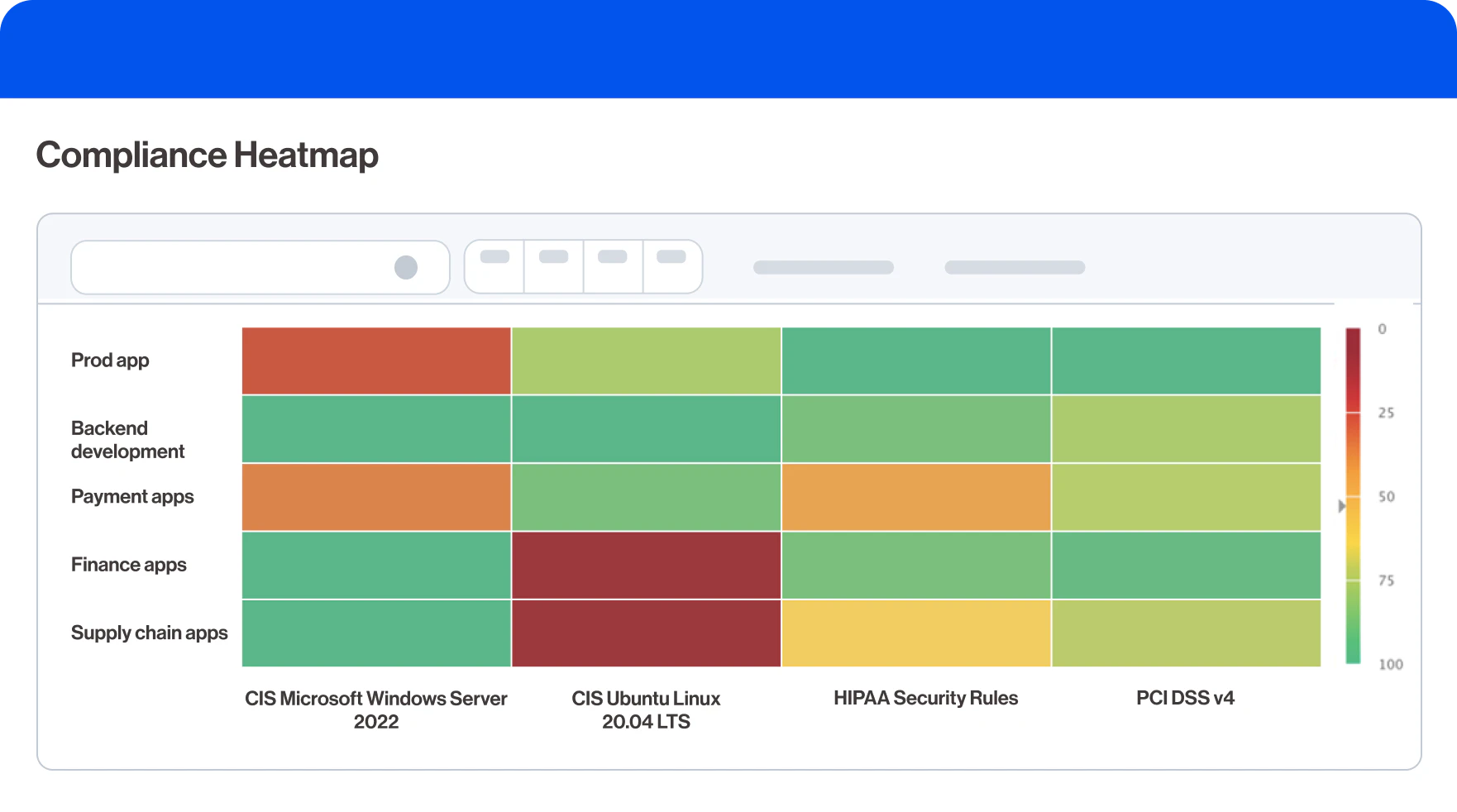
Thanks to automation and shared context, teams move faster. Wiz normalizes resources across clouds and supports bi-directional analysis—cloud-to-code for root cause and ownership, and code-to-cloud to prevent recurrence via policy gates in CI/CD pipelines. Instead of piecing together evidence across tools, your teams get a single, consistent view of their overall security posture.
See how Wiz ASM reduces exploitable exposure—schedule a demo today.
Surface the exposures that matter most
Detect critical exposures that span across your cloud, code, SaaS, APIs and more.
