

What does a cloud security engineer do?
Cloud security engineers secure modern cloud environments without slowing down the teams building on them. The role sits between infrastructure, security, and software delivery and includes architecture reviews, guardrail design, and incident response.
Cloud security engineers protect the systems that developers and platform teams rely on every day: cloud identities, infrastructure-as-code, Kubernetes clusters, storage services, runtime workloads, secrets management, data exposure paths, and the policies that shape how environments are deployed and operated.
The role is broader than traditional perimeter security. If you’re reviewing Terraform, tightening IAM, validating cloud controls, investigating runtime behavior, or helping developers fix insecure patterns before release, you’re already doing cloud security engineering work.
AWS Security Specialty Exam Prep Guide
Ready to validate your cloud security skills?

What is the goal of modern cloud security engineering?
Modern cloud security engineering prioritizes secure delivery rather than deployment blocks. Practitioners build automated policy checks, hardened templates, and secure defaults that guide engineering decisions from the start of the software lifecycle. Modern cloud security engineering replaces late-stage reviews with proactive guardrails and detection logic. Guardrails such as policy checks, hardened templates, and secure defaults prevent insecure deployments early, while attack-path analysis reduces non-critical alert volume by focusing teams on reachable, high-impact risk.
While cloud providers secure the underlying infrastructure, security engineers manage the security of workloads, identities, data, and network exposure within those environments.
Cloud security vs. DevSecOps vs. Cloud security architecture
Modern security teams often combine posture management, pipeline security, and reference architecture into a single workflow:
Cloud security engineering focuses on cloud posture, identity risk, runtime visibility, data exposure, and technical security policies.
DevSecOps embeds security into CI/CD, code review, infrastructure pipelines, and developer workflows.
Cloud security architecture emphasizes reference designs, security compliance frameworks, and architecture patterns.
In practice, real teams blend these responsibilities. If you want to grow as a cloud security engineer, you must understand cloud operations, automation, and secure software delivery.
Essential technical skills for modern cloud security engineers
1. Cloud platform fundamentals
Choose one major cloud provider to master native security configurations. Practitioners often start with AWS because of its leading market share and extensive documentation ecosystem. However, you may choose to prioritize Azure or GCP if those platforms make up your organization’s primary infrastructure stack.
You should understand IAM, networking, compute, containers, storage, encryption, logging, secrets handling, and native governance controls. Early in a career, mastering one cloud’s identity and networking models provides more value than a shallow familiarity with all three providers.
2. Infrastructure as code (IaC)
Modern cloud security roles require infrastructure-as-code (IaC) proficiency. If environments are built with Terraform, CloudFormation, Bicep, Pulumi, Helm, or Kubernetes manifests, security needs to understand those artifacts as well.
Analyzing IaC identifies risky configurations before production deployment. Writing or modifying it helps you propose safer defaults instead of just filing tickets. Strong cloud security engineers understand module design, review practices, and drift.
3. Automation and scripting
Security engineers automate repetitive tasks, such as log parsing, cloud API checks, and alert enrichment, to maintain operational speed. Most practitioners use Python as a default for these workflows, though Bash and PowerShell are useful for environment-specific scripting. This technical proficiency allows security teams to validate configurations and execute remediation workflows without manual intervention.
4. Identity, vulnerability, and runtime security
Cloud risk usually starts with identity. 0
You need to find overprivileged roles and trust relationships to see where an attacker could move. A vulnerability on its own might not be a big deal, but it becomes a priority when it’s on an internet-exposed workload with admin permissions. 0
That’s why the best teams prioritize based on the full attack path, not just a severity score.
5. Governance, risk, compliance, and policy as code
Cloud security controls need to align with an organization’s policies, standards, audit expectations, and risk tolerance.
You don’t need to become a compliance specialist but should understand how technical security policies map to broader requirements. Policy as code is useful because it turns manual review into enforceable, testable logic.
6. Emerging cloud-native technologies
Cloud security engineering now encompasses specific technologies like Kubernetes clusters, serverless functions, and AI training pipelines. You do not need to master every emerging trend immediately, but you must identify how these components shift your attack surface.
How to build a modern cloud security mindset
The best cloud security engineers do more than find problems. They help teams reduce real risk without breaking delivery:
Shift left, but keep runtime context
Shifting left reduces costs because teams identify and fix insecure patterns in code before they reach production. Security engineers support delivery by scanning infrastructure as code in pull requests and validating policies before merges. This approach helps teams use secure defaults without slowing down development.
A risky permission or vulnerable package means more when you understand its runtime context. That context shows whether the resource is internet-exposed, reachable, and tied to sensitive data, turning an isolated finding into a prioritized risk.
Tune for signal, not alert volume
Cloud environments generate high volumes of findings, but a giant backlog doesn't equal a winning security program. You need to tune detections, reduce duplicates, and focus on the issues most likely to create risk.
That matters internally too. If your SOC or platform teams are drowning in noisy cloud alerts, your job is to clean up that signal quality so they can focus on what matters.
Collaborate early with developers and platform teams
Embed cloud security into planning. Join design reviews, sprint planning, or platform conversations before code is written to prevent risky patterns instead of addressing them later.
Translate technical flaws into business risk
Mature engineers know how to explain why something matters. Not every finding deserves the same urgency, and not every team can fix everything immediately. Explaining exposure, business impact, ownership, and remediation priority is one of the highest-value skills in the role.
Watch 12-min demo
See how Wiz connects posture, identity, and runtime context to surface the risks that actually matter.

Cloud security career paths and specialization opportunities
Cloud security opens up multiple paths once you build a strong foundation:
Cloud security architect
If you enjoy reference architectures, cloud guardrails, and designing secure patterns at scale, architecture is a natural next step.
DevSecOps or platform security engineer
If you like working closely with CI/CD, developer workflows, and secure delivery, you may move toward DevSecOps or platform security. This path stays close to engineering and often focuses on code-to-cloud visibility, policy automation, and secure paved roads.
Detection and response specialist
If runtime behavior, investigations, and cloud incident response are part of the role you keep gravitating toward, detection engineering or cloud-focused incident response may be a better fit.
Engineering manager or security leadership
If you enjoy mentoring, roadmap planning, and building cross-functional programs, cloud security leadership can be a natural long-term move.
Getting started in cloud security: Education, certs, and experience
There’s no single answer for how to become a cloud security engineer, but the strongest paths combine foundational knowledge, hands-on practice, and proof that you can work across infrastructure, identity, and security operations.
Do you need a computer science degree?
A computer science degree is rarely a hard requirement. Most hiring managers care more about whether you understand real cloud environments, can reason through security tradeoffs, and can show practical examples of what you’ve built or secured.
Formal education can help, but for many people, hands-on experience and a strong portfolio will do more for career growth than another diploma.
Certifications
Certifications help most when they support real skill-building. A practical path might include one cloud certification, then something focused on Kubernetes or security (depending on your direction) followed by a hands-on cert if you want stronger proof of practical ability.
Vendor-specific certs build depth on AWS, Azure, or GCP. Vendor-agnostic certs strengthen fundamentals. Practical certs are especially useful when they test applied knowledge.
How to gain experience in cloud security
Learn Linux, networking, IAM, and cloud fundamentals.
Learn one cloud platform deeply.
Write and review Terraform or other IaC.
Build a home lab or cloud project portfolio.
Practice vulnerability and posture analysis.
Join security communities and capture the flag (CTF) challenges.
Practice communication and remediation.
Home labs, cloud challenges, and community work are especially valuable because they help you build a portfolio you can actually talk through in interviews.
How Wiz supports modern cloud security teams
Cloud security engineering requires context that spans code, infrastructure, identity, and runtime. Wiz connects those layers so engineers can follow risk from a pull request all the way to a running workload.
Wiz Code catches misconfigurations and vulnerable dependencies before they reach production. Once workloads are deployed, Wiz Cloud inventories resources across AWS, Azure, GCP, and Kubernetes through agentless scanning, giving engineers full visibility without managing agents.
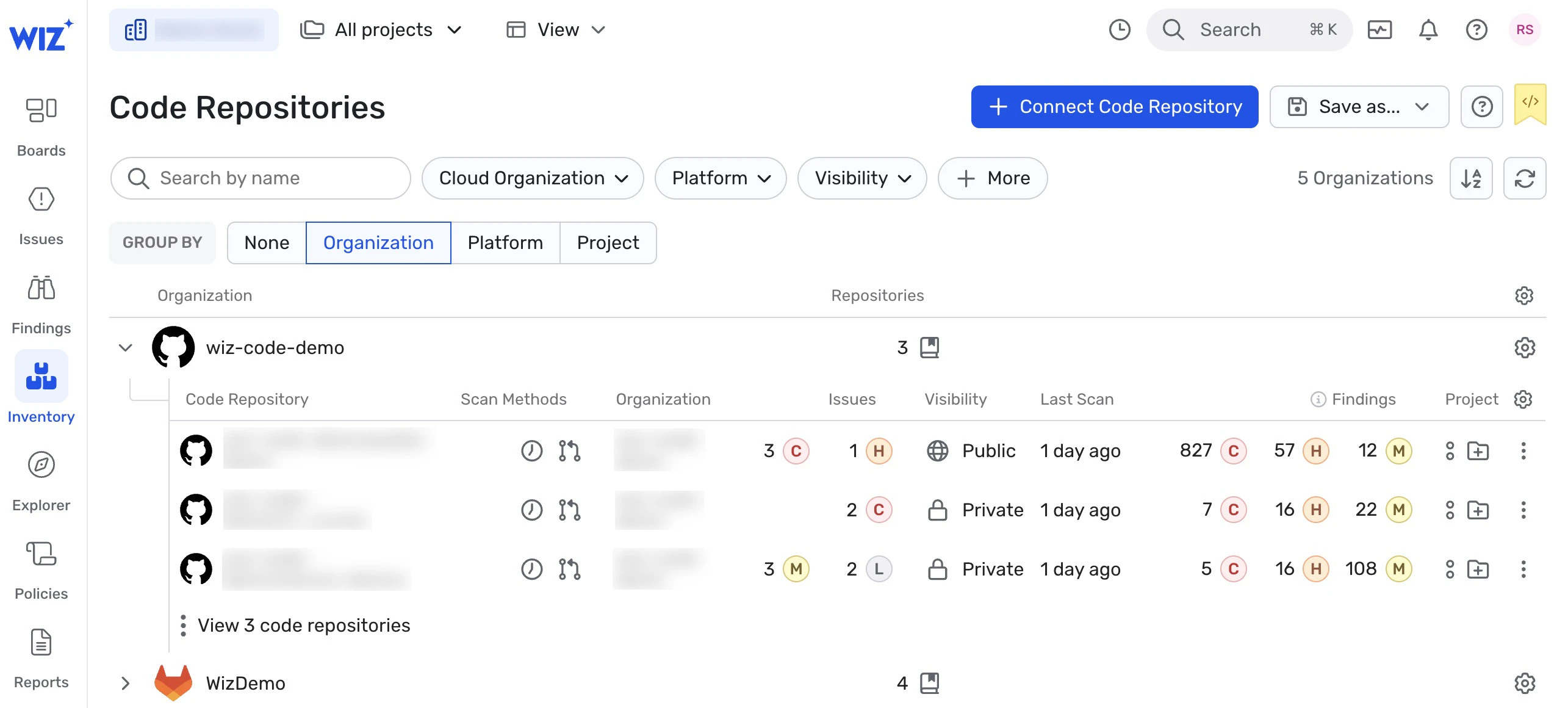
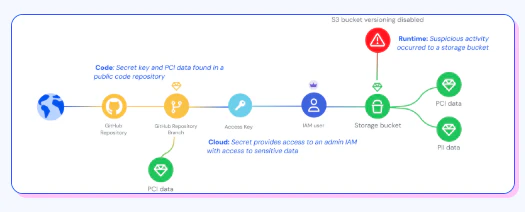
The Wiz Security Graph ties these findings together into attack paths. Instead of sorting through isolated alerts, engineers see how a vulnerable, internet-facing workload with overprivileged access can reach sensitive data. That context turns a backlog into a short list of issues worth fixing first. When threats reach runtime, Wiz Defend correlates suspicious activity with the posture context already in the graph and traces it back to the source.
The same approach extends to AI workloads through AI Application Protection (AI-APP), which maps AI services, training data flows, and the identities that access them to surface risks unique to AI infrastructure.
Request a demo to explore how Wiz can secure your cloud environment.
See how Wiz connects your full cloud security picture
From code to cloud to runtime, Wiz gives your team the context to prioritize real risk and fix what matters.
