

Attack surface and attack vector fundamentals
Today’s rapid CI/CD cycles and infrastructure-as-code (IaC) pipelines flood your environment with new assets and configurations. Assets like temporary services and exposed non-standard ports deploy faster than security teams can manually inventory them.
On top of that, security teams often mistakenly prioritize firefighting over foundational security, defaulting to reactive, vector-focused triage—usually centered around high-profile threats reported in news headlines. This consumes resources that could go instead towards long-term attack surface reduction strategies.
A better approach is to take a strategic, unified code-to-cloud perspective that can manage both security hygiene and active threats at velocity. Code-to-cloud security means connecting three layers of context: (1) vulnerabilities and secrets in your source code repositories, (2) misconfigurations in your infrastructure-as-code templates, and (3) runtime exposures in your deployed cloud resources. This unified view shows not just what's vulnerable, but what's actually exploitable—a container with a critical CVE matters more when it's internet-exposed with admin privileges than when it's isolated in a dev environment. Understanding the full attack surface, rather than just the attack vector, is the key to helping your teams work smarter and more efficiently.
2025 Gartner® Market Guide for Cloud-Native Application Protection Platforms (CNAPP)
Security teams are consolidating tools, aligning workflows, and prioritizing platforms that offer end-to-end context. The 2025 Gartner® Market Guide for Cloud-Native Application Protection Platforms (CNAPP) explores this shift and outlines what security leaders should consider as the market matures.

| Attack surface category | Hazards |
|---|---|
| Identity | Weak passwords, PAM controls, MFA gaps |
| Data | Public bucket access, data residency, unencrypted databases, data classification gaps |
| Cloud control plane | Cloud control plane: IAM/Identity misconfigurations, unused/stale resources, compliance violations, SSRF/IMDSv1 vulnerabilities/exposures |
| Internet-facing assets | Certificates & domains, servers, websites, network applications, exposed APIs, shadow IT |
| Endpoints | IOT, mobile, workstations, USB ports, cyber, physical, network segmentation gaps |
| Application / code | Digital supply chain, software vulnerabilities, code repositories, open-source libraries, collaboration tools, CI/CD pipeline weaknesses |
This blog post will explain strategies for attack surface management (ASM) that integrate both attack surface reduction and attack vector defense into one continuous process, helping you meet the requirements of leading security frameworks like Gartner’s Continuous Threat Exposure Management (CTEM) framework.
The critical relationship between attack surfaces and attack vectors
| Attack surface | Attack vector | |
|---|---|---|
| Definition | Set of all possible entry points and exposures | Specific method or path used to successfully execute a breach |
| Nature | Dynamic and evolving, changing with each deployment, config change, or identity update | Dynamic and active, representing a chosen exploitation transaction |
| Goal of management | Reduction and visibility (shrinking the exposed area) | Blockage and deterrence (preventing the exploit delivery) |
| Strategic focus | Proactive work done upstream in design and inventory management | Reactive work focused on mitigating active, known threats downstream |
| Key metric | The number of external assets or misconfigurations available for targeting | Blocked exploit rate, MTTD/MTTR for active threats, time to patch critical CVEs |
| Best defense | Integrated code-to-cloud security that provides full asset context | Runtime controls (WAF, EDR/eBPF sensors), identity hardening (MFA, least privilege), informed by threat intel |
The "what": Understanding the attack surface
An attack surface comprises all the potential entry points where an unauthorized user can attempt to infiltrate your network or extract data.
Attack surface examples fall into three key categories:
Digital/network surface: Public-facing IPs, open ports, and unpatched web applications
Cloud/application attack surface: Exposed APIs, forgotten S3 buckets, and overly permissive IAM roles
Social/human attack surface: Phishing targets, exposed employee lists, and poor credential hygiene
Security teams can’t adequately protect assets they haven’t discovered or properly inventoried. So ASM first aims to map and minimize the attack surface with continuous discovery, inventory visibility, and exposure minimization.
Dissecting Cloud Attacks and Attack Vectors
Cloud attacks are malicious activities that target cloud data and infrastructure. By exploiting cloud vulnerabilities, attackers try to access and tamper with cloud data by exfiltrating sensitive information or disrupting operations.
Read more

The "how": Understanding the attack vector
An attack vector is the specific path or method an attacker employs to successfully breach the attack surface. This is the transactional event that exploits a single, targetable vulnerability.
A few common attack vector examples include:
Exploitation of known CVEs in libraries on unpatched public servers
Phishing and social engineering techniques that deliver malicious links for credential theft
Misconfigurations that allow access to services like publicly configured database instances
Supply chain compromise that exploits trust in third-party libraries for code injection
Vector defense refers to directly blocking and deterring attack vectors using controls like WAFs, EDR/eBPF sensors, and identity protections (MFA, conditional access). While the primary focus is preventing exploit chains from executing, effective vector defense uses attack surface context to prioritize which threats warrant immediate response versus routine monitoring.
Stopping attack vectors is important, but it's a lot of work. So your best bet is to implement integrated controls that work to minimize the attack surface first, then prioritize and block attack vectors based on actual risk.
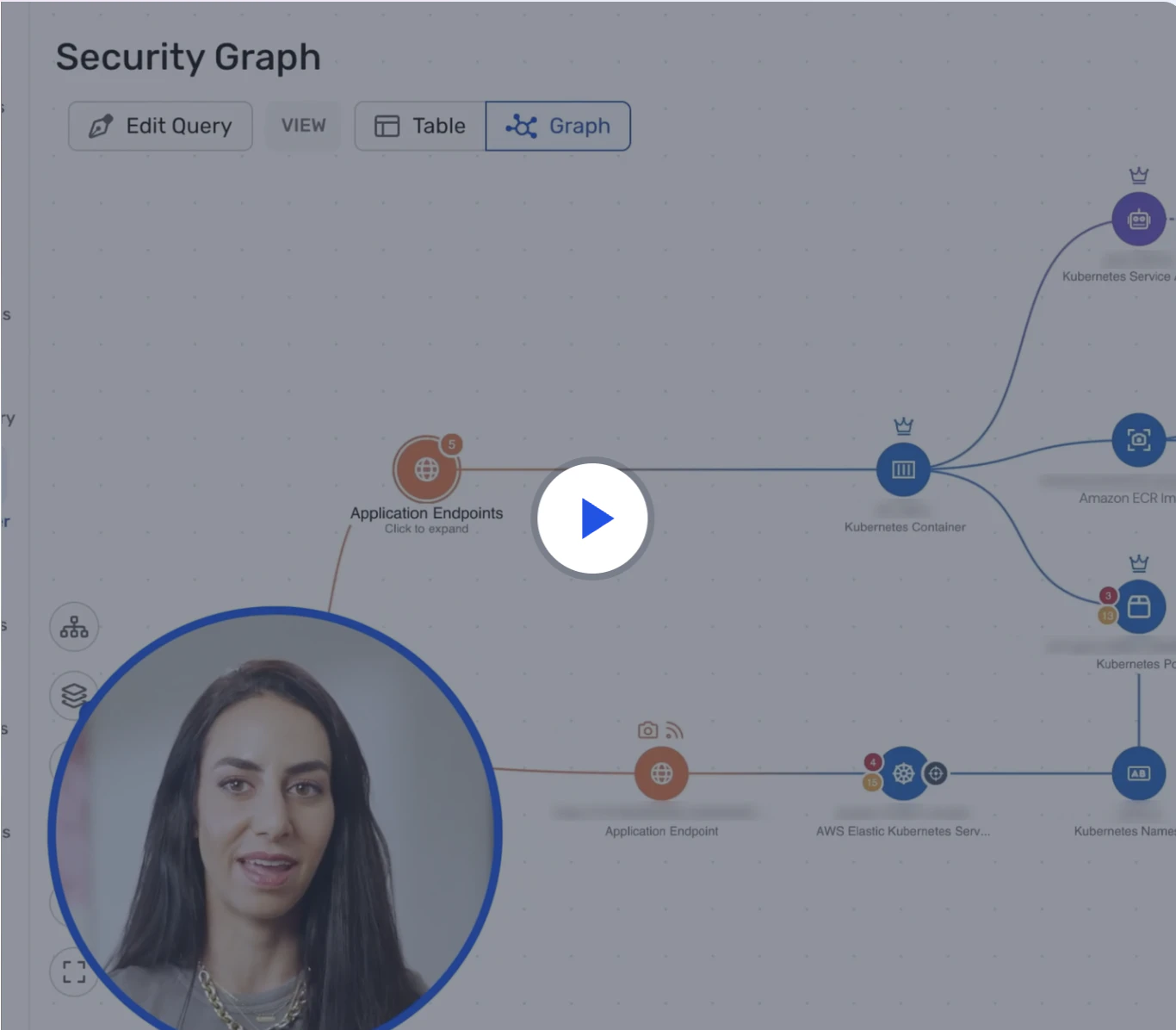
Watch 12-minute Demo
Learn about the full power of the Wiz cloud security platform. Built to protect your cloud environment from code to runtime.
Watch demo
How cloud adoption has transformed both attack surfaces and vectors
Perimeter erosion
Cloud adoption changed risk by dissolving traditional network perimeters. The attack surface is no longer a static perimeter firewall but a dynamic, constantly shifting boundary of thousands of microservices.
Beyond the missing perimeter, expanding multi-cloud estates create sprawling, fragmented attack surfaces across diverse cloud service providers. The Snowflake data breach, for example, demonstrated that with stolen partner credentials, attackers were able to completely bypass traditional network controls.
New attack vector characteristics
Ephemeral assets in serverless and container environments introduce exposures that live for minutes, bypassing traditional scanner inventories. Multiplied at cloud scale, this means that cloud misconfigurations can create hundreds or even thousands of low-friction entry vectors for adversaries seeking easy credential and data access.
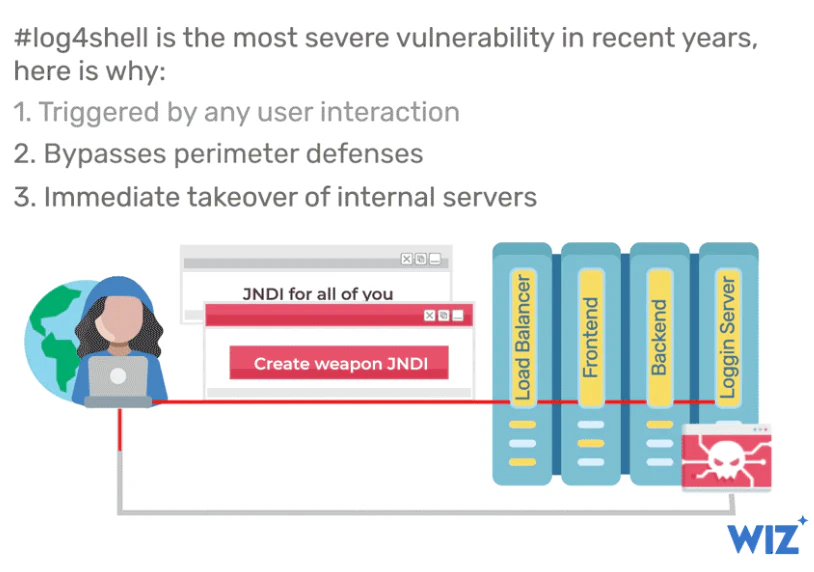
Perhaps the best-known example is Log4Shell (CVE-2021-44228), where internet-facing applications logging untrusted input became universal vectors. Attackers exploited vulnerable Log4j libraries to achieve remote code execution, enabling reconnaissance and data exfiltration without deploying complex malware—all through a simple malicious string in a log message.
Log4Shell highlights the importance of a holistic approach that secures application logic, identity permissions, and open-source libraries over simply patching known OS bugs.
Escalation of risk & impact
Cloud adoption fosters development velocity, but sometimes this means that security configuration checks are pushed later in the SDLC, where risks become more expensive to resolve.
This operational drift vastly expands the effective attack surface faster than human teams can monitor it. A single error in an IAM policy or S3 bucket setting immediately creates a new high-severity surface vulnerability. Meanwhile, internal cloud connectivity boosts lateral movement vectors, enabling rapid privilege escalation.
The SolarWinds breach highlighted this risk. Though initially a supply chain compromise via trojanized Orion software updates, it demonstrated how quickly nation-state actors (identified as APT29/Cozy Bear) achieved lateral movement and privilege escalation across hybrid enterprise environments—from on-premises networks to Azure AD and Microsoft 365 cloud services—once inside the perimeter.
The bottom line? Cloud environments simultaneously increase the likelihood and impact of both surface exposure and successful vector exploitation.


Why attack surface management matters in the cloud
ASM helps achieve comprehensive visibility
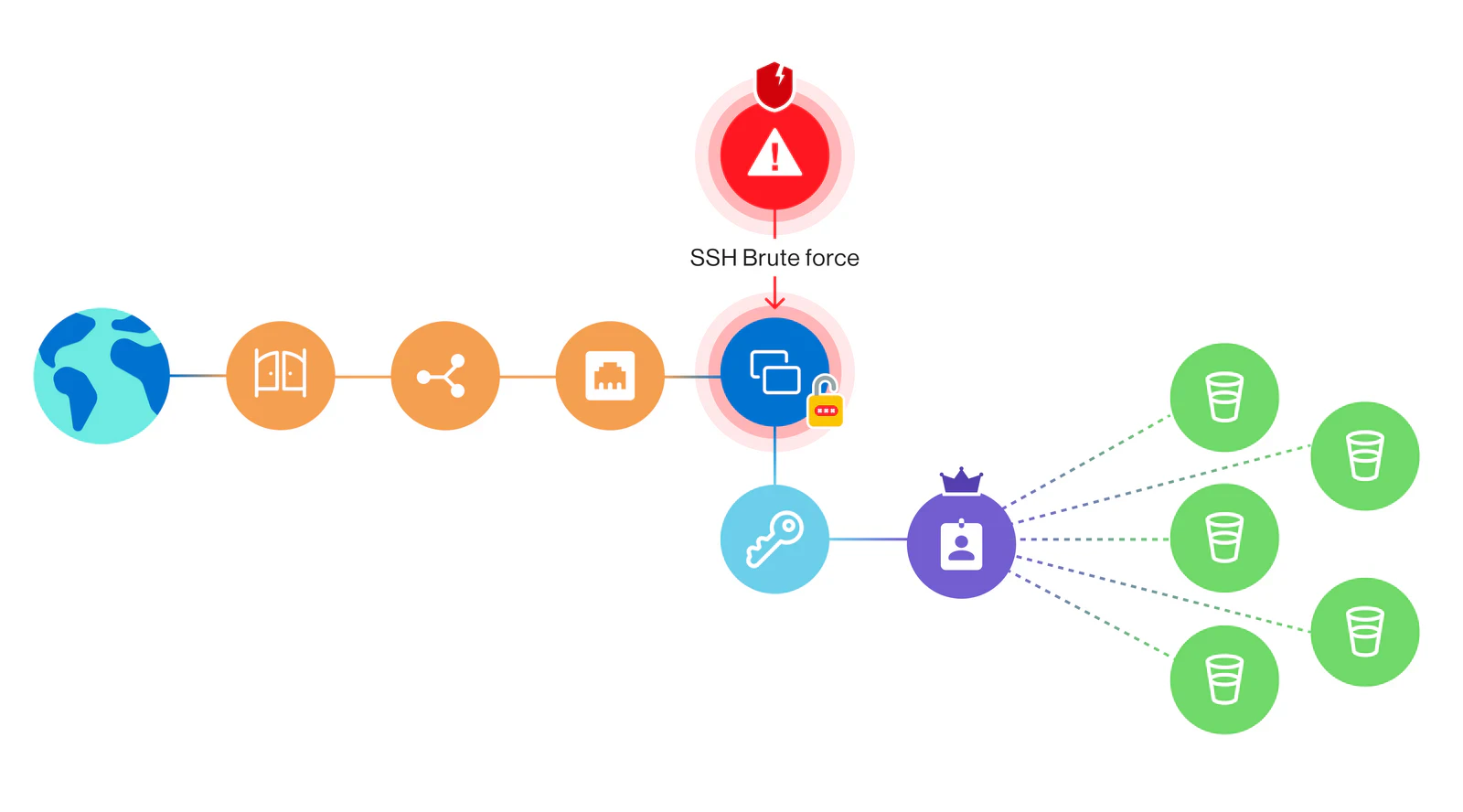
Attack path mapping analyzes and depicts the chained sequence of vulnerabilities and misconfigurations an attacker would exploit to reach a high-value asset, offering a visual representation of the connection between the attack surface and the attack vector.
Why is holistic visibility through attack path mapping so important?:
It provides centralized control for sprawling, uninventoried multi-cloud assets.
It eliminates the manual work required by fragmented security tools.
It fills in the blind spots caused by ephemeral serverless deployments and multi-cloud fragmentation.
ASM promotes intelligent risk prioritization
By quantifying business risk, ASM helps you put an end to security resource drain by directing security teams’ efforts away from low-impact vulnerabilities towards high-severity access and configuration flaws that are exploitable. These are the issues that actually matter, fulfilling the validation and prioritization stages of Gartner’s CTEM lifecycle.
ASM enables operational efficiency
For cloud-native operations, ASM prevents security drift, which could lead to auditing failure and increased compliance fines. It also verifies continuous automated adherence to compliance standards, significantly simplifying audit processes. This, in turn, can help boost development velocity without incurring unknown or unaddressed security debt.
Strategic approaches to managing attack surfaces and vectors simultaneously
Vulnerability management approaches
Action item: Implement continuous automated discovery of all assets to define the perimeter and track exposures.
Vulnerability management approaches help you prioritize patching by overlaying asset criticality with active exploitation intelligence like CISA’s Known Exploited Vulnerabilities (KEV) Catalog. Vulnerability tools should help shift your focus from patching every CVE (“fighting fires”) to remediation efforts that yield measurable surface area reduction.
Cloud security approaches
Action item: Design cloud environments with security policy as code (PaC) to mandate least-privilege exposure by default.
Cloud security tools like CSPM and CDR serve complementary roles: CSPM continuously discovers and prioritizes misconfigurations and exposures across your cloud infrastructure (AWS, Azure, GCP), while CDR provides runtime threat detection and response capabilities for active vectors targeting APIs, serverless functions, and container workloads. You should treat misconfigurations as both a surface flaw and a potential zero-day vector waiting for exploitation.
Security engineering approaches
Action item: Develop sophisticated detection rules that map attacker tactics, techniques, and procedures (TTPs) associated with known vectors to specific assets.
Focus on security analysis tools that provide context from code repository to running cloud asset. Ensure that every exposed asset has clear ownership and a defined timeline for surface reduction goals. A defense in depth model with multiple controls will help you curb surface exposure and block attack vectors.
Measuring the success of your attack surface management program
There are a wide range of metrics that track how effectively your organization is reducing the size of the attack surface and blocking attack vectors. The following are among the most relevant. In all cases, a reduction in these metrics indicates success over time. Quantifying risk reduction in this way can help justify security spend and expand your ASM program into other areas.
Attack surface metrics (what attackers can discover)
| Metric | Rationale |
|---|---|
| Number of internet-facing assets | Pure external footprint size |
| Number of open high-risk ports (RDP, SMB, etc.) | Common doors attackers knock on first |
| Exposed sensitive services (admin panels, DBs, backups) | High-value targets instantly visible |
| Public cloud storage buckets with public access | Top cause of data leaks |
| Expired or self-signed TLS certificates | Enables MITM & erodes trust |
| Newly discovered assets (per month/quarter) | Flags shadow IT and uncontrolled sprawl |
| Number of distinct technologies exposed externally | More software = larger footprint & risk |
Attack vector metrics (what attackers can actually exploit today)
| Metric | Rationale |
|---|---|
| Critical/high CVEs on internet-facing assets | Scannable & exploitable right now |
| Known Exploited Vulnerabilities (CISA KEV) present externally | Actively weaponized in the wild |
| Live RDP or SSH directly exposed to the internet | #1 initial access method in real breaches |
| Unremediated vulns with public PoC/exploit code | Highest probability of imminent attack |
| Reachable attack paths to crown-jewel assets (BAS/EASM) | Real end-to-end exploit chains, not just singles |
How Wiz connects attack surface visibility to real attack vector threats
Wiz ASM (Attack Surface Management) gives you an all-in-one platform to eliminate exploitable risk across your entire cloud estate. Wiz ASM cuts through the noise, providing full visibility into your attack surface and highlighting the risks that actually matter.
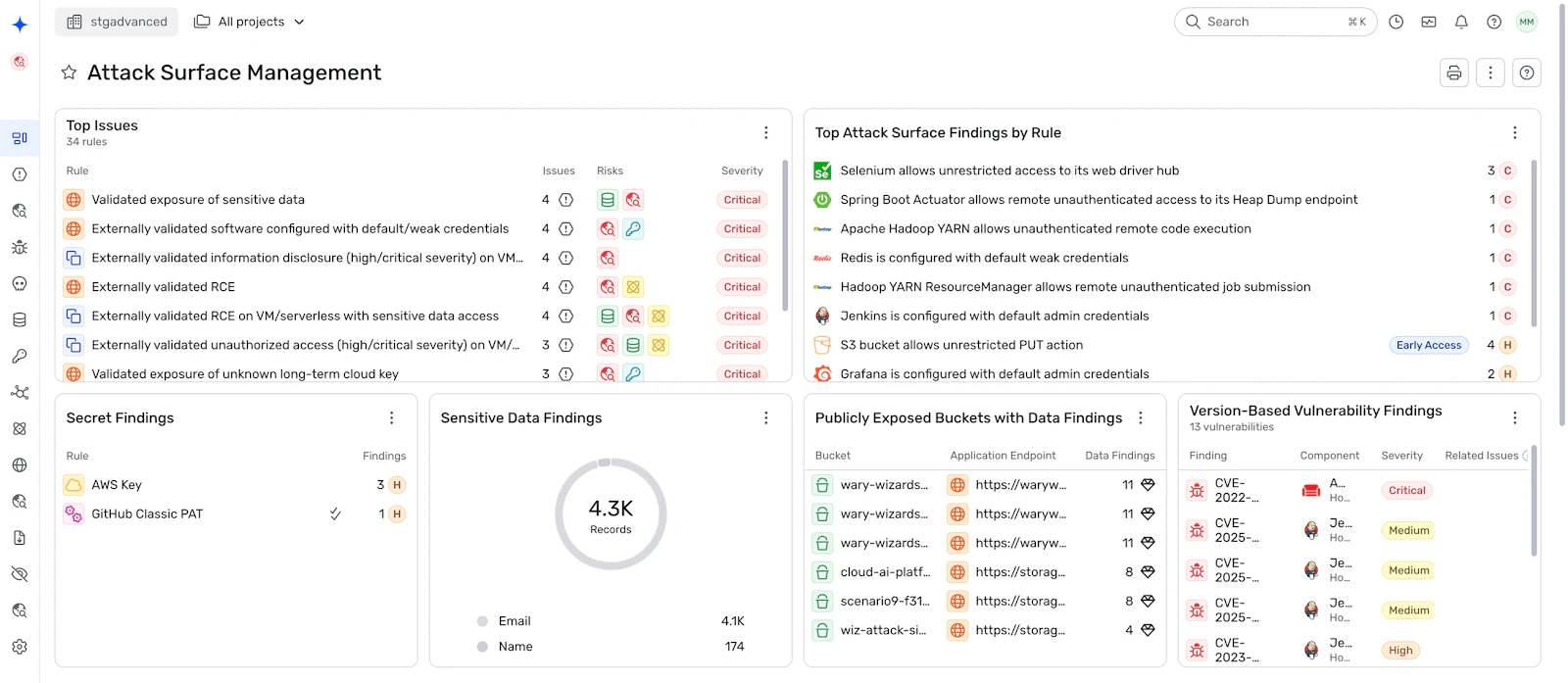
Wiz ASM continuously discovers and inventories all external-facing assets—like domains, IPs, APIs, and application endpoints—across multi-cloud environments (AWS, Azure, GCP, SaaS, and custom domains). It also verifies which of these assets are truly internet-accessible using dynamic scanning and DNS resolution.
Wiz ASM then automatically evaluates the exploitability of these assets by simulating real-world attack techniques, including weak credential checks, misconfiguration detection, and safe exploit attempts, to demonstrate exposure.
But the journey doesn’t end there. Because Wiz ASM findings integrate with the Wiz Security Graph, security teams can correlate external exposures with internal cloud context: misconfigurations, vulnerabilities, sensitive data risks, and mapped attack paths. This helps you quickly pinpoint and remediate what’s exposed (attack surface) and block potential exploitation methods (attack vectors). Plus, Wiz provides the context needed to identify asset ownership, meaning developers can respond faster—reducing mean time to remediation (MTTR).
With Wiz, you’ll also get core features like…
API-specific risk assessments (aligned to the OWASP API Top 10)
Support for 140+ built-in compliance frameworks like PCI DSS and KEV, with integrated compliance reporting
Rapid hourly scanning for new or changed assets
Wiz ASM gives you actionable, organization-wide visibility, empowering teams to prioritize and remediate your biggest risks. Ready to see for yourself? Get a free demo to discover how simple it can be to protect everything you build and run in the cloud.
Surface the exposures that matter most
Detect critical exposures that span across your cloud, code, SaaS, APIs and more.
