

What is SAST scanning and how does it work?
SAST scanning, or Static Application Security Testing, is a "white-box" testing method that analyzes your application's source code, bytecode, or binaries to find security flaws. Unlike other testing methods that require a running application, SAST looks at the code from the inside while it is still in the development phase. This allows teams to identify and fix vulnerabilities before code is shipped to production or deployed to cloud environments.
SAST is most effective when it's simple for developers and precise for security teams—providing fast feedback, low noise, and clear ownership. The best SAST implementations catch real vulnerabilities early without slowing down development velocity.
The scanning process works by parsing your code to understand its structure and logic. The tool builds a model of how data flows through the application (data flow analysis) and how the program executes commands (control flow analysis). It then compares this model against a database of known vulnerability patterns and security rules.
SAST tools are designed to identify specific categories of coding errors, including:
SQL Injection: Improperly sanitizing user input in database queries.
Cross-Site Scripting (XSS): Allowing malicious scripts to be injected into web pages.
Buffer Overflows: Mishandling memory allocation in lower-level languages.
Insecure Cryptography: Using weak encryption algorithms or hardcoded keys.
One of the main benefits of SAST is pinpointing source locations for findings. When the scanner detects a vulnerability, it identifies the exact file and line number where the issue exists, making remediation faster for developers.
Modern SAST tools are versatile and support a wide range of programming languages and frameworks. Whether you are writing in Java, Python, C#, or Go, the tool applies language-specific rules to detect flaws unique to that environment. To make this process seamless, SAST integrates directly into developer tools like IDEs and CI/CD pipelines. This generates immediate reports with severity ratings and code snippets, helping teams prioritize which issues to fix first.
Secure Coding Best Practices [Cheat Sheet]
With curated insights and easy-to-follow code snippets, this 11-page cheat sheet simplifies complex security concepts, empowering every developer to build secure, reliable applications.

Why SAST scanning matters in cloud-native development
Cloud-native development moves at a high velocity, with teams deploying code changes frequently—sometimes multiple times a day. This speed is essential for innovation, but it also means there is less time for manual security reviews. Automated scanning is the only way to keep up with this pace without becoming a bottleneck.
In modern architectures, applications are often broken down into microservices and containers. This increases the overall attack surface because there are more individual code components and endpoints to secure. Furthermore, cloud workloads are often ephemeral, meaning they spin up and down quickly. You cannot rely solely on runtime protection; you must validate the security of the code before it is ever deployed.
SAST is a foundational component of DevSecOps, which aims to embed security into every stage of the developer workflow. By finding vulnerabilities early, you save significant time and money. However, not all code vulnerabilities pose equal risk. Context from deployment—such as internet exposure, identity permissions, and data access—helps teams prioritize SAST findings that are actually exploitable in your environment.
Beyond cost and speed, SAST helps you meet strict compliance requirements. Standards like SOC 2, PCI DSS 4.0, and HIPAA emphasize secure software development and vulnerability management. SAST helps demonstrate due diligence for these controls by providing evidence of code-level security testing. Modern AppSec programs also scan Infrastructure as Code (IaC) templates—such as Terraform or Kubernetes manifests—to make cloud environments secure by design.
SAST vs DAST vs SCA: Understanding application security testing approaches
To build a comprehensive security program, it is important to understand how SAST compares to other testing methods like DAST and SCA.
Dynamic Application Security Testing (DAST) is a "black-box" testing method. It interacts with a running application from the outside, simulating how an attacker would try to exploit it. While SAST finds coding errors, DAST finds runtime vulnerabilities that only appear when the application is active.
Software Composition Analysis (SCA) focuses specifically on third-party dependencies. Modern applications rely heavily on open-source libraries, and SCA scans these components to identify known vulnerabilities (CVEs) and license compliance issues.—critical given that 74% of commercial codebases contained high-risk open-source vulnerabilities in 2023.
Here is how these three approaches compare:
SAST (static application security testing) analyzes source code using a white-box approach and runs pre-deployment during coding or build stages, identifying issues like SQL injection and XSS with immediate feedback for developers in their IDEs.
DAST (dynamic application security testing) uses a black-box approach to test running applications in staging or production, uncovering runtime exploits and configuration issues, but typically provides feedback after deployment.
SCA (software composition analysis)focuses on dependency analysis, running during build and runtime to detect known vulnerabilities in third-party libraries and provide continuous monitoring of open-source components.
Organizations need all three approaches to achieve defense in depth. SAST complements DAST and SCA by catching issues at the earliest possible stage. While SAST might produce false positives, it provides 100% code coverage. DAST might miss hidden code paths, but it validates real-world exploitability. Using a unified application security testing strategy ensures you cover all bases.
Implementing SAST scanning in cloud development workflows
Implementing SAST effectively means integrating it into the daily tools and workflows your developers already use.
The first line of defense is the Integrated Development Environment (IDE). By installing SAST plugins, developers receive real-time feedback as they write code, similar to a spell checker. This allows them to fix security flaws instantly before the code is even saved.
The next step is using pre-commit hooks. These are automated checks that run when a developer attempts to commit code to version control. If the scanner detects a critical vulnerability, the hook blocks the commit, preventing insecure code from entering the repository.
CI/CD pipeline integration is critical for continuous validation. You can configure SAST to run during the build stage or whenever a pull request is created. To enforce security standards, you can set up policy gates that prevent code from being merged or deployed if it contains high-severity vulnerabilities.
Severity thresholds: Configure the tool to fail builds only for "Critical" or "High" issues to avoid stopping work for minor bugs.
Issue tracking: Integrate the scanner with tools like Jira to automatically create tickets for valid vulnerabilities.
False positives: Establish a process for developers to flag and suppress false alarms so they don't block future builds.
Successful implementation also requires people and processes. Identify security champions within your development teams to promote adoption and help peers understand scan results. Finally, ensure your strategy covers modern cloud assets. You should scan container images and serverless functions (like AWS Lambda) just as you would traditional application code.
SAST vs DAST : comment utiliser ces deux outils de test pour la sécurité applicative
In this Academy article, we'll dig into SAST and DAST security testing methods, exploring how they work and their core aspects
En savoir plus

Key challenges and limitations of traditional SAST scanning
While SAST is essential, traditional tools often struggle to keep up with the complexity of modern cloud environments.
The most common complaint is alert fatigue caused by false positives. Traditional scanners often flag code that is theoretically vulnerable but not actually exploitable in the real world. When developers are bombarded with hundreds of irrelevant alerts, they lose trust in the tool and may start ignoring reports entirely.
Scalability is another major hurdle. Scanning large, monolithic codebases can take hours. If a security scan slows down the CI/CD pipeline significantly, developers will find ways to bypass it to maintain their velocity.
Traditional SAST tools also lack context. They analyze code in isolation, meaning they don't understand how the application is deployed or configured. For example, a scanner might flag a vulnerability in a service that is never exposed to the internet, marking it as "Critical" when the actual risk is low.
Other limitations include:
Language gaps: Some tools lack support for newer languages or specific frameworks used in cloud-native stacks.
Runtime blindness: SAST cannot detect issues that only manifest when the application is running.
IaC separation: Many traditional tools do not scan infrastructure code, requiring teams to use separate tools for Terraform or Kubernetes security.
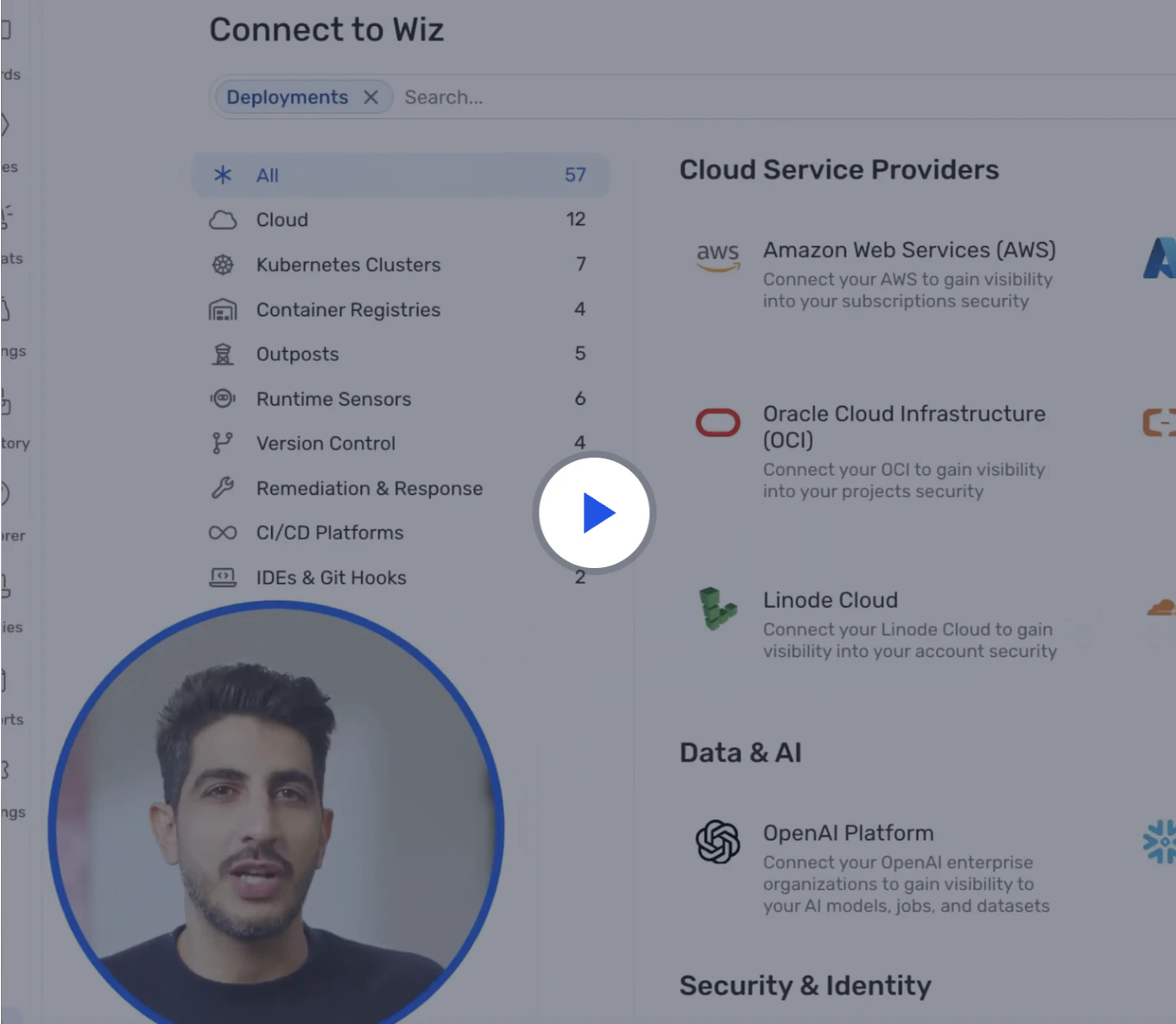
Watch 5-minute demo
Watch the demo to learn how Wiz Code scans infrastructure as code, container images, and CI/CD pipelines to catch risks early—before they reach the cloud.
Watch now
Best practices for effective SAST scanning in the cloud
To get the most out of SAST without slowing down development, you need to tune your approach for the cloud.
Start by establishing baseline security policies. Define what constitutes a "Critical" vulnerability for your organization and set clear Service Level Agreements (SLAs) for how quickly they must be fixed.
Graduated thresholds: Block builds for critical issues, but only warn for medium or low risks.
Custom rules: Tailor the scanner's ruleset to your specific coding standards and security requirements to reduce noise.
Incremental scanning: Configure your CI/CD pipeline to scan only the new or changed code in a pull request rather than the entire codebase.
Developer training is equally important. Simply giving developers a list of vulnerabilities is not enough; they need education on secure coding practices and guidance on how to interpret SAST findings. Clear ownership is vital—ensure every repository has a designated owner responsible for remediation.
You should also implement a robust exception management process. There will always be false positives or risks that the business chooses to accept. Create a workflow where developers can request exceptions that are reviewed and approved by security, ensuring these decisions are documented.
Qu’est-ce que l’analyse DAST ? Une perspective de sécurité cloud
L'analyse DAST (Dynamic Application Security Testing) est une méthode automatisée de test de sécurité qui analyse vos applications en cours d'exécution depuis l'extérieur. Elle interacte avec l'application tout comme le ferait un utilisateur réel ou un attaquant afin de détecter les faiblesses de sécurité.
En savoir plus

How Wiz SAST enhances static analysis with cloud context
Wiz SAST is part of Wiz Code, which gives teams continuous coverage across code, cloud, and runtime. Unlike a standalone scanner, it combines native scanning across SCA, secrets, sensitive data, IaC, and supply chain posture with the option to ingest findings from leading code scanners. Because those signals land in the Wiz Security Graph, teams can trace issues from code to cloud and act in the tools they already use rather than switching between disconnected scanners and dashboards. This keeps static analysis tied to how the application is actually built and deployed, which is what teams need to fix the right issues first.
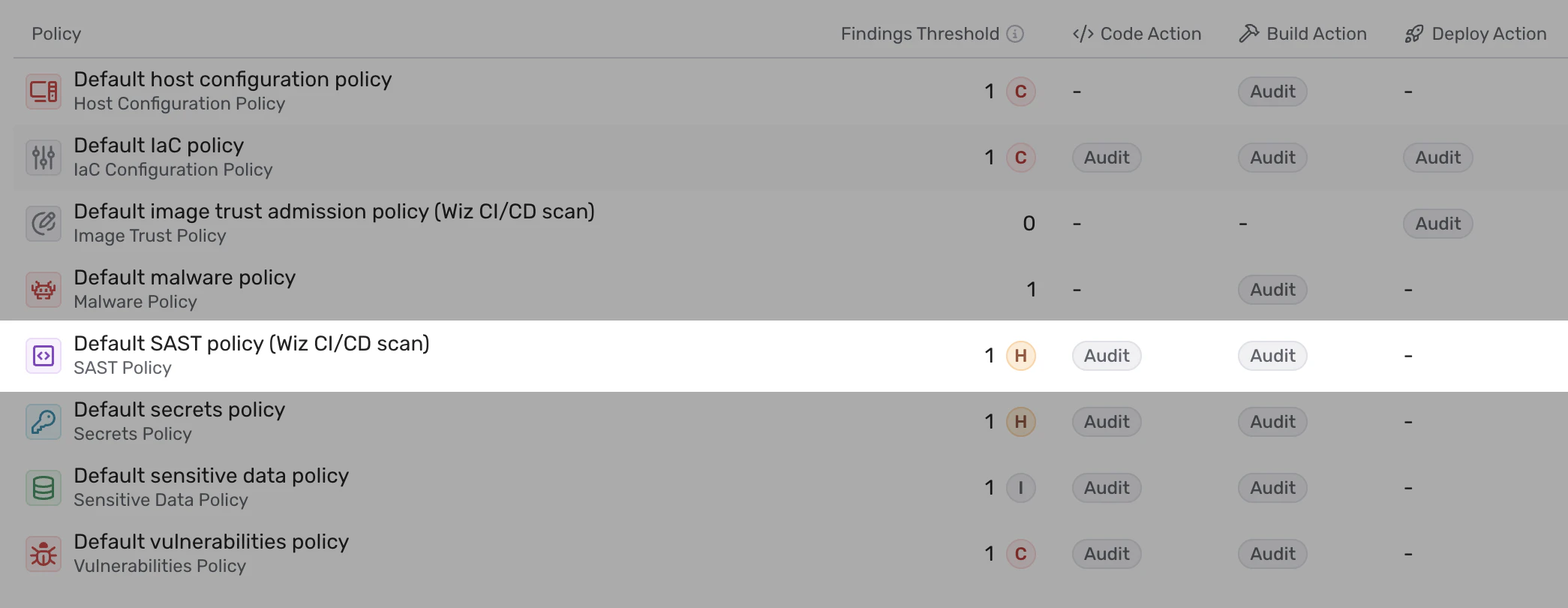
Wiz Code keeps that coverage continuous as code changes, but some flaws depend on intent rather than a pattern a rule can match. Think of broken access control, like an insecure direct object reference (IDOR) that lets any user pull another customer's invoice by changing an ID. Wiz AI SAST reads how the application actually behaves to flag these logic flaws, along with weak input validation and misapplied cryptography. Built on the same harness as Atlas, it adds Security Graph context, and the Red Agent confirms exploitability before anyone chases a finding.
Zero-configuration mapping: Wiz SAST automatically traces vulnerabilities from source code repositories all the way to the running workloads in your cloud environment, showing you the complete attack path.
Toxic combinations: The platform identifies when a code flaw combines with a cloud misconfiguration (like a permissive IAM role) to create a critical attack path that could be exploited.
Unified policy engine: Wiz SAST works alongside SCA, secrets scanning, and IaC analysis in a single platform, eliminating tool sprawl and providing one source of truth for application security.
Repeatable AI findings: Mika AI picks which repos get AI scanning, while retest and semantic deduplication keep findings stable. Each includes a confidence score, investigation summary, and repro command.
Wiz SAST also uses AI to shorten the path from finding to fix. The built-in triage agent explains why a vulnerability is exploitable in your environment, or why your deployment context makes it a likely false positive. From there, the Green Agent traces the root cause and writes a remediation plan. Developers can apply the fix in their pull request or hand the plan to a coding agent like Claude Code.
By integrating with developer workflows through IDE plugins and CLI tools, Wiz SAST ensures security is seamless and non-disruptive. Book a demo to get started!
Catch code risks before you deploy
Learn how Wiz Code scans IaC, containers, and pipelines to stop misconfigurations and vulnerabilities before they hit your cloud.
