

What is SecOps?
Security operations brings IT and security teams together under a shared operating model focused on protecting systems, data, and cloud infrastructure. Rather than working in silos, these teams collaboratively manage patches, identity permissions, and incident response. This integration eliminates the blind spots that attackers exploit when security and operations function independently.
How do SecOps teams make your organization safer?
Catching threats before they escalate into incidents is the primary way SecOps protects your organization. When security and IT operations share visibility, they can spot malware infections, insider misuse, and cloud misconfigurations while there's still time to act.
SecOps teams reduce risk through three core activities:
Early threat identification: Detecting anomalies across endpoints, identities, and cloud resources before attackers establish persistence
Faster incident response: Coordinating security alerts with IT workflows so containment happens in minutes rather than hours
Continuous compliance: Monitoring against frameworks like NIST, PCI DSS, and GDPR to maintain audit readiness
The result is less downtime and stronger business continuity when incidents do occur.
Getting Started with DevSecOps [Guide]
Master the DevSecOps lifecycle. From phased roadmaps and tool checklists to developer-first collaboration frameworks, get the blueprints to build security into every commit.

What are the differences between SecOps, DevOps, and DevSecOps?
Understanding where SecOps ends and DevOps or DevSecOps begins helps you assign responsibilities correctly and avoid security gaps.
| Discipline | Primary goal | Focus and activities | Tools and practices | Key difference |
|---|---|---|---|---|
| SecOps | Protecting systems and infrastructure | Identifies threats, coordinates incident response, enforces compliance, and manages risk | SIEM, SOAR, monitoring dashboards, patch management, and compliance reporting | SecOps is the team coordinating IT and security, with the SOC as the monitoring hub |
| DevOps | Optimizing software development | Streamlines CI/CD pipelines and automates testing, provisioning, and deployments to accelerate releases | CI/CD pipelines, infrastructure as code (IaC), automated testing, and container orchestration | DevOps prioritizes speed and innovation, with security as an afterthought |
| DevSecOps | Securing software development | Embeds security throughout the SDLC and shifts security left with early testing and controls | SAST, DAST, IaC scanning, and automated security gates in CI/CD | DevSecOps is proactive and integrated into development, unlike reactive SecOps |
What is the SecOps methodology?
The SecOps methodology centers on breaking down barriers between security and IT operations teams. Instead of security handing off requirements and walking away, both teams share information, align on priorities, and collaborate throughout incident response.
This shared approach only works at scale with automation. Manual handoffs between teams create delays that attackers exploit. Automated workflows for patching, alert triage, and remediation reduce response times while freeing analysts to focus on threats that require human judgment.
Below are several key tasks that SecOps teams handle, along with how they carry them out effectively and the benefits they provide.
Detecting threats: Build context and reduce noise
Effective threat detection starts with knowing what you're defending. Build an asset inventory that maps your environment, then layer in threat intelligence from external feeds and internal telemetry.
The goal is context. When you correlate threat data with indicators of compromise and known exploits, you filter out noise and surface the alerts that actually matter. Teams that prioritize threats based on real risk spend less time chasing false positives and more time stopping attacks.
Managing vulnerabilities: Prioritize what matters most
How to carry it out:
Scan continuously for vulnerabilities across cloud resources, applications, and workloads.
Evaluate vulnerabilities by asking: (1) Can an attacker reach this from the internet? (2) Does it expose sensitive data? (3) Is there a known active exploit?
Assign ownership to DevOps and application teams to ensure they deploy fixes quickly.
Automate triage, ticketing, and remediation workflows to accelerate response.
Ongoing security monitoring: Detect issues before they escalate
How to carry it out:
Monitor continuously for threats across networks, environments, and sensitive systems.
Investigate alerts promptly and verify whether they represent genuine risks.
Feed insights into response playbooks so the team improves with each detection.
Benefits: Proactive monitoring enables SecOps to spot issues before they escalate into full incidents. That's why continuous visibility ensures that teams reduce downtime, protect sensitive data, and maintain compliance.
Responding to incidents: Act fast with a plan
How to carry it out:
Build and test incident response playbooks in advance to ensure teams know how to react.
Automate containment and remediation steps whenever possible to minimize delays.
Assign clear roles and responsibilities across security and operations teams for faster collaboration.
Benefits: A practiced, automated incident response process reduces downtime, limits damage, and keeps business operations resilient. That way, teams can recover faster and demonstrate their readiness to regulators, customers, and leadership.
Reporting and analytics: Turn findings into action
How to carry it out:
Generate reports for internal stakeholders, auditors, and regulators.
Preserve forensic data during and after incidents to support investigations.
Perform root cause analysis, document lessons you've learned, and update processes and tools.
Benefits: Clear reporting builds trust with leadership, regulators, and customers. Analytics enable teams to learn from past events, reduce recurring issues, and continually strengthen their security posture.
Common SecOps challenges
Most SecOps programs do not fail because teams do not care. They fail because the day-to-day work is spread across too many tools, too many owners, and too many kinds of telemetry.
These are the issues that usually slow teams down the most:
Tool sprawl and context switching: Alerts land in one place, asset inventory lives somewhere else, and cloud identity data sits in a third tool. That split makes it hard to answer simple questions like "what can this compromised workload reach?"
Too many alerts, not enough signal: Rules fire on every suspicious event, but many events are low-risk in your environment. Without exposure and permission context, triage becomes a guessing game.
Cloud identity is hard to reason about: Effective permissions come from multiple layers (IAM roles, policies, group membership, trust relationships). A single over-permissioned role can turn a minor foothold into a control plane incident.
Fast change creates drift: New services, new containers, and new pipelines show up weekly. If detections and coverage reviews are quarterly, you miss what changed.
Slow investigations because evidence is scattered: Analysts have to pull audit logs, runtime signals, and configuration history from different places before they can tell a coherent story.
Get the DevOps Security Best Practices [Cheat Sheet]
In this 12 page cheat sheet we'll cover best practices in the following areas of DevOps: secure coding practices, infrastructure security, monitoring and response.

Key components: SecOps tooling
SecOps teams use a range of tools to perform diverse functions. Here are several that your team can use, too:
| Tool/Function | Description | KPIs |
|---|---|---|
| Endpoint detection and response (EDR) / Cloud detection and response (CDR) | EDR protects individual endpoints, while CDR extends detection and response into cloud environments. Both are essential in hybrid environments where endpoints and cloud workloads are interconnected. | MTTD, MTTR |
| Threat intelligence platform | Provides real-time intelligence on malware, adversary tactics, and attack methods to help teams proactively anticipate and neutralize threats. | Reduction in phishing and malware incidents, threat coverage accuracy |
| SIEM and SOAR | Aggregates and normalizes incoming security data for analysis, while automating incident response workflows and repetitive tasks. | False positive rate, alert triage time, automated response coverage |
| Network security tools | Enforces segmentation and access policies to protect data in transit and block unauthorized connections. | Blocked intrusion attempts, network uptime and availability, policy compliance rate |
| Vulnerability management | Correlates vulnerability data with business context to prioritize remediation, streamline patching cycles, and reduce overall risk. | Patch cycle time, average vulnerability age, risk reduction percentage |
Tool sprawl is one of the biggest obstacles SecOps teams face. When vulnerability data lives in one console, identity risks in another, and cloud misconfigurations in a third, analysts waste time switching contexts instead of stopping threats.
Cloud-native application protection platforms (CNAPPs) solve this by unifying security capabilities under a single view. For SecOps teams, this means correlating risks across workloads, identities, and data without manual effort.
Building a SecOps team
The best SecOps teams blend security depth with operational breadth. Specialists who only understand threats struggle to assess real-world impact, while IT generalists without security training miss attack patterns hiding in normal system behavior.
Hybrid expertise closes this gap. Security analysts with operational experience can trace how a vulnerability translates into business risk. IT professionals with security knowledge implement defenses that actually work in production environments.
Core security roles
Security analyst: Detects, investigates, and responds to security incidents
Security engineer: Plans, builds, and maintains your security infrastructure; evaluates and tests vendor tools
Security manager: Oversees the SecOps team and overall security strategy
Operations-oriented roles
IT operations manager: Manages IT infrastructure and services
System administrator: Maintains and supports IT systems
System analyst: Analyzes IT systems and recommends improvements
Hybrid roles
Incident responder: Configures and monitors security tools; handles security incidents from detection to resolution
Threat intelligence analyst: Aggregates, analyzes, and shares information on potential threats
Executive sponsorship makes or breaks SecOps programs. Your CISO or equivalent security leader won't handle day-to-day operations, but they set strategic direction and secure the budget that keeps the program running.
More importantly, the CISO translates security risk into business terms that executives understand. Without this bridge, SecOps teams struggle to justify investments or explain why certain threats demand immediate attention.
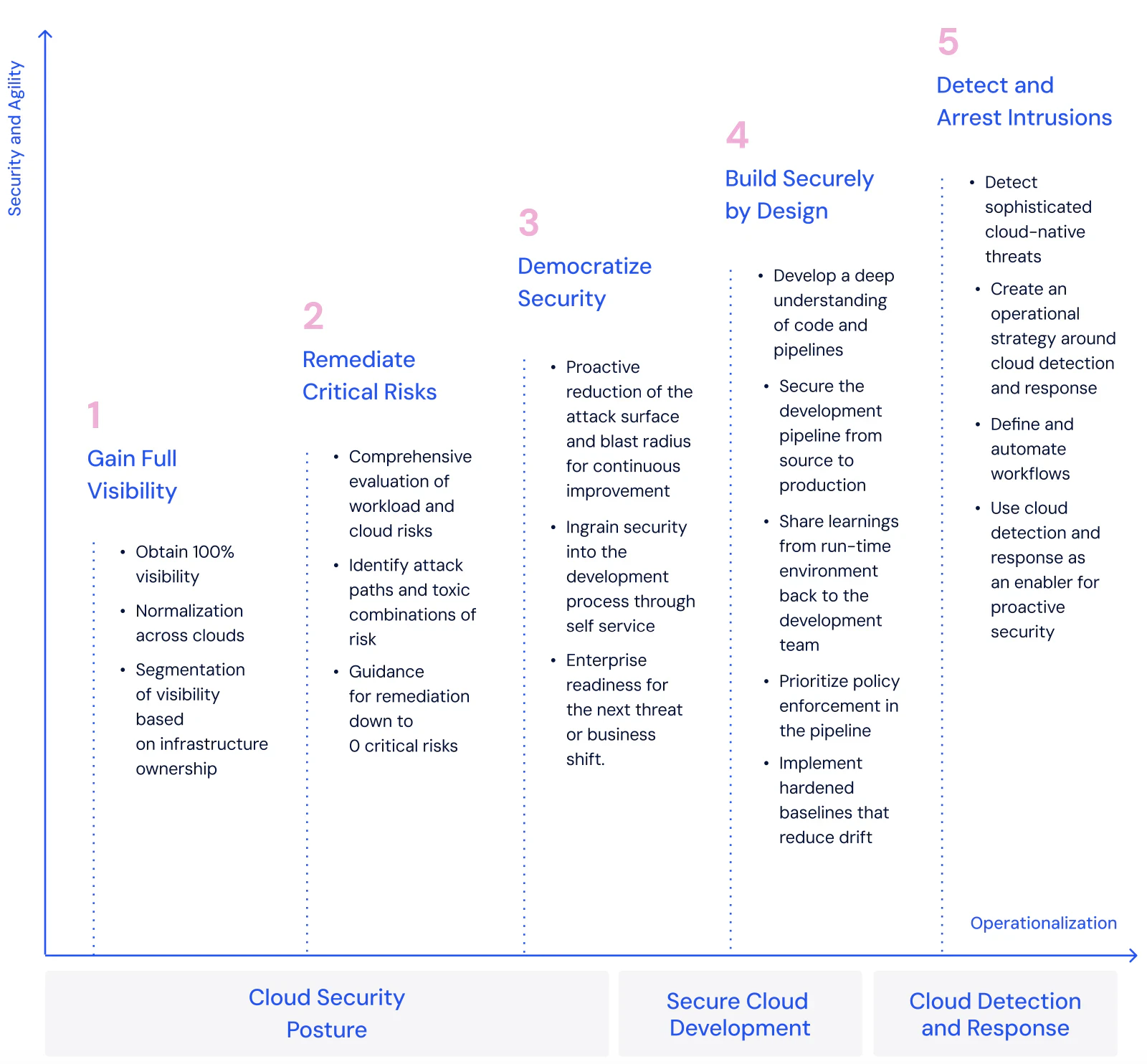
Here's how you can improve your SecOps maturity assessments:
Baseline current state: Document existing tools, processes, and responsibilities.
Benchmark performance: Compare current capabilities and metrics to industry standards or peers to highlight strengths and weaknesses.
Run gap analyses: Identify missing coverage, automation opportunities, or misaligned responsibilities.
Build actionable roadmaps: Prioritize critical investments, such as scaling automation or expanding detection capabilities.
Reassess regularly: Reevaluate performance annually or after major changes, such as mergers or cloud migrations.
Achieving SecOps maturity through continuous improvement
Mature SecOps programs measure progress, not just activity. Tracking metrics like mean time to detect and mean time to respond reveals whether your team is actually improving or just staying busy.
Continuous improvement requires structured assessments that identify gaps before attackers find them. Here's how to build that discipline:
Define and track SecOps KPIs and performance metrics
To prove that SecOps delivers business value, your team should define clear KPIs that directly tie to security and organizational goals. These metrics create visibility into program effectiveness and build the case for ongoing executive support.
The right metrics tie security performance to business impact. Track these to prove SecOps value and identify where to invest:
Mean time to detect (MTTD): How quickly your team spots incidents. Shorter detection windows limit attacker dwell time.
Mean time to respond (MTTR): How fast you contain and remediate threats once detected. This directly affects breach impact.
Patch management cycle time: How long critical vulnerabilities remain unpatched. Longer cycles mean larger exposure windows.
False positive rate: How much time your team wastes on non-issues. High rates cause alert fatigue and missed real threats.
Compliance coverage: What percentage of workloads map to required frameworks. Gaps create audit risk.
Cost of incidents avoided: The business continuity value your team delivers through prevention.
Conduct periodic maturity assessments and gap analyses
Beyond daily operations, SecOps teams should also measure themselves against a structured maturity curve. For example, frameworks like NIST CSF tiers or internal benchmarks help organizations assess their capabilities across automation, monitoring, incident response, and cross-team collaboration.
How Wiz powers modern security operations
Most SecOps teams inherit fragmented visibility across their cloud environments. Vulnerabilities surface in one tool, identity risks in another, and misconfigurations somewhere else. Wiz eliminates this fragmentation through the Wiz Security Graph, which maps all cloud and AI resources, relationships, and risks into a unified model. This is the foundation of the Wiz AI Application Protection Platform (AI-APP).
For SecOps teams, the impact is most visible through Wiz AI Agents, which operationalize the Security Graph across investigation, remediation, and validation.
The Blue Agent transforms how investigation works. It automatically investigates every triggered threat using the full context of the Security Graph, producing a transparent verdict with the sequence of events, involved entities, blast radius, and confidence level. Analysts review a complete investigation, not a raw alert. Detection severity incorporates cloud context, so the team knows which threats actually matter.
The Green Agent transforms how remediation works. It continuously analyzes the highest-risk issues, traces each to its root cause, identifies the most efficient fix, and maps ownership to the right developer or team. Remediation moves forward without handoff delays or ambiguity.
The Red Agent transforms how validation works. It reasons through application logic like a sophisticated security researcher, continuously probing for exploitable risks that traditional scanning overlooks. SecOps teams gain confidence that their defenses hold against real-world attack paths.
Agentic Workflows tie it all together. Teams define how agents, automation, and human approvals connect: auto-containing high-confidence threats, routing lower-confidence verdicts for review in Slack, creating Jira tickets with full context, or escalating to SecOps leadership. The result is a security operations model that scales with the cloud environment instead of falling behind it.
With prioritized, context-rich insights, Wiz enables security and IT teams to collaborate more effectively. That's why over 50% of Fortune 100 companies already rely on Wiz to eliminate critical cloud risks and strengthen their SecOps capabilities.
Want to measure your response readiness? Get our free Template for Cloud Incident Response to map out your protocols when threats arise. Or, to enhance your multi-cloud environment, request a free Wiz demo today.
Enable Your Team to Embrace SecOps
Learn why CISOs at the fastest growing companies choose Wiz to power their shift towards DevSecOps.
