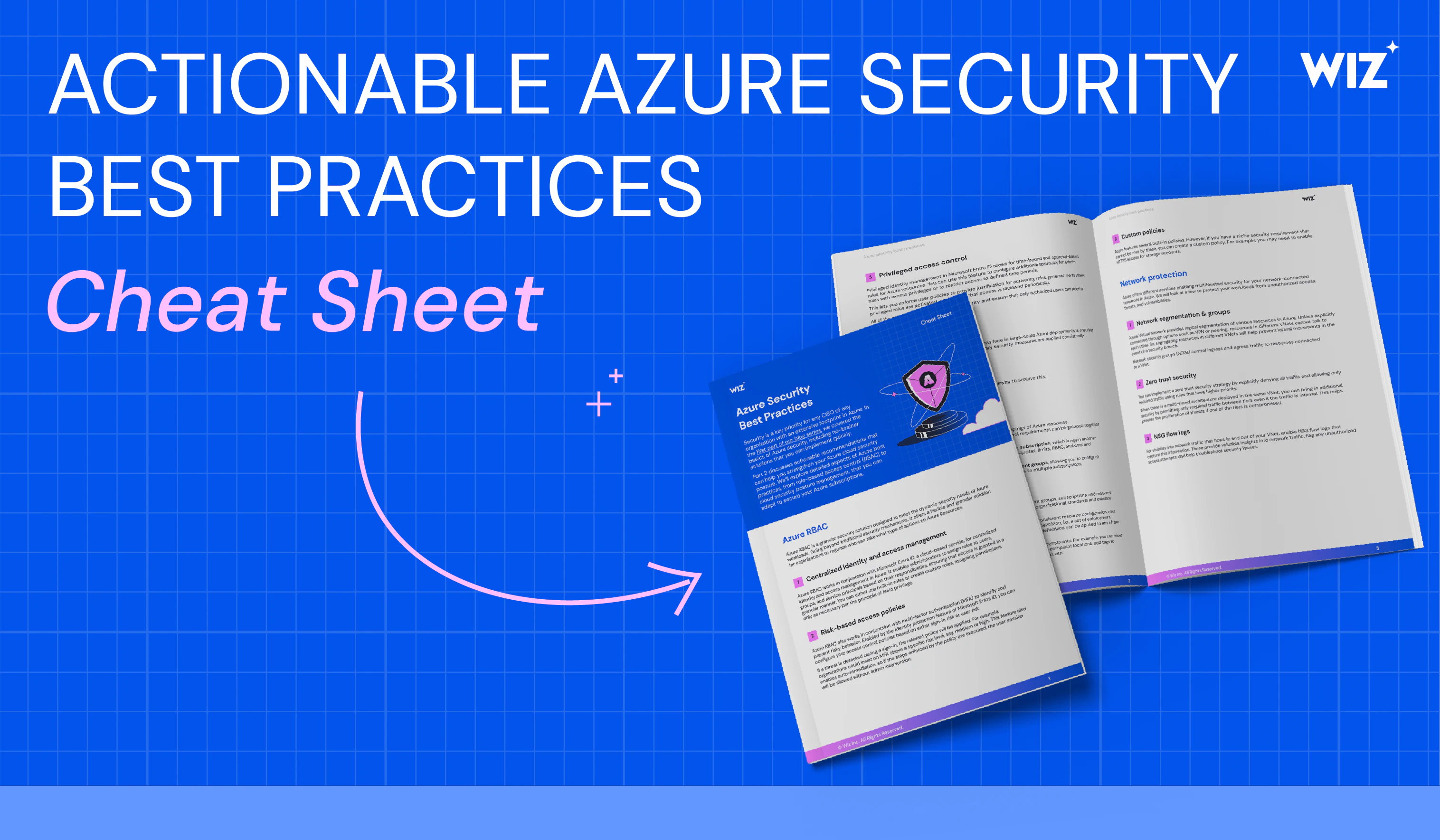


9 Azure Security Best Practices to Strengthen Your Cloud
Misconfigurations, weak access controls, and data exposure put your Azure workloads at risk. Follow these 9 proven security best practices to stay protected.
Get a personalized demo
"Best User Experience I have ever seen, provides full visibility to cloud workloads."
"Wiz provides a single pane of glass to see what is going on in our cloud environments."
"We know that if Wiz identifies something as critical, it actually is."
This cheat sheet is designed for:
DevOps and platform engineers building or maintaining CI/CD pipelines in Azure DevOps
Cloud security engineers responsible for securing ADO environmentsDevelopers who want to ship fast without introducing supply chain risk
Compliance and GRC teams enforcing security controls across development workflows
Anyone looking to harden Azure DevOps against misconfigurations and credential-based attacks
What's included?
Control plane hardening: Organization-level settings, project governance, and branch protection policies to secure your ADO foundation.
Identity and access management: Best practices for Entra ID groups, JIT access, service connections, and personal access tokens.
Pipeline security: How to separate build and release pipelines, scope service accounts, use reusable templates, and pin task versions.
Secrets and credential management: Stop hardcoding credentials and use external vaults, managed identities, and automated secret rotation.
Threat detection and monitoring: Baseline pipeline behavior, monitor authentication patterns, and respond fast when incidents occur.
Continuous improvement tips: Enforce security automatically with policy as code and build an iterative security program that keeps pace with new threats.
Get a personalized demo
"Best User Experience I have ever seen, provides full visibility to cloud workloads."
"Wiz provides a single pane of glass to see what is going on in our cloud environments."
"We know that if Wiz identifies something as critical, it actually is."