

What ASPM Really Is (and Why It Emerged)
Application Security Posture Management (ASPM) is a unified approach to understanding, prioritizing, and reducing application risk across the entire software development lifecycle.
Instead of treating security findings as isolated issues from individual tools, ASPM manages them as part of a single risk model that spans code, pipelines, runtime environments, and cloud infrastructure.
Historically, application security programs evolved around specialized scanners. Most organizations deployed separate tools for:
Each tool served a purpose, but over time this fragmentation created systemic problems.
Security teams were forced to manage tool sprawl, maintain integrations, and reconcile conflicting results. Developers received overlapping or contradictory findings with little guidance on what actually mattered. Leadership lacked a clear, consistent view of application risk across the organization.
ASPM emerged to address these structural issues.
Rather than replacing every scanner, ASPM acts as a decision layer. It aggregates findings from multiple sources, correlates them with deployment and runtime context, and prioritizes risk based on real-world impact instead of generic severity scores.
This distinction is critical.
Historically AppSec tooling focused on detection. ASPM focuses on understanding and action. It answers questions like:
Which vulnerabilities are actually deployed in production?
Which issues are reachable by attackers?
Which risks matter most to the business right now?
By shifting the focus from finding more issues to resolving the right ones, ASPM enables teams to move from reactive scanning to continuous risk reduction.
Wiz Named a Leader in IDC’s ASPM MarketScape
See why IDC recognized Wiz as a leader in Application Security Posture Management and how we’re helping organizations reduce risk across the SDLC.

Core ASPM Capabilities That Actually Matter
Not all ASPM capabilities contribute equally to reducing risk. Some are foundational. Others determine whether the platform actually changes outcomes.
When evaluating ASPM, the goal is not to compare feature lists. It is to understand whether the platform can reliably turn scattered security signals into clear decisions and fast remediation.
Asset and Application Discovery (With Ownership and Business Context)
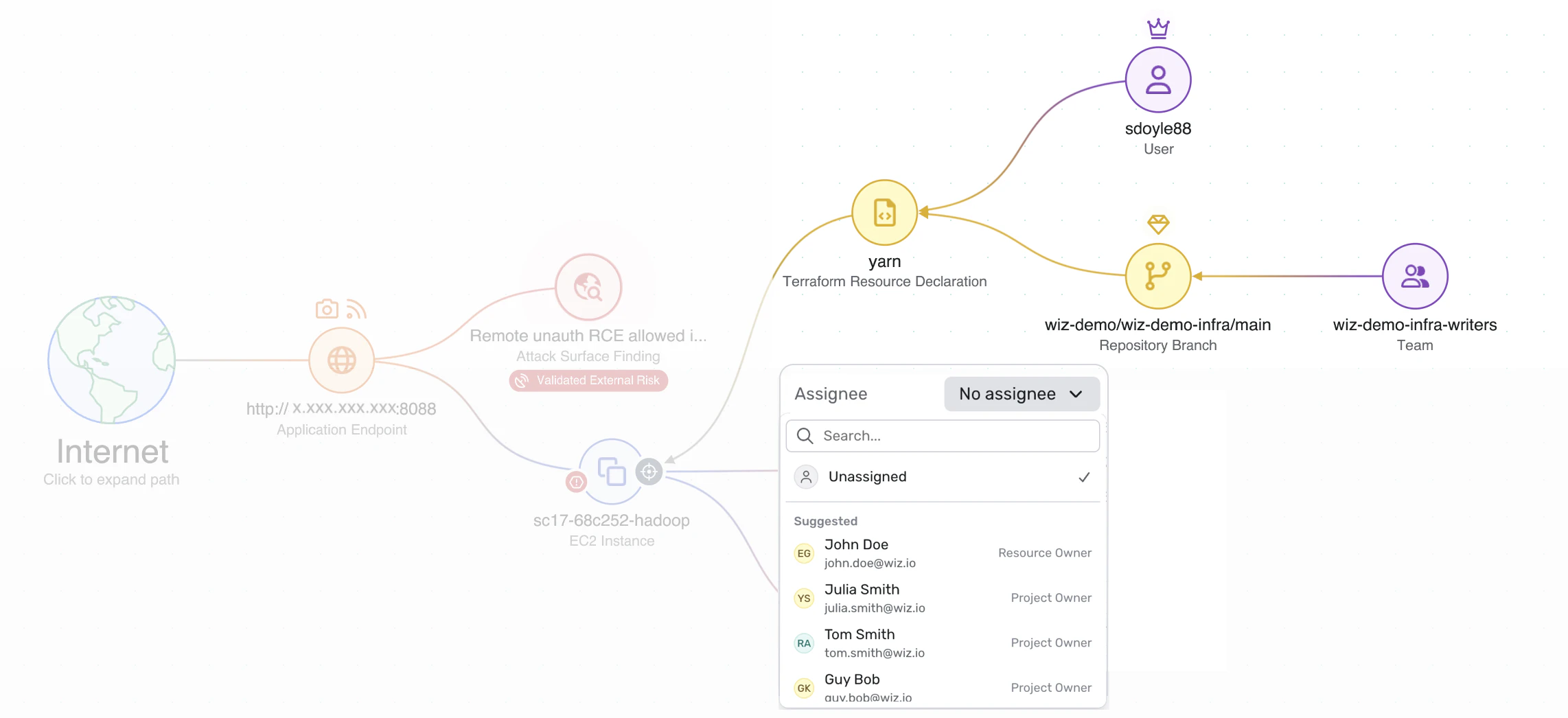
You cannot manage application risk if you do not have an accurate view of what exists and why it matters.
Modern applications are not single repositories. They are collections of services, pipelines, cloud resources, and runtime components that change continuously. A strong ASPM platform maintains a living inventory of applications and their components across environments.
Discovery alone is insufficient. Two additional dimensions are critical:
Ownership mapping
The platform should understand which team owns each application, service, or pipeline so findings are routed automatically to the right owners.Business criticality
Applications should be classified based on business impact, not just technical attributes. An externally facing payment service or AI model handling customer data should be treated differently from an internal test service.
This business context allows ASPM to prioritize true crown jewels first, instead of treating all findings as equal.
Vulnerability Aggregation and Correlation (Via a Security Graph)
ASPM platforms must ingest findings from multiple sources, including native scanners and existing AppSec tools. But aggregation is only the starting point.
What differentiates effective ASPM is how findings are connected.
Rather than presenting vulnerabilities as flat lists, strong platforms model relationships between code issues, identities, runtime services, exposure paths, and data access. This graph-based approach enables the platform to understand how seemingly minor issues combine to create real risk.
For example, a single CVE may appear low risk on its own. When connected to an over-privileged identity running on a publicly exposed service with access to sensitive data, it becomes a toxic combination.
This security graph is what turns correlation into understanding. It allows ASPM to reason about risk as interconnected paths, not isolated findings.
Contextual Risk Prioritization (From Severity to Impact)
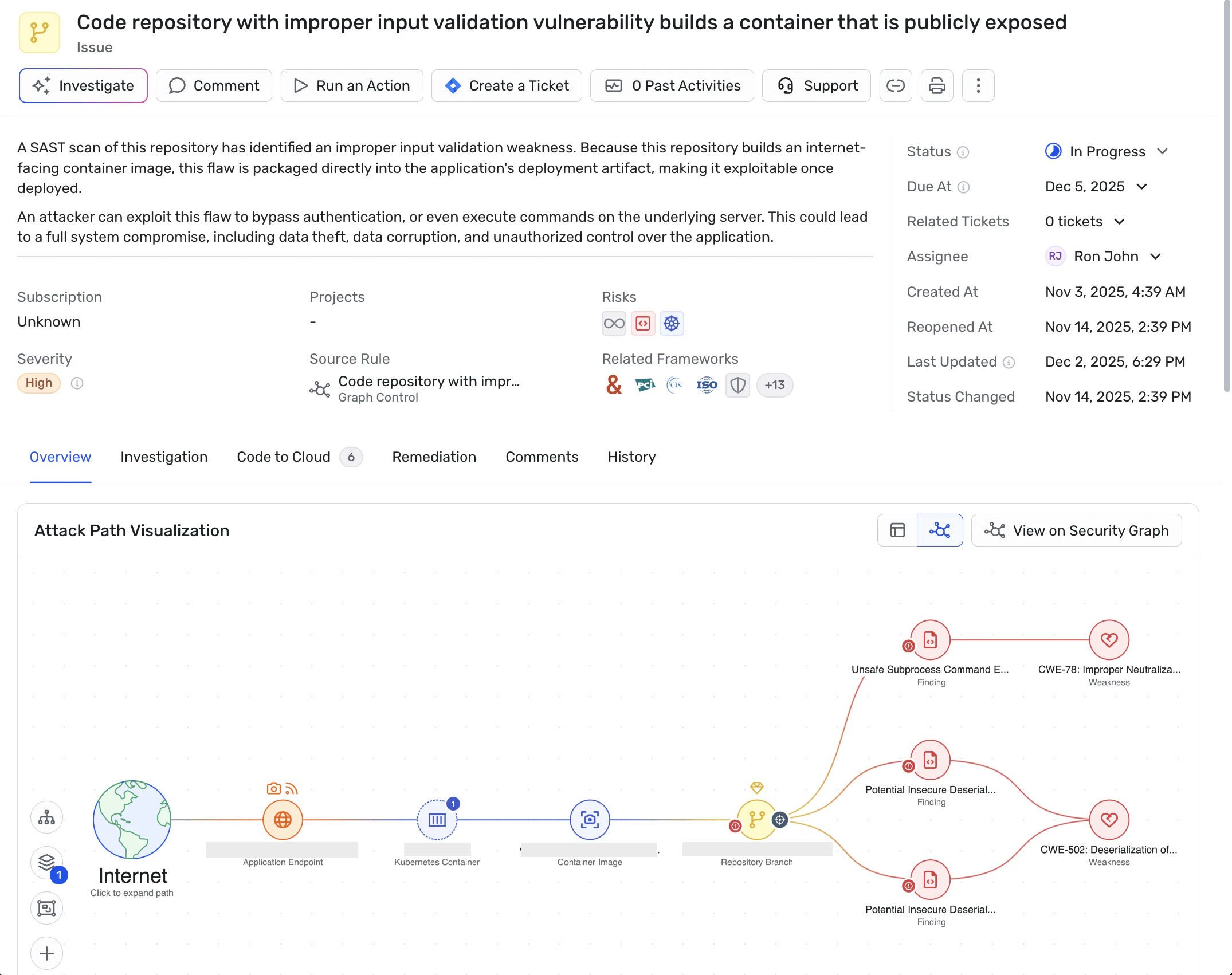
Generic severity scores do not reflect real-world risk.
Effective ASPM platforms prioritize findings using runtime and business context, including:
Whether the vulnerable code is deployed and running
Whether the service is exposed to untrusted networks
Whether the application supports critical business functions or sensitive workflows
Prioritization should answer a practical question: Which fixes will meaningfully reduce risk right now?
By grounding prioritization in exposure and business impact, ASPM helps teams focus on issues that actually threaten production systems, rather than chasing theoretical flaws.
Code-to-Cloud Traceability and the Developer Feedback Loop
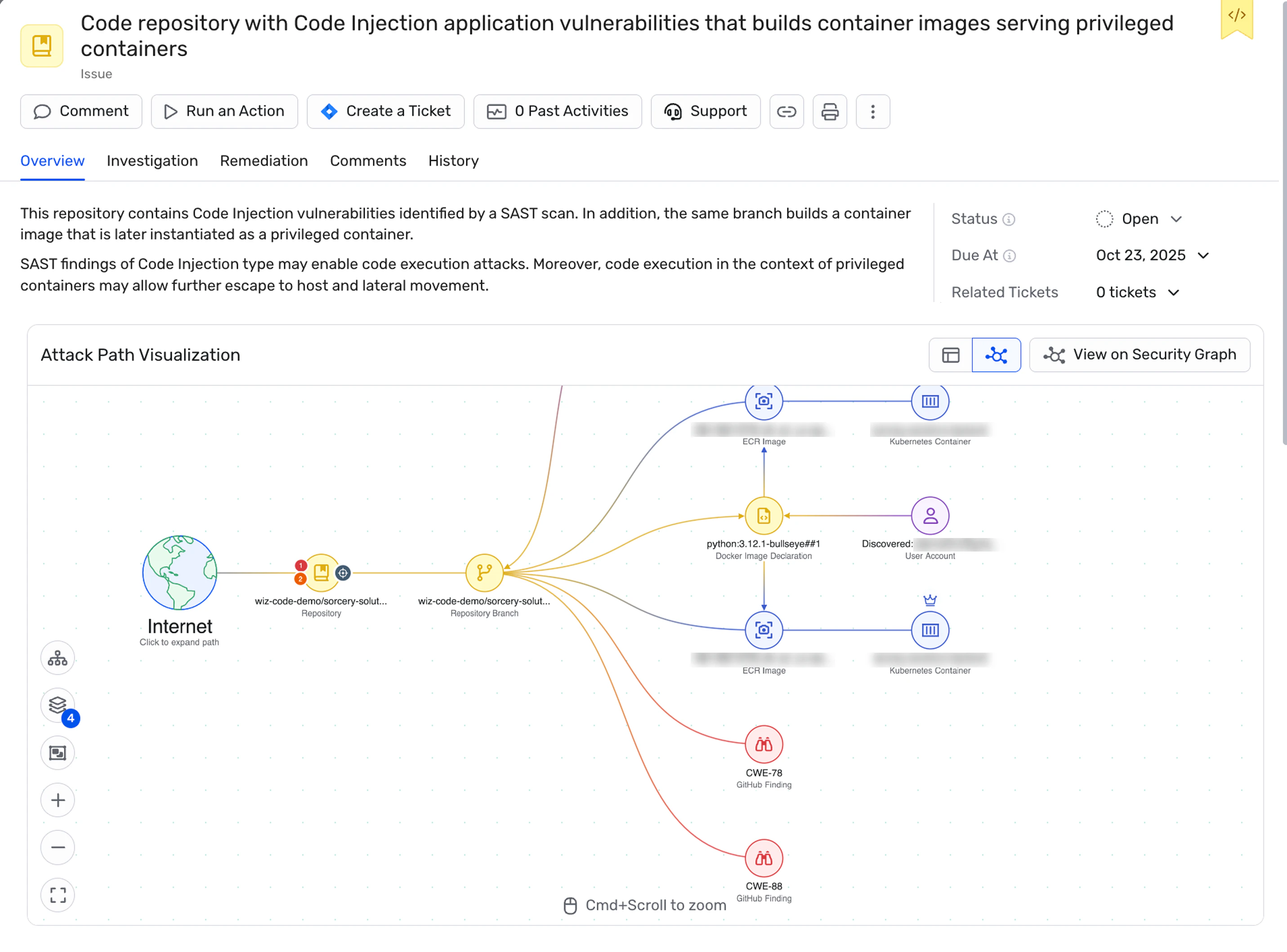
One of the most important ASPM capabilities is full-stack traceability.
When a risk is identified in production, developers need to see exactly where it originated. That means tracing a runtime finding back to:
The specific repository and commit
The pipeline or deployment that introduced it
The owning team or developer context
This traceability closes the feedback loop between production and development. It eliminates guesswork, reduces investigation time, and makes remediation feel actionable instead of abstract.
Without code-to-cloud traceability, even well-prioritized findings slow down once they reach engineering teams.
2026 ASPM Buyer’s Guide: The Shift to AI-Native Application Security
This guide details the transition from traditional, aggregation-focused ASPM to an AI-native architecture.

Remediation Workflow and Accountability
ASPM only delivers value if issues are fixed.
Strong platforms integrate remediation into existing engineering workflows instead of creating parallel processes. Findings should arrive with enough context for teams to act immediately, without needing security translation.
Tracking outcomes over time is equally important. Teams should be able to see whether risk is decreasing, which issues recur, and where remediation stalls.
This is the line between visibility and execution.
Continuous Visibility Across the SDLC
Application risk emerges continuously as code changes, dependencies evolve, and infrastructure is provisioned.
Effective ASPM platforms maintain visibility across development, pipelines, and production, while still prioritizing based on real runtime exposure. This continuity prevents the common failure mode where teams fix issues early but lose sight of what actually matters in production.
By connecting signals across the SDLC into a single risk model, ASPM enables consistent, impact-driven decisions instead of fragmented security feedback.
Get the Application Security Best Practices [Cheat Sheet]
This 6-page guide goes beyond basics — it’s a deep dive into advanced, practical AppSec strategies for developers, security engineers, and DevOps teams.

Code-to-Cloud Visibility: Where ASPM Either Works or Breaks
Code-to-cloud visibility is the point where ASPM either becomes a force multiplier or another reporting layer.
At its core, code-to-cloud visibility is the ability to connect what happens in production back to the exact code, pipeline, and ownership that created it. Without that connection, even well-prioritized findings slow down once they reach engineering teams.
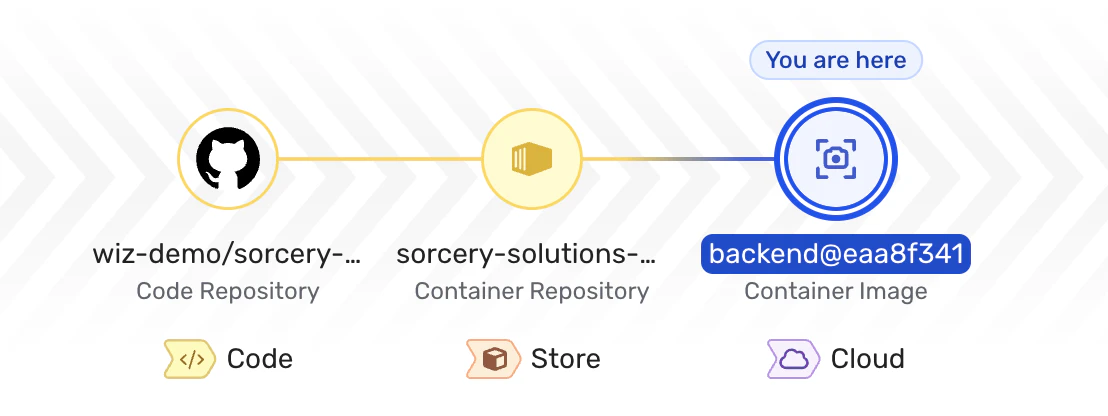
Most application security failures happen after detection. Security teams identify a real issue, but developers cannot easily answer basic follow-up questions:
Where in the code did this come from?
Which repository and pipeline introduced it?
Which team owns the service that is actually exposed?
When these questions require manual investigation, remediation stalls. Findings linger not because teams disagree with the risk, but because the path to fixing it is unclear.
Deployment context is what filters signal from noise.
A vulnerability that exists only in source code but is never deployed poses little immediate risk. A misconfiguration in a staging environment is not equivalent to the same issue in production. Without understanding where and how code is running, ASPM platforms push teams to fix issues that do not materially reduce risk.
Code-to-cloud visibility resolves this by tying findings to runtime reality.
Effective platforms can show whether vulnerable code is deployed, which environment it runs in, how it is exposed, and what it can reach. This allows teams to focus on issues that are both present and exploitable, rather than chasing theoretical problems.
Ownership is the other half of the equation.
Modern architectures often break the traditional link between application and team. A service may be built in one repository, deployed by a shared pipeline, and run on infrastructure managed by another group. Without code-to-cloud correlation, security findings bounce between teams without resolution.
When code, pipelines, and runtime assets are linked, ownership becomes clear. Findings can be routed to the right team with enough context to act immediately.
This visibility also enables more advanced risk analysis.
By correlating code issues with runtime exposure and cloud context, ASPM platforms can model attack paths and toxic combinations. A low-severity code issue may become high risk when it runs on an internet-exposed service with access to sensitive data. Conversely, a high-severity issue may be deprioritized if it never reaches production.
This is where ASPM moves beyond vulnerability management.
Code-to-cloud visibility transforms application security from a backlog of findings into a living map of risk across the SDLC. Without it, ASPM becomes another aggregation layer. With it, ASPM becomes an engine for faster, more meaningful risk reduction.
How Wiz Approaches ASPM as Part of a Unified CNAPP
Wiz approaches ASPM as a core capability of a cloud native application protection platform (CNAPP), not as a standalone application security overlay.
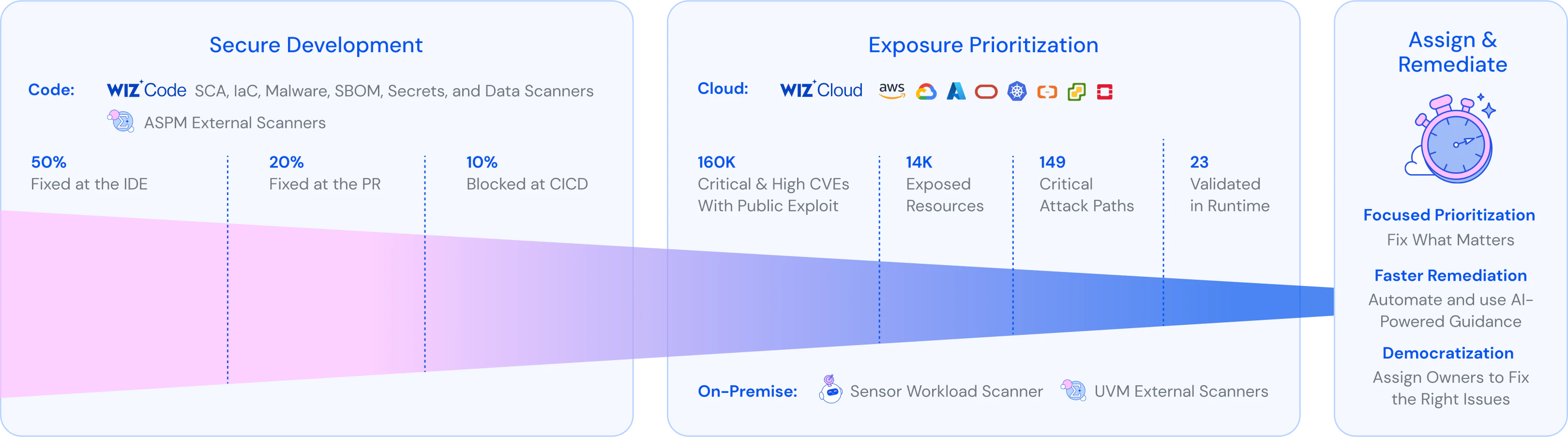
This distinction matters because application risk does not exist independently of cloud infrastructure, identity, runtime exposure, or data sensitivity. Treating ASPM as a separate layer forces teams to manually connect findings across tools, slowing prioritization and remediation.
In Wiz, application security signals live in the same Security Graph as cloud resources, identities, networks, and data. This unified model allows Wiz to evaluate application risk in context, correlating code-level issues with how applications are actually deployed and what they can reach in production.
Instead of asking isolated questions like “is this vulnerable?” or “does this policy fail?”, teams can see complete attack paths. For example, Wiz can show how a vulnerable dependency in application code intersects with a public-facing service, an over-privileged runtime identity, and access to sensitive data. This graph-based view highlights toxic combinations that represent real business risk, not just theoretical flaws.
Wiz also emphasizes code-to-cloud traceability. When a risk is identified at runtime, Wiz traces it back to the originating repository, pipeline, and ownership context. This closes the feedback loop between production and development, allowing teams to fix issues at the source and prevent them from being reintroduced.
Because ASPM is integrated into Wiz’s broader CNAPP, application risk is prioritized using the same operating model as other cloud risks. Findings are evaluated based on exploitability, exposure, and business impact, then routed to the teams that own the affected services. This reduces alert fatigue and keeps security aligned with how engineering teams actually work.
Wiz’s agentless architecture enables rapid visibility across environments without adding operational overhead. As applications, pipelines, and cloud services change, Wiz continuously re-evaluates risk and surfaces new attack paths rather than relying on periodic scans or manual reviews.
Most importantly, Wiz treats ASPM as an execution engine, not just a reporting layer. By combining application signals with cloud, identity, and data context in a single CNAPP, Wiz helps organizations move faster from detection to remediation and steadily reduce application risk over time.
ASPM in Wiz is not about finding more issues. It is about understanding which issues matter most, why they matter in production, and how to fix them efficiently as part of a unified cloud security strategy.
If you want to see how this works in practice, a live demo can walk through how Wiz delivers ASPM as part of its CNAPP to connect code, cloud, and runtime context and reduce real application risk.
Guided Tour